Shareholder Roles And Agreement Rights In Britain
Role description | Common rights sought | Common obligations | Protection level | Drafting notes |
|---|---|---|---|---|
Founder | ||||
Original promoter who usually contributes the business idea, early capital, intellectual property and operational leadership. | Board seat, operational control, pre-emption rights, consent over share issues, drag-along rights and protection against dilution. | Full-time commitment, confidentiality, IP assignment, non-solicitation, non-compete where enforceable, vesting and leaver provisions. | High | Define vesting, good leaver and bad leaver events clearly align articles and shareholders' agreement on compulsory transfers. |
Founder who retains shares but has reduced day-to-day involvement after stepping back from management. | Basic information rights, tag-along rights, pre-emption rights and limited consent rights over major exits or dilution. | Confidentiality, non-disparagement, post-termination restrictions and compulsory transfer on serious default. | Medium | Avoid leaving a passive founder with excessive veto rights that could block funding, sale or restructuring decisions. |
Co-founder | ||||
One of two or more founders, often with overlapping control and substantial management influence. | Equal board rights, reserved matters, pre-emption rights, deadlock mechanisms, tag-along rights and founder vetoes. | Time commitment, confidentiality, IP assignment, restrictive covenants, vesting and good leaver or bad leaver transfer rules. | High | Include a practical deadlock process equal shareholdings without a deadlock clause can paralyse key decisions. |
Technical or product co-founder whose main value is software, know-how, product development or technical leadership. | Board role, founder consent rights, equity vesting, anti-dilution protection and recognition of product responsibilities. | IP assignment, confidentiality, source code handover, invention disclosure, non-solicitation and service continuity duties. | High | Check that company-owned IP is documented separately employment IP rules may not cover all pre-incorporation or contractor work. |
Minority shareholder | ||||
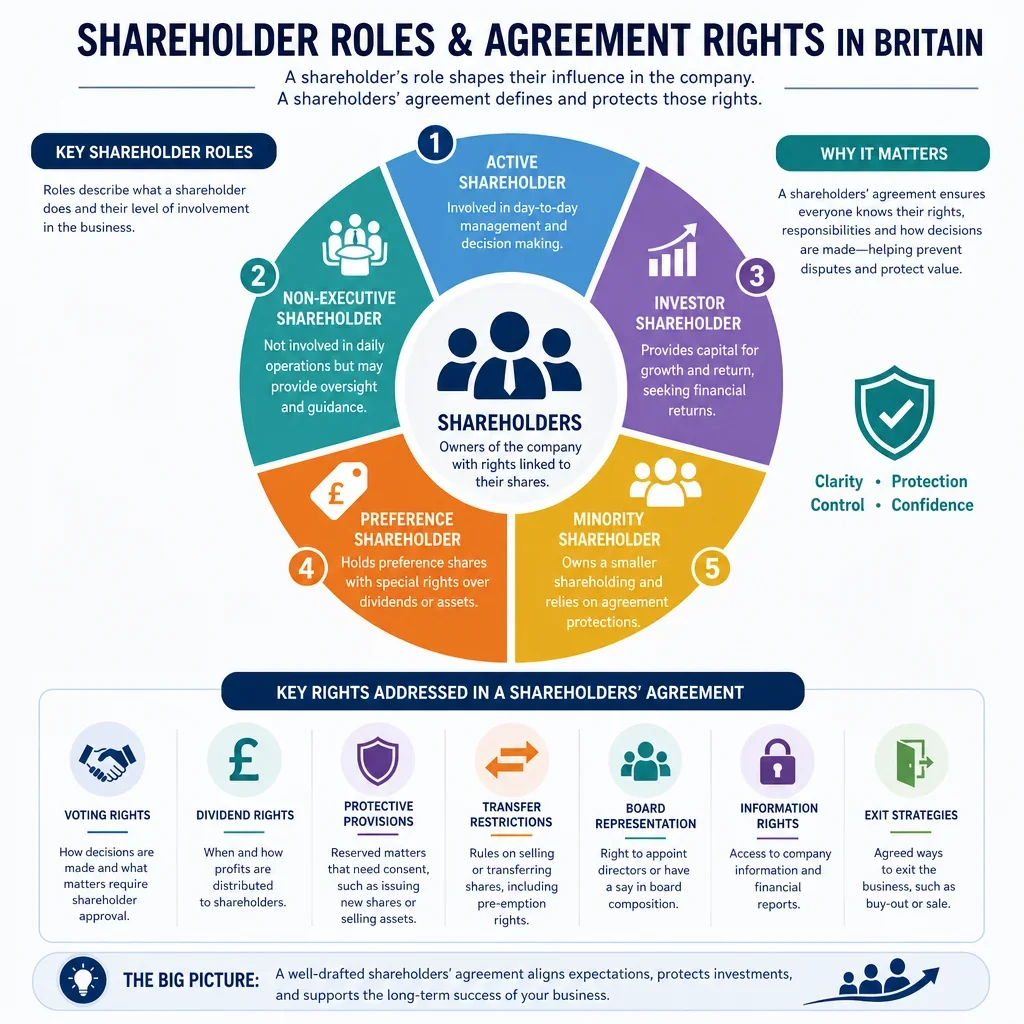
Shareholder without enough voting power to control ordinary or special resolutions alone. | Information rights, reserved matters, tag-along rights, pre-emption rights, anti-dilution rights and fair exit rights. | Confidentiality, transfer restrictions, non-compete if active in the business, and compliance with company policies. | High | Contractual vetoes can supplement unfair prejudice protection under section 994 of the Companies Act 2006. |
Small passive investor with limited operational input and limited bargaining power. | Annual accounts, basic reporting, tag-along rights, pre-emption on new issues and protection from share transfers to competitors. | Confidentiality, permitted transfer limits, notice requirements and compliance with drag-along on an approved sale. | Medium | Keep rights proportionate too many consent rights for small holders may make routine administration difficult. |
Majority shareholder | ||||
Shareholder with voting control over ordinary resolutions and strong influence over board composition and strategy. | Board appointment rights, drag-along rights, consent over major matters, control of budgets and transfer flexibility. | Confidentiality, fair dealing with minorities, compliance with reserved matters and restrictions on related-party transactions. | Medium | Balance control with minority protections to reduce unfair prejudice risk and increase buyer confidence on exit. |
Controlling shareholder that may also provide funding, management services or commercial contracts to the company. | Reserved matter control, financing approval rights, group reporting, appointment rights and drag-along rights. | Conflict management, confidentiality, restrictions on competing opportunities and approval of related-party arrangements. | Medium | Draft conflicts and related-party approval procedures carefully where the controller also trades with the company. |
Angel investor | ||||
Individual early-stage investor who provides capital, contacts or mentoring, usually for a minority stake. | Information rights, pre-emption rights, anti-dilution protection, tag-along rights, investor consent rights and observer rights. | Confidentiality, transfer restrictions, compliance with tax scheme conditions where relevant and non-interference in management. | High | Consider SEIS or EIS compatibility investor preference rights can affect qualifying status and should be checked. |
Angel investor who also advises the company or introduces customers, suppliers or future investors. | Reporting rights, advisory role recognition, pro rata participation rights, tag-along rights and consent over fundamental changes. | Confidentiality, conflict disclosure, no authority to bind the company and restrictions on misuse of business opportunities. | Medium | Separate investment rights from advisory services to avoid uncertainty over authority, remuneration and termination. |
Venture capital investor | ||||
Institutional investor funding high-growth companies, often through preferred shares and staged investment rounds. | Preferred economic rights, board seat, veto rights, information rights, anti-dilution, liquidation preference and drag or tag rights. | Confidentiality, transfer limits, market standard investor undertakings and compliance with future financing mechanics. | High | Align shareholders' agreement, articles, investment agreement and preference share rights inconsistencies can undermine enforcement. |
Lead VC investor coordinating a funding round and negotiating principal investor protections. | Investor majority consent, board appointment, budget approval, founder vesting, warranties, reporting and exit consent rights. | Confidentiality, regulatory compliance, restrictions on transfers to competitors and coordination with co-investors. | High | Use clear investor majority definitions so future share transfers or new rounds do not accidentally change consent control. |
Employee shareholder | ||||
Employee or director holding shares as an incentive, reward or retention mechanism. | Dividend rights, limited information rights, tag-along rights and fair value treatment for good leavers. | Confidentiality, restrictive covenants, leaver transfer obligations, IP duties and compliance with employment policies. | Medium | Coordinate share provisions with the employment contract, option plan and tax treatment, especially for EMI options. |
Employee shareholder whose ownership is linked to continuing employment or directorship. | Good leaver price protection, transparent valuation process, accrued dividend rights and limited challenge rights. | Compulsory transfer on leaving, confidentiality, non-solicitation, non-dealing and return of company property. | Medium | State valuation date, valuation method and whether discounts apply vague leaver pricing often causes disputes. |
Corporate shareholder | ||||
Company or group entity investing for strategic, commercial, acquisition or joint venture reasons. | Board rights, reserved matters, information rights, transfer rights within group, confidentiality carve-outs and exit rights. | Confidentiality, conflict controls, competition restrictions, sanctions compliance and limits on using company information. | High | Define permitted group transfers and what happens if the shareholder's parent, control or strategic relationship changes. |
Corporate party to a joint venture, often contributing assets, services, distribution channels or sector expertise. | Reserved matters, deadlock rights, board equality, business plan approval, non-compete protections and exit mechanisms. | Capital contributions, service commitments, confidentiality, non-solicitation, regulatory compliance and dispute escalation duties. | High | Joint ventures need robust deadlock, funding default, IP use, competition and termination provisions from the outset. |
Minority shareholder | ||||
Shareholder with enough shares to block special resolutions but not enough to control ordinary resolutions. | Consent over articles changes, new share classes, major disposals, winding up, dilution and changes to dividend policy. | Use of vetoes in good faith, confidentiality, transfer restrictions and participation in agreed exit processes. | High | A special resolution generally requires at least 75 percent approval, so a holding above 25 percent may carry blocking power. |
Majority shareholder | ||||
Shareholder holding more than 50 percent of voting rights, usually able to pass ordinary resolutions. | Appointment and removal influence, operational control, budget approval, drag-along and authority to approve routine corporate actions. | Compliance with reserved matters, minority information rights, confidentiality and fair exit process obligations. | Medium | Ordinary resolutions usually require a simple majority, but contractual reserved matters can raise approval thresholds. |
Founder | ||||
Founder seeking to keep ownership stable while the company grows and admits investors or employees. | Pre-emption on transfers, rights of first refusal, permitted family transfers, drag-along and founder consent over new issues. | Transfer restrictions, lock-in, confidentiality and obligations to support an approved sale. | High | Statutory pre-emption can apply to allotments of equity securities, but bespoke transfer pre-emption needs contractual drafting. |
Venture capital investor | ||||
Investor expecting later financing rounds and potential dilution as the company scales. | Pro rata participation, anti-dilution adjustment, pay-to-play terms, information rights and consent over down rounds. | Funding procedure compliance, confidentiality, prompt responses to funding notices and transfer restrictions. | High | Anti-dilution clauses should specify formula, excluded issuances and treatment of option pools before each round. |
Angel investor | ||||
Individual investor seeking early-stage tax relief while taking commercial equity risk. | Ordinary share economics, information rights, pre-emption, tag-along and limited consent rights compatible with tax relief. | Holding period compliance, no prohibited preferential rights where tax relief is intended, confidentiality and transfer restrictions. | Medium | Avoid preferential redemption or excessive downside protection if SEIS or EIS relief is a key commercial assumption. |
Corporate shareholder | ||||
Corporate investor that may operate in the same market or have regulatory, competition or confidentiality sensitivities. | Limited reporting, board observer rights, consent over strategic changes, permitted group sharing and exit on control change. | Information barriers, confidentiality, competition law compliance, no misuse of sensitive information and conflict disclosure. | High | Limit competitively sensitive information sharing where shareholders are actual or potential competitors. |
Employee shareholder | ||||
Employee shareholder who is also a statutory director of the company. | Board participation, dividend rights, good leaver treatment, indemnity support and clear conflict procedures. | Director duties, confidentiality, conflict disclosure, leaver transfer obligations and post-termination restrictions. | Medium | Directors' statutory duties apply alongside contractual shareholder obligations and cannot simply be contracted out. |
Co-founder | ||||
Co-founder expected to contribute capital, assets, services or sweat equity on agreed milestones. | Milestone equity, anti-dilution protection, consent over funding changes and protection from unequal contribution disputes. | Capital contribution duties, service milestones, IP delivery, confidentiality and default transfer consequences. | High | State what happens if a founder fails to contribute promised cash, assets or services by the agreed date. |
Minority shareholder | ||||
Minority holder vulnerable to being left behind if majority shareholders sell control. | Tag-along rights, equal sale terms, notice of offers, pre-emption and protection from selective exits. | Participation in valid drag-along sale, confidentiality, execution of sale documents and warranty limits. | High | Specify sale percentage thresholds, price matching, warranty caps and whether drag-along binds all classes of shares. |
What Rights Should A UK Shareholders' Agreement Give Different Shareholder Types?
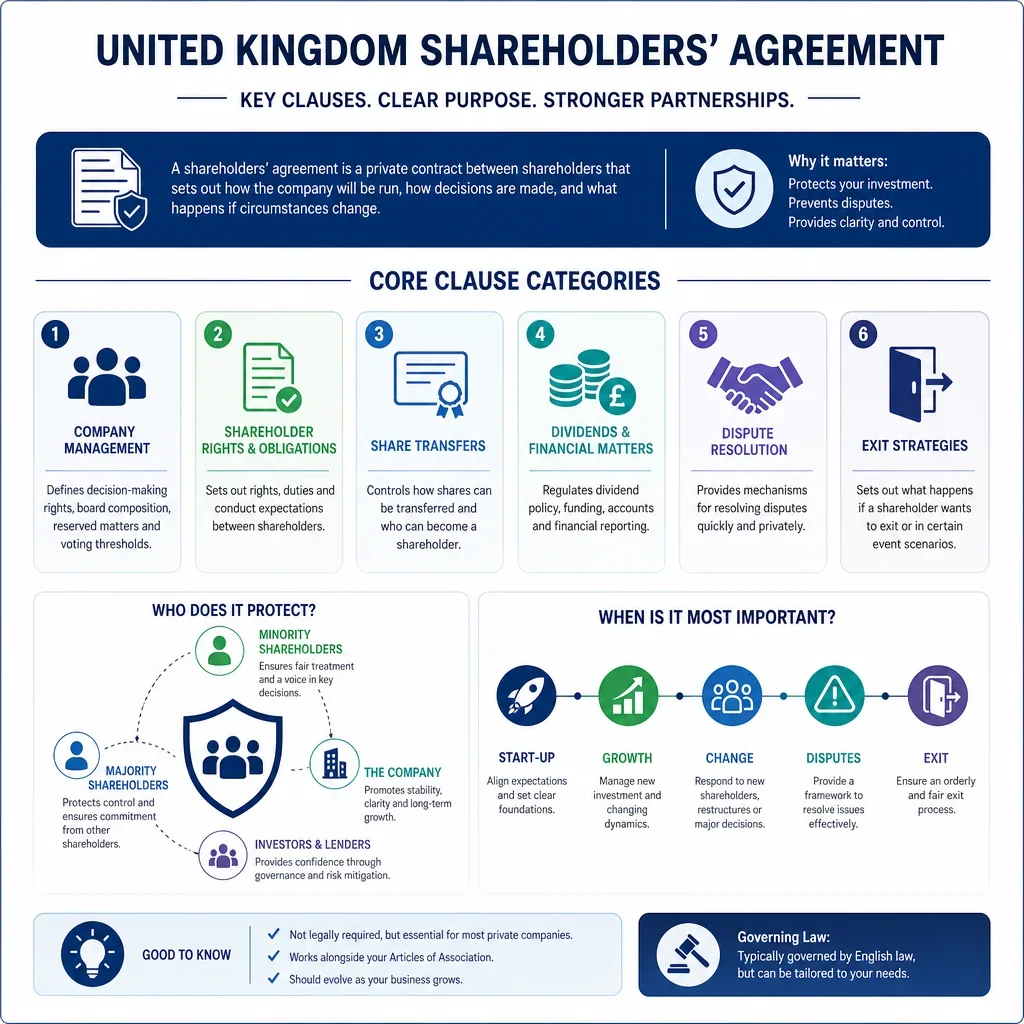
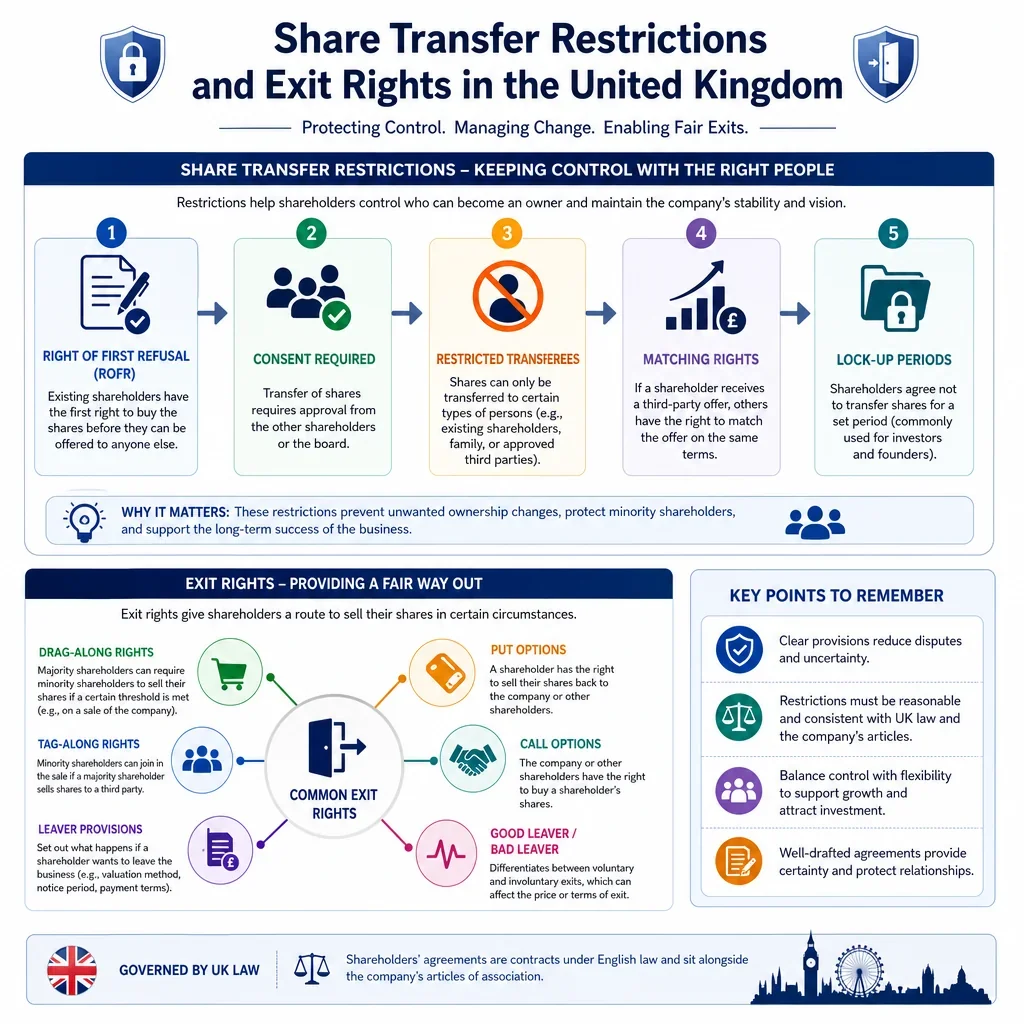
Control and economics usually need different drafting. Founders and majority shareholders often focus on board control, leaver rules and transfer restrictions, while angel, VC and minority shareholders usually need reserved matters, information rights, pre-emption rights and anti-dilution protection.
When Are Minority Protections Most Important?
Minority shareholders in the UK have statutory unfair prejudice protection under section 994 of the Companies Act 2006, but a shareholders' agreement can reduce disputes by setting clear consent thresholds, information rights and exit mechanisms before problems arise.
Why Do Founder And Employee Shareholder Clauses Need Care?
Founder and employee shareholder provisions should align share ownership with ongoing contribution. Good leaver and bad leaver clauses, vesting, compulsory transfer rights and confidentiality obligations can protect the company, but restrictive covenants must be carefully limited to improve enforceability.
What Should Investors Check Before Signing?
Angel and VC investors should check whether veto rights, information rights, pre-emption rights, drag-along, tag-along and anti-dilution clauses match their investment risk. VC terms often require more detailed drafting because they may interact with future funding rounds, board appointment rights and investor consent matters.
FAQs
You Might Also Be Interested In