

Share Classes And Transfer Considerations In The United Kingdom
Created:
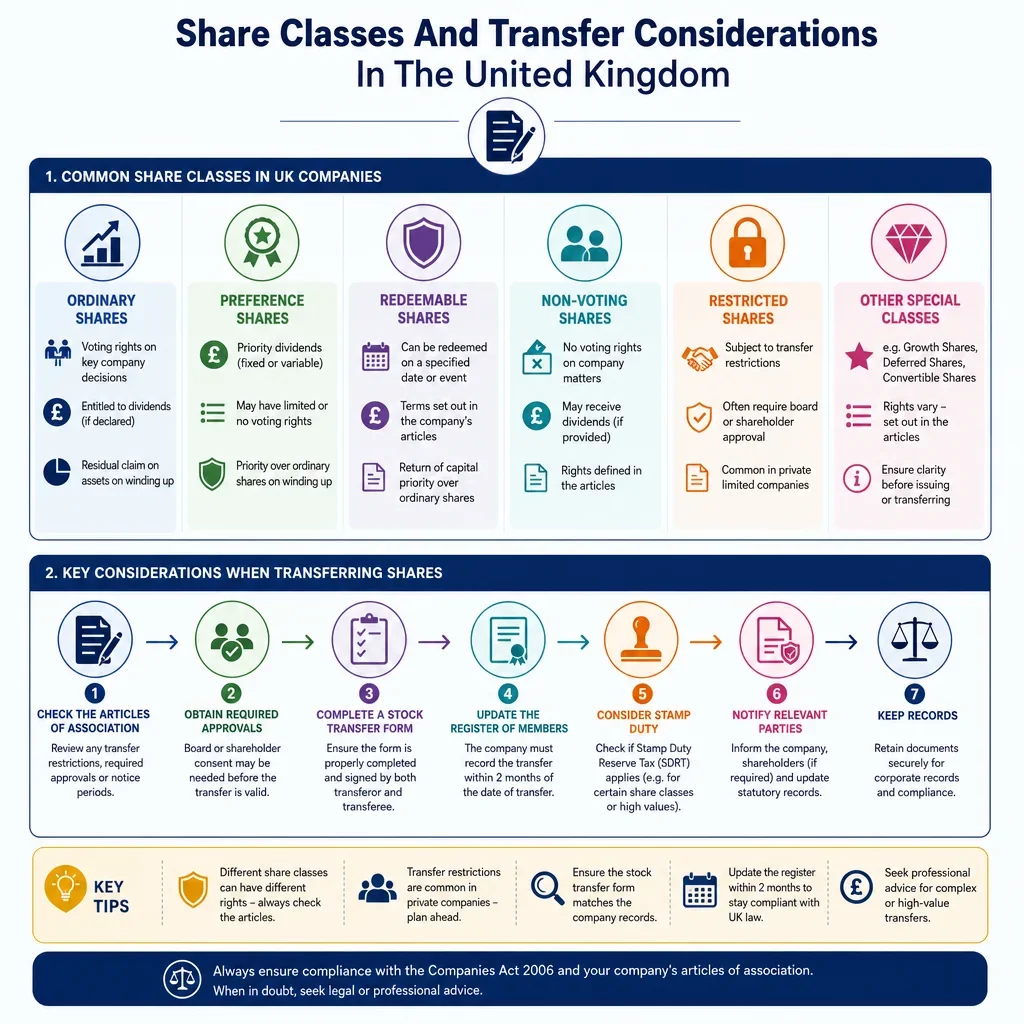
Understanding share classes and transfer considerations helps UK companies manage ownership changes accurately and confidently. This guide is relevant for directors, shareholders and advisers preparing an AI Generated Stock Transfer Form for use in the United Kingdom.
Description | Share Category | Where To Check | Transfer Complexity | Practical Considerations |
|---|---|---|---|---|
Ordinary shares | ||||
Standard equity shares, usually carrying voting, dividend and capital rights. | Ordinary shares | Articles, register of members, share certificate and confirmation statement. | Usually straightforward | Check articles for transfer restrictions, pre-emption rights and director approval. |
Non-voting ordinary shares | ||||
Ordinary economic rights but no vote, or limited voting rights. | Ordinary shares | Articles, resolutions creating the class, share certificate and register of members. | May require additional checks | State the class accurately because voting rights may affect control and consents. |
Voting ordinary shares | ||||
Ordinary shares expressly carrying voting rights at shareholder meetings. | Ordinary shares | Articles, share certificate, register of members and shareholder resolutions. | May require additional checks | May shift control check consent thresholds and any drag, tag or pre-emption terms. |
A ordinary shares | ||||
A separate ordinary class, often with bespoke voting or dividend rights. | Alphabet shares | Articles, class rights schedule, share certificate and register of members. | May require additional checks | Confirm exact letter class and whether rights differ from other ordinary shares. |
B ordinary shares | ||||
Separate ordinary class commonly used for different dividends or voting rights. | Alphabet shares | Articles, class rights schedule, share certificate and register of members. | May require additional checks | Check dividend rights, voting rights and any class consent requirements. |
C ordinary shares | ||||
Additional ordinary class used to separate rights between shareholders. | Alphabet shares | Articles, share certificate, register of members and allotment statement. | May require additional checks | Use the precise class label rights may not match A or B ordinary shares. |
Alphabet shares | ||||
Lettered share classes often used to vary dividends, votes or control rights. | Alphabet shares | Articles, class rights, share certificate, register and shareholder agreement. | Often requires additional checks | Transfers may affect income allocation and class voting check bespoke rights. |
Preference shares | ||||
Shares with preferential dividend or capital rights over ordinary shares. | Preference shares | Articles, statement of capital, share certificate and resolutions creating rights. | Often requires additional checks | Check dividend priority, voting rights, capital priority and transfer limits. |
Cumulative preference shares | ||||
Preference shares where unpaid preferential dividends accumulate for later payment. | Preference shares | Articles, class rights, dividend records and board minutes. | Often requires additional checks | Confirm accrued dividends and whether entitlement transfers with the shares. |
Non-cumulative preference shares | ||||
Preference shares where missed dividends usually do not carry forward. | Preference shares | Articles, class rights, dividend records and share certificate. | Often requires additional checks | Check dividend terms and whether any unpaid entitlement remains with seller. |
Participating preference shares | ||||
Preference shares that may also participate in surplus profits or assets. | Preference shares | Articles, class rights schedule, investment documents and shareholder agreement. | Often requires additional checks | Economic value depends on participation formula and liquidation waterfall. |
Convertible preference shares | ||||
Preference shares convertible into ordinary shares on specified terms. | Preference shares | Articles, investment agreement, conversion notices and class rights. | Often requires additional checks | Check conversion rights, investor consent and transfer restrictions before signing. |
Redeemable shares | ||||
Shares issued on terms allowing or requiring redemption by the company. | Redeemable shares | Articles, terms of issue, share certificate, allotment records and register. | Often requires additional checks | Check redemption date, price, funding rules and whether transfer is permitted. |
Redeemable preference shares | ||||
Preference shares with agreed redemption rights or redemption obligations. | Preference shares, Redeemable shares | Articles, terms of issue, class rights, board minutes and register. | Often requires additional checks | Check both redemption mechanics and preference rights before documenting transfer. |
Deferred shares | ||||
Shares with rights postponed behind other classes, often little current value. | Deferred shares | Articles, class rights, share certificate and register of members. | Often requires additional checks | Check whether transfer is restricted, compulsory or economically immaterial. |
Founder shares | ||||
Shares issued to founders, sometimes with enhanced voting or vesting terms. | Other | Articles, shareholders' agreement, founder agreement and register of members. | Often requires additional checks | Check vesting, leaver rules, board consent and pre-emption provisions. |
Management shares | ||||
Shares carrying management, voting or appointment rights for control purposes. | Other | Articles, class rights, shareholders' agreement and board minutes. | Often requires additional checks | Transfer may change control verify consent and permitted transferee rules. |
Growth shares | ||||
Shares participating only in value above a hurdle or threshold. | Other | Articles, valuation documents, employee agreements and share option records. | Often requires additional checks | Check hurdle, valuation, employment-related securities and leaver restrictions. |
Employee shares | ||||
Shares issued or transferred under employee share or incentive arrangements. | Other | Plan rules, articles, award agreement, register and employee documentation. | Often requires additional checks | Check plan rules, tax status, holding period and leaver or forfeiture terms. |
Restricted shares | ||||
Shares subject to limits on transfer, disposal or ownership. | Other | Articles, shareholders' agreement, share plan rules and share certificate legends. | Often requires additional checks | Obtain required consents and follow any permitted transfer process exactly. |
Partly paid shares | ||||
Shares where some nominal value or premium remains unpaid. | Other | Register of members, allotment records, statement of capital and payment records. | Often requires additional checks | Transferee may assume liability for unpaid amounts check calls and consent. |
Fully paid shares | ||||
Shares for which the required nominal value and premium are fully paid. | Other | Register of members, allotment records, payment records and share certificate. | Usually straightforward | Still check articles and confirm there are no unpaid calls or liens. |
Nil paid shares | ||||
Shares issued without payment made on the amount due. | Other | Allotment records, register of members, statement of capital and payment records. | Often requires additional checks | Check liability for unpaid capital and whether directors can refuse registration. |
Shares subject to a company lien | ||||
Shares over which the company may claim security for unpaid amounts. | Other | Articles, register, payment records, board minutes and share certificate. | Often requires additional checks | Lien may block transfer or require payment before registration. |
Treasury shares | ||||
Company's own shares held in treasury after a purchase of own shares. | Other | Register, Companies House filings, purchase records and board minutes. | Often requires additional checks | Company-held shares require treasury share rules, not a normal member transfer. |
Subscriber shares | ||||
Shares taken by initial subscribers on incorporation. | Ordinary shares | Incorporation statement, register of members and first share certificates. | Usually straightforward | Confirm they were issued and paid as recorded before transfer. |
Bonus shares | ||||
Shares issued to existing shareholders without fresh cash subscription. | Other | Board minutes, allotment records, register and statement of capital. | May require additional checks | Confirm class, issue authority and whether shares are fully paid by capitalisation. |
Rights issue shares | ||||
Shares offered to existing shareholders, often pro rata, before issue. | Other | Offer documents, allotment records, register and statement of capital. | May require additional checks | Check whether shares are already allotted or only rights to subscribe exist. |
Shares subject to pre-emption rights | ||||
Shares where existing holders may have first refusal or offer rights. | Other | Articles, shareholders' agreement, investment agreement and transfer notices. | Often requires additional checks | Follow any offer process before transferring to an outside buyer. |
Shares subject to directors' refusal power | ||||
Shares where directors may refuse registration under articles or law. | Other | Articles, board minutes, transfer instrument and register of members. | Often requires additional checks | Company must consider registration and give refusal notice within statutory limits. |
Shares subject to class consent rights | ||||
Shares whose class rights may require consent for variation or transfer events. | Other | Articles, class resolutions, shareholder consents and statutory filings. | Often requires additional checks | Check if transfer triggers class approval, variation concerns or investor vetoes. |
Certificated shares | ||||
Shares evidenced by a paper or electronic share certificate, outside CREST. | Other | Share certificate, register of members and company records. | Usually straightforward | A paper stock transfer form is commonly used for certificated UK shares. |
Uncertificated shares | ||||
Shares held and transferred in uncertificated form, commonly through CREST. | Other | CREST records, register, registrar records and company articles. | Often requires additional checks | Transfer may need CREST or registrar procedures instead of a paper form. |
Listed company shares | ||||
Shares admitted to the Official List and traded on a market. | Other | Registrar, CREST account, share certificate, market records and issuer documents. | Often requires additional checks | Market settlement, registrar rules and stamp duty processes may apply. |
AIM company shares | ||||
Shares admitted to trading on AIM, often held through CREST. | Other | Registrar, CREST records, share certificate and company admission documents. | Often requires additional checks | Check registrar procedure, settlement route and any market-specific restrictions. |
Nominee-held shares | ||||
Shares registered in a nominee's name for an underlying beneficial owner. | Other | Register of members, nominee agreement, broker records and trust documents. | Often requires additional checks | Confirm who can sign and whether legal or beneficial ownership is transferring. |
Jointly held shares | ||||
Shares registered in the names of two or more holders. | Other | Register of members, share certificate and any joint holder mandate. | May require additional checks | All registered holders may need to sign unless authority says otherwise. |
Shares held by personal representatives | ||||
Shares transmitted on death before or during transfer to beneficiaries. | Other | Register, grant of probate, letters of administration and articles. | Often requires additional checks | Company will need evidence of authority before registration or transfer. |
Shares transmitted by operation of law | ||||
Shares passing by death, bankruptcy or similar legal transmission, not ordinary sale. | Other | Register, court or insolvency documents, probate papers and articles. | Often requires additional checks | Transmission evidence may be needed before a transfer form is accepted. |
Charged or pledged shares | ||||
Shares used as security for debt or obligations. | Other | Security documents, PSC records, register, Companies House charges and certificates. | Often requires additional checks | Lender consent or release may be needed before legal title transfers. |
Shares subject to drag-along rights | ||||
Shares that may be compelled to transfer on a qualifying sale. | Other | Articles, shareholders' agreement, investment agreement and sale notice. | Often requires additional checks | Confirm trigger, required majority, notice mechanics and signing authority. |
Shares subject to tag-along rights | ||||
Shares giving holders a right to join another shareholder's sale. | Other | Articles, shareholders' agreement, investment agreement and sale notice. | Often requires additional checks | Sale may require notice to protected holders before completion. |
Shares subject to compulsory transfer provisions | ||||
Shares that must be transferred after specified events, such as leaver events. | Other | Articles, shareholders' agreement, employment contract and board notices. | Often requires additional checks | Check trigger event, valuation formula, deemed transfer and execution authority. |
EIS shares | ||||
Shares issued to investors seeking Enterprise Investment Scheme tax relief. | Ordinary shares | EIS compliance documents, articles, share certificate and allotment records. | Often requires additional checks | Transfer may affect relief check holding period and qualifying share conditions. |
SEIS shares | ||||
Shares issued to investors seeking Seed Enterprise Investment Scheme relief. | Ordinary shares | SEIS compliance documents, articles, share certificate and allotment records. | Often requires additional checks | Transfer may jeopardise relief if timing or qualifying conditions are breached. |
EMI option shares | ||||
Shares acquired or to be acquired under an Enterprise Management Incentive option. | Other | EMI option agreement, plan rules, articles, exercise notice and register. | Often requires additional checks | Check exercise, restrictions, tax treatment and whether shares are actually issued. |
Private company shares | ||||
Shares in a private company limited by shares, commonly transferred off-market. | Other | Articles, register of members, share certificates and Companies House filings. | May require additional checks | Private company articles commonly restrict transfers or require board approval. |
Public company shares | ||||
Shares in a public limited company, listed or unlisted. | Other | Registrar, CREST records, articles, share certificate and market documents. | May require additional checks | Check whether settlement is certificated, CREST-based, listed or registrar-managed. |
Shares with different nominal values | ||||
Shares of different denominations, such as £1 ordinary and 1p ordinary shares. | Other | Statement of capital, register, share certificate and allotment records. | May require additional checks | State nominal value and class precisely to avoid transferring the wrong shares. |
Shares denominated in foreign currency | ||||
Shares whose nominal value is stated in a currency other than sterling. | Other | Statement of capital, articles, register and share certificate. | May require additional checks | Record currency and nominal value correctly consideration may need conversion checks. |
Enhanced voting shares | ||||
Shares carrying more than one vote per share or special voting power. | Other | Articles, class rights, shareholder agreement and register of members. | Often requires additional checks | Transfer can alter control disproportionately check conversion or sunset terms. |
Golden shares | ||||
Shares carrying special veto, consent or control rights. | Other | Articles, class rights, government or investor documents and resolutions. | Often requires additional checks | Check whether transfer is prohibited or special rights fall away on transfer. |
Non-voting preference shares | ||||
Preference shares with limited or no voting rights. | Preference shares | Articles, class rights, share certificate and register of members. | Often requires additional checks | Confirm voting exclusions, dividend priority and any default voting triggers. |
Dividend-only shares | ||||
Shares designed mainly to receive dividends, often with limited votes or capital. | Other | Articles, class rights, dividend minutes and register of members. | Often requires additional checks | Check dividend discretion, tax context and whether transfer affects income rights. |
Capital-only shares | ||||
Shares with capital participation but limited or no dividend rights. | Other | Articles, class rights, liquidation waterfall and register of members. | Often requires additional checks | Value depends on capital rights and ranking on winding up or sale. |
Convertible shares | ||||
Shares convertible into another class under agreed terms. | Other | Articles, conversion terms, notices, register and board minutes. | Often requires additional checks | Check whether conversion occurs before, after or on transfer. |
Shares with anti-dilution rights | ||||
Investor shares protected against future down-round dilution by adjustment rights. | Preference shares | Articles, investment agreement, subscription agreement and class rights. | Often requires additional checks | Transfer may require investor consent and preserve or terminate protection rights. |
Shares with liquidation preference | ||||
Shares with priority return on winding up, sale or deemed liquidation event. | Preference shares | Articles, investment agreement, liquidation waterfall and class rights. | Often requires additional checks | Value depends on preference multiple, participation and ranking. |
Shares with director appointment rights | ||||
Shares carrying rights to appoint or remove a director. | Other | Articles, shareholders' agreement, class rights and board records. | Often requires additional checks | Check whether appointment rights transfer, lapse or need company consent. |
Shares held in trust | ||||
Shares registered by trustees or held for beneficiaries under trust arrangements. | Other | Register, trust deed, trustee resolutions and share certificate. | Often requires additional checks | Confirm trustee authority, beneficial ownership and any trust restrictions. |
Shares held by a corporate shareholder | ||||
Shares registered to a company or other corporate body. | Other | Register, share certificate, corporate approvals and signing authority evidence. | May require additional checks | Check company execution formalities and board authority for the transfer. |
Shares held for a minor | ||||
Shares beneficially owned by a child, often registered via trustee or nominee. | Other | Register, trust records, nominee documents and articles. | Often requires additional checks | Check capacity, trustee authority and whether company accepts minor members. |
£1 ordinary shares | ||||
Ordinary shares with a nominal value of one pound each. | Ordinary shares | Statement of capital, share certificate, register and incorporation documents. | Usually straightforward | Include the correct nominal value if multiple ordinary denominations exist. |
1p ordinary shares | ||||
Ordinary shares with a nominal value of one penny each. | Ordinary shares | Statement of capital, share certificate, register and allotment records. | Usually straightforward | Check nominal value, class and number of shares against company records. |
Shares with declared but unpaid dividends | ||||
Shares where dividends were declared before transfer but not yet paid. | Other | Dividend vouchers, board minutes, articles, register and sale agreement. | May require additional checks | Agree whether seller or buyer receives declared unpaid dividends. |
Which Share Class Details Matter Most On A UK Stock Transfer Form?
The share class should be stated exactly as shown in the company records, because ordinary, preference, redeemable, deferred and alphabet shares can carry different voting, dividend, capital and redemption rights.
Where Should You Check Before Completing A Stock Transfer Form?
- Check the articles of association for transfer restrictions, pre-emption rights, directors' refusal powers and class rights.
- Check the register of members, share certificate and allotment records to confirm the exact class, number and holder details.
- For companies with alphabet shares or bespoke preference shares, confirm whether a shareholder agreement or special resolutions changed the rights.
Which Share Transfers Usually Need Extra Checks?
- Redeemable shares, preference shares, deferred shares, management shares, growth shares and employee shares often need additional checks because the articles may impose special rights, vesting terms, leaver provisions, valuation rules or consent requirements.
- Listed, AIM, uncertificated or partly paid shares may require transfer processes outside a simple paper stock transfer form.
- Shares with unpaid amounts, security interests or nominee arrangements should not be transferred without checking liability, authority and beneficial ownership.
When Can A UK Company Refuse Or Delay Registration?
A stock transfer is not fully effective against the company until the transferee is entered in the register of members. Directors should check any articles-based restrictions and may need to consider statutory rules on registering transfers and giving notice of refusal.
Want to Generate Your own Stock Transfer Form?
Docaro AI can help you write your own Stock Transfer Form for use in the United Kingdom in minutes.
FAQs
A share class is a category of shares with specific rights, such as voting, dividend, capital return, or transfer rights. UK companies may have ordinary shares, preference shares, deferred shares, or other customised classes set out in their articles of association.
Show All FAQs
You Might Also Be Interested In
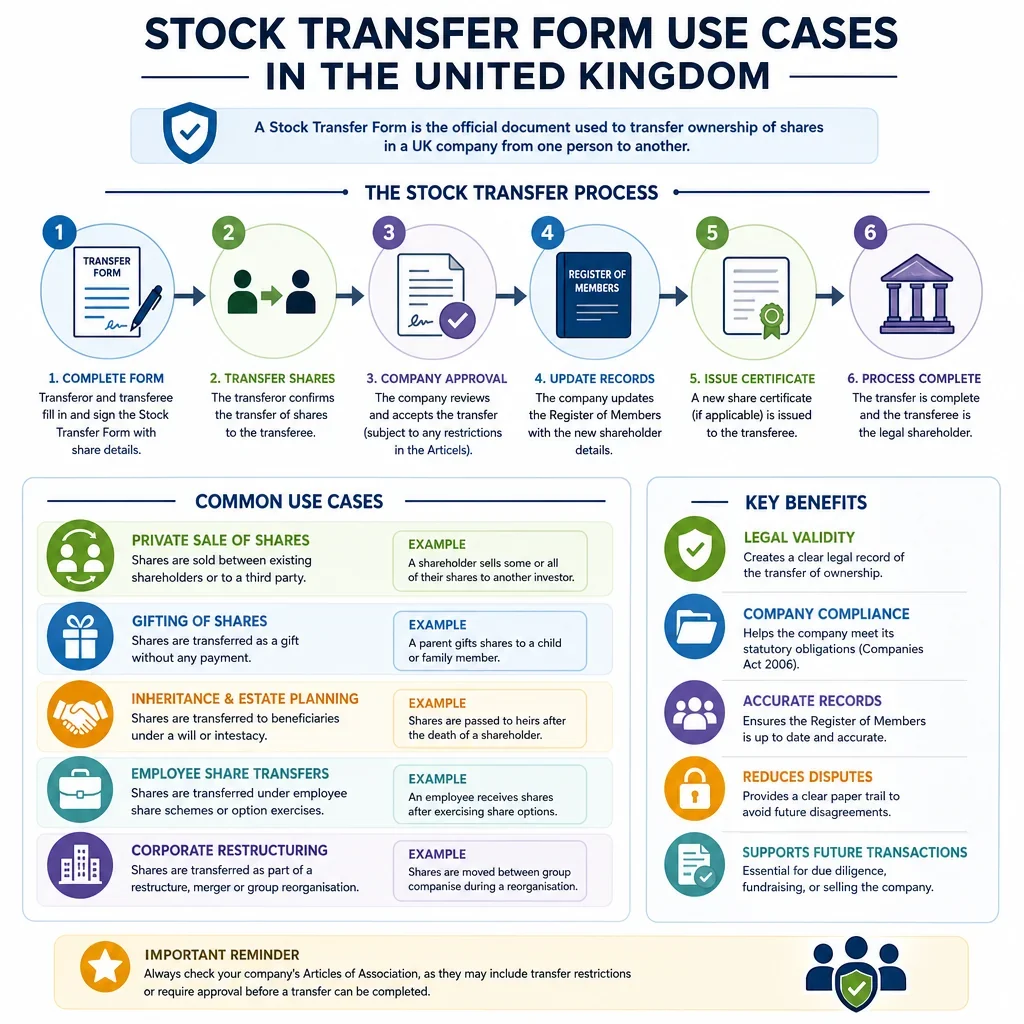
Explore Stock Transfer Form use cases in the United Kingdom and understand when this document is needed for share transfers.
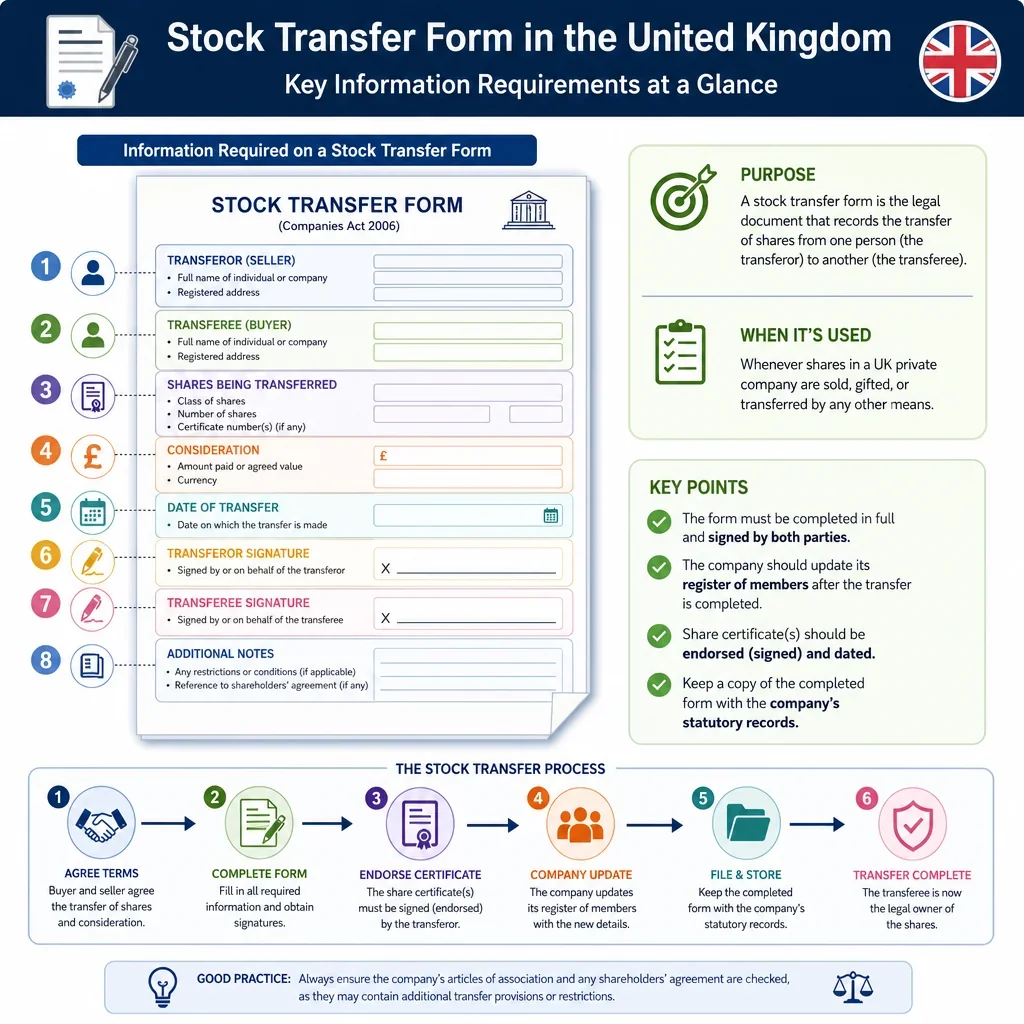
Learn United Kingdom stock transfer form requirements, including key details needed for accurate share transfers.