United Kingdom Patent Licence Agreement Clause Library
Clause name | Purpose | Typical importance | Negotiation points |
|---|---|---|---|
Core commercial term | |||
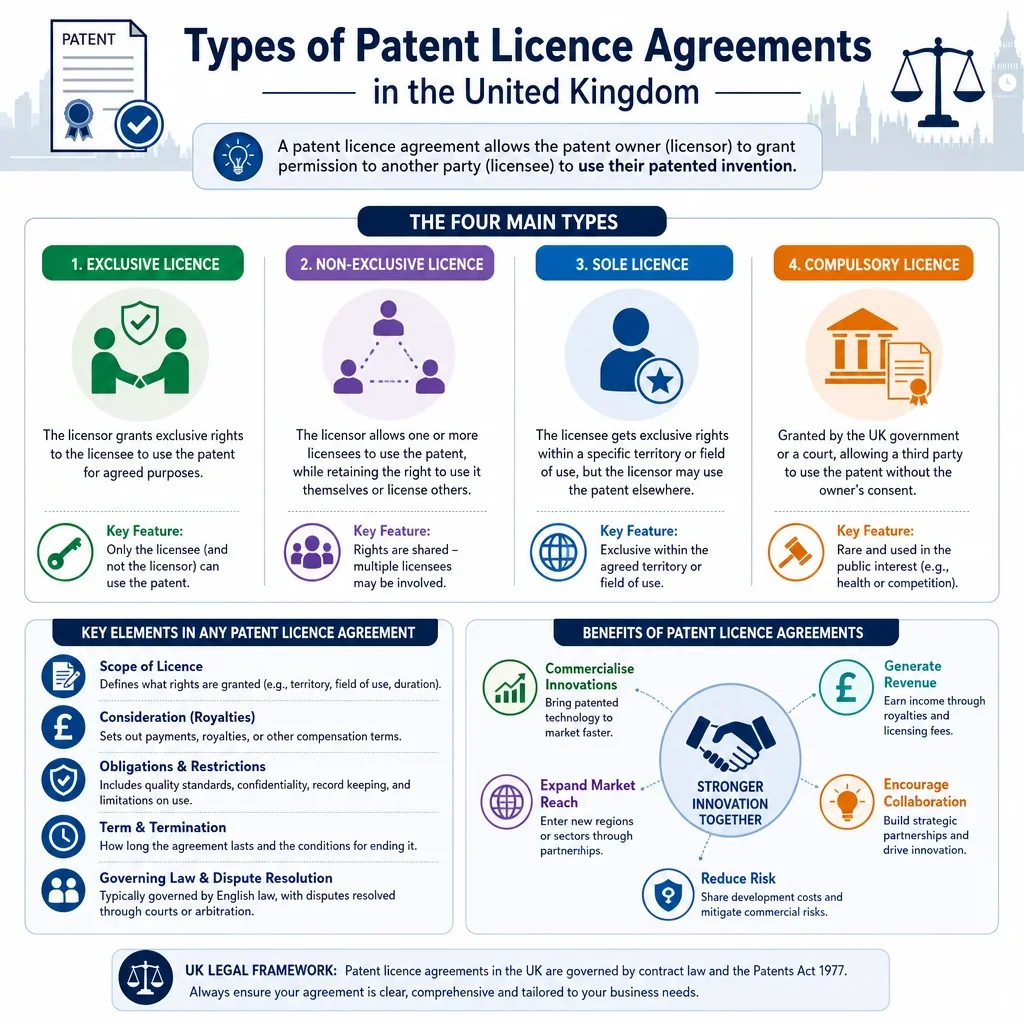
Grant of Licence | Defines the patent rights the licensee may use. | Usually essential | Scope of rights acts permitted patent list future patents. |
Licensed Patents | Identifies the patents and applications covered by the licence. | Usually essential | Patent numbers continuations divisionals foreign equivalents future filings. |
Exclusivity | States whether the licence is exclusive, sole or non-exclusive. | Usually essential | Reserved rights licensor use existing licensees performance conditions. |
Territory | Sets where the licensee may exploit the licensed patents. | Usually essential | UK only worldwide country carve-outs online sales expansion rights. |
Rights and restrictions | |||
Field Of Use | Limits exploitation to specified products, sectors or applications. | Often included | Field definition reserved markets overlapping products breach consequences. |
Core commercial term | |||
Term | States when the licence starts and ends. | Usually essential | Fixed term patent expiry renewal early termination rights. |
Rights and restrictions | |||
Sublicensing | Controls whether the licensee may grant rights to others. | Often included | Consent affiliates subcontractors flow-down terms revenue sharing. |
Affiliate Use | Allows or restricts use by group companies. | Often included | Affiliate definition liability for affiliates post-group exit rights. |
Permitted Acts | Lists permitted making, using, selling, importing or keeping acts. | Usually essential | Manufacture import distribution offer for sale research use. |
Prohibited Uses | Prevents unauthorised uses outside the agreed licence scope. | Often included | Reverse engineering unlicensed fields resale limits third-party access. |
Reservation Of Rights | Confirms rights not expressly granted remain with the licensor. | Often included | Licensor research academic use government rights third-party licences. |
Intellectual property protection | |||
Associated Know-How | Licences confidential technical information needed to use the patents. | Often included | Materials supplied confidentiality updates survival after patent expiry. |
Administration | |||
Technology Transfer | Sets support for transferring technical capability to the licensee. | Situation-specific | Training documentation site visits timetable extra fees. |
Intellectual property protection | |||
Improvements | Allocates rights in developments made after signing. | Often included | Ownership grant-back royalty-free use patent filing control. |
Grant-Back Licence | Gives the licensor rights to licensee improvements. | Situation-specific | Exclusive or non-exclusive royalties competition law compliance scope. |
Patent Prosecution | Allocates control of patent applications and prosecution strategy. | Often included | Decision control consultation costs abandonment notices foreign filings. |
Patent Maintenance Fees | Sets responsibility for renewal fees and keeping patents in force. | Often included | Who pays notice before lapse reimbursement territory-specific renewals. |
Patent Abandonment | Requires notice before a patent is allowed to lapse or be abandoned. | Often included | Notice period licensee step-in rights cost assumption assignment option. |
Administration | |||
Registration Of Licence | Allocates responsibility for recording the licence at the UK IPO. | Often included | Who files timing costs redactions evidence required. |
Payment and accounting | |||
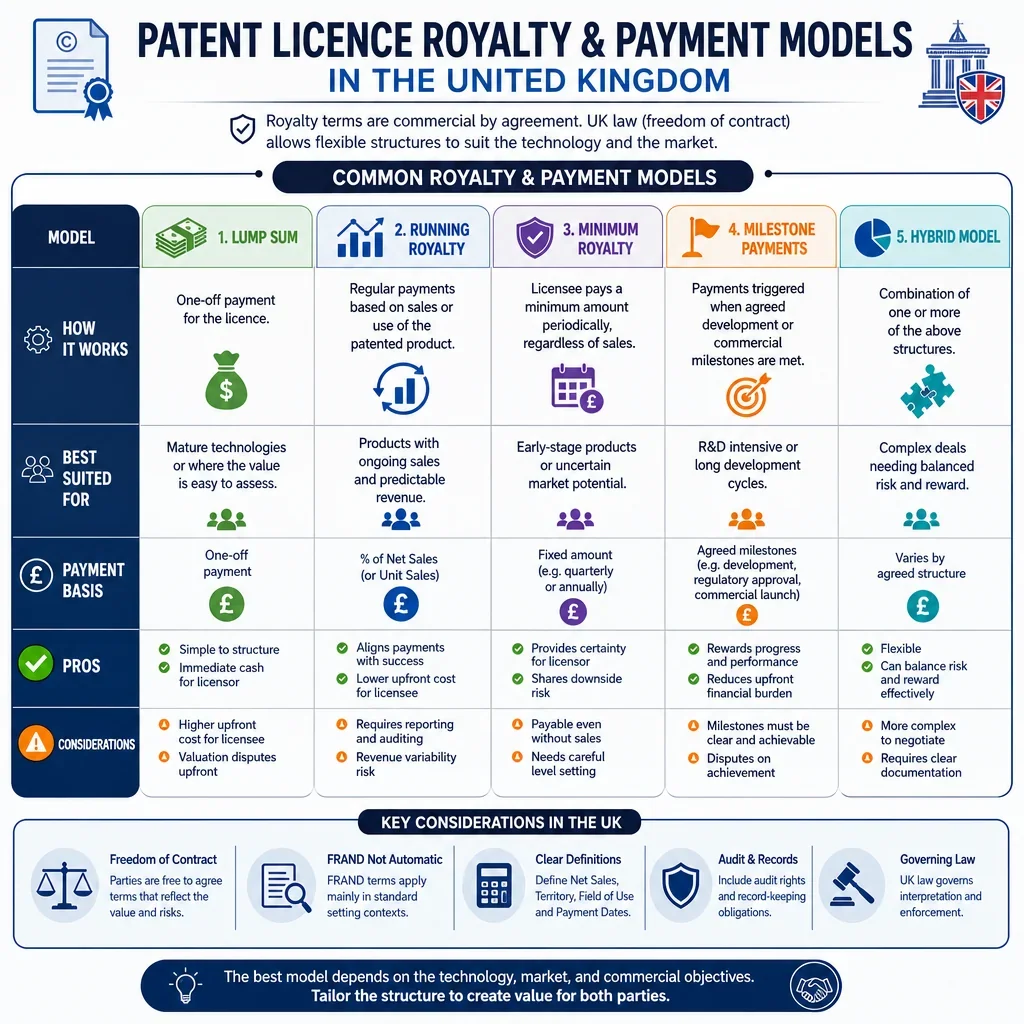
Royalties | Sets the payments due for use of the licensed patents. | Usually essential | Rate royalty base deductions stacking post-expiry payments. |
Upfront Fee | Requires an initial payment for entering the licence. | Optional | Amount due date refundability credit against royalties. |
Milestone Payments | Links payments to development, regulatory or sales events. | Situation-specific | Trigger events evidence timing one-off or repeat payments. |
Minimum Royalties | Ensures minimum revenue or active exploitation by the licensee. | Often included | Annual amount ramp-up crediting cure rights exclusivity loss. |
Net Sales Definition | Defines the sales figure on which royalties are calculated. | Usually essential | Permitted deductions affiliates bundled products non-cash consideration. |
Royalty Reports | Requires periodic statements supporting royalty calculations. | Usually essential | Reporting period format product data nil reports certification. |
Audit Rights | Allows checking of royalty records and underpayments. | Usually essential | Frequency lookback period auditor confidentiality cost shifting. |
Records Retention | Requires books and records to support payments and compliance. | Often included | Retention period records scope access rights electronic records. |
Tax And VAT | Allocates taxes, VAT and withholding on licence payments. | Often included | VAT addition withholding gross-up tax certificates reverse charge. |
Late Payment Interest | Sets interest and recovery rights for overdue sums. | Often included | Interest rate statutory or contractual rate grace period costs. |
Currency And Exchange Rates | States payment currency and conversion method. | Often included | GBP or foreign currency exchange date bank charges hedging risk. |
Core commercial term | |||
Commercialisation Diligence | Requires reasonable efforts to develop or sell licensed products. | Often included | Efforts standard development plan milestones remedy for failure. |
Performance Milestones | Sets objective targets for retaining rights, especially exclusivity. | Often included | Target dates sales levels regulatory steps extensions consequences. |
Intellectual property protection | |||
Confidentiality | Protects confidential technical, commercial and patent information. | Usually essential | Duration exclusions permitted disclosures injunctive relief residual knowledge. |
Publication Review | Controls publications that may disclose patentable or confidential information. | Situation-specific | Review period patent filing delay academic freedom deletion rights. |
Patent Marking | Requires products or materials to identify relevant patent protection. | Often included | Physical marking web marking wording updates false marking risk. |
Dispute and enforcement | |||
Infringement Notices | Requires parties to notify each other of suspected infringement. | Often included | Notice timing evidence market monitoring confidentiality. |
Enforcement Control | Allocates control of infringement actions against third parties. | Often included | Right to sue conduct settlement consent costs recoveries. |
Cooperation In Proceedings | Requires assistance in infringement, validity or enforcement proceedings. | Often included | Evidence witnesses documents cost reimbursement privilege. |
Settlement Control | Controls settlements affecting patent scope, validity or licence value. | Often included | Consent rights admissions royalty-free licences field restrictions. |
Validity Challenges | Addresses whether the licensee may challenge patent validity. | Situation-specific | No-challenge limits termination trigger competition law risk notice. |
Risk allocation | |||
Third-Party IP Claims | Allocates responsibility if licensed products allegedly infringe others' rights. | Often included | Defence control indemnity workarounds settlement approval exclusions. |
Licensor Warranties | States promises about ownership, authority, patents and disclosed matters. | Usually essential | Title right to license no known claims no validity guarantee. |
No Validity Or FTO Warranty | Disclaims guarantees that patents are valid or products are non-infringing. | Often included | Known issues due diligence reliance indemnity carve-outs disclosure schedule. |
Licensee Warranties | Requires lawful, safe and authorised exploitation by the licensee. | Often included | Compliance product quality regulatory approvals no misuse. |
Indemnities | Allocates financial responsibility for specified losses and claims. | Usually essential | IP claims product claims procedure exclusions liability cap. |
Limitation Of Liability | Caps or excludes liability between the parties. | Usually essential | Cap amount excluded losses uncapped liabilities UCTA reasonableness. |
Product Liability | Allocates responsibility for harm caused by licensed products. | Situation-specific | Manufacturer liability recalls insurance indemnity regulatory duties. |
Insurance | Requires insurance for product, IP or contractual risks. | Often included | Coverage types limits named insured evidence deductibles. |
Regulatory Compliance | Requires compliance with laws affecting licensed products or processes. | Often included | Approvals standards audits reporting responsibility by territory. |
Export Controls And Sanctions | Restricts transfers or sales prohibited by export control or sanctions rules. | Situation-specific | Restricted territories licences end users audit rights termination. |
Competition Law Compliance | Helps avoid anti-competitive licensing restrictions. | Often included | Territorial limits pricing restrictions grant-backs no-challenge terms. |
Rights and restrictions | |||
Quality Control | Sets standards for licensed products or processes. | Situation-specific | Specifications inspections rejection corrective action records. |
Use Of Names And Marks | Controls use of party names, logos or trade marks. | Optional | Approval attribution trade mark licence press releases misuse. |
Administration | |||
Assignment | Controls transfer of rights or obligations to another person. | Usually essential | Consent group transfers business sale patent assignment novation. |
Change Of Control | Deals with ownership changes in a party. | Often included | Competitor acquisition notice consent termination deemed assignment. |
Dispute and enforcement | |||
Termination For Breach | Allows termination for serious or uncured contractual breach. | Usually essential | Material breach cure period non-payment repeated breach partial termination. |
Insolvency Termination | Sets rights if a party becomes insolvent or enters administration. | Often included | Ipso facto limits payment default administrator powers survival of rights. |
Termination For Convenience | Allows exit without breach after notice. | Optional | Who can terminate notice period minimum term wind-down rights. |
Effects Of Termination | States what happens when the licence ends. | Usually essential | Cease use stock sell-off return materials accrued royalties. |
Administration | |||
Survival | Identifies obligations that continue after termination or expiry. | Usually essential | Confidentiality audits payment indemnities dispute clauses. |
Rights and restrictions | |||
Sell-Off Period | Allows disposal of existing stock after termination or expiry. | Often included | Duration stock count royalties termination-for-breach exclusion. |
Risk allocation | |||
Force Majeure | Excuses delay caused by events beyond reasonable control. | Often included | Covered events payment exclusion notice mitigation long-stop termination. |
Dispute and enforcement | |||
Governing Law | Selects the law governing the agreement. | Usually essential | England and Wales Scotland Northern Ireland mandatory foreign laws. |
Jurisdiction | Chooses which courts may hear disputes. | Usually essential | Exclusive courts non-exclusive courts patent validity forums interim relief. |
Arbitration | Refers disputes to private arbitration instead of court litigation. | Optional | Rules seat arbitrators confidentiality validity disputes emergency relief. |
Dispute Escalation | Requires negotiation or mediation before formal proceedings. | Often included | Escalation levels time limits mediation urgent injunction carve-out. |
Administration | |||
Notices | Sets how formal notices must be given. | Usually essential | Email validity addresses deemed receipt overseas service. |
Data Protection | Covers personal data processed during collaboration or reporting. | Situation-specific | Controller roles processors international transfers security audit. |
Risk allocation | |||
Anti-Bribery And Corruption | Requires compliance with anti-bribery laws in licensing activities. | Often included | Policies audit warranties training termination for breach. |
Modern Slavery Compliance | Addresses supply chain labour compliance for licensed products. | Situation-specific | Supplier standards audits reporting remediation termination. |
Administration | |||
Entire Agreement | Confirms the written agreement replaces prior discussions. | Usually essential | Reliance carve-outs fraud prior NDAs disclosure schedules. |
Variation | Sets how the agreement can be amended. | Usually essential | Written amendments authorised signatories email changes waiver risk. |
Waiver | Prevents delay or inaction from automatically waiving rights. | Often included | Written waiver single breach continuing rights payment indulgence. |
Severance | Keeps the agreement operating if a clause is invalid. | Often included | Deletion replacement wording competition law invalidity material effect. |
Counterparts And E-Signature | Allows signing in separate copies and electronically. | Often included | Electronic platform execution formalities deeds overseas signatories. |
Third Party Rights | States whether non-parties may enforce agreement terms. | Often included | Affiliate rights sublicensee rights exclusion consent to vary. |
No Partnership Or Agency | Confirms the licence does not create a partnership or agency. | Often included | Authority to bind joint ventures distributor role public statements. |
What Clauses Matter Most In A UK Patent Licence Agreement?
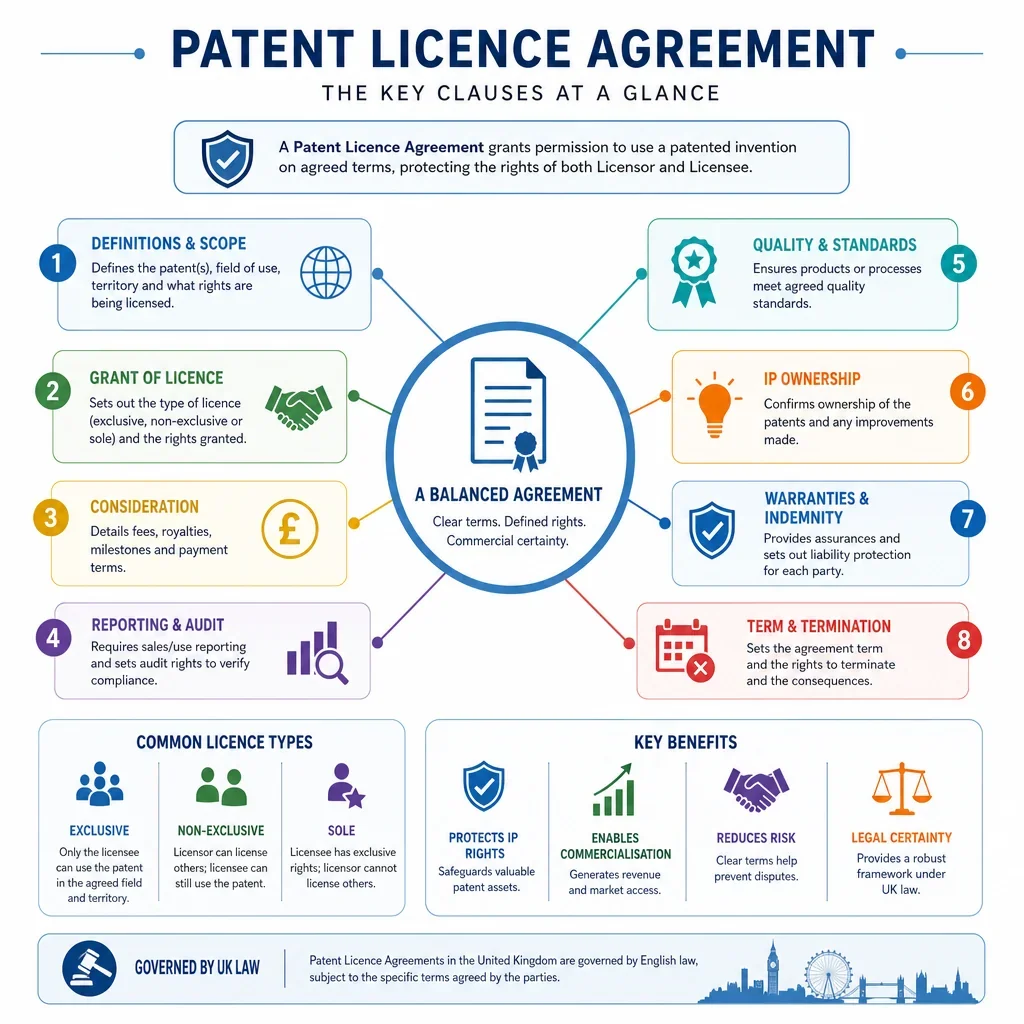
The core grant, territory, field, exclusivity and duration clauses usually drive the legal and commercial value of the licence. A UK patent licence should clearly identify the licensed patents, whether the licence is exclusive, sole or non-exclusive, the permitted territory, the permitted field of use and whether sub-licensing is allowed.
Why Should UK Patent Licences Address Registration?
Under the Patents Act 1977, section 33, certain patent transactions including licences may be registered. Registration can affect priority against later interests and can be relevant to enforcement and recoverability of costs, so parties should decide who registers, who pays fees and what confidentiality redactions are needed.
Which Payment Clauses Need The Most Detail?
Royalty clauses should define the royalty base, deductions, currency, VAT treatment, reporting periods, audit rights, late payment interest and what happens after expiry, invalidity or revocation of licensed patents. Ambiguity in these clauses is a common source of disputes because patent value is often tied to product sales, milestones or minimum annual payments.
How Should A Patent Licence Deal With Enforcement And Infringement?
A practical UK agreement should allocate responsibility for monitoring infringement, deciding whether to sue, controlling proceedings, sharing recoveries and cooperating with evidence. Exclusive licensees may have statutory rights to bring infringement proceedings in some circumstances under the Patents Act 1977, section 67, so enforcement drafting should match the intended commercial control.
What Risk Clauses Are Especially Important For Patent Licensing?
Patent licences should not assume that a patent is valid, enforceable or freedom-to-operate unless the contract says so. Warranties, indemnities, liability caps, product liability allocation, regulatory compliance, export controls and competition law limits are often heavily negotiated, particularly where the licensee will manufacture or sell patented products in regulated markets.
FAQs
You Might Also Be Interested In