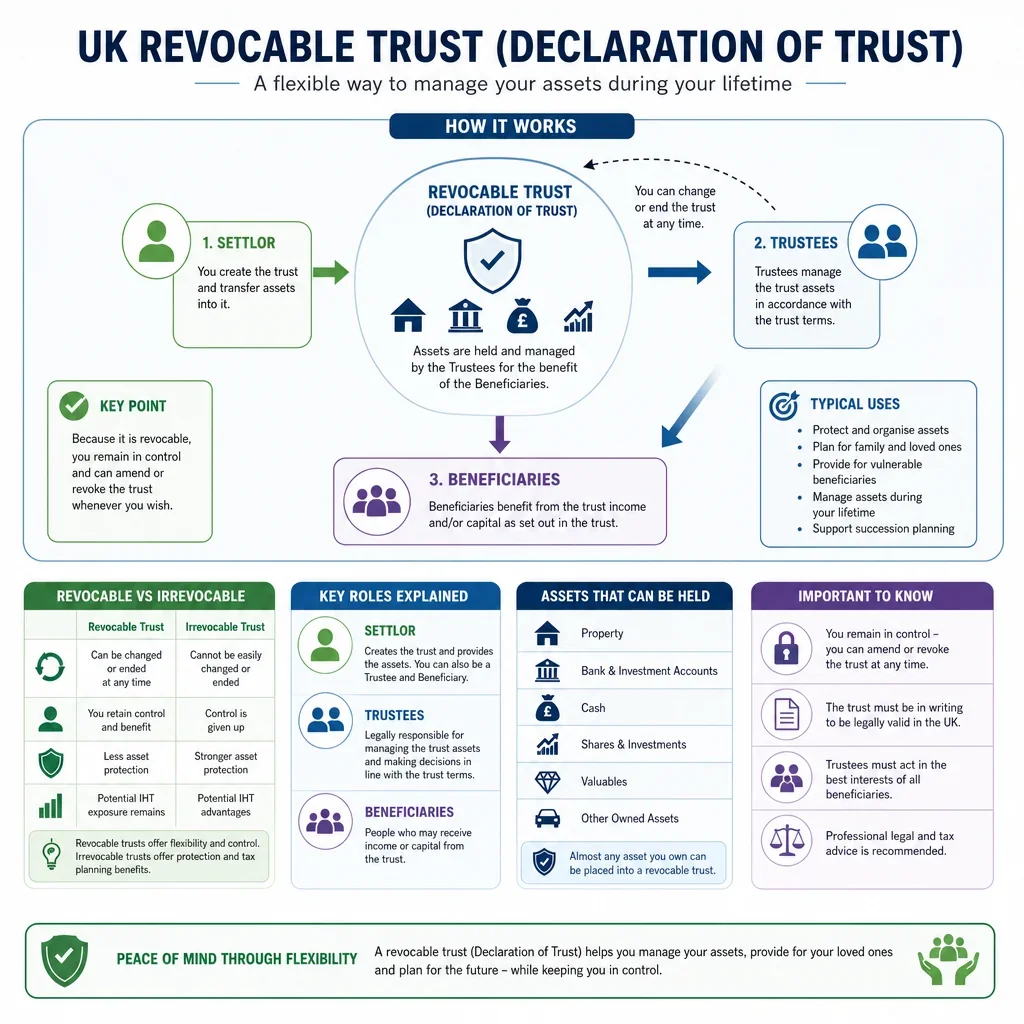
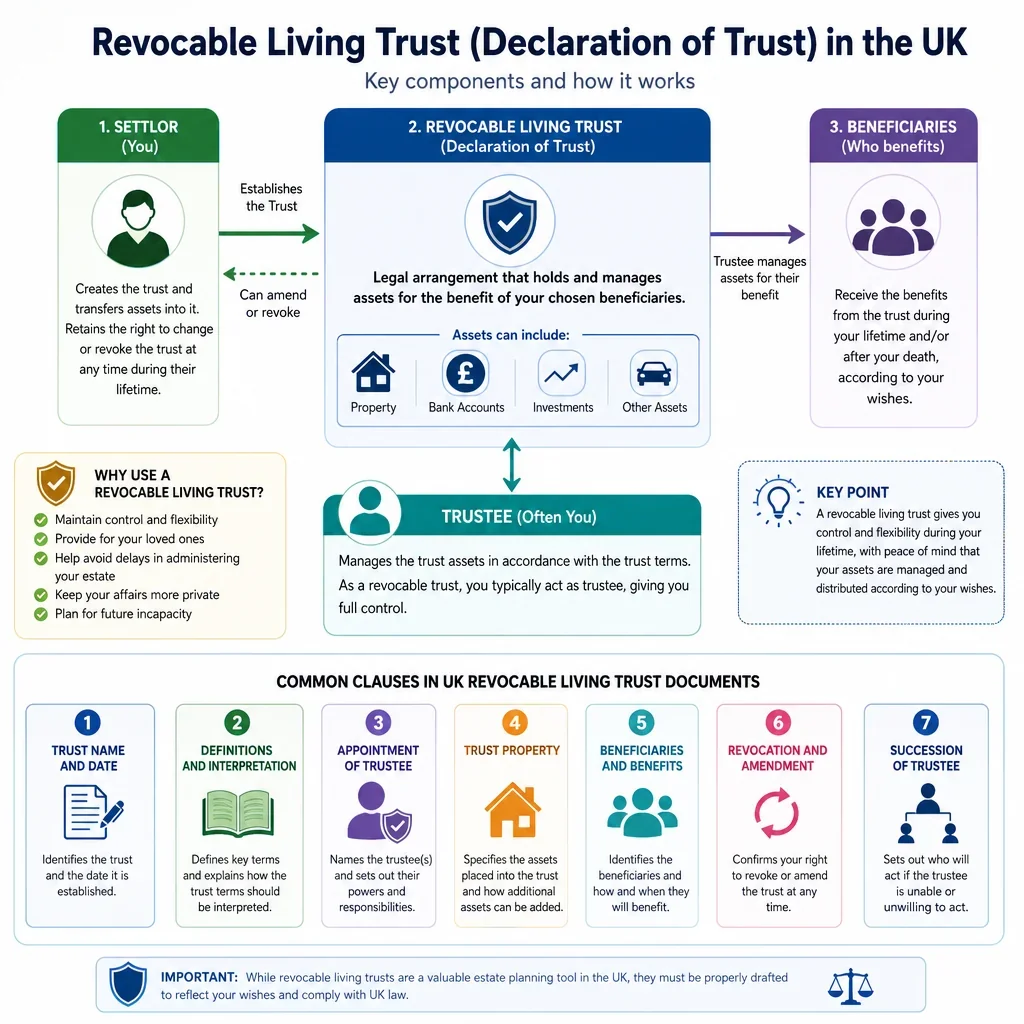
Parties And Roles In UK Declaration Of Trust Documents
Party role | Main function | Inclusion requirement | Signing involvement | Information commonly collected |
|---|---|---|---|---|
Creator of trust | ||||
Settlor | Creates the trust and transfers or declares property to be held on trust. | Usually required | Usually signs | Full name, address, capacity, property settled, date of declaration. |
Declarant | Declares that property is held on specified trusts. | Usually required | Usually signs | Full name, address, title held, property, beneficial shares declared. |
Manager of trust property | ||||
Trustee | Holds and administers trust property for the beneficiaries. | Usually required | Usually signs | Full name, address, powers, appointment date, replacement provisions. |
Co-Trustee | Shares trustee duties and decisions with other trustees. | Sometimes required | Usually signs | Full name, address, decision rules, signing authority, retirement terms. |
Initial Trustee | Acts as the first trustee from the date the trust takes effect. | Usually required | Usually signs | Full name, address, start date, acceptance of appointment. |
Replacement Trustee | Takes over trustee functions when an existing trustee leaves office. | Optional | May sign depending on drafting | Full name, address, trigger events, appointment method, consent needed. |
Retiring Trustee | Leaves office and may transfer trust property to continuing trustees. | Sometimes required | Usually signs | Full name, address, retirement date, release terms, property transfer details. |
Continuing Trustee | Continues administering the trust after another trustee retires or is replaced. | Sometimes required | Usually signs | Full name, address, continuing powers, confirmation of trust property held. |
Sole Trustee | Acts alone as trustee, subject to limits for land and capital money. | Sometimes required | Usually signs | Full name, address, authority, limitations, successor provisions. |
Independent Trustee | Provides independent administration where conflicts or vulnerability may arise. | Optional | Usually signs | Full name, address, independence basis, professional status, fees. |
Professional Trustee | Administers the trust professionally, often for remuneration. | Optional | Usually signs | Name, firm, address, regulatory status, fee authority, contact details. |
Corporate Trustee | Company or trust corporation acts as trustee through authorised signatories. | Optional | Usually signs | Company name, number, registered office, signatories, execution block. |
Custodian Trustee | Holds legal title while managing trustees handle administration. | Not usually required | May sign depending on drafting | Name, address, property held, division of duties, consent rights. |
Managing Trustee | Handles day-to-day administration and investment decisions. | Optional | May sign depending on drafting | Full name, address, delegated powers, limits, reporting duties. |
Legal Owner | Holds registered legal title to land, usually as trustee for beneficiaries. | Usually required | Usually signs | Full name, address, title number, ownership form, mortgage details. |
Registered Proprietor | Appears on the Land Register as owner of the legal estate. | Sometimes required | Usually signs | Full name, service address, title number, restrictions, form of ownership. |
Creator of trust | ||||
Transferor | Transfers property to trustees or co-owners to be held on trust. | Sometimes required | Usually signs | Full name, address, property transferred, consideration, title number. |
Manager of trust property | ||||
Transferee | Receives legal title and may hold it as trustee. | Sometimes required | Usually signs | Full name, address, trust capacity, joint ownership declaration, title details. |
Person with benefit | ||||
Beneficiary | Receives income, capital, occupation rights, or other benefit under the trust. | Usually required | May sign depending on drafting | Full name, address, relationship, share, entitlement type, conditions. |
Named Beneficiary | Has a specifically identified interest in the trust property. | Usually required | May sign depending on drafting | Full name, address, percentage share, contribution, payment instructions. |
Fixed Beneficiary | Receives a defined share or entitlement that trustees cannot vary. | Sometimes required | May sign depending on drafting | Full name, address, fixed percentage, entitlement date, restrictions. |
Discretionary Beneficiary | May benefit if trustees exercise discretion in their favour. | Sometimes required | Usually does not sign | Full name or class, relationship, eligibility conditions, exclusion terms. |
Income Beneficiary | Receives rent, interest, dividends, or other trust income. | Sometimes required | May sign depending on drafting | Full name, address, income share, payment frequency, tax details. |
Capital Beneficiary | Receives capital distributions or sale proceeds. | Sometimes required | May sign depending on drafting | Full name, address, capital share, vesting date, distribution conditions. |
Life Tenant | Enjoys income or occupation rights during life or a specified period. | Sometimes required | May sign depending on drafting | Full name, address, occupation rights, income rights, termination event. |
Remainderman | Receives capital after a life interest or prior entitlement ends. | Sometimes required | Usually does not sign | Full name, address, relationship, contingent share, vesting conditions. |
Minor Beneficiary | Beneficiary under 18 whose interest is managed by trustees. | Sometimes required | Usually does not sign | Full name, date of birth, guardian, share, age for entitlement. |
Adult Beneficiary | Adult person entitled to trust benefit and able to consent personally. | Sometimes required | May sign depending on drafting | Full name, address, share, consent, identification details. |
Class Beneficiary | Falls within a described class such as children or grandchildren. | Sometimes required | Usually does not sign | Class description, eligibility date, exclusions, identification method. |
Future Beneficiary | May become entitled if born, adopted, or qualifying later. | Optional | Usually does not sign | Eligibility class, qualifying event, closing date, default provisions. |
Excluded Person | Person expressly prevented from receiving trust benefits. | Optional | Usually does not sign | Full name or class, relationship, scope and duration of exclusion. |
Beneficial Owner | Owns the economic interest in property despite legal title being held by trustees. | Usually required | May sign depending on drafting | Full name, address, beneficial share, contribution, occupation rights. |
Joint Tenant | Co-owns property where the survivor usually takes the whole beneficial interest. | Sometimes required | May sign depending on drafting | Full names, addresses, confirmation of joint tenancy, severance intentions. |
Tenant In Common | Co-owns a defined share that can pass under a will or intestacy. | Sometimes required | May sign depending on drafting | Full names, addresses, percentage shares, contributions, restriction required. |
Financial Contributor | Provides funds that may justify or record a beneficial interest. | Sometimes required | May sign depending on drafting | Full name, amount paid, source, purpose, agreed share or repayment. |
Occupier Beneficiary | Has a right or permission to occupy trust land. | Sometimes required | May sign depending on drafting | Full name, address, occupation terms, duration, expenses, termination events. |
Optional oversight role | ||||
Appointor | Holds power to appoint trustees or exercise specified appointment powers. | Optional | May sign depending on drafting | Full name, address, powers, consent rights, successor appointor. |
Protector | Oversees trustees and may hold consent, veto, or removal powers. | Optional | May sign depending on drafting | Full name, address, powers, consent matters, removal and successor rules. |
Enforcer | Ensures trustees comply with specified purposes or obligations. | Not usually required | May sign depending on drafting | Full name, address, enforcement powers, reporting rights, replacement rules. |
Consent Holder | Must approve specified trustee actions before they take effect. | Optional | May sign depending on drafting | Full name, address, decisions requiring consent, response deadlines. |
Power Holder | Holds a specific power such as amendment, appointment, or removal. | Optional | May sign depending on drafting | Full name, address, exact power, limits, exercise method. |
Evidence or execution role | ||||
Witness | Attests a party's signature, especially where the document is a deed. | Usually required | Witnesses signature only | Full name, address, occupation, signature, independence, date witnessed. |
Independent Witness | Witnesses signature and is not a party or beneficiary. | Usually required | Witnesses signature only | Full name, address, occupation, relationship, confirmation of independence. |
Attesting Witness | Observes signing and signs to attest valid execution. | Usually required | Witnesses signature only | Full name, address, occupation, signature, date, party witnessed. |
Deed Witness | Witnesses execution where the declaration is made as a deed. | Usually required | Witnesses signature only | Full name, address, occupation, signature, physical presence details. |
Authorised Signatory | Signs on behalf of a company, trustee company, or corporate owner. | Sometimes required | Usually signs | Full name, role, authority, company details, signature block. |
Director | Executes the document for a company where company execution rules apply. | Sometimes required | Usually signs | Full name, office held, company number, authority, co-signatory. |
Company Secretary | May co-sign for company execution with a director. | Sometimes required | Usually signs | Full name, company office, company details, authority to sign. |
Attorney | Signs or acts for a party under a valid power of attorney. | Sometimes required | Usually signs | Full name, address, donor name, power type, authority scope. |
Creator of trust | ||||
Donor Of Power Of Attorney | Party whose attorney signs or acts on their behalf. | Sometimes required | Usually does not sign | Full name, address, attorney details, power date, authority limitations. |
Evidence or execution role | ||||
Litigation Friend | Represents a child or protected party in related court proceedings. | Not usually required | May sign depending on drafting | Full name, address, represented person, relationship, court role. |
Parent Or Guardian | Provides details or receives notices for a minor beneficiary. | Sometimes required | May sign depending on drafting | Full name, address, child represented, relationship, contact details. |
Optional oversight role | ||||
Mortgage Lender | May need to consent if trust arrangements affect charged property. | Sometimes required | Usually does not sign | Lender name, account number, charge date, consent requirements, restrictions. |
Manager of trust property | ||||
Nominee | Holds legal title or assets for the beneficial owner. | Sometimes required | Usually signs | Full name, address, asset held, beneficial owner, authority limits. |
Bare Trustee | Holds property for beneficiaries absolutely entitled to capital and income. | Sometimes required | Usually signs | Full name, address, beneficiary, asset, transfer obligations. |
Lead Trustee | Acts as main contact for HMRC trust registration and tax administration. | Sometimes required | May sign depending on drafting | Full name, address, National Insurance number, email, phone, UTR. |
Optional oversight role | ||||
Person Exercising Effective Control | Exercises control over trustee decisions or trust administration. | Sometimes required | May sign depending on drafting | Full name, address, control powers, start date, TRS information. |
Evidence or execution role | ||||
Land Registry Applicant | Applies to register a transfer, restriction, or title change. | Sometimes required | May sign depending on drafting | Full name, address, application type, title number, conveyancer details. |
Conveyancer | Prepares or submits property documents and registration applications. | Optional | Usually does not sign | Firm name, address, SRA or CLC number, contact, client reference. |
Optional oversight role | ||||
Notice Recipient | Receives notices about trustee decisions, sales, accounts, or distributions. | Optional | Usually does not sign | Full name, postal address, email, notice events, delivery method. |
Evidence or execution role | ||||
Law Of Property Act 1925 Section 53 Signatory | Person who signs writing evidencing a declaration or disposition of equitable interests. | Usually required | Usually signs | Full name, signature, property, equitable interest, date signed. |
Law Of Property Miscellaneous Provisions Act 1989 Deed Signatory | Executes a deed with required formalities including signature and attestation. | Sometimes required | Usually signs | Full name, signature, witness details, delivery wording, execution date. |
Manager of trust property | ||||
Trustee Act 2000 Trustee | Exercises trustee powers subject to statutory duties of care and investment rules. | Usually required | Usually signs | Full name, address, trustee powers, investment authority, delegation powers. |
Trusts Of Land And Appointment Of Trustees Act 1996 Trustee | Manages trust land and exercises statutory powers relating to land. | Sometimes required | Usually signs | Full name, address, land details, occupation rights, sale powers. |
Evidence or execution role | ||||
Companies Act 2006 Company Signatory | Signs for a company using statutory company execution methods. | Sometimes required | Usually signs | Director name, secretary name, company number, registered office, authority. |
Who Must Be Named In A UK Declaration Of Trust?
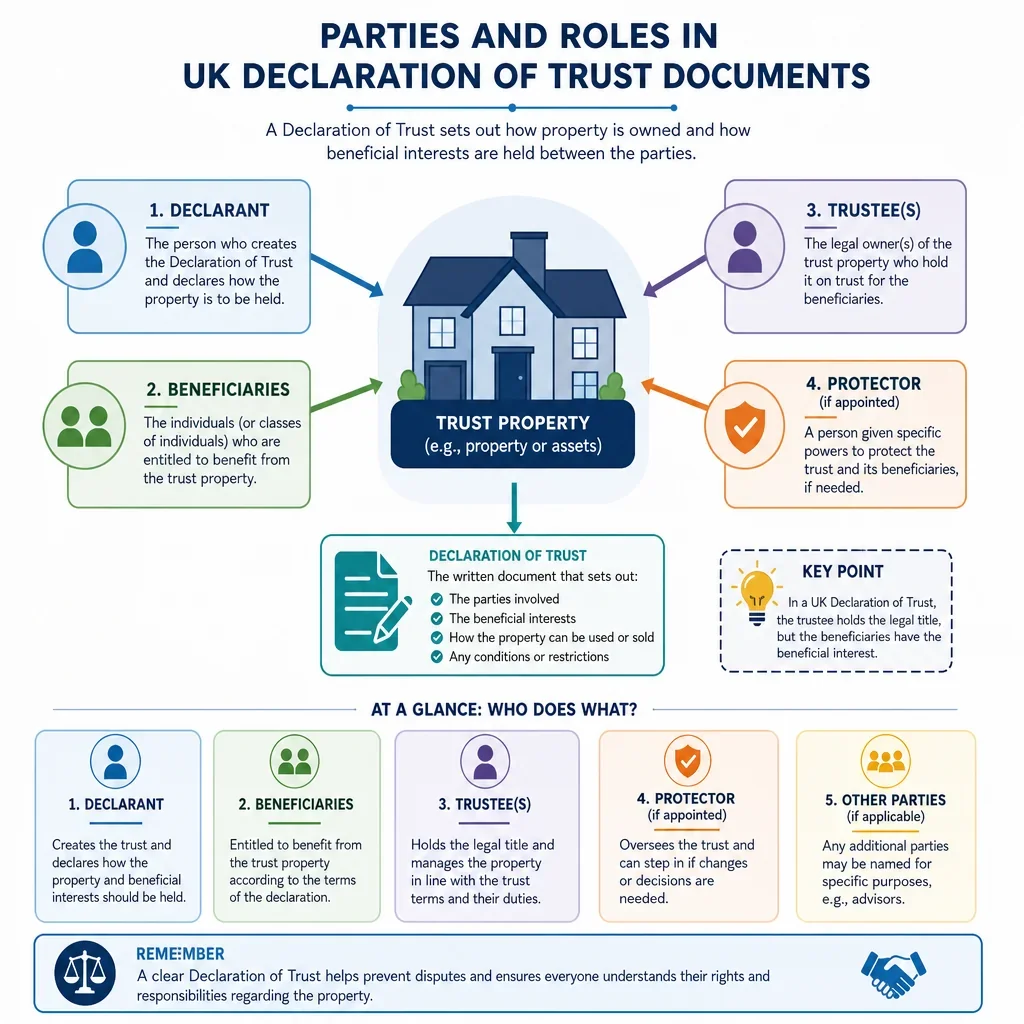
A declaration of trust should normally identify the settlor or declarant, the trustees or legal owners, and the beneficiaries. In property co-ownership cases, the legal owners on the Land Registry title are usually the trustees, while the beneficial owners are the people entitled to the equity or income. If the trust changes the beneficial ownership of land, it should generally be made or evidenced in signed writing under section 53 of the Law of Property Act 1925.
Do Trustees And Beneficiaries Need To Sign?
Trustees and legal owners usually sign because they are declaring or acknowledging how they hold the property. Beneficiaries may also sign where the drafting records consent, contribution, tax allocations, or a binding agreement between co-owners, but they do not always need to sign. If the document is executed as a deed, signatures must be witnessed in accordance with the rules for deeds, including section 1 of the Law of Property (Miscellaneous Provisions) Act 1989.
What Extra Roles Are Sometimes Useful?
Optional roles such as a protector, independent trustee, replacement trustee, or appointor can help where the trust is more complex, long-term, involves minors or vulnerable beneficiaries, or needs independent oversight. These roles should be clearly defined so that appointment, removal, consent, and decision-making powers are not ambiguous.
Which Details Should Be Collected Before Drafting?
- For trustees and legal owners: full names, addresses, title details, decision-making powers, and whether they hold as joint tenants or tenants in common.
- For beneficiaries: full names, addresses, relationship to the settlor, fixed percentages or discretionary status, and any conditions on entitlement.
- For execution: witness name, address, occupation, independence, and confirmation that the witness is present when the relevant party signs.
- For property trusts: Land Registry title number, property address, mortgage details, contributions, restrictions, and intended beneficial shares.
FAQs
You Might Also Be Interested In