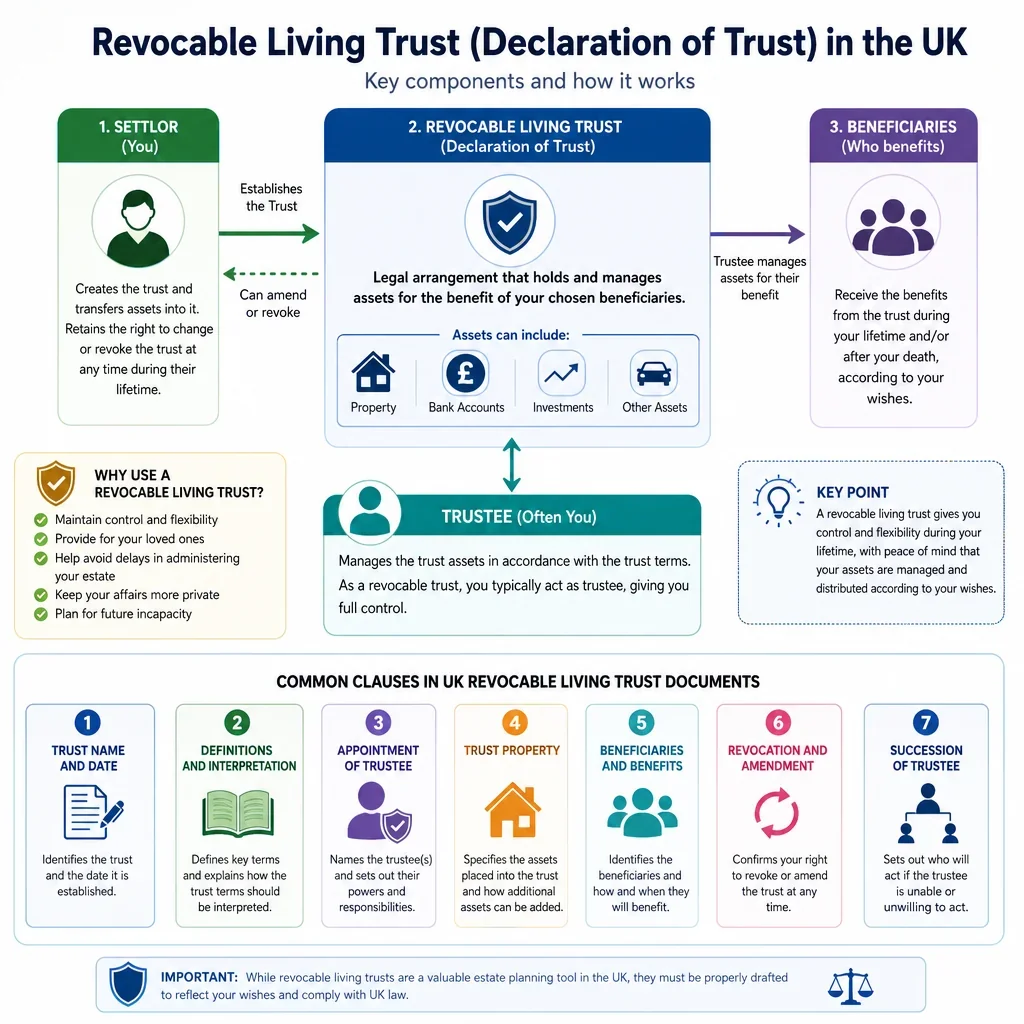
Common Clauses In UK Revocable Living Trust Documents
Clause name | Clause purpose | Usage frequency | When used | Inputs required |
|---|---|---|---|---|
Core trust creation | ||||
Declaration Of Trust | States that trustees hold the property on trust for the beneficiaries. | Essential | All declarations of trust. | Trustees, beneficiaries, property description, date. |
Parties And Capacity | Identifies settlor, trustee, beneficiary, and their legal capacity. | Essential | All documents with named individuals or companies. | Full names, addresses, roles, company numbers if any. |
Trust Property Description | Defines the asset covered by the declaration. | Essential | All trusts, especially trusts of land. | Address, title number, asset details, exclusions. |
Execution and evidence | ||||
Registered Title Details | Links the trust to the correct registered land title. | Common | Registered freehold or leasehold property. | Title number, tenure, property address, registered proprietors. |
Unregistered Land Identification | Identifies unregistered property using deed and plan evidence. | Situational | Property not yet registered at HM Land Registry. | Conveyance details, plan, deed references, boundaries. |
Ownership and shares | ||||
Fixed Beneficial Shares | States each beneficiary's percentage or fraction. | Essential | Co-owners want clear unequal or equal shares. | Beneficiary names and percentages or fractions. |
Contribution-Based Shares | Links beneficial shares to stated purchase contributions. | Common | Buyers contributed different deposits or costs. | Deposit amounts, purchase price, fees, agreed calculation. |
Floating Beneficial Shares | Allows shares to change as contributions change. | Situational | Parties will contribute unequally over time. | Contribution formula, review dates, eligible payments. |
Tenants In Common Statement | Confirms beneficiaries hold distinct shares, not survivorship interests. | Common | Co-owners want shares to pass under will or estate. | Beneficiaries, share percentages, severance status. |
Survivorship Intention | Records whether survivorship is intended on death. | Situational | Joint owners want clarity on death consequences. | Survivorship preference, beneficiary names, shares. |
Deposit Protection | Repays stated deposits before remaining proceeds are shared. | Common | One party paid a larger initial deposit. | Deposit amounts, repayment priority, balance split. |
Mortgage Contributions | Records who must pay mortgage instalments and in what shares. | Common | Trust property is mortgaged. | Mortgage lender, account, payment shares, due dates. |
Sale or transfer | ||||
Mortgage Redemption On Sale | Requires mortgage repayment before net proceeds are distributed. | Common | Property may be sold with a secured loan outstanding. | Loan details, redemption priority, sale cost deductions. |
Ownership and shares | ||||
Improvements And Renovations | Records how improvement costs affect shares or reimbursements. | Situational | Parties fund renovations unequally. | Works, costs, consent rules, reimbursement formula. |
Administration | ||||
Outgoings And Running Costs | Allocates bills, insurance, service charges, and maintenance costs. | Common | Property has ongoing shared expenses. | Cost categories, payment shares, reimbursement process. |
Occupation Rights | States who may live in or use the property. | Common | One or more beneficiaries will occupy the property. | Occupiers, conditions, exclusivity, termination events. |
Occupation Rent | Compensates non-occupying beneficiaries where agreed. | Situational | One beneficiary occupies to the exclusion of others. | Rent basis, valuation method, payment dates, set-offs. |
Rental Income Distribution | Allocates rent after expenses between beneficiaries. | Situational | Trust property is let to tenants. | Rent split, deductible expenses, agent fees, tax records. |
Trustee Management Powers | Gives trustees power to manage, insure, repair, and deal with assets. | Essential | All trusts needing active administration. | Permitted powers, limits, consent requirements. |
Trustee Duty Of Care | Reminds trustees to act with reasonable care and skill. | Common | Trustees have investment, management, or delegation powers. | Trustee roles, professional status, modified duties if any. |
Investment Powers | Allows trustees to invest trust funds where relevant. | Situational | Trust may hold cash or investment assets. | Permitted investments, risk limits, advice requirements. |
Delegation To Agents | Allows trustees to appoint agents, solicitors, or managers. | Common | Trustees may need professional help managing property. | Permitted agents, fee approval, supervision duties. |
Appointment And Retirement Of Trustees | Sets how trustees can be replaced or retire. | Common | Trust may continue after a trustee leaves or dies. | Appointor, replacement process, minimum trustees. |
Minimum Trustee Number | Supports valid receipt and overreaching where land is sold. | Situational | Trust of land may be sold by trustees. | Current trustees, replacement trustee arrangements. |
Trustee Decisions And Consent | States whether decisions require unanimity, majority, or consent. | Common | There is more than one trustee or beneficiary. | Decision types, voting threshold, reserved matters. |
Beneficiary Consent For Reserved Matters | Requires beneficiary approval for sale, mortgage, lease, or transfer. | Common | Beneficiaries want control over major property decisions. | Reserved matters, consent form, response period. |
Accounts And Records | Requires trustees to keep records of payments and distributions. | Common | Trust has income, expenses, loans, or unequal contributions. | Record types, reporting frequency, access rights. |
Tax Reporting Responsibility | Allocates responsibility for trust tax filings and information. | Situational | Trust generates income, gains, or registration obligations. | Responsible trustee, adviser, tax references, deadlines. |
Trust Registration Service Compliance | Records who checks and completes any TRS registration. | Situational | Trust may need HMRC trust registration. | Lead trustee, trust details, beneficiary details, deadlines. |
Insurance | Requires property insurance and allocates premium costs. | Common | Trust property is a building or valuable asset. | Insured risks, policyholder, premium shares, claim proceeds. |
Repairs And Maintenance | Allocates maintenance duties and cost sharing. | Common | Trust property needs upkeep or shared occupation. | Repair categories, approval threshold, payment shares. |
Emergency Expenditure | Allows urgent spending to protect the trust property. | Optional | Property may need urgent repairs without prior consent. | Spending cap, notice period, reimbursement method. |
Trustee Indemnity | Protects trustees from proper expenses and liabilities. | Common | Trustees may incur costs acting for the trust. | Covered liabilities, exclusions, payment source. |
Trustee Remuneration | Allows payment to professional or authorised trustees. | Situational | A solicitor, accountant, or professional trustee is appointed. | Fee basis, approval process, expense policy. |
No Lay Trustee Remuneration | Confirms unpaid trustees may recover expenses only. | Optional | Family or co-owner trustees should not be paid fees. | Expense categories, approval process, reimbursement timing. |
Variation or revocation | ||||
Revocation By Settlor | Allows the settlor to revoke the trust if permitted. | Essential | Trust is intended to be revocable. | Revocation power holder, notice form, effective date. |
Variation By Agreement | Sets how the trust terms may be amended. | Common | Parties may need to change shares or rules later. | Consent parties, writing requirement, execution method. |
Execution and evidence | ||||
Land Disposition Formalities | Flags written and signed formalities for land contracts. | Common | Trust terms affect sale or transfer of land. | Written terms, signatures, incorporated documents. |
Evidence Of Trust Of Land | Records signed evidence of a trust concerning land. | Essential | Trust concerns UK land or beneficial interests in land. | Signed declaration, property details, beneficial interests. |
Execution As A Deed | Provides deed wording and execution formalities where needed. | Common | Document is intended to be executed as a deed. | Execution blocks, witnesses, delivery wording, dates. |
Witness Attestation | Records independent witnessing of signatures. | Common | Individuals execute the document as a deed. | Witness names, addresses, occupations, signatures. |
Company Execution | Sets company signing method for corporate trustees or beneficiaries. | Situational | A UK company is a party to the trust deed. | Company name, number, signatories, authority evidence. |
Electronic Signature | Allows electronic signing where legally acceptable. | Optional | Parties intend to sign electronically. | Platform, authentication, witness process, signing date. |
Counterparts | Allows parties to sign separate copies of the same document. | Optional | Parties sign in different locations or at different times. | Counterpart wording, delivery method, completion date. |
Land Registry Restriction | Records whether a restriction should protect trust interests. | Situational | Beneficial interests in registered land need title protection. | Restriction type, title number, applicant, consent evidence. |
Form A Restriction | Protects tenants in common by restricting sole disposition. | Common | Co-owners hold beneficial shares as tenants in common. | Title number, proprietors, trust evidence, application form. |
Sale or transfer | ||||
Power Of Sale | Authorises trustees to sell the trust property. | Common | Trust property may need to be sold. | Sale triggers, consent rules, marketing method. |
Sale Trigger Events | Lists events that require or permit sale. | Common | Parties want certainty on when sale can happen. | Events, notice periods, exceptions, consent rules. |
Sale Procedure | Sets valuation, agent selection, listing, and acceptance rules. | Common | Co-owners may disagree about sale mechanics. | Valuer, agent, asking price, offer acceptance threshold. |
Net Sale Proceeds Distribution | States how sale proceeds are paid after deductions. | Essential | Trust asset may be sold or refinanced. | Deduction order, shares, bank details, reserves. |
Beneficiary Buy-Out Right | Allows one beneficiary to buy another's share. | Situational | Co-owners may separate or one wants to keep the property. | Valuation method, payment deadline, transfer costs. |
Right Of First Refusal | Gives existing beneficiaries first chance to buy a share. | Optional | Parties want to prevent unwanted third-party co-owners. | Offer notice, price, acceptance period, transfer conditions. |
Transfer Restrictions | Limits assignment or transfer of beneficial interests. | Situational | Beneficiaries should not freely sell or assign shares. | Restricted transfers, consent parties, permitted transferees. |
Assignment Of Beneficial Interest | Requires proper written transfer of a beneficial interest. | Situational | A beneficiary may transfer all or part of a share. | Transferor, transferee, share, consideration, signatures. |
Lender Consent | Requires lender consent before transfer, lease, or further charge. | Situational | Trust property is subject to a mortgage. | Lender, mortgage terms, consent process, prohibited acts. |
Refinancing | Sets rules for remortgaging or changing secured borrowing. | Situational | Parties may refinance the property. | Consent threshold, loan limits, payment responsibility. |
Letting And Licensing | Controls granting tenancies, licences, or short-term lets. | Situational | Property may be rented out or occupied by third parties. | Permitted lettings, consent, income split, management agent. |
Ownership and shares | ||||
Death Of Beneficiary | States what happens to a deceased beneficiary's share. | Common | Beneficial shares are held as tenants in common. | Share destination, estate representative, notice requirements. |
Dispute handling | ||||
Bankruptcy Or Insolvency | Addresses consequences if a beneficiary becomes insolvent. | Situational | There is credit risk or business-owner involvement. | Trigger events, notice, sale or buy-out mechanism. |
Relationship Breakdown | Sets practical steps if cohabiting parties separate. | Situational | Unmarried partners or family members buy together. | Occupation, buy-out, sale timetable, cost sharing. |
Deadlock Resolution | Provides a process when trustees or beneficiaries cannot agree. | Common | Multiple decision-makers have equal control. | Deadlock definition, escalation, mediator, final mechanism. |
Mediation Before Proceedings | Requires parties to attempt mediation before court action. | Optional | Parties want a structured non-court dispute process. | Mediator selection, timing, cost sharing, exceptions. |
Expert Determination | Lets an expert decide valuation or technical disputes. | Situational | Disputes may concern value, repairs, or accounting. | Expert type, appointment body, binding status, costs. |
Valuation Method | Sets how property or shares are valued. | Common | Buy-out, sale, transfer, or dispute may require valuation. | Valuer qualifications, valuation date, assumptions, costs. |
Court Application Under TOLATA | Acknowledges right to seek court directions or sale order. | Situational | Disputes over sale, occupation, or exercise of trustee functions. | Parties, disputed issue, pre-action steps, court jurisdiction. |
Administration | ||||
Consultation With Beneficiaries | Requires trustees to consult beneficiaries where appropriate. | Common | Trustees exercise functions over land. | Beneficiaries to consult, notice method, response period. |
Dispute handling | ||||
Governing Law | States which UK jurisdiction's law governs the trust. | Essential | All UK trust documents, especially cross-border parties. | England and Wales, Scotland, or Northern Ireland. |
Jurisdiction | States which courts may hear disputes. | Common | Parties or property may be in different places. | Court jurisdiction, exclusive or non-exclusive wording. |
Administration | ||||
Notices | Sets how formal notices must be given. | Common | Revocation, sale, consent, or dispute notices may be needed. | Addresses, email use, deemed delivery, update process. |
Confidentiality | Limits disclosure of trust terms and financial information. | Optional | Parties want privacy around ownership or family finances. | Confidential information, permitted disclosures, duration. |
Personal Data Handling | Allows trustees to process personal data for trust administration. | Optional | Trustees hold identity, tax, or contact details. | Data types, purposes, disclosure recipients, retention period. |
Dispute handling | ||||
Severability | Keeps remaining terms effective if one term is invalid. | Optional | Document contains detailed or bespoke provisions. | Fallback wording, modification permission. |
Execution and evidence | ||||
Entire Agreement | Confirms the document records the complete trust arrangement. | Optional | Parties want to avoid reliance on informal side discussions. | Excluded documents, prior agreements, reliance carve-outs. |
Schedules And Supporting Documents | Incorporates plans, title documents, accounts, or contribution tables. | Common | The trust needs detailed property or contribution evidence. | Schedule list, document references, signed copies. |
Independent Advice Acknowledgment | Records opportunity to take legal and tax advice. | Optional | Unequal shares, family gifts, or vulnerable parties are involved. | Advice taken, adviser details, waiver wording. |
Voluntary Execution | Records that parties sign freely and understand the document. | Optional | There is risk of later challenge by a party or estate. | Signatory confirmations, language needs, advice details. |
Mental Capacity Confirmation | Records that parties have capacity to enter the arrangement. | Optional | Elderly, vulnerable, or attorney-assisted parties are involved. | Capacity confirmation, assessor if any, execution circumstances. |
Attorney Execution | Allows signing by attorney where valid authority exists. | Situational | A party signs through an attorney or deputy. | Power of attorney, attorney details, authority scope. |
Administration | ||||
Minor Beneficiary Provisions | Sets how shares for beneficiaries under 18 are held or applied. | Situational | A child is or may become a beneficiary. | Child details, guardian, payment rules, age conditions. |
Maintenance And Advancement | Allows funds to be applied for a beneficiary's benefit. | Situational | Trust holds money or minor beneficiaries' shares. | Eligible beneficiaries, purposes, limits, approval process. |
Ownership and shares | ||||
Further Contributions | Records how later payments affect reimbursement or shares. | Common | Beneficiaries may make unequal future payments. | Eligible payments, evidence required, adjustment formula. |
Inter-Party Loans | Distinguishes loans from ownership contributions. | Situational | One party lends money to another for the purchase. | Loan amount, interest, repayment, security, share effect. |
Third-Party Gift Contributions | Records whether third-party funds are gifts, loans, or contributions. | Situational | Parents or relatives provide purchase funds. | Donor, recipient, amount, gift or loan status. |
No Beneficial Interest For Non-Contributors | Confirms a named person has no beneficial share. | Situational | Someone is on title or mortgage but not intended to benefit. | Person name, role, reason, acknowledgement. |
Core trust creation | ||||
Bare Trust Statement | Confirms beneficiaries are absolutely entitled to trust property. | Situational | Trustees hold property for adult beneficiaries absolutely. | Beneficiaries, entitlement shares, trustee role. |
Nominee Trustee Statement | States legal owner holds as nominee for beneficial owner. | Situational | Legal title is in one name for another's benefit. | Nominee, beneficial owner, asset, permitted actions. |
Background Recitals | Explains context, purchase history, and parties' intentions. | Common | Document records contributions or corrects informal arrangements. | Purchase date, price, contributions, relationship, intentions. |
Commencement Date | States when the trust takes effect. | Essential | All declarations, especially purchase-completion documents. | Effective date, completion date, signing date if different. |
Trust Duration | States how long the trust may continue. | Optional | Trust may continue for a long period or across generations. | Trust period, termination events, governing jurisdiction. |
Variation or revocation | ||||
Termination Of Trust | Sets when the trust ends and assets are distributed. | Common | Trust ends on sale, agreement, revocation, or final distribution. | Termination triggers, distribution rules, final accounts. |
Adult Beneficiary Termination Right | Acknowledges adult beneficiaries may require transfer where entitled. | Situational | All beneficiaries are adult, capacitated, and absolutely entitled. | Beneficiary ages, capacity, entitlement, transfer instructions. |
Written Amendment Evidence | Requires changes to be written, dated, and signed. | Common | Parties may later alter shares or administration terms. | Amending parties, amendment text, signatures, witnesses. |
Correction Of Errors | Provides a process to correct clerical mistakes. | Optional | Document contains schedules, figures, or complex calculations. | Error type, correction authority, notice, evidence. |
Execution and evidence | ||||
Document Custody | States who keeps the original and provides certified copies. | Common | Original deed may be needed for sale, dispute, or registration. | Custodian, copy rights, storage location, replacement process. |
Identity Verification Evidence | Supports identity checks for land transactions or registration. | Situational | Land Registry applications or transfers may follow. | ID documents, verification form, verifier details. |
Sale or transfer | ||||
No Unilateral Dealings | Prevents one party dealing with the property without required consent. | Common | Only one legal owner or trustee may be able to act externally. | Restricted acts, consent parties, exceptions, remedies. |
Ownership and shares | ||||
Set-Off And Reimbursement | Allows unpaid contributions or expenses to be offset on sale. | Common | Parties may pay more than their agreed share. | Eligible debts, evidence, interest, deduction order. |
Interest On Unpaid Contributions | Charges interest where a party fails to pay agreed sums. | Optional | Late payments could unfairly burden another beneficiary. | Rate, grace period, compounding, recovery method. |
Administration | ||||
Trust Bank Account | Requires separate banking for trust receipts and expenses. | Situational | Trust receives rent, sale proceeds, or shared contributions. | Bank, signatories, approval limits, statement access. |
Conflicts Of Interest | Regulates trustee decisions where personal interests conflict. | Common | Trustees are also beneficiaries or connected parties. | Conflict types, disclosure, voting limits, approvals. |
Sale or transfer | ||||
Self-Dealing Consent | Permits trustee purchase or transaction only with safeguards. | Situational | Trustee may buy a beneficiary's share or trust property. | Consent, valuation, disclosure, independent advice. |
Administration | ||||
Leasehold Compliance | Requires compliance with lease covenants and landlord consents. | Situational | Trust property is leasehold. | Lease terms, ground rent, service charge, consent rules. |
Service Charge And Ground Rent | Allocates leasehold recurring charges between beneficiaries. | Situational | Property is a leasehold flat or leasehold house. | Charge types, payment shares, reserve fund, disputes. |
Planning And Building Works Consent | Controls alterations needing planning, building, or landlord approval. | Situational | Beneficiaries may alter or extend the property. | Works, approvals, cost sharing, ownership impact. |
Execution and evidence | ||||
Ownership Warranties | Confirms parties have not created conflicting interests. | Optional | Existing property or prior informal arrangements are involved. | Prior agreements, charges, occupiers, third-party claims. |
Core trust creation | ||||
Existing Occupiers And Third-Party Rights | Identifies occupiers or third parties with possible rights. | Situational | Anyone other than owners lives at or uses the property. | Occupier names, rights, consents, waivers, licences. |
No Partnership | Confirms co-ownership does not create a partnership. | Optional | Property is investment property or jointly managed asset. | Business exclusions, management limits, tax acknowledgments. |
Administration | ||||
Personal Representatives | Allows dealings with executors or administrators after death. | Situational | A beneficiary dies before sale or distribution. | Representative details, grant evidence, notice address. |
Incapacity | Sets process if a party loses capacity. | Situational | Long-term ownership or older parties are involved. | Attorney, deputy, evidence, decision limits. |
Email Notices | Permits formal notices by email with delivery rules. | Optional | Parties prefer electronic administration. | Email addresses, deemed receipt, bounce-back rules. |
Change Of Contact Details | Requires parties to keep notice details current. | Optional | Trust may last for years or parties may move. | Current addresses, update process, deemed service rules. |
Tax Indemnity Between Beneficiaries | Allocates tax costs arising from each beneficiary's share or actions. | Situational | Sale, rental, or transfer may create tax liabilities. | Tax types, responsible party, indemnity scope, records. |
Sale or transfer | ||||
Stamp Duty Land Tax Responsibility | Allocates responsibility for SDLT on transfers or consideration. | Situational | Beneficial interests or legal title may be transferred for value. | Consideration, transferee, filing responsibility, payment deadline. |
Capital Gains Tax Responsibility | Allocates information duties for gains on sale or transfer. | Situational | Property is not fully covered by main residence relief. | Base cost, sale price, ownership periods, relief claims. |
Administration | ||||
Inheritance Tax Information | Records responsibility for inheritance tax information if relevant. | Optional | Trust involves gifts, retained benefits, or estate planning. | Gift dates, values, settlor benefits, tax adviser. |
Core trust creation | ||||
Scottish Property Law Adaptation | Flags need for Scotland-specific wording and registration checks. | Situational | Property or parties are in Scotland. | Scottish title details, governing law, registration requirements. |
Northern Ireland Property Law Adaptation | Flags need for Northern Ireland title and law checks. | Situational | Property or parties are in Northern Ireland. | NI title details, governing law, registration steps. |
Trust Of Land Basis | Confirms the arrangement is a trust of land where applicable. | Common | Property is land in England and Wales. | Property, trustees, beneficiaries, powers, restrictions. |
Execution and evidence | ||||
Priority Over Transfer Form Declaration | Clarifies how this deed relates to TR1 trust panel wording. | Situational | A Land Registry transfer form also declares co-ownership status. | TR1 date, panel wording, deed priority, consistency check. |
Ownership and shares | ||||
Severance Of Joint Tenancy | Records severance so parties hold beneficial shares separately. | Situational | Existing joint tenants want to become tenants in common. | Existing owners, notice, shares, Land Registry restriction. |
What Clauses Matter Most In A UK Declaration Of Trust?
The essential clauses are the ones that identify the property, the trustees, the beneficiaries, and the beneficial shares. In UK practice, a declaration of trust is most useful when it clearly records who owns what beneficial interest, even if the legal title is held by one or more trustees.
When Should A Revocation Or Variation Clause Be Included?
A revocation or variation clause is especially important where the arrangement is intended to be changeable. However, changes should be documented carefully because beneficial interests in land and trusts affecting land can engage formalities under the Law of Property (Miscellaneous Provisions) Act 1989 and the Law of Property Act 1925.
Why Are Sale And Transfer Clauses Important?
Sale proceeds, mortgage repayments, buy-outs, and consent to sale are common sources of disputes. Clauses dealing with valuation, sale procedure, deduction of costs, and distribution of net proceeds can make the document much more practical where the trust property is a home or investment property.
What Evidence Should Be Kept With The Trust Document?
Execution, witness, counterpart, and record-keeping clauses help show that the declaration was properly made and preserved. If the trust concerns registered land, users should also consider whether any HM Land Registry restriction or supporting evidence is needed.
FAQs
You Might Also Be Interested In