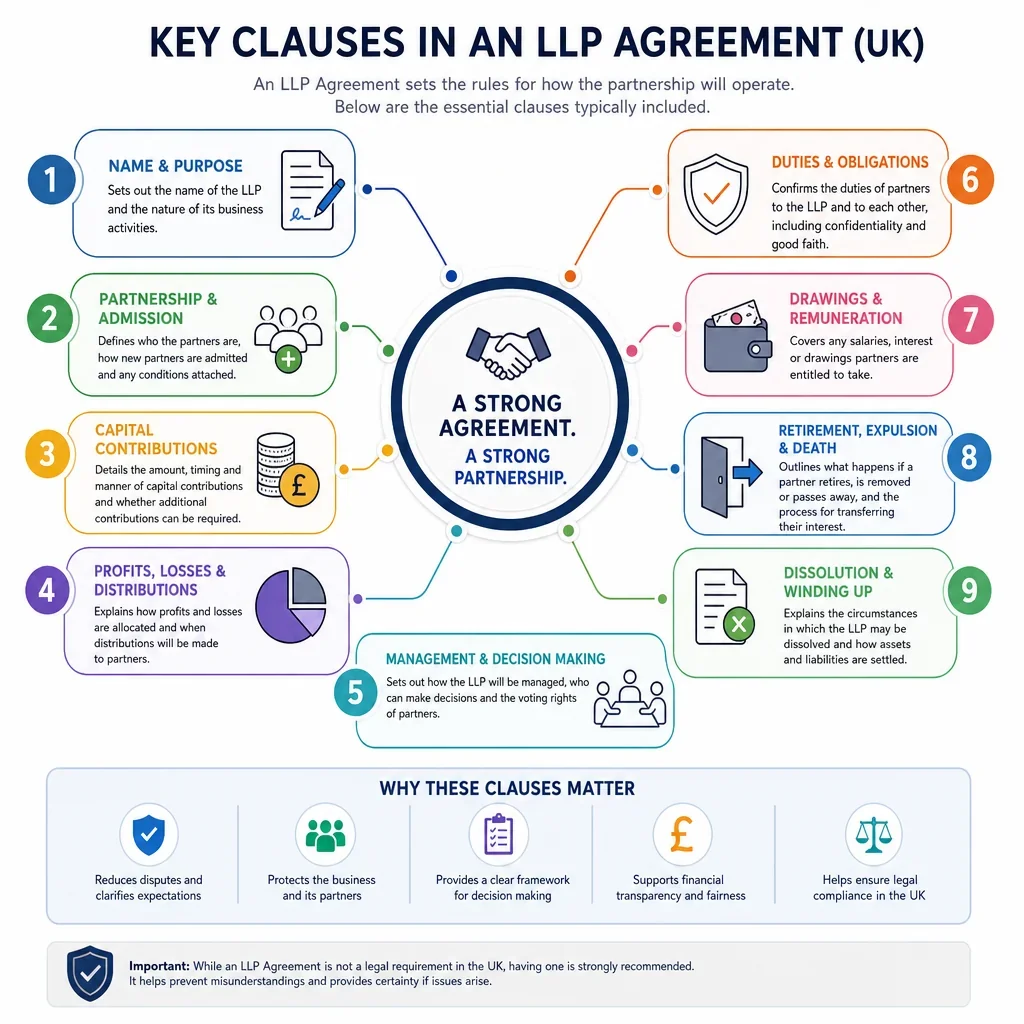
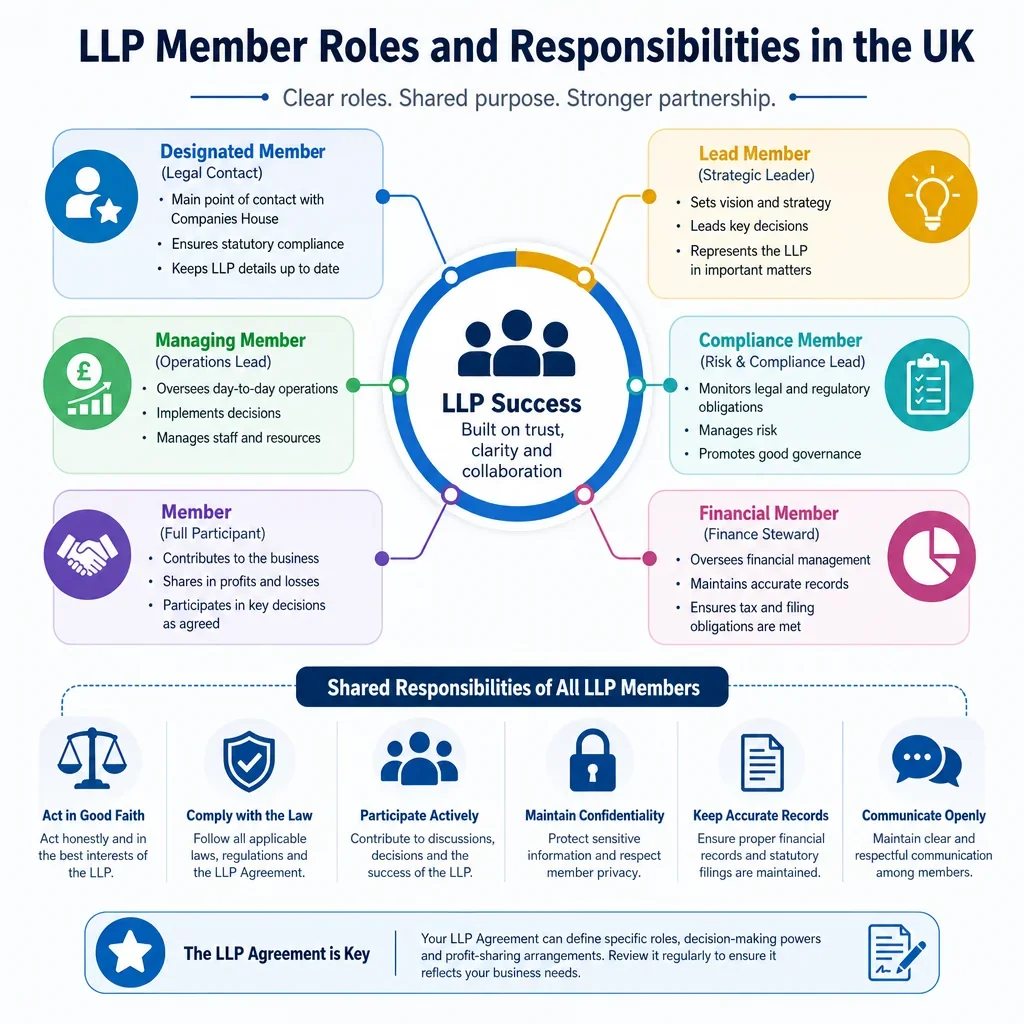
LLP Member Roles And Responsibilities In The UK
Member role | Responsibilities | Rights | Voting rights | Management involvement |
|---|---|---|---|---|
Founding member | ||||
Founding member | Sets up the LLP, agrees initial capital, admits first members and approves the first LLP agreement. | Usually has initial management, voting, profit share and information rights set out in the agreement. | Yes | Yes |
Designated member | ||||
Designated member | Handles statutory duties such as filings, notices, accounts and Companies House compliance. | Has the same member rights as agreed, plus authority to perform statutory compliance acts. | Depends on agreement | Depends on agreement |
Non-designated member | ||||
Non-designated member | Contributes work or capital and complies with the LLP agreement without holding designated status. | Receives agreed profit share, information access and participation rights under the agreement. | Depends on agreement | Depends on agreement |
Equity member | ||||
Full equity member | Contributes capital, shares business risk, manages the firm and complies with agreed duties. | Usually has full profit share, capital account, vote, management and information rights. | Yes | Yes |
Junior equity member | Builds practice, contributes capital and performs operational duties with limited strategic authority. | Receives reduced profit share and may have limited votes or reserved matter exclusions. | Depends on agreement | Depends on agreement |
Fixed-share member | Provides services and limited capital while receiving a fixed or capped profit allocation. | Usually has fixed drawings, limited profit upside and restricted management or voting rights. | Depends on agreement | Depends on agreement |
Salaried member | ||||
Salaried member | Works for the LLP for fixed remuneration and follows agreed performance and conduct obligations. | Usually has remuneration, limited information rights and few or no strategic control rights. | Depends on agreement | Depends on agreement |
Non-equity salaried member | Performs professional or operational duties without meaningful capital risk or profit participation. | Generally receives fixed pay and contractual benefits, with limited voting and capital rights. | No | No |
Corporate member | ||||
Corporate member | Acts through authorised representatives and complies with contribution, confidentiality and voting procedures. | Has agreed profit, capital, voting and information rights exercised by authorised representatives. | Depends on agreement | Depends on agreement |
Retired member | ||||
Retiring member | Transfers matters, returns property, preserves confidentiality and complies with exit restrictions. | Receives repayment of capital, final drawings and any agreed retirement or goodwill payments. | No | No |
Retired consultant member | Provides advisory support, maintains confidentiality and avoids competing or soliciting clients if restricted. | May receive consultancy fees, deferred profit share or limited access to records. | No | No |
Equity member | ||||
Managing member | Leads day-to-day operations, implements strategy and supervises staff, budgets and risk controls. | Usually has delegated authority, management vote and access to all operational information. | Yes | Yes |
Senior member or chair | Chairs member meetings, guides strategy and represents the LLP externally. | May have casting vote, enhanced consultation rights or reserved matter involvement. | Yes | Yes |
Management board member | Makes delegated business decisions on finance, staffing, strategy and operational policies. | Has board voting rights, management information and authority within delegated limits. | Yes | Yes |
Designated member | ||||
Finance member | Oversees accounts, tax payments, budgets, drawings, banking and financial reporting. | Has access to financial records and authority for agreed financial controls. | Depends on agreement | Yes |
Compliance member | Monitors regulatory, AML, data protection, insurance and Companies House compliance. | Has access to records needed to manage risk and statutory reporting obligations. | Depends on agreement | Yes |
Companies House filing member | Files confirmation statements, member changes, registered office changes and other statutory notices. | May sign and submit statutory forms and obtain internal information needed for filings. | Depends on agreement | Depends on agreement |
Equity member | ||||
Capital contributing member | Pays agreed capital, maintains capital account and meets any further contribution obligations. | Has capital account credit, profit allocation and repayment rights on exit or winding up. | Depends on agreement | Depends on agreement |
Sweat equity member | Contributes services, business development or intellectual property instead of substantial cash capital. | Receives agreed equity, profit share or vesting rights tied to contribution or performance. | Depends on agreement | Yes |
Investor member | Provides funding and complies with transfer, confidentiality and conflict restrictions. | May receive priority return, information rights and limited votes on reserved matters. | Depends on agreement | No |
Non-designated member | ||||
Passive member | Maintains contribution and confidentiality obligations without active operational duties. | Usually has economic rights and limited information or reserved matter voting rights. | Depends on agreement | No |
Equity member | ||||
Department head member | Manages a practice area, team, budget, client standards and performance targets. | Has management input, team information access and voting rights as agreed. | Yes | Yes |
Client relationship member | Maintains key clients, supervises service delivery and follows conflict and confidentiality rules. | May receive client origination credit, profit allocation and client matter information. | Depends on agreement | Yes |
Salaried member | ||||
Probationary member | Meets induction, performance, capital and conduct conditions before full membership rights vest. | Has limited pay, information and participation rights during the probation period. | No | No |
Associate member | Provides services under supervision and follows performance, confidentiality and conduct obligations. | Usually receives fixed remuneration and limited consultation or information rights. | No | No |
Equity member | ||||
Reserved matter voting member | Reviews major decisions such as new members, borrowing, disposals and agreement changes. | Has votes or veto rights on specified reserved matters only. | Yes | Depends on agreement |
Veto member | Considers protected decisions and exercises veto rights in good faith if required. | Has veto over defined matters such as dilution, debt, transfers or constitutional changes. | Yes | Depends on agreement |
Salaried member | ||||
Profit-only member | Performs agreed services and may receive profit-linked remuneration without capital ownership. | Has profit bonus or allocation rights but usually no capital or strategic voting rights. | No | Depends on agreement |
Designated member | ||||
Bank mandate member | Operates bank mandates, payment approvals and borrowing limits set by the members. | Has signing authority for banking transactions within agreed thresholds. | Depends on agreement | Yes |
Equity member | ||||
IP contributing member | Assigns or licenses agreed IP and helps maintain ownership, confidentiality and registrations. | May receive equity, royalties, profit share or reversion rights on exit. | Depends on agreement | Depends on agreement |
Non-designated member | ||||
Nominee member | Holds membership interest for another person subject to disclosure, authority and fiduciary controls. | Exercises rights only as permitted by nominee arrangements and the LLP agreement. | Depends on agreement | No |
Corporate member | ||||
Corporate representative | Attends meetings and acts for the corporate member within written authority limits. | May exercise the corporate member's voting and information rights if authorised. | Depends on agreement | Depends on agreement |
Non-designated member | ||||
Suspended member | Complies with investigation, confidentiality and non-interference obligations during suspension. | May retain economic rights but lose management, voting or access rights temporarily. | No | No |
Retired member | ||||
Expelled member | Exits the LLP, returns property and complies with confidentiality and restrictive covenants. | Receives only agreed exit payments and statutory or contractual information rights. | No | No |
Deceased member estate | Personal representatives coordinate capital repayment and transfer of outstanding economic rights. | Estate may receive capital account, unpaid profits and insured benefits if agreed. | No | No |
Non-designated member | ||||
Insolvent member | Notifies insolvency events and cooperates with transfer, buyout or termination procedures. | Rights may be suspended, bought out or transferred under the agreement. | No | No |
Equity member | ||||
Leave member | Maintains confidentiality and agreed handover duties while absent from active work. | May retain profit share, vote, capital rights and return-to-work rights as agreed. | Depends on agreement | No |
Salaried member | ||||
Seconded member | Works for a client or affiliate while preserving LLP duties, confidentiality and reporting lines. | Keeps agreed remuneration and limited membership rights during secondment. | No | No |
Designated member | ||||
Tax reporting member | Coordinates partnership tax returns, member tax information and HMRC communications. | May obtain financial data and issue tax allocation statements to members. | Depends on agreement | Yes |
AML responsible member | Oversees client due diligence, risk assessments, suspicious activity procedures and AML training. | Has access to client, transaction and compliance records needed for AML controls. | Depends on agreement | Yes |
Data protection member | Supervises data protection policies, breach response, records and processor controls. | May access personal data processing records needed for compliance and breach management. | Depends on agreement | Yes |
Health and safety member | Oversees workplace safety policies, risk assessments and incident reporting. | Can require safety information, training records and corrective action within delegated authority. | Depends on agreement | Yes |
Equity member | ||||
HR member | Manages recruitment, employment policies, performance processes and staff disputes. | Has access to staffing records and authority over employment procedures within limits. | Depends on agreement | Yes |
Designated member | ||||
Conduct and equality member | Monitors discrimination, harassment, grievance and professional conduct policies. | May access complaint records and require remedial steps under agreed governance powers. | Depends on agreement | Yes |
Equity member | ||||
Conflicts member | Reviews conflicts of interest, related-party dealings and member competing interests. | Can require disclosures and restrict conflicted members from decisions or information. | Depends on agreement | Yes |
Admissions member | Evaluates prospective members, capital terms, due diligence and admission documents. | May recommend admission, negotiate terms and access candidate information. | Depends on agreement | Yes |
Remuneration member | Reviews drawings, bonuses, profit allocations and member performance criteria. | Has access to financial and performance data for remuneration decisions. | Depends on agreement | Yes |
Dispute resolution member | Coordinates internal dispute steps, mediation triggers and member meeting procedures. | May call meetings, request documents and enforce agreed dispute procedures. | Depends on agreement | Depends on agreement |
Designated member | ||||
Winding-up member | Coordinates member decisions, asset realisation and filings on solvent or insolvent closure. | Has authority to liaise with advisers, liquidators and Companies House as agreed. | Depends on agreement | Yes |
Equity member | ||||
Majority interest member | Supports funding, governance and major decisions while observing minority protections. | May control ordinary decisions through weighted votes or higher profit interest. | Yes | Depends on agreement |
Minority interest member | Complies with contribution and conduct duties while relying on reserved matter protections. | May have information rights, anti-dilution protection and vetoes on fundamental changes. | Depends on agreement | Depends on agreement |
Founding member | ||||
Vesting founder member | Meets service or milestone conditions for founder interest to vest over time. | Receives increasing profit, capital or voting rights as vesting conditions are met. | Depends on agreement | Yes |
Founder with reserved rights | Maintains strategic involvement and protects agreed founder-level decisions. | May hold vetoes, consent rights, board seat or enhanced information rights. | Yes | Depends on agreement |
Corporate member | ||||
Overseas corporate member | Provides authority evidence, tax information and authorised representatives for UK LLP matters. | Exercises economic and voting rights through representatives subject to UK LLP procedures. | Depends on agreement | Depends on agreement |
Equity member | ||||
PSC member | Provides information for people with significant control records and notifications if applicable. | May hold significant voting rights, capital rights or control over LLP decisions. | Yes | Depends on agreement |
How Should An LLP Agreement Define Member Roles In The UK?
An LLP agreement should distinguish designated members from ordinary members because designated members have statutory filing and compliance duties for the LLP, including Companies House filings and accounts-related obligations. It should also separate equity members, who commonly share profits and management control, from salaried members, whose tax and employment-style status can be more sensitive.
Which LLP Members Usually Need Voting Rights?
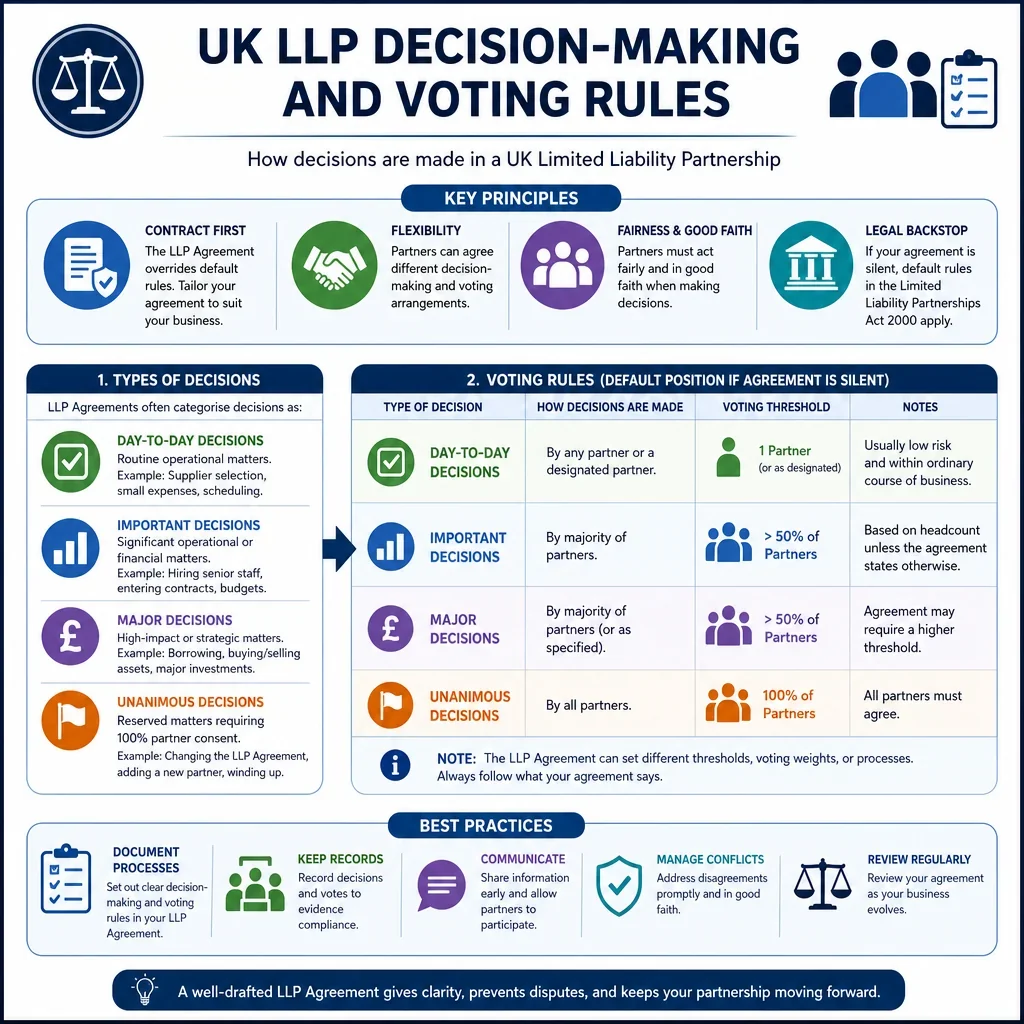
Voting rights are not fixed by one standard model. In practice, an LLP agreement should state whether votes are based on one member one vote, profit shares, capital contributions, reserved matters, or a management board. Salaried, retired and non-designated members may have no vote or only limited votes if the agreement says so.
Why Are Designated Members Important For Compliance?
UK LLPs must have at least two designated members. If there are fewer than two, every member may be treated as designated. This makes it important to identify named designated members and require them to handle statutory registers, Companies House notifications, accounts, confirmation statements and related administrative duties.
What Should The Agreement Say About Retired Or Corporate Members?
Retired members should have clear limits on continuing profit shares, confidentiality, restrictive covenants, voting and access to records. Corporate members should have named representatives, authority limits and procedures for replacing representatives, because the company acts through individuals.
FAQs
You Might Also Be Interested In