UK LLP Decision-Making And Voting Rules
Decision type | Approval threshold | Eligible voters | Drafting consideration | Impact level |
|---|---|---|---|---|
Ordinary business | ||||
Day-to-day business decisions | Managing member approval | Managing members or authorised members under the agreement. | Keeps routine management efficient while reserving major matters. | Low |
Entering ordinary supplier contracts | Managing member approval | Authorised managers within agreed spending limits. | Set contract value limits before member approval is needed. | Low |
Reserved matter | ||||
Entering material customer or supplier contract | Supermajority | All non-conflicted members with voting rights. | Material commitments can affect cash flow and risk profile. | High |
Financial matter | ||||
Approving annual budget | Simple majority | Members entitled to vote on financial matters. | Budget approval gives control over spending priorities. | Medium |
Expenditure above approved budget | Supermajority | All voting members except conflicted members. | Prevents managers exceeding financial authority without oversight. | Medium |
Capital expenditure within limits | Managing member approval | Managing members within agreed authority limits. | Operational assets need quick approval under fixed caps. | Low |
Reserved matter | ||||
Major capital expenditure | Supermajority | All members with financial voting rights. | Large asset purchases can alter capital needs and returns. | High |
Financial matter | ||||
Taking bank borrowing | Supermajority | All voting members, subject to conflict exclusions. | Borrowing affects solvency, security and member economics. | High |
Granting security over LLP assets | Supermajority | All members with voting rights. | Security may restrict assets and future financing options. | High |
Reserved matter | ||||
Giving member-backed guarantee | Unanimous consent | All affected members required to give guarantee. | Personal exposure should not be imposed without consent. | High |
Financial matter | ||||
Declaring profit distributions | Simple majority | Members entitled to share profits. | Coordinate distributions with tax, cash flow and reserves. | Medium |
Changing profit-sharing ratios | Unanimous consent | All members whose economic rights may be affected. | Directly changes bargain between members and tax outcomes. | High |
Requiring extra capital contributions | Supermajority | All members required to contribute. | Capital calls affect liquidity and default consequences. | High |
Returning member capital | Supermajority | Members with capital accounts. | Return of capital may affect solvency and creditor protection. | Medium |
Setting cash reserves | Simple majority | Members with distribution rights. | Balances distribution expectations against working capital needs. | Medium |
Administrative matter | ||||
Changing accounting policies | Simple majority | Members responsible for accounts or finance matters. | Policy changes can affect reported profits and allocations. | Medium |
Appointing or removing auditors | Simple majority | Members entitled to vote on accounts and audit. | Audit oversight supports financial transparency between members. | Medium |
Financial matter | ||||
Making material tax elections | Supermajority | Members affected by tax allocations. | LLP tax treatment can directly affect member liabilities. | High |
Membership change | ||||
Admitting a new member | Unanimous consent | Existing members entitled to vote on admissions. | New members change control, economics and mutual trust. | High |
Administrative matter | ||||
Appointing designated member | Simple majority | Members with governance voting rights. | Designated members carry statutory filing responsibilities. | Medium |
Removing designated member status | Simple majority | Members with governance voting rights. | Ensure statutory duties remain allocated after removal. | Medium |
Appointing managing member | Simple majority | Members entitled to vote on management appointments. | Defines who can run the LLP day to day. | Medium |
Removing managing member | Supermajority | All members except the affected manager if conflicted. | Removal affects control and may trigger disputes. | High |
Delegating authority to committee | Simple majority | Members with management voting rights. | Delegation needs scope, limits and reporting obligations. | Medium |
Membership change | ||||
Approving new member admission terms | Unanimous consent | Existing members whose rights may be diluted. | Admission terms affect capital, profits, voting and liabilities. | High |
Approving voluntary retirement terms | As specified in agreement | Continuing members and retiring member if not conflicted. | Exit payments and restrictive covenants need clear consent rules. | High |
Expelling a member | Supermajority | All non-affected members, excluding the member facing expulsion. | Expulsion should require express grounds and fair process. | High |
Compulsory retirement of member | Supermajority | Non-affected members only. | Needs objective triggers to reduce unfair prejudice disputes. | High |
Transfer of member interest | Unanimous consent | All continuing members with membership voting rights. | Transfers can introduce unwanted participants or alter control. | High |
Buyout after death or incapacity | As specified in agreement | Continuing members, excluding estate representatives if conflicted. | Valuation and payment terms should be pre-agreed. | High |
Suspending member voting rights | Supermajority | Non-defaulting members only. | Suspension affects control and needs clear default triggers. | High |
Structural change | ||||
Changing voting weights | Unanimous consent | All members whose voting rights may change. | Alters control bargain and minority protections. | High |
Amending LLP agreement | Unanimous consent | All members bound by the agreement. | Amendments can change all contractual member rights. | High |
Changing reserved matters list | Unanimous consent | All members protected by reserved matters. | Prevents majority from removing minority veto protections. | High |
Changing business purpose | Supermajority | All members with strategic voting rights. | A new business line changes risk and member expectations. | High |
Acquiring another business | Supermajority | All voting members, excluding conflicted sellers. | Acquisitions create integration, financing and liability risks. | High |
Disposing of substantial assets | Supermajority | All members with economic voting rights. | Asset sales may effectively change the whole business. | High |
Merger or business combination | Unanimous consent | All members whose rights or liabilities change. | Combination may alter identity, economics and governance. | High |
Converting or incorporating business | Unanimous consent | All members affected by structural conversion. | Conversion changes legal, tax and ownership arrangements. | High |
Voluntary winding up | Unanimous consent | All members unless agreement specifies a higher class threshold. | Ends the business and triggers statutory insolvency processes. | High |
Appointing liquidator | As specified in agreement | Members entitled to vote in winding-up process. | Liquidator choice affects asset realisation and member distributions. | High |
Administrative matter | ||||
Changing registered office | Designated member approval | Designated members or authorised administrative members. | Administrative change requires Companies House notification. | Low |
Changing LLP name | Supermajority | Members with governance voting rights. | Name changes affect brand, filings and contracts. | Medium |
Approving Companies House filings | Designated member approval | Designated members responsible for statutory compliance. | Designated members handle filing and compliance obligations. | Low |
Approving confirmation statement | Designated member approval | Designated members or compliance lead. | Incorrect statutory records can create compliance issues. | Low |
Financial matter | ||||
Approving annual accounts | Designated member approval | Designated members and finance-approved members. | Accounts approval affects statutory reporting and member transparency. | Medium |
Opening or closing bank account | Designated member approval | Designated members or authorised finance members. | Specify signatories and dual-approval payment controls. | Medium |
Authorising large payments | Managing member approval | Approved signatories within payment authority matrix. | Payment limits reduce fraud and unauthorised withdrawals. | Medium |
Reserved matter | ||||
Approving related party transaction | Supermajority | Non-conflicted members only. | Conflict rules protect LLP value and minority members. | High |
Waiving member conflict of interest | Supermajority | Non-conflicted members only. | Waivers should be informed, recorded and limited. | High |
Permitting competing business activity | Unanimous consent | All non-competing members. | Competing activity can undermine loyalty and business opportunities. | High |
Assigning key intellectual property | Supermajority | Members with economic rights in the asset. | Core IP may be the LLP's main commercial asset. | High |
Licensing core intellectual property | Supermajority | Members with rights in commercial exploitation. | Exclusive licences can reduce future business value. | High |
Ordinary business | ||||
Hiring senior employee or consultant | Managing member approval | Managing members within agreed remuneration limits. | Senior hires create cost, authority and confidentiality risks. | Medium |
Financial matter | ||||
Changing member remuneration policy | Supermajority | Members affected by drawings or guaranteed payments. | Remuneration changes affect profit allocation and fairness. | High |
Approving monthly member drawings | Simple majority | Members entitled to drawings. | Drawings should align with forecast profits and tax reserves. | Medium |
Ordinary business | ||||
Purchasing key business insurance | Managing member approval | Managing members or risk committee. | Insurance limits should match LLP risk profile. | Medium |
Reserved matter | ||||
Starting or settling major litigation | Supermajority | Non-conflicted members after legal advice. | Litigation may create cost, publicity and precedent risks. | High |
Ordinary business | ||||
Settling minor customer dispute | Managing member approval | Authorised managers within settlement limits. | Low-value disputes need efficient settlement authority. | Low |
Reserved matter | ||||
Responding to regulatory investigation | Supermajority | Non-conflicted members and designated compliance members. | Regulatory responses may affect licences and reputation. | High |
Administrative matter | ||||
Approving data protection policy | Managing member approval | Management or compliance members. | Policy approval supports UK GDPR compliance. | Medium |
Financial matter | ||||
Entering premises lease | Supermajority | Members with financial voting rights. | Leases create long-term rent and repair liabilities. | High |
Reserved matter | ||||
Buying or selling real property | Supermajority | All members with capital or profit interests. | Property transactions involve large capital and financing risks. | High |
Administrative matter | ||||
Adopting anti-bribery policy | Managing member approval | Management or compliance members. | Supports procedures for bribery risk management. | Medium |
Changing accounting reference date | Designated member approval | Designated members or finance-approved members. | Affects accounts timing, tax planning and filing deadlines. | Medium |
Maintaining member records | Designated member approval | Designated members or company secretarial provider. | Accurate records support filings and voting entitlement checks. | Low |
Approving PSC information filing | Designated member approval | Designated members responsible for PSC compliance. | PSC changes should be captured promptly and accurately. | Low |
Structural change | ||||
Changing dispute resolution procedure | Unanimous consent | All members bound by dispute procedures. | Procedure affects enforcement cost and forum choice. | High |
Reserved matter | ||||
Triggering deadlock procedure | As specified in agreement | Members on each deadlocked side as defined. | Deadlock mechanisms need objective triggers and timelines. | High |
Administrative matter | ||||
Using chair casting vote | As specified in agreement | Chair or meeting presider if expressly authorised. | Casting votes should not apply to reserved matters. | Medium |
Approving written member resolution | As specified in agreement | Members entitled to vote on the underlying decision. | Threshold should match the underlying matter's approval rule. | Low |
Shortening meeting notice period | Unanimous consent | All members entitled to notice. | Short notice can prejudice absent members. | Medium |
Structural change | ||||
Changing quorum requirements | Unanimous consent | All members protected by quorum rules. | Quorum changes can shift practical control of decisions. | High |
Varying class rights | Unanimous consent | Affected class members and overall member approval. | Class rights need separate consent to protect minorities. | High |
Accepting external investment | Supermajority | Members whose capital, profits or control may dilute. | Investment can dilute economics and impose investor controls. | High |
Financial matter | ||||
Creating incentive or option plan | Supermajority | Members affected by dilution or profit allocation. | Incentives may dilute future profits or control. | High |
Making unusual donation or sponsorship | Simple majority | Members with budget approval rights. | Non-core spending may create reputational concerns. | Medium |
Reserved matter | ||||
Making loan to member | Supermajority | Non-borrowing members only. | Member loans create conflicts and cash extraction risk. | High |
Financial matter | ||||
Accepting loan from member | Supermajority | Non-lending members unless agreement permits lender vote. | Terms must avoid unfair priority over other members. | Medium |
Administrative matter | ||||
Appointing tax adviser | Managing member approval | Managing or finance members. | Adviser choice affects compliance quality and member returns. | Low |
Financial matter | ||||
Approving LLP tax return | Designated member approval | Designated tax matters member or finance members. | Tax return affects member allocations and compliance exposure. | Medium |
Reserved matter | ||||
Waiving confidentiality obligations | Supermajority | Members whose confidential information may be affected. | Disclosure may harm business value or client relationships. | High |
Administrative matter | ||||
Authorising agent to bind LLP | Managing member approval | Managing members or members with delegation power. | Members can bind the LLP as agents under statute. | Medium |
Reserved matter | ||||
Restricting member authority | Supermajority | All members except affected member if conflicted. | Internal limits should be clear because agency rules matter externally. | High |
Granting indemnity to member | Supermajority | Non-benefiting members only. | Indemnities shift risk from individual to LLP assets. | High |
Releasing restrictive covenant | Supermajority | Members protected by the covenant. | Release may affect goodwill, clients and staff retention. | High |
Ordinary business | ||||
Approving annual business plan | Simple majority | Members with strategic voting rights. | Plan approval guides management without overusing vetoes. | Medium |
Taking emergency protective action | Managing member approval | Available managing member, with later member ratification. | Emergency authority should be narrow and promptly reported. | Medium |
Reserved matter | ||||
Ratifying unauthorised act | As specified in agreement | Members who could have approved the act originally. | Ratification threshold should mirror the original decision type. | Medium |
What Voting Rules Should A UK LLP Agreement Include?
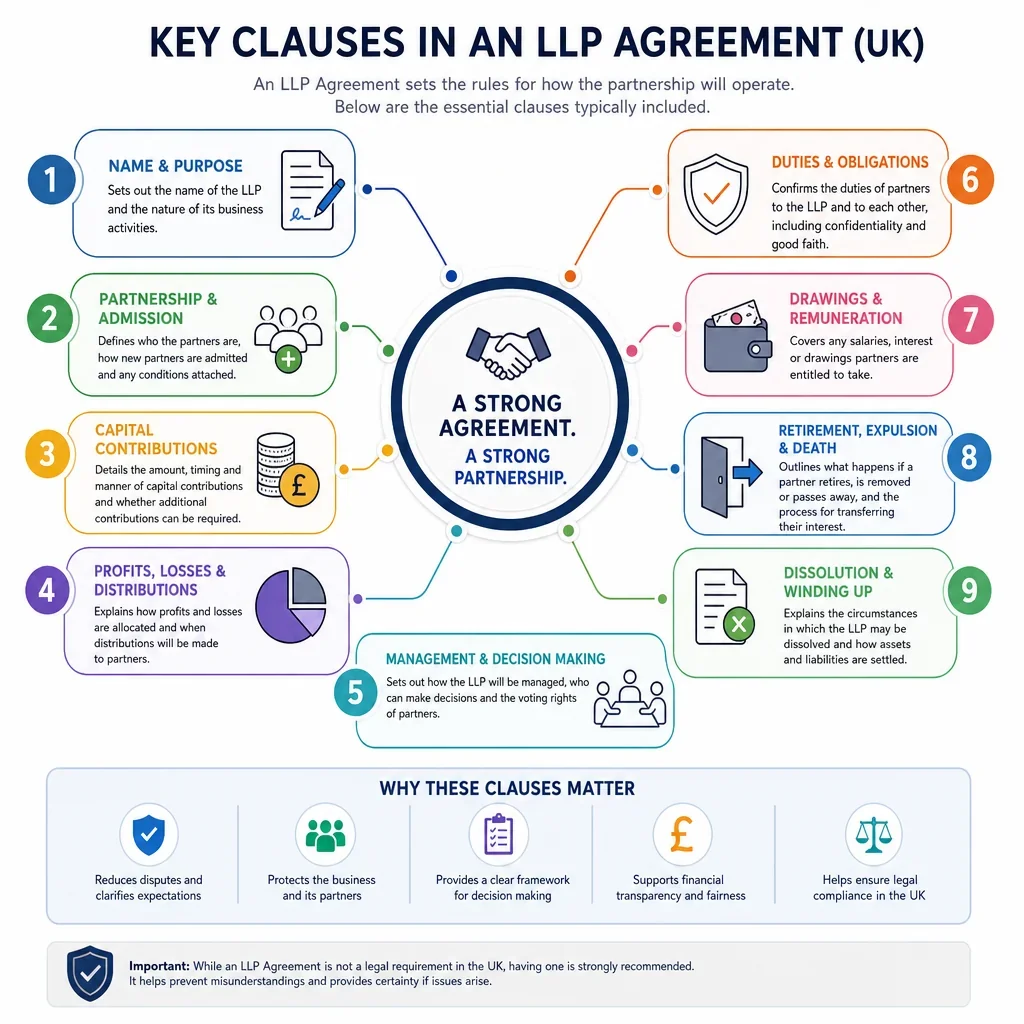
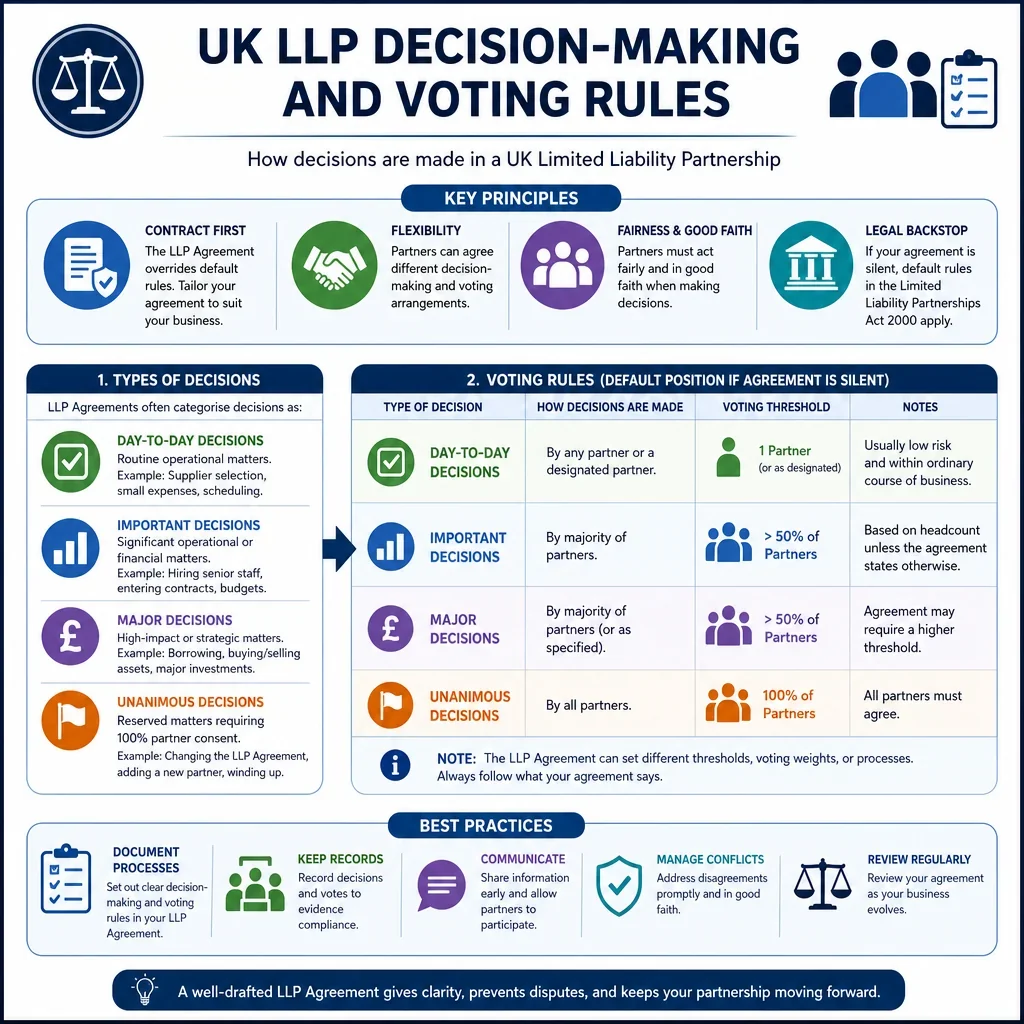
A UK LLP agreement should separate day-to-day decisions from reserved matters. Routine trading, minor supplier contracts and administrative filings usually work with simple majority or manager approval, while admissions, expulsions, profit-sharing changes, mergers, winding up and amendments to the LLP agreement usually need unanimous consent or a defined supermajority.
Why Are Reserved Matters Important In An LLP?
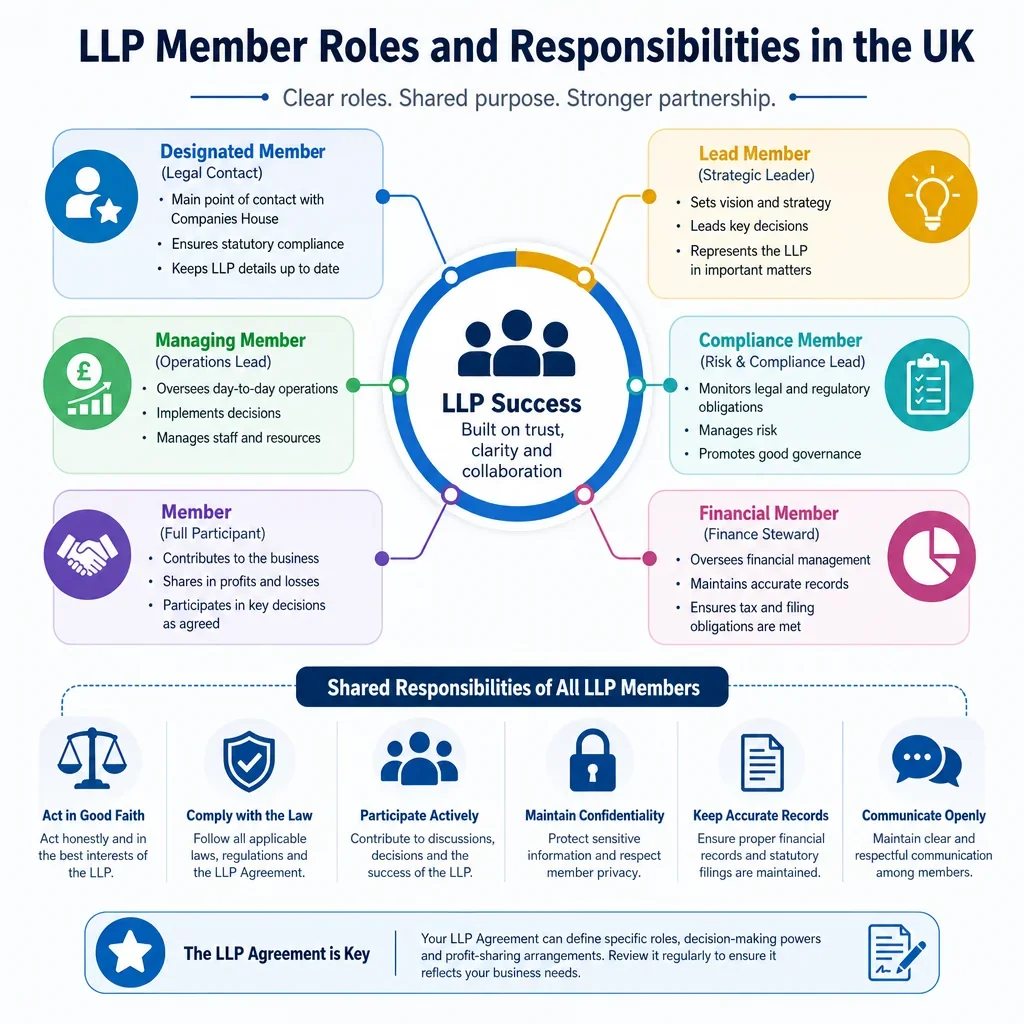
The Limited Liability Partnerships Act 2000 gives an LLP separate legal personality, so members should agree internally who can bind the LLP on high-impact matters. A reserved matters schedule helps prevent managers or a bare majority from making decisions that change ownership economics, member rights, borrowing exposure or the structure of the business.
Which Decisions Commonly Need Unanimous Consent?
- Membership and economics: admitting members, changing capital contributions, altering profit shares and approving transfers of interests commonly require unanimous consent or a high supermajority.
- Constitutional changes: amendments to the LLP agreement, mergers, conversions and winding up are high-impact structural decisions and should have bespoke thresholds.
- Disputes and exits: expulsion, compulsory retirement, non-compete waivers and major litigation can materially affect individual members, so careful consent rules and conflict exclusions are important.
Who Should Be Eligible To Vote?
The agreement should state whether voting is by headcount, profit share, capital contribution or another formula. It should also specify when conflicted members, defaulting members, suspended members or outgoing members are excluded from voting. Without clear drafting, disputes can arise over whether designated members, managing members or all members control a particular decision.
FAQs
You Might Also Be Interested In