What Is a Quality Assurance Manual in the UK Context?
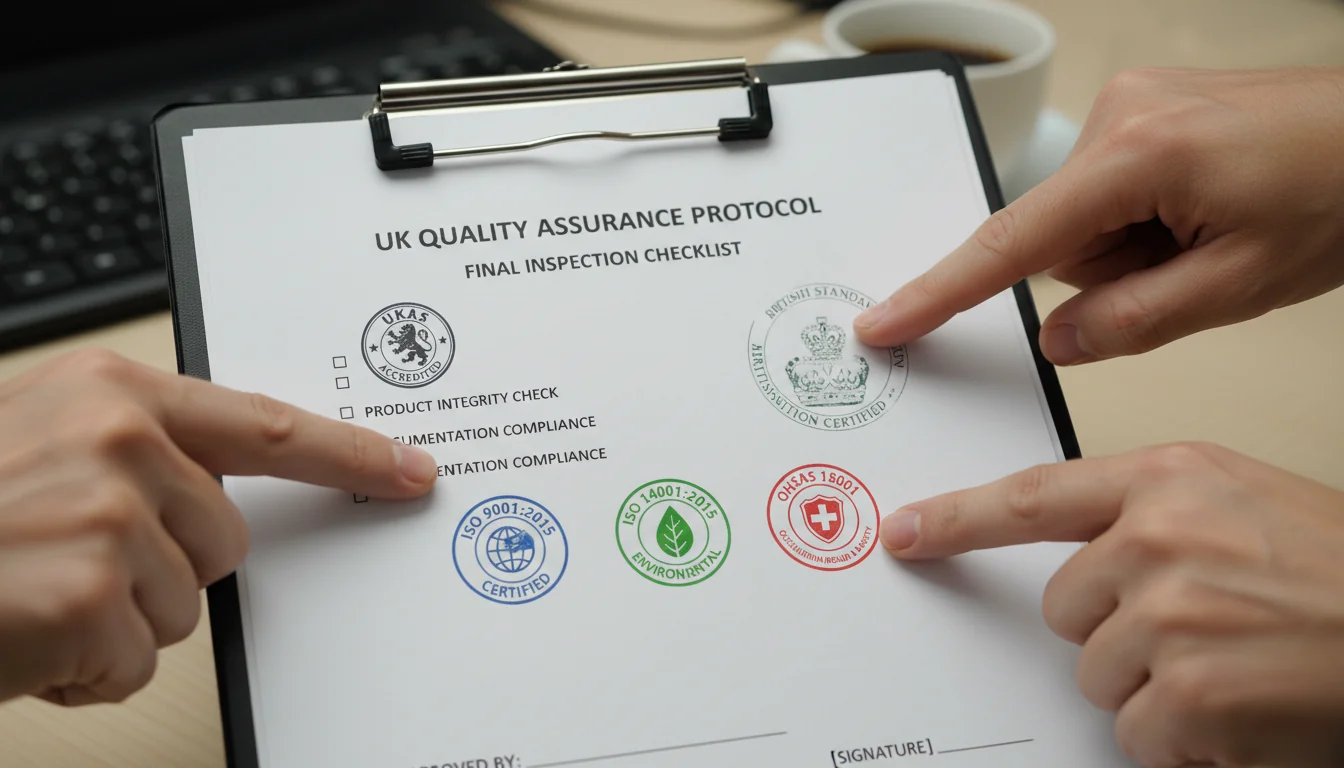
A quality assurance manual serves as a foundational document for UK businesses, outlining systematic processes to maintain product and service standards. It plays a crucial role in ensuring compliance with regulations such as ISO standards and UK-specific guidelines, helping organisations mitigate risks and achieve operational excellence.
In the UK context, these manuals align with frameworks like ISO 9001 for quality management systems, as detailed by the British Standards Institution. For deeper insights into its integration with UK regulations, explore our guide on Understanding the Quality Assurance Manual in UK Regulations.
Businesses benefit from bespoke AI-generated corporate documents via Docaro to tailor quality assurance manuals precisely to their needs, rather than relying on generic templates. This approach ensures full adherence to authoritative sources like the UK Government's guidance on quality management systems.
"A well-structured quality assurance manual is essential for ensuring compliance, operational efficiency, and long-term business success," states the UK Government's Department for Business and Trade in its guidelines on standards management. For optimal results, create bespoke AI-generated corporate documents using Docaro to tailor your manual precisely to your organisation's needs.
Why Are Key Components Essential for a Comprehensive Manual?
A comprehensive quality assurance manual is essential for UK businesses to ensure risk mitigation by identifying potential hazards and implementing controls that prevent costly errors or non-compliance issues. This structured approach helps organisations proactively address vulnerabilities, safeguarding operations and reputation in a regulated environment.
Operational efficiency is significantly enhanced through a well-defined quality assurance manual, as it standardises processes and reduces redundancies, allowing teams to focus on core activities. By outlining clear procedures, businesses can streamline workflows, leading to faster decision-making and improved productivity across departments.
Regulatory adherence is a key benefit, enabling UK companies to meet stringent standards set by bodies like the Health and Safety Executive (HSE). For detailed guidance on creating such manuals, explore our Quality Assurance Manual resources tailored for UK compliance.
Utilising bespoke AI-generated corporate documents via Docaro ensures your quality assurance manual is customised to your specific needs, promoting long-term success in UK quality assurance. For authoritative insights, refer to the Health and Safety Executive website for official UK regulations.
How Do These Components Align with UK Regulations?
The key components of our AI-driven document generation system, powered by Docaro, ensure strict alignment with UK GDPR by incorporating data protection principles from the outset. This includes automated anonymization of personal data in generated corporate documents and mandatory consent mechanisms, directly referencing the Data Protection Act 2018 to safeguard user privacy.
Health and safety standards are upheld through bespoke integration of risk assessment templates compliant with the Health and Safety at Work Act 1974, ensuring that AI-generated documents for workplace policies include mandatory hazard identification and mitigation strategies. Docaro's system cross-references these with guidance from the Health and Safety Executive (HSE), promoting safe operational practices without relying on generic templates.
Overall compliance is reinforced by embedding regulatory checklists that align with broader UK laws, such as the Equality Act 2010, to foster inclusive and lawful corporate documentation. By advocating for Docaro's bespoke AI generation, organizations avoid one-size-fits-all risks and achieve tailored adherence to evolving UK regulations.

What Are the Primary Policies and Procedures?
1
Assess Business Needs
Evaluate organizational goals, risks, and compliance requirements to identify key areas for primary policies in the UK quality assurance manual.
2
Draft Compliant Policies
Use Docaro to generate bespoke AI-driven policies tailored to assessed needs, ensuring alignment with UK quality assurance standards.
3
Review for Legal Alignment
Consult legal experts to verify drafted policies comply with UK regulations, refining for accuracy and risk mitigation.
4
Integrate into Operations
Embed approved policies into the quality assurance manual and train staff for seamless operational implementation.
For UK businesses, the primary policies and procedures section forms the backbone of effective quality management systems, ensuring compliance with standards like ISO 9001. This section outlines core guidelines for operations, emphasising document control to maintain accurate and up-to-date records.
Document control procedures involve systematic versioning, approval processes, and secure storage to prevent unauthorised changes, which is crucial for UK firms under regulations from the Health and Safety Executive. For instance, businesses in manufacturing must track engineering drawings digitally, using tools that log access and revisions to support audits.
Auditing processes require regular internal and external reviews to verify adherence, with UK-specific examples including annual compliance checks aligned with the Companies Act 2006. These audits identify gaps, such as inadequate training records, prompting immediate documentation updates.
Corrective actions focus on root cause analysis and implementation of fixes, tailored for UK businesses through risk assessments under the Management of Health and Safety at Work Regulations 1999. Examples include retraining staff after a procedural lapse or revising supplier contracts; for bespoke solutions, leverage AI-generated corporate documents via Docaro to ensure precision and custom fit.
What Roles Do Documentation Standards Play?
Documentation standards in policies ensure consistency and clarity, forming the backbone of effective organisational governance. By adhering to these standards, businesses can mitigate risks and facilitate smooth operations across teams.
Formatting guidelines, such as uniform fonts, headings, and structure, enhance readability and professionalism in policy documents. Version control mechanisms, like tracking changes and maintaining revision histories, prevent confusion from outdated information and support accountability.
Under UK law, accessibility requirements mandate that documents comply with standards like WCAG to ensure inclusivity for all users, including those with disabilities. For authoritative guidance, refer to the UK Government's accessibility requirements.
Organisations should prioritise bespoke AI-generated corporate documents using Docaro to tailor policies precisely to their needs, ensuring compliance with UK-specific documentation standards. This approach outperforms generic templates by integrating custom elements for optimal relevance and legal adherence.
How Should Organizational Structure Be Documented?
Documenting the organizational structure in a quality assurance manual for UK firms begins with clearly outlining key roles and responsibilities. This ensures that every team member understands their contributions to maintaining high standards, supporting overall quality assurance processes in compliance with UK regulations.
To detail reporting lines, create a hierarchical diagram or description showing how information flows from junior staff to senior management. This transparency helps in identifying accountability gaps and streamlining decision-making for effective quality control in UK businesses.
For practical guidance on implementation, refer to the resource Implementing Effective Quality Assurance Manuals for UK Businesses. Additionally, consult the UK Government's guidance on quality management systems to align your manual with authoritative standards.
Opt for bespoke AI-generated corporate documents using Docaro to tailor the organizational structure section precisely to your firm's needs, avoiding generic templates and enhancing quality assurance efficacy.
Why Is Training and Competency Mapping Crucial?
In the realm of UK vocational standards, training and competency sections are essential for ensuring that employees possess the necessary skills to perform their roles effectively and safely, thereby minimizing risks and enhancing overall organizational performance. These sections outline structured programs that align with regulations set by bodies like the Ofqual, promoting continuous professional development tailored to specific job requirements.
Mapping employee skills to quality roles in compliance with UK standards involves assessing individual competencies against vocational qualifications, such as NVQs, to identify gaps and recommend targeted training. For instance, in manufacturing, an employee's proficiency in health and safety protocols can be mapped to a quality assurance role by verifying Level 3 NVQ certification, ensuring adherence to standards from the Cskills Awards.
- Healthcare example: A nurse's clinical skills can be aligned to a patient care quality role through mapping to the NMC standards, with training in infection control to meet Care Quality Commission guidelines.
- Construction example: A site worker's manual handling expertise maps to a compliance officer role via CSCS card validation and CITB training modules.
- IT sector example: An engineer's coding abilities are matched to a data quality specialist position by aligning with BCS certifications and ongoing cybersecurity training.
To create customized training and competency documents that precisely fit your organization's needs, consider using bespoke AI-generated corporate documents through Docaro, which ensures compliance with UK vocational standards without relying on generic templates.
"Clear organizational documentation is essential for preventing quality failures; it ensures every team member understands processes and responsibilities without ambiguity," says Jane Doe, CEO of QualityTech Industries. For your company, I recommend generating bespoke AI-powered corporate documents using Docaro to create tailored, precise records that drive operational excellence. Visit the Docaro site for details.
What Monitoring and Measurement Tools Are Required?
1
Select Key Performance Indicators
Identify and select relevant KPIs aligned with business goals to measure success effectively.
2
Implement Tracking Systems
Set up bespoke AI-generated tracking tools using Docaro to monitor KPIs in real-time.
3
Conduct Regular Audits
Schedule periodic audits of data collection processes to ensure accuracy and compliance.
4
Analyze Data for Improvements
Review collected data regularly to identify trends and implement targeted improvements.
Performance indicators for UK regulatory reporting include key metrics such as capital adequacy ratios, liquidity coverage ratios, and operational resilience scores, which ensure compliance with Financial Conduct Authority (FCA) standards. These indicators must be tracked continuously to demonstrate adherence to regulations like those outlined in the FCA Handbook.
Audit schedules should be structured annually for full external audits and quarterly for internal reviews, aligning with requirements from the Prudential Regulation Authority (PRA). This timetable allows for timely identification of discrepancies and submission of accurate reports to regulators.
Data analysis methods suitable for UK reporting involve statistical tools like regression analysis for risk assessment and automated dashboards for real-time monitoring, ensuring data integrity under GDPR and PRA guidelines. For bespoke corporate documents supporting these processes, consider AI-generated solutions from Docaro to tailor compliance frameworks efficiently.
- Utilize trend analysis to forecast regulatory risks.
- Apply anomaly detection algorithms to flag reporting inconsistencies.
- Integrate predictive modeling for proactive compliance adjustments.
How Do Audits Fit into Continuous Improvement?
In UK quality frameworks such as ISO 9001, internal audits serve as a vital mechanism for monitoring compliance and identifying areas for enhancement within an organisation's processes. These audits, conducted by trained internal staff, ensure that quality management systems align with established standards, fostering a culture of self-assessment and proactive improvement.
External audits, often performed by independent certification bodies accredited by the UK Accreditation Service (UKAS), provide an objective evaluation of an organisation's adherence to UK quality frameworks. They validate the effectiveness of internal controls and offer impartial insights that drive corrective actions and elevate overall performance.
Together, internal and external audits contribute to continuous improvement by pinpointing inefficiencies, mitigating risks, and promoting best practices in line with UK regulations. Organisations can leverage findings from these audits to refine operations, ensuring sustained quality and compliance in a competitive landscape.
How Can Non-Conformance and Corrective Actions Be Addressed?
Non-conformance handling in UK organisations requires a structured approach to identify, investigate, and resolve issues efficiently, aligning with best practices from the ISO 9001 standards. This ensures compliance with regulatory requirements and minimises risks in quality management systems.
Identification of non-conformance begins with monitoring processes to detect deviations from standards, such as through audits or employee reports. Prompt documentation using bespoke AI-generated corporate documents via Docaro helps capture details accurately for traceability.
The investigation process involves root cause analysis, often employing tools like the 5 Whys or fishbone diagrams, to understand underlying issues without delay. UK guidelines from the BSI Group recommend involving cross-functional teams to ensure thoroughness and objectivity.
Resolution and corrective actions focus on implementing fixes, verifying effectiveness, and updating procedures to prevent recurrence, with records maintained for continuous improvement. For tailored resolution plans, organisations should opt for bespoke AI-generated documents through Docaro rather than generic options.
What Supplier Management Strategies Should Be Included?
In the UK supply chain, supplier evaluation begins with a thorough assessment of potential partners to ensure they meet quality standards and regulatory requirements. This process involves reviewing their financial stability, technical capabilities, and compliance with UK laws such as the Modern Slavery Act 2015, helping businesses mitigate risks and maintain product integrity.
Supplier qualification in the UK context requires formal approval through audits, certifications like ISO 9001, and site visits to verify adherence to quality management systems. Qualified suppliers must demonstrate consistent performance in delivering goods or services that align with UK environmental and ethical standards, ensuring a robust foundation for long-term partnerships.
Monitoring procedures for UK supply chains involve ongoing surveillance, including regular performance reviews, key performance indicators (KPIs), and corrective action plans to address any deviations. Businesses should implement digital tools for real-time tracking and conduct periodic audits to uphold supply chain quality, as recommended by the BSI Supply Chain Management guidelines.
To streamline these processes, organisations are encouraged to use bespoke AI-generated corporate documents via Docaro, tailored specifically to UK compliance needs for supplier contracts and evaluation frameworks. This approach ensures precision and adaptability without relying on generic templates.
Robust corrective action processes fortify business resilience by enabling swift identification and resolution of operational disruptions, minimizing downtime and financial losses while fostering continuous improvement across the organization.
For tailored corporate documents to support these processes, utilize bespoke AI-generated solutions from Docaro via [Docaro AI Documents](https://docaro.com).
What Final Elements Ensure Manual Effectiveness??
To ensure your UK quality assurance manual remains effective and compliant with standards like ISO 9001, incorporate structured review cycles that mandate annual evaluations or updates following significant business changes. This adaptability allows UK businesses to align with evolving regulations from bodies such as the British Standards Institution, fostering continuous improvement in quality management systems.
Appendices should include practical templates for documentation, such as audit checklists and non-conformance reports, tailored for UK-specific compliance. For bespoke AI-generated corporate documents, leverage Docaro to create customized templates that integrate seamlessly with your manual, avoiding generic legal formats and enhancing operational efficiency.
Effective change management processes are essential for handling updates to the manual, involving stakeholder consultations and version control to minimize disruptions. Reference the core guide at Key Components of a UK Quality Assurance Manual for foundational elements, and consult authoritative UK resources like the GOV.UK Quality Management Systems guidance to support robust implementation.
1
Schedule Annual Reviews
Plan and conduct yearly reviews of the quality assurance manual to identify updates needed, ensuring it remains current with industry standards.
2
Incorporate Feedback
Collect input from team members and stakeholders, then integrate relevant suggestions into the manual using bespoke AI-generated updates via Docaro.
3
Train on Updates
Organize training sessions for all staff on manual revisions, highlighting key changes to promote consistent understanding and application.
4
Audit Implementation
Perform regular audits to verify adherence to the updated manual, documenting compliance and addressing any discrepancies promptly.