Key Clauses For An Independent Contractor Agreement In The United Kingdom
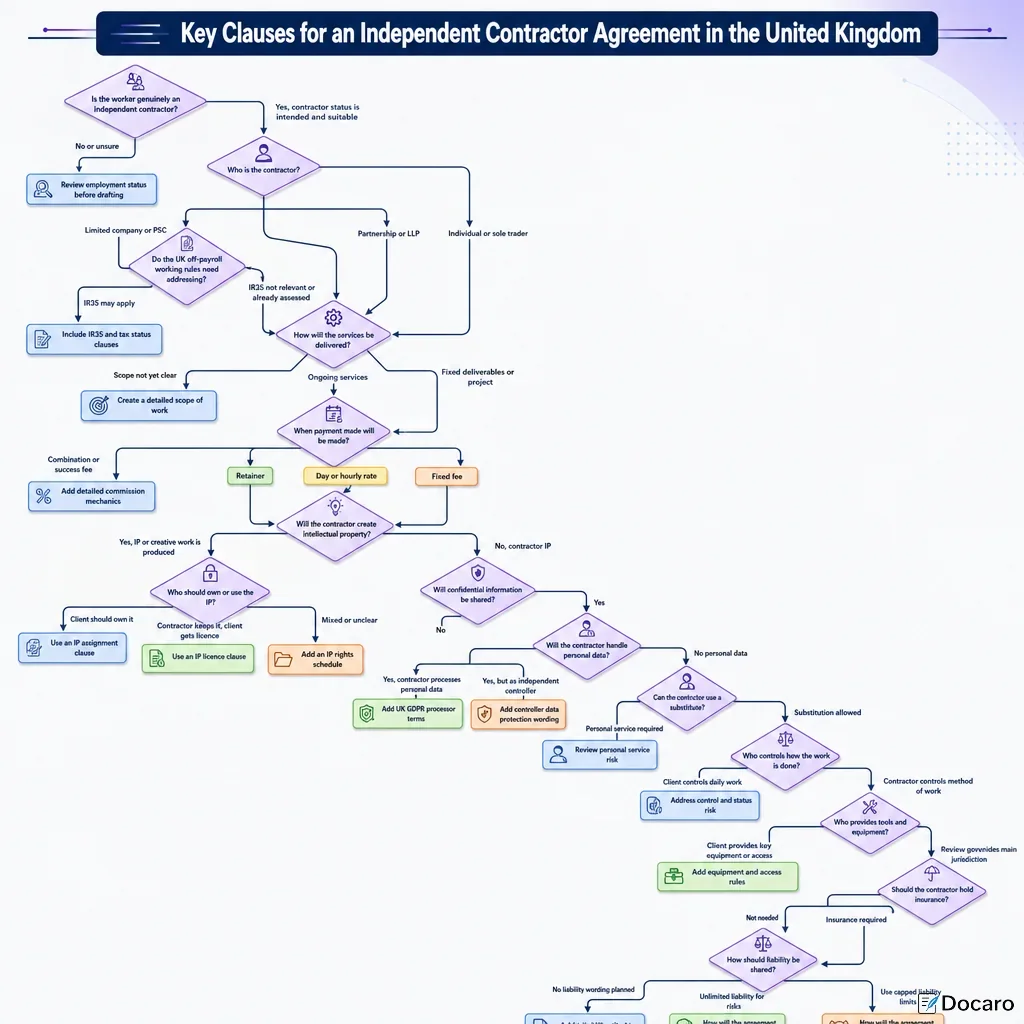
Is the worker genuinely an independent contractor?
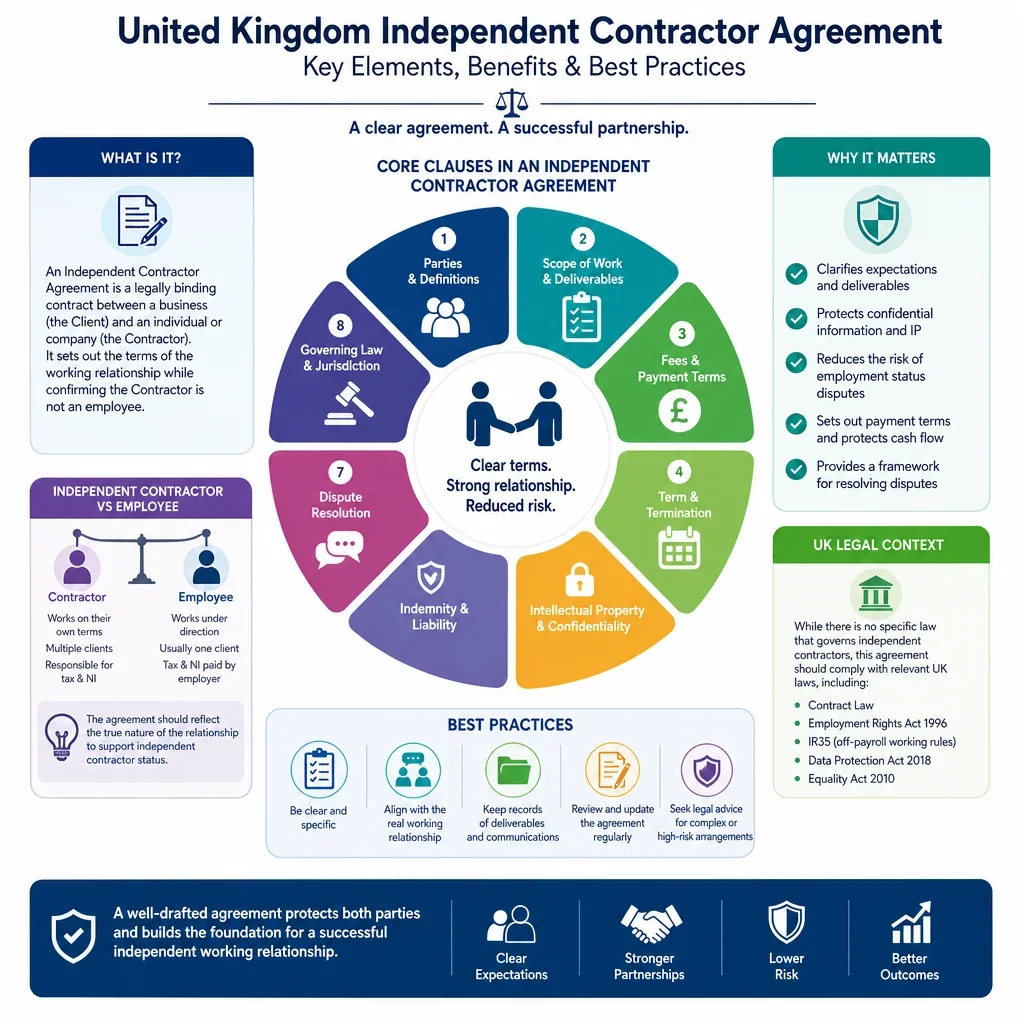
Why Are Independent Contractor Agreement Clauses Important In The UK?
Choosing the right clauses helps make the agreement match the real commercial relationship. In the United Kingdom, a contractor agreement is not judged by wording alone. Courts, tribunals and HMRC may look at how the parties actually work in practice, including control, personal service, substitution, mutual obligations and financial risk.
How Can The Right Clauses Reduce Employment Status Risk?
A clear contractor agreement can help show that the contractor is in business on their own account. Clauses on substitution, control, equipment, payment, tax responsibility and independence are especially important. If the relationship is wrongly described, the client may face claims for employment rights, holiday pay, PAYE, National Insurance and other liabilities.
Why Should IP And Confidentiality Be Covered Clearly?
UK intellectual property rules can be different for contractors and employees. A client may not automatically own work created by an independent contractor unless the agreement assigns those rights. Confidentiality clauses also protect trade secrets, customer information, pricing, software, business plans and other sensitive material.
When Does Data Protection Need Extra Clauses?
If a contractor handles personal data, the UK GDPR and Data Protection Act 2018 may require specific wording. A data processing clause or data protection schedule can set out instructions, security duties, breach reporting, sub-processors, deletion and audit rights.
What Happens If Key Clauses Are Missing?
Missing or unclear clauses can lead to disputes about payment, scope, ownership, liability, termination and post-contract restrictions. They can also weaken the client's position if the arrangement is challenged by HMRC or in a tribunal.
For further guidance, see GOV.UK employment status, HMRC CEST guidance, off-payroll working rules and the ICO guidance on controllers and processors.
FAQs
You Might Also Be Interested In