Choosing The Right Independent Contractor Agreement In The United Kingdom
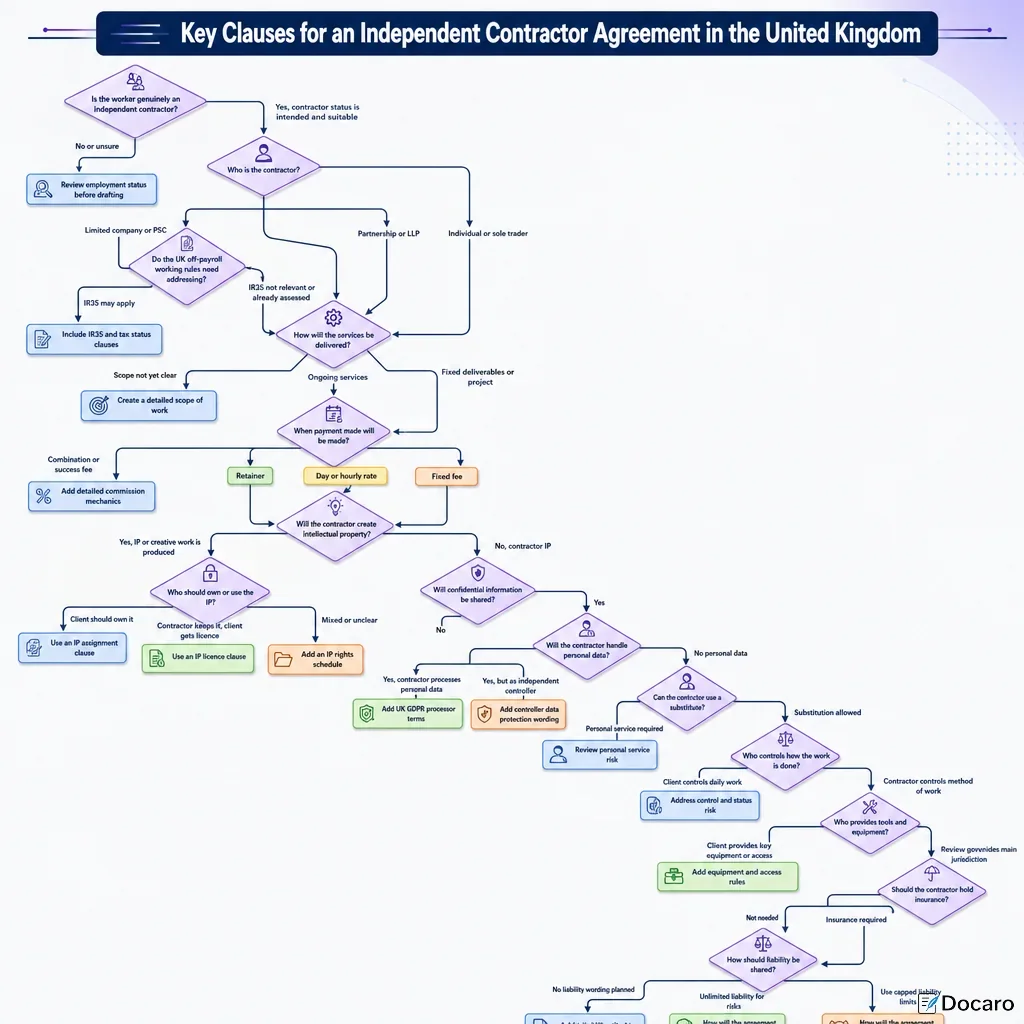
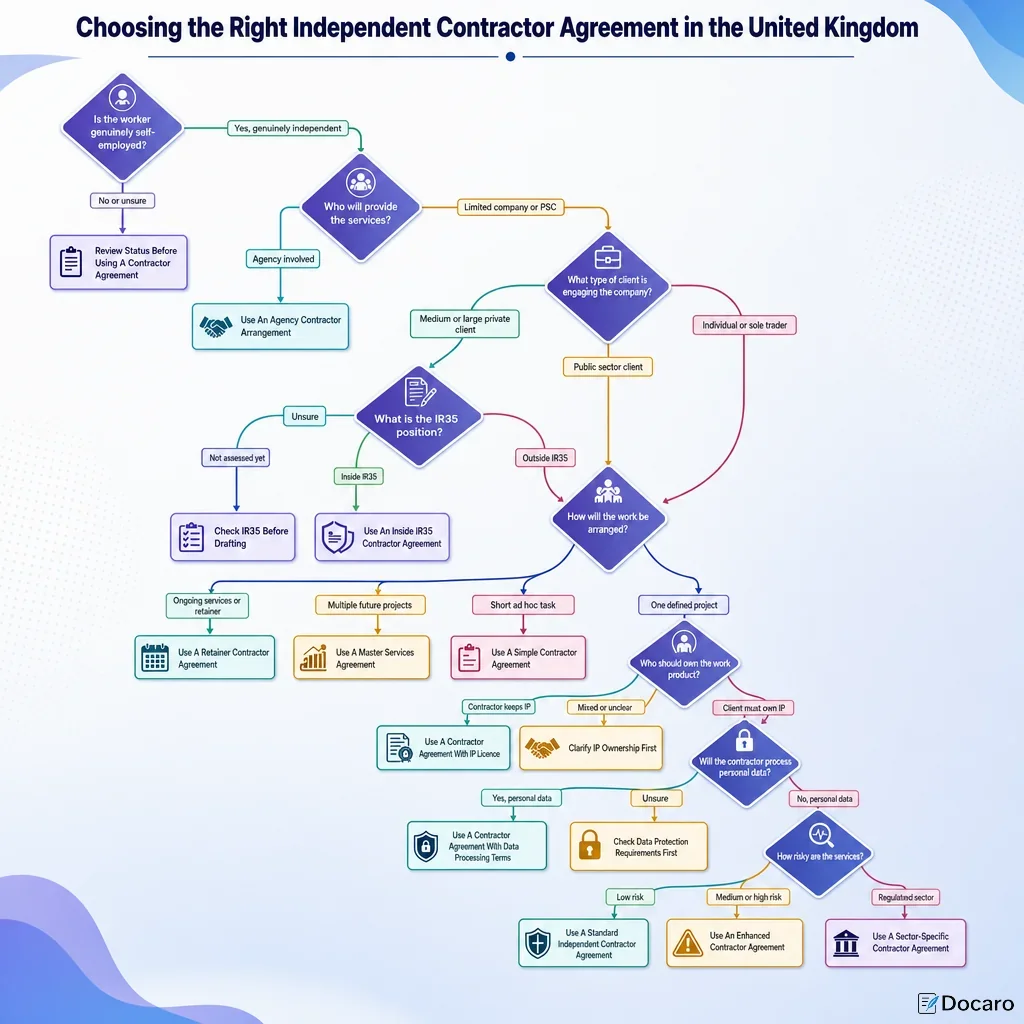
Is the worker genuinely self-employed?
Why Is Choosing The Right UK Independent Contractor Agreement Important?
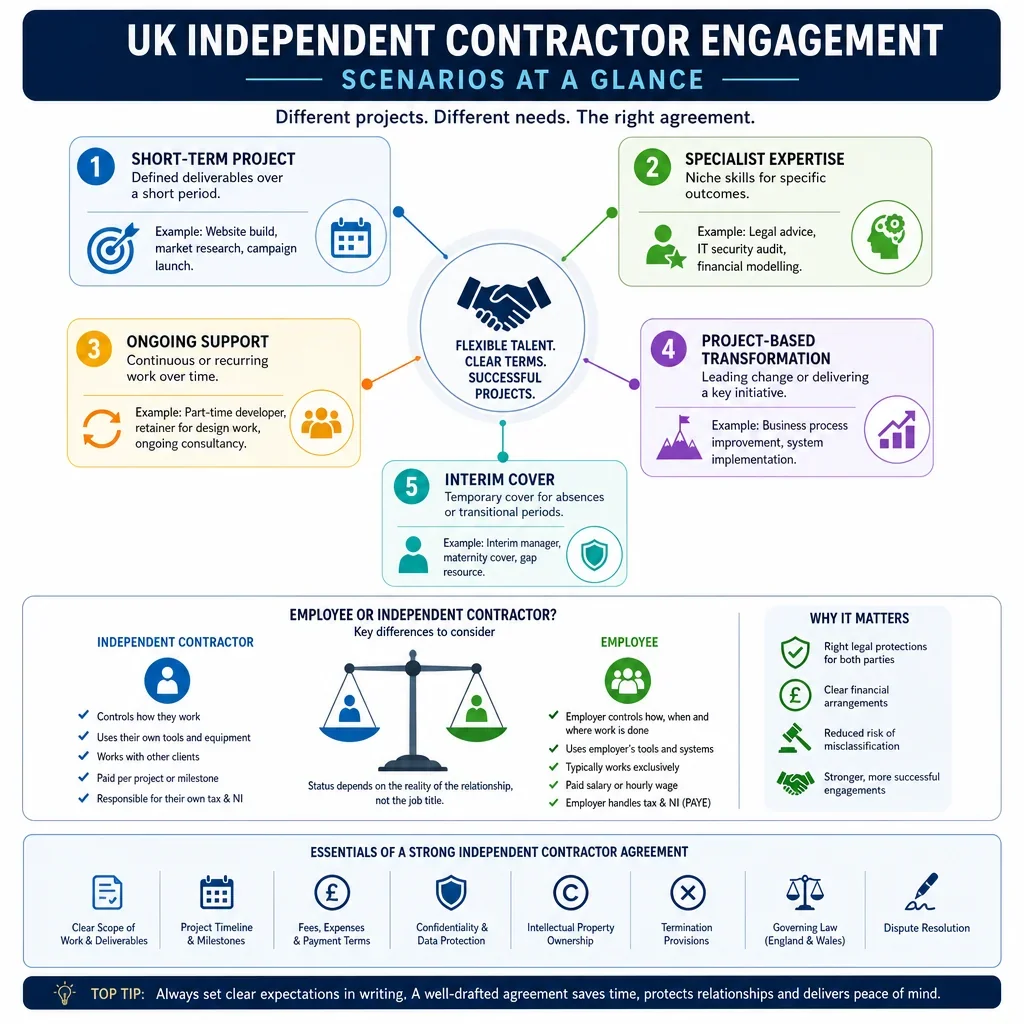
Choosing the right independent contractor agreement helps make the legal and tax position match the real working relationship. In the United Kingdom, calling someone a contractor does not automatically make them self-employed. HMRC, tribunals and courts look at how the arrangement works in practice.
How Can The Wrong Agreement Create Employment Status Risk?
If the contract gives the client too much control, requires personal service, or looks like ongoing employment, the contractor may be treated as an employee or worker. This can lead to claims for holiday pay, notice pay, minimum wage rights or other statutory protections.
Why Does IR35 Matter For UK Contractor Agreements?
Where a contractor works through a limited company or personal service company, the IR35 and off-payroll working rules may decide who is responsible for tax status and deductions. The agreement should support the correct status decision and should not contradict the actual working practices.
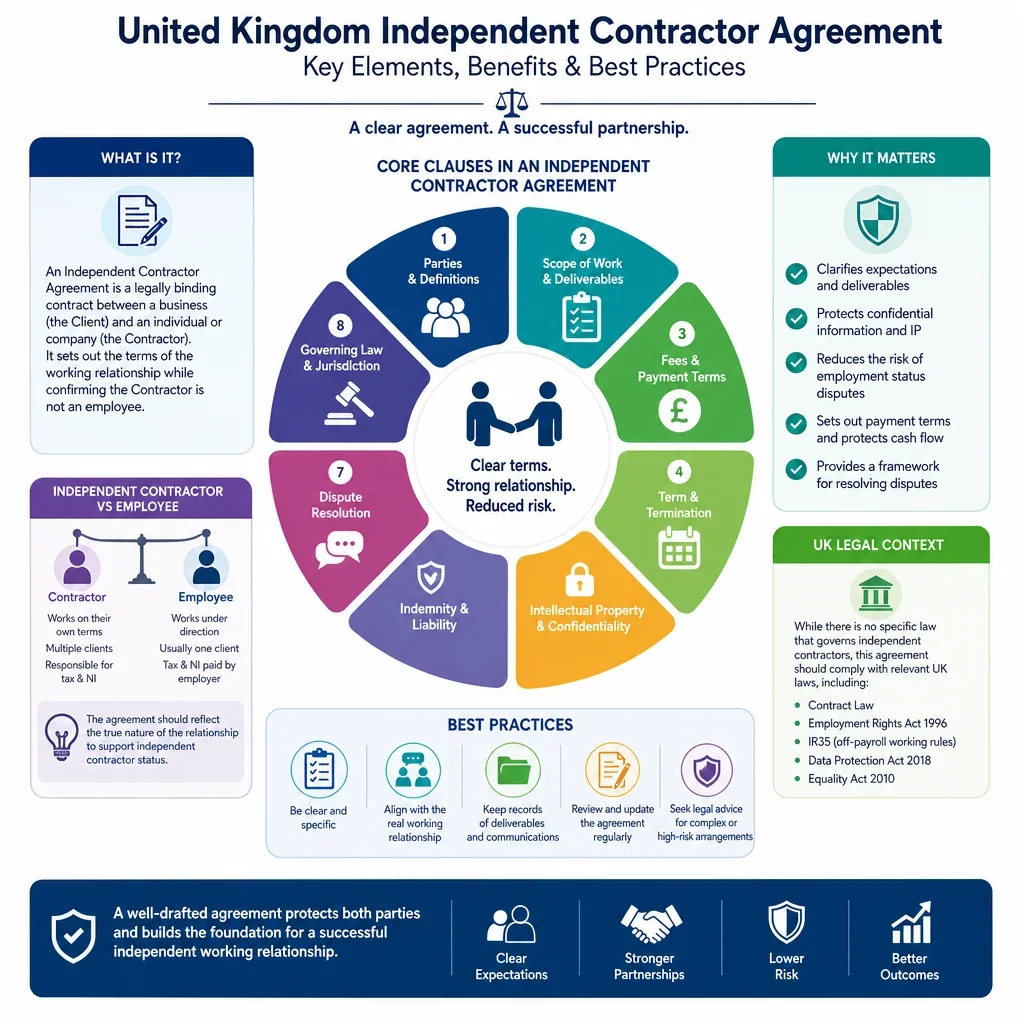
What Should A Good Independent Contractor Agreement Cover?
- Scope of work, deliverables, milestones and acceptance rules.
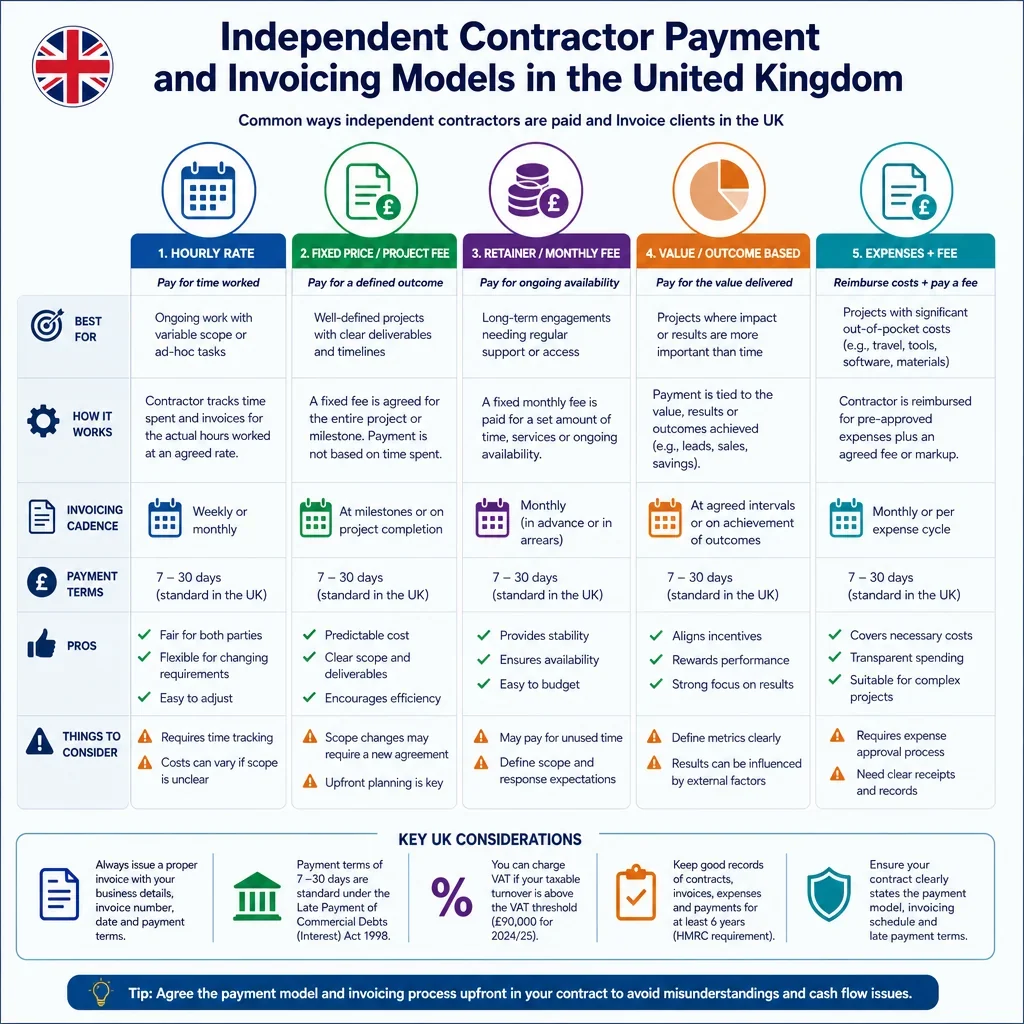
- Fees and expenses, including VAT and payment timing.
- Intellectual property, especially for software, designs, documents and creative work.
- Confidentiality and data protection, including UK GDPR terms where needed.
- Insurance, liability and indemnities, particularly for higher-risk services.
- Termination rights and what happens to unfinished work.
A well-matched agreement reduces disputes, improves compliance and gives both sides a clearer commercial framework for the engagement.
FAQs
You Might Also Be Interested In