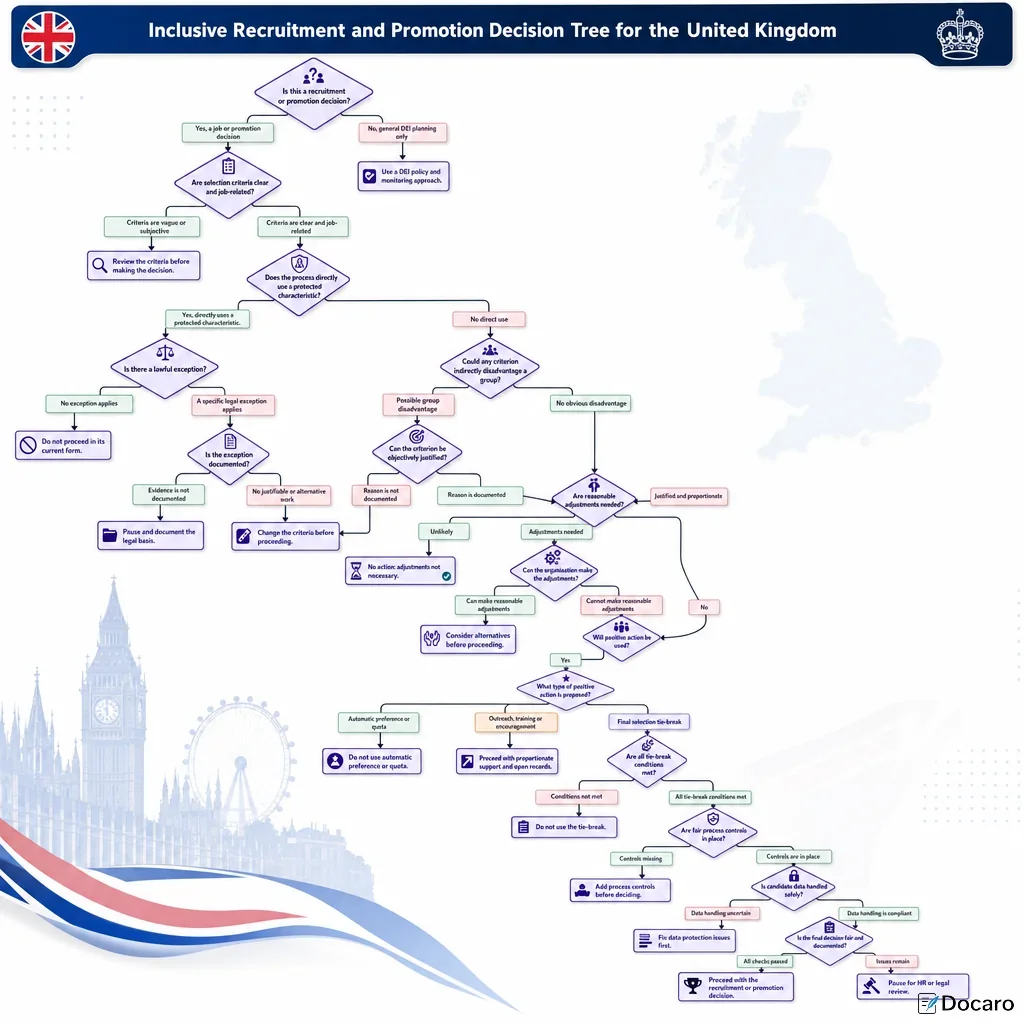
Inclusive Recruitment And Promotion Decision Tree For The United Kingdom
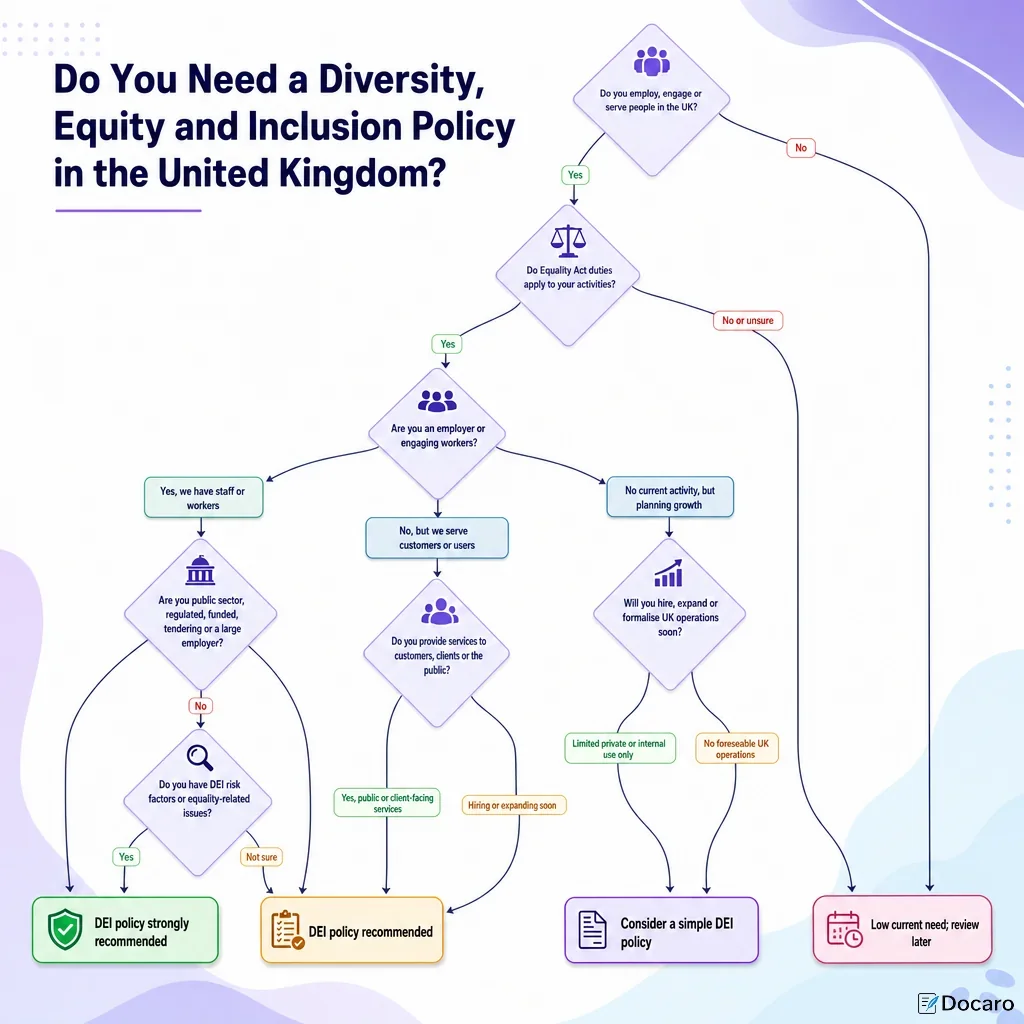
Is this a recruitment or promotion decision?
Why Is Inclusive Recruitment And Promotion Important In The UK?
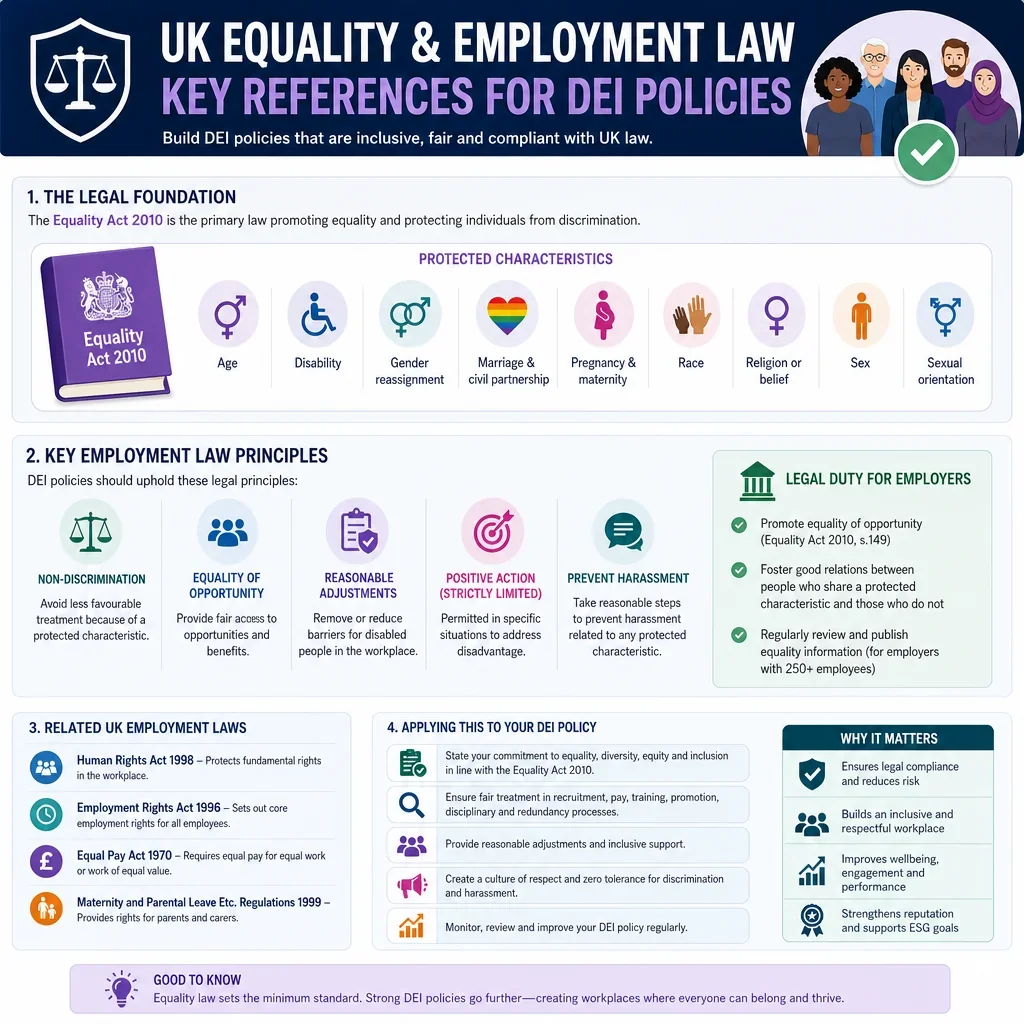
Recruitment and promotion decisions shape who gets access to work, career progression, pay, and leadership opportunities. In the United Kingdom, employers must comply with the Equality Act 2010, which protects people from discrimination connected to protected characteristics such as age, disability, race, sex, religion or belief, sexual orientation, gender reassignment, pregnancy and maternity, and marriage or civil partnership.
How Does The Equality Act 2010 Affect Hiring And Promotion?
The Equality Act 2010 applies to job adverts, application forms, shortlisting, interviews, tests, offers, promotion panels, training opportunities, and workplace decisions. A decision that appears neutral can still be unlawful if it disadvantages a protected group and cannot be objectively justified. Employers must also consider reasonable adjustments for disabled applicants and employees.
Why Should Employers Document DEI Decisions?
Clear records help show that decisions were based on role-related criteria rather than assumptions, bias, or protected characteristics. Documentation is especially important where an employer uses positive action, rejects a requested adjustment, or relies on a requirement that may affect groups differently.
What Are The Risks Of Getting It Wrong?
- Legal risk: discrimination claims can lead to employment tribunal proceedings and uncapped compensation.
- Reputational risk: unfair or unclear processes can damage trust with staff, applicants, clients, and regulators.
- Operational risk: biased decisions can reduce workforce diversity, weaken decision-making, and limit access to talent.
- Data protection risk: DEI monitoring data may include sensitive personal data and must be handled lawfully under UK data protection rules.
How Can A DEI Policy Support Better Decisions?
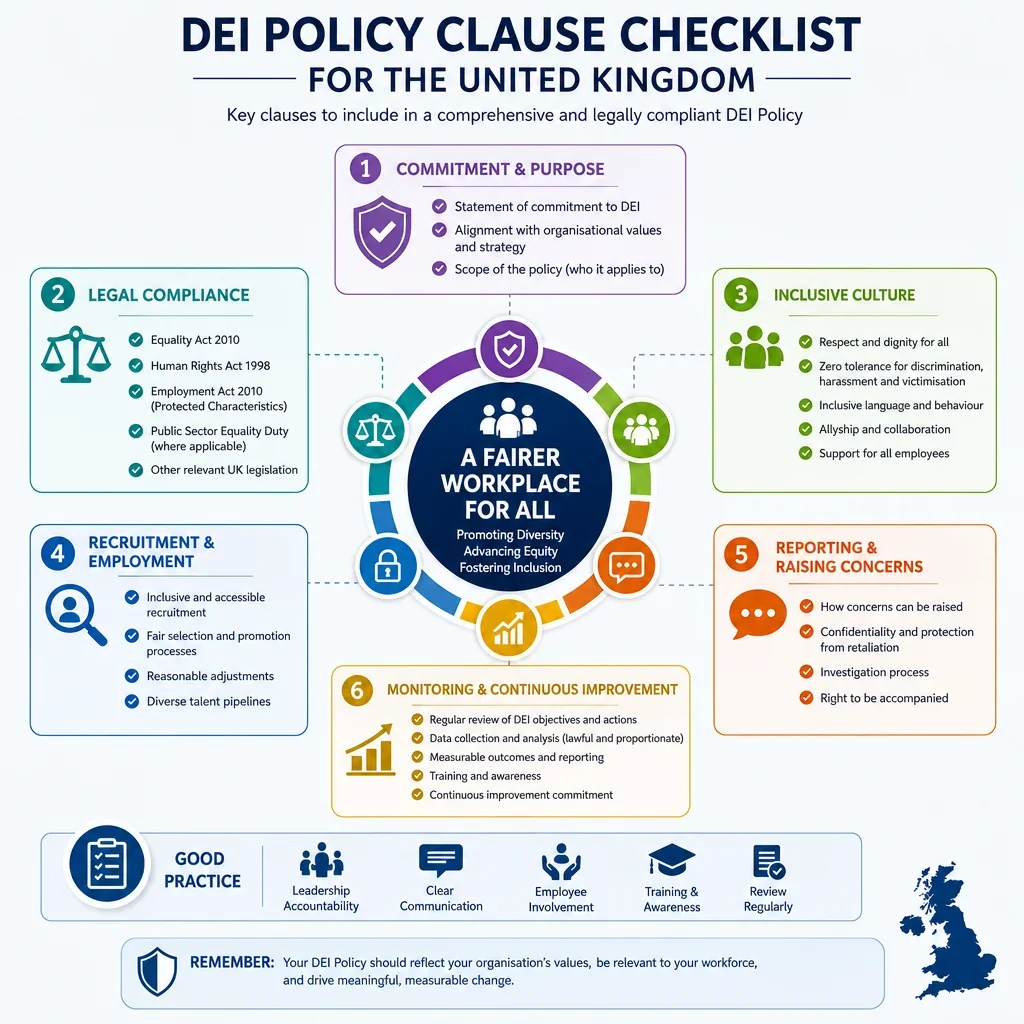
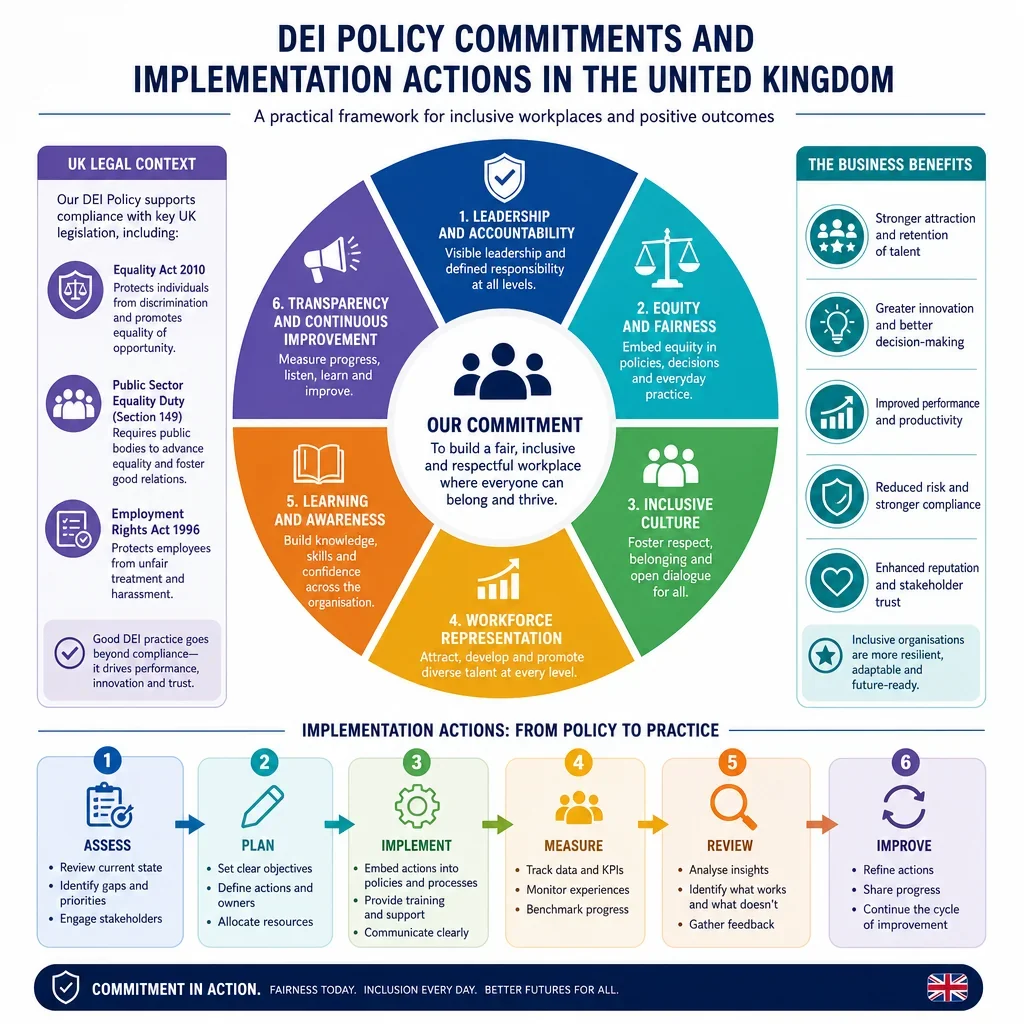
A strong Diversity, Equity and Inclusion Policy helps employers set expectations, define fair processes, explain reasonable adjustments, guide lawful positive action, and build accountability. It should be practical, UK-specific, and aligned with recruitment, promotion, grievance, disciplinary, and data protection procedures.
FAQs
You Might Also Be Interested In