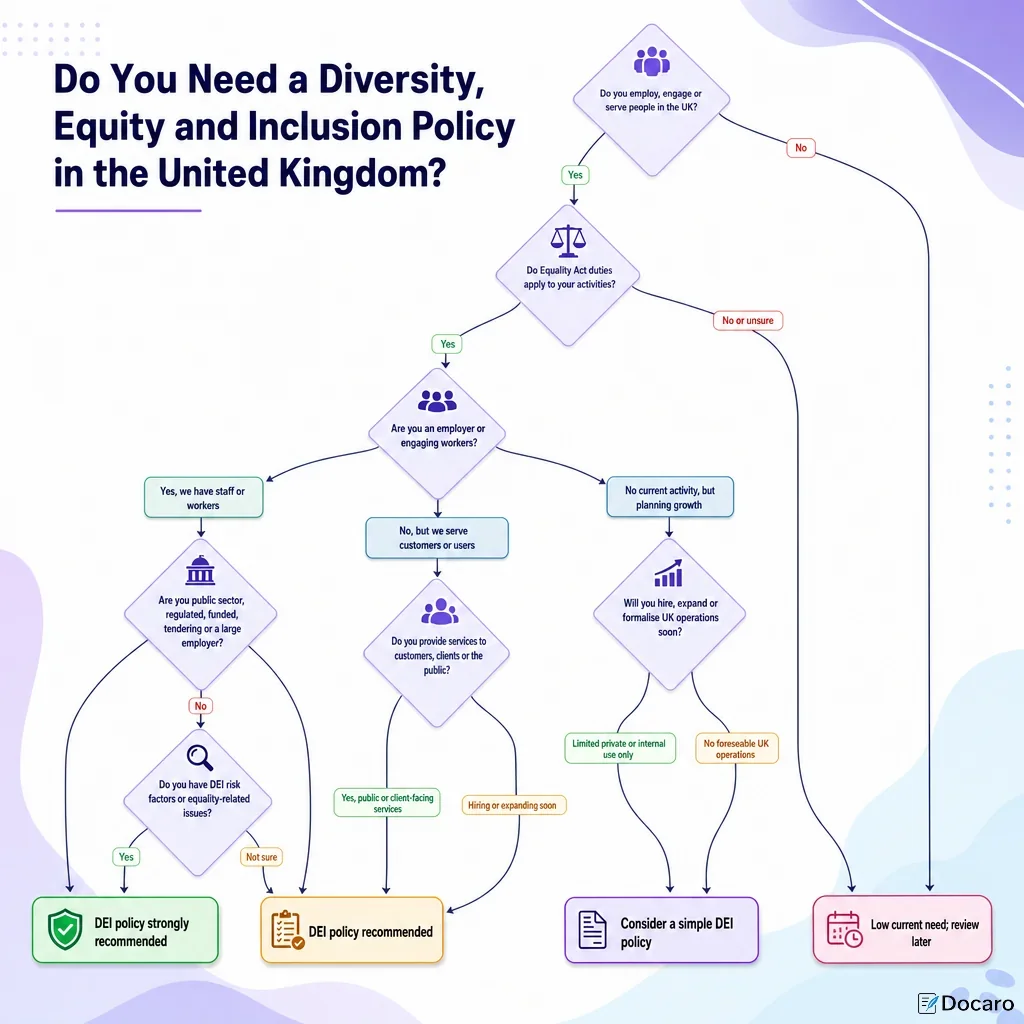
Do You Need A Diversity, Equity And Inclusion Policy In The United Kingdom?
Do you employ, engage or serve people in the UK?
Do UK Organisations Need A Diversity, Equity And Inclusion Policy?
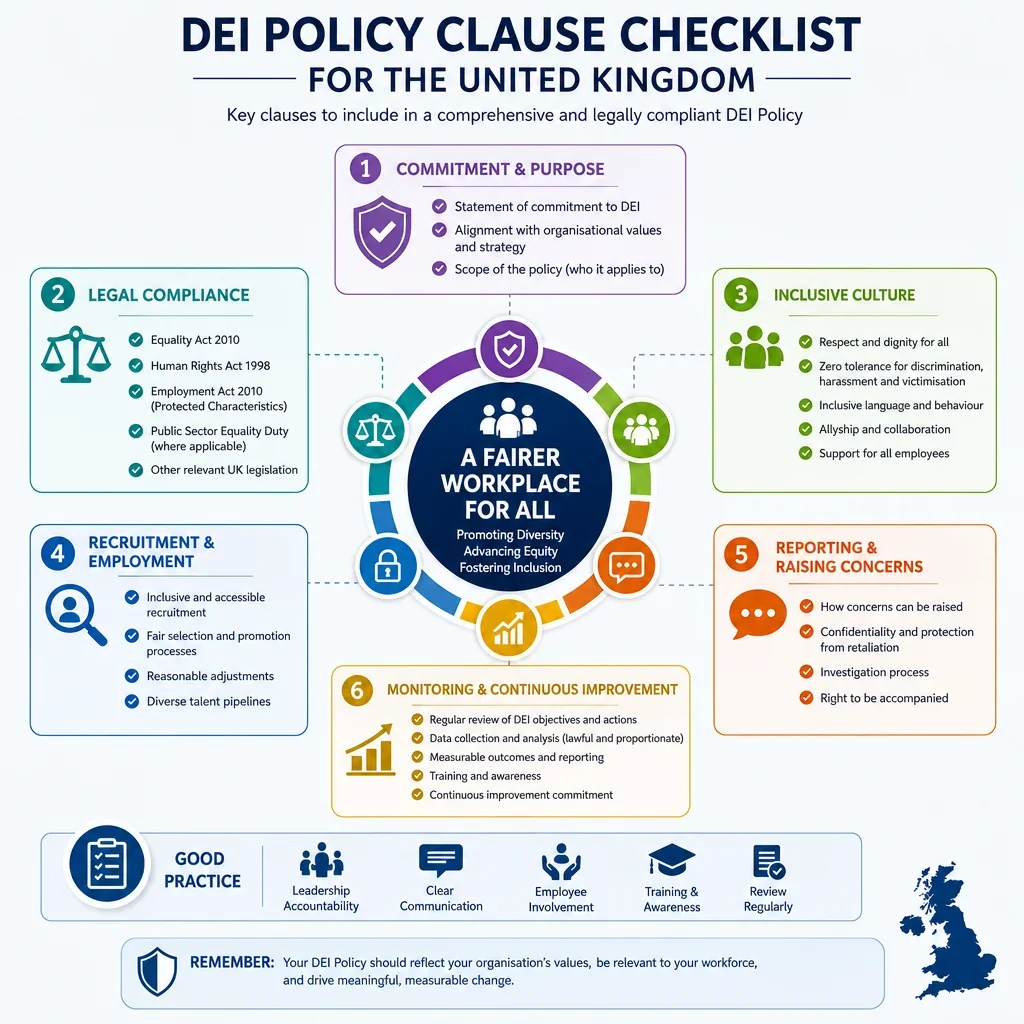
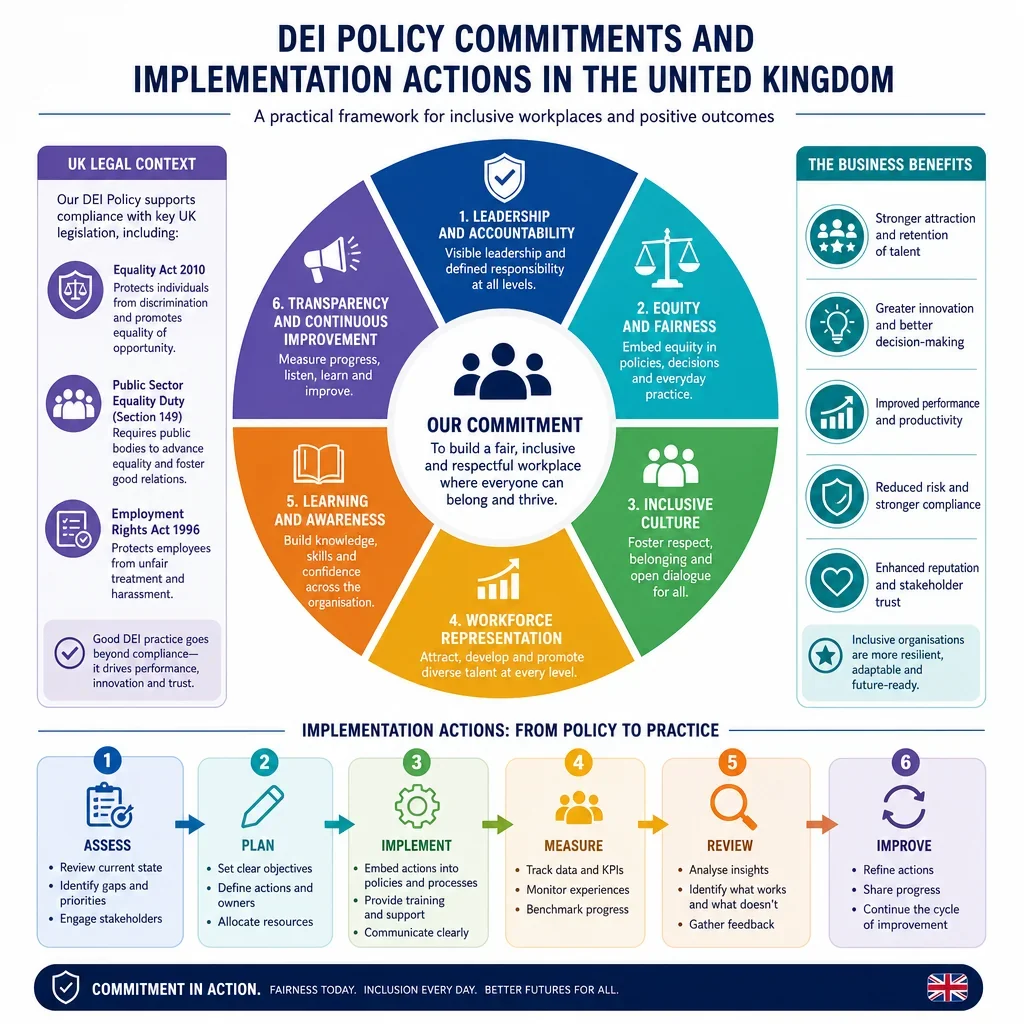
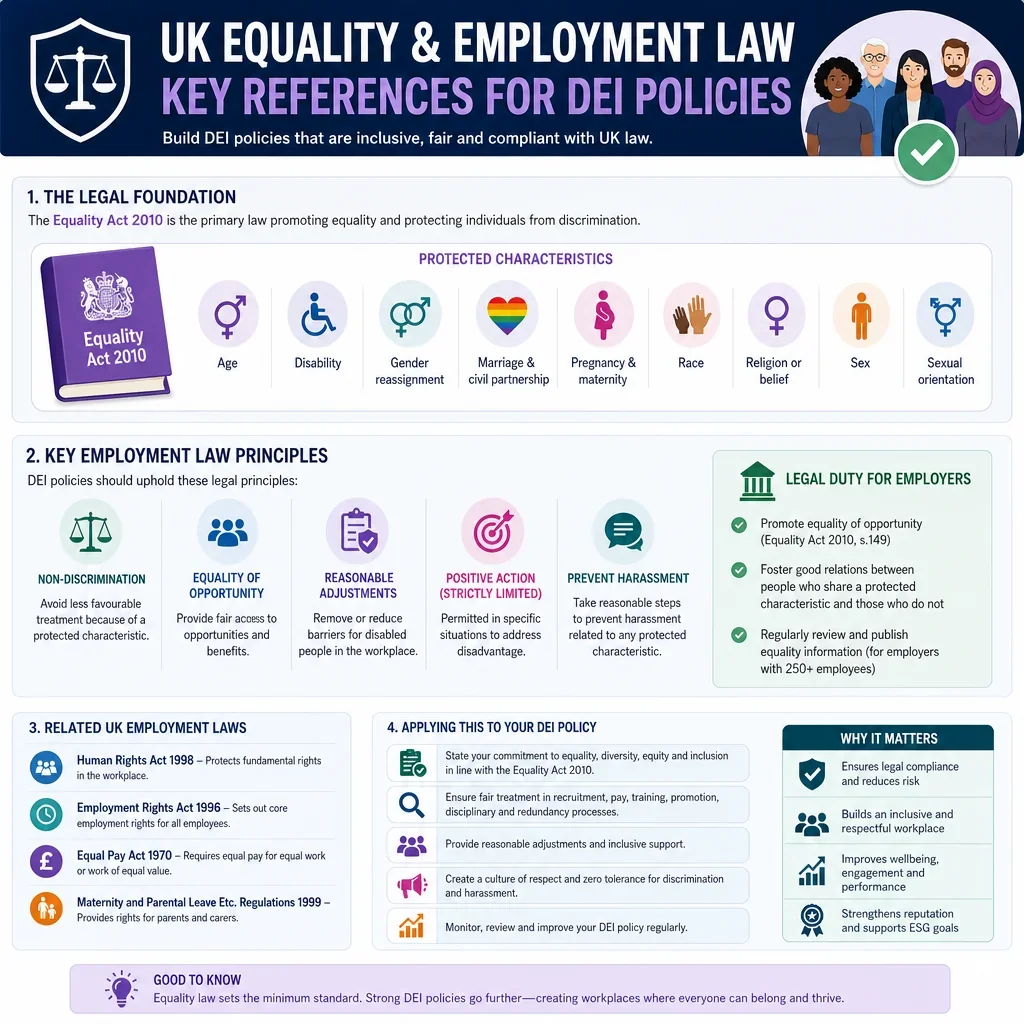
A Diversity, Equity and Inclusion Policy is not always a standalone legal requirement in the United Kingdom. However, many organisations have duties under the Equality Act 2010, including duties to avoid unlawful discrimination, harassment and victimisation. A clear policy helps translate those duties into day-to-day rules for staff, managers, applicants, customers and service users.
Why Is A DEI Policy Important For UK Employers?
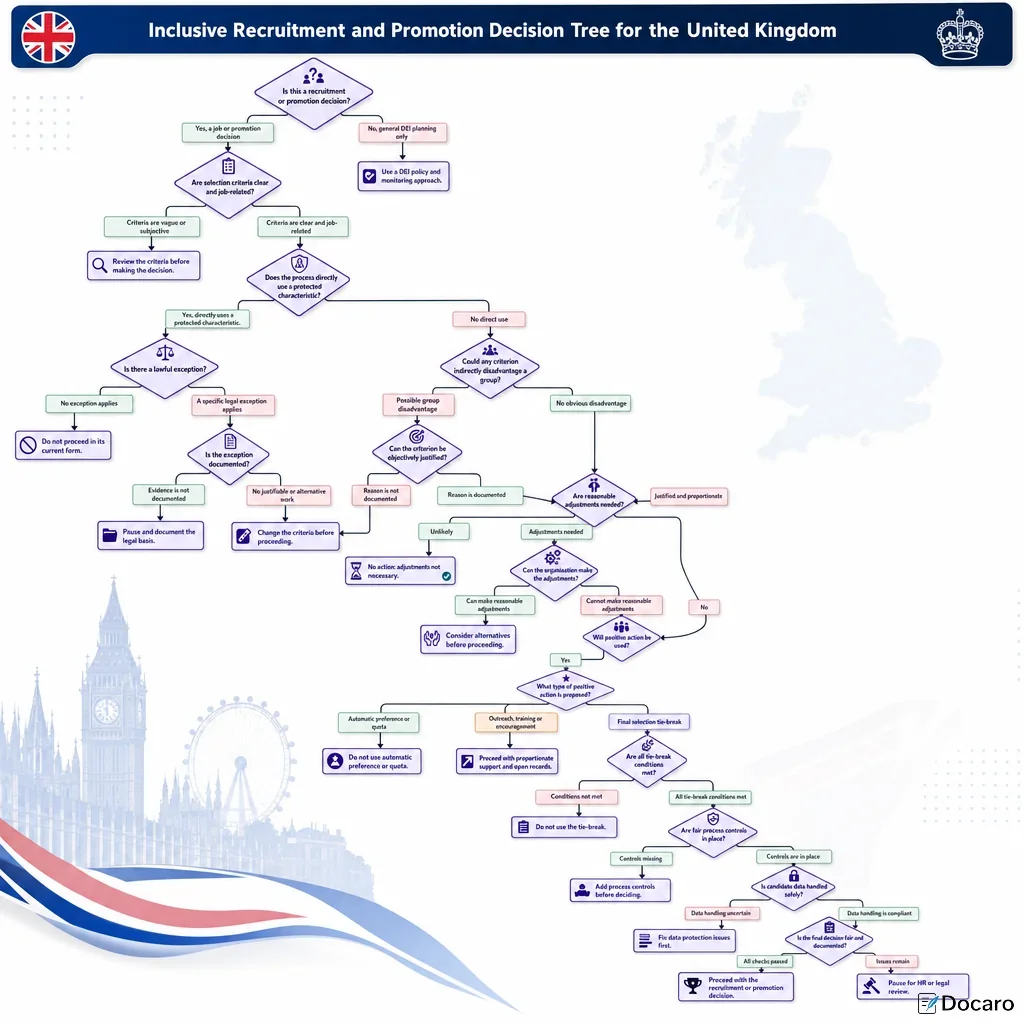
For UK employers, a DEI policy can support fair recruitment, promotion, pay decisions, workplace conduct, complaint handling and reasonable adjustments for disabled people. It can also help show that the organisation has taken equality seriously if a dispute, grievance or tribunal claim arises.
What Are The Risks Of Not Having A DEI Policy?
- Inconsistent decisions: managers may apply different standards when hiring, promoting or disciplining staff.
- Higher dispute risk: unclear expectations can contribute to grievances, discrimination complaints or reputational harm.
- Weak evidence of compliance: without a written policy, it may be harder to show that equality duties were understood and communicated.
- Missed commercial expectations: clients, funders, regulators and public sector buyers may expect evidence of DEI commitments.
When Should A UK Business Create Or Review Its DEI Policy?
A policy should be created or reviewed when an organisation hires staff, grows quickly, introduces new HR processes, serves the public, bids for contracts, receives complaints, or becomes subject to additional reporting or regulatory expectations. The policy should be practical, accurate and aligned with how the organisation actually operates.
This tool provides general guidance for the United Kingdom and should not replace legal advice on specific circumstances.
FAQs
You Might Also Be Interested In