Formal Invoice Field Checklist For The United Kingdom
Invoice Field | Field Purpose | Importance Level | Tax Conditional | Completion Guidance |
|---|---|---|---|---|
Supplier details | ||||
Supplier Legal Name | Identifies the business issuing the invoice. | Essential | false | Use the full registered or trading name consistently. |
Supplier Trading Name | Shows any brand or trading style used by the supplier. | Optional | false | Include only if different from the legal name. |
Supplier Address | Provides the supplier's business address. | Essential | false | Use the main business or registered office address. |
Registered Office Address | Shows the official registered office of a UK company. | Conditional | false | Include for limited companies and LLPs. |
Company Registration Number | Identifies the incorporated supplier at Companies House. | Conditional | false | Use the exact Companies House number. |
Place Of Registration | States whether the company is registered in England and Wales, Scotland, or Northern Ireland. | Conditional | false | Match the jurisdiction shown at Companies House. |
Supplier Contact Email | Gives a contact point for invoice queries. | Usually included | false | Use a monitored finance or accounts email address. |
Supplier Phone Number | Provides a phone contact for payment or invoice queries. | Optional | false | Include the country code for international customers. |
Supplier Website | Provides a website for verification or support. | Optional | false | Use the main secure website URL. |
Customer details | ||||
Customer Legal Name | Identifies the customer being charged. | Essential | false | Use the customer's full legal or account name. |
Customer Billing Address | Shows where the invoice is addressed for billing. | Essential | false | Use the customer's billing address, not necessarily delivery address. |
Customer VAT Number | Records the customer's VAT number where relevant. | Conditional | true | Include for reverse charge, cross-border, or customer VAT reporting needs. |
Customer Contact Person | Names the person responsible for approving or querying the invoice. | Usually included | false | Use the buyer, project lead, or accounts payable contact. |
Customer Email | Records where the invoice was or should be sent. | Usually included | false | Use the customer's accounts payable or billing email. |
Delivery Address | Shows where goods or services were delivered. | Conditional | false | Include when different from the billing address. |
Invoice identifiers | ||||
Document Title | Labels the document as an invoice. | Essential | false | Use a clear title such as Invoice or VAT Invoice. |
Invoice Number | Provides a unique reference for the invoice. | Essential | false | Use a sequential unique number do not reuse numbers. |
Invoice Date | Shows when the invoice was issued. | Essential | false | Use the actual issue date in a clear UK format. |
Tax details | ||||
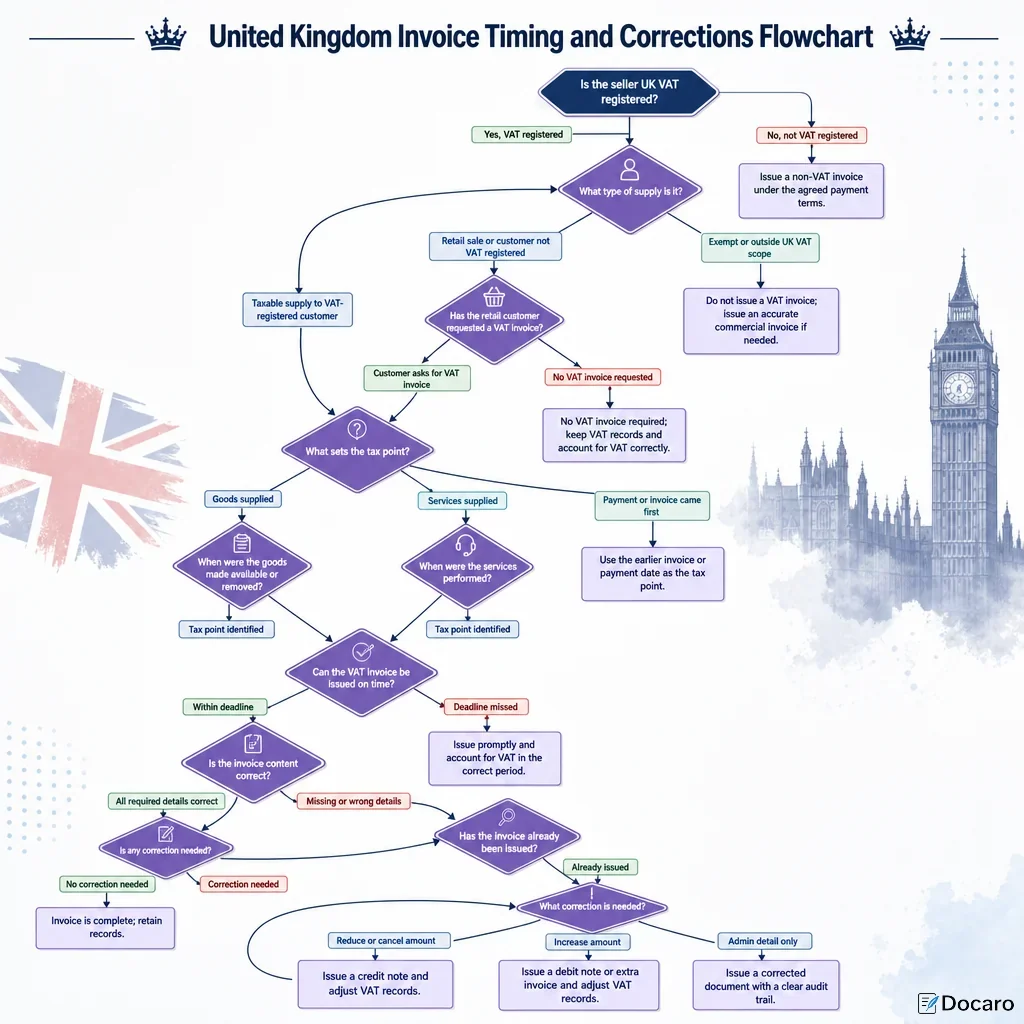
Tax Point | States the VAT time of supply. | Conditional | true | Include when different from the invoice date or required for VAT records. |
Invoice identifiers | ||||
Purchase Order Number | Links the invoice to the customer's purchase order. | Conditional | false | Include exactly as supplied by the customer. |
Contract Reference | Links the invoice to a contract or framework agreement. | Usually included | false | Use the contract number, statement of work, or framework reference. |
Project Reference | Associates the charge with a project, matter, or job. | Optional | false | Use the customer's preferred project code where known. |
Delivery Note Reference | Links goods supplied to delivery documentation. | Conditional | false | Include for goods deliveries or fulfilment records. |
Currency | States the currency of all invoice amounts. | Essential | false | Use GBP unless another currency is agreed state currency code. |
Line items | ||||
Item Description | Describes the goods or services supplied. | Essential | false | Be specific enough to identify what was supplied. |
Service Period | States the period covered by the billed services. | Conditional | false | Use start and end dates for subscriptions, retainers, or time-based work. |
Quantity | Shows the number of units supplied. | Essential | false | Use measurable units such as hours, days, items, or months. |
Unit Price | Shows the price per unit before totals. | Essential | false | State whether the price is excluding or including VAT. |
Line Net Amount | Shows the line total before VAT. | Essential | false | Calculate quantity multiplied by unit price after line discounts. |
Line Discount | Shows any discount applied to an individual line. | Conditional | false | Show the discount rate or amount before calculating VAT. |
Expenses Or Disbursements | Shows reimbursed costs charged to the customer. | Conditional | true | Separate true disbursements from recharged costs for VAT treatment. |
Tax details | ||||
Subtotal Excluding VAT | Shows the total taxable value before VAT. | Essential | false | Sum all net line amounts before VAT. |
VAT Registration Number | Identifies the supplier's VAT registration. | Conditional | true | Include only if VAT registered and issuing a VAT invoice. |
VAT Rate | Shows the VAT rate applied to each line or supply. | Conditional | true | Use the correct rate, such as standard, reduced, zero, exempt, or outside scope. |
VAT Amount | Shows VAT charged on the invoice. | Conditional | true | Calculate VAT by rate and show totals clearly. |
VAT Breakdown By Rate | Separates VAT totals for different VAT rates. | Conditional | true | Group taxable values and VAT amounts by rate. |
Total Including VAT | Shows the final gross amount payable. | Essential | false | Ensure the total reconciles to net amount plus VAT and adjustments. |
Reverse Charge Statement | States that the customer accounts for VAT under reverse charge rules. | Conditional | true | Use where domestic reverse charge or cross-border reverse charge applies. |
CIS Deduction | Shows Construction Industry Scheme deduction applied to labour. | Conditional | true | Show CIS deductions separately from VAT and net totals. |
Not VAT Registered Statement | Clarifies that no VAT is charged because the supplier is not VAT registered. | Optional | true | Use simple wording and do not show VAT as charged. |
Payment details | ||||
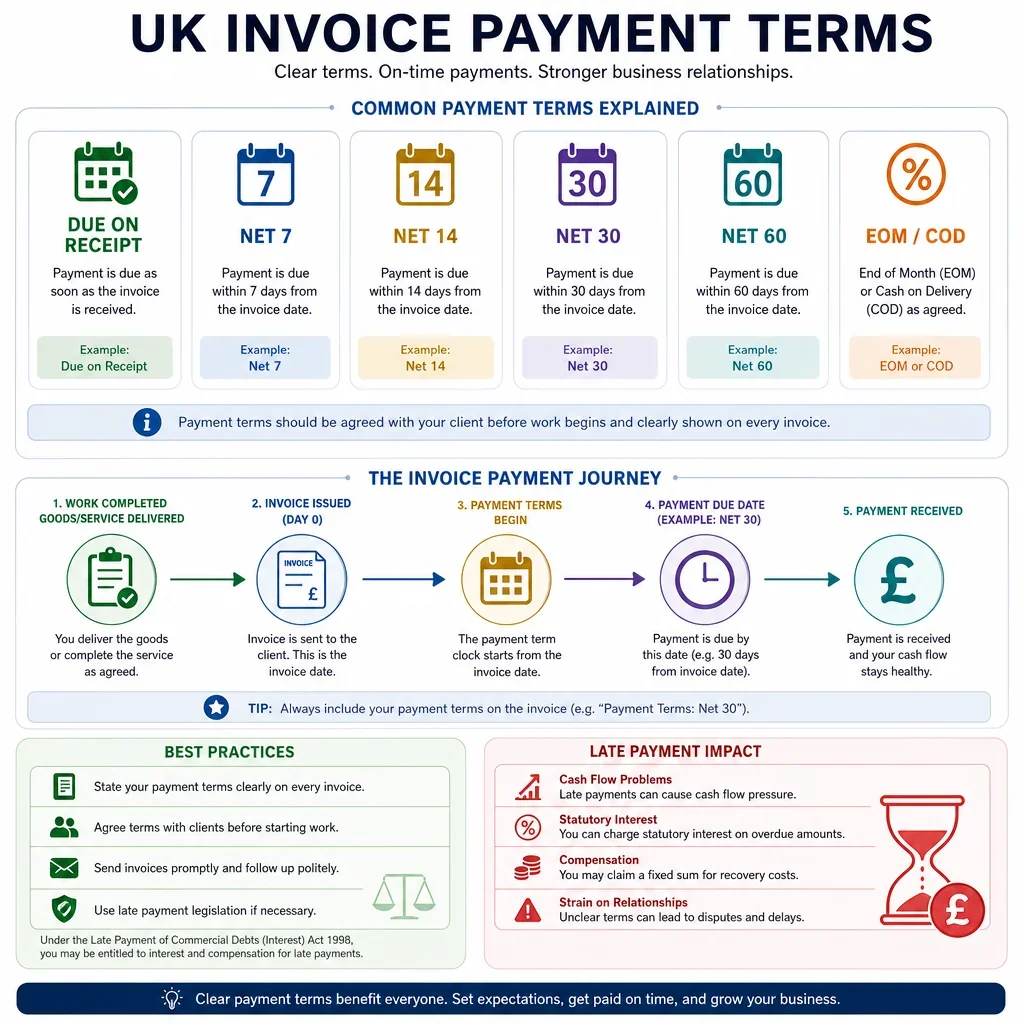
Payment Due Date | States the date by which payment should be made. | Essential | false | Calculate from agreed terms, or state a specific date. |
Payment Terms | Explains the agreed payment period or trigger. | Essential | false | Use clear wording such as payable within 30 days of invoice date. |
Amount Payable | States the exact amount the customer must pay. | Essential | false | Match the final invoice total after credits, deductions, and deposits. |
Bank Account Name | Shows the payee name for bank transfers. | Usually included | false | Use the exact name held by the bank to support confirmation of payee. |
Sort Code | Provides the UK bank sort code for payment. | Usually included | false | Format as six digits, commonly with hyphens. |
Account Number | Provides the UK bank account number for payment. | Usually included | false | Check the digits carefully before issuing the invoice. |
IBAN | Provides an international bank account identifier. | Conditional | false | Include for international bank transfers. |
BIC Or SWIFT Code | Identifies the bank for international transfers. | Conditional | false | Include with IBAN for overseas customers where needed. |
Payment Reference | Tells the customer what reference to quote when paying. | Essential | false | Use the invoice number or customer account number. |
Accepted Payment Methods | Lists how the customer may pay. | Usually included | false | State options such as bank transfer, card, Direct Debit, or cheque. |
Payment Link | Provides a secure online payment route. | Optional | false | Use an HTTPS link from a trusted payment provider. |
Remittance Email | Gives the address for sending remittance advice. | Optional | false | Use an accounts receivable email address. |
Terms and notes | ||||
Late Payment Interest Statement | Warns that statutory or contractual late payment interest may apply. | Usually included | false | Use wording consistent with the contract and UK late payment rules. |
Late Payment Compensation Note | Notes potential fixed compensation for late commercial payment. | Optional | false | Refer to statutory compensation only for qualifying business debts. |
Credit Terms Note | Clarifies whether credit was agreed and on what basis. | Optional | false | Use only if different from standard payment terms. |
Retention Of Title Note | States whether ownership of goods is retained until payment. | Conditional | false | Use where supported by agreed sale terms. |
Warranty Or Service Note | Summarises any warranty, support, or service coverage. | Optional | false | Keep brief and refer to separate terms if detailed. |
Special Instructions | Records customer-specific billing or processing instructions. | Optional | false | Include portal upload details, approval steps, or required coding. |
Invoice Query Contact | Identifies who to contact about invoice disputes or corrections. | Usually included | false | Provide a named team, email, and response route. |
Thank-You Note | Adds a short courteous closing message. | Optional | false | Keep it brief and professional. |
What Must A UK Formal Invoice Include?
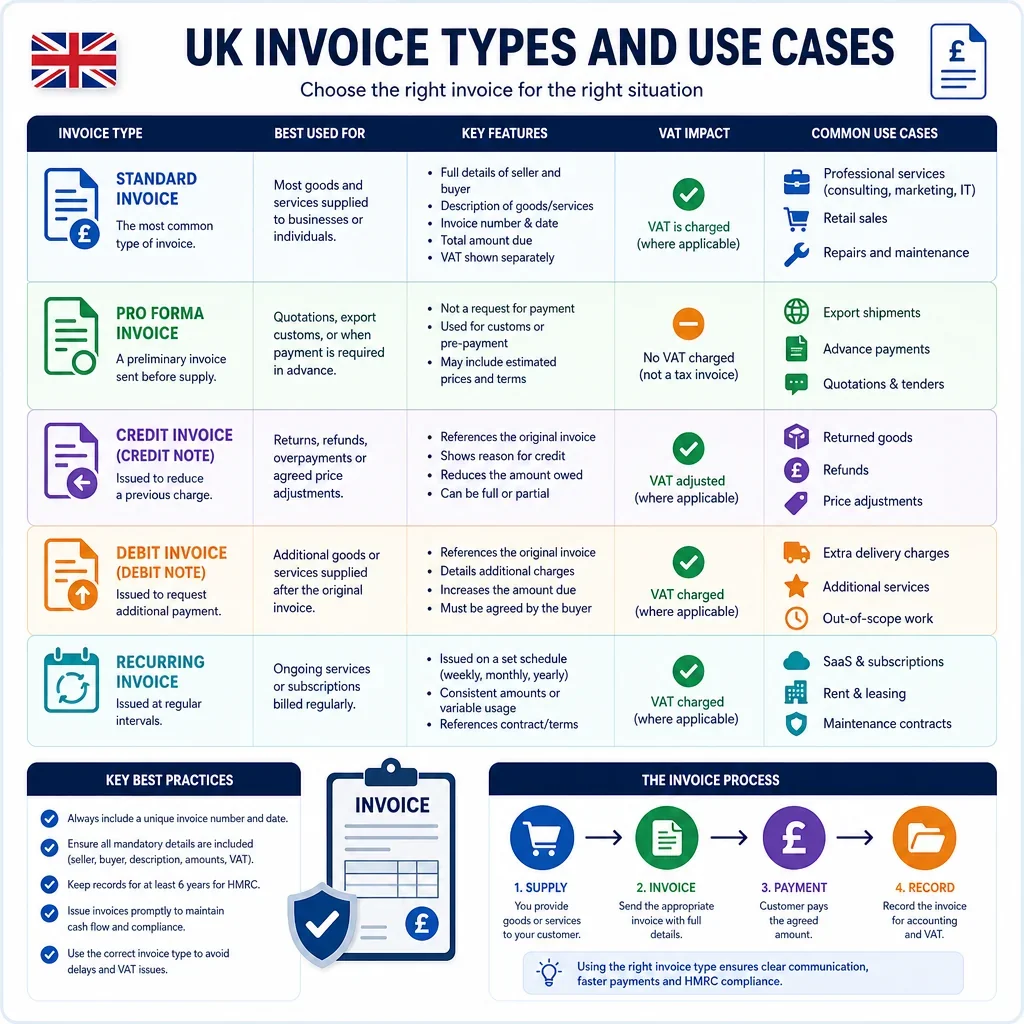
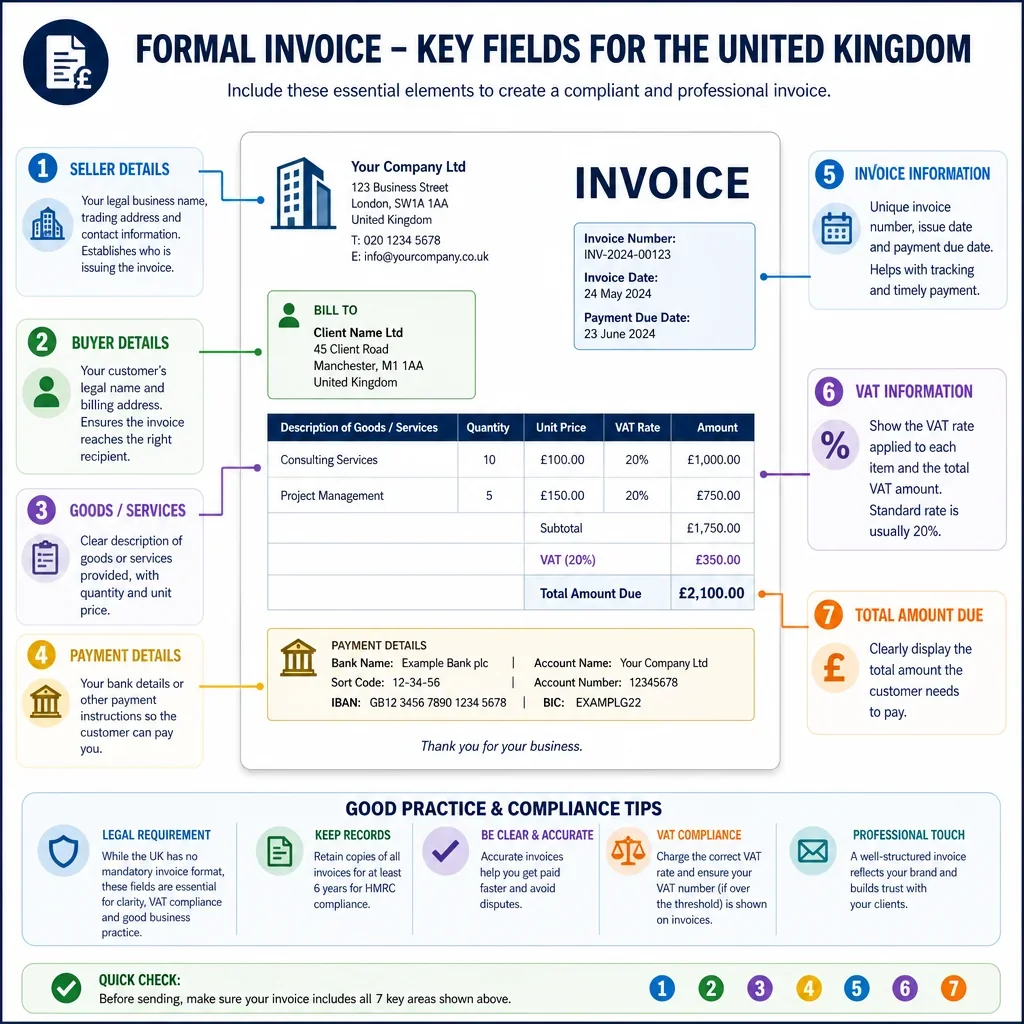
A UK invoice should clearly identify the supplier, the customer, the invoice number, the invoice date, what was supplied, the amount due, and how payment should be made. If the supplier is VAT registered, the invoice normally needs additional VAT information such as the VAT registration number, tax point, VAT rate, VAT amount, and totals excluding and including VAT.
When Do VAT Fields Become Essential?
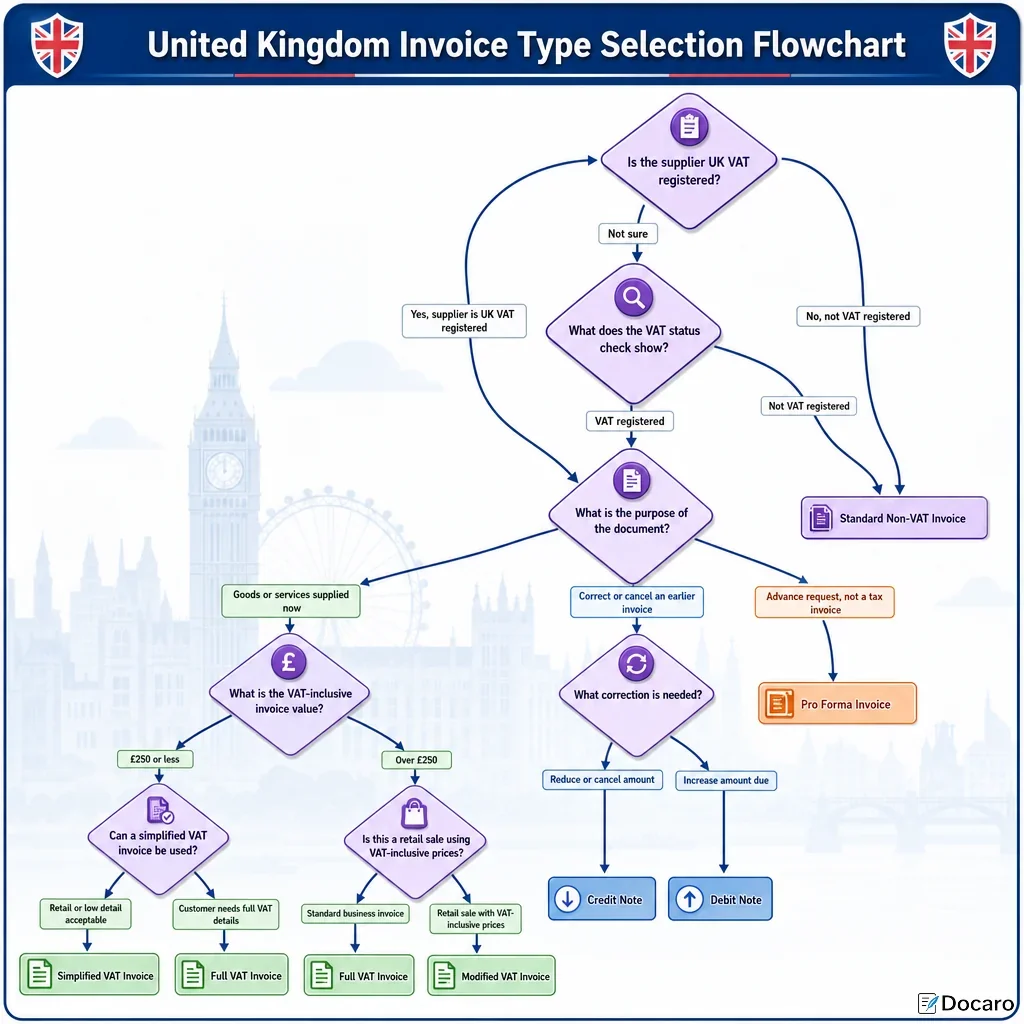
VAT-specific fields become essential when issuing a VAT invoice. HMRC guidance requires VAT invoices to include details such as a unique invoice number, supplier name and address, VAT registration number, time of supply, invoice date, description of goods or services, VAT rate, VAT payable, and totals. Simplified VAT invoices may be used for retail supplies of £250 or less, with reduced information requirements.
Which Invoice Details Help Avoid Payment Delays?
Payment delays are less likely where the invoice includes a clear purchase order number, customer billing contact, payment due date, accepted payment methods, bank details, payment reference, and late payment terms. For UK business-to-business debts, statutory interest and fixed compensation may apply under late payment legislation if payment is late.
What Company Information Should UK Limited Companies Show?
A UK limited company should include its registered company name, registered office address, company number, and place of registration on business documents. These details help the customer verify the legal entity issuing the invoice and support compliance with UK company disclosure rules.
FAQs
You Might Also Be Interested In