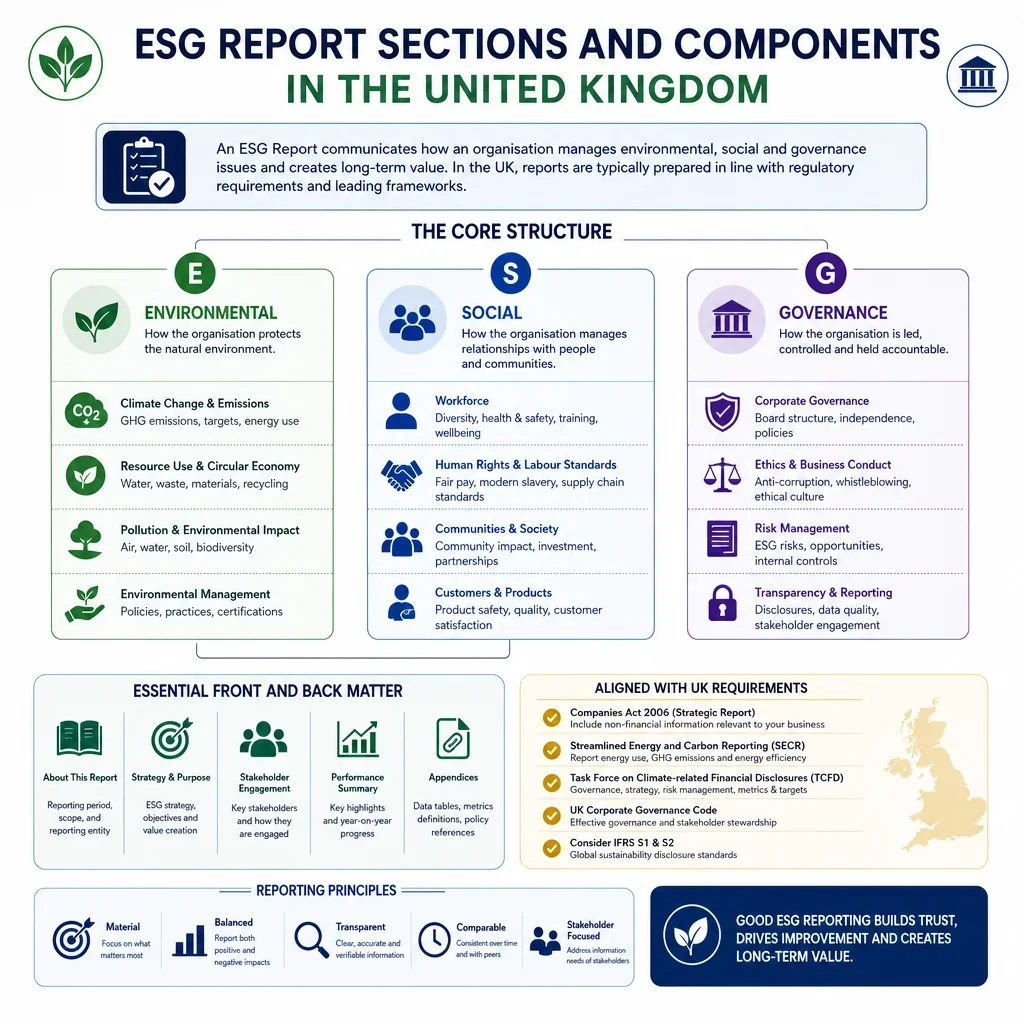
ESG Report Sections And Components In The United Kingdom
Section Name | Purpose | Typical Content | Reader Importance | Responsible Function | Supporting Evidence | Drafting Notes |
|---|---|---|---|---|---|---|
Executive Summary | ||||||
Executive Summary | Summarises ESG performance, priorities and major developments. | Key achievements, challenges, headline metrics, major risks, targets and next steps. | High | Executive Management Sustainability | Approved KPI pack, annual report, board papers, strategy documents. | Keep balanced include limitations and avoid unsupported promotional claims. |
CEO Or Chair Statement | Sets leadership tone and confirms senior commitment to ESG priorities. | Leadership message, strategic context, notable progress, challenges and future commitments. | Medium | Board Executive Management | Board-approved messaging, speech notes, annual report chair statement. | Ensure commitments match approved strategy and are not overstated. |
Appendix | ||||||
Report Scope And Boundaries | Explains which entities, geographies and activities are covered. | Reporting period, organisational boundary, operational boundary, exclusions and restatements. | High | Finance Sustainability Legal | Group structure chart, consolidation schedule, site list, prior reports. | State exclusions clearly align boundaries with financial and emissions reporting. |
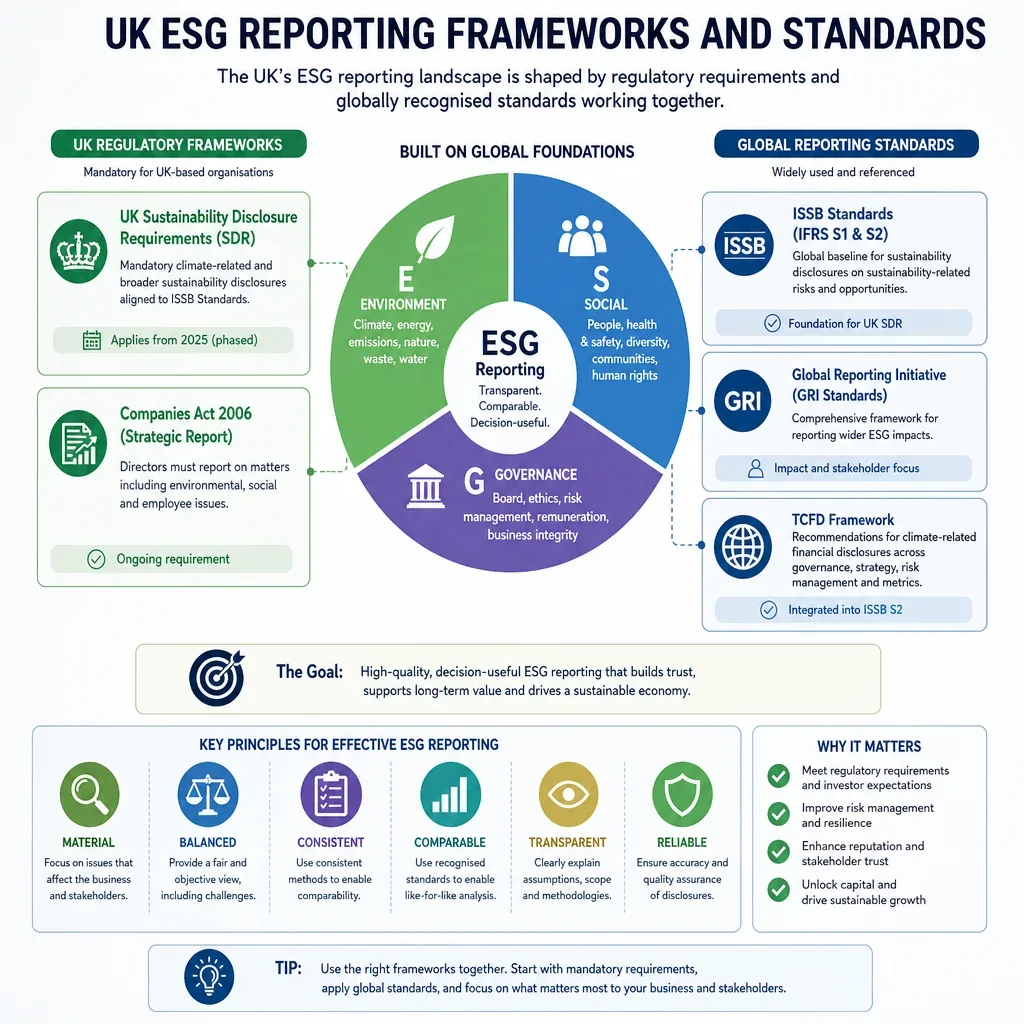
Reporting Frameworks And Standards | Identifies the ESG frameworks used to structure disclosures. | References to GRI, SASB, IFRS S1/S2, TCFD, UK Corporate Governance Code or internal framework. | High | Sustainability Finance Legal | Framework mapping, disclosure index, management sign-off, reporting methodology. | Do not claim compliance with a framework unless all required criteria are met. |
Strategy | ||||||
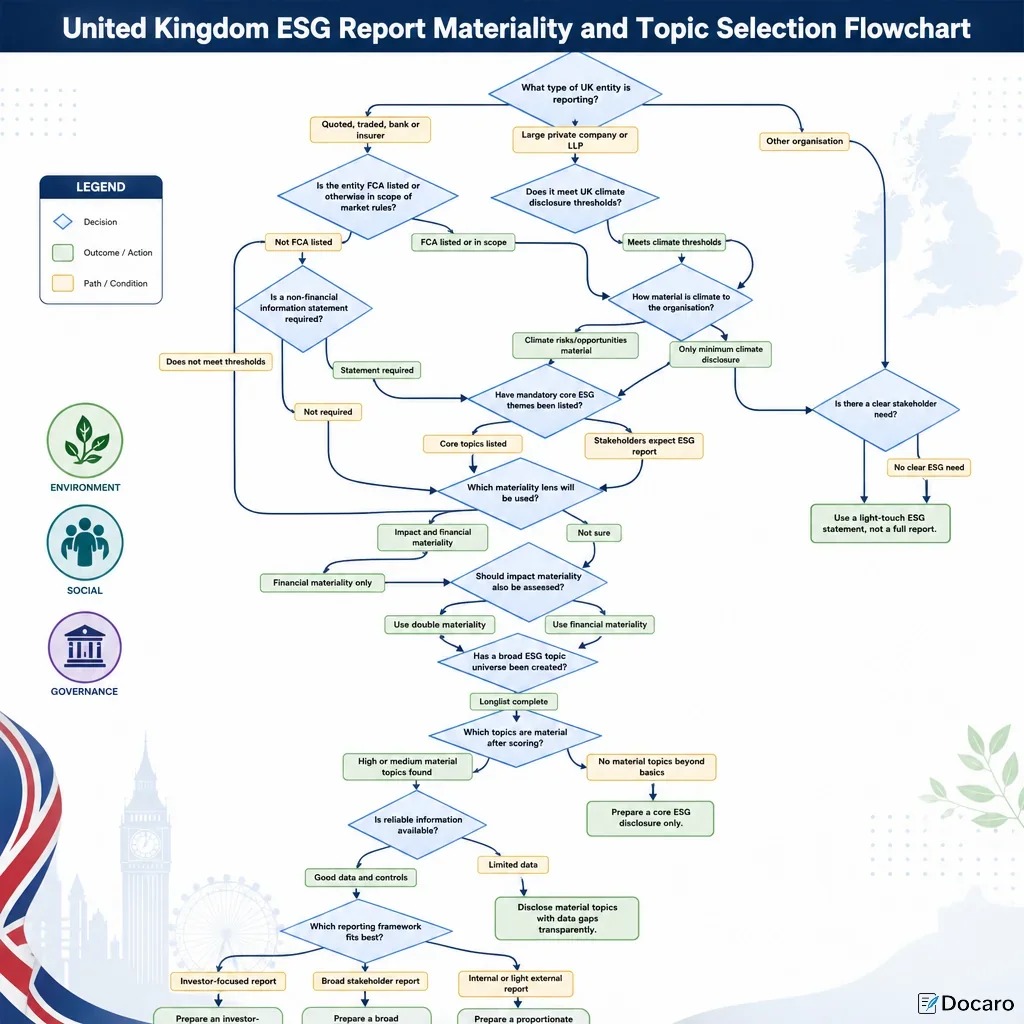
Materiality Assessment | Explains how significant ESG topics were identified and prioritised. | Material topics, assessment method, stakeholder inputs, scoring criteria and review frequency. | High | Sustainability Executive Management | Workshop outputs, surveys, interview notes, scoring matrix, board papers. | Explain methodology avoid presenting management preferences as stakeholder evidence. |
Stakeholder Engagement | Shows how stakeholder views influence ESG priorities and decisions. | Stakeholder groups, engagement channels, key concerns, frequency and company responses. | Medium | Executive Management Sustainability HR | Survey results, consultation records, investor meetings, employee forums, customer feedback. | Avoid generic lists connect engagement outcomes to real decisions. |
ESG Strategy And Roadmap | Sets out the company's ESG ambitions, priorities and planned actions. | Strategic pillars, short and long-term actions, ownership, milestones and resources. | High | Executive Management Sustainability Board | ESG strategy, budget approvals, transformation plans, board minutes. | Distinguish approved plans from aspirations include timeframes and accountability. |
Business Model And ESG Context | Explains how ESG factors affect the company's business model. | Value chain, operating model, products, markets, ESG dependencies and impacts. | High | Executive Management Sustainability Finance | Business model description, strategy papers, value chain maps, investor materials. | Link ESG issues to actual revenue, costs, operations and supply chains. |
Governance | ||||||
Climate Governance | Describes board and management oversight of climate-related matters. | Board responsibilities, committee oversight, management roles, reporting lines and meeting frequency. | High | Board Executive Management Legal | Board terms of reference, minutes, committee papers, climate risk updates. | Align with TCFD governance disclosures where applicable. |
Board Oversight Of ESG | Explains how the board monitors ESG risks, opportunities and performance. | Board agenda items, committee structure, escalation routes, training and decision records. | High | Board Legal | Board minutes, committee terms, ESG dashboard, training records. | Describe actual oversight, not only formal governance documents. |
Management Responsibilities For ESG | Shows how ESG responsibility is allocated across management and functions. | Executive sponsors, ESG committee, working groups, reporting cadence and role descriptions. | Medium | Executive Management Sustainability HR | Organisation charts, committee minutes, job descriptions, ESG governance policy. | Avoid unclear ownership name functions rather than individuals where appropriate. |
ESG Policies Overview | Summarises key policies governing ESG conduct and controls. | Environment, human rights, health and safety, anti-bribery, whistleblowing and procurement policies. | Medium | Legal Sustainability HR Procurement | Current policies, approval records, policy register, staff acknowledgements. | State whether policies are group-wide avoid listing obsolete policies. |
Risk Management | ||||||
ESG Risk Management Process | Explains how ESG risks are identified, assessed and managed. | Risk identification, assessment criteria, controls, risk owners and escalation process. | High | Executive Management Legal Sustainability | Enterprise risk register, control matrices, internal audit reports, risk committee minutes. | Show integration with enterprise risk management, not a standalone ESG list only. |
Principal ESG Risks | Identifies the most significant ESG risks facing the business. | Climate transition, physical climate, labour, supply chain, regulatory and reputational risks. | High | Executive Management Legal Sustainability Operations | Risk register, scenario analysis, legal updates, insurance assessments, incident records. | Ensure consistency with principal risks in the annual report. |
Climate-Related Risks And Opportunities | Discloses climate risks and opportunities relevant to strategy and finances. | Physical risks, transition risks, opportunities, time horizons, financial impacts and responses. | High | Finance Sustainability Executive Management | TCFD analysis, climate risk register, asset locations, insurance data, financial models. | Define short, medium and long term avoid unsupported resilience claims. |
Climate Scenario Analysis | Assesses business resilience under different climate pathways. | Scenario assumptions, temperature pathways, time horizons, affected assets and strategic responses. | High | Finance Sustainability Operations | Scenario models, asset data, transition assumptions, financial sensitivity analysis. | Explain assumptions and uncertainty do not imply forecasts are certain. |
Strategy | ||||||
Transition Plan | Explains how the company plans to transition to a lower-carbon model. | Decarbonisation levers, capital allocation, dependencies, milestones, governance and delivery risks. | High | Executive Management Finance Sustainability Operations | Transition plan, capex plans, emissions pathway, board approvals, project pipeline. | Be clear on assumptions, offsets, technology dependencies and financing gaps. |
Environmental | ||||||
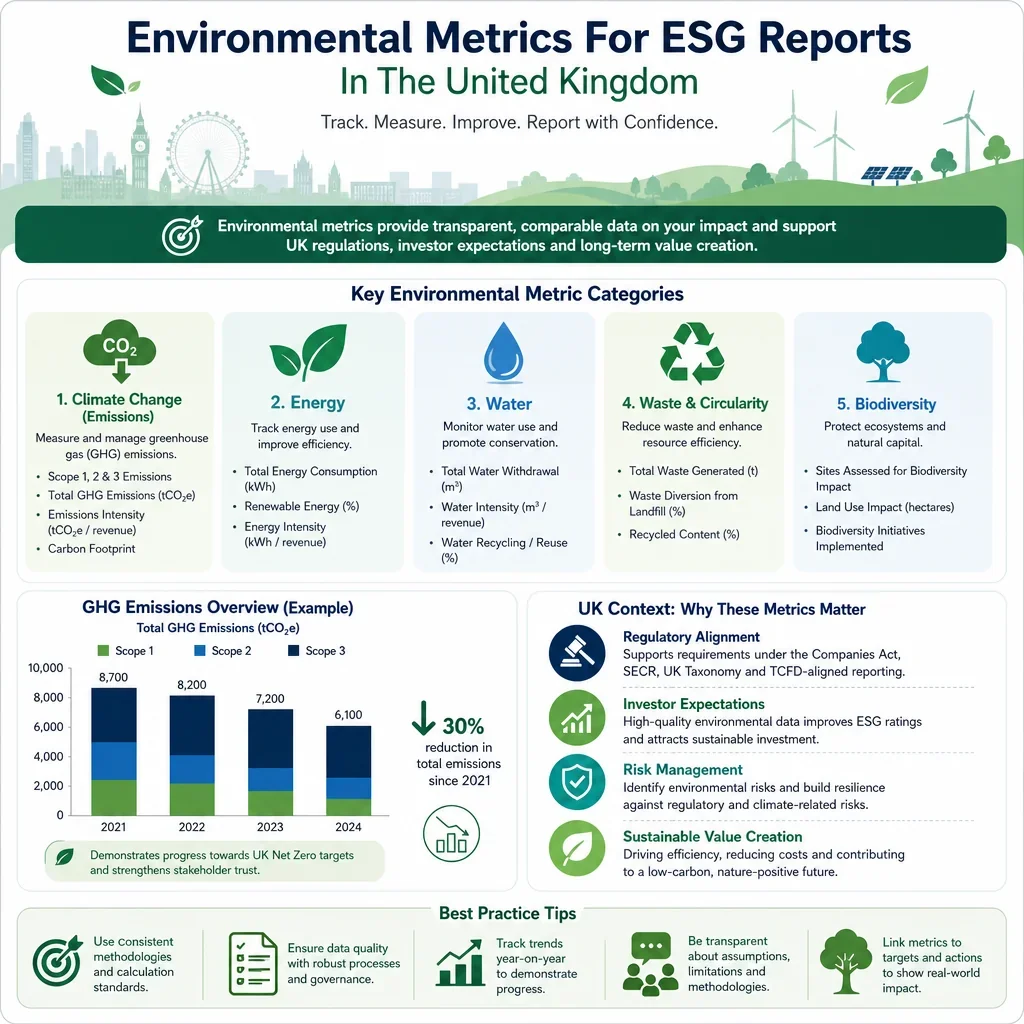
Greenhouse Gas Emissions | Reports emissions generated by operations and value chain activities. | Scope 1, Scope 2, Scope 3 emissions, methodology, factors, base year and restatements. | High | Sustainability Finance Operations | Utility bills, fuel records, travel data, supplier data, emissions calculations. | State methodology, boundaries and emissions factors separate market-based and location-based Scope 2 where used. |
Streamlined Energy And Carbon Reporting | Reports UK energy use, emissions and efficiency actions where SECR applies. | UK energy consumption, associated GHG emissions, intensity ratio and energy efficiency measures. | High | Finance Sustainability | Energy invoices, meter data, fuel records, emissions calculations, annual report disclosure. | Confirm whether company, LLP or quoted company thresholds apply. |
Energy Consumption | Shows energy used by business operations and energy mix. | Electricity, gas, fuel, renewable energy, kWh consumption and intensity metrics. | High | Operations Finance Sustainability | Meter readings, utility bills, landlord data, renewable certificates, site records. | Use consistent units and explain estimates for leased premises. |
Energy Efficiency Measures | Describes actions taken to reduce energy use and emissions. | LED upgrades, building management systems, fleet changes, process improvements and savings. | Medium | Operations Sustainability Finance | Project records, invoices, energy audits, measurement and verification reports. | Quantify savings where possible and avoid double counting with renewable energy claims. |
Metrics and Targets | ||||||
Carbon Reduction Targets | Sets emissions reduction goals and tracks progress. | Near-term targets, long-term targets, base year, target boundary, progress and recalculations. | High | Sustainability Finance Executive Management | Target approval papers, emissions inventory, SBTi validation, progress dashboards. | Define base year and scope coverage do not use net zero language loosely. |
Strategy | ||||||
Net Zero Commitment | States the company's intended pathway to net zero emissions. | Target year, scope coverage, reduction pathway, residual emissions and neutralisation approach. | High | Board Executive Management Sustainability | Board approval, emissions baseline, transition plan, external validation documents. | Avoid implying offsets replace emissions reductions unless transparently explained. |
Environmental | ||||||
Carbon Offsets And Removals | Explains use of offsets, credits or removals in climate claims. | Offset type, volume, registry, vintage, quality criteria and residual emissions covered. | Medium | Sustainability Finance Legal | Offset certificates, registry entries, purchase contracts, retirement records. | Be transparent avoid carbon neutral claims without clear evidence and boundaries. |
Water Management | Reports water use, stewardship and exposure to water stress. | Withdrawals, consumption, discharge, water-stressed locations, reduction initiatives and compliance. | Medium | Operations Sustainability | Water bills, meter data, permits, site audits, discharge monitoring records. | Prioritise material sites and distinguish withdrawal from consumption. |
Waste Management | Reports waste generation, handling, recovery and disposal. | Waste by type, hazardous waste, recycling rates, landfill diversion and reduction measures. | Medium | Operations Sustainability | Waste transfer notes, contractor reports, weighbridge tickets, hazardous waste records. | Use licensed contractor data and keep hazardous waste separately identified. |
Circular Economy And Resource Efficiency | Shows how the business reduces resource use and supports circularity. | Reuse, repair, recycled inputs, packaging reduction, product life extension and take-back schemes. | Medium | Operations Procurement Sustainability | Materials data, procurement records, product design documents, waste audits. | Avoid broad circular claims unless supported by lifecycle or materials data. |
Biodiversity And Nature Impact | Describes impacts, dependencies and actions relating to nature and biodiversity. | Site impacts, protected areas, habitat initiatives, nature risks, dependencies and mitigation. | Medium | Sustainability Operations | Ecology surveys, site maps, planning reports, TNFD assessment, habitat data. | Use location-specific information avoid irrelevant nature claims for office-only businesses. |
Pollution Prevention And Environmental Compliance | Reports controls for emissions, spills, permits and environmental incidents. | Permits, inspections, incidents, notices, fines, controls and corrective actions. | High | Operations Legal Sustainability | Permit register, inspection reports, incident logs, regulator correspondence, audit reports. | Disclose significant incidents accurately and ensure legal review of enforcement matters. |
Sustainable Products And Services | Explains environmental or social attributes of products and services. | Product certifications, lifecycle impacts, sustainable revenue, design features and customer benefits. | Medium | Sustainability Operations Legal | Lifecycle assessments, certification documents, product specifications, sales data. | Check all green claims against CMA guidance and evidence before publication. |
Packaging And Plastics | Reports packaging use, recycled content and reduction initiatives. | Packaging tonnes, plastic content, recyclability, reuse models, supplier initiatives and compliance. | Medium | Procurement Operations Sustainability | Packaging data, supplier declarations, tax records, compliance submissions, design specifications. | Align with packaging producer responsibility and plastic packaging tax records where relevant. |
Social | ||||||
Employee Workforce Profile | Provides an overview of the company's workforce composition. | Headcount, full-time and part-time split, contract type, location, age and tenure. | Medium | HR Finance | HRIS reports, payroll records, workforce planning data, annual returns. | Define employee scope and date basis protect personal data. |
Diversity, Equity And Inclusion | Explains workforce diversity, inclusion initiatives and equality commitments. | Gender, ethnicity, disability, inclusion programmes, employee networks and leadership diversity. | High | HR Executive Management | HR diversity data, inclusion surveys, policy records, training logs. | Use aggregated data be careful with special category personal data. |
Gender Pay Gap Reporting | Discloses statutory gender pay gap information where the employer is in scope. | Mean and median pay gap, bonus gap, bonus proportions, quartiles and narrative actions. | High | HR Finance Legal | Payroll extract, snapshot date calculations, gender pay gap submission, narrative report. | Ensure figures match the government portal and explain actions without implying equal pay compliance. |
Equal Opportunities And Non-Discrimination | Describes controls to prevent discrimination and promote fair treatment. | Equality policy, recruitment controls, reasonable adjustments, complaints and training. | High | HR Legal | Policies, training records, grievance logs, recruitment data, adjustment records. | Avoid personal case details legal review is needed for live disputes. |
Employee Engagement | Shows how the company listens to and responds to employees. | Engagement scores, surveys, forums, feedback themes and resulting actions. | Medium | HR Executive Management | Survey reports, forum minutes, action plans, communications records. | Include response rates and explain negative trends where material. |
Learning And Development | Reports investment in employee skills and capability. | Training hours, mandatory training, leadership development, apprenticeships and upskilling programmes. | Medium | HR | LMS reports, attendance records, training budget, apprenticeship records. | Separate mandatory compliance training from development programmes. |
Health, Safety And Wellbeing | Reports workforce safety performance, controls and wellbeing initiatives. | Accident rates, RIDDOR incidents, safety audits, training, wellbeing programmes and corrective actions. | High | Operations HR Legal | Accident logs, HSE reports, risk assessments, training records, audit findings. | Use consistent incident definitions and ensure enforcement matters are legally reviewed. |
Human Rights | Describes commitment and due diligence on human rights impacts. | Policy commitment, salient risks, due diligence, grievance mechanisms and remediation approach. | High | Legal Sustainability Procurement HR | Human rights policy, risk assessment, supplier audits, grievance records. | Avoid claiming no risk without documented assessment across operations and suppliers. |
Modern Slavery Statement | Reports steps taken to prevent modern slavery in operations and supply chains. | Organisation structure, policies, due diligence, risk areas, training and effectiveness indicators. | High | Legal Procurement HR Board | Board-approved statement, supplier due diligence, training records, risk assessments. | If in scope, ensure board approval, director signature and website publication. |
Labour Standards In The Supply Chain | Explains supplier controls for labour rights and working conditions. | Supplier code, audits, high-risk categories, corrective actions and worker grievance routes. | High | Procurement Legal Sustainability | Supplier code, audit reports, onboarding checks, corrective action plans. | Do not overstate coverage disclose limitations in lower-tier supply chains. |
Responsible Procurement | Shows how ESG criteria are embedded in purchasing decisions. | Supplier screening, ESG clauses, local sourcing, supplier diversity and performance reviews. | Medium | Procurement Sustainability Legal | Procurement policy, supplier questionnaires, contract clauses, scorecards. | Clarify whether ESG criteria are mandatory or preferred in supplier selection. |
Community Investment And Social Impact | Reports contributions to communities and wider social value. | Donations, volunteering, partnerships, social value outcomes and local community engagement. | Medium | Sustainability HR Executive Management | Donation records, volunteering logs, partner reports, impact assessments. | Distinguish inputs from measurable outcomes avoid inflated impact claims. |
Customer Responsibility And Product Safety | Explains controls protecting customers and end users. | Product safety, responsible marketing, accessibility, complaints and customer outcomes. | Medium | Operations Legal Executive Management | Quality records, complaints data, recall records, marketing approvals, customer surveys. | Ensure statements align with product liability, safety and consumer law reviews. |
Governance | ||||||
Data Protection And Privacy | Describes governance and controls for personal data protection. | Privacy governance, policies, DPIAs, training, incidents, subject rights and supplier controls. | High | Legal Executive Management | ROPA, DPIAs, breach logs, privacy notices, training records, processor contracts. | Avoid disclosing sensitive incident details ensure claims match ICO accountability evidence. |
Cyber Security | Explains cyber risk management, resilience and incident preparedness. | Cyber governance, controls, testing, awareness, certifications, incidents and response plans. | High | Executive Management Legal Operations | Security policies, penetration tests, incident logs, certifications, training reports. | Balance transparency with security avoid revealing exploitable control details. |
Business Ethics And Code Of Conduct | Sets expectations for lawful and ethical conduct. | Code principles, training, certifications, conflicts of interest and disciplinary processes. | High | Legal HR Executive Management | Code of conduct, training logs, attestations, investigation records. | Describe implementation and monitoring, not just policy existence. |
Anti-Bribery And Corruption | Explains controls to prevent bribery, corruption and improper payments. | Risk assessment, policies, gifts and hospitality, third-party due diligence, training and investigations. | High | Legal Finance Procurement | ABC policy, risk assessment, due diligence files, gifts register, training logs. | Reference adequate procedures carefully avoid suggesting immunity from liability. |
Whistleblowing And Speak-Up | Describes channels and protections for reporting concerns. | Reporting channels, anonymity, non-retaliation, case volumes, themes and remediation. | High | Legal HR Board | Whistleblowing policy, hotline reports, investigation logs, audit committee papers. | Aggregate case data and avoid identifying whistleblowers or live investigations. |
Tax Transparency | Explains approach to tax governance, risk and transparency. | Tax strategy, governance, risk appetite, HMRC relationship and taxes paid. | Medium | Finance Legal Board | Published tax strategy, tax control framework, board approvals, HMRC correspondence. | Ensure consistency with any required published UK tax strategy. |
Political Donations And Lobbying | Discloses political expenditure, lobbying approach and governance controls. | Political donations, trade association memberships, lobbying positions and approval processes. | Medium | Legal Board Finance | Donation records, board approvals, memberships register, public affairs records. | Check Companies Act and electoral law definitions before describing donations. |
Board Composition And Independence | Shows board skills, diversity, independence and suitability for ESG oversight. | Director profiles, independence status, tenure, diversity, skills matrix and committee membership. | High | Board Legal | Annual report, board evaluations, skills matrix, nominations committee papers. | Ensure consistency with annual report governance disclosures. |
Executive Remuneration And ESG Linkage | Explains whether pay incentives are linked to ESG outcomes. | ESG bonus metrics, weighting, performance conditions, outcomes and remuneration committee oversight. | Medium | Board HR Finance | Remuneration policy, scorecards, committee minutes, annual remuneration report. | Avoid vague ESG pay linkage specify measurable metrics and weighting where disclosed. |
Compliance With Laws And Regulations | Summarises material compliance systems and significant legal matters. | Compliance framework, regulatory monitoring, training, audits, breaches and remediation. | High | Legal Executive Management | Compliance registers, legal reports, audit findings, regulator correspondence. | Legal review required for litigation, investigations or enforcement disclosures. |
Metrics and Targets | ||||||
ESG Metrics Dashboard | Presents core ESG KPIs in one accessible place. | Emissions, energy, waste, diversity, safety, training, supplier and governance KPIs. | High | Sustainability Finance HR Operations | KPI workbook, source system extracts, finance review, data owner sign-offs. | Define each KPI and avoid mixing assured and unaudited data without explanation. |
Progress Against Targets | Tracks performance against ESG commitments and targets. | Target baseline, current year performance, prior year comparison, status and corrective actions. | High | Sustainability Finance Executive Management | Target register, KPI dashboard, board reports, action plans. | Report missed targets transparently and explain recalculations or scope changes. |
Appendix | ||||||
Data Methodology And Assumptions | Explains how ESG data was calculated and estimated. | Calculation methods, boundaries, estimates, emission factors, currency and restatement rules. | High | Finance Sustainability | Methodology document, calculation files, emission factor sources, data owner sign-offs. | Document assumptions clearly so figures can be checked and repeated. |
Assurance Statement | Provides independent assurance over selected ESG information. | Assurance scope, standard, level, provider, limitations, conclusions and responsibilities. | Medium | Finance Sustainability Legal | Assurance engagement letter, evidence files, final assurance report, management representations. | State exactly which metrics are assured and the assurance level. |
ESG Disclosure Index | Maps report content to selected disclosure requirements or standards. | Disclosure references, page numbers, omissions, explanations and external links. | Medium | Sustainability Legal | Framework checklist, report draft, gap analysis, disclosure owner sign-offs. | Do not imply full compliance if the index is only partial or voluntary. |
TCFD Disclosure Index | Maps climate disclosures to the TCFD pillars and recommendations. | Governance, strategy, risk management, metrics and targets cross-references. | High | Sustainability Finance Legal | TCFD checklist, climate report sections, annual report cross-references. | Ensure cross-references are precise and consistent with UK climate disclosure obligations where applicable. |
Governance | ||||||
Directors' Section 172 Statement Linkage | Connects ESG matters with directors' duty to consider stakeholders and long-term consequences. | Stakeholder considerations, principal decisions, employee interests, supplier relationships and community impacts. | High | Board Legal | Annual report section 172 statement, board papers, stakeholder engagement records. | Ensure ESG narrative is consistent with statutory strategic report disclosures. |
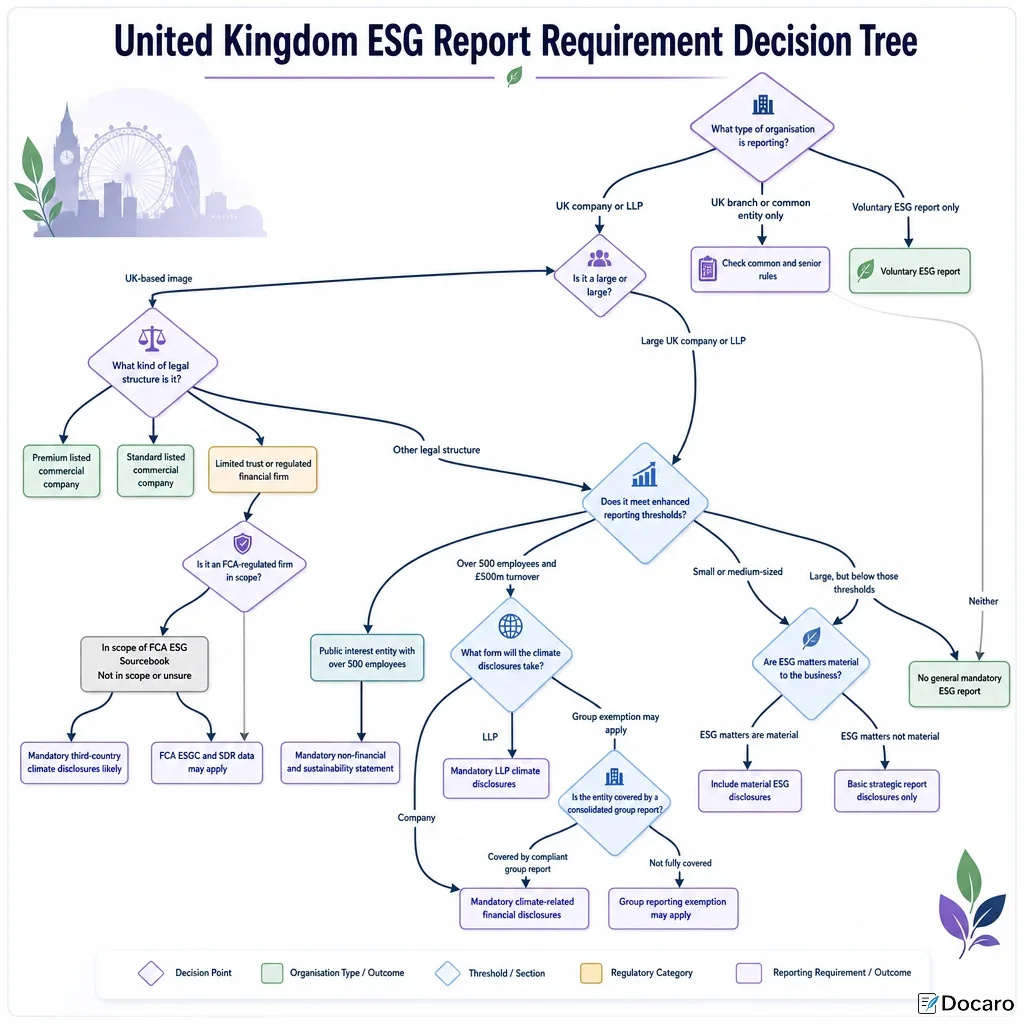
Non-Financial And Sustainability Information Statement | Addresses UK strategic report requirements for certain large companies. | Environmental matters, employees, social matters, human rights, anti-corruption and climate disclosures. | High | Legal Finance Sustainability Board | Strategic report, compliance checklist, climate disclosures, board approval records. | Confirm company size, listing status and scope before treating disclosures as mandatory. |
Green Claims And Marketing Controls | Explains controls to ensure environmental claims are accurate and evidenced. | Claim approval process, substantiation files, training, product claims and website review controls. | High | Legal Sustainability Executive Management | Claims register, approval records, evidence files, marketing sign-off checklists. | Check environmental claims against CMA guidance before publishing the report. |
Strategy | ||||||
Sustainable Finance And Green Bonds | Reports ESG-linked financing, proceeds allocation and impact where relevant. | Green bonds, sustainability-linked loans, KPIs, use of proceeds, impact reporting and assurance. | Medium | Finance Sustainability Legal | Financing agreements, framework documents, allocation reports, impact calculations. | Ensure wording aligns with loan or bond documentation and any external review. |
Risk Management | ||||||
Supplier ESG Assessment | Shows how supplier ESG risks are assessed and monitored. | Supplier segmentation, questionnaires, risk scoring, audits, remediation and termination criteria. | High | Procurement Sustainability Legal | Supplier risk register, due diligence reports, audit findings, corrective action logs. | Specify coverage by spend, geography or supplier category where available. |
Governance | ||||||
ESG Training And Awareness | Reports employee and leadership training on ESG-related responsibilities. | Training topics, completion rates, audience groups, board briefings and refresher cycles. | Medium | HR Legal Sustainability | Training records, LMS reports, attendance logs, course materials. | Report meaningful completion data avoid implying training alone proves effective controls. |
Risk Management | ||||||
Incident Management And Remediation | Explains how ESG incidents are managed and remediated. | Incident types, escalation, investigations, remediation, lessons learned and recurrence prevention. | High | Legal Operations HR Executive Management | Incident logs, investigation reports, corrective action trackers, regulator correspondence. | Aggregate sensitive matters and obtain legal review for significant incidents. |
Executive Summary | ||||||
Future Priorities | Sets out planned ESG focus areas for the next reporting period. | Upcoming projects, target milestones, planned disclosures, governance improvements and investment needs. | Medium | Executive Management Sustainability Board | ESG roadmap, budget plans, board strategy papers, project pipeline. | Use cautious wording for forward-looking statements and identify key dependencies. |
What Sections Should A UK ESG Report Usually Include?
A useful UK ESG Report normally combines narrative, governance accountability, risk analysis and quantified metrics. Readers usually expect a clear executive summary, board oversight, climate-related risks, greenhouse gas emissions, workforce information, supply chain controls, ethics and compliance, and a metrics and targets section that explains progress against prior commitments.
Which ESG Report Sections Carry The Highest Legal And Regulatory Sensitivity?
The most legally sensitive sections are those covering climate disclosures, greenhouse gas emissions, directors\' governance responsibilities, modern slavery, diversity and inclusion, health and safety, anti-bribery, data protection and supply chain due diligence. These areas often overlap with UK statutory reporting, FCA listing rules, Companies Act requirements, SECR, the Modern Slavery Act and Equality Act duties.
Who Should Contribute To A UK ESG Report?
ESG reporting should not be drafted by one team alone. Finance is usually needed for emissions, energy and assurance-ready metrics; Legal for statutory statements and risk wording; HR for workforce and diversity data; Operations for environmental performance; Procurement for supplier and modern slavery content; and the Board for oversight, approval and accountability.
How Can Companies Reduce Greenwashing Risk In An ESG Report?
Claims should be specific, evidenced and internally consistent. Avoid vague statements such as world-leading, fully sustainable or net zero aligned unless supported by credible data, boundaries, methodologies and action plans. The most defensible sections are linked to policies, board minutes, emissions calculations, audit trails, supplier records and measurable targets.
What Evidence Should Be Prepared Before Drafting?
Before drafting, collect board papers, risk registers, HR reports, GHG calculations, energy invoices, supplier due diligence records, health and safety logs, policy documents, whistleblowing reports, training records and previous annual report disclosures. This makes the ESG Report easier to verify and helps keep disclosures consistent with UK annual reporting and regulatory expectations.
FAQs
You Might Also Be Interested In