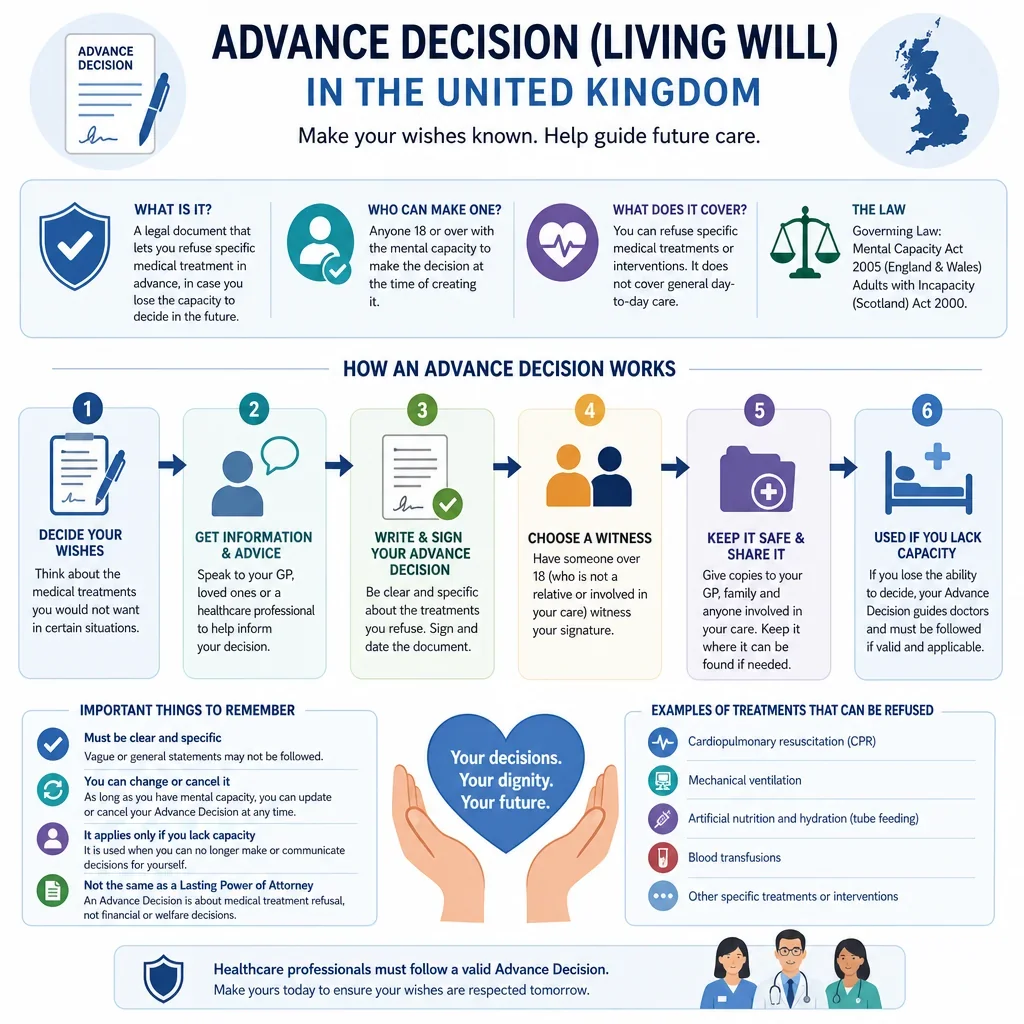
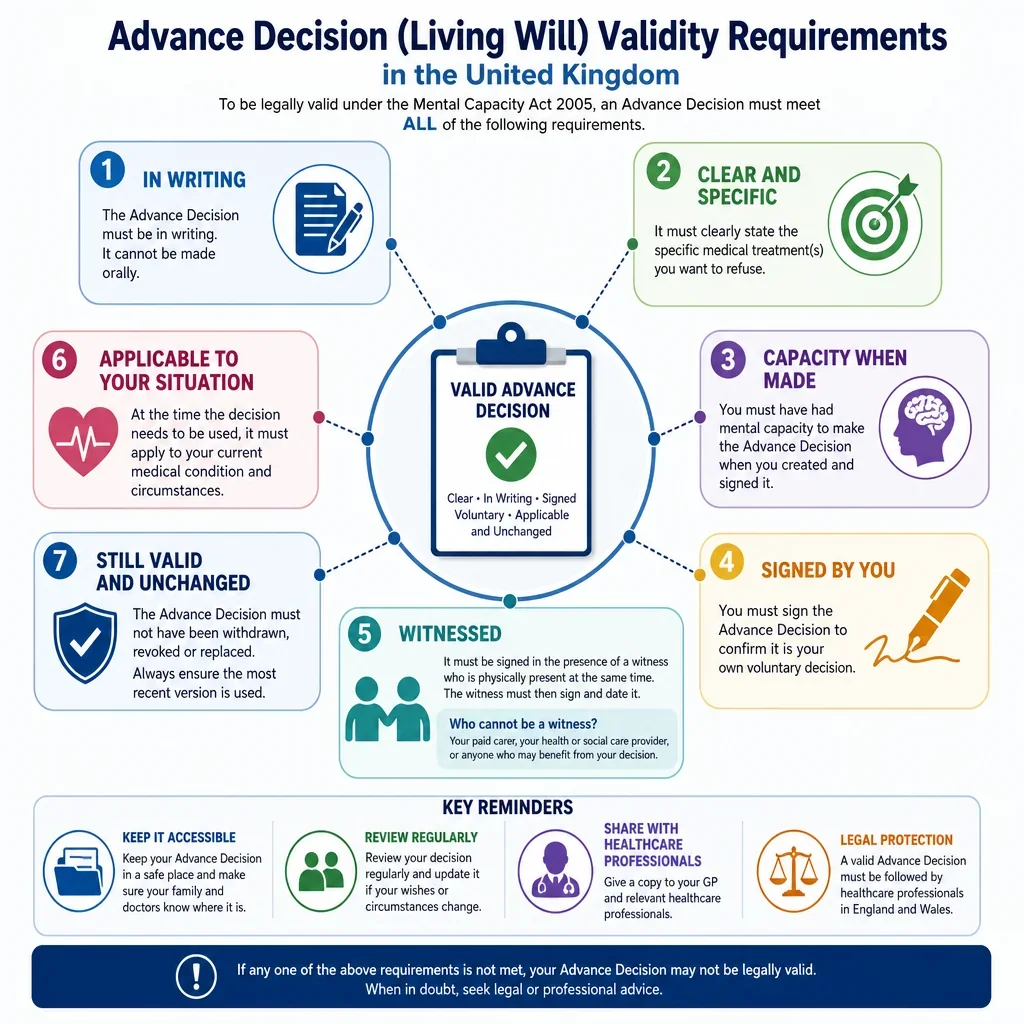
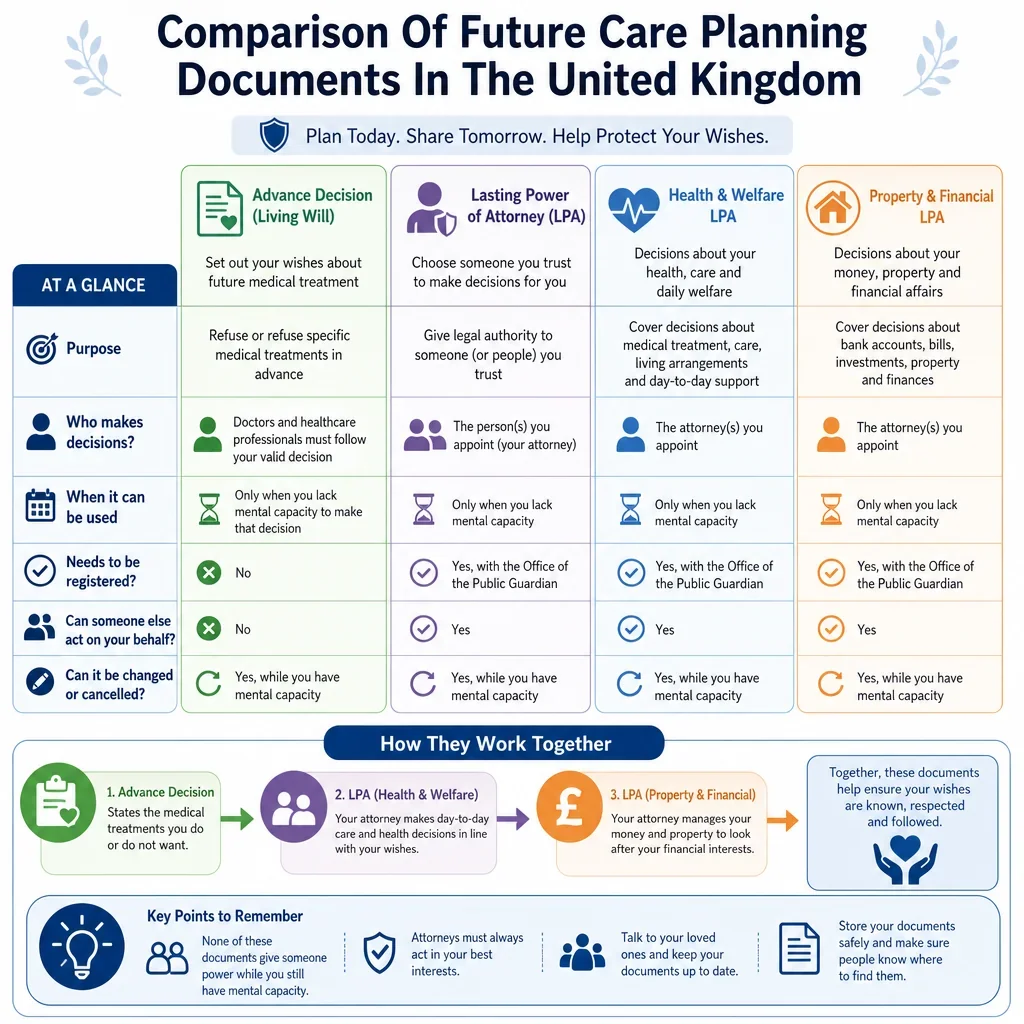
Comparison Of Future Care Planning Documents In The United Kingdom
Document Name | Purpose | Legal Effect | Typical Use Cases |
|---|---|---|---|
Refusing medical treatment, End of life planning | |||
Advance Decision to Refuse Treatment | Refuses specified medical treatment if the person later lacks capacity. | Legally binding if valid and applicable | Refusing ventilation, CPR, artificial nutrition or other treatments in defined future circumstances. |
Refusing medical treatment | |||
Mental Capacity Act 2005 Advance Decision | Sets the legal framework for refusing treatment in advance in England and Wales. | Legally binding if valid and applicable | Assessing whether an Advance Decision must be followed by clinicians. |
Refusing medical treatment, End of life planning | |||
Advance Decision Refusing Life-Sustaining Treatment | Refuses treatment needed to keep the person alive in specified circumstances. | Legally binding if valid and applicable | Refusing CPR, ventilation or clinically assisted nutrition and hydration near end of life. |
Expressing care preferences, End of life planning | |||
Advance Statement | Records wishes, values and preferences for future care and treatment. | Usually not legally binding | Stating preferred place of care, routines, beliefs, food, visitors and comfort wishes. |
Appointing decision makers, Expressing care preferences, End of life planning | |||
Health and Welfare Lasting Power of Attorney | Appoints attorneys to make health and welfare decisions if capacity is lost. | Legally binding appointment | Choosing trusted people to decide medical treatment, care home, daily care or life-sustaining treatment authority. |
Appointing decision makers, Financial or property matters | |||
Property and Financial Affairs Lasting Power of Attorney | Appoints attorneys to manage money, property, bills and financial affairs. | Legally binding appointment | Managing bank accounts, paying care fees, selling property or handling pensions. |
Appointing decision makers | |||
Mental Capacity Act 2005 Lasting Power of Attorney | Creates the legal basis for appointing attorneys in England and Wales. | Legally binding appointment | Checking whether an attorney has valid legal authority to act. |
Appointing decision makers, Financial or property matters | |||
Enduring Power of Attorney | Older appointment for property and financial decisions, made before October 2007. | Legally binding appointment | Using or registering an old financial power of attorney when capacity is being lost. |
Appointing decision makers, Financial or property matters, Expressing care preferences | |||
Court of Protection Deputyship | Court appointment to make decisions for someone who lacks mental capacity. | Legally binding appointment | Managing finances or welfare decisions where no attorney has authority. |
Expressing care preferences, Appointing decision makers | |||
Mental Capacity Act Best Interests Checklist | Guides decisions for adults who lack capacity in England and Wales. | Depends on circumstances | Weighing wishes, beliefs, relatives views and clinical options after capacity is lost. |
Expressing care preferences, End of life planning | |||
ReSPECT Form | Records emergency care and treatment recommendations after shared decision making. | Depends on circumstances | Emergency planning for frailty, serious illness, palliative care or risk of sudden deterioration. |
Refusing medical treatment, End of life planning | |||
DNACPR Form | Records a clinical decision not to attempt cardiopulmonary resuscitation. | Depends on circumstances | Avoiding CPR where it would not work, would cause harm or is not wanted. |
Expressing care preferences | |||
Personalised Care and Support Plan | Sets out assessed care needs, support arrangements and agreed outcomes. | Depends on circumstances | Coordinating home care, equipment, personal care, care home support or reviews. |
Expressing care preferences, End of life planning | |||
Anticipatory Care Plan | Plans ahead for changes in health, support needs and future treatment choices. | Usually not legally binding | Planning for long-term conditions, frailty, emergencies, hospital admission or preferred care settings. |
Emergency Health Care Plan | Summarises urgent care actions, contacts and treatment preferences for emergencies. | Depends on circumstances | Helping paramedics, out-of-hours doctors or hospitals respond to urgent deterioration. |
Advance Care Plan | Captures future care priorities, treatment wishes and important personal information. | Depends on circumstances | Planning future care after diagnosis, frailty, dementia, serious illness or palliative care referral. |
Preferred Priorities for Care | Records preferences and priorities for future and end of life care. | Usually not legally binding | Recording where someone wants to be cared for and what matters most near death. |
Expressing care preferences | |||
Statement of Wishes and Feelings | Records personal wishes, feelings, beliefs and values for future decisions. | Usually not legally binding | Helping attorneys, deputies or clinicians decide best interests after capacity is lost. |
Expressing care preferences, End of life planning | |||
Treatment Escalation Plan | Records ceilings of treatment and escalation decisions for acute deterioration. | Depends on circumstances | Deciding whether ICU, ventilation, surgery, antibiotics or ward-based care are appropriate. |
Do Not Hospitalise Preference | Records a preference to avoid hospital admission where appropriate care is available elsewhere. | Usually not legally binding | Care home, dementia, frailty or palliative care where comfort care at home is preferred. |
End of life planning | |||
NHS Organ Donor Register Decision | Records a decision to donate or not donate organs and tissue after death. | Depends on circumstances | Making donation choices clear to family and clinicians after death. |
Human Tissue Act 2004 Consent For Donation | Provides the consent framework for organ, tissue and body donation. | Depends on circumstances | Understanding consent rules for donation, post-mortem use and human tissue storage. |
Financial or property matters, End of life planning | |||
Will | Directs distribution of property and appoints executors after death. | Legally binding if valid and applicable | Leaving assets, appointing executors, naming guardians and making gifts after death. |
Wills Act 1837 Will Formalities | Sets formal signing and witnessing requirements for valid Wills. | Legally binding if valid and applicable | Checking whether a Will has been properly signed and witnessed. |
Expressing care preferences, Financial or property matters, End of life planning | |||
Letter of Wishes | Gives non-binding guidance about estate, funeral, guardianship or personal wishes. | Usually not legally binding | Explaining personal wishes to executors, trustees, guardians or family members. |
End of life planning, Expressing care preferences | |||
Funeral Wishes | Records preferences for burial, cremation, ceremony, music or memorial arrangements. | Usually not legally binding | Helping relatives and executors arrange a funeral consistent with personal wishes. |
Financial or property matters, End of life planning | |||
Pre-Paid Funeral Plan | Pays in advance for specified funeral services under a regulated plan. | Depends on circumstances | Reducing funeral cost uncertainty and telling family which funeral provider to contact. |
Pension Expression of Wish Form | Nominates preferred recipients of pension death benefits. | Usually not legally binding | Guiding pension trustees or providers about lump sum or dependant benefit recipients. |
Life Insurance Beneficiary Nomination | Identifies who should receive policy proceeds or trust benefits after death. | Depends on circumstances | Directing insurance proceeds to family, partners, trustees or dependants after death. |
Assets and Accounts Inventory | Lists assets, debts, accounts, policies and digital services for future administration. | Usually not legally binding | Helping attorneys, executors or family locate accounts, debts, insurance and key contacts. |
Digital Assets Instructions | Records online accounts, device access wishes and instructions for digital property. | Depends on circumstances | Managing social media, cloud files, cryptoassets, subscriptions and online banking after incapacity or death. |
Expressing care preferences | |||
Emergency Contacts and Key Information Sheet | Provides contacts, diagnoses, medicines, allergies and practical information for emergencies. | Usually not legally binding | Helping carers, paramedics, hospitals or relatives respond quickly in a crisis. |
Independent Mental Capacity Advocate Referral | Provides statutory advocacy for certain serious decisions where no suitable consultee exists. | Depends on circumstances | Serious medical treatment or accommodation decisions for an unbefriended person lacking capacity. |
Expressing care preferences, Refusing medical treatment | |||
Mental Health Advance Choice Document | Records mental health treatment preferences, crisis wishes and people to contact. | Depends on circumstances | Planning for psychiatric crisis, medication preferences, hospital admission and trusted contacts. |
Refusing medical treatment | |||
Mental Health Act 1983 Treatment Rules | Regulates treatment for mental disorder, including when refusal may be overridden. | Depends on circumstances | Assessing whether a treatment refusal applies during detention or compulsory mental health treatment. |
Refusing medical treatment, End of life planning | |||
Scottish Advance Directive | Records refusal of specified medical treatment for future incapacity in Scotland. | Depends on circumstances | Refusing future treatment in Scotland and telling clinicians what treatment is unwanted. |
Appointing decision makers, Expressing care preferences | |||
Scottish Welfare Power of Attorney | Appoints someone to make welfare decisions if the granter lacks capacity. | Legally binding appointment | Planning who can decide care, treatment and welfare matters in Scotland. |
Appointing decision makers, Financial or property matters | |||
Scottish Continuing Power of Attorney | Appoints someone to manage money and property in Scotland. | Legally binding appointment | Managing bank accounts, property, benefits and bills under Scottish law. |
Adults with Incapacity Scotland Act 2000 Power of Attorney | Provides the statutory basis for continuing and welfare powers of attorney in Scotland. | Legally binding appointment | Checking Scottish attorney powers and registration requirements. |
Appointing decision makers, Financial or property matters, Expressing care preferences | |||
Scottish Guardianship Order | Court appointment to make welfare, financial or property decisions for an adult with incapacity. | Legally binding appointment | Long-term decision-making in Scotland where no suitable attorney has authority. |
Refusing medical treatment, End of life planning | |||
Northern Ireland Advance Decision | Records refusal of specified treatment for future loss of capacity in Northern Ireland. | Depends on circumstances | Refusing future treatment and supporting advance care planning in Northern Ireland. |
Appointing decision makers, Financial or property matters | |||
Northern Ireland Enduring Power of Attorney | Appoints attorneys to manage financial affairs in Northern Ireland. | Legally binding appointment | Authorising someone to handle money and property if capacity is lost in Northern Ireland. |
Northern Ireland Controllership Order | Court authorisation to manage financial affairs for a person lacking capacity. | Legally binding appointment | Managing finances in Northern Ireland where no enduring power of attorney is available. |
Which Future Care Planning Document Is Legally Binding In The UK?
An Advance Decision to Refuse Treatment can be legally binding in England and Wales if it meets the Mental Capacity Act 2005 requirements and applies to the treatment and circumstances in question. A Health and Welfare Lasting Power of Attorney is also a legally binding appointment, allowing attorneys to make health and care decisions if the donor lacks capacity, subject to any limits in the LPA.
How Do Advance Decisions Differ From Advance Statements?
An Advance Decision is used to refuse specified medical treatment and may bind clinicians if valid and applicable. An Advance Statement records wishes, values and preferences about care, but is usually not legally binding; decision makers must consider it when deciding best interests.
When Should Someone Use An LPA Instead Of An Advance Decision?
Use an LPA where trusted people should make future decisions, especially where circumstances may be complex or unpredictable. Use an Advance Decision where the key aim is to refuse specific treatments in defined circumstances. They can coexist, but the timing and wording matter because a later Health and Welfare LPA may override an earlier Advance Decision if it gives the attorney authority over the same treatment.
Which Documents Matter Most For End Of Life Care Planning?
- Advance Decision: strongest tool for refusing specific life-sustaining or other treatment.
- Advance Statement: useful for values, comfort, place of care and personal preferences.
- ReSPECT or DNACPR: clinical forms that guide emergency and resuscitation decisions, but their status and process differ from an Advance Decision.
- Will and funeral wishes: useful after death, but they do not appoint medical decision makers or refuse treatment while alive.
What Should UK Users Check Before Relying On A Document?
Users should check whether the document is meant to be legally binding, whether it covers health, welfare, finances or post-death matters, and whether it applies across the relevant UK nation. England and Wales use the Mental Capacity Act 2005 framework for Advance Decisions and LPAs, while Scotland and Northern Ireland have different legal regimes and terminology.
FAQs
You Might Also Be Interested In