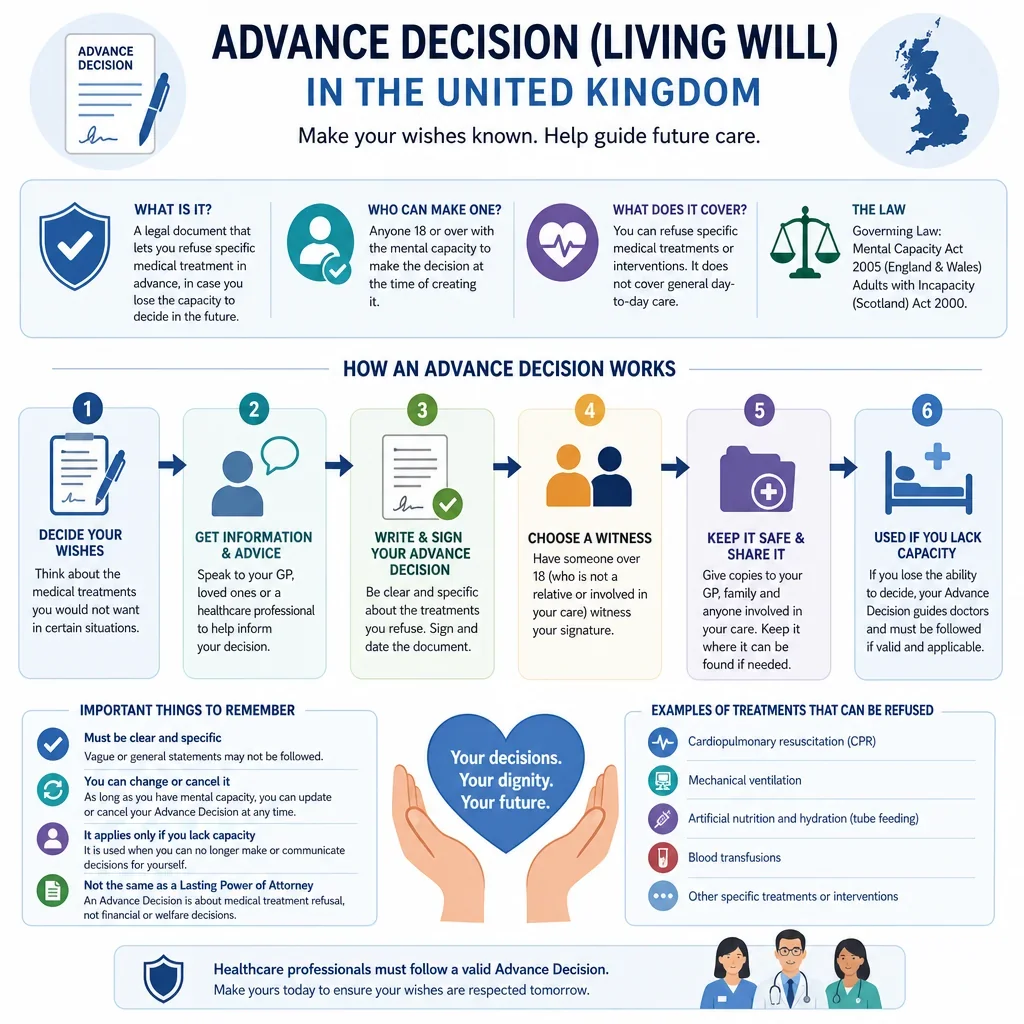
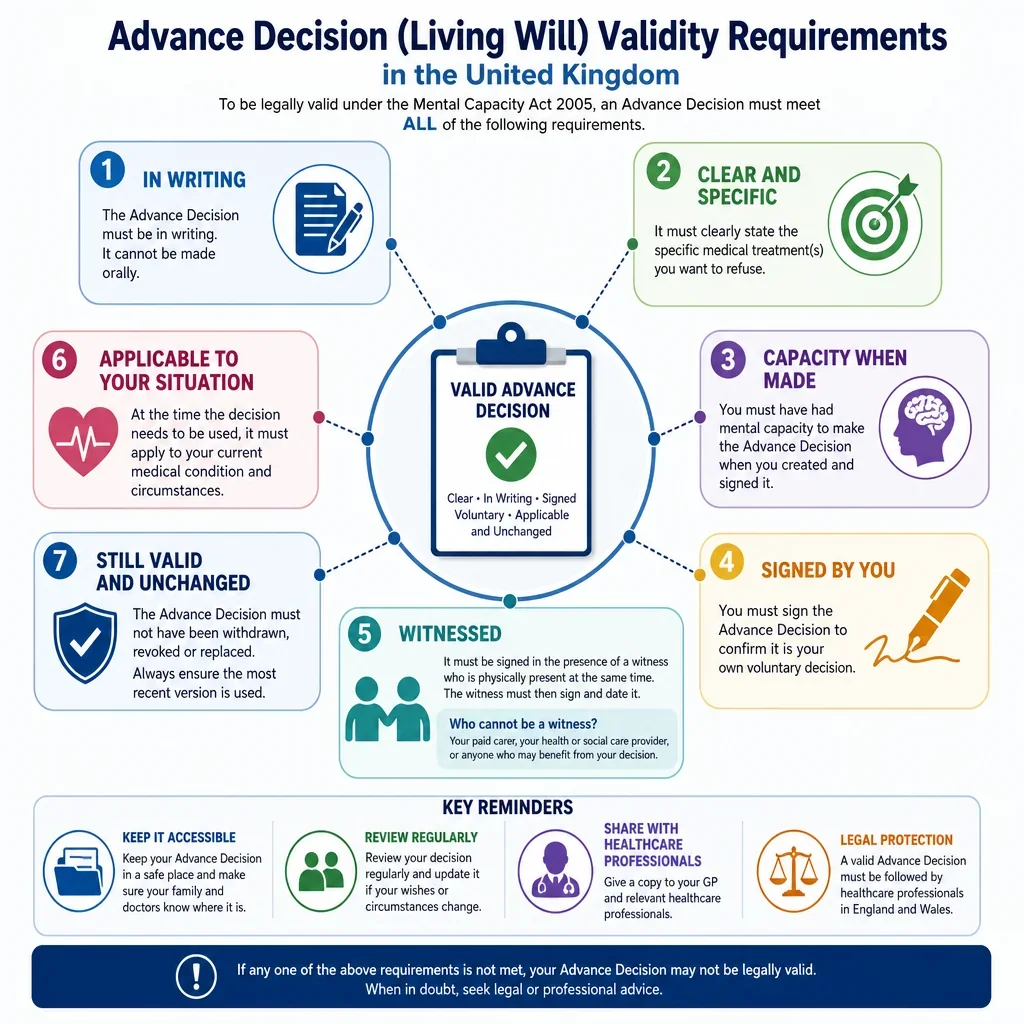
Advance Decision Validity Requirements In The United Kingdom
Requirement | Explanation | Importance Level | Practical Check |
|---|---|---|---|
Age | |||
Maker must be 18 or over | An Advance Decision only has legal effect if made by an adult aged 18 or above. | Always important | Record the maker's date of birth and the date the Advance Decision was signed. |
Capacity | |||
Maker must have mental capacity when making it | The refusal must be made at a time when the person can understand, retain, use or weigh the relevant information and communicate the decision. | Always important | If capacity could be questioned, ask a doctor or solicitor to record a capacity assessment. |
Capacity should not be doubted merely because of age, illness or disability | A person is presumed to have capacity unless it is established that they lack it. | May depend on circumstances | Do not reject the document only because the maker was elderly, disabled or seriously ill. |
Maker should have had practicable support before capacity is treated as lacking | A person is not unable to decide unless all practicable steps to help them decide have failed. | May depend on circumstances | Note any help given, such as plain-language explanation, interpreter support or extra time. |
An unwise refusal does not prove lack of capacity | The fact that a refusal seems risky or unusual does not by itself mean the person lacked capacity. | May depend on circumstances | Focus on the decision-making process, not whether others agree with the choice. |
Refusal must operate only if the person later lacks capacity | An Advance Decision is a future refusal that applies when the person lacks capacity to consent to or refuse treatment at the relevant time. | Always important | Use current consent or refusal if the person still has capacity when treatment is proposed. |
Specific treatment refusal | |||
Treatment refusal must be specific | The document must specify the treatment that is to be refused, rather than making a general request for no care. | Always important | Name treatments such as CPR, ventilation, artificial nutrition or antibiotics where relevant. |
Circumstances must be identified where relevant | A refusal may specify circumstances, and it will not apply if those circumstances are absent. | Always important | State the clinical situations clearly, such as permanent unconsciousness or advanced dementia. |
Refusal does not apply if specified circumstances are absent | If the document limits the refusal to certain circumstances, clinicians need not follow it outside those circumstances. | Always important | Avoid vague triggers match each treatment refusal to clear situations. |
It can refuse treatment but cannot demand treatment | An Advance Decision is legally about refusing specified treatment, not requiring doctors to provide a particular treatment. | May depend on circumstances | Put treatment preferences in an advance statement, not as binding refusals. |
Written form | |||
Non-life-sustaining refusals may be oral or written | The Act does not require every Advance Decision to be written, but written evidence is much safer in practice. | May depend on circumstances | Write it down even if the refusal is not about life-sustaining treatment. |
Life-sustaining treatment refusal must be in writing | A refusal of life-sustaining treatment is not valid unless it is recorded in writing. | Especially important for life-sustaining treatment | Use a written document for any refusal involving CPR, ventilation or other life-sustaining treatment. |
Signature and witnessing | |||
Life-sustaining treatment refusal must be signed | The maker must sign the written refusal, or another person may sign it on their behalf in their presence and at their direction. | Especially important for life-sustaining treatment | Check the signature appears and, if signed by someone else, record why and at whose direction. |
Signature must be witnessed for life-sustaining treatment refusal | The signature, whether by the maker or another person, must be made or acknowledged in the presence of a witness who signs the document. | Especially important for life-sustaining treatment | Include witness name, signature, date and contact details on the same document. |
Life-sustaining treatment statement | |||
Must state it applies even if life is at risk | A refusal of life-sustaining treatment must include a clear statement that it is to apply even if life is at risk. | Especially important for life-sustaining treatment | Use the statutory wording or very close wording: applies even if my life is at risk. |
Specific treatment refusal | |||
Refusal must match the proposed treatment | An Advance Decision is not applicable if the treatment being considered is not the treatment specified in the refusal. | Always important | Review whether medical names and lay descriptions cover the treatment actually being offered. |
Capacity | |||
It applies only when the person now lacks capacity for that treatment decision | If the person currently has capacity to decide about the treatment, their current decision controls. | Always important | Assess capacity at the time treatment is proposed, not only when the document was made. |
No later contradictory action | |||
It must not have been withdrawn | An Advance Decision is invalid if the maker withdrew it while they had capacity to do so. | Always important | Ask whether the maker later revoked it verbally, in writing or by destroying the document. |
Withdrawal need not follow a formal written process | The Mental Capacity Act allows withdrawal or alteration of an Advance Decision at any time while the person has capacity. | May depend on circumstances | Record any later verbal change and notify people holding copies. |
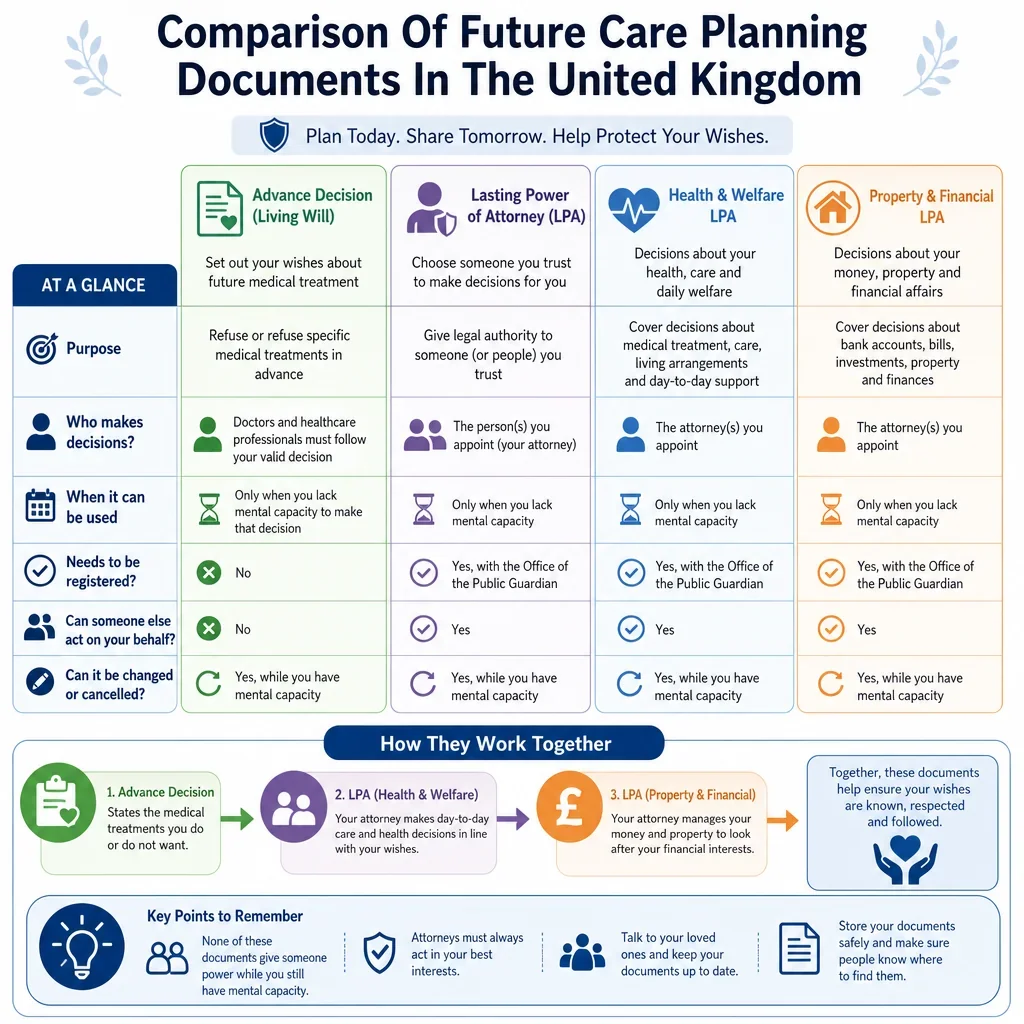
No later health and welfare LPA must override it | An Advance Decision is invalid if the maker later gives an attorney authority to make the same treatment decision. | Always important | Check the date and scope of any registered health and welfare LPA. |
No later inconsistent conduct giving reasonable grounds to think wishes changed | The refusal is invalid if the person later did anything clearly inconsistent with it, giving reasonable grounds to believe they changed their mind. | Always important | Look for later statements, religious changes, treatment choices or updated care plans. |
No unforeseen circumstances that would have affected the decision | An Advance Decision is not applicable if there are reasonable grounds to believe circumstances exist that the person did not anticipate and that would have affected the refusal. | May depend on circumstances | Review it after diagnosis, pregnancy, new treatments or major changes in prognosis. |
Pregnancy may affect applicability if not anticipated | Pregnancy does not automatically cancel an Advance Decision, but may be a circumstance the maker should address expressly. | May depend on circumstances | State whether the refusal should apply during pregnancy and discuss it with a clinician. |
Specific treatment refusal | |||
It cannot refuse basic care needed to keep the person comfortable | An Advance Decision cannot refuse basic nursing care such as warmth, shelter, hygiene and comfort measures. | May depend on circumstances | Limit refusals to medical treatments, not comfort care or basic nursing support. |
It cannot request anything unlawful such as assisted dying | The document can refuse treatment but cannot require anyone to help end life or provide unlawful treatment. | May depend on circumstances | Remove wording that asks clinicians to cause death or provide unlawful assistance. |
Life-sustaining treatment statement | |||
Artificial nutrition and hydration refusals may need life-sustaining treatment formalities | Clinically assisted nutrition or hydration can be life-sustaining, so refusals should meet the stricter written, signed, witnessed and risk-to-life requirements. | Especially important for life-sustaining treatment | Treat CANH refusals as life-sustaining and include the required statutory statement. |
CPR refusal should meet life-sustaining treatment formalities | Cardiopulmonary resuscitation is normally life-sustaining treatment, so a future refusal should satisfy the stricter formalities. | Especially important for life-sustaining treatment | Use clear wording such as I refuse CPR in the stated circumstances, even if my life is at risk. |
Ventilation refusal should meet life-sustaining treatment formalities | Mechanical ventilation may keep a person alive, so a future refusal should be written, signed, witnessed and include the risk-to-life statement. | Especially important for life-sustaining treatment | Specify invasive and non-invasive ventilation if both are refused. |
Specific treatment refusal | |||
Antibiotic refusal may need careful circumstances wording | Antibiotics may be minor or life-sustaining depending on the illness, so the refusal should state when it applies. | May depend on circumstances | Say whether antibiotics are refused only for life-threatening infection or more broadly. |
Each refused treatment should be separately stated | Separate treatment refusals reduce uncertainty about what is covered and when it applies. | Always important | Use a separate bullet or clause for each treatment and set of circumstances. |
Written form | |||
Maker should be clearly identified | Clear personal details help clinicians confirm the document belongs to the patient. | May depend on circumstances | Include full name, date of birth, address and NHS number if known. |
Document should be dated | A date helps prove age, capacity timing, and whether any later LPA or conduct came after the refusal. | Always important | Date the document and any later review, confirmation or amendment. |
No later contradictory action | |||
Regular review helps show continuing wishes | Review is not a statutory formality, but it reduces doubt about later changes in wishes or circumstances. | May depend on circumstances | Review after major diagnosis, treatment change, relationship change or every few years. |
Written form | |||
Relevant people should know where it is kept | A valid Advance Decision may not be followed if clinicians cannot find it when treatment is needed. | May depend on circumstances | Give copies to the GP, hospital, care home, family, attorney and emergency contacts. |
Specific treatment refusal | |||
Valid and applicable refusal has the same effect as a contemporaneous capacitous refusal | If valid and applicable, the refusal must be respected as though the person currently had capacity and refused the treatment. | Always important | If it meets the requirements and applies, clinicians should not provide the refused treatment. |
No later contradictory action | |||
Clinicians may treat if validity or applicability is reasonably doubted | A person does not incur liability for treatment if they reasonably believe no valid and applicable Advance Decision exists. | May depend on circumstances | Remove avoidable uncertainty by using clear wording, dates, signatures and accessible copies. |
Emergency treatment may continue while validity is checked | Life-sustaining or deterioration-preventing treatment is permitted while a decision is sought from the court or validity is clarified. | May depend on circumstances | Make the document easy to locate quickly in emergencies. |
Serious disputes may need Court of Protection clarification | The Court of Protection can determine whether an Advance Decision exists, is valid, or is applicable. | May depend on circumstances | Seek urgent legal or clinical governance advice if family or clinicians dispute the refusal. |
Specific treatment refusal | |||
It must be a refusal, not merely a preference statement | Preferences about care are relevant but are not the same as a legally binding refusal of specified treatment. | Always important | Use decisive refusal wording such as I refuse, not only I would prefer not to have. |
Blanket wording such as no treatment may be too vague | General wording may fail to specify the treatment or circumstances closely enough to be applied safely. | Always important | Replace broad wording with named treatments and stated clinical circumstances. |
No later contradictory action | |||
DNACPR records should be consistent with the Advance Decision | A DNACPR form is different from an Advance Decision, but inconsistency can create doubt about CPR wishes. | May depend on circumstances | Ask the GP or care team to ensure CPR records reflect the Advance Decision. |
Old copies should be replaced after amendments | Different versions can make clinicians unsure which refusal reflects the maker's current wishes. | May depend on circumstances | Destroy superseded versions and tell copy holders which version is current. |
Capacity | |||
Clinical discussion can support informed refusal | Discussing the refusal with a healthcare professional helps evidence understanding of treatment consequences. | May depend on circumstances | Ask the clinician to note the discussion and capacity in medical records. |
Signature and witnessing | |||
Witness should be independent and able to confirm the signature | The Act requires witnessing for life-sustaining treatment refusals using an independent adult witness reduces later disputes. | Especially important for life-sustaining treatment | Use an adult witness who is not pressuring the maker and can be contacted later. |
Capacity | |||
Decision should be voluntary and free from pressure | Coercion or undue pressure may create serious doubt about whether the refusal truly represents the maker's decision. | May depend on circumstances | Meet privately with the maker if there is any concern about pressure by relatives or carers. |
No later contradictory action | |||
New treatment options may affect applicability | If a new treatment or improved prognosis was not anticipated and might have affected the refusal, applicability may be doubted. | May depend on circumstances | Review the Advance Decision after major medical advances or changes in diagnosis. |
Written form | |||
Statutory Advance Decision rules apply in England and Wales | The Mental Capacity Act 2005 rules on Advance Decisions apply to England and Wales Scotland and Northern Ireland have different legal frameworks. | Always important | For use outside England and Wales, get local legal advice before relying on the document. |
What Makes An Advance Decision Valid In England And Wales?
An Advance Decision is most reliable when it is made by a person aged 18 or over who has mental capacity, clearly identifies the treatment being refused, and is made before the treatment decision is needed. If it refuses life-sustaining treatment, it must be in writing, signed by or on behalf of the person, witnessed, and include an express statement that it applies even if life is at risk.
When Can An Advance Decision Be Ignored?
Healthcare professionals may lawfully treat despite an Advance Decision if there are reasonable grounds to believe it is invalid or not applicable. Key risk factors include later inconsistent behaviour, a later Lasting Power of Attorney giving treatment decision powers, unclear wording, major changes in circumstances, or uncertainty about capacity at the time it was made.
How Should You Check An Advance Decision Before Relying On It?
- Check age and capacity: the maker must have been 18 or over and had capacity when the refusal was made.
- Check the treatment: the refusal must specify the treatment clearly enough for clinicians to apply it.
- Check life-sustaining treatment wording: a refusal of life-sustaining treatment needs the statutory written, signed, witnessed and risk-to-life statement requirements.
- Check for later changes: later written or verbal withdrawals, inconsistent conduct, or a later health and welfare LPA may affect validity.
- Tell the right people: give copies to the GP, hospital teams, family or attorneys so the document can be found when needed.
FAQs
You Might Also Be Interested In