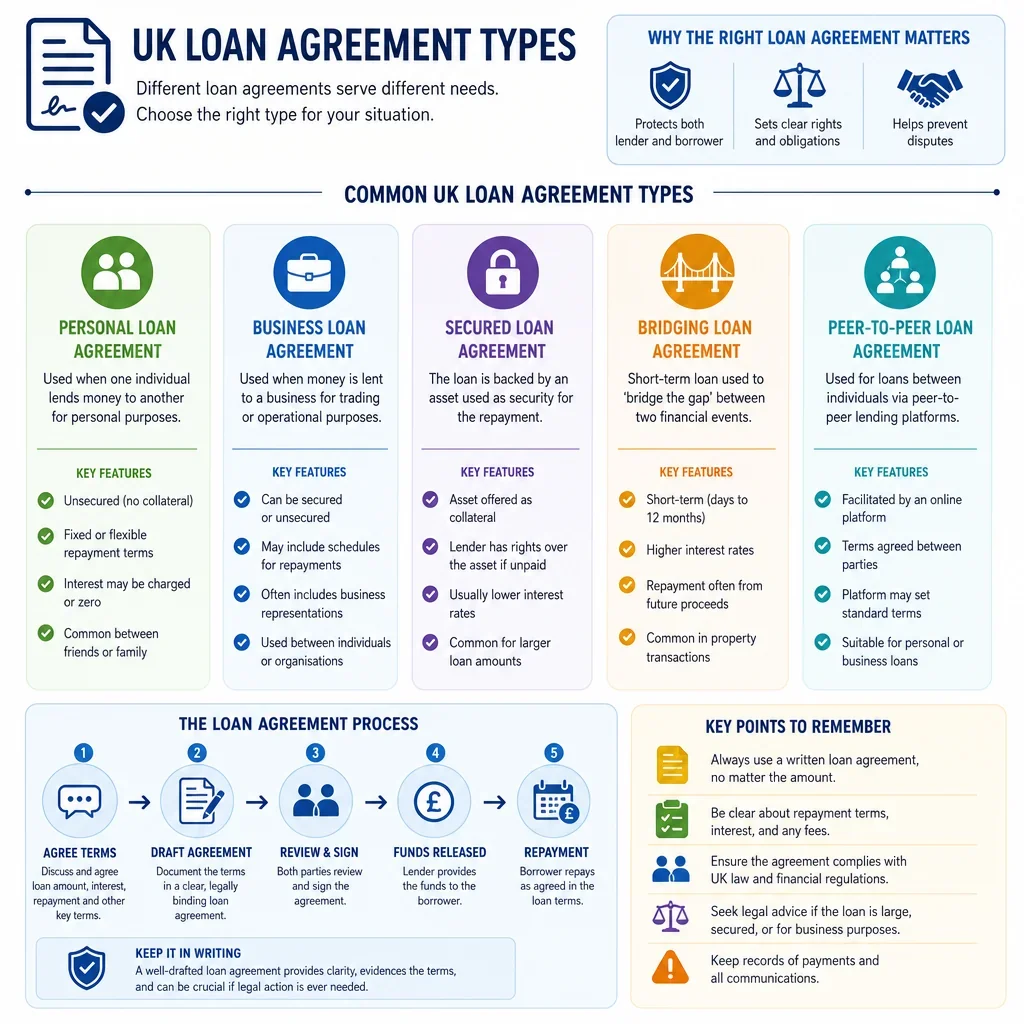
Common Clauses In UK Loan Agreements
Clause Category | Purpose | Inclusion Level | Drafting Notes | Main Affected Party |
|---|---|---|---|---|
Parties | ||||
Core commercial term | Identifies the lender, borrower and any obligors. | Usually essential | Use full legal names, registered numbers and addresses. | Both parties |
Definitions and Interpretation | ||||
Legal boilerplate | Defines key terms and interpretation rules. | Usually essential | Keep defined terms consistent with schedules and security documents. | Both parties |
Facility Amount | ||||
Core commercial term | States the maximum loan principal available. | Usually essential | Specify currency and whether amount is committed or discretionary. | Both parties |
Purpose of Loan | ||||
Core commercial term | Restricts how the borrowed money may be used. | Often included | State if purpose is binding or for information only. | Borrower |
Availability Period | ||||
Core commercial term | Sets the period during which funds may be drawn. | Often included | Confirm whether undrawn amounts cancel after expiry. | Borrower |
Drawdown Request | ||||
Administration | Sets process for requesting loan advances. | Often included | Include notice period, account details and required certifications. | Borrower |
Single Advance | ||||
Core commercial term | Provides for the loan to be advanced once only. | Situation-specific | Use for simple term loans with one completion payment. | Both parties |
Multiple Advances | ||||
Core commercial term | Allows several drawdowns under one facility. | Situation-specific | Specify minimum amounts, frequency and final drawdown date. | Borrower |
Revolving Facility | ||||
Core commercial term | Permits re-borrowing of amounts repaid. | Situation-specific | Define utilisation, rollover and cancellation mechanics clearly. | Both parties |
Conditions Precedent | ||||
Core commercial term | Lists documents and conditions required before funding. | Usually essential | Include approvals, KYC, security, board minutes and legal opinions if needed. | Borrower |
Maturity Date | ||||
Repayment | States the final date for repayment. | Usually essential | Use a fixed date or objective calculation method. | Borrower |
Repayment Schedule | ||||
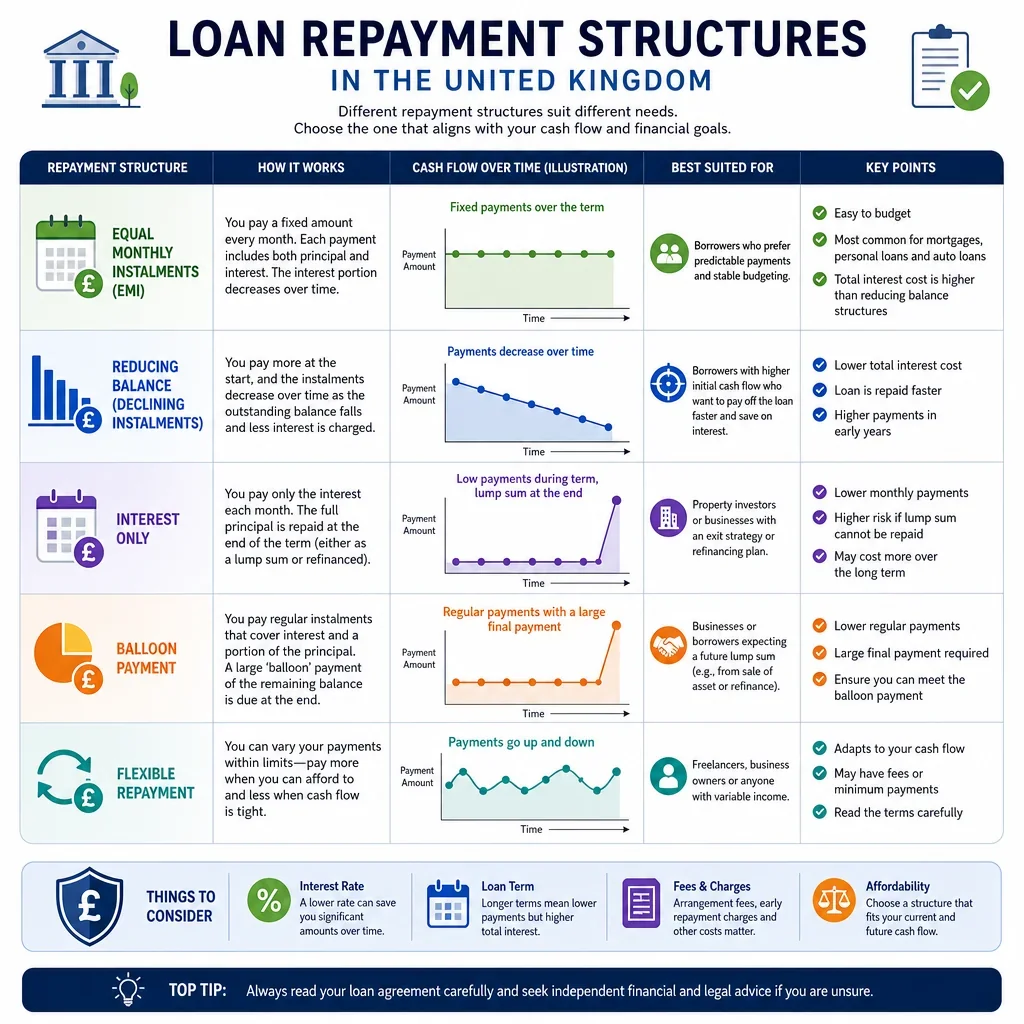
Repayment | Sets instalment amounts and due dates. | Usually essential | Attach a schedule if repayments are not a single bullet payment. | Borrower |
Bullet Repayment | ||||
Repayment | Requires full principal repayment at maturity. | Situation-specific | Assess refinancing risk and whether interim interest is payable. | Borrower |
Amortisation | ||||
Repayment | Requires principal to reduce over time. | Situation-specific | State whether instalments are equal, sculpted or fixed by percentage. | Both parties |
Voluntary Prepayment | ||||
Repayment | Allows early repayment by the borrower. | Often included | Set notice, minimum amounts and any prepayment fee. | Borrower |
Mandatory Prepayment | ||||
Repayment | Requires repayment after specified events. | Situation-specific | Common triggers include asset sales, insurance proceeds and change of control. | Borrower |
Change Of Control Prepayment | ||||
Repayment | Protects lender if borrower ownership changes. | Situation-specific | Define control precisely, including indirect and beneficial ownership. | Borrower |
Illegality Prepayment | ||||
Repayment | Requires repayment if lending becomes unlawful. | Often included | Allow time for lender transfer or mitigation where appropriate. | Both parties |
No Reborrowing | ||||
Repayment | Prevents repaid amounts being borrowed again. | Often included | Do not use for true revolving facilities. | Borrower |
Application Of Payments | ||||
Repayment | Sets order for applying payments received. | Often included | Typical order is costs, fees, default interest, interest then principal. | Both parties |
Interest Rate | ||||
Interest and fees | States the rate payable on the loan. | Usually essential | Specify fixed, floating or zero-interest treatment. | Both parties |
SONIA Interest | ||||
Interest and fees | Uses Sterling Overnight Index Average as floating benchmark. | Situation-specific | Include compounding, lookback, observation shift and fallback terms. | Both parties |
Base Rate Interest | ||||
Interest and fees | Links interest to Bank Rate or another base rate. | Situation-specific | Identify the rate source and timing for changes. | Both parties |
Interest Payment Dates | ||||
Interest and fees | Sets when accrued interest must be paid. | Usually essential | Align with repayment schedule and business day convention. | Borrower |
Interest Calculation | ||||
Interest and fees | Explains how interest accrues and is calculated. | Usually essential | State day-count basis, compounding and rounding. | Both parties |
Default Interest | ||||
Interest and fees | Increases interest on overdue amounts. | Often included | Keep rate commercially justifiable to reduce penalty risk. | Borrower |
Arrangement Fee | ||||
Interest and fees | Requires payment of lender setup fee. | Optional | State amount, due date and whether refundable. | Borrower |
Commitment Fee | ||||
Interest and fees | Charges for undrawn committed funds. | Situation-specific | Use only where lender must keep funds available. | Borrower |
Exit Fee | ||||
Interest and fees | Requires fee on repayment or facility termination. | Optional | Make trigger and calculation transparent. | Borrower |
Break Costs | ||||
Interest and fees | Compensates lender for early repayment funding losses. | Situation-specific | Define calculation method and supporting evidence required. | Borrower |
Tax Gross-Up | ||||
Interest and fees | Preserves lender return if withholding tax applies. | Situation-specific | Check UK yearly interest withholding rules and exemptions. | Borrower |
Increased Costs | ||||
Interest and fees | Passes certain regulatory cost increases to borrower. | Situation-specific | Limit to objective changes affecting lender cost of funds or capital. | Borrower |
Security | ||||
Security | Requires security for repayment obligations. | Situation-specific | Identify secured assets and use separate security documents where needed. | Borrower |
Registration Of Company Charges | ||||
Security | Ensures registrable security is filed at Companies House. | Situation-specific | File within 21 days after creation for companies and LLPs. | Lender |
Legal Mortgage | ||||
Security | Creates security over land or real estate. | Situation-specific | Registered land charges usually need HM Land Registry registration. | Borrower |
Fixed Charge | ||||
Security | Grants security over specific assets with lender control. | Situation-specific | Control restrictions are key to fixed charge characterisation. | Borrower |
Floating Charge | ||||
Security | Grants security over changing business assets. | Situation-specific | Consider insolvency priority and prescribed part risk. | Both parties |
Negative Pledge | ||||
Security | Restricts borrower from granting competing security. | Often included | Include permitted security and ordinary-course exceptions. | Borrower |
Guarantee | ||||
Security | Makes a third party liable if borrower fails to pay. | Situation-specific | Execute in writing and consider independent legal advice for individuals. | Third party |
Indemnity | ||||
Security | Creates primary liability for specified losses. | Optional | Define covered losses and avoid overbroad consumer wording. | Borrower |
Continuing Security | ||||
Security | Keeps security effective despite account changes. | Often included | Use for all-monies guarantees or security arrangements. | Borrower |
Release Of Security | ||||
Security | Provides for release after full repayment. | Often included | State who pays release filings and discharge costs. | Both parties |
Insurance Covenant | ||||
Security | Requires insured assets supporting repayment or security. | Situation-specific | Consider lender loss payee or noting interest wording. | Borrower |
Asset Valuation | ||||
Security | Allows valuation of secured assets. | Situation-specific | State timing, valuer appointment and who pays costs. | Borrower |
Events Of Default | ||||
Default and enforcement | Lists triggers for lender enforcement rights. | Usually essential | Tailor triggers to loan risk and include cure periods where appropriate. | Borrower |
Non-Payment Default | ||||
Default and enforcement | Default if borrower misses a payment. | Usually essential | Consider grace period for administrative errors only. | Borrower |
Breach Of Covenant Default | ||||
Default and enforcement | Default if borrower breaches agreed obligations. | Often included | Separate immediate defaults from breaches with remedy periods. | Borrower |
Misrepresentation Default | ||||
Default and enforcement | Default if material statements are untrue. | Often included | Link to representations and materiality thresholds. | Borrower |
Insolvency Default | ||||
Default and enforcement | Default if borrower enters insolvency or rescue process. | Usually essential | Align triggers with UK administration, liquidation, CVA and moratorium concepts. | Borrower |
Cross-Default | ||||
Default and enforcement | Default if other financial debt defaults. | Situation-specific | Use thresholds to avoid minor or disputed defaults. | Borrower |
Material Adverse Change | ||||
Default and enforcement | Default for major adverse change in borrower risk. | Optional | Define scope narrowly to reduce uncertainty. | Borrower |
Unlawfulness Default | ||||
Default and enforcement | Default if obligations become unlawful or unenforceable. | Often included | Coordinate with illegality prepayment and severance wording. | Both parties |
Cessation Of Business Default | ||||
Default and enforcement | Default if borrower stops trading or operating. | Situation-specific | Distinguish full cessation from ordinary restructuring. | Borrower |
Acceleration | ||||
Default and enforcement | Makes outstanding debt immediately due after default. | Usually essential | State whether acceleration is automatic or by lender notice. | Borrower |
Cancellation On Default | ||||
Default and enforcement | Cancels undrawn commitments after default. | Often included | Useful where facility has multiple advances or revolving availability. | Borrower |
Enforcement Costs | ||||
Default and enforcement | Requires borrower to pay recovery and enforcement costs. | Often included | Limit to properly incurred and reasonable costs. | Borrower |
Appointment Of Receiver | ||||
Default and enforcement | Allows enforcement through a receiver over secured assets. | Situation-specific | Ensure appointment powers match security document and statutory powers. | Borrower |
Representations | ||||
Core commercial term | Records factual statements relied on by lender. | Usually essential | State when representations are made and repeated. | Borrower |
Capacity And Authority | ||||
Core commercial term | Confirms borrower can enter and perform agreement. | Usually essential | For companies, obtain board approval and check constitutional limits. | Borrower |
No Conflict | ||||
Core commercial term | Confirms loan does not breach other obligations. | Often included | Check existing finance documents, shareholder agreements and security restrictions. | Borrower |
Binding Obligations | ||||
Core commercial term | Confirms agreement is legally binding and enforceable. | Often included | Subject to insolvency, equitable and public policy limitations. | Lender |
No Default | ||||
Core commercial term | Confirms no default exists at signing or drawdown. | Often included | Consider repeating at each utilisation date. | Borrower |
Solvency | ||||
Core commercial term | Confirms borrower is solvent and able to pay debts. | Often included | Use objective wording aligned with cash-flow and balance-sheet tests. | Borrower |
Financial Statements | ||||
Core commercial term | Confirms accounts are accurate and not misleading. | Often included | Refer to latest accounts and applicable accounting standards. | Borrower |
Information Undertakings | ||||
Administration | Requires borrower to provide financial and business information. | Often included | Set reporting frequency, format and recipients. | Borrower |
Financial Covenants | ||||
Core commercial term | Requires borrower to maintain agreed financial ratios. | Situation-specific | Define EBITDA, debt, cash and testing dates carefully. | Borrower |
Debt Service Cover Ratio | ||||
Core commercial term | Tests cashflow against debt service obligations. | Situation-specific | Common in property, project and cashflow lending. | Borrower |
Loan To Value Covenant | ||||
Security | Limits debt compared with secured asset value. | Situation-specific | Define valuation basis, frequency and cure rights. | Borrower |
Compliance With Laws | ||||
Core commercial term | Requires borrower to comply with applicable law. | Often included | Limit to laws material to business or loan where appropriate. | Borrower |
Sanctions Compliance | ||||
Core commercial term | Prevents use of loan in breach of sanctions. | Often included | Check UK sanctions, ownership, control and restricted activities. | Both parties |
Anti-Money Laundering | ||||
Core commercial term | Requires lawful source of funds and AML cooperation. | Often included | Include KYC, beneficial ownership and suspicious activity cooperation. | Both parties |
Anti-Bribery And Corruption | ||||
Core commercial term | Prevents loan use connected with bribery or corruption. | Often included | Reference Bribery Act compliance and adequate procedures where relevant. | Both parties |
Environmental Undertakings | ||||
Core commercial term | Requires compliance with environmental obligations. | Situation-specific | Use for property, industrial or regulated businesses. | Borrower |
Restrictions On Disposals | ||||
Core commercial term | Restricts sale of key borrower assets. | Often included | List permitted disposals and ordinary-course exceptions. | Borrower |
Restrictions On Further Debt | ||||
Core commercial term | Limits additional borrowing by borrower. | Often included | Include permitted debt baskets and trade credit exceptions. | Borrower |
Restrictions On Distributions | ||||
Core commercial term | Limits dividends or shareholder payments before repayment. | Situation-specific | Coordinate with Companies Act distribution rules for companies. | Borrower |
Maintenance Of Assets | ||||
Security | Requires borrower to preserve key secured assets. | Situation-specific | Specify repair standards, access rights and evidence of maintenance. | Borrower |
Payment Mechanics | ||||
Administration | Sets how and where payments must be made. | Usually essential | Include account details, currency, cleared funds and cut-off times. | Both parties |
Currency Of Account And Payment | ||||
Administration | States the currency for debt and payments. | Usually essential | Add currency indemnity if payments may be received in another currency. | Both parties |
Business Day Convention | ||||
Administration | Adjusts dates falling on non-business days. | Often included | Choose following, modified following or preceding convention. | Both parties |
No Set-Off By Borrower | ||||
Administration | Requires payments without deduction or set-off. | Often included | Consumer fairness rules may limit broad exclusion wording. | Borrower |
Lender Set-Off | ||||
Default and enforcement | Allows lender to set off mutual debts after default. | Optional | Check insolvency set-off and bank account terms if applicable. | Borrower |
Evidence Of Debt | ||||
Administration | Makes lender records evidence of amounts owed. | Often included | Usually stated as prima facie evidence absent manifest error. | Lender |
Notices | ||||
Administration | Sets rules for formal communications. | Usually essential | Include permitted delivery methods, addresses and deemed receipt. | Both parties |
Electronic Signatures | ||||
Administration | Allows signing by electronic signature where valid. | Optional | Deeds, land security and witnessing may need extra formalities. | Both parties |
Counterparts | ||||
Legal boilerplate | Allows parties to sign separate copies. | Often included | Useful for remote or multi-party completion. | Both parties |
Confidentiality | ||||
Legal boilerplate | Protects non-public deal and borrower information. | Optional | Include permitted disclosure to advisers, funders and regulators. | Both parties |
Data Protection | ||||
Legal boilerplate | Addresses processing of personal data in loan administration. | Often included | Use where individuals, guarantors or directors provide personal data. | Both parties |
Assignment And Transfer | ||||
Administration | Controls transfer of lender or borrower rights. | Often included | Borrower transfers usually need lender consent lender transfers may be restricted. | Both parties |
Novation | ||||
Administration | Permits substitution of a party with consent. | Optional | Use a novation certificate or deed for obligations transfer. | Both parties |
Amendments And Waivers | ||||
Administration | Sets how the agreement can be changed or waived. | Usually essential | Require written consent and identify who may approve changes. | Both parties |
No Waiver | ||||
Legal boilerplate | Prevents delay from waiving rights. | Often included | State rights are cumulative unless expressly waived in writing. | Lender |
Entire Agreement | ||||
Legal boilerplate | Confirms document supersedes prior discussions. | Often included | Do not exclude liability for fraud. | Both parties |
Severance | ||||
Legal boilerplate | Preserves agreement if a term is invalid. | Often included | Allow deletion or modification only to minimum necessary extent. | Both parties |
Third Party Rights | ||||
Legal boilerplate | Controls enforcement by non-parties. | Often included | Exclude or expressly grant rights under the 1999 Act. | Third party |
Governing Law | ||||
Legal boilerplate | States the law governing the agreement. | Usually essential | For UK pages, specify England and Wales, Scotland or Northern Ireland as applicable. | Both parties |
Jurisdiction | ||||
Legal boilerplate | Selects courts for disputes. | Usually essential | Choose exclusive or non-exclusive jurisdiction and match governing law. | Both parties |
Service Of Process Agent | ||||
Legal boilerplate | Appoints UK agent for service on foreign party. | Situation-specific | Use where borrower, guarantor or lender is outside the chosen jurisdiction. | Third party |
Arbitration | ||||
Legal boilerplate | Refers disputes to private arbitral tribunal. | Optional | Specify seat, rules, language and number of arbitrators. | Both parties |
Consumer Credit Compliance | ||||
Core commercial term | Addresses regulated credit requirements for individual borrowers. | Situation-specific | Check if the loan is regulated or exempt before signing. | Lender |
Consumer Fairness Review | ||||
Legal boilerplate | Flags fairness review for consumer-facing terms. | Situation-specific | Important for default interest, fees, set-off and unilateral variation. | Borrower |
Execution As A Deed | ||||
Legal boilerplate | Provides deed execution where required or preferred. | Situation-specific | Use for guarantees, powers of attorney or security documents where appropriate. | Both parties |
Company Execution Formalities | ||||
Legal boilerplate | Ensures valid execution by a company. | Situation-specific | Company may sign by seal, two authorised signatories or director with witness. | Both parties |
Power Of Attorney | ||||
Default and enforcement | Authorises lender to act for borrower after default. | Situation-specific | Usually executed as deed and limited to enforcement steps. | Borrower |
Limitation Period Awareness | ||||
Legal boilerplate | Flags enforcement timing for simple contracts and deeds. | Optional | Execution method affects limitation period for bringing claims. | Both parties |
Tax Residency And FATCA | ||||
Administration | Collects tax status information for reporting and withholding. | Situation-specific | Relevant for institutional, cross-border or reportable finance arrangements. | Both parties |
Facility Agent | ||||
Administration | Appoints agent to administer syndicated facility. | Situation-specific | Define duties, protections, resignation and payment flows. | Third party |
Security Trustee | ||||
Security | Holds security for multiple finance parties. | Situation-specific | Use where security benefits a syndicate or changing lender group. | Third party |
Pro Rata Sharing | ||||
Administration | Shares recoveries fairly among multiple lenders. | Situation-specific | Relevant only for syndicated or club facilities. | Lender |
What Clauses Matter Most In A UK Loan Agreement?
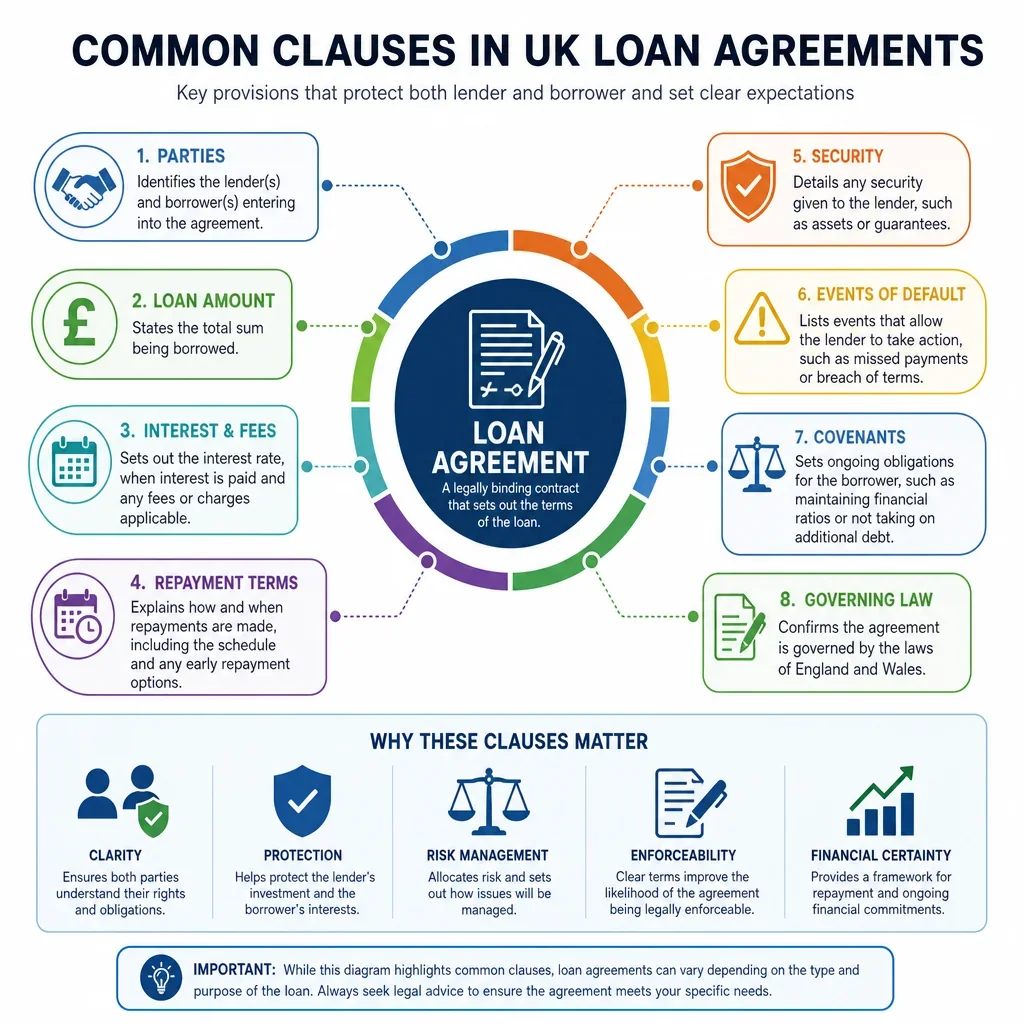
UK loan agreements usually need more than the loan amount and repayment date. The most important clauses define the facility, interest, repayment mechanics, default triggers, enforcement rights, notices, governing law and dispute forum. If the loan is secured, security and registration provisions are also critical.
When Should A Loan Agreement Include Security Clauses?
Security clauses are situation-specific but important where the lender wants rights over assets if the borrower defaults. For companies and LLPs, most registrable security must be registered at Companies House within the statutory period under the Companies Act 2006, otherwise it may be void against an administrator, liquidator or creditor.
Which Clauses Need Extra Care For Consumer Or Individual Borrowers?
If the borrower is an individual, sole trader or small partnership, the Consumer Credit Act 1974 and FCA consumer credit regime may apply unless an exemption is available. Clauses on interest, fees, default interest, early repayment, enforcement and notices should be checked carefully before using a business-style loan template.
Why Are Default And Enforcement Clauses So Detailed?
Default clauses decide when the lender can accelerate the debt, stop further drawdowns, enforce security or demand repayment. UK drafting commonly separates non-payment, insolvency, breach of covenant, misrepresentation, cross-default and material adverse change, because each trigger carries different commercial and evidential risk.
How Do Administration Clauses Reduce Disputes?
Clauses covering payment mechanics, day-count, business days, notices, assignment, amendments, set-off, tax gross-up and evidence of debt help prevent technical disputes about whether money was paid on time, how much is due, who may enforce the loan and how formal communications must be served.
FAQs
You Might Also Be Interested In