What To Include In A Reference Letter In The United Kingdom
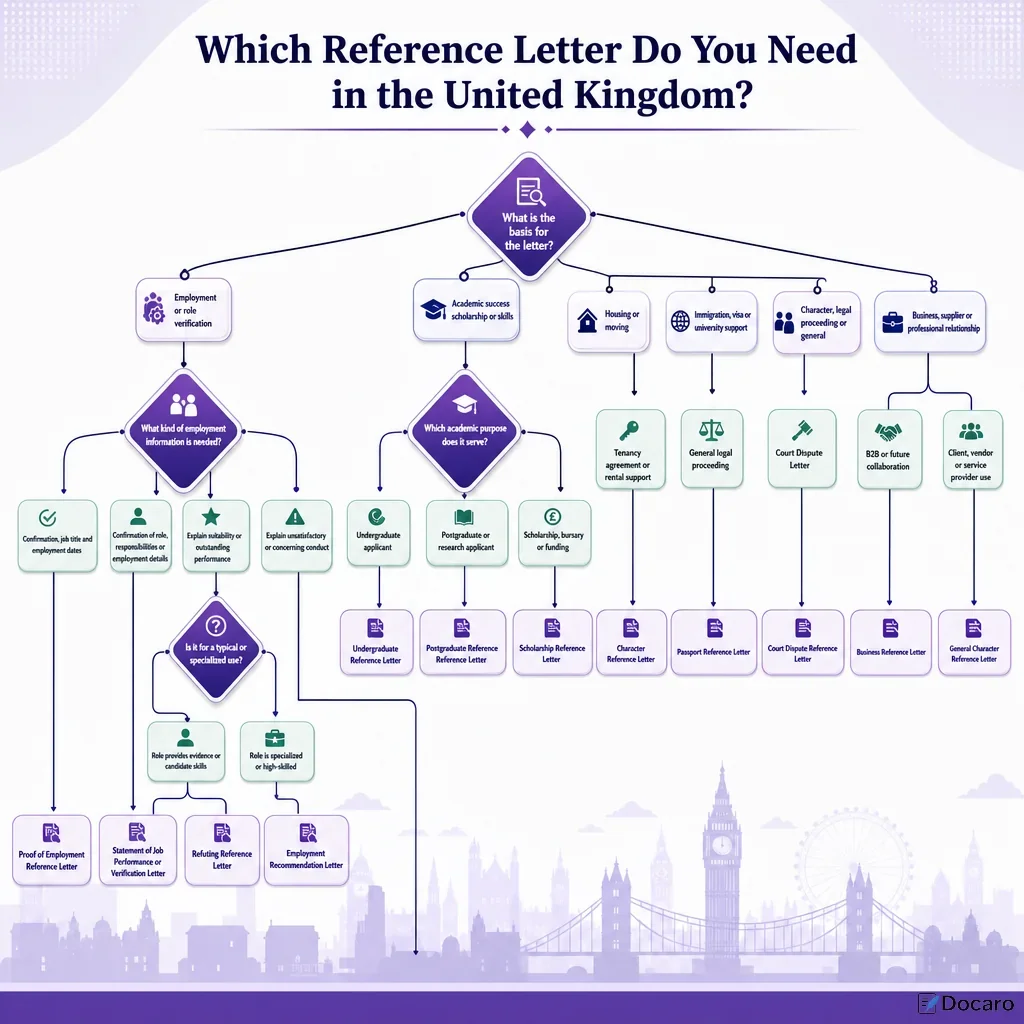
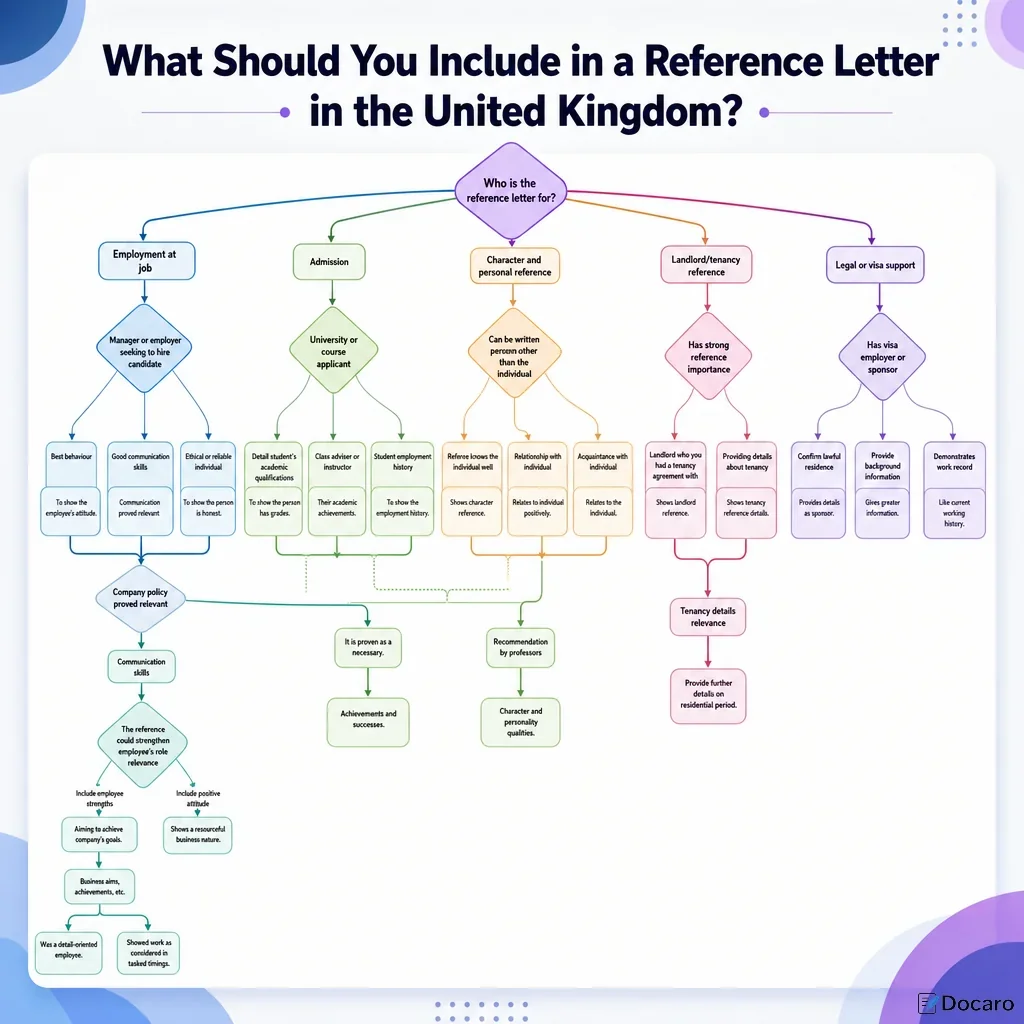
What is the reference for?
Why Does A UK Reference Letter Need The Right Content?
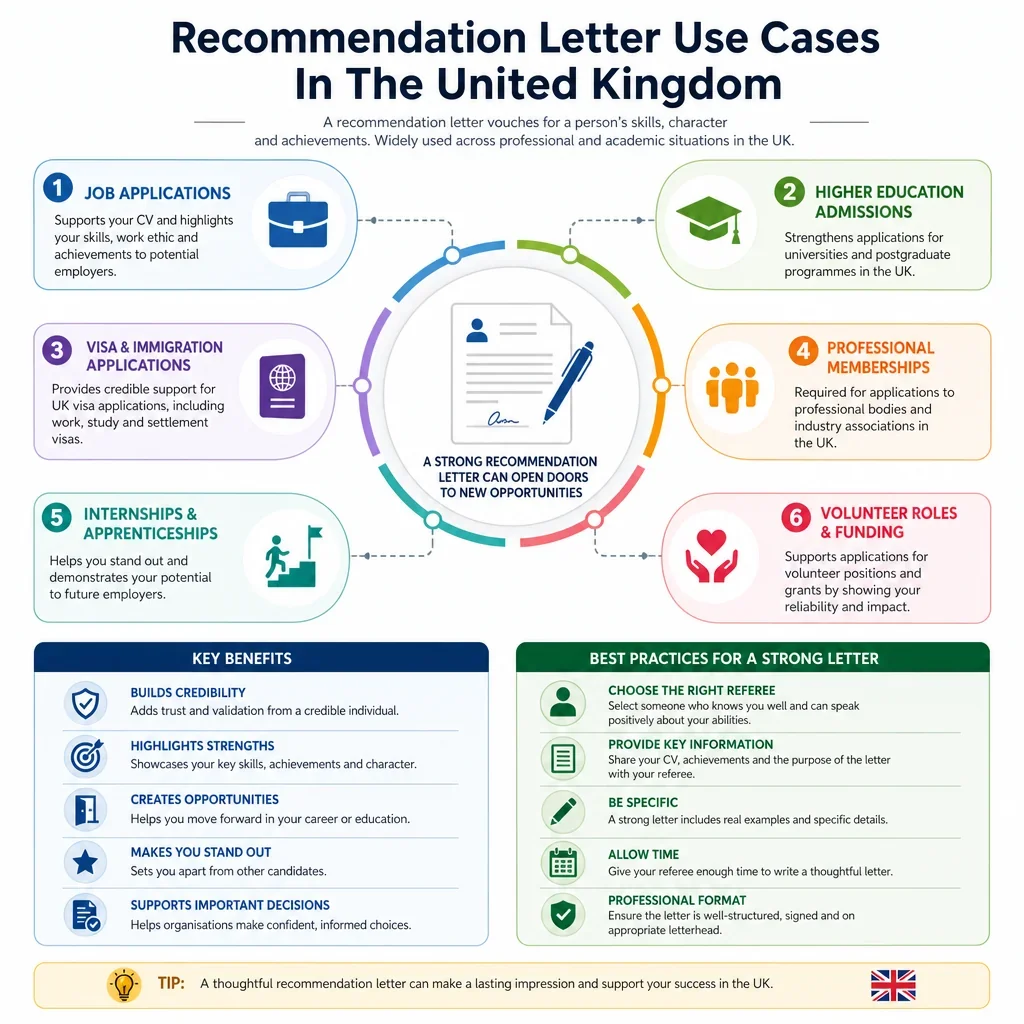
A reference letter in the United Kingdom can affect a person's job, tenancy, university place, visa application, or regulated role. The right content helps the recipient make a fair decision while protecting the referee from avoidable legal and reputational risk.
What Happens If A Reference Is Inaccurate?
A UK reference should be fair, accurate, and not misleading. If it contains careless statements, unsupported opinions, or important omissions, it may cause harm to the applicant or mislead the organisation relying on it. Employment references should follow guidance from GOV.UK and Acas.
How Can Data Protection Affect A Reference Letter?
Most reference letters contain personal data. Referees should only include information that is necessary, relevant, and lawful under UK data protection rules. Sensitive details, such as health information or protected characteristics, should usually be avoided unless there is a clear lawful reason.
What Should A Good Reference Letter Include?
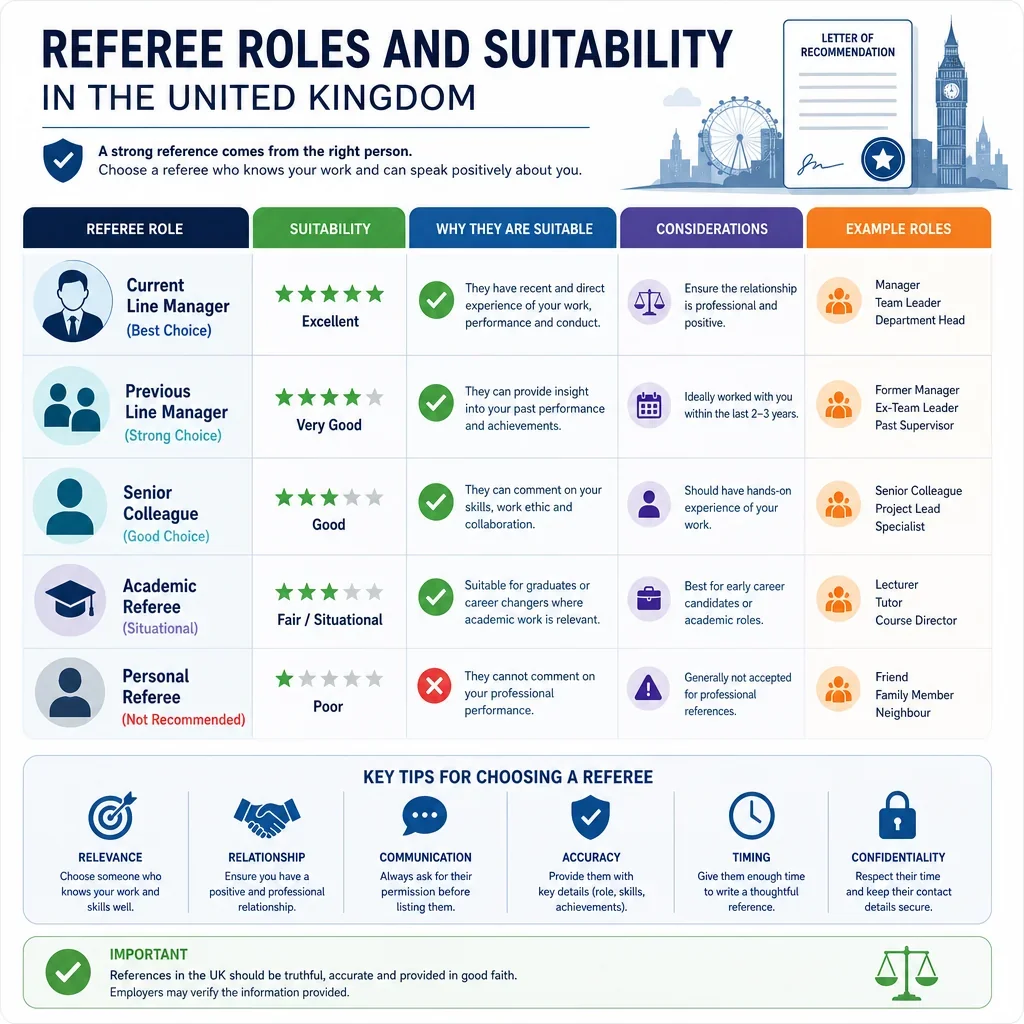
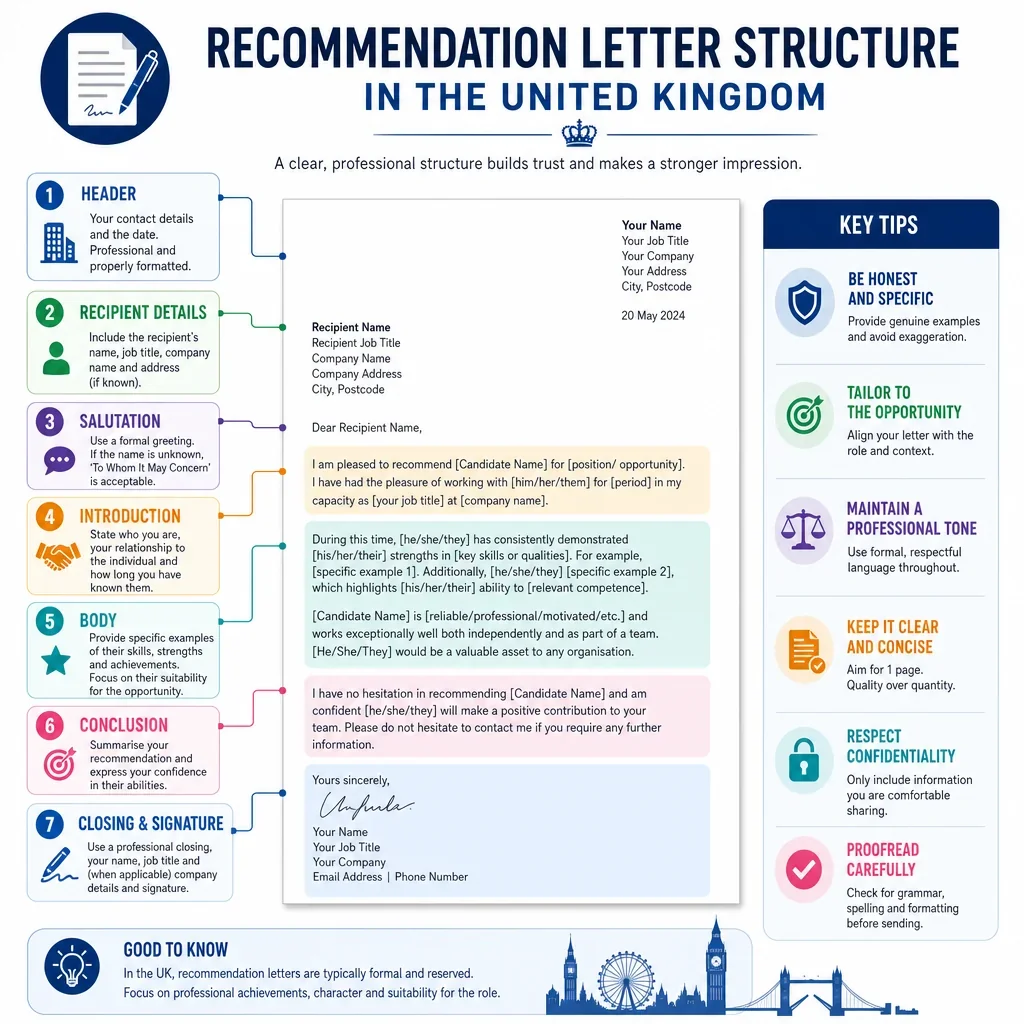
- The referee's relationship to the person and how long they have known them.
- Key verified facts, such as dates, role, course, tenancy, or capacity known.
- Relevant strengths supported by clear examples.
- A suitable recommendation matched to the purpose of the letter.
- Contact details, date, and signature so the recipient can verify the reference.
Why Should UK Referees Avoid Irrelevant Details?
Irrelevant or discriminatory comments can undermine the usefulness of the reference and may create risk under the Equality Act 2010 or UK GDPR. A concise, evidence-based letter is usually more persuasive and safer than a long letter containing unnecessary personal information.
FAQs
You Might Also Be Interested In