

Referee Roles And Suitability In The United Kingdom
Created:
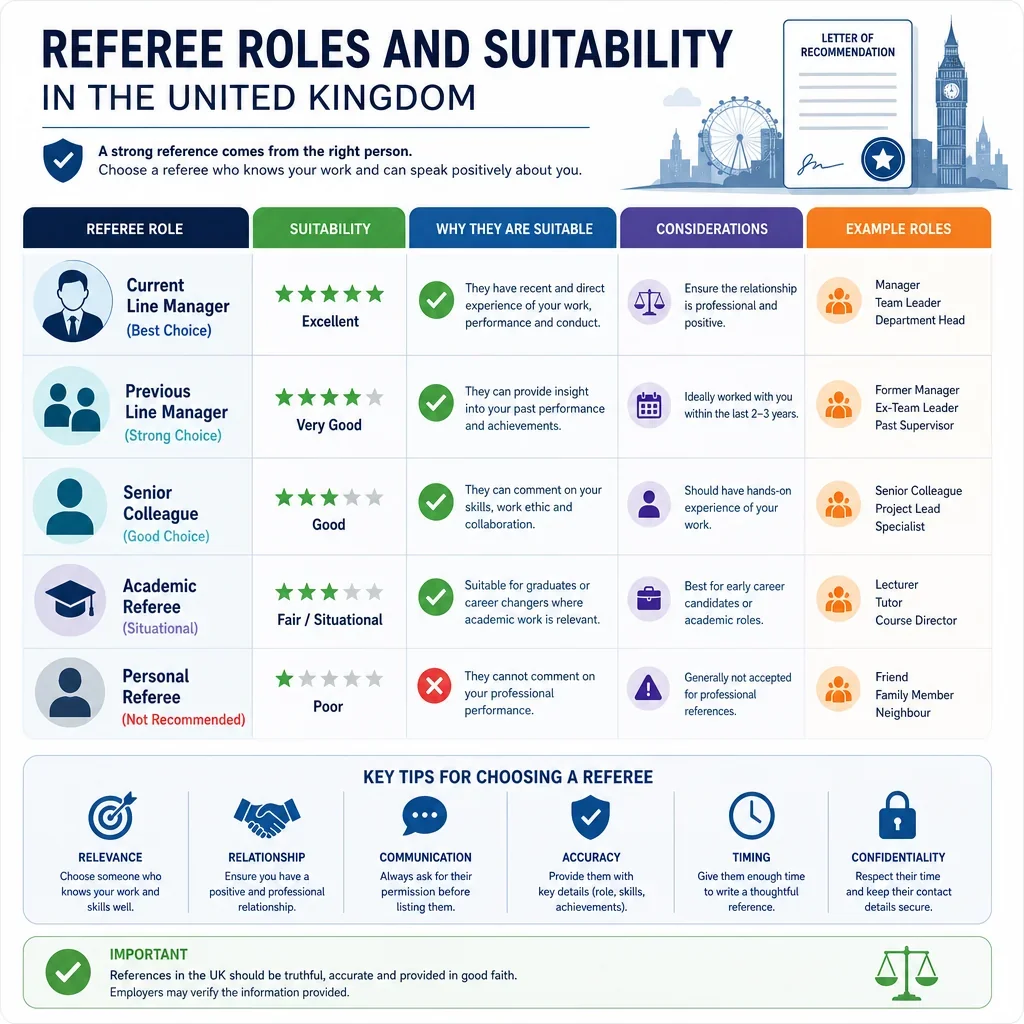
Understanding referee roles and suitability helps you choose the right person to support a credible reference. This guide is useful for anyone preparing an AI Generated Reference Letter for use in the United Kingdom.
Referee Role | Best Used For | Evidence They Can Provide | Typical Credibility Level | Considerations |
|---|---|---|---|---|
Line Manager | ||||
Current line manager | Job applications, promotions and internal transfers. | Recent duties, performance, conduct, attendance and teamwork. | High | Ask permission first current employer may not know about the job search. |
Former line manager | Job applications where current employer cannot be approached. | Past performance, responsibilities, reliability and reason for leaving. | High | Best if they supervised the applicant directly and recently. |
Employer | ||||
HR department | Formal employment verification and compliance checks. | Job title, dates of employment, salary band and absence records. | High | May provide only a brief factual reference under company policy. |
Business owner or director | Small businesses, senior roles and personal recommendations. | Overall contribution, trustworthiness, leadership and commercial impact. | High | Should still give evidence-based comments, not unsupported praise. |
Department head | Professional roles needing senior endorsement. | Department-level contribution, standards, outcomes and leadership potential. | High | Less useful if they had little direct contact with the applicant. |
Line Manager | ||||
Team leader | Operational, retail, hospitality, care and entry-level roles. | Shift performance, punctuality, customer service and team behaviour. | High | Confirm they are authorised to provide references for the employer. |
Project manager | Project-based, contract, consultancy and technical roles. | Deliverables, deadlines, stakeholder management and problem solving. | High | Specify the project dates and applicant role clearly. |
Internship supervisor | Graduate jobs, placements and early-career applications. | Work ethic, learning speed, initiative and workplace conduct. | High | Best where the internship involved real responsibilities and feedback. |
Apprenticeship mentor | Apprenticeship completion, first skilled job or trade role. | Practical skills, training progress, safety awareness and reliability. | High | Should mention completed standards, qualifications or workplace evidence. |
Work placement supervisor | Students applying for work after a placement year. | Workplace skills, professionalism, attendance and task completion. | High | Include placement length and type of supervision. |
Colleague | ||||
Senior colleague | Peer-supported job applications where a manager is unavailable. | Collaboration, technical ability, professionalism and day-to-day conduct. | Medium | Less authoritative than a manager unless they oversaw work informally. |
Peer colleague | Character, teamwork and collaboration evidence. | Teamwork, communication, dependability and working relationships. | Medium | May not be accepted where an employer reference is required. |
Professional Contact | ||||
Internal stakeholder | Matrix organisations, project work and stakeholder-facing roles. | Communication, responsiveness, delivery quality and stakeholder trust. | Medium | Should clarify they were not the applicant's line manager. |
Client or customer contact | Consultancy, freelance, sales and client-facing roles. | Service quality, professionalism, outcomes and client satisfaction. | Medium | Check confidentiality and commercial sensitivity before sharing details. |
Supplier or vendor contact | Procurement, operations and partnership roles. | Negotiation, reliability, professionalism and relationship management. | Medium | May be viewed as less independent if commercially connected. |
Professional mentor | Career change, leadership development and graduate applications. | Growth, judgement, goals, commitment and professional maturity. | Medium | Most persuasive if they know the applicant's work, not only aspirations. |
Chartered professional contact | Professional membership, regulated sectors and credibility checks. | Professional standards, ethics, competence and reputation. | High | Use only where they know the applicant personally and professionally. |
Accountant | Self-employed income checks, business credibility and tenancy applications. | Business trading history, income patterns and financial reliability. | High | They may need client consent before disclosing financial information. |
Solicitor | Formal character references and identity-sensitive applications. | Professional dealings, integrity and length of acquaintance. | High | They may avoid opinions outside their direct knowledge. |
Teacher or Tutor | ||||
University lecturer | Graduate jobs, postgraduate study and scholarships. | Academic ability, participation, writing quality and subject knowledge. | High | Provide CV, transcript and application details to help specificity. |
Personal tutor | Student applications needing academic and pastoral context. | Progress, engagement, resilience, attendance and academic conduct. | High | Best if they have known the student for a full academic year or more. |
Course leader | Further study, graduate schemes and academic progression. | Course performance, cohort standing, attendance and assessment outcomes. | High | May rely on institutional records rather than personal observation. |
Academic Supervisor | ||||
Dissertation supervisor | Postgraduate study, research roles and analytical jobs. | Research ability, independence, writing, analysis and deadlines. | High | Ideal if the reference can mention dissertation topic and outcome. |
PhD supervisor | Academic posts, fellowships, research jobs and visas needing academic evidence. | Research contribution, independence, publications and scholarly conduct. | High | Should address the specific criteria for research or academic role. |
Teacher or Tutor | ||||
School teacher | School leaver jobs, apprenticeships and college applications. | Attendance, effort, behaviour, punctuality and academic strengths. | High | Use a teacher who knows the pupil well, not only the highest-status teacher. |
Head of year | School references needing behaviour and attendance context. | Conduct, attendance, punctuality, leadership and pastoral record. | High | May provide broader evidence than a single subject teacher. |
Careers adviser | Early-career applications where work history is limited. | Career planning, motivation, employability preparation and professionalism. | Medium | Less persuasive if they have not observed academic or work performance. |
Volunteer Coordinator | ||||
Volunteer coordinator | Charity, care, community, youth work and entry-level roles. | Reliability, commitment, safeguarding awareness and service attitude. | High | Useful for safeguarding roles but may not replace formal employment checks. |
Charity manager | Non-profit roles, trusteeships and community work. | Commitment, governance awareness, discretion and public service values. | High | Should distinguish paid work, volunteering and trustee responsibilities. |
Community Leader | ||||
Sports coach | Youth roles, coaching, character references and school leaver applications. | Discipline, teamwork, leadership, resilience and punctuality. | Medium | Best where the coach has known the applicant for a sustained period. |
Youth worker | Character references, volunteering and youth-sector applications. | Maturity, responsibility, safeguarding awareness and community engagement. | Medium | May need consent and care when discussing sensitive personal history. |
Religious leader | Character references, community roles and volunteering. | Integrity, service, reliability and community involvement. | Medium | Avoid references based only on moral opinion without examples. |
Community group leader | Community, charity, public-facing and character references. | Participation, reliability, initiative and contribution to others. | Medium | Should state role, length of acquaintance and specific examples. |
Local councillor | Community roles, public appointments and character references. | Community contribution, public conduct and civic engagement. | Medium | Most useful if they personally know the applicant, not only their reputation. |
Landlord or Letting Agent | ||||
Current landlord | Rental applications and housing references. | Rent payment history, tenancy conduct and property care. | High | Less useful for employment unless reliability is the only issue. |
Former landlord | New tenancy applications after moving home. | Previous rent payments, deposit issues and end-of-tenancy conduct. | High | Check the reference will not be affected by an unresolved dispute. |
Letting agent | Formal tenant referencing and private rental applications. | Tenancy records, rent ledger, inspection outcomes and complaints. | High | May only confirm factual tenancy data under agency policy. |
Property manager | Managed property tenancy references. | Property care, neighbour complaints, rent issues and responsiveness. | High | Ensure they can access records for the full tenancy period. |
Professional Contact | ||||
Rent guarantor contact | Rental applications where affordability or student status is relevant. | Financial support arrangement and personal reliability. | Limited | Often not independent enough to replace landlord or employer evidence. |
Employer | ||||
Previous employer | Employment references requested by a new employer. | Dates, title, duties, performance and reason for leaving. | High | Reference should be fair, accurate and not misleading. |
Professional Contact | ||||
Recruitment agency consultant | Temporary work, agency placements and contractor applications. | Assignment history, client feedback, reliability and availability. | Medium | May have second-hand feedback rather than direct supervision. |
Line Manager | ||||
Temporary assignment supervisor | Temporary, seasonal and agency worker references. | Attendance, adaptability, productivity and workplace behaviour. | High | Clarify short assignment dates to avoid overstating familiarity. |
Professional Contact | ||||
Freelance client | Freelance portfolios, contractor tenders and consultancy roles. | Quality of work, deadlines, communication and business results. | High | Get consent before naming clients or disclosing project details. |
Board chair | Senior leadership, trustee, director and governance roles. | Governance, judgement, leadership, ethics and strategic contribution. | High | Should avoid confidential board matters unless disclosure is authorised. |
Fellow trustee | Charity governance, non-profit leadership and public service roles. | Governance conduct, diligence, collaboration and fiduciary awareness. | Medium | Better if they held a senior or chairing role on the board. |
Line Manager | ||||
Clinical supervisor | Healthcare, care, counselling and clinical training roles. | Clinical competence, professionalism, safety and reflective practice. | High | Do not disclose patient-identifiable information in the reference. |
Academic Supervisor | ||||
Practice educator | Nursing, social work, teaching and professional placements. | Placement competence, professional standards and reflective development. | High | Should align comments with placement assessment outcomes. |
Employer | ||||
Designated safeguarding lead | Schools, childcare, youth work and regulated activity roles. | Safeguarding conduct, concerns history and suitability context. | High | Safeguarding references may need factual concerns, not only positive comments. |
Headteacher | Teaching, education leadership and school safeguarding references. | Teaching quality, conduct, safeguarding suitability and employment history. | High | Education employers may require specific safeguarding reference information. |
Teacher or Tutor | ||||
Admissions tutor | University, postgraduate and competitive course applications. | Academic suitability, motivation and course readiness. | High | UCAS references should support academic suitability and predicted performance. |
Sixth form tutor | UCAS, apprenticeships and first job applications. | Predicted grades, attendance, engagement and suitability. | High | Give them deadlines and course or employer criteria early. |
Training provider tutor | Vocational courses, apprenticeships and professional retraining. | Course completion, practical competence and assessment results. | High | Should reference accredited training or assessment evidence where relevant. |
Professional Contact | ||||
Professional association officer | Membership, fellowship, accreditation and professional recognition. | Participation, professional standing and contribution to the field. | Medium | Check the association's reference format and eligibility rules. |
Academic Supervisor | ||||
External examiner | Academic roles where the examiner knows the applicant's assessed work. | Academic standard, originality and assessed research quality. | Medium | Often limited by brief contact and assessment-only knowledge. |
Colleague | ||||
Research collaborator | Research jobs, grants, fellowships and academic appointments. | Research contribution, collaboration, publications and grant delivery. | High | Declare collaboration relationship to avoid perceived conflict of interest. |
Co-founder | Entrepreneurial, product, leadership and investor-facing contexts. | Leadership, resilience, innovation, execution and commercial judgement. | Medium | May be seen as biased if still financially connected. |
Professional Contact | ||||
Investor or adviser | Founder, senior commercial and investment-related applications. | Commercial judgement, credibility, execution and stakeholder management. | Medium | Disclose financial interests or advisory relationships where relevant. |
Non-executive director | Board, executive and governance applications. | Strategy, governance, risk awareness and leadership behaviour. | High | Avoid confidential board information unless authorised. |
Probation officer | Rehabilitation, support, housing or programme-related references. | Engagement, compliance, progress and risk management context. | Medium | Disclosure of offending information must be lawful, relevant and proportionate. |
Support worker | Housing, benefits, rehabilitation and personal progress references. | Engagement, stability, practical responsibility and progress. | Medium | Avoid unnecessary health or sensitive personal data. |
Community Leader | ||||
Foster carer or host family | Character references for young people with limited work history. | Responsibility, maturity, reliability and personal development. | Medium | Protect private family and care history unless clearly relevant. |
Neighbour | Basic character references where no formal referee is available. | Neighbourliness, reliability, community behaviour and length of acquaintance. | Limited | Rarely suitable for employment, academic or regulated role references. |
Family friend | Low-stakes character references only. | Personal character, reliability and length of acquaintance. | Limited | Often rejected if the recipient requires an independent referee. |
Relative | Usually unsuitable except informal personal support letters. | Personal background and family observations. | Limited | Most employers, landlords and universities prefer independent referees. |
Personal friend | Informal character references only. | Personal qualities and length of friendship. | Limited | Likely to be considered biased and weak for formal applications. |
Club secretary | Sports, hobby, volunteering and community applications. | Attendance, contribution, responsibility and community conduct. | Medium | More useful if the applicant held a committee or leadership role. |
Volunteer Coordinator | ||||
Volunteer team leader | Volunteer-to-work transitions and community-sector roles. | Reliability, teamwork, initiative and service delivery. | High | Should state volunteer hours, responsibilities and supervision level. |
Event organiser | Events, hospitality, volunteering and customer-facing roles. | Punctuality, pressure handling, teamwork and public interaction. | Medium | One-off events provide weaker evidence than repeated volunteering. |
Professional Contact | ||||
Trade union representative | Character, workplace conduct and employment dispute context. | Professionalism, conduct during processes and workplace engagement. | Medium | Avoid disclosing confidential dispute details without consent. |
Mediator or dispute professional | Rare cases needing evidence of constructive conduct in disputes. | Engagement, reasonableness, communication and compliance with process. | Limited | Mediation is usually confidential, so disclosure may be restricted. |
Line Manager | ||||
Host employer supervisor | Secondments, placements and outsourced service roles. | Day-to-day performance, integration, delivery and conduct. | High | Clarify whether they were the legal employer or host supervisor. |
Employer | ||||
Overseas employer | UK job applications by applicants with international work history. | Employment dates, duties, performance and conduct abroad. | High | May need translation, verification and international contact details. |
Commanding officer | Civilian jobs after military service and security-sensitive roles. | Discipline, leadership, service record, reliability and conduct. | High | Operational or classified information should not be disclosed. |
Police supervisor | Security, public service and regulated employment applications. | Integrity, conduct, decision-making and public service standards. | High | Must avoid operationally sensitive or confidential information. |
Care home manager | Adult social care, support work and safeguarding-sensitive roles. | Care standards, safeguarding conduct, reliability and compassion. | High | References may be checked alongside DBS and right to work checks. |
Nursery manager | Childcare, early years and education roles. | Childcare practice, safeguarding, conduct and reliability. | High | Safeguarding suitability is especially important for children-facing roles. |
Academic Supervisor | ||||
Pupil supervisor | Legal practice, chambers applications and professional qualification evidence. | Advocacy, ethics, drafting, judgement and professional conduct. | High | Should focus on observed competence and professional standards. |
Employer | ||||
Training principal | Solicitor training, legal qualification and law firm applications. | Legal skills, ethics, client care and training progress. | High | Should avoid confidential client matters. |
Line Manager | ||||
Financial services supervisor | Banking, insurance, compliance and regulated finance roles. | Competence, conduct, compliance awareness and integrity. | High | Regulatory references may be required under FCA rules for some roles. |
Professional Contact | ||||
Compliance officer | Compliance, risk, AML and regulated sector applications. | Regulatory awareness, integrity, diligence and issue escalation. | High | Should avoid disclosing confidential investigations without authority. |
Employer, Landlord or Letting Agent | ||||
Live-in employer or host | Au pair, domestic work, live-in care and accommodation-linked roles. | Work performance, household conduct, trust and accommodation care. | Medium | Clarify whether the reference concerns employment, lodging or both. |
Community Leader | ||||
Prison chaplain | Rehabilitation, character and community reintegration references. | Engagement, personal development, responsibility and conduct. | Medium | Avoid unnecessary disclosure of convictions or sensitive history. |
Teacher or Tutor | ||||
Adult education tutor | Return-to-work, retraining and skills-based applications. | Commitment, attendance, learning progress and practical skills. | High | Best where recent study offsets an employment gap. |
Professional Contact | ||||
Work coach | Employability, job readiness and support programme references. | Engagement, employability preparation and job-search commitment. | Limited | May be restricted by departmental policy and limited direct observation. |
Enterprise adviser | Business start-up, enterprise schemes and career development. | Business planning, initiative, commitment and commercial awareness. | Medium | Should state whether advice was formal, voluntary or commercial. |
Landlord or Letting Agent | ||||
Housing officer | Social housing transfers, supported housing and tenancy references. | Tenancy conduct, rent account, anti-social behaviour records and engagement. | High | Disclosure should be factual, relevant and handled under data protection rules. |
Accommodation officer | Student housing and first private tenancy applications. | Residence conduct, rent or fee payment and accommodation care. | Medium | May not cover employment or academic suitability. |
Teacher or Tutor | ||||
Predicted grades referee | University applications and conditional offers. | Predicted grades, academic potential and current performance. | High | Predictions should be evidence-based and consistent with school policy. |
Employer | ||||
Regulated activity employer | Jobs involving regulated activity with children or vulnerable adults. | Suitability, safeguarding conduct and previous concerns. | High | References usually sit alongside DBS checks and safer recruitment processes. |
Employer, Line Manager, Colleague, Teacher or Tutor, Academic Supervisor, Volunteer Coordinator, Landlord or Letting Agent, Professional Contact, Community Leader | ||||
Any referee handling personal data | All references involving identifiable personal information. | Only relevant, accurate and proportionate personal data. | Medium | Sharing reference information must comply with UK GDPR principles. |
Employer | ||||
Employer giving equality-sensitive reference | Employment references where absence, health or conduct may be mentioned. | Factual employment information and relevant conduct evidence. | High | Avoid discriminatory comments linked to protected characteristics. |
Who Is The Best Referee For A UK Reference Letter?
The strongest referee is usually someone with direct, recent authority over the applicant, such as a line manager, employer, academic supervisor or tutor. These referees can verify dates, duties, performance, conduct and achievements, which makes their recommendation more credible than a general character reference.
When Should You Use A Character Referee Instead Of An Employer?
A character referee is most useful where the applicant has limited work history, is returning to work, applying for volunteering, renting property, or needs evidence of reliability and integrity. Community leaders, volunteer coordinators and professional contacts can help, but they should be able to give specific examples rather than general praise.
What Should UK Referees Be Careful About?
- Accuracy matters: UK guidance from Acas warns that employment references should be fair and accurate, so referees should avoid unsupported opinions or misleading statements.
- Consent and data protection matter: references normally involve personal data, so applicants should know who is being approached and what information may be shared.
- Regulated roles may need safer recruitment checks: for work with children or vulnerable adults, employers often need formal employment history, conduct and safeguarding information, not just a positive recommendation.
- Landlord references are different: a landlord or letting agent is mainly useful for rent payment history, tenancy conduct and property care, not employment suitability.
Want to Generate Your own Reference Letter?
Docaro AI can help you write your own Reference Letter for use in the United Kingdom in minutes.
FAQs
A referee in the UK is someone who can vouch for a person’s character, skills, experience, or suitability for a job, course, tenancy, or professional opportunity.
Show All FAQs
You Might Also Be Interested In
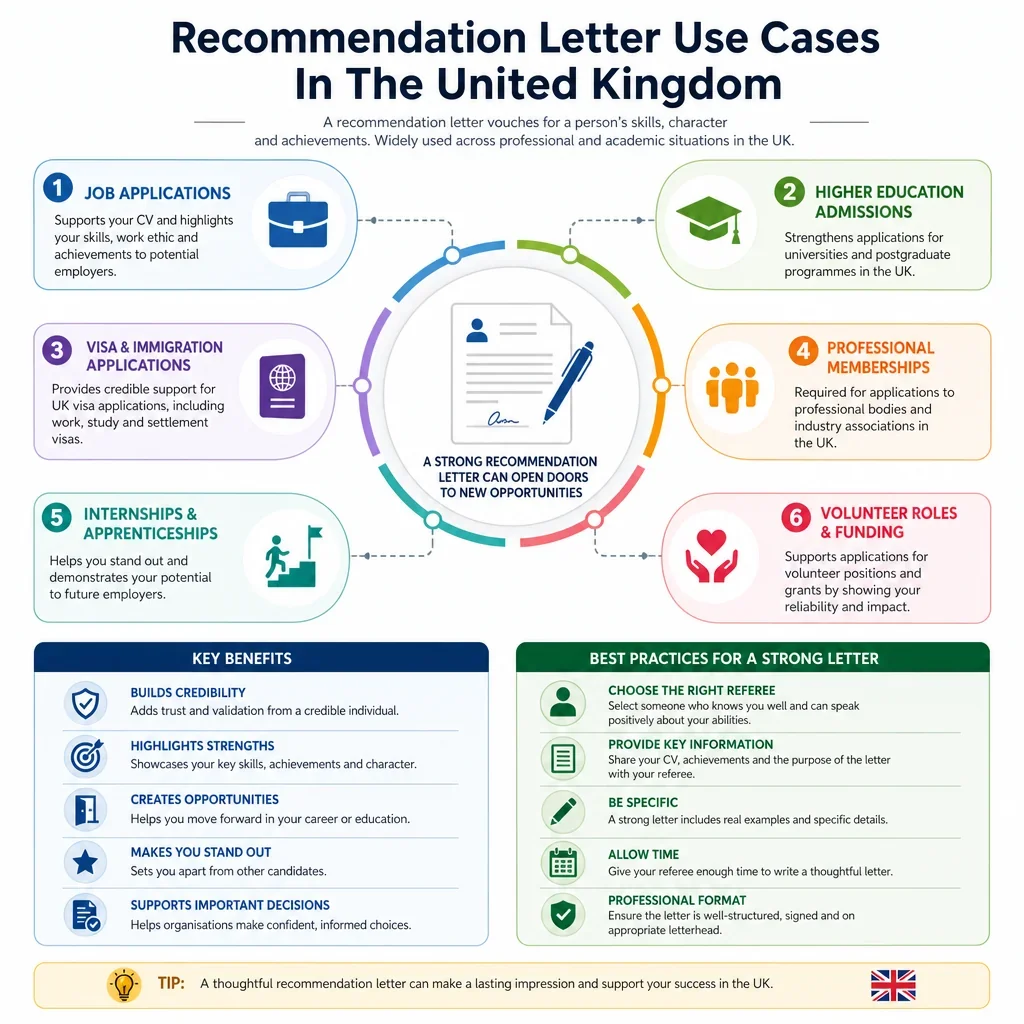
Explore recommendation letter use cases in the United Kingdom for jobs, education, visas, and professional references.
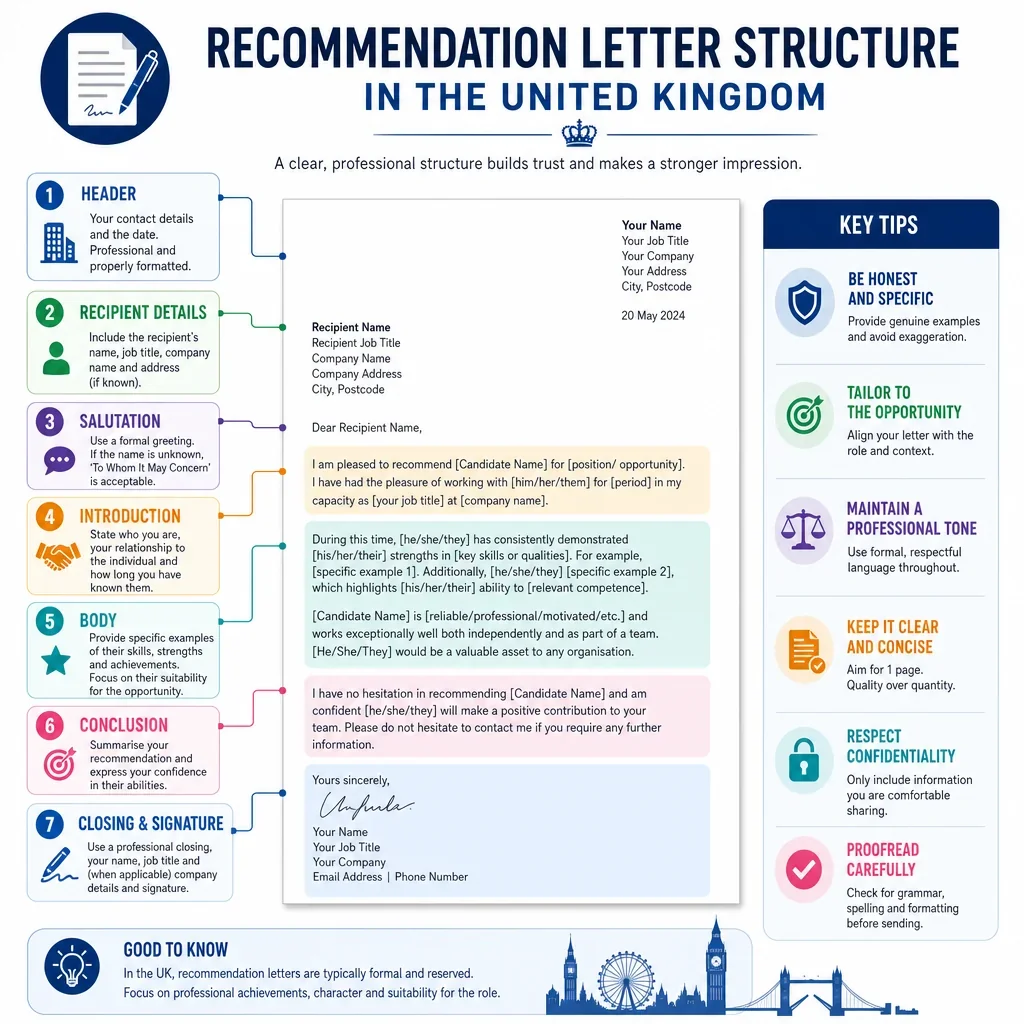
United Kingdom checklist for structuring a strong recommendation letter with essential sections, formatting tips and key details.
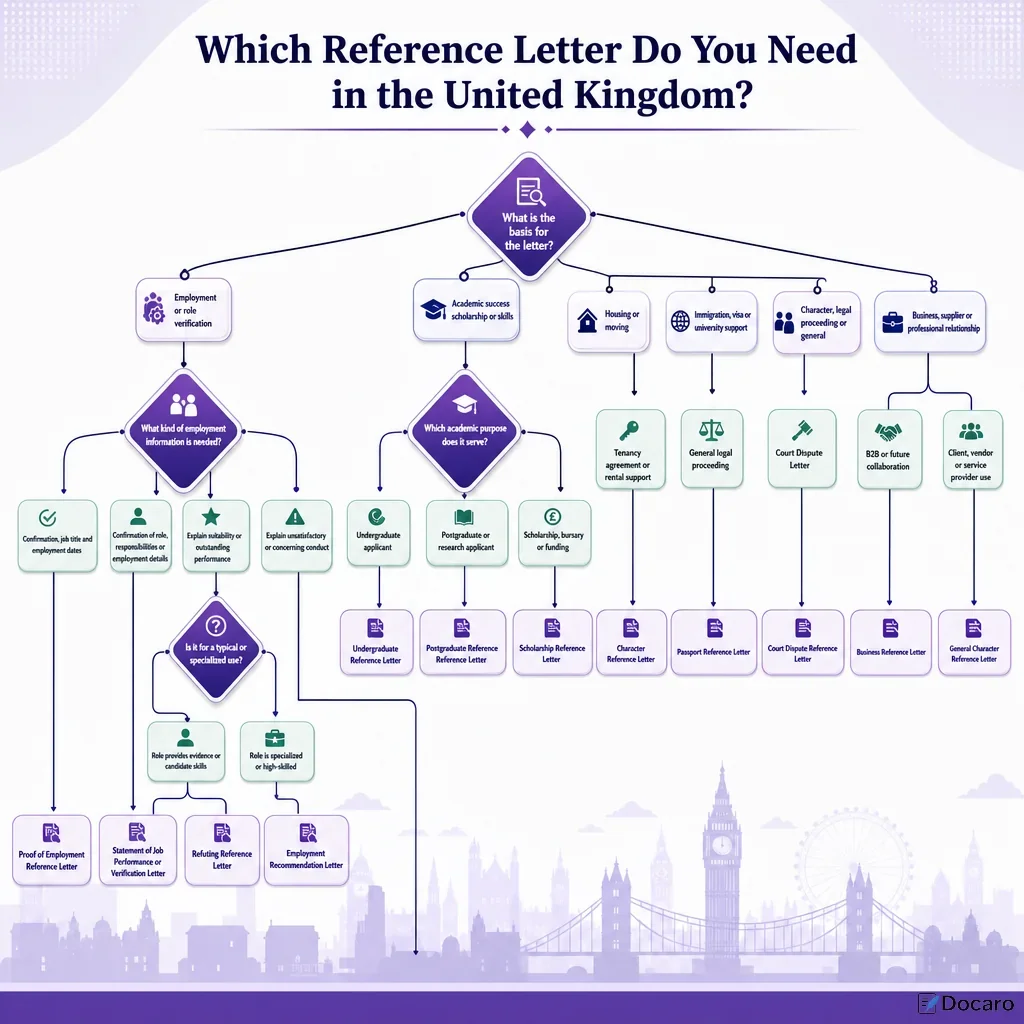
Find the right reference letter for the United Kingdom with a simple guide for jobs, study, housing, and more.
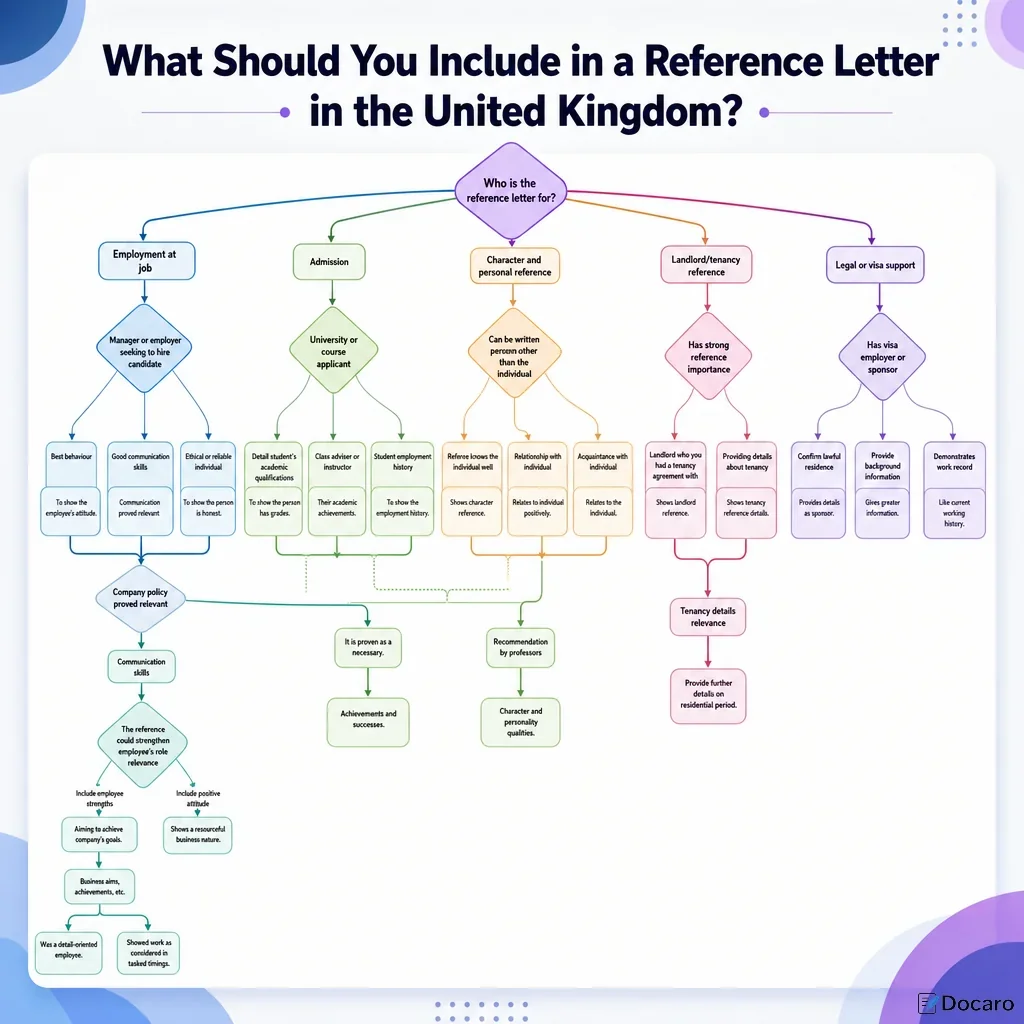
Learn what to include in a reference letter in the United Kingdom, from key details to structure and practical writing tips.