What Should Be Included In An Inventory Of Assets In The United Kingdom?
What is the inventory for?
Why Is An Accurate Inventory Of Assets Important In The UK?
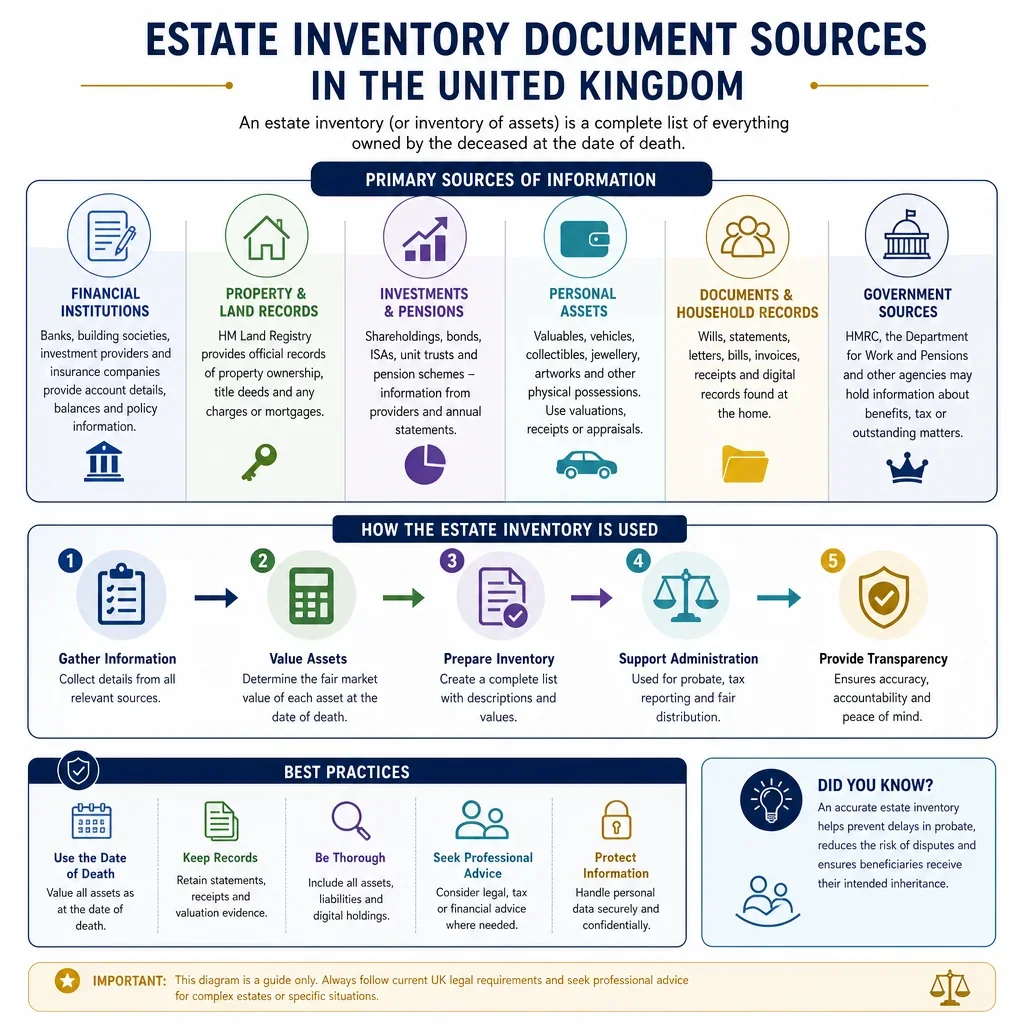
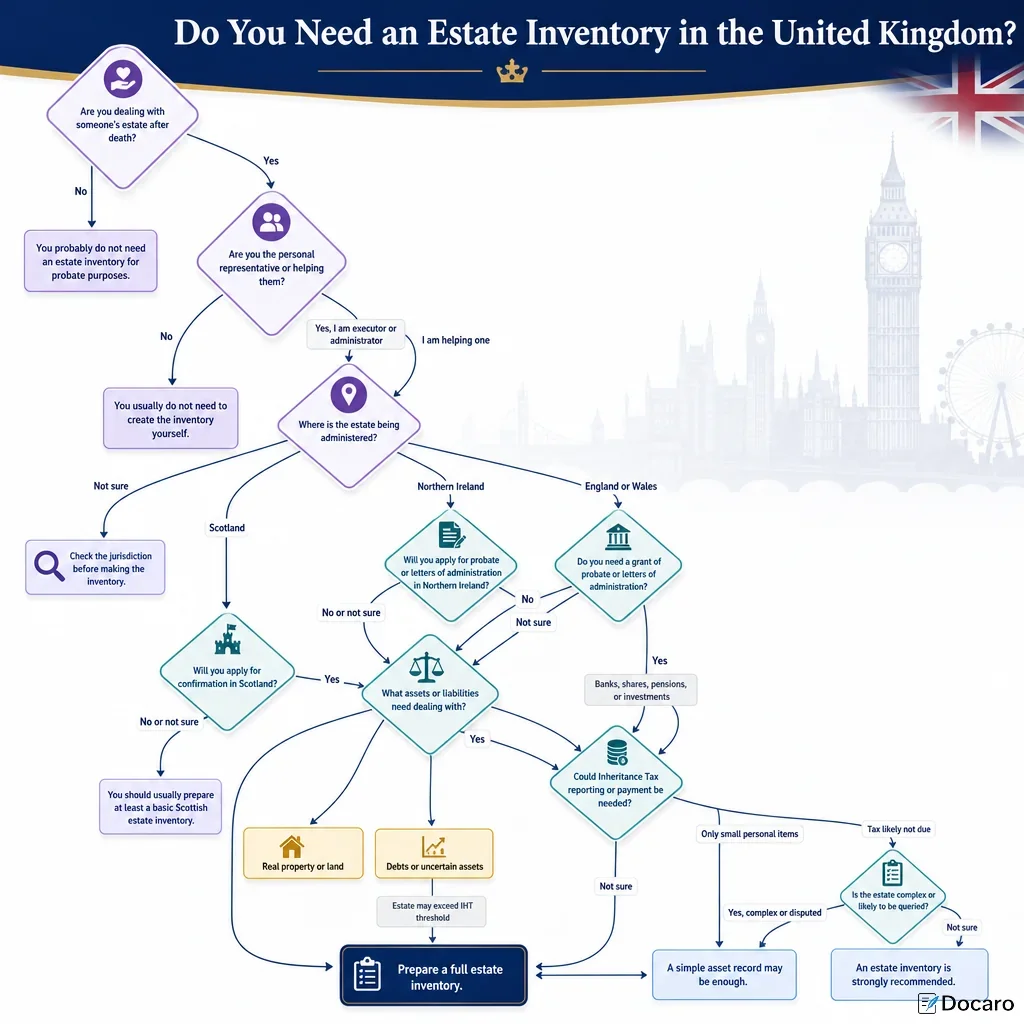
An Inventory of Assets helps executors and administrators understand what the deceased owned, what they owed and what can be distributed. In the United Kingdom, it is often used to support probate, inheritance tax reporting and communication with beneficiaries.
It Helps Probate And Estate Administration Run Smoothly
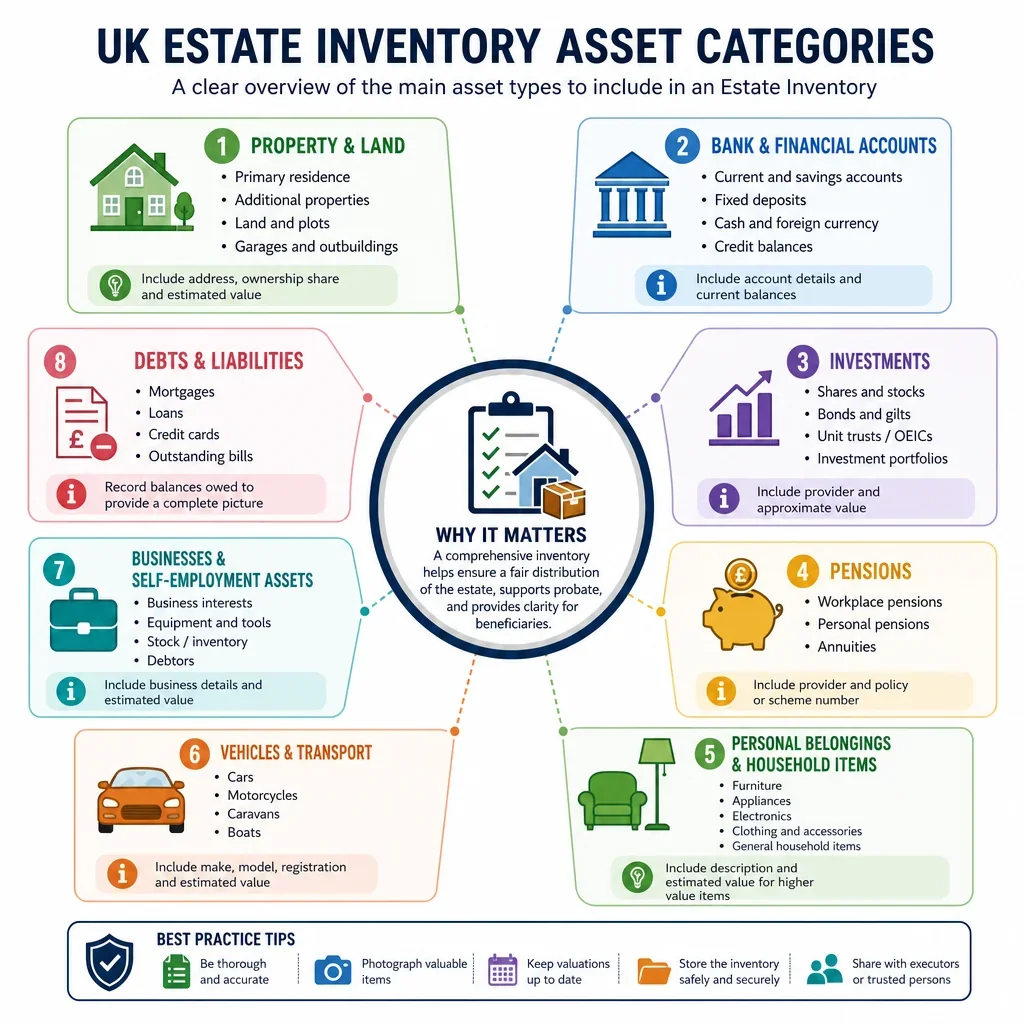
A clear inventory records property, bank accounts, investments, personal possessions, joint assets, debts and other relevant estate information. This reduces the risk of delays when applying for probate or responding to questions from the probate service, HMRC, creditors or beneficiaries.
It Supports Correct Inheritance Tax Reporting
UK inheritance tax is based on the value of the estate and, in some cases, lifetime gifts and trust interests. Recording date-of-death values, valuation sources and liabilities helps the personal representative report the estate accurately. Further guidance is available from GOV.UK on valuing an estate.
It Reduces The Risk Of Beneficiary Disputes
Beneficiaries may ask how estate values were calculated and why particular assets were included or excluded. A well-structured inventory provides a transparent record of the evidence used and the decisions made.
It Protects Executors And Administrators
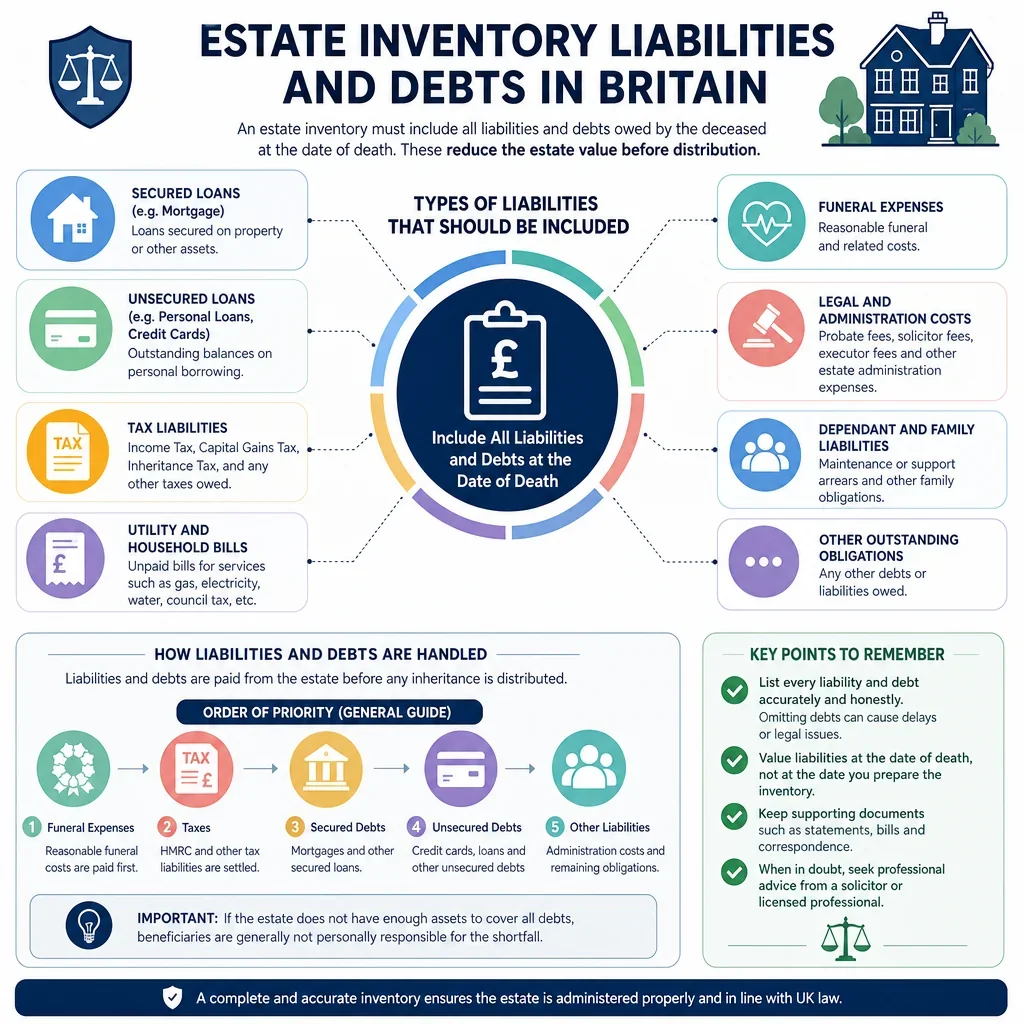
Personal representatives have responsibilities when collecting assets, paying debts and distributing the estate. If they distribute too early or overlook a debt or asset, they may face practical or legal problems. A careful inventory helps show that reasonable enquiries were made.
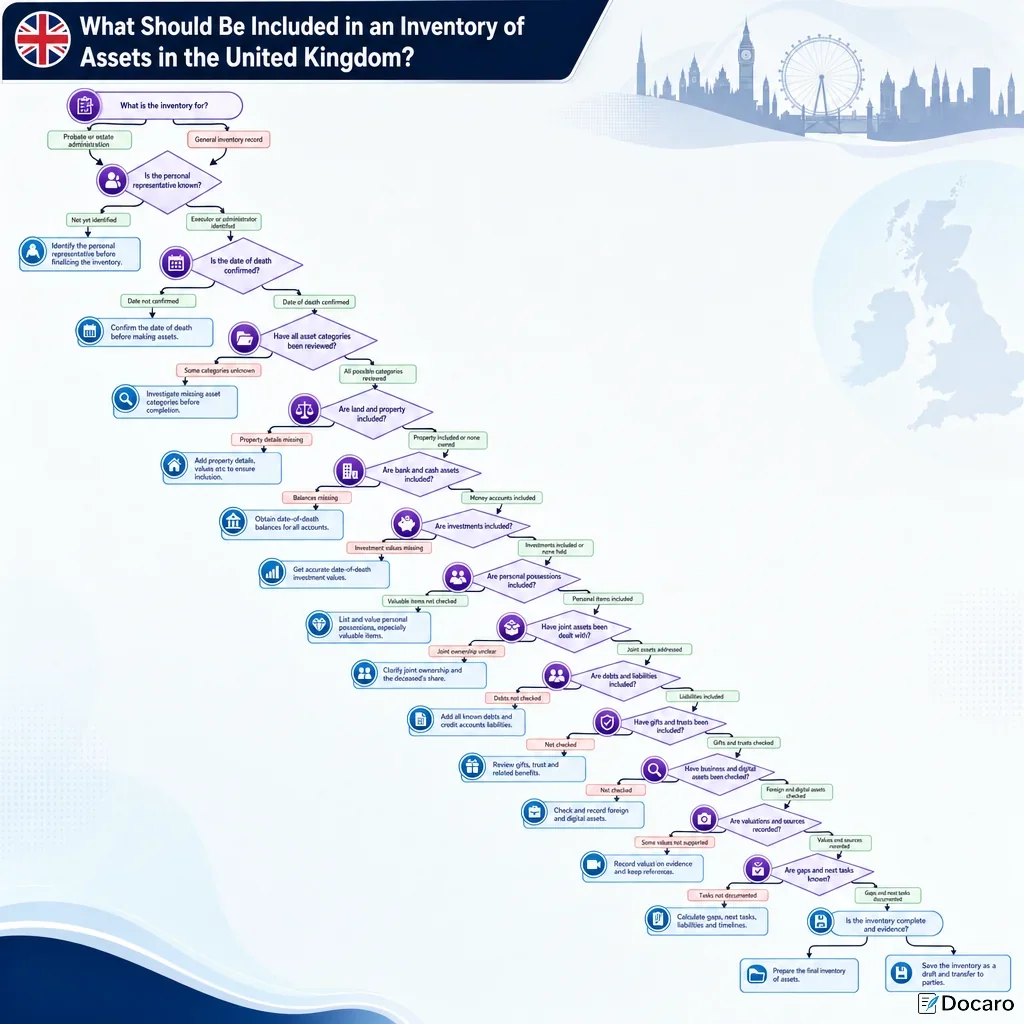
What Should A UK Inventory Of Assets Usually Include?
- Deceased person details, including name, address and date of death.
- Personal representative details, including executor or administrator information.
- Assets, such as property, accounts, investments, possessions, business interests and digital assets.
- Ownership details, including sole, joint and beneficial shares.
- Liabilities, such as mortgages, loans, bills, tax and funeral costs.
- Valuations, including the date, method and supporting evidence.
- Net estate total, showing assets less liabilities.
FAQs
You Might Also Be Interested In