What Should An Employee Confidentiality Agreement Include In The United Kingdom?
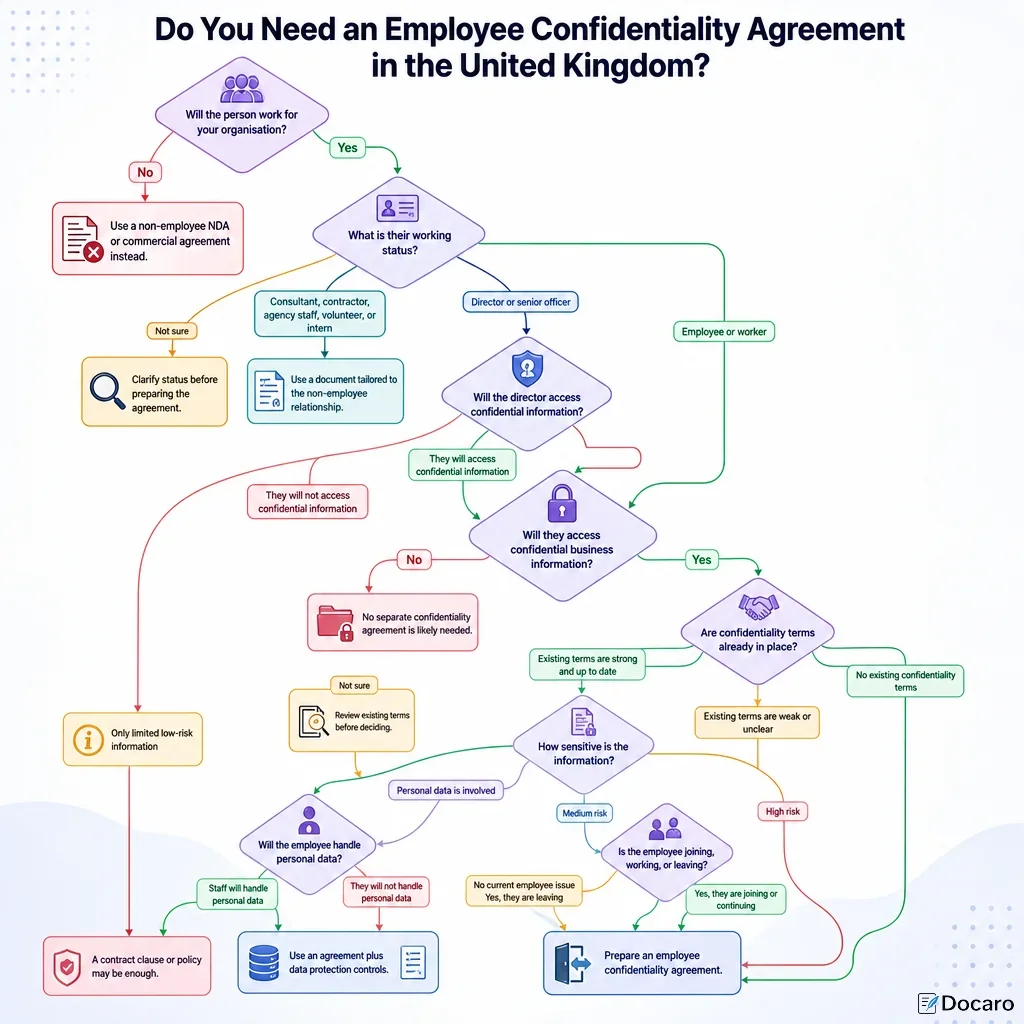
Who will sign the agreement?
What Should A UK Employee Confidentiality Agreement Include?
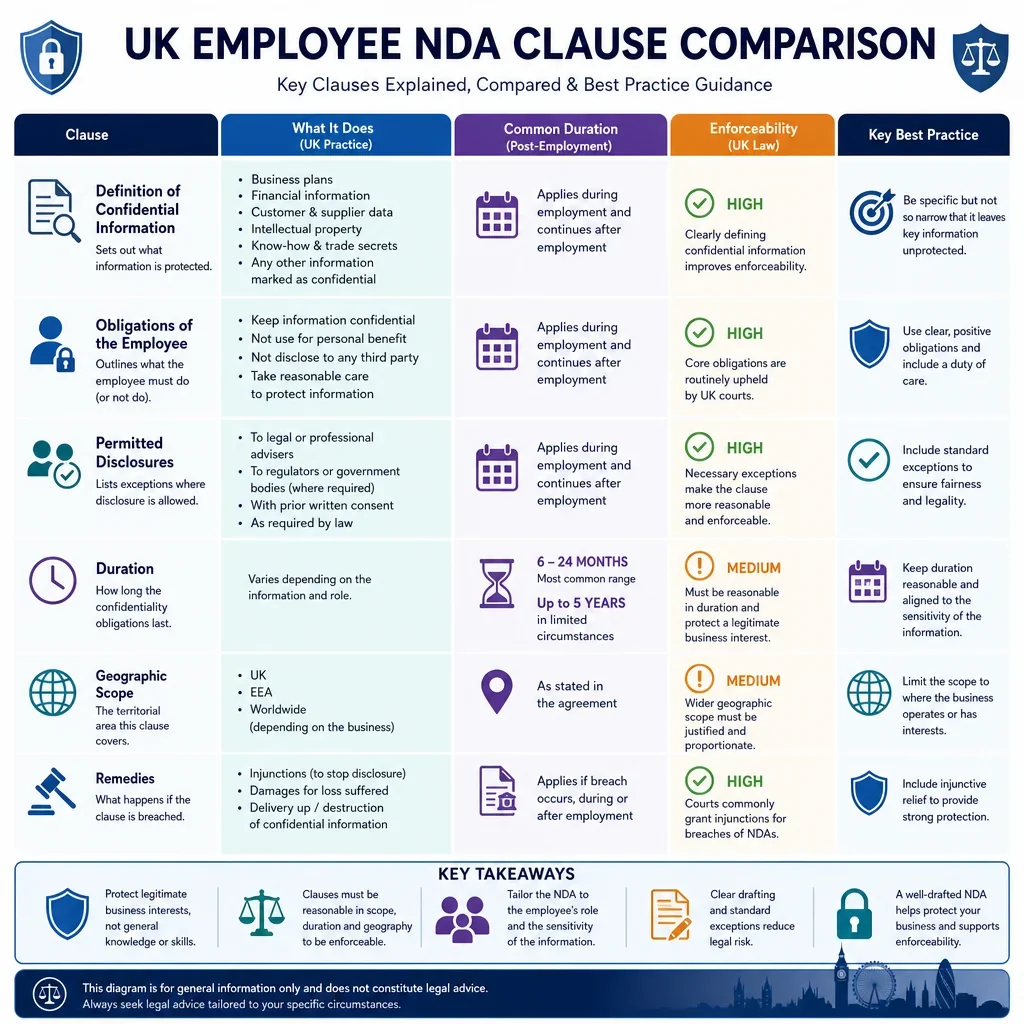
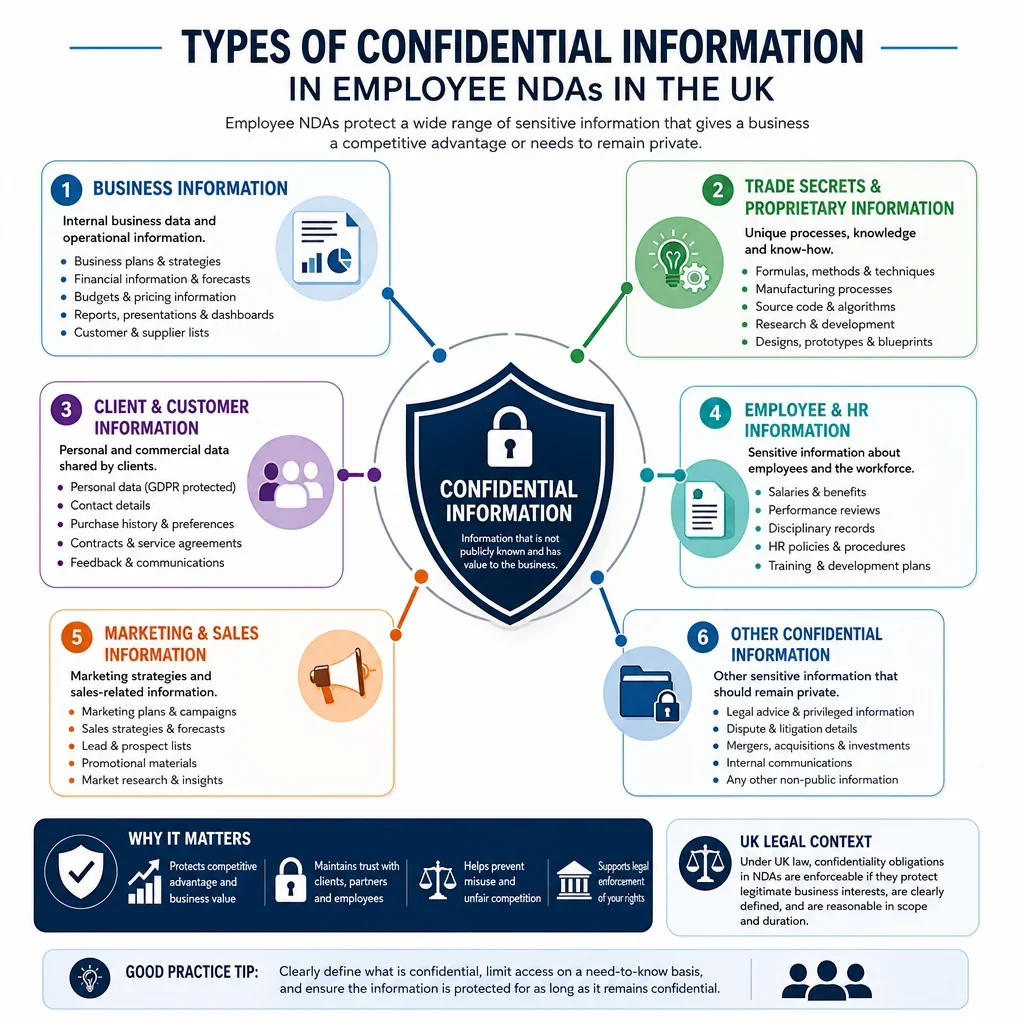
A well drafted employee confidentiality agreement helps a UK employer protect trade secrets, customer information, pricing, business plans, software, designs and other sensitive material. It also helps employees understand exactly what they can and cannot do with confidential information.
Why Is The Right NDA Wording Important In The United Kingdom?
Confidentiality wording must be clear, proportionate and lawful. If a clause is too vague, conflicts with the employment contract, ignores UK data protection rules or tries to stop protected whistleblowing, it may be difficult to enforce and may create legal risk.
What Risks Does A Poor Employee NDA Create?
- Weak protection: unclear definitions can make it harder to prove what information was protected.
- Unlawful restrictions: an agreement must not prevent protected disclosures under UK whistleblowing law.
- Data protection issues: personal data must be handled consistently with the UK GDPR and Data Protection Act 2018.
- Employment disputes: inconsistent terms can cause confusion with contracts, handbooks and workplace policies.
- Enforcement problems: overbroad post-termination restrictions may be challenged under UK restraint of trade rules.
How Can This Checklist Help?
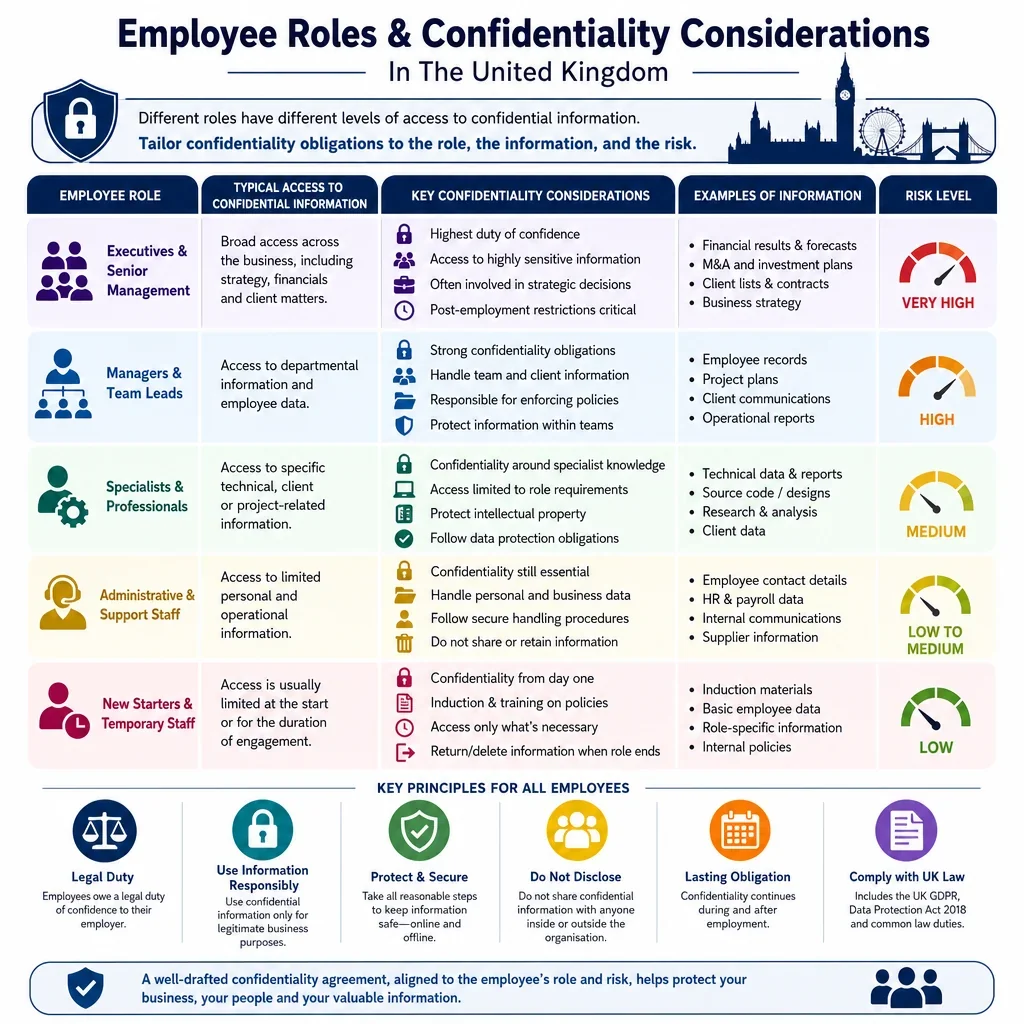
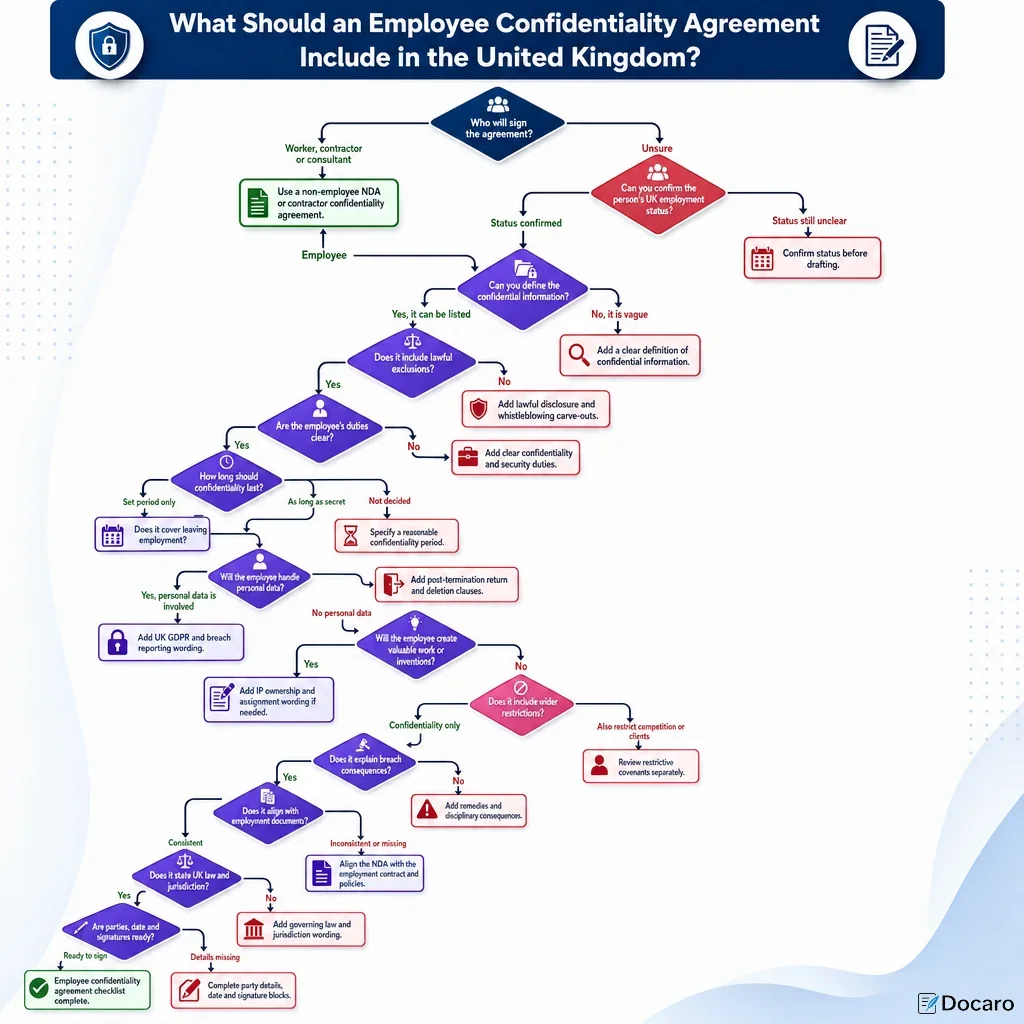
This decision tool highlights the main clauses to consider before creating an employee confidentiality agreement for use in the United Kingdom. It is designed to support practical drafting, but it is not a substitute for legal advice where high-value information, senior employees, cross-border work or restrictive covenants are involved.
For official guidance, see ACAS employment contracts guidance, ICO UK GDPR guidance and ACAS whistleblowing guidance.
FAQs
You Might Also Be Interested In