Do You Need An Employee Confidentiality Agreement In The United Kingdom?
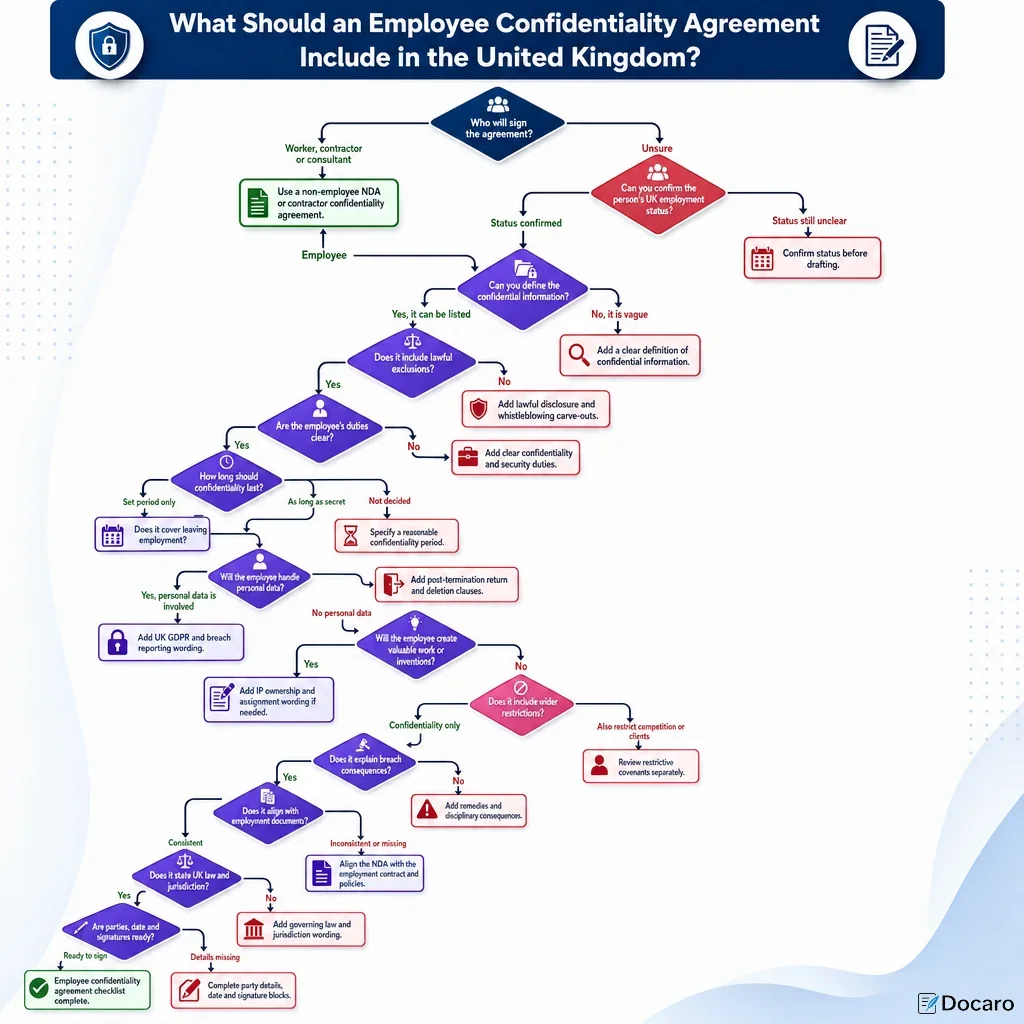
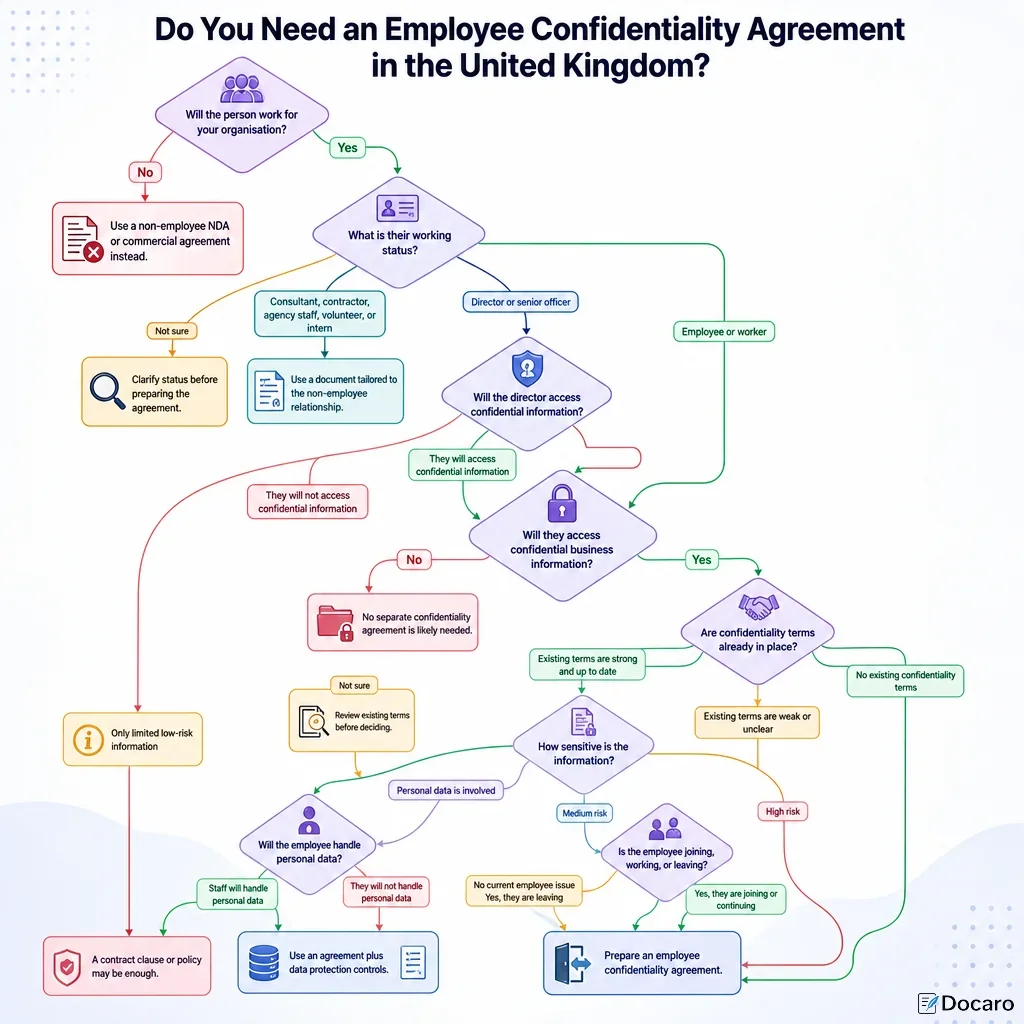
Will the person work for your organisation?
Why Is An Employee Confidentiality Agreement Important In The UK?
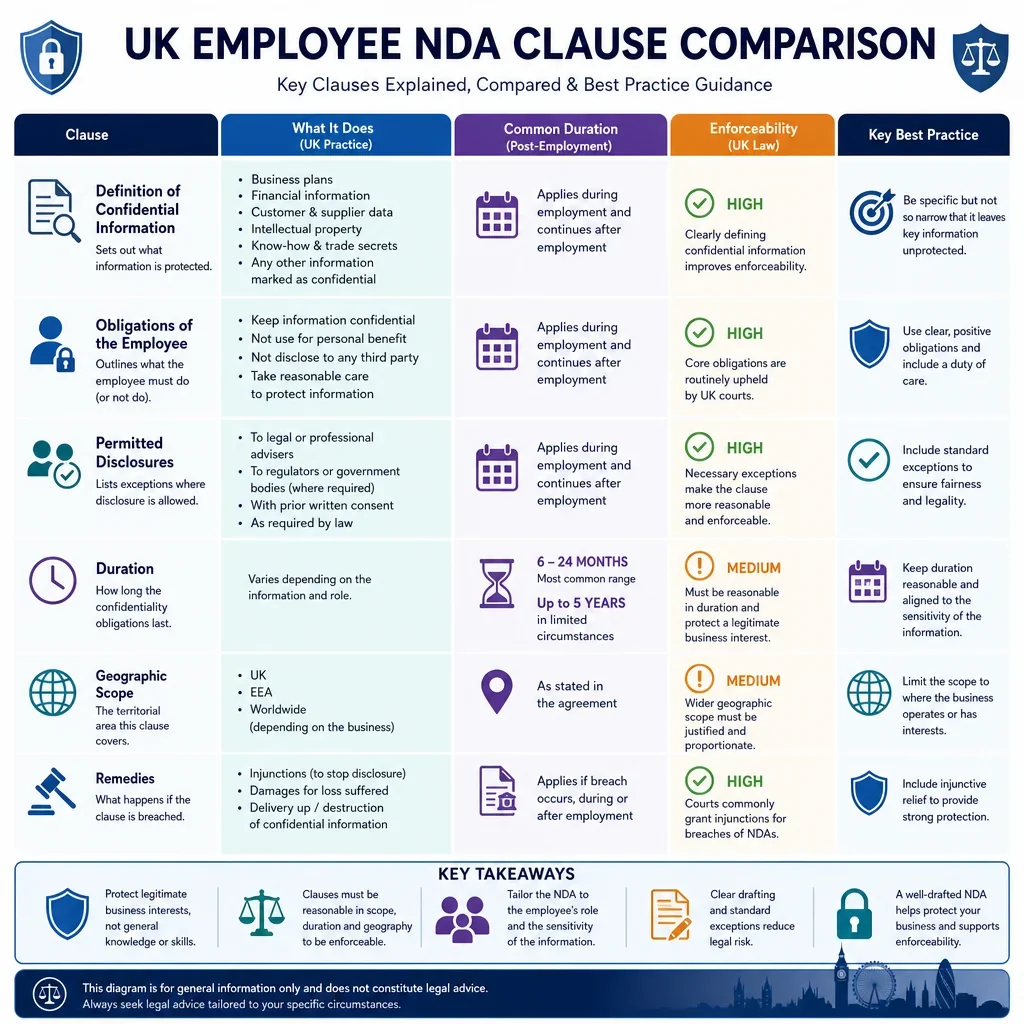
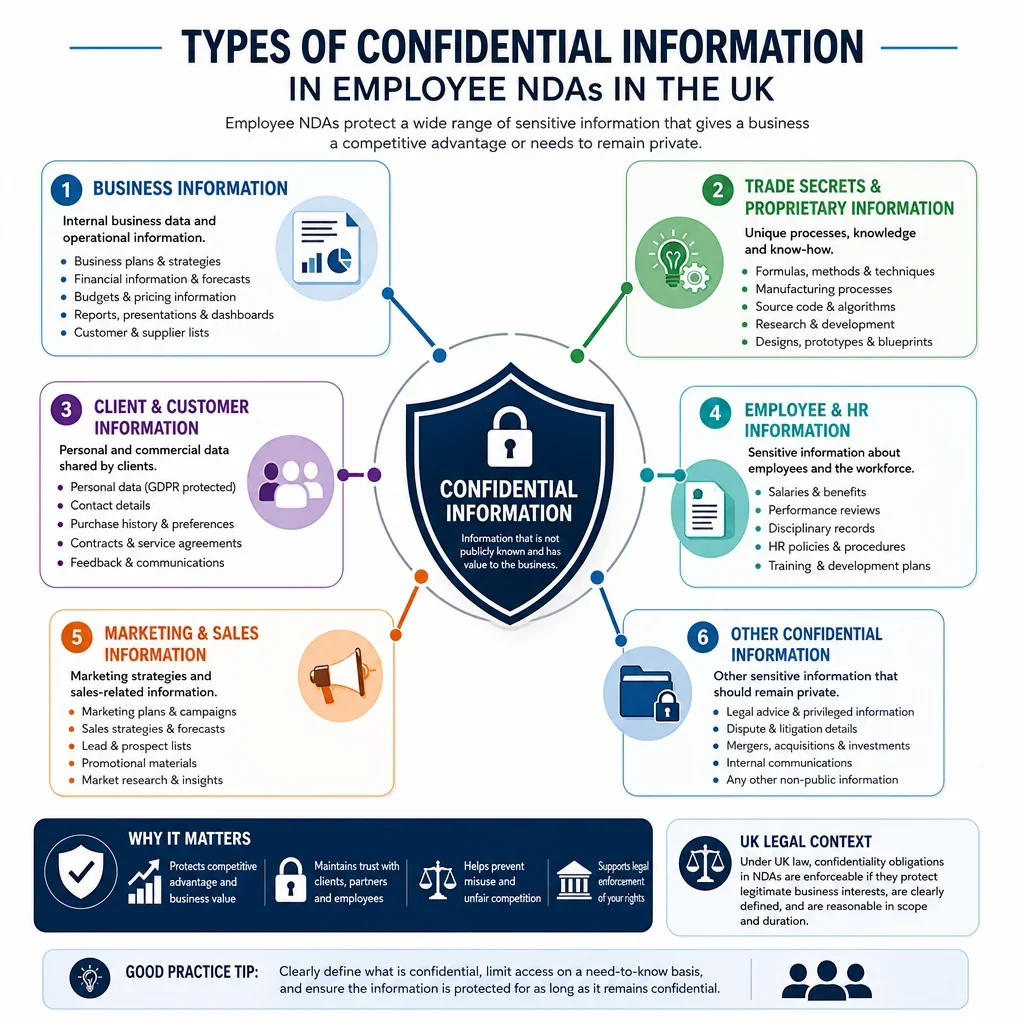
UK employers often rely on staff to handle commercially sensitive information, personal data, client details, software, pricing, designs, and business plans. A clear employee confidentiality agreement helps show what information is protected, how it may be used, and what happens when employment ends.
When Can The Wrong Document Cause Problems?
Using the wrong document can create uncertainty. An employee agreement may be unsuitable for a contractor, consultant, supplier, or business partner. In those cases, a standalone NDA, consultancy agreement, services agreement, or data processing agreement may be more appropriate.
How Does Confidentiality Relate To UK GDPR?
If employees handle personal data, confidentiality wording is useful but not enough on its own. UK organisations must also consider ICO guidance on UK GDPR, security measures, access controls, training, retention, and lawful processing.
What Should UK Employers Consider Before Asking Staff To Sign?
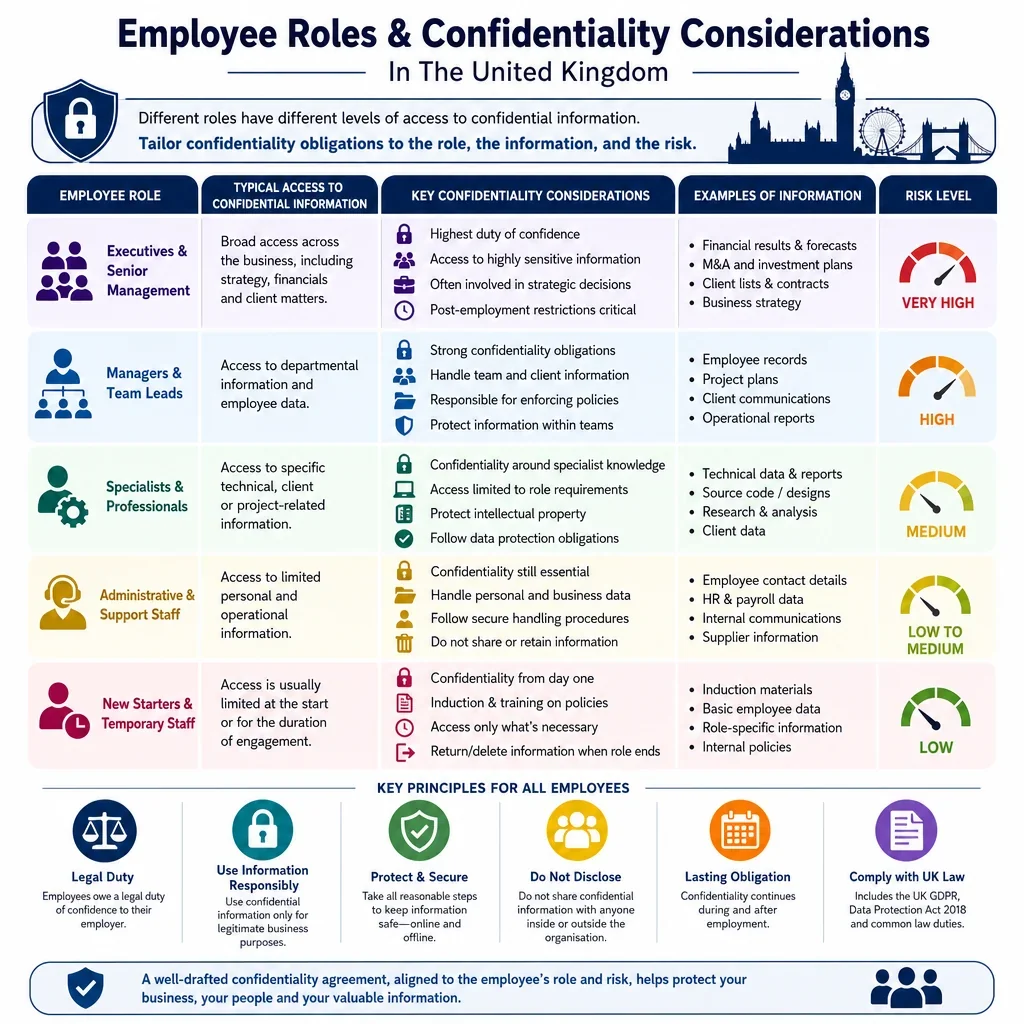
- Employment status: employees, workers, directors, contractors, and volunteers may need different documents.
- Existing terms: check employment contracts, handbooks, offer letters, and prior NDAs.
- Sensitivity: stronger terms are more important for trade secrets, client lists, financial data, source code, and strategy.
- Timing: it is usually easier to agree confidentiality terms at recruitment or promotion than after a dispute arises.
- Fairness: terms should be clear, proportionate, and not drafted so widely that they are hard to enforce.
Does An NDA Replace Good Information Security?
No. A confidentiality agreement should support, not replace, practical controls such as limited access, secure systems, staff training, document marking, exit processes, and prompt removal of access when someone leaves.
FAQs
You Might Also Be Interested In