What Clauses Should A Data Processing Agreement Include In The United Kingdom?
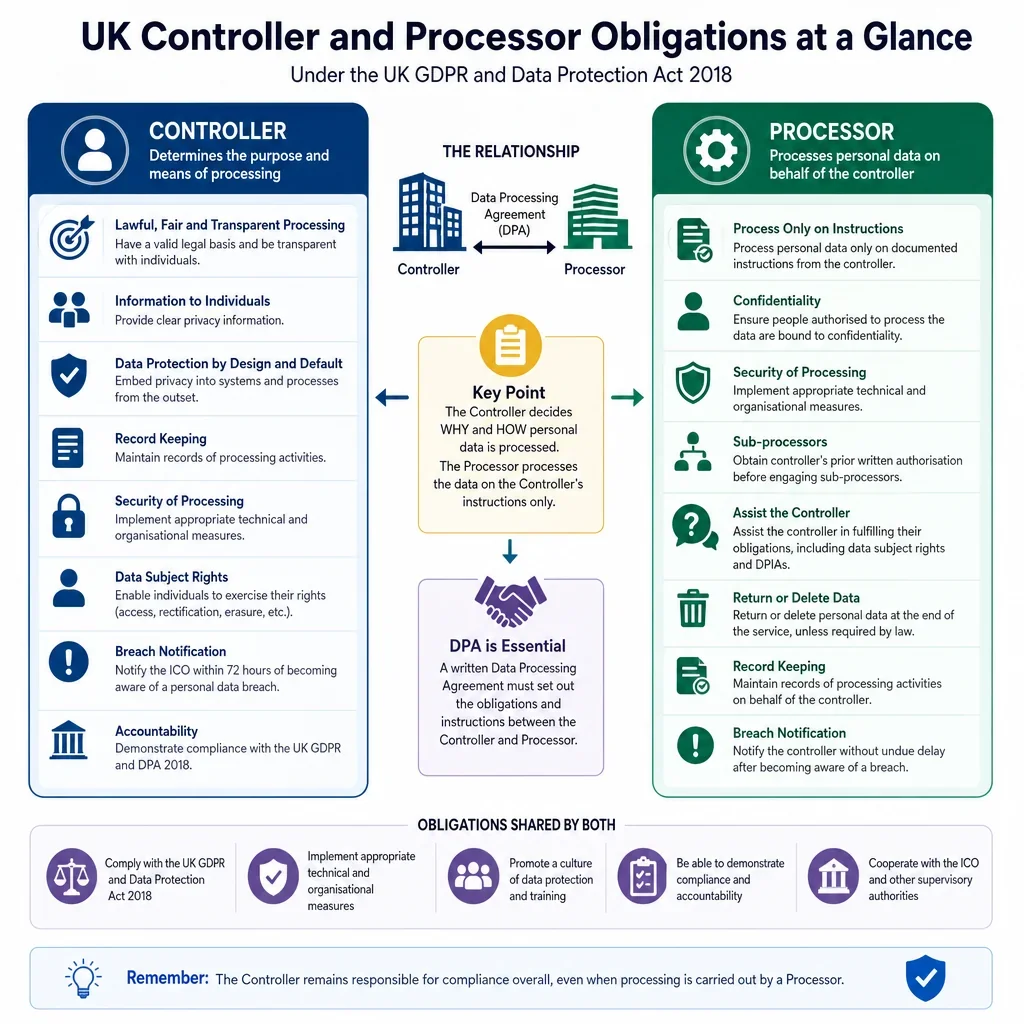
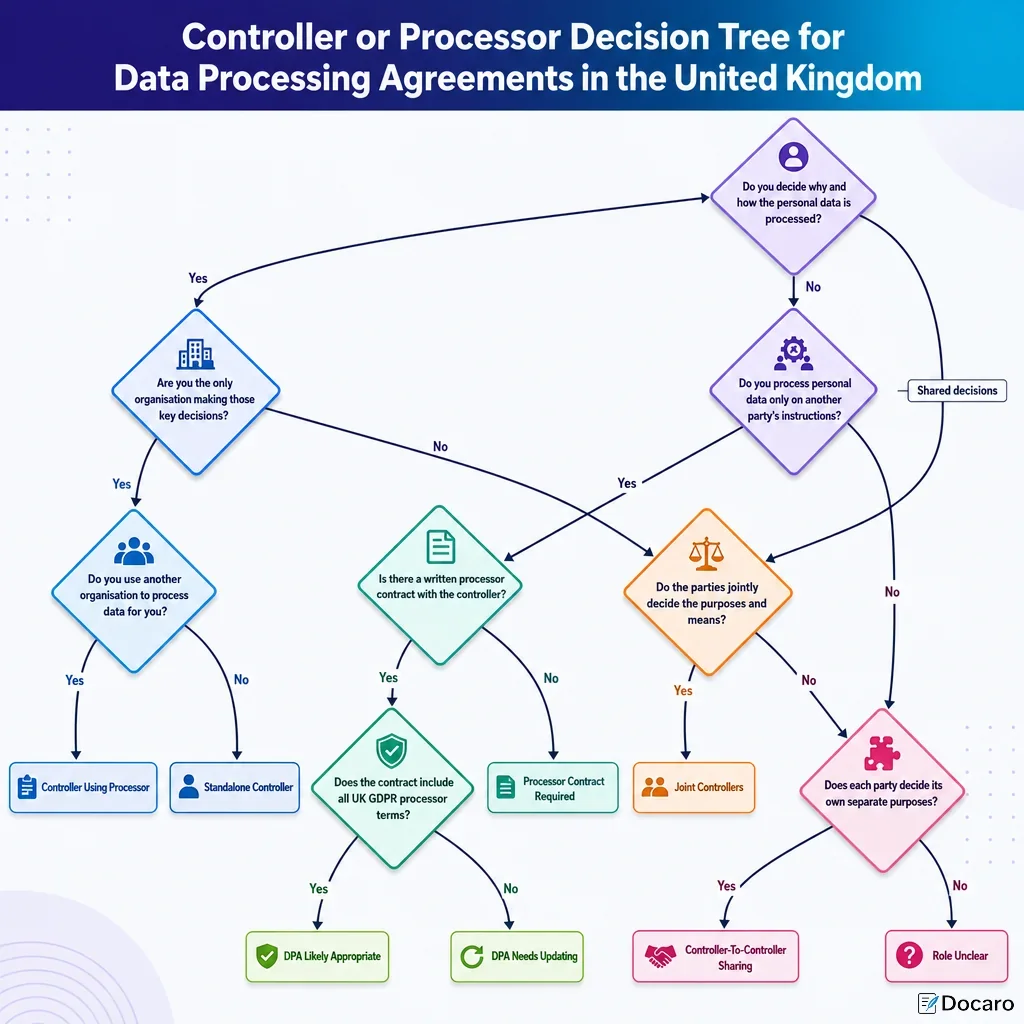
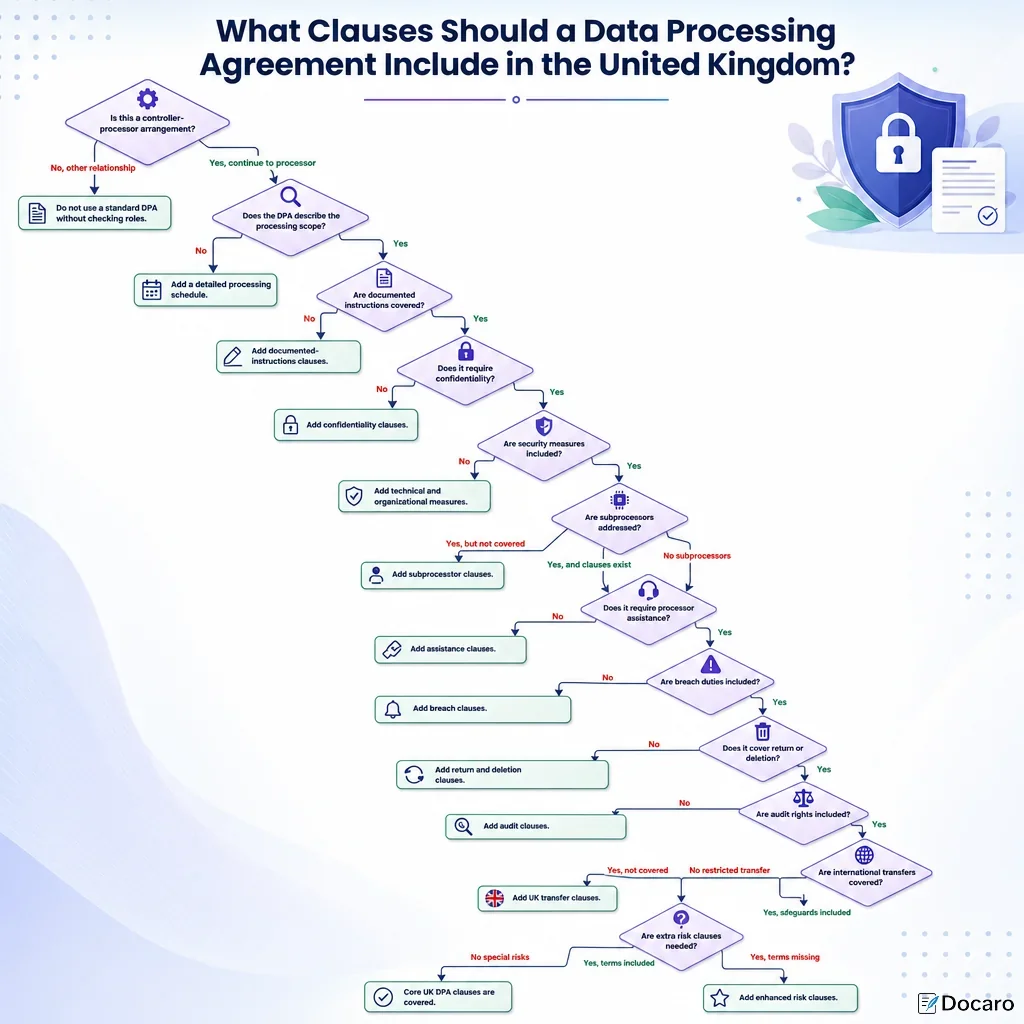
Is this a controller-processor arrangement?
Why Does A UK Data Processing Agreement Need The Right Clauses?
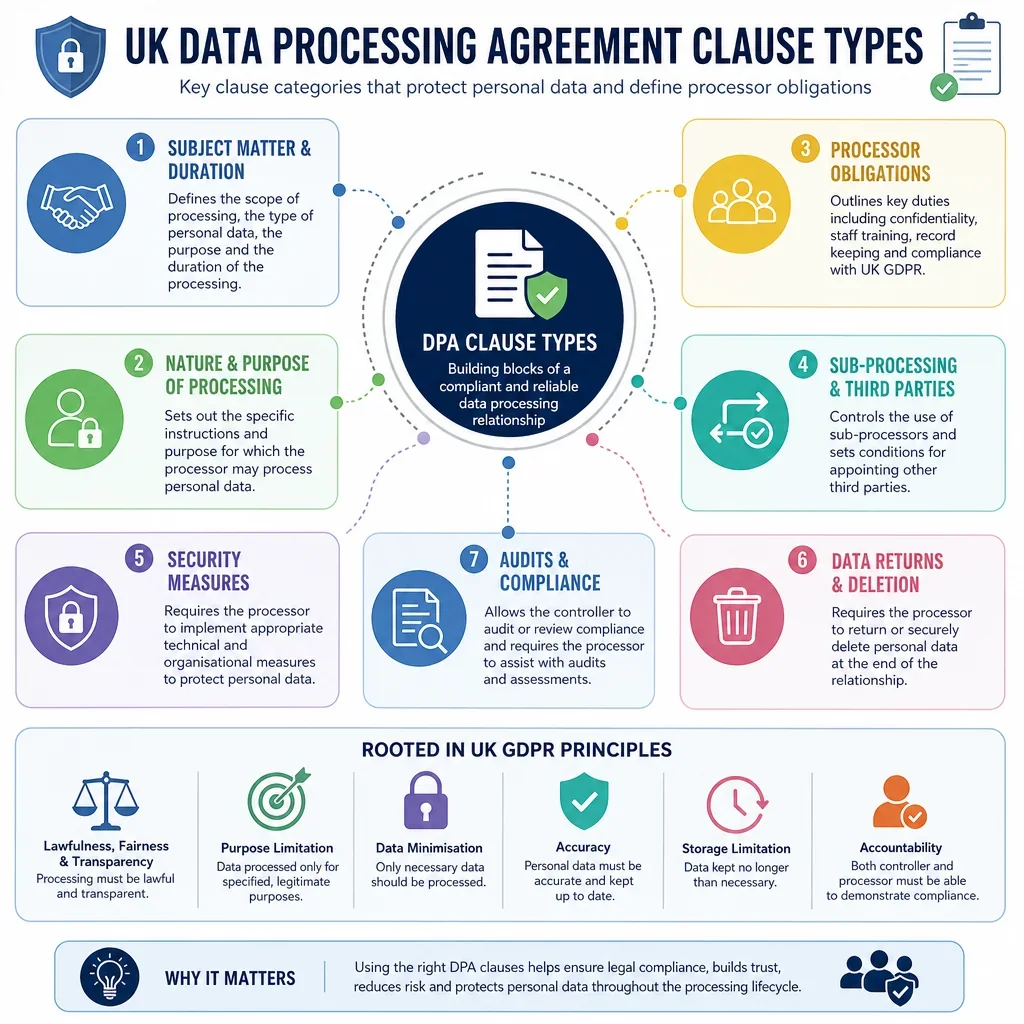
A data processing agreement is not just a commercial formality in the United Kingdom. Where a controller uses a processor, the UK GDPR requires a written contract containing specific mandatory terms. If those terms are missing, unclear, or inconsistent with the real processing, both compliance and accountability can be weakened.
What Happens If A DPA Is Incomplete?
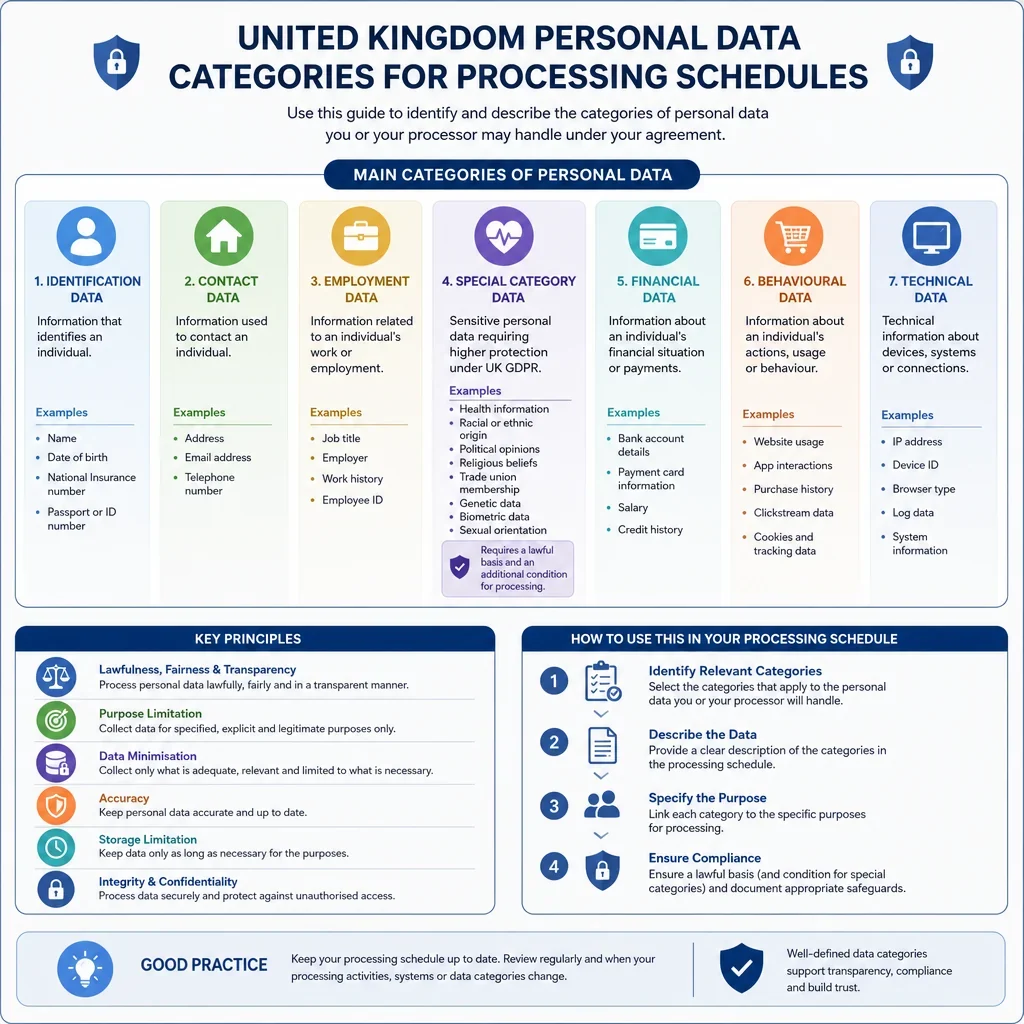
An incomplete DPA can leave the controller unable to prove that it selected and instructed the processor properly. It can also create uncertainty about security, breach reporting, subprocessors, deletion, audits, and international transfers. These are the points that often matter most when something goes wrong.
Which Clauses Matter Most Under The UK GDPR?
The most important clauses usually cover documented instructions, confidentiality, security measures, subprocessor controls, assistance with data subject rights, personal data breaches, return or deletion, and audit rights. These reflect the core requirements in Article 28 of the UK GDPR.
Why Are International Transfers A UK-Specific Risk?
If personal data is sent to or accessed from outside the UK, the parties must consider UK transfer rules. Depending on the destination and arrangement, this may require a UK adequacy route, the International Data Transfer Agreement, or the UK Addendum to EU Standard Contractual Clauses. The ICO international transfers guidance is a key reference.
How Does A Good DPA Help Businesses?
- It supports UK GDPR compliance and accountability.
- It gives clear operational rules to both parties.
- It reduces disputes about security, breaches, and subcontracting.
- It helps the controller respond to ICO or data subject queries.
- It makes the processor’s duties easier to monitor and enforce.
For UK organisations, the safest approach is to build the DPA around the actual processing and check it against the ICO guidance on controller and processor contracts.
FAQs
You Might Also Be Interested In