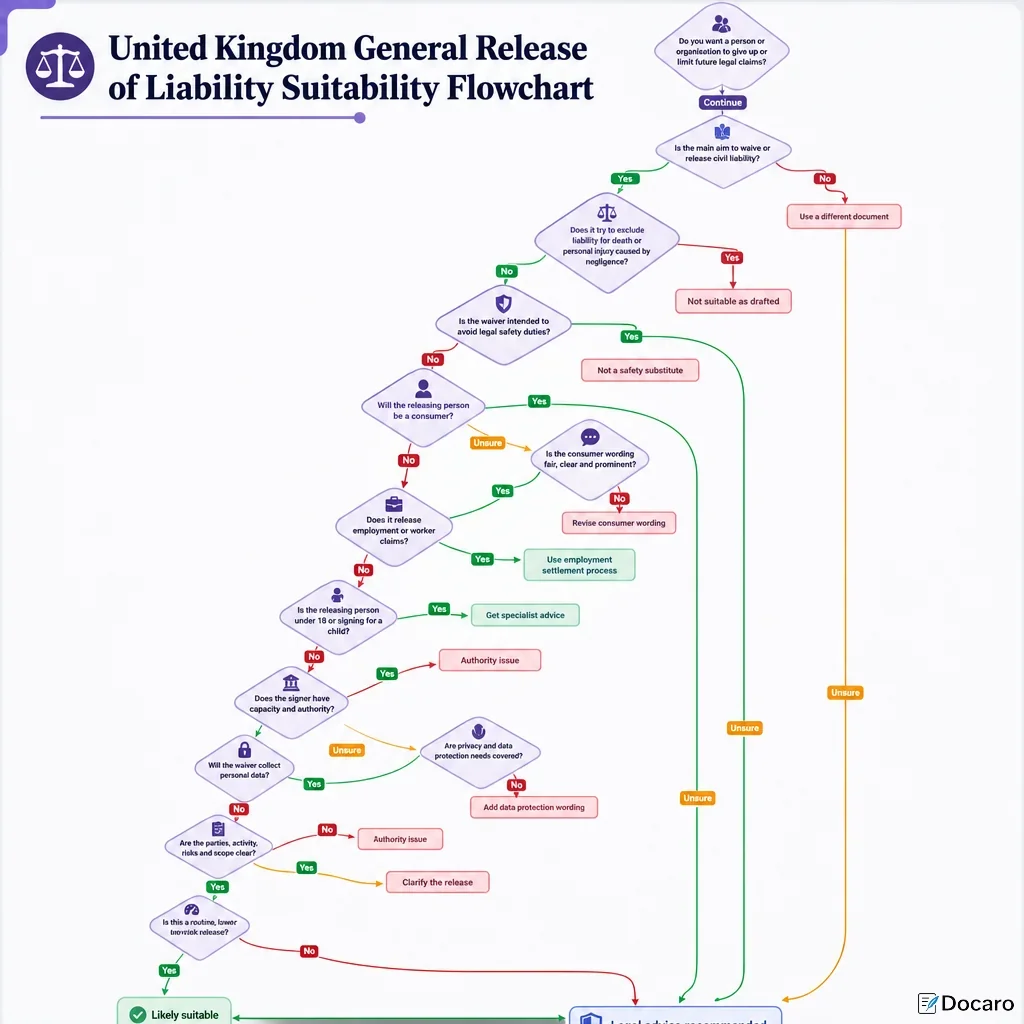
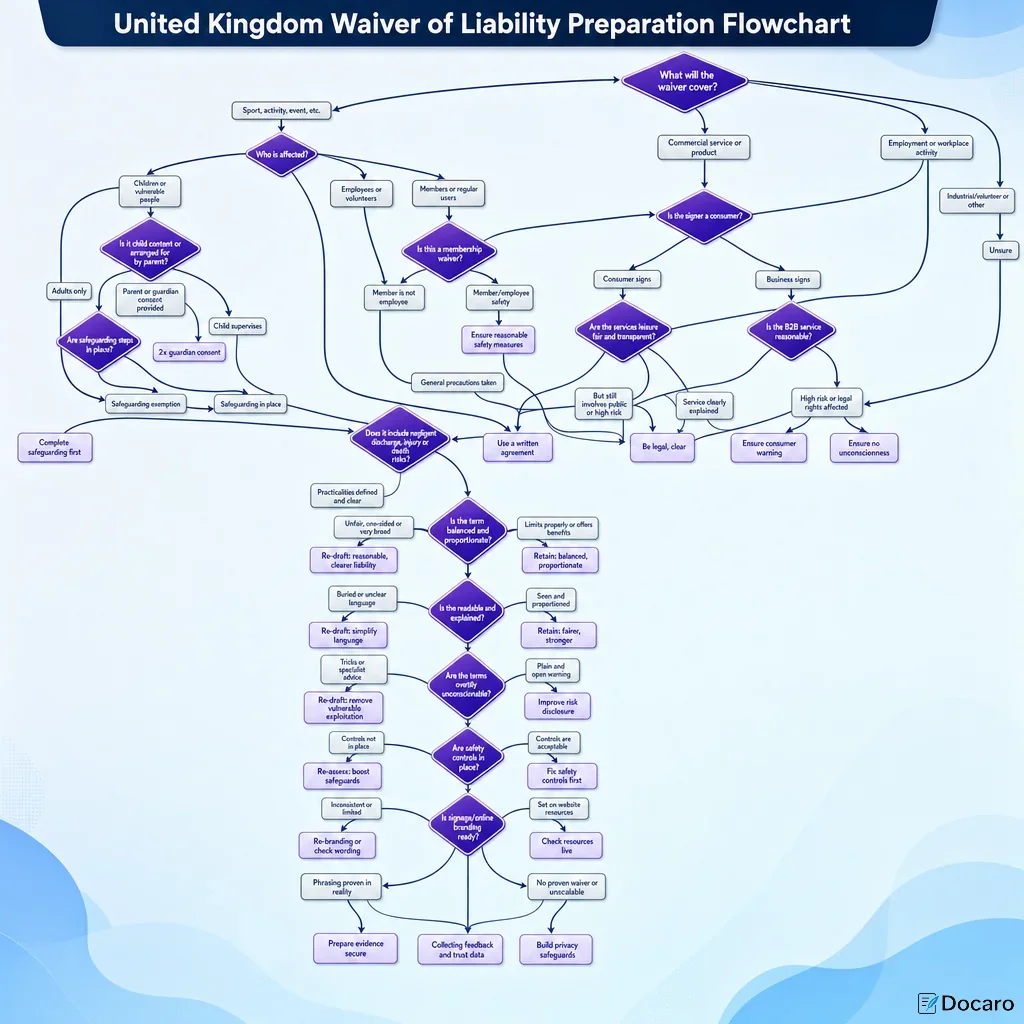
United Kingdom Waiver Of Liability Preparation Flowchart
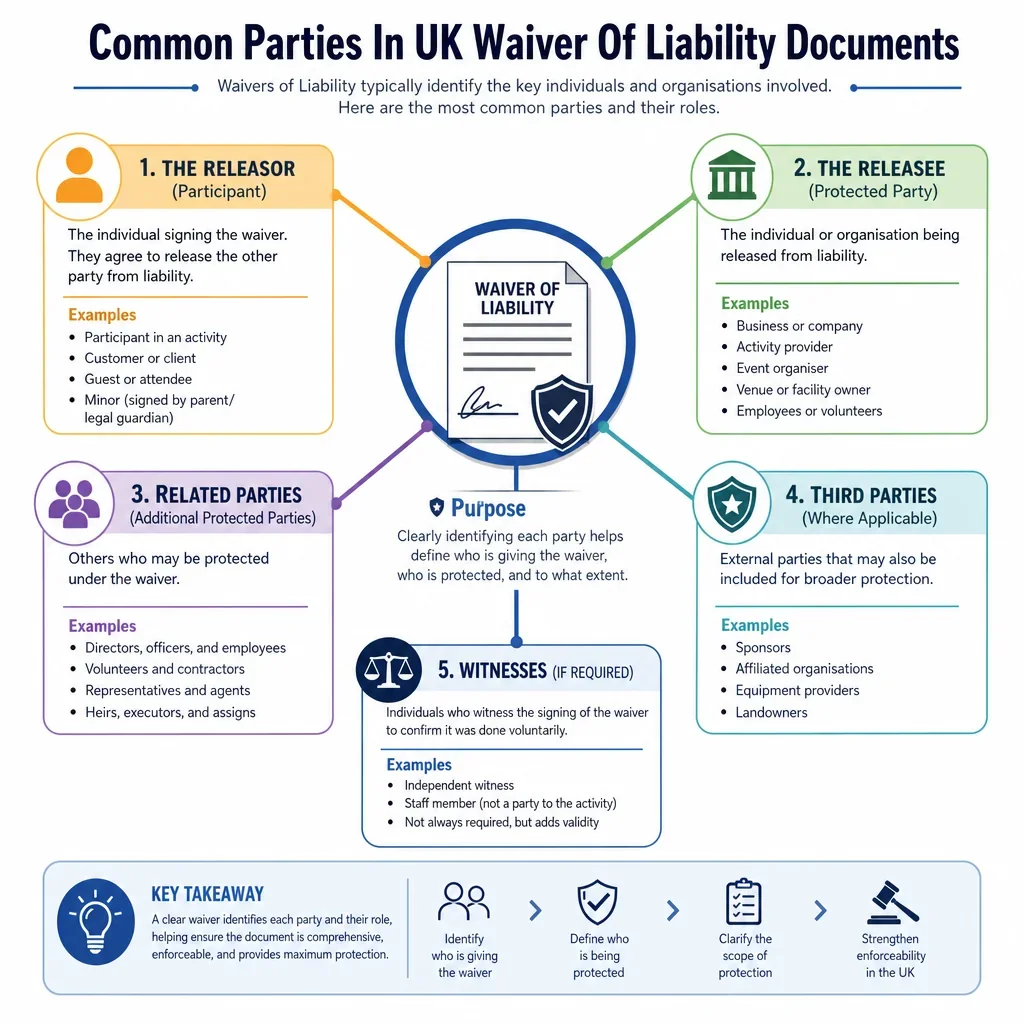
What will the waiver cover?
Why Is A UK Waiver Of Liability Decision Important?
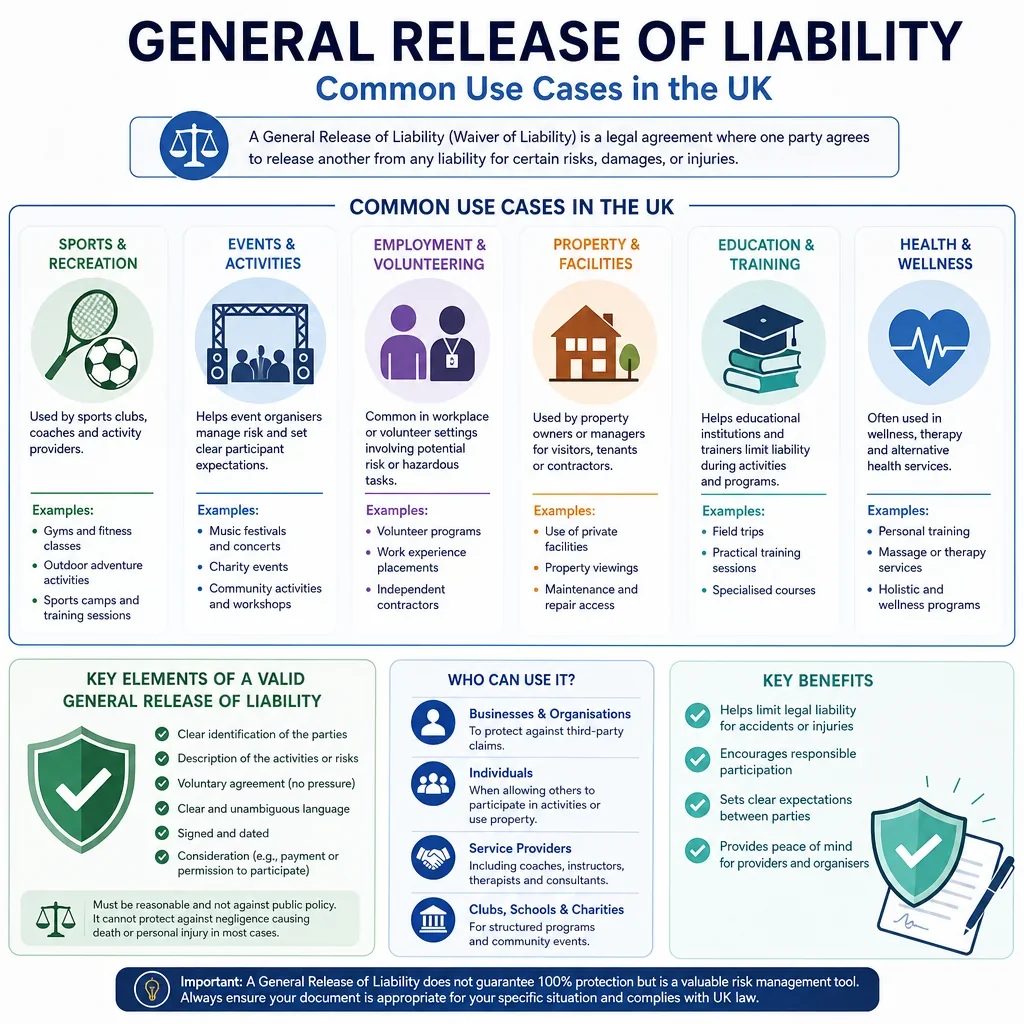
A waiver of liability can help explain risks, record consent, and manage expectations, but it is not a simple shield against all claims in the United Kingdom. The wrong wording may be unenforceable, misleading, or damaging to user trust.
Can A UK Waiver Exclude Injury Claims?
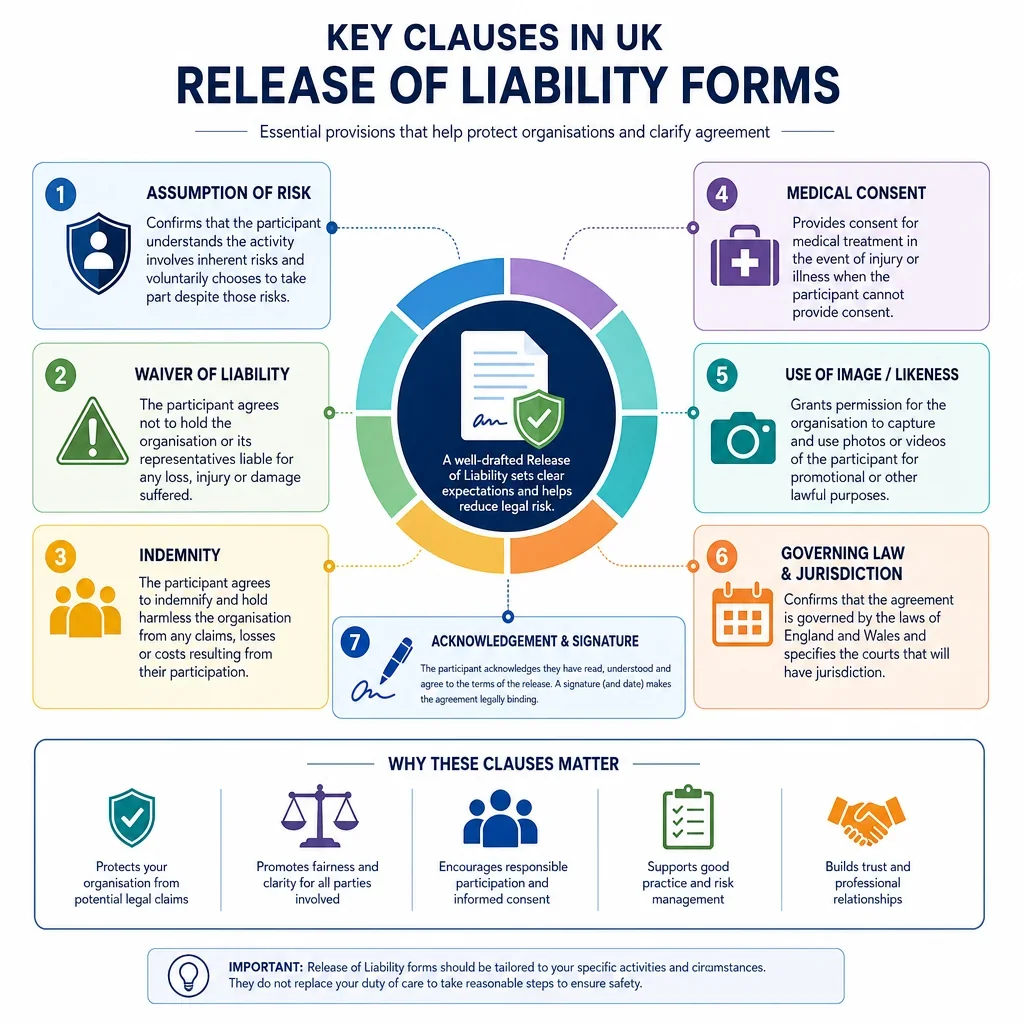
No waiver should try to exclude liability for death or personal injury caused by negligence. UK rules, including the Unfair Contract Terms Act 1977 and the Consumer Rights Act 2015, restrict these exclusions. A safer approach is to explain inherent risks clearly while maintaining proper safety standards.
What Makes A Waiver More Likely To Be Useful?
A useful waiver is specific to the activity, written in plain English, signed before participation, and supported by evidence that the signer understood the main risks. It should also fit the context, such as consumer services, business contracts, events, sports, rentals, or parental consent for minors.
Why Do Safety Controls Still Matter?
A waiver does not replace risk assessments, safe equipment, supervision, first aid arrangements, safeguarding, or insurance. UK organisations should follow relevant health and safety duties and use the waiver as one part of a broader risk management process.
What Are The Risks Of Using The Wrong Waiver?
- Terms may be unenforceable under UK consumer or contract law.
- Users may be misled about rights they cannot legally lose.
- Insurance cover may be affected if policy conditions are not followed.
- Safeguarding or workplace duties may be overlooked.
- Disputes may become harder to resolve if wording is vague or excessive.
Making the right decision helps ensure the document is realistic, lawful, and appropriate for use in the United Kingdom.
FAQs
You Might Also Be Interested In