Clauses Commonly Found In UK Release Of Liability Forms
Clause name | Purpose | Typical inclusion level | Relevant situations | Drafting notes |
|---|---|---|---|---|
Core release clause | ||||
General Release Of Claims | States that the participant releases the organiser from specified claims connected with the activity. | Often included | Sports events, fitness classes, adventure activities, charity events, workshops, venue hire. | Define released parties, activities, dates and claim types. Do not purport to exclude liability for death or personal injury caused by negligence. |
Negligence Carve-Out | Clarifies that the waiver does not exclude liability where UK law prevents exclusion. | Often included | Any business-to-consumer waiver or organised activity open to the public. | Expressly preserve liability for death or personal injury caused by negligence and other non-excludable duties. |
Risk acknowledgement | ||||
Assumption Of Risk | Records that the participant understands and accepts the inherent risks of the activity. | Often included | Climbing, cycling, martial arts, equestrian activities, watersports, gym sessions, obstacle races. | List real activity-specific risks. Avoid suggesting the participant accepts risks created by the organiser’s negligence. |
Specific Inherent Risks | Identifies the particular hazards the participant is being asked to consider. | Often included | Activities involving heights, water, animals, vehicles, tools, weather, crowds or physical contact. | Use concise examples such as falls, collisions, slips, equipment failure, weather exposure and fatigue. |
Voluntary Participation | Confirms the participant is choosing to take part voluntarily after considering the risks. | Often included | Recreational events, training courses, amateur competitions, voluntary workplace socials. | State that participation is optional and that questions should be raised before signing. |
Participant obligation | ||||
Fitness To Participate | Requires the participant to confirm they are physically and medically fit for the activity. | Often included | Fitness classes, endurance events, combat sports, dance, manual skills training. | Ask participants to disclose relevant conditions and seek medical advice where unsure. |
Data and records clause | ||||
Medical Conditions Disclosure | Collects health information needed to assess participation and respond to emergencies. | Context-specific | Children’s activities, high-risk sport, residential events, food activities, disability accommodations. | Health data is special category data. Explain purpose, access, retention and lawful basis. |
Signature and consent clause | ||||
Emergency Medical Treatment Consent | Authorises staff to seek emergency medical help if the participant cannot consent at the time. | Context-specific | Children’s events, remote activities, residential trips, outdoor expeditions, sports events. | Include emergency contacts, allergies, medication and limits of authority. Do not replace clinical consent rules. |
Data and records clause | ||||
Emergency Contact Details | Records who should be contacted if the participant is injured or becomes unwell. | Often included | Most physical activities, events involving minors, off-site activities, residential activities. | Collect name, relationship, phone number and an alternate contact where appropriate. |
Participant obligation | ||||
Compliance With Safety Rules | Requires the participant to follow instructions, safety briefings and venue rules. | Often included | All supervised activities, equipment use, venue hire, group events. | Refer to written rules and oral instructions. Reserve the right to remove unsafe participants. |
Equipment Use And Inspection | Sets expectations for safe use, inspection and return of equipment. | Context-specific | Bike hire, gym equipment, climbing gear, watercraft, tools, protective clothing. | Identify supplied equipment, user checks, reporting faults, loss charges and training requirements. |
Protective Equipment Requirement | Requires participants to wear or use required protective clothing or safety equipment. | Context-specific | Cycling, motorsport, paintball, climbing, construction-style workshops, watersports. | Specify helmets, buoyancy aids, goggles, gloves or footwear. State whether provided or participant-supplied. |
Alcohol And Drugs Restriction | Prevents participation while impaired by alcohol, drugs or unsafe medication. | Sometimes included | Driving experiences, watersports, climbing, weapon handling, gym classes, festivals. | Reserve refusal or removal rights. Consider how staff will identify and record impairment concerns. |
Participant Conduct And Behaviour | Sets standards for respectful, lawful and safe behaviour during the activity. | Sometimes included | Group events, youth activities, public events, residential courses, team sports. | Cover aggression, harassment, dangerous behaviour, rule breaches and consequences. |
Administrative clause | ||||
Right To Refuse Or Remove Participation | Allows the organiser to refuse or stop participation for safety or rule breaches. | Sometimes included | High-risk activities, intoxication concerns, aggressive behaviour, inadequate fitness or equipment. | State grounds clearly and link to safety. Address refunds separately if relevant. |
Core release clause | ||||
Participant Indemnity | Requires the participant to reimburse losses caused by their breach, misconduct or damage. | Use with care | Equipment hire, venue hire, group bookings, events where participants can harm third parties. | Limit to losses caused by the participant. Overbroad consumer indemnities may be unfair. |
Third-Party Claims Responsibility | Allocates responsibility if the participant injures another person or damages third-party property. | Sometimes included | Team sports, cycling groups, event stalls, hired venues, activities involving vehicles or animals. | Tie responsibility to the participant’s acts, omissions or rule breaches. Consider insurance requirements. |
Property Damage And Loss | Addresses responsibility for damage to venue, equipment, vehicles, clothing or personal belongings. | Often included | Venue hire, equipment hire, lockers, changing rooms, events with personal kit. | Separate organiser property from participant belongings. Avoid excluding liability for negligence where unlawful or unfair. |
Personal Belongings Disclaimer | Warns participants that they are responsible for keeping valuables safe. | Sometimes included | Gyms, changing rooms, events, outdoor activities, festivals, residential trips. | State any storage provided and whether lockers are supervised. Do not overstate exclusions for negligence. |
Risk acknowledgement | ||||
No Guarantee Of Risk-Free Activity | Explains that reasonable safety measures cannot remove all inherent risks. | Sometimes included | Outdoor activities, contact sports, animal activities, weather-dependent events. | Balance with organiser safety duties. Avoid wording that undermines statutory rights. |
Safety Briefing Acknowledgement | Confirms the participant has received, understood or had access to safety instructions. | Often included | Activities with pre-event briefings, demonstrations, course rules or venue safety notices. | Keep records of the briefing content, date, version and instructor where possible. |
Signature and consent clause | ||||
Opportunity To Ask Questions | Records that the participant had a chance to ask questions before signing. | Sometimes included | Complex activities, safety briefings, training courses, documents signed on arrival. | Do not rely on this alone. Ensure the form is available early enough to read properly. |
Informed Consent Statement | Confirms the signer understands the activity, risks, rules and consequences of signing. | Often included | Most waivers, especially for physical activities or unusual hazards. | Use plain English and prominent wording. Avoid burying important terms in small print. |
Age Confirmation | Confirms whether the participant is an adult or requires parent or guardian consent. | Often included | Activities restricted to adults, minors’ activities, online booking forms. | Ask for date of birth or confirmation of age band. State minimum age rules clearly. |
Parent Or Guardian Consent | Records consent from an adult with responsibility for a child participant. | Context-specific | Under-18 sports, school trips, holiday clubs, youth workshops, children’s parties. | Capture parent details and authority. Do not assume a parent can waive all child personal injury claims. |
Administrative clause | ||||
Child Collection Authorisation | Identifies who may collect a child after the activity. | Context-specific | Holiday clubs, after-school clubs, children’s sports, tutoring, residential events. | Collect authorised names, phone numbers, password procedures and late collection arrangements. |
Safeguarding Policy Acknowledgement | Links the waiver to the organiser’s safeguarding rules and reporting procedures. | Context-specific | Activities involving children, vulnerable adults, coaching, residential trips, clubs. | Reference the safeguarding policy and contact. Ensure policies match actual practice and DBS requirements where relevant. |
Data and records clause | ||||
Photography And Video Consent | Seeks permission to photograph, film or record the participant for defined purposes. | Context-specific | Events, marketing, coaching analysis, social media, children’s activities. | Separate marketing consent from participation. Provide opt-out choices and extra safeguards for children. |
Personal Data Processing Notice | Explains how participant details are collected, used, stored and shared. | Often included | All waivers collecting names, contact details, health data, emergency contacts or signatures. | Include controller identity, purposes, lawful basis, retention, rights and privacy notice link. |
Special Category Health Data Consent | Addresses use of medical information, allergies, disabilities or medication details. | Context-specific | Medical screening, adaptive sport, food allergies, residential care, high-risk activities. | Identify Article 9 condition and Data Protection Act condition where needed. Minimise collected data. |
Waiver Record Retention | States how long signed waivers and related records will be kept. | Sometimes included | Repeat activities, insurance evidence, incidents, minors’ records, online waiver platforms. | Align retention with limitation periods, insurance needs and data minimisation obligations. |
Signature and consent clause | ||||
Electronic Signature Acceptance | Confirms that the waiver may be accepted by electronic signature or online tick-box. | Sometimes included | Online bookings, digital check-in, mobile waiver forms, event registration systems. | Keep audit data such as timestamp, IP address, version, signer name and consent action. |
Group Booker Authority | Confirms whether a booking organiser has authority to accept terms for others. | Context-specific | Corporate events, stag and hen parties, school groups, club trips, family bookings. | Prefer individual waivers for each adult participant. Avoid relying only on one group signer. |
Administrative clause | ||||
Incorporation Of Booking Terms | Connects the waiver with booking terms, venue rules or event conditions. | Sometimes included | Online bookings, ticketed events, memberships, courses, equipment hire. | Provide terms before contract formation. Highlight important limitations and cancellation terms. |
Cancellation Or Alteration For Safety | Allows the organiser to change, postpone or cancel the activity for safety reasons. | Context-specific | Weather-dependent activities, outdoor events, water activities, public events, travel-based activities. | State refund, credit or rescheduling approach. Avoid unfair unilateral change terms in consumer contracts. |
Risk acknowledgement | ||||
Weather And Environmental Conditions | Warns that weather, terrain, temperature or natural conditions may affect risk. | Context-specific | Hiking, cycling, outdoor fitness, festivals, watersports, camping, winter activities. | Mention appropriate clothing, footwear, hydration, sun protection and cancellation triggers. |
Transport And Travel Risk | Addresses risks and responsibilities linked to travel to, from or during the activity. | Context-specific | Coach travel, car sharing, minibuses, off-site trips, cycling routes, shuttle transfers. | Clarify whether transport is provided, supervised or outside the organiser’s responsibility. |
Participant obligation | ||||
Participant Vehicle Use | Sets rules for participants using their own vehicles during the activity. | Context-specific | Cycling events, car rallies, farm visits, off-road days, volunteer driving. | Require licence, insurance, roadworthiness and compliance with road laws where applicable. |
Administrative clause | ||||
Insurance Acknowledgement | Explains what insurance is or is not provided by the organiser. | Sometimes included | Travel activities, sports events, equipment hire, adventure activities, overseas-linked activities. | Avoid misleading statements. If participants need their own cover, say so clearly. |
Public Liability Insurance Notice | Provides basic information about organiser public liability cover where relevant. | Context-specific | Commercial venues, instructors, sports clubs, events using council or private premises. | Do not promise coverage for all incidents. Match policy wording and venue requirements. |
Participant obligation | ||||
Compliance With Law | Requires the participant to comply with applicable laws, regulations and lawful instructions. | Sometimes included | Road events, alcohol-licensed venues, public spaces, firearms or air weapons, regulated equipment. | Identify key legal rules if they are central to the activity. |
Risk acknowledgement | ||||
Premises And Occupiers’ Liability Notice | Warns about premises-related hazards while recognising occupiers’ safety duties. | Use with care | Venue hire, climbing centres, farms, warehouses, outdoor sites, private land activities. | Do not attempt to remove statutory occupiers’ duties. Use clear warning and site rules. |
Participant obligation | ||||
Unauthorised Areas Warning | Tells participants not to enter restricted, staff-only or unsafe areas. | Sometimes included | Farms, industrial sites, theatres, sports venues, construction-like workshops, outdoor sites. | Use signage, barriers and staff instructions as well as waiver wording. |
Health And Safety Cooperation | Requires participants to cooperate with reasonable health and safety measures. | Sometimes included | Workshops, volunteer activities, workplaces opened to visitors, training sites, practical courses. | Reflect actual risk assessments, supervision and emergency procedures. |
Risk acknowledgement | ||||
Manual Handling Risk Acknowledgement | Warns about lifting, carrying, pushing or pulling risks. | Context-specific | DIY workshops, volunteering, moving equipment, charity events, obstacle courses. | Provide instructions, weight limits and request help where needed. |
Food Allergy And Dietary Notice | Collects dietary information and warns about allergen or cross-contamination risks. | Context-specific | Cooking classes, residential trips, catered events, children’s parties, food tastings. | Request allergy details and explain limitations. Follow food allergen information duties. |
Participant obligation | ||||
Communicable Illness Statement | Asks participants not to attend if they have symptoms of contagious illness. | Sometimes included | Group fitness, close-contact activities, care settings, children’s groups, residential events. | Keep wording current with public health guidance. Avoid unnecessary medical data collection. |
Risk acknowledgement | ||||
Animal Interaction Risk | Warns that animals may behave unpredictably and cause injury or damage. | Context-specific | Horse riding, farms, petting zoos, dog events, animal therapy, falconry. | Include rules on approach, feeding, handling, hygiene and supervision. |
Water Activity Risk | Warns about drowning, cold water shock, currents, slips and water quality risks. | Context-specific | Swimming, paddleboarding, kayaking, sailing, open-water events, coasteering. | State swimming ability, buoyancy aid rules, supervision level and weather cancellation rules. |
Height And Climbing Risk | Warns about falls, falling objects, harness use and belaying risks. | Context-specific | Climbing walls, abseiling, high ropes, scaffolding workshops, tree climbing. | Identify supervision, competency checks, equipment rules and weight or age limits. |
Contact Sport Injury Risk | Warns about injury from physical contact, collisions or competitive play. | Context-specific | Rugby, football, martial arts, boxing, hockey, wrestling, roller derby. | Reference rules, protective kit, concussion protocols and participant experience levels. |
Participant obligation | ||||
Concussion And Head Injury Protocol | Requires reporting symptoms and following removal-from-play guidance after head injury. | Context-specific | Contact sports, cycling, equestrian activities, skating, climbing, school sport. | Use current governing body guidance. Make clear that safety decisions are final. |
Pregnancy And Health Changes Disclosure | Asks participants to disclose pregnancy or health changes relevant to safe participation. | Context-specific | Fitness, martial arts, adventure activities, sauna or heat activities, manual handling. | Ask only necessary information and avoid discriminatory exclusion. Suggest medical advice where appropriate. |
Administrative clause | ||||
Accessibility And Reasonable Adjustments | Invites participants to request adjustments for disability or access needs. | Sometimes included | Public events, training, sports, workshops, venues open to consumers. | Do not use the waiver to avoid reasonable adjustment duties under the Equality Act 2010. |
Force Majeure Or Events Beyond Control | Addresses delays, cancellation or changes caused by events outside reasonable control. | Sometimes included | Outdoor events, travel-linked events, venue closures, extreme weather, public restrictions. | Specify consequences for refunds, rescheduling and notice. Consumer fairness rules still apply. |
Complaints And Incident Reporting | Tells participants how to report incidents, injuries, hazards or complaints. | Sometimes included | Organised events, sports clubs, venue operations, children’s activities, training courses. | Include contact details, immediate reporting requirements and incident record procedures. |
Data and records clause | ||||
Accident Book And Incident Record Notice | Explains that accidents or near misses may be recorded for safety, insurance and legal reasons. | Context-specific | Workplaces, clubs, venues, high-risk activities, events with first aid provision. | Record facts promptly. Consider RIDDOR reporting where the legal threshold is met. |
Administrative clause | ||||
First Aid Assistance Notice | Explains whether first aiders are available and what assistance may be provided. | Context-specific | Sports events, public events, children’s activities, outdoor activities, residential stays. | State the level of first aid cover accurately. Do not imply professional medical services unless provided. |
Severability | Keeps the rest of the waiver effective if one term is invalid or unenforceable. | Often included | Most release forms, especially those with exclusion, indemnity or limitation wording. | Useful but not a cure for unlawful or unfair core wording. |
Entire Agreement | States that the written waiver and linked terms contain the relevant agreement. | Sometimes included | Commercial bookings, training courses, equipment hire, memberships. | Do not use to exclude liability for misrepresentation where unlawful or unfair. |
Variation Of Waiver Terms | Explains how waiver terms may be changed or updated. | Sometimes included | Memberships, repeat activities, online platforms, seasonal events. | Notify participants of material changes. Avoid unilateral variation terms that may be unfair. |
Core release clause | ||||
No Waiver Of Statutory Rights | Confirms that the form does not remove rights that cannot legally be excluded. | Often included | Consumer-facing waivers, paid activities, memberships, events open to the public. | State that statutory rights, non-excludable liability and mandatory consumer protections remain unaffected. |
Property Loss Liability Limit | Caps or limits liability for certain property loss where legally permitted. | Use with care | Locker use, cloakrooms, equipment storage, event parking, baggage handling. | Consumer limits must be fair, transparent and reasonable. Never include personal injury caused by negligence in the cap. |
Administrative clause | ||||
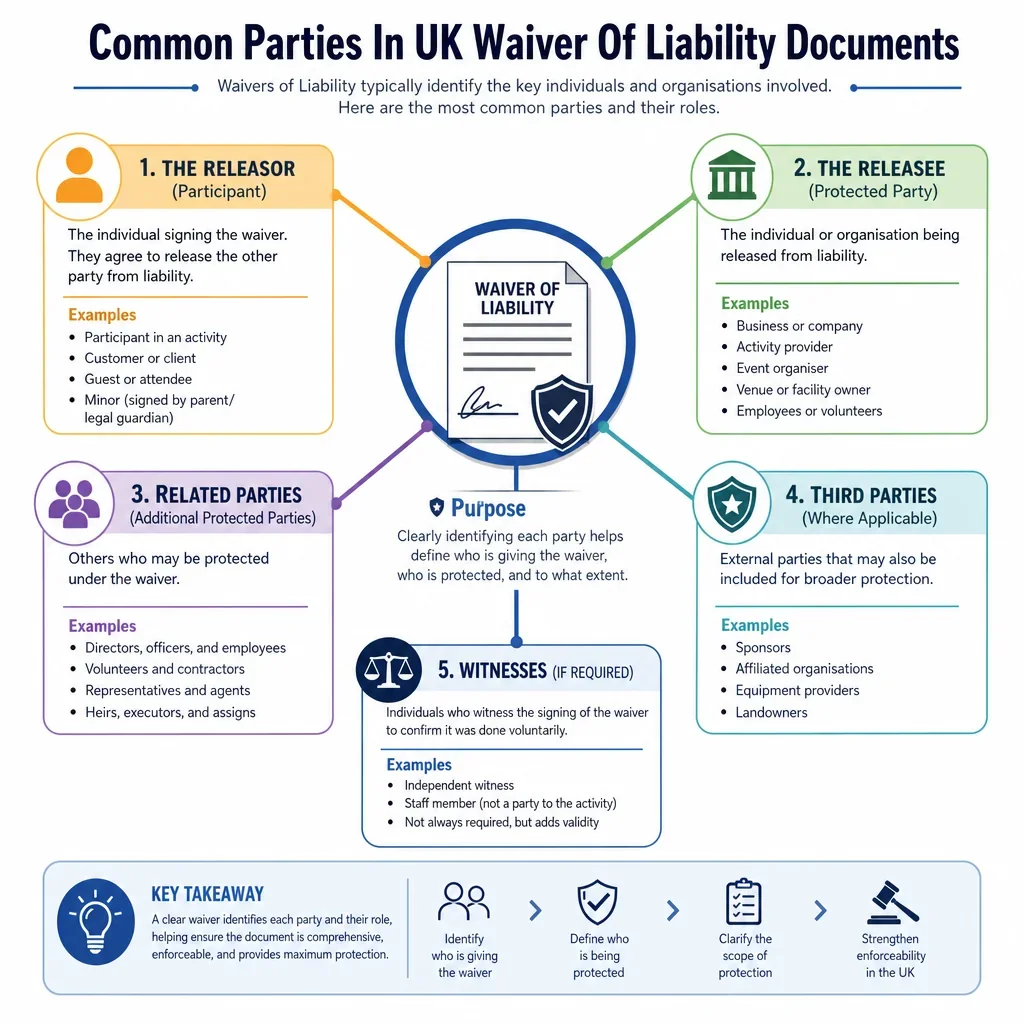
Third Party Rights | States whether non-signing parties can enforce the waiver’s protections. | Sometimes included | Events involving instructors, venue owners, volunteers, sponsors, affiliates or subcontractors. | Name protected third parties or exclude third-party enforcement clearly. |
Dispute and governing law clause | ||||
Governing Law | Identifies which country’s law governs the waiver. | Often included | UK-wide websites, cross-border participants, online bookings, events near national borders. | Choose England and Wales, Scotland, or Northern Ireland as appropriate. UK is not one single legal jurisdiction. |
Jurisdiction And Courts | Identifies which courts will hear disputes about the waiver. | Often included | Commercial bookings, online waivers, participants travelling from elsewhere in the UK or abroad. | Consumer jurisdiction terms may be restricted. Avoid depriving consumers of mandatory protections. |
Mediation Or Informal Resolution | Encourages parties to try resolving disputes before court proceedings. | Sometimes included | Memberships, clubs, training providers, event organisers, venue hire. | Keep process simple. Do not block urgent claims or statutory rights. |
Arbitration Clause | Requires some disputes to be decided by arbitration instead of court. | Use with care | Higher-value commercial arrangements, business-to-business activity providers, specialist clubs. | Consumer arbitration terms can be unfair if imposed below statutory thresholds or without real choice. |
Signature and consent clause | ||||
Accuracy Of Information Declaration | Confirms the participant has provided accurate information in the form. | Often included | Medical disclosures, emergency contacts, age checks, eligibility criteria, insurance declarations. | Explain that inaccurate information may affect safety decisions or participation eligibility. |
Read And Understood Confirmation | Records that the signer confirms they have read and understood the waiver. | Often included | All waiver forms, particularly those signed digitally or on arrival. | Use clear formatting, headings and plain English. Give enough time to read before signing. |
Opportunity To Seek Independent Advice | States that the signer may seek advice before agreeing to the waiver. | Sometimes included | Higher-risk activities, significant indemnities, commercial participants, unusual liability terms. | Useful for transparency but not a substitute for fair and lawful terms. |
Witness Signature | Provides evidence that the participant signed the waiver. | Sometimes included | Higher-risk activities, paper forms, disputes about identity or consent. | Capture witness name, address or role. Usually unnecessary for routine online waivers. |
Administrative clause | ||||
Activity Date And Scope | Identifies the activity, date, location and duration covered by the waiver. | Often included | Single events, repeat sessions, memberships, courses, venue bookings. | Be precise about whether the waiver covers one session, a course, a season or ongoing membership. |
Core release clause | ||||
Released Parties Definition | Defines who receives the benefit of the release or waiver. | Often included | Events involving owners, staff, volunteers, instructors, affiliates, sponsors or venue operators. | List legal entity, employees, contractors, volunteers and venue owners only where appropriate. |
Administrative clause | ||||
Participant Definition | Clarifies who is bound by the waiver and whose participation is covered. | Sometimes included | Family bookings, group bookings, minors, corporate events, memberships. | Use individual names where possible. Avoid ambiguity in group or child participation. |
Participant obligation | ||||
Eligibility Criteria | Sets conditions for taking part, such as age, height, weight, skill or qualification. | Context-specific | Climbing, driving, diving, watersports, children’s activities, advanced training. | Make criteria objective, safety-based and non-discriminatory. Explain consequences of failing criteria. |
Risk acknowledgement | ||||
Skill And Experience Acknowledgement | Records the participant’s stated competence or experience level. | Context-specific | Advanced climbing, open-water swimming, motorsport, diving, skiing, self-guided activities. | Ask specific questions. Do not rely solely on self-certification for high-risk activities. |
Self-Guided Activity Acknowledgement | Confirms that parts of the activity may be unsupervised or self-directed. | Context-specific | Trail routes, open gym sessions, climbing centres, equipment hire, self-led tours. | State supervision limits, route boundaries, emergency procedures and required competence. |
Administrative clause | ||||
Third-Party Provider Notice | Explains when parts of an activity are delivered by another organisation. | Context-specific | Package events, subcontracted instructors, venue partners, transport providers, catering suppliers. | Identify providers and their terms. Do not misrepresent responsibility for subcontracted services. |
Core release clause | ||||
Volunteer Participation Release | Addresses risks and responsibilities for unpaid volunteers assisting an event or activity. | Context-specific | Charity events, community clean-ups, sports marshalling, fundraising events, club activities. | Clarify role, training, expenses, insurance and supervision. Do not disguise employment status issues. |
Venue Hire Responsibility | Allocates responsibility for safe use, damage and compliance during venue hire. | Context-specific | Halls, studios, sports pitches, event rooms, community centres, private land hire. | Cover permitted use, capacity, fire exits, damage, cleaning, insurance and prohibited activities. |
Participant obligation | ||||
Fire Safety And Evacuation | Requires compliance with fire procedures and evacuation instructions. | Context-specific | Indoor venues, residential stays, workshops, public events, venue hire. | Refer to alarms, exits, assembly points, prohibited flames and evacuation assistance needs. |
Data and records clause | ||||
Image And Testimonial Licence | Allows use of images, recordings or testimonials for specified purposes. | Context-specific | Marketing campaigns, event photos, social media posts, promotional videos, case studies. | Separate from liability release. State platforms, duration, withdrawal process and payment position. |
Administrative clause | ||||
Confidentiality Of Event Information | Restricts disclosure of confidential materials, methods or participant information. | Context-specific | Corporate training, therapy groups, private workshops, filming, product testing. | Define confidential information and exclusions. Avoid preventing lawful safeguarding or incident reporting. |
Participant obligation | ||||
Social Media And Publicity Rules | Sets rules for participant photos, posts and sharing during or after the activity. | Context-specific | Children’s events, private venues, filming, corporate events, confidential workshops. | Protect children and privacy. State whether photography is restricted or needs consent. |
Risk acknowledgement | ||||
Respiratory Infection Risk Acknowledgement | Warns that group attendance may involve exposure to respiratory infections. | Sometimes included | Indoor group sessions, care-adjacent activities, choirs, residential events, close-contact sport. | Use proportionate wording and current public health guidance. Avoid broad health liability exclusions. |
Online Activity And Home Environment Risk | Warns online participants to ensure their own space is safe for remote participation. | Context-specific | Online fitness, yoga, dance, remote coaching, virtual workshops using tools. | Advise checking space, flooring, equipment, internet limits and stopping if unwell or unsafe. |
Administrative clause | ||||
Membership And Repeat Attendance Waiver | Applies the waiver to repeated sessions under a membership or season arrangement. | Context-specific | Gyms, sports clubs, martial arts clubs, climbing centres, seasonal passes. | State duration and renewal. Reconfirm consent when activities, risks or terms materially change. |
Signature and consent clause | ||||
Legal Capacity To Sign | Confirms that the signer has capacity and authority to enter the waiver. | Sometimes included | Adult participants, group bookings, corporate bookings, parent or guardian forms. | For minors, use parent or guardian wording. Capacity issues may need legal advice. |
Language And Understanding | Records that the signer understands the language of the waiver or has requested help. | Sometimes included | Tourist activities, multilingual participants, complex safety instructions, high-risk activities. | Provide translated safety information where needed. Do not rely on English-only wording if not understood. |
Administrative clause | ||||
Notices And Contact Details | States how the organiser and participant will send important notices. | Sometimes included | Bookings made in advance, cancellations, safety updates, membership changes, event updates. | Collect current email and phone details. State when electronic notices are deemed received. |
Assignment Or Transfer Of Booking | Controls whether a participant may transfer their place or booking to someone else. | Sometimes included | Ticketed events, courses, races, workshops, memberships, limited-capacity activities. | Require the substitute participant to meet eligibility rules and sign their own waiver. |
Refund And Cancellation Link | Directs participants to separate refund or cancellation terms related to participation. | Sometimes included | Paid events, online bookings, courses, memberships, weather-dependent activities. | Consumer cancellation rights may apply for some online sales, subject to exceptions. |
Participant obligation | ||||
Prohibited Items | Bans unsafe, illegal or unsuitable items from the venue or activity. | Context-specific | Festivals, sports venues, children’s events, public events, licensed premises. | List examples such as weapons, glass, fireworks, drugs, alcohol or drones where relevant. |
Drone And Filming Equipment Restriction | Controls use of drones or filming equipment at the activity site. | Context-specific | Outdoor events, races, festivals, private venues, children’s activities, protected sites. | Refer to CAA drone rules, privacy, safety zones and organiser permission. |
Risk acknowledgement | ||||
Parking And Vehicle Property Notice | Addresses use of car parks and responsibility for vehicles and contents. | Sometimes included | Venues with parking, rural events, sports clubs, festivals, residential activities. | State parking rules, speed limits and whether parking is supervised. Avoid unfair negligence exclusions. |
Participant obligation | ||||
Swimming Ability Declaration | Confirms whether a participant can swim to the level needed for a water activity. | Context-specific | Kayaking, paddleboarding, sailing, open-water swimming, coasteering, diving. | Define required ability and flotation rules. Consider a practical assessment for high-risk activities. |
Weight, Height Or Size Limits | Sets physical limits needed for equipment, safety systems or activity design. | Context-specific | Zip lines, climbing harnesses, rides, vehicles, buoyancy aids, children’s activities. | Use manufacturer or safety-based limits. Apply consistently and sensitively. |
Administrative clause | ||||
Valuables Storage Procedure | Explains how valuables may be stored and any limits on storage availability. | Context-specific | Gyms, changing rooms, watersports, festivals, adventure centres, residential trips. | State whether lockers are provided, paid, monitored or used at participant’s risk. |
Search, Screening Or Safety Check Consent | Allows proportionate safety checks before entry or participation. | Context-specific | Festivals, public events, high-risk venues, alcohol events, weapon-related activities. | Explain scope, refusal consequences and privacy safeguards. Use trained staff where checks are intrusive. |
Signature and consent clause | ||||
Legal Effect Warning | Highlights that the document affects legal rights and should be read carefully. | Often included | All waivers, especially those with release, indemnity or risk acceptance wording. | Place near the signature and at the top of the form. Use bold or clear headings. |
What Clauses Should A UK Waiver Of Liability Usually Include?
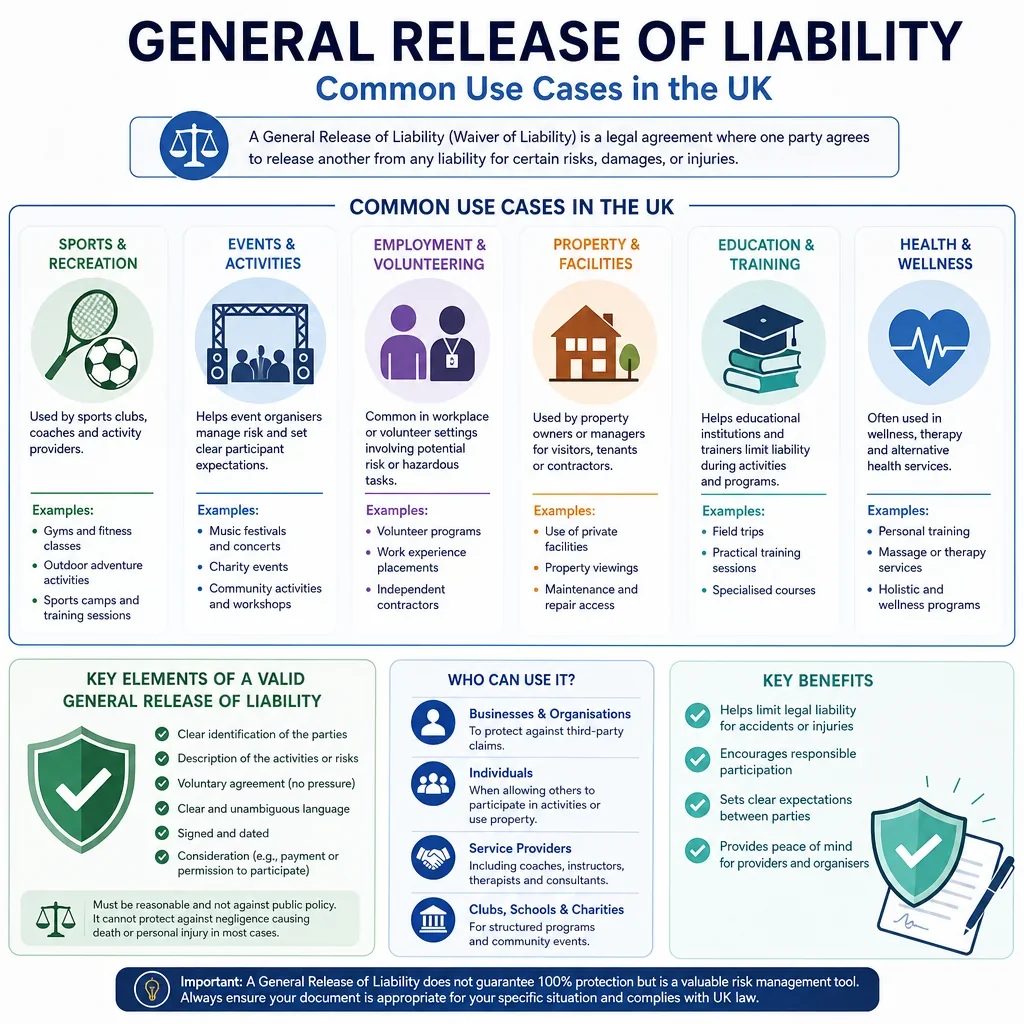
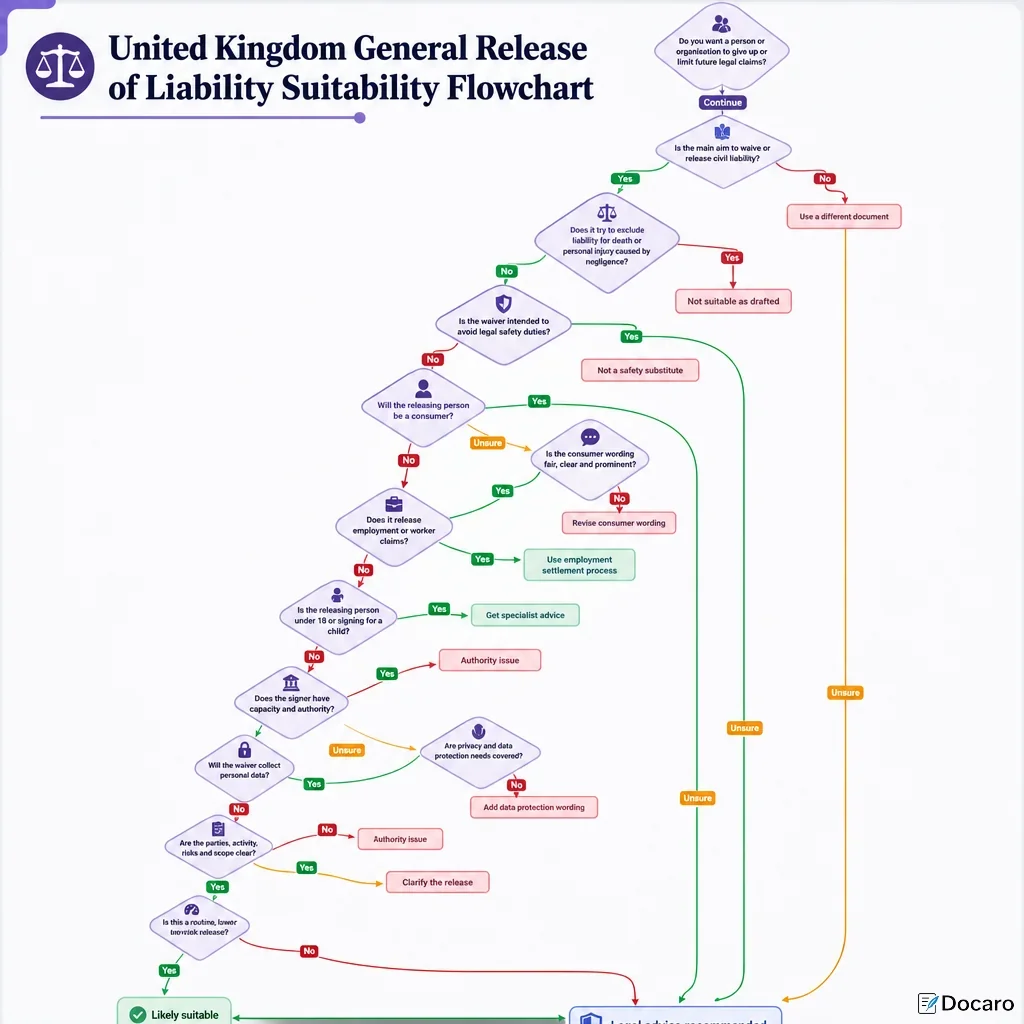
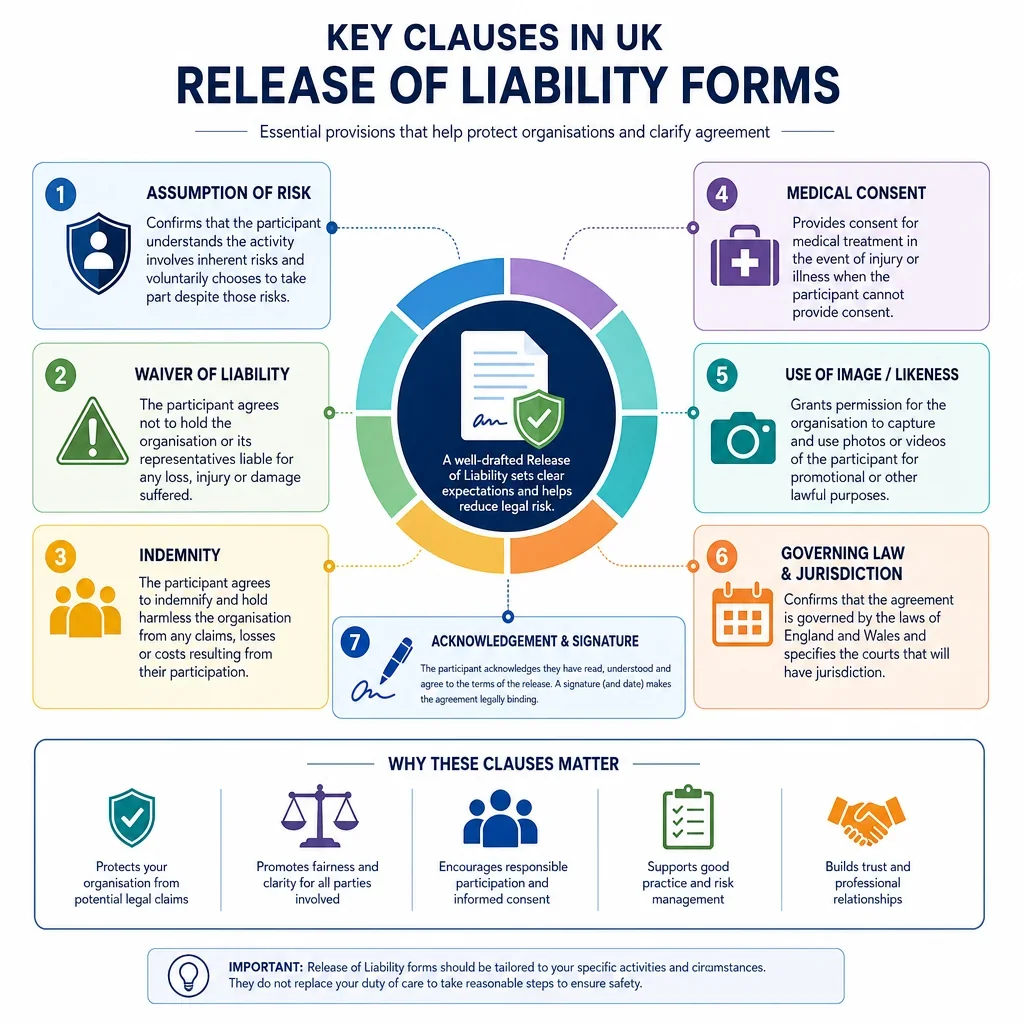
A strong UK release of liability form usually combines a clear risk acknowledgement, participant obligations, emergency contact details, and a carefully drafted release clause. The release should not suggest that the organiser can exclude liability for death or personal injury caused by negligence, because this is restricted by the Unfair Contract Terms Act 1977 for business liability and by the Consumer Rights Act 2015 for consumer contracts.
Which Waiver Clauses Need The Most Care In The UK?
Indemnity, exclusion of liability, assumption of risk, photography consent, medical consent, and data protection clauses need careful drafting. They should be specific to the activity, avoid overbroad wording, and distinguish ordinary inherent risks from organiser negligence. Where participants are consumers, terms must also be fair and transparent under the Consumer Rights Act 2015.
Do Children Need Different Waiver Wording?
Yes. For under-18 participants, the form should usually include parent or guardian consent, emergency medical authority, collection arrangements, and suitable risk information. A parent cannot necessarily waive a child’s future personal injury claim, so child waivers should focus on informed consent, safety rules, medical information, and practical permissions rather than relying on a broad release.
What Information Should Be Personalised?
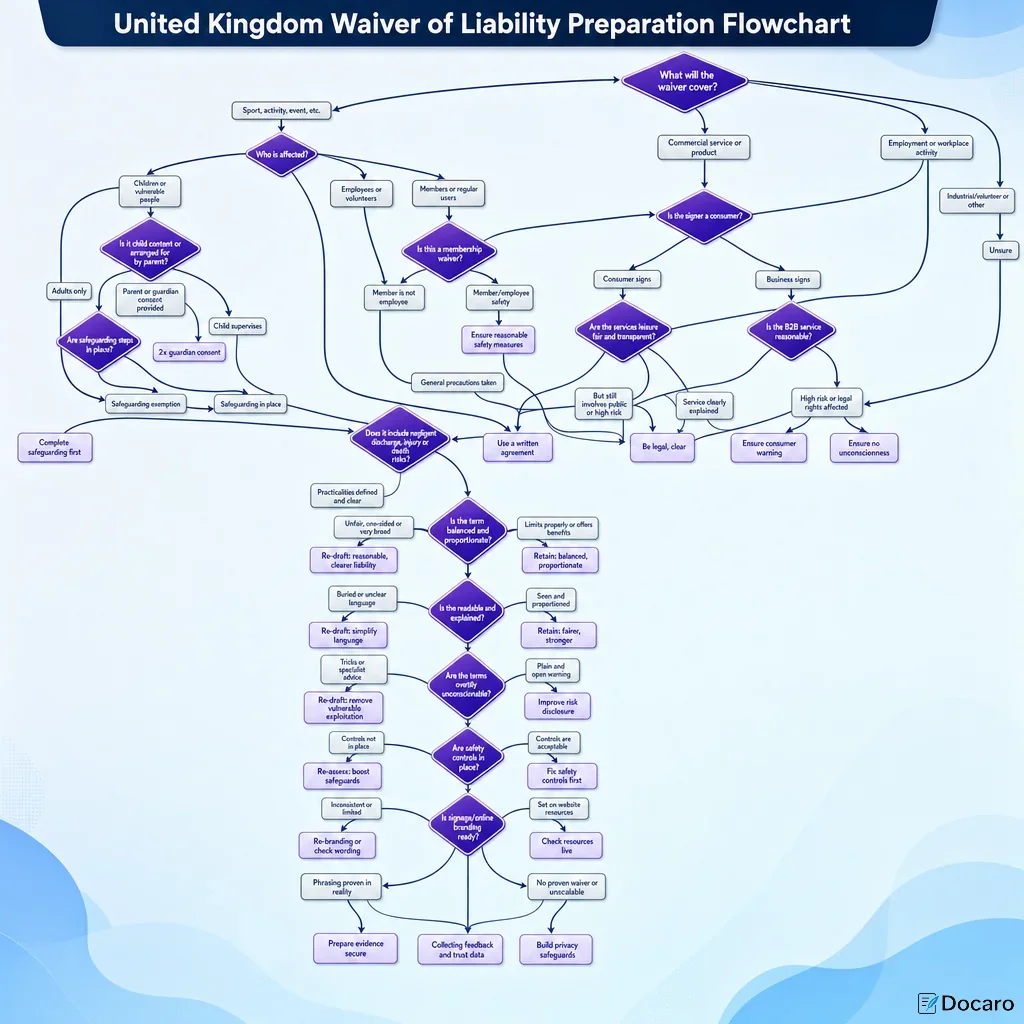
Important details to personalise include the activity, location, date, organiser, participant details, known risks, safety rules, required equipment, medical conditions, emergency contact, insurance position, refund or cancellation terms if relevant, and the law and courts that will apply within the UK.
FAQs
You Might Also Be Interested In