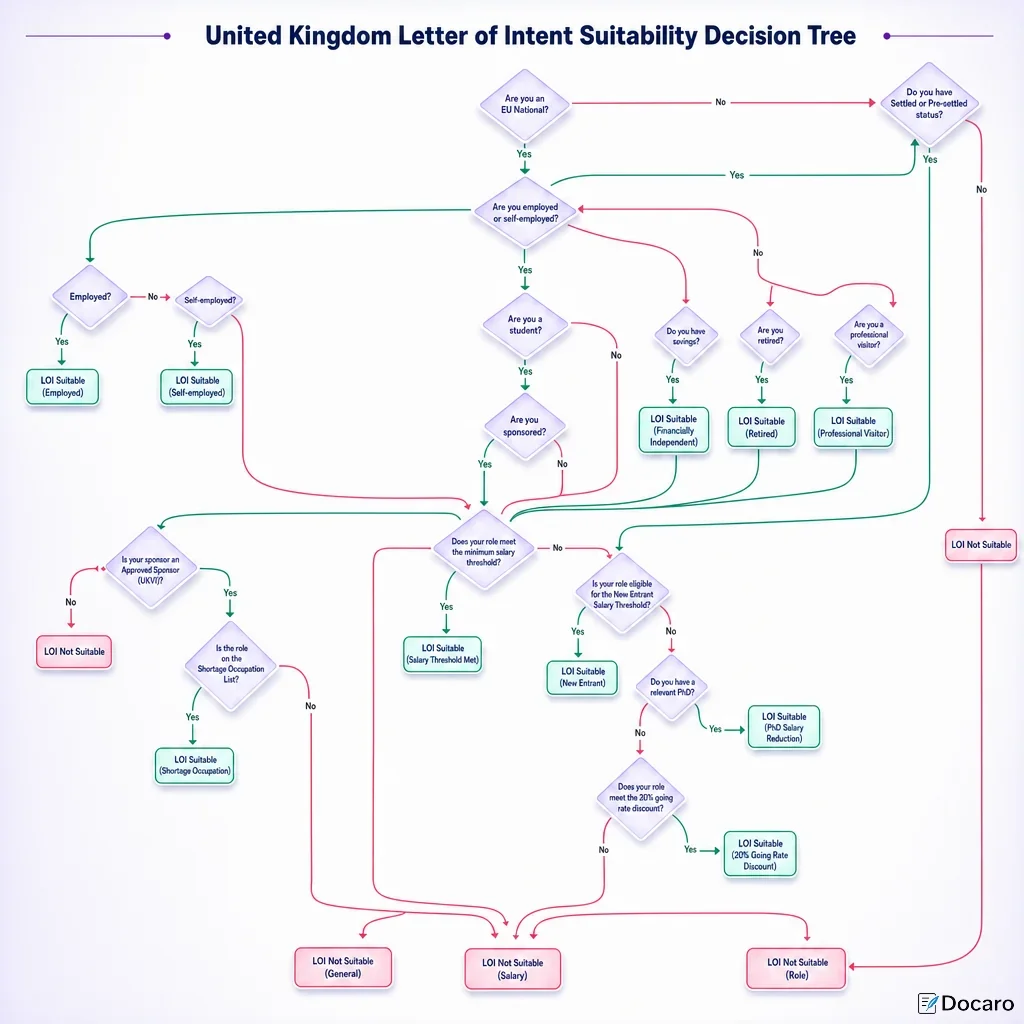
United Kingdom Letter Of Intent Suitability Decision Tree
What Do You Need?
Why Is Choosing The Right UK Letter Of Intent Important?
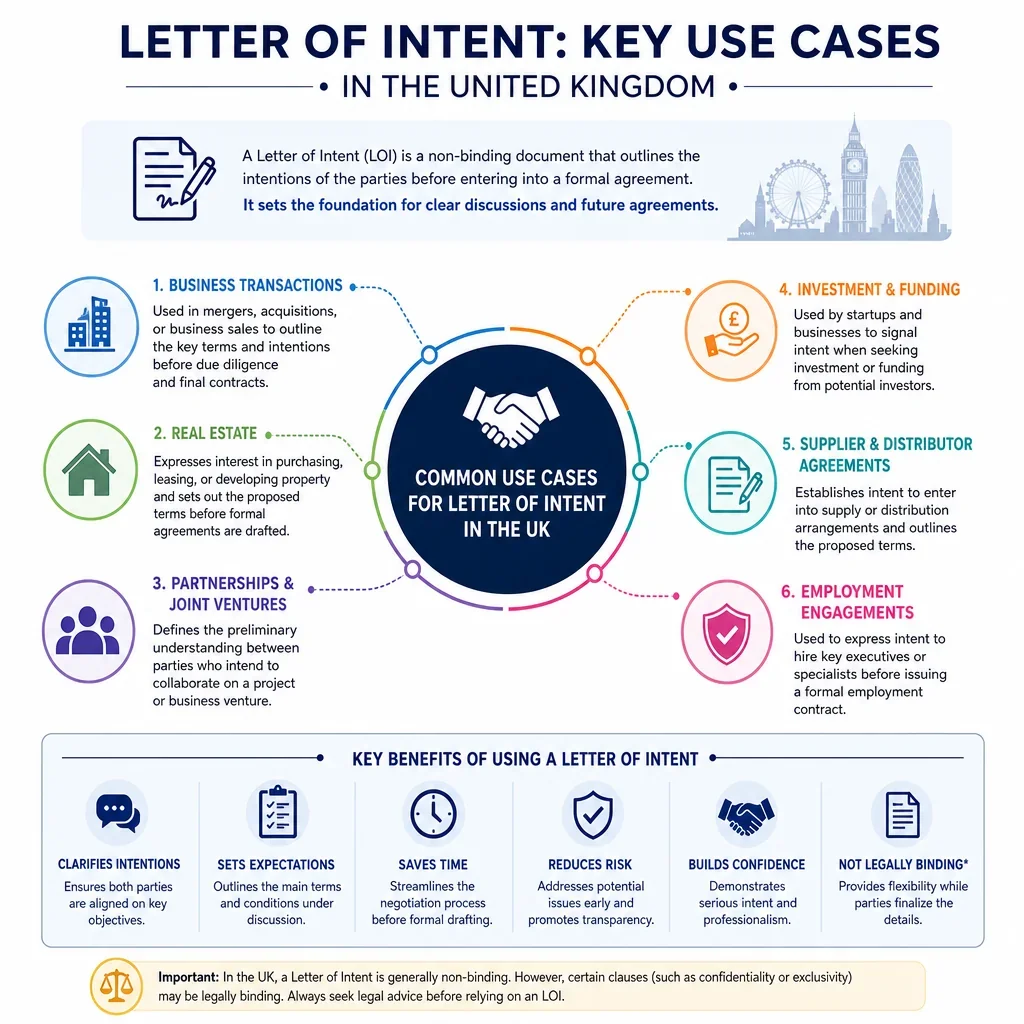
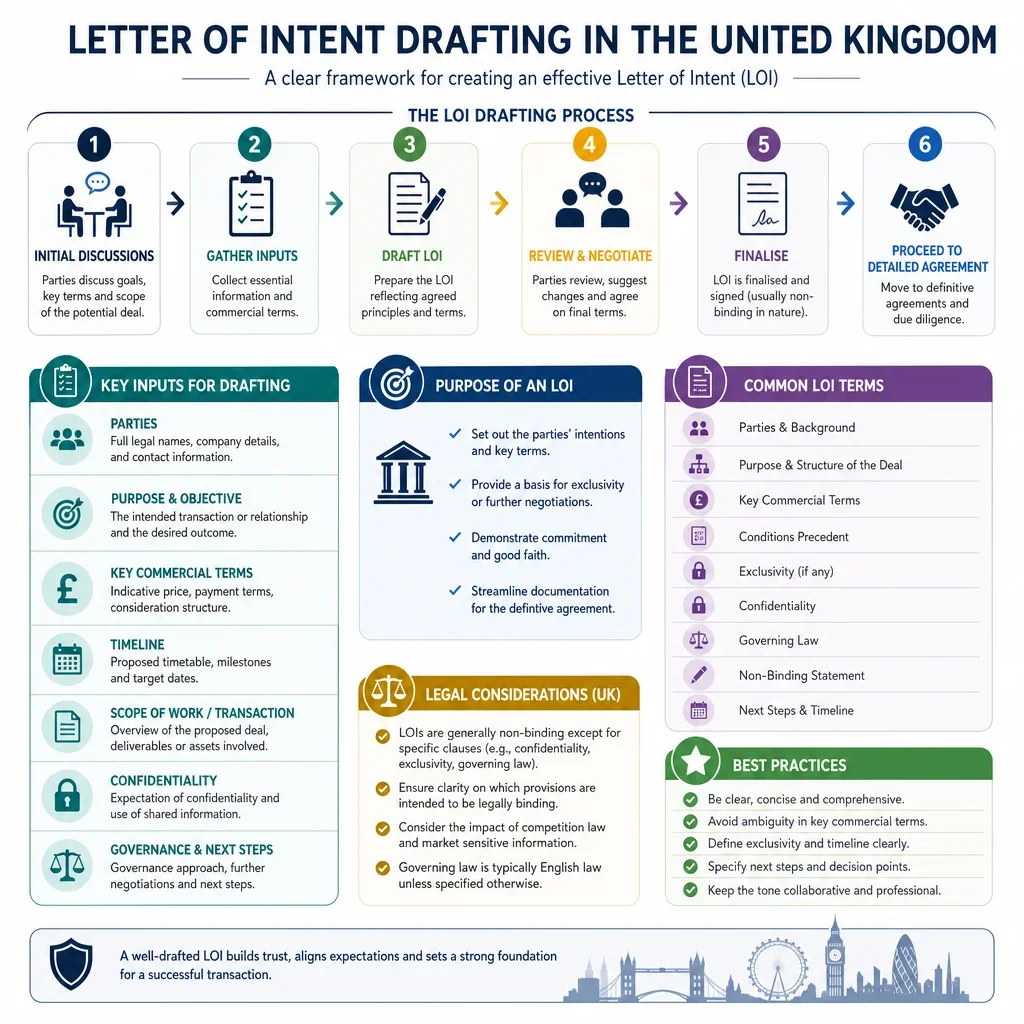
A letter of intent can be useful in the United Kingdom when parties want to record deal terms before a final contract is signed. However, the wrong document can create uncertainty about whether the parties are legally bound, what work can start, who pays costs, and what happens if negotiations fail.
Can A Letter Of Intent Be Legally Binding In The UK?
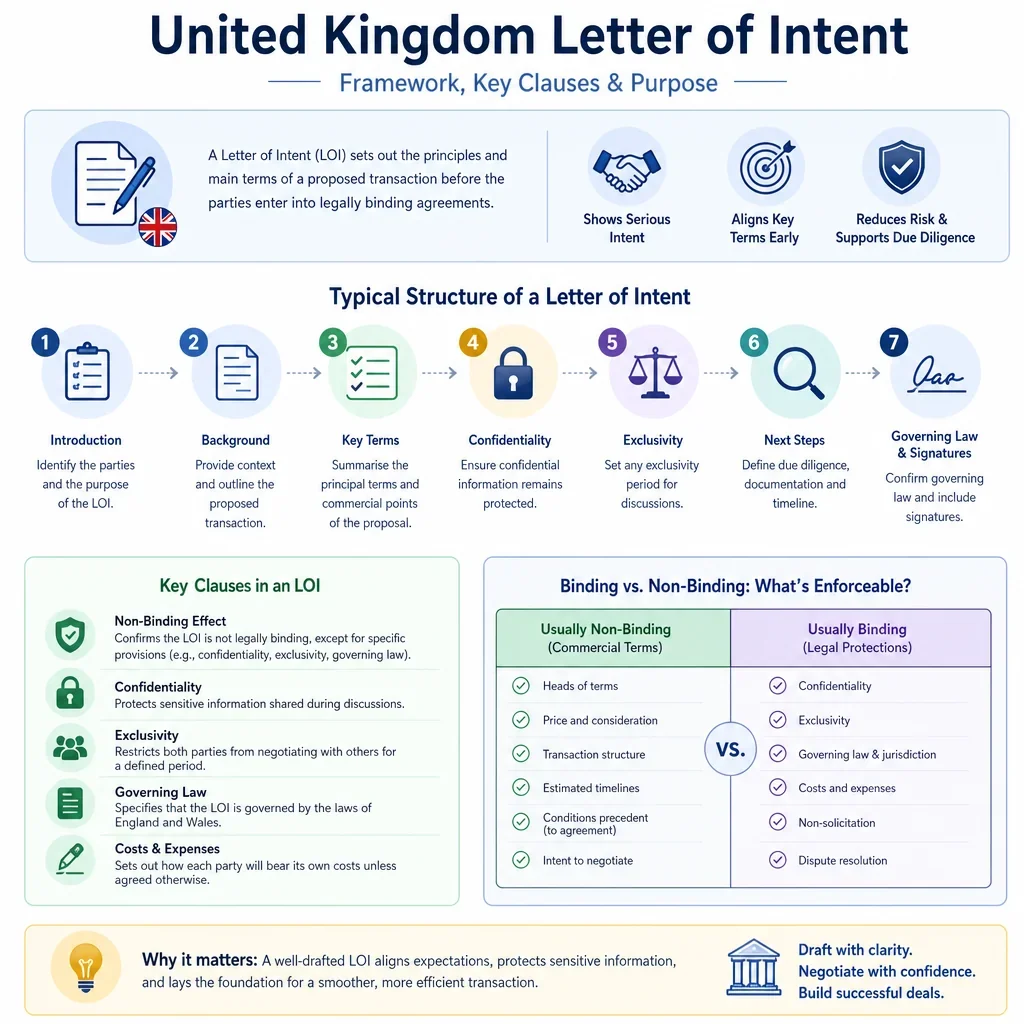
Yes. A UK court may treat parts of a letter of intent as binding if the wording, conduct, and certainty of terms show that legal obligations were intended. Clear drafting helps separate binding clauses, such as confidentiality or exclusivity, from non-binding commercial intentions.
When Should You Use A Full Contract Instead?
If the parties want the whole transaction to start immediately, a full contract is usually safer. This is especially important for construction works, land transactions, employment arrangements, public sector procurement, and higher-value commercial deals.
What Are The Main Risks Of Getting It Wrong?
- Accidentally creating a binding contract before final terms are agreed.
- Starting work without clear payment, liability, insurance, or termination terms.
- Using a letter where UK land, employment, consumer, data protection, or procurement rules require more specific documents.
- Failing to protect confidential information or personal data.
- Disputes about signing authority, governing law, or the status of negotiations.
How Does A Decision Tool Help?
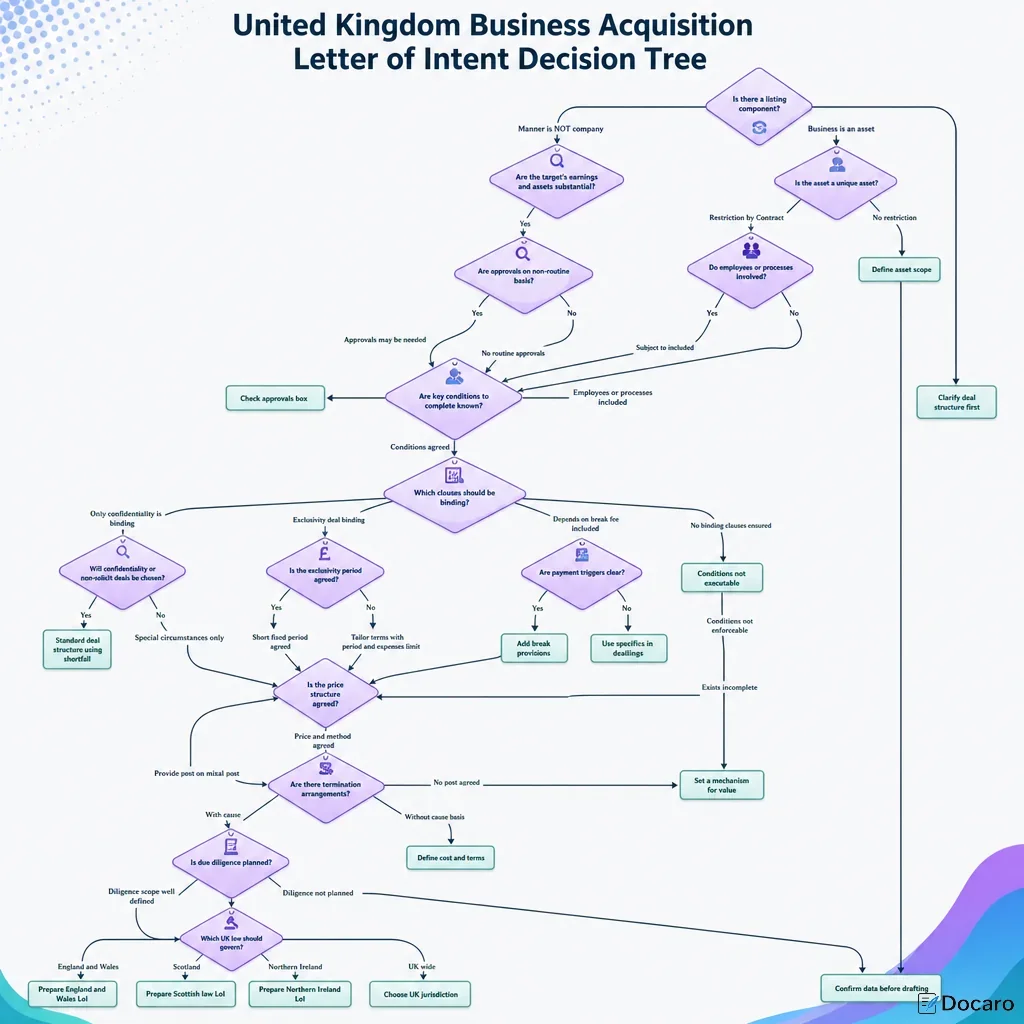
A structured decision process helps identify whether a letter of intent is suitable, whether it should be binding or non-binding, and when a different UK legal document is more appropriate. For official background, see GOV.UK consumer rights, ICO data protection guidance, and UK land contract formalities.
FAQs
You Might Also Be Interested In