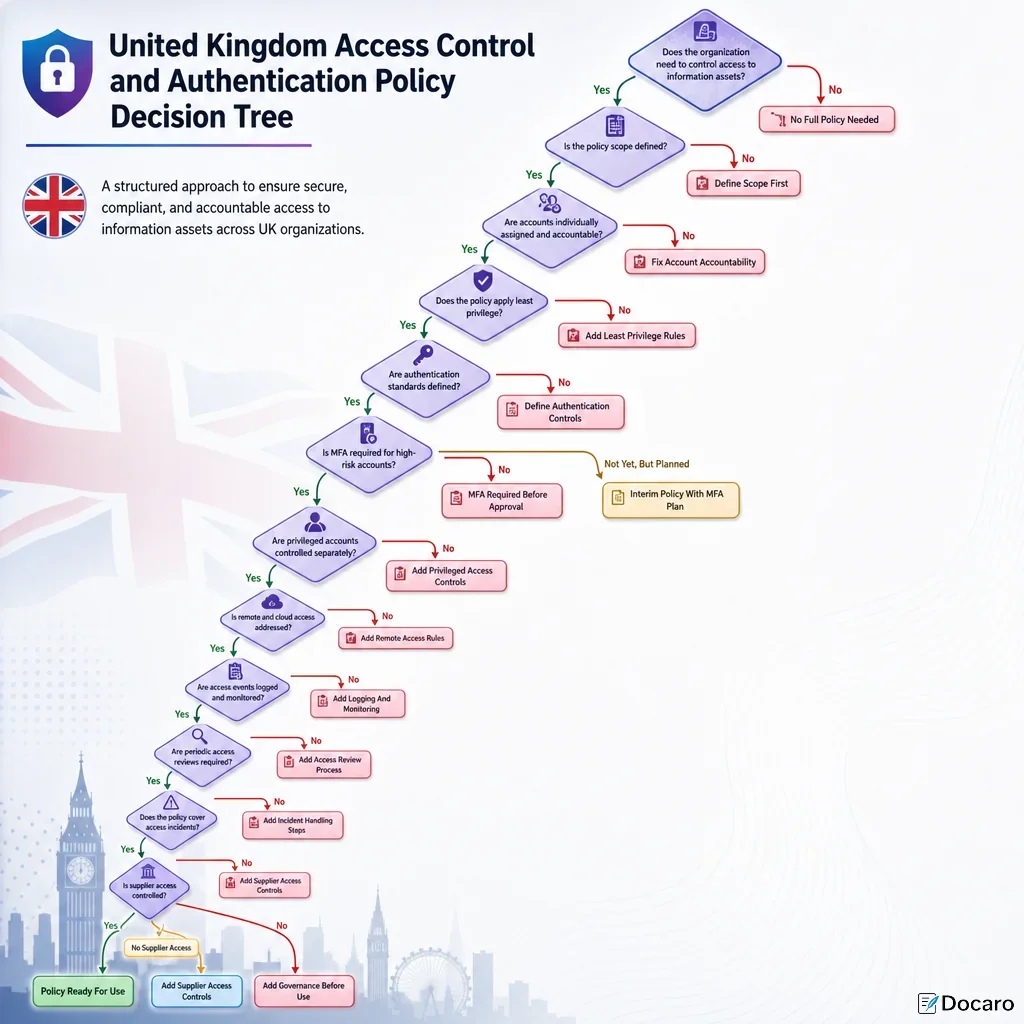
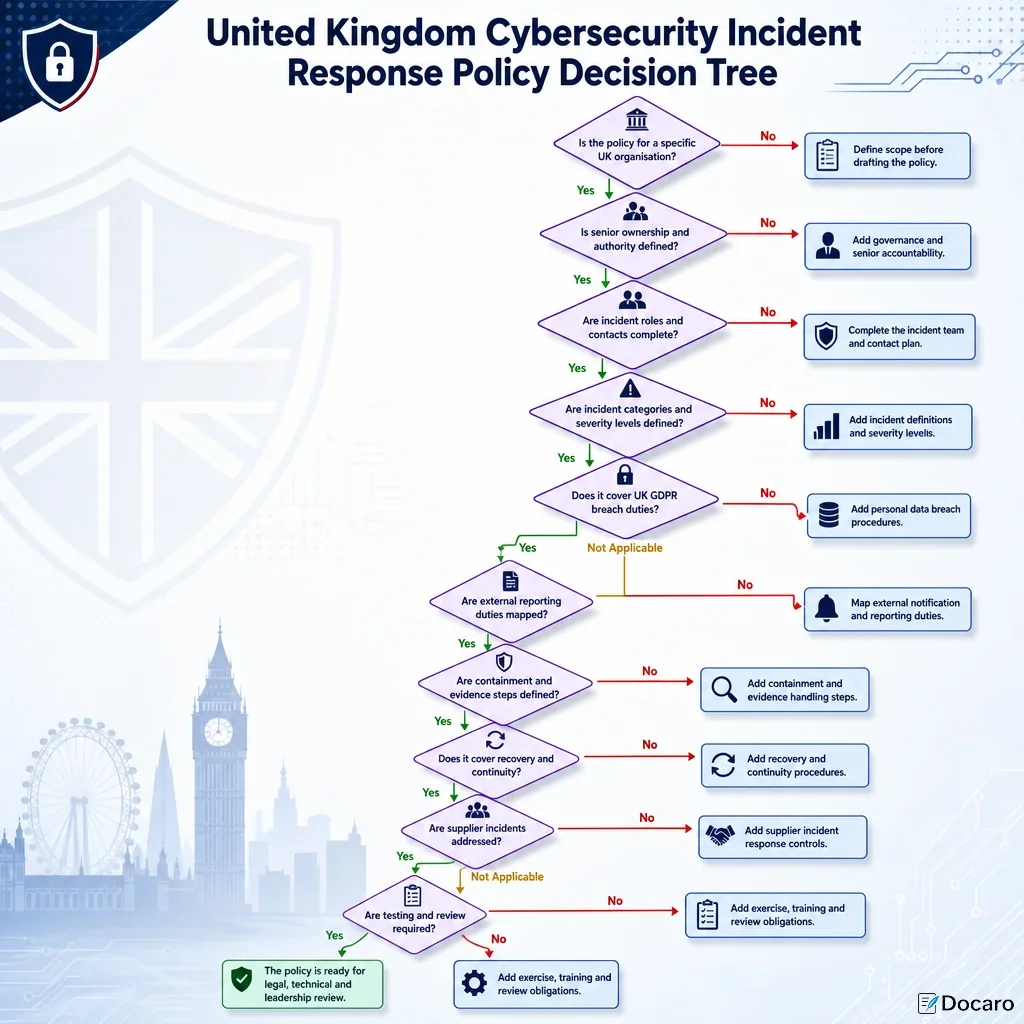
United Kingdom Cybersecurity Policy Scope Decision Tree
What will the policy cover?
Why Is Cybersecurity Policy Scope Important In The UK?
Choosing the right scope for a UK cybersecurity policy helps ensure the document is practical, enforceable, and aligned with the organisation's legal and operational risks. A policy that is too narrow may leave important systems, staff, suppliers, or personal data outside its controls. A policy that is too broad may be ignored because it does not reflect how the organisation actually works.
How Does Scope Affect UK GDPR Compliance?
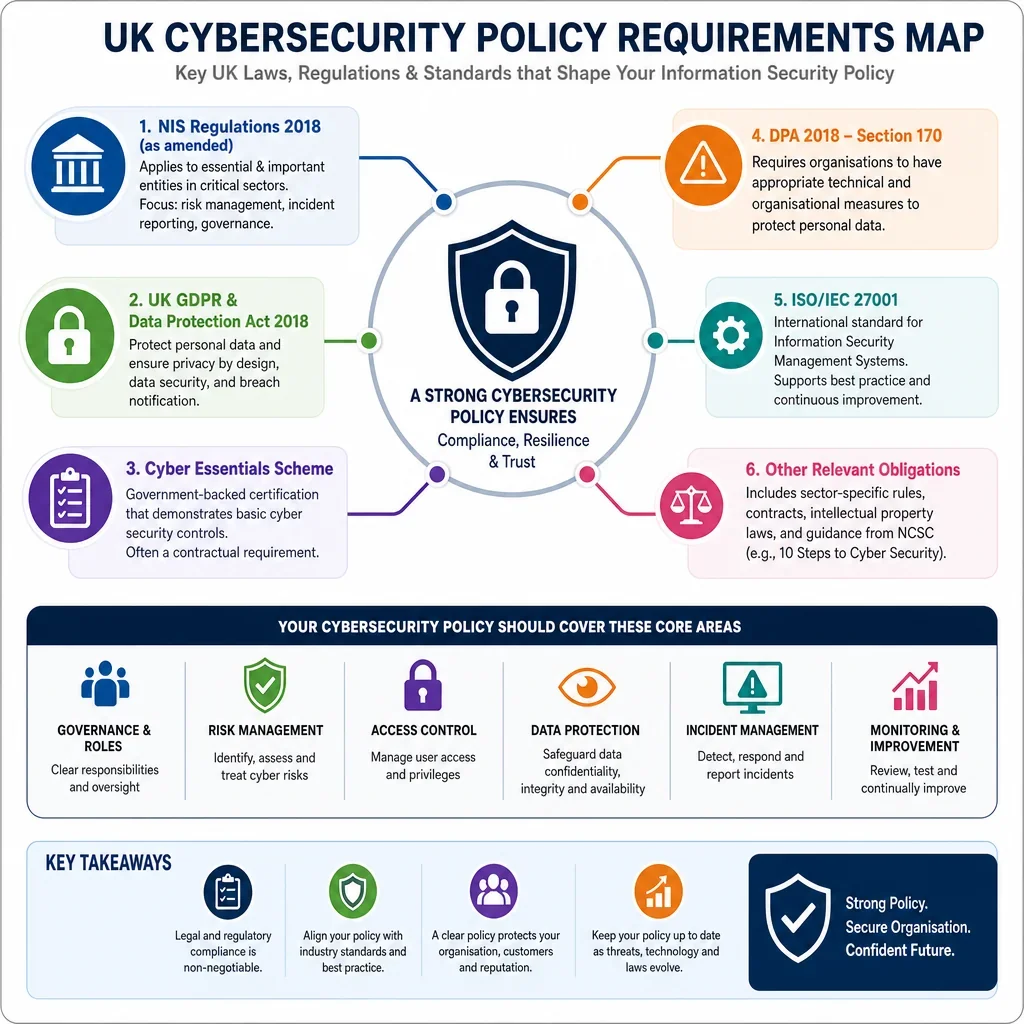
Where personal data is processed, UK organisations must apply appropriate security measures under the UK GDPR and the Data Protection Act 2018. A clear Information Security Policy supports access control, breach reporting, supplier management, staff responsibilities, and secure handling of personal data. The ICO data security guidance is a key reference for UK organisations.
Why Does Sector Regulation Matter?
Some UK organisations need more than a general policy. Financial services firms, public sector bodies, health and care providers, education providers, and operators of essential services may face additional expectations from regulators, government frameworks, or contracts. Mapping the scope correctly helps the policy reflect the right level of governance, incident response, assurance, and resilience.
What Happens If The Policy Misses Suppliers Or Remote Work?
Many cybersecurity incidents involve third parties, cloud services, remote access, or unmanaged devices. If these are not included in the policy scope, staff may not know which rules apply and suppliers may not be held to suitable standards. UK organisations should consider guidance from the NCSC on supply chain security when deciding whether suppliers are in scope.
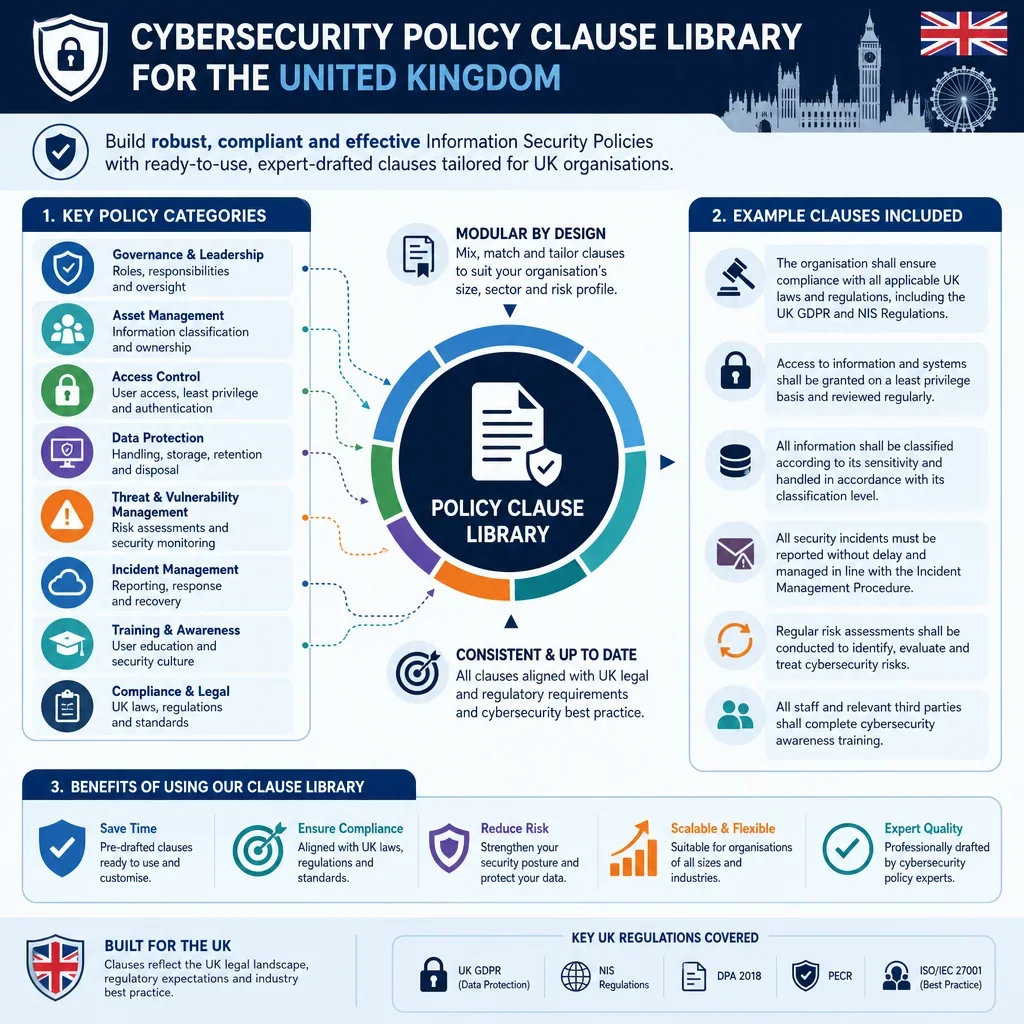
What Should A Good UK Information Security Policy Cover?
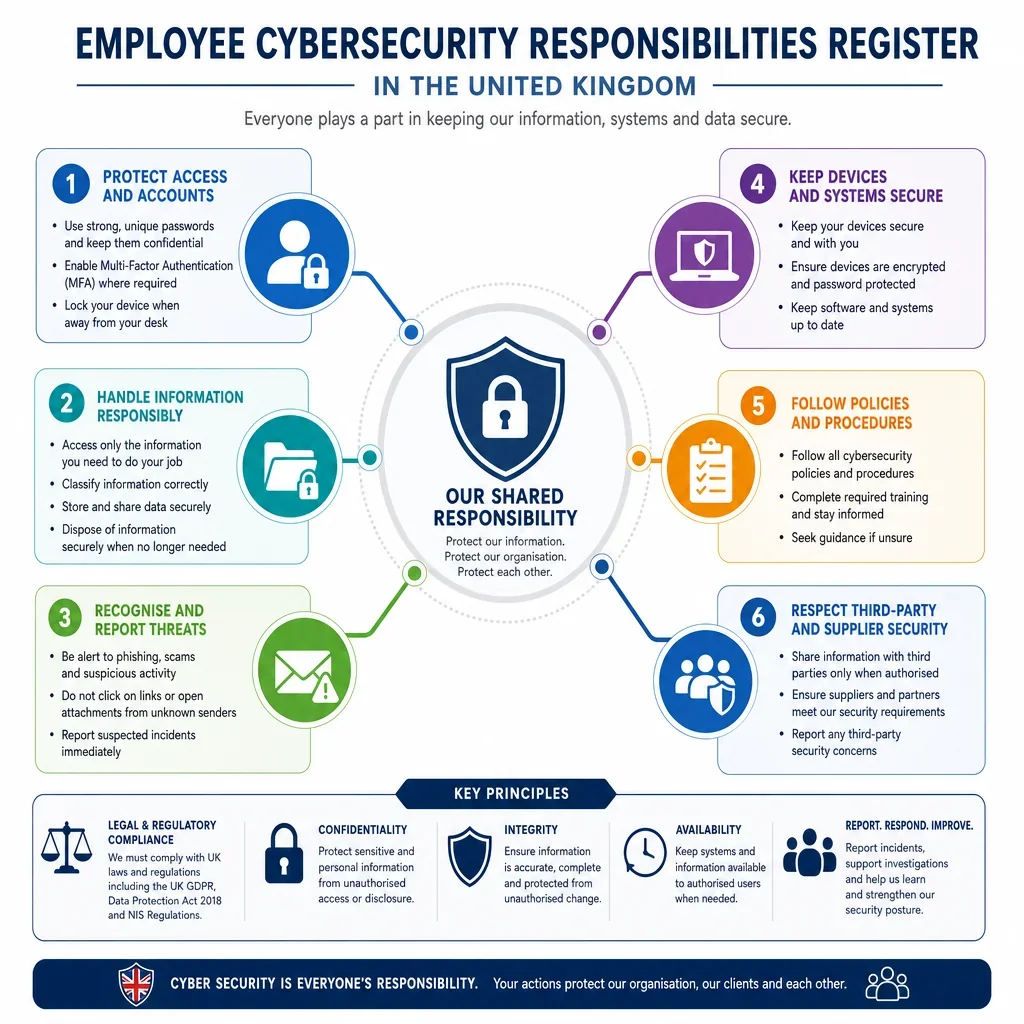
- People: staff, directors, contractors, volunteers, suppliers, and other users with access.
- Assets: devices, networks, cloud services, data, records, applications, and paper information.
- Legal duties: UK GDPR, sector regulation, contract terms, and public sector requirements where relevant.
- Working practices: remote work, BYOD, travel, access management, backups, and incident reporting.
- Accountability: senior ownership, user responsibilities, review dates, and enforcement.
Getting the scope right makes the policy easier to implement, easier to audit, and more useful as a practical cybersecurity control for a UK organisation.
You Might Also Be Interested In