UK Resignation Notice Period Reference
Common Usage | Final Day Wording Guidance | Date Confirmation Recommended | Notice Length Category | Handover Timing Note |
|---|---|---|---|---|
No notice | ||||
Used only where agreed, during probation if contract allows, or in exceptional urgent circumstances. | Say the resignation is effective immediately and ask the employer to confirm the termination date. | true | Very short | Immediate handover is needed provide key files, contacts, access details, and urgent task notes. |
Used where the employer agrees to waive the employee's contractual or statutory notice requirement. | Refer to the agreed waiver and state the agreed last day or immediate leaving date. | true | Very short | Handover should be limited to essentials and recorded in writing as soon as possible. |
Less than one week | ||||
Common for casual, very short service, or mutually agreed early departure situations. | State the proposed final working day and ask the employer to confirm acceptance of short notice. | true | Very short | Prioritise urgent work, passwords, contact lists, and a brief written status note. |
May apply where employment has lasted less than one month and the contract has no longer notice term. | Explain the short service context and give the exact date employment is intended to end. | true | Very short | Provide a concise update on training completed, open tasks, and company property held. |
One week | ||||
Common statutory minimum where the employee has worked at least one month and no longer contractual notice applies. | State the notice is one week and give the calculated final working day clearly. | true | Short | Use the week to document work in progress and brief a manager or colleague quickly. |
Often used in probation clauses for junior or new starters, subject to the employment contract. | Mention the probation notice clause if relevant and specify the final working date. | true | Short | Focus on training notes, allocated tasks, and any customer or supplier introductions already made. |
Common in weekly paid operational, retail, hospitality, or temporary roles where the contract matches pay cycles. | Give the exact final shift or final working day, not only the week-ending date. | true | Short | Arrange cover for scheduled shifts and return any uniform, keys, or equipment promptly. |
Two weeks | ||||
Common in contracts for junior, hourly paid, operational, or early-career roles. | State two weeks' notice and identify the final working date in day-month-year format. | true | Short | Plan a focused handover, prioritising recurring duties, deadlines, and key internal contacts. |
Used where the contract requires longer notice but the employee proposes a shorter agreed departure. | Frame the date as a request for early release unless it matches the contractual notice period. | true | Short | Offer a realistic handover schedule showing what can and cannot be completed before leaving. |
Often practical for rota-based teams needing limited time to arrange shift cover. | Name the final working shift and ask HR or the manager to confirm rota treatment. | true | Short | Confirm remaining shifts, hand over customer issues, and note any absence or leave already booked. |
Four weeks | ||||
Common standard notice period for many permanent employees with weekly notice wording in the contract. | State four weeks' notice and provide the final working day rather than saying one month. | true | Standard | Allows a structured handover, completion of routine tasks, and briefing of replacements or colleagues. |
Used where the employee has accrued holiday to take or be paid for before leaving. | Separate the final employment date from any last day actually worked if holiday is taken. | true | Standard | Complete core handover before any holiday begins, not only before the employment end date. |
Common where the contract uses weeks but payroll runs monthly, creating date calculation issues. | Use a precise calendar date and avoid implying it is identical to one calendar month. | true | Standard | Schedule handover milestones weekly so progress is clear before payroll and exit processing. |
One month | ||||
Very common contractual notice period for permanent monthly paid employees and professional roles. | State one calendar month's notice and give the exact final working date. | true | Standard | Prepare a full handover plan covering open work, deadlines, contacts, and replacement support. |
Seen where contracts say notice expires at the end of a calendar month or pay period. | Check whether notice runs from the resignation date or to the end of the next month. | true | Standard | Agree milestones early because the actual end date may be later than a simple calendar month. |
Common for roles managing clients, projects, accounts, or recurring monthly reporting cycles. | Include the final working date and offer to support project or client transition during notice. | true | Standard | Use the month to document project status, risks, next actions, and stakeholder contacts. |
Two months | ||||
Common for specialist, technical, managerial, or hard-to-replace employees under contract. | State the contractual two-month notice period and the exact proposed final working date. | true | Extended | Create a staged handover with documentation, shadowing, and transfer of specialist knowledge. |
Seen in roles with sensitive information, client relationships, or competitive restrictions. | State the employment end date and let the employer confirm any garden leave arrangements. | true | Extended | Prepare handover promptly in case system access or duties change during the notice period. |
Useful for regulated, finance, healthcare, education, or safety-critical continuity planning. | Give the final date and offer cooperation with compliance, access, and audit handover steps. | true | Extended | Include compliance records, approvals, delegated authority, and risk items in the handover plan. |
Three months | ||||
Common for senior managers, directors, executives, and high-impact professional roles. | Refer to the contractual three-month notice clause and state the calculated final working date. | true | Extended | Plan phased transition, successor briefing, governance updates, and stakeholder communication. |
Used for roles with major client accounts, sales pipelines, partnerships, or long project cycles. | State the final date and offer to support client transition within contractual boundaries. | true | Extended | Document account history, live opportunities, obligations, renewal dates, and relationship risks. |
Often paired with confidentiality, non-solicitation, non-dealing, or non-compete clauses in senior contracts. | Keep the resignation date clear and avoid discussing restrictive covenants unless necessary. | true | Extended | Handover should include sensitive information controls and orderly transfer of client or staff responsibilities. |
More than three months | ||||
Seen in executive, board-level, partner, academic, clinical, or highly specialised contracts. | Quote the contractual notice length and request written confirmation of the exact leaving date. | true | Extended | Requires a formal transition plan, governance timetable, and agreed communication strategy. |
May appear in academic or education contracts tied to terms, semesters, or academic years. | Check whether the contract requires notice by a specific term date and state the intended end date. | true | Extended | Plan around teaching, assessment, supervision, research commitments, and term deadlines. |
May be used for consultants, senior clinicians, accountable persons, or scarce specialist posts. | State the contractual notice period and request confirmation of rota, clinical, or governance implications. | true | Extended | Allow time for caseload transfer, rota planning, patient safety actions, and compliance records. |
Relevant where long notice can be shortened by an employer exercising a payment in lieu clause. | Give the contractual end date and let the employer confirm any payment in lieu arrangement. | true | Extended | Prepare early because employment may end sooner if payment in lieu is exercised. |
How Much Notice Should A UK Resignation Letter Give?
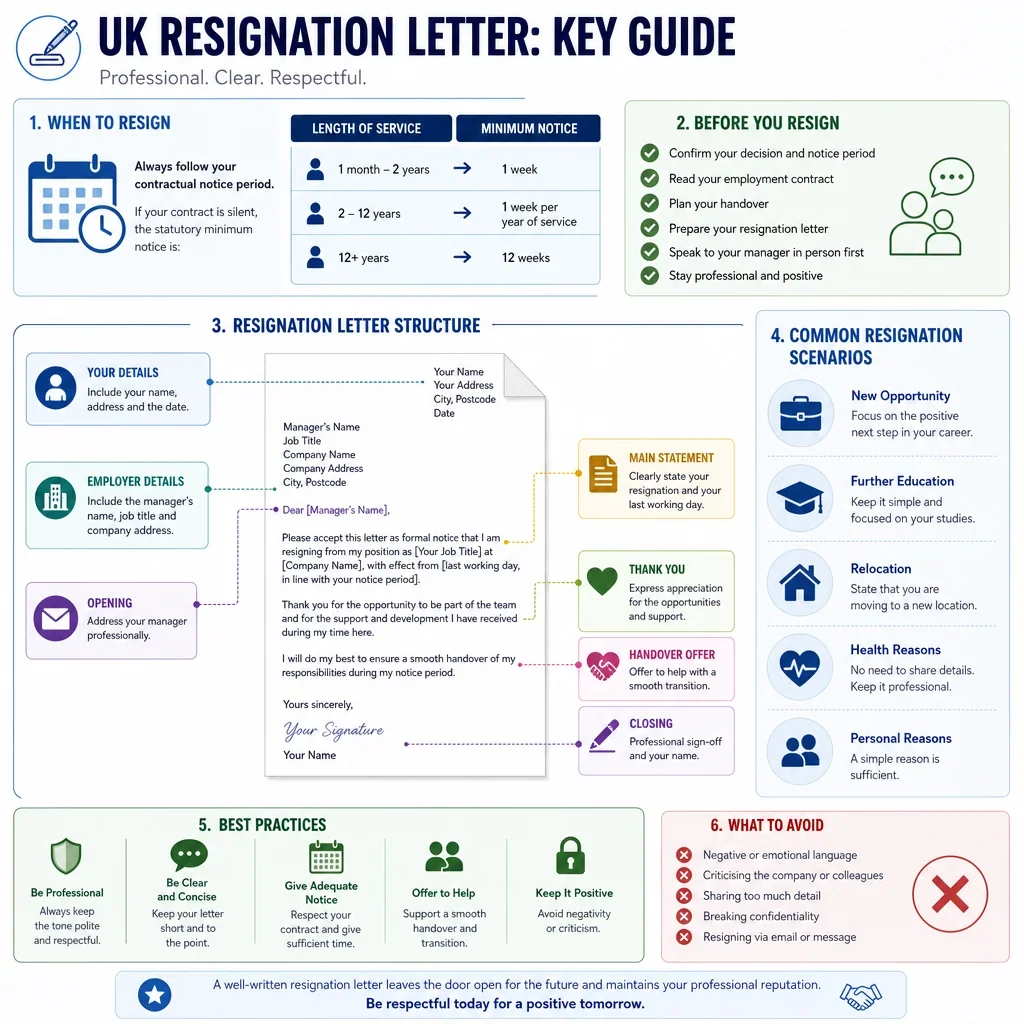
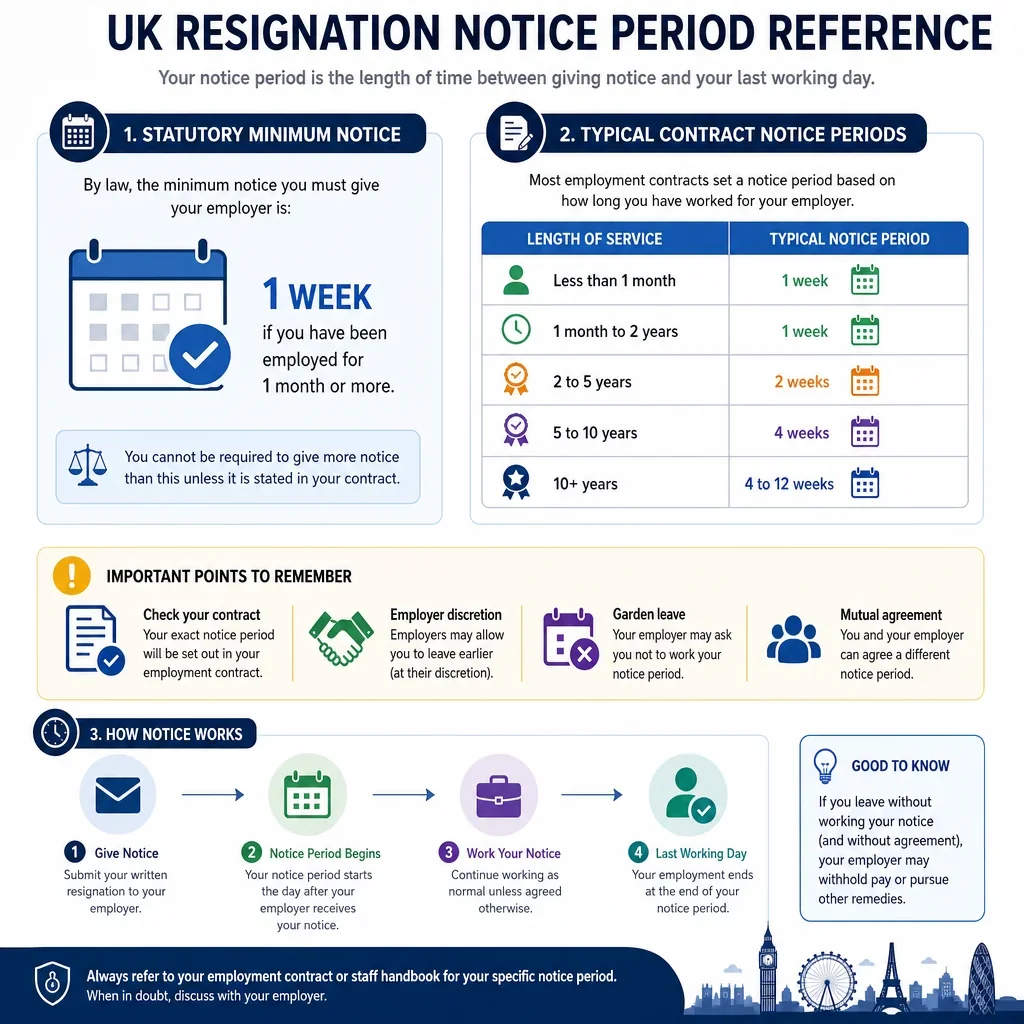
In the UK, the safest starting point is the employee\'s contract. If the contract requires a longer notice period than the statutory minimum, the resignation letter should normally use the contractual period and state a clear final working day. If there is no contractual notice term, employees who have worked for at least one month must usually give at least one week\'s notice under section 86 of the Employment Rights Act 1996.
When Is The Final Working Date Most Likely To Need Checking?
Final date confirmation is especially important for one month, multi-month, and more than three month notice periods, because contracts may define notice by calendar months, pay periods, or specified month-end dates. It is also useful for short notice periods where weekends, bank holidays, annual leave, garden leave, or payroll cut-offs could affect the practical last working day.
What If The Employee Wants To Leave With Little Or No Notice?
No notice, less than one week, or a shorter period than the contract allows should usually be presented carefully as a request for agreement, not as an assumption. The resignation letter should ask the employer to confirm whether an earlier leaving date is accepted, because leaving early may create contractual issues.
How Does The Notice Period Affect The Handover?
- Very short notice usually needs an immediate handover of passwords, files, live matters, and urgent contacts.
- Short notice allows only a focused written handover and prioritisation of critical tasks.
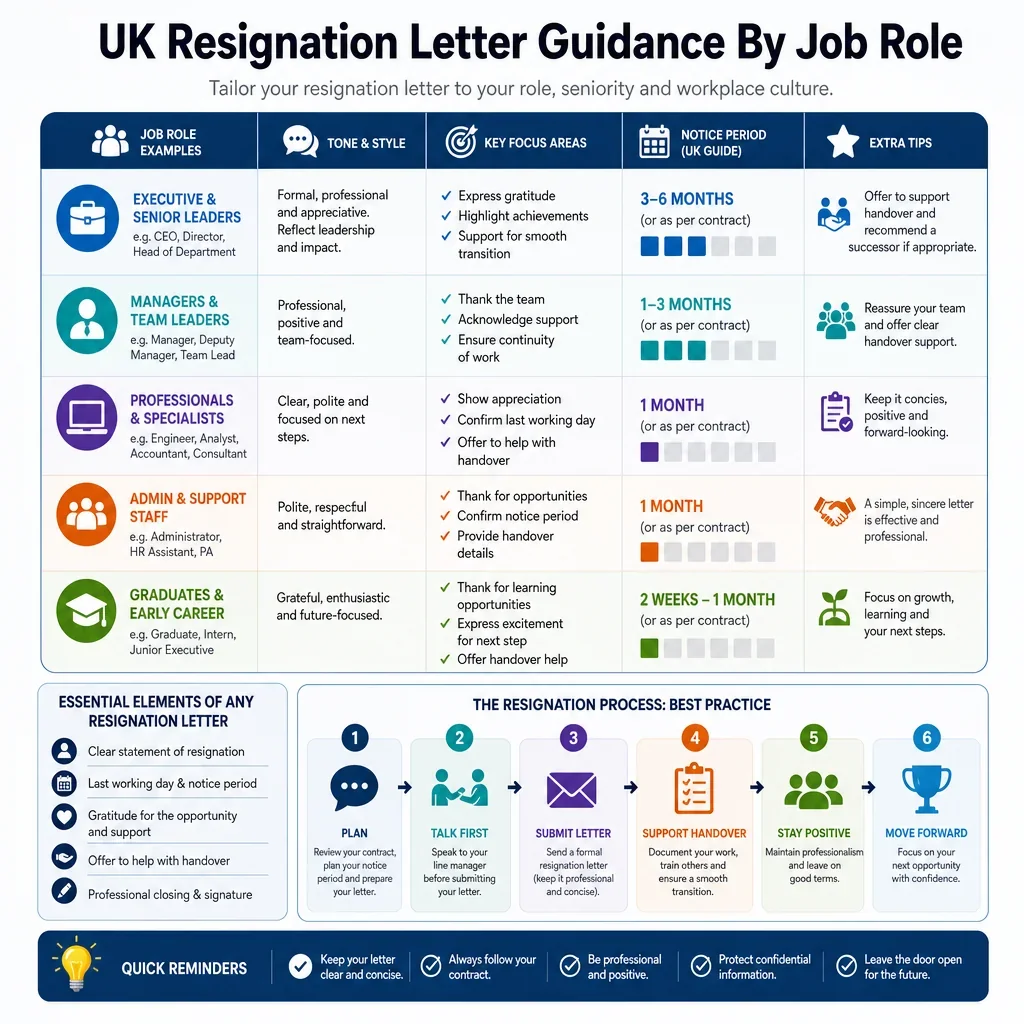
- Standard notice, such as four weeks or one month, is usually enough to complete a structured handover and close routine work.
- Extended notice is common for senior, specialist, or regulated roles and should include transition planning, client continuity, and knowledge transfer.
FAQs
You Might Also Be Interested In