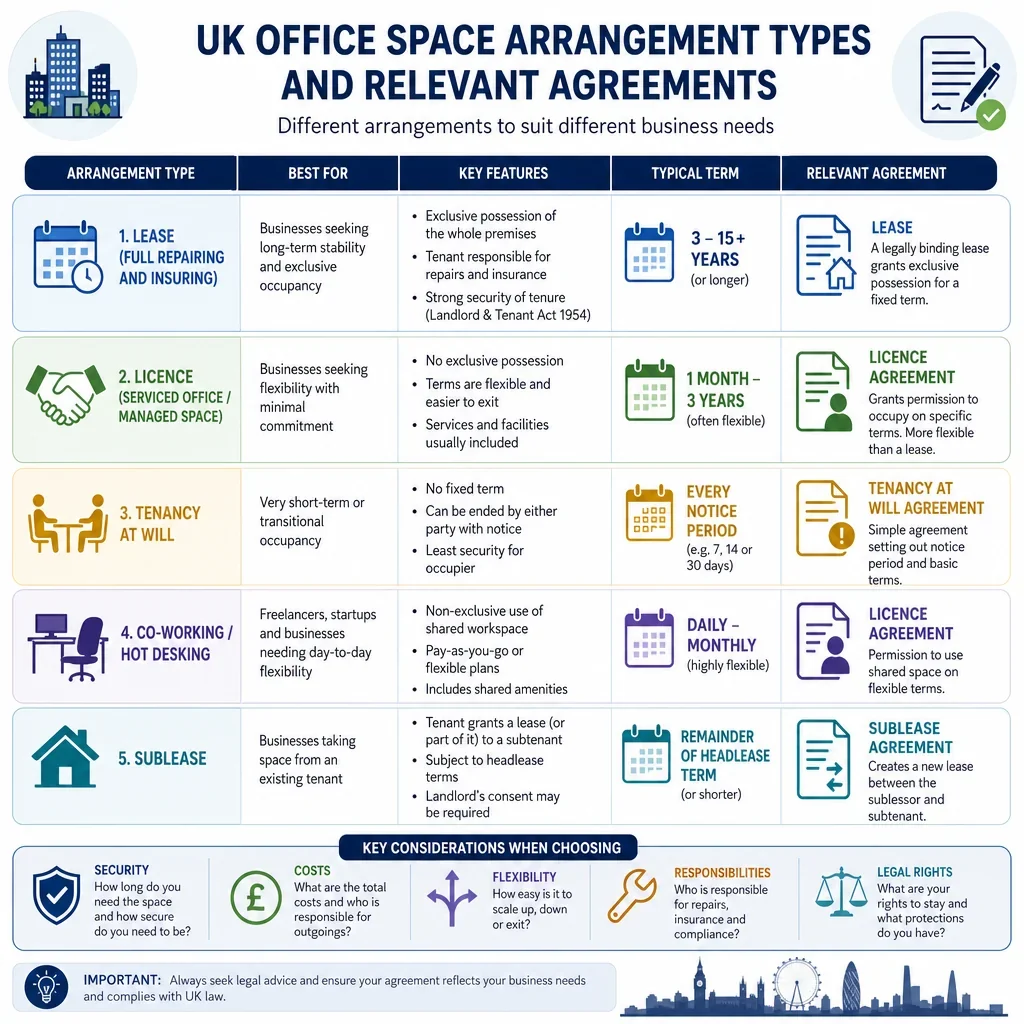
UK Office Lease Agreement Clause Types
Clause Name | Clause Purpose | Typical Inclusion Frequency | Primary Party Affected | Common Considerations |
|---|---|---|---|---|
Rent and payments | ||||
Principal Rent | Sets the annual rent, payment dates and payment method for the office premises. | Usually included | Both parties | Quarterly or monthly payments, rent-free periods, arrears consequences and bank details. |
Rent Review | Allows rent to be adjusted at stated review dates during the lease term. | Often included | Both parties | Open market review, indexation, upwards-only terms, assumptions and dispute procedure. |
VAT On Rent And Payments | Requires VAT to be paid where the landlord has opted to tax the property. | Often included | Tenant | Whether VAT is chargeable, tax invoices, irrecoverable VAT and option to tax evidence. |
Service Charge | Requires the tenant to contribute to shared building or estate services and costs. | Usually included | Tenant | Budgeting, caps, exclusions, management fees, sinking funds and annual accounts. |
Insurance and risk | ||||
Insurance Rent | Requires the tenant to reimburse the landlord for building insurance premiums. | Usually included | Tenant | Insured risks, exclusions, excesses, premium reasonableness and terrorism cover. |
Rent and payments | ||||
Rent Deposit | Provides security for rent arrears or other tenant breaches. | Sometimes included | Both parties | Amount, release conditions, interest, insolvency protection and top-up obligations. |
Interest On Late Payments | Applies interest to overdue rent, service charge or other sums. | Usually included | Tenant | Rate above base rate, grace period, compounding and statutory late payment rights. |
Default Costs And Enforcement Expenses | Requires the defaulting tenant to pay landlord costs caused by breach or enforcement. | Usually included | Tenant | Reasonable legal fees, surveyor fees, administration charges and evidence of loss. |
Use of premises | ||||
Permitted Use | Limits the premises to office or other agreed business uses. | Usually included | Tenant | Planning use class, hybrid working, client visits, ancillary uses and change of use consent. |
Compliance and legal obligations | ||||
Planning Law Compliance | Requires occupation and works to comply with planning law and permissions. | Usually included | Tenant | Lawful use, listed building controls, planning conditions and responsibility for consents. |
Use of premises | ||||
Nuisance And Disturbance | Prevents activities that disturb neighbours, other occupiers or the landlord. | Usually included | Both parties | Noise, odours, deliveries, events, out-of-hours use and complaints handling. |
Landlord controls | ||||
Signage And Branding | Controls tenant signs, nameplates, branding and external displays. | Often included | Tenant | Landlord consent, planning consent, building style, removal and reinstatement. |
Use of premises | ||||
Access Rights And Hours | Defines when and how the tenant may access the office and common parts. | Often included | Tenant | 24-hour access, security passes, lifts, reception, loading bays and emergency access. |
Use Of Common Parts | Regulates shared areas such as entrances, corridors, lifts, toilets and car parks. | Usually included | Both parties | Rights reserved, cleaning standards, obstruction, security, deliveries and landlord regulations. |
Car Parking Spaces | Grants and regulates use of allocated or shared parking spaces. | Sometimes included | Tenant | Numbered spaces, licence or lease right, EV charging, visitor parking and charges. |
Maintenance and repairs | ||||
Tenant Repairing Obligations | Sets the tenant's duty to repair and keep the premises in required condition. | Usually included | Tenant | Full repairing lease, internal-only repair, fair wear, inherent defects and schedule of condition. |
Landlord Repairing Obligations | Requires the landlord to repair retained structure, common parts or service media. | Often included | Landlord | Recoverability via service charge, response times, structural defects and excluded damage. |
Decoration And Redecoration | Requires the premises to be decorated at stated intervals and at lease end. | Often included | Tenant | Frequency, colours, professional standard, final year decoration and landlord approval. |
Tenant protections | ||||
Schedule Of Condition | Limits repair liability by recording the premises' condition at lease start. | Sometimes included | Tenant | Photographs, surveyor input, annexing to lease and wording linking repair duty. |
Landlord controls | ||||
Alterations And Fit-Out Works | Controls structural and non-structural changes, fit-out works and installations. | Usually included | Tenant | Consent standard, licence for alterations, reinstatement, building regulations and contractor rules. |
Maintenance and repairs | ||||
Reinstatement At Lease End | Requires removal of tenant works and restoration before yielding up. | Often included | Tenant | Notice timing, agreed exclusions, cost of strip-out, data cabling and partitions. |
Termination and renewal | ||||
Yielding Up | Sets the condition and process for returning the premises at lease expiry. | Usually included | Both parties | Vacant possession, keys, reinstatement, cleaning, tenant goods and dilapidations claims. |
Maintenance and repairs | ||||
Dilapidations | Deals with claims for disrepair, reinstatement and end-of-term breaches. | Often included | Both parties | Terminal schedule, quantified demand, section 18 cap and settlement timing. |
Insurance and risk | ||||
Landlord Building Insurance | Requires the landlord to insure the building against agreed insured risks. | Usually included | Landlord | Insured risks, terrorism, policy terms, uninsured risks and tenant acts invalidating cover. |
Tenant Contents And Business Insurance | Requires tenant to insure its contents, equipment, stock and business risks. | Often included | Tenant | Public liability, employer liability, contents, interruption cover and policy evidence. |
Rent Suspension After Damage | Suspends rent if insured damage makes the office unusable. | Usually included | Tenant | Extent of unfitness, suspension period, uninsured damage and service charge treatment. |
Uninsured And Uninsurable Risks | Allocates responsibility where damage is not covered or insurance is unavailable. | Sometimes included | Both parties | Repair obligation, termination right, market availability and landlord discretion. |
Tenant Indemnity | Protects the landlord against losses caused by tenant breach, acts or occupation. | Usually included | Tenant | Scope, negligence, third-party claims, consequential loss and insurance overlap. |
Limitation Of Landlord Liability | Limits landlord responsibility for tenant losses except where legally unavoidable. | Often included | Tenant | Negligence carve-outs, death or injury, service failures and statutory reasonableness. |
Termination and renewal | ||||
Tenant Break Option | Gives the tenant a contractual right to end the lease early. | Sometimes included | Tenant | Notice deadline, vacant possession, rent payment, compliance conditions and refund rights. |
Landlord Break Option | Gives the landlord a contractual right to end the lease early. | Situation-specific | Landlord | Redevelopment plans, compensation, notice period and interaction with security of tenure. |
Forfeiture And Re-Entry | Allows landlord to terminate for non-payment, insolvency or serious breach. | Usually included | Landlord | Section 146 notice, waiver, relief from forfeiture and peaceable re-entry risk. |
Security Of Tenure Status | States whether the lease is protected by or contracted out of the 1954 Act. | Usually included | Both parties | Warning notice, tenant declaration, renewal rights, contracting-out timing and statutory notices. |
Renewal Procedure | Sets any contractual or statutory process for lease renewal discussions. | Sometimes included | Both parties | 1954 Act notices, renewal rent, opposition grounds and timetable for court application. |
Holding Over | Deals with continued occupation after contractual expiry. | Sometimes included | Both parties | Protected tenancy, tenancy at will, rent payments and prejudice to redevelopment plans. |
Landlord controls | ||||
Assignment | Controls transfer of the lease to another occupier. | Usually included | Both parties | Landlord consent, financial strength, authorised guarantee agreement and group transfers. |
Underletting | Controls the tenant's ability to grant a sublease of all or part. | Often included | Tenant | Whole or part, underlease rent, excluded security, direct covenants and consent conditions. |
Use of premises | ||||
Sharing Occupation | Allows or restricts occupation by group companies, contractors or flexible desk users. | Often included | Tenant | Group companies, serviced office use, confidentiality, no tenancy creation and notice to landlord. |
Landlord controls | ||||
Charging The Lease | Restricts granting security over the lease to a lender. | Sometimes included | Tenant | Lender consent, registration, landlord notice and enforcement by mortgagee. |
Tenant protections | ||||
Landlord Consent Procedure | Sets how applications for consent are made and decided. | Often included | Both parties | Reasonable time, written reasons, information required and landlord professional costs. |
Compliance and legal obligations | ||||
Compliance With Laws | Requires tenant to comply with laws affecting occupation and use of the premises. | Usually included | Tenant | Health and safety, planning, licensing, employment duties and cost allocation. |
Health And Safety Compliance | Allocates duties for safe workplace use and occupation. | Usually included | Both parties | Risk assessments, contractors, accident reporting, common areas and shared duties. |
Fire Safety Duties | Allocates responsibility for fire precautions, risk assessments and emergency procedures. | Usually included | Both parties | Responsible person, alarms, evacuation routes, fire doors, drills and tenant fit-out impact. |
Building Safety Compliance | Addresses duties for higher-risk or regulated buildings and safety information. | Situation-specific | Both parties | Higher-risk building status, information requests, alterations, safety cases and cost recovery. |
Asbestos Management | Allocates duties for asbestos surveys, records and safe works. | Often included | Both parties | Dutyholder, asbestos register, refurbishment surveys, contractor controls and cost responsibility. |
EPC And Minimum Energy Efficiency Standards | Ensures the office can lawfully be let and occupied under energy efficiency rules. | Often included | Landlord | EPC rating, MEES exemptions, improvement works, data sharing and tenant alterations. |
Environmental Obligations | Prevents contamination, pollution and environmentally harmful use of the premises. | Sometimes included | Tenant | Waste storage, hazardous materials, cleaning chemicals, contamination indemnity and reporting duties. |
Accessibility And Equality Adjustments | Addresses reasonable adjustments and accessibility duties affecting office occupation. | Sometimes included | Both parties | Access routes, lifts, signage, shared areas, landlord consent and who pays for works. |
Rent and payments | ||||
Utilities And Metering | Allocates payment and responsibility for electricity, water, gas, heating and telecoms. | Usually included | Tenant | Separate meters, recharge basis, data cabling, outages, green tariffs and capacity. |
Maintenance and repairs | ||||
Landlord Services | Lists services the landlord provides to the building or estate. | Usually included | Landlord | Cleaning, security, lifts, HVAC, reception, service standards and interruption remedies. |
Heating Cooling And Ventilation | Allocates responsibility for HVAC plant, servicing and operating hours. | Often included | Both parties | Maintenance contracts, comfort cooling, after-hours charges, capacity and replacement costs. |
Landlord controls | ||||
Landlord Entry Rights | Allows landlord access for inspection, repair, valuation, letting or compliance checks. | Usually included | Landlord | Notice, emergencies, business disruption, confidentiality and security protocols. |
Building Regulations And Estate Rules | Requires compliance with reasonable rules for the building or estate. | Often included | Tenant | Reasonableness, notice of changes, conflict with lease and operational restrictions. |
Compliance and legal obligations | ||||
Superior Lease Compliance | Requires compliance with obligations in any superior lease affecting the premises. | Situation-specific | Tenant | Copy of superior lease, consent chains, head landlord rights and breach risk. |
Tenant protections | ||||
Quiet Enjoyment | Promises tenant can occupy without unlawful interference by the landlord. | Usually included | Tenant | Landlord works, access rights, service interruptions and neighbouring occupier disturbance. |
Non-Derogation From Grant | Prevents landlord actions that substantially undermine the rights granted to tenant. | Sometimes included | Tenant | Development works, access obstruction, visibility, noise and loss of essential rights. |
Landlord controls | ||||
Landlord Development And Works Rights | Reserves landlord rights to alter, develop or repair adjoining and retained property. | Often included | Landlord | Disruption, scaffolding, access, rent abatement, consultation and quiet enjoyment limits. |
Rights Reserved To Landlord | Lists rights kept by the landlord over the building, estate or service media. | Usually included | Landlord | Entry, conduits, support, scaffolding, relocation of services and disruption limits. |
Tenant protections | ||||
Rights Granted To Tenant | Identifies rights needed for occupation, access, services and use of common facilities. | Usually included | Tenant | Access routes, service media, toilets, lifts, cycle storage, bins and escape routes. |
Compliance and legal obligations | ||||
Notices | Sets how formal notices under the lease must be served. | Usually included | Both parties | Service address, email use, deemed receipt, break notices and statutory notice compatibility. |
Land Registry Registration | Requires registration of registrable leases and protection of relevant interests. | Situation-specific | Tenant | Lease term over seven years, priority searches, notices, restrictions and evidence to landlord. |
Rent and payments | ||||
Stamp Duty Land Tax | Allocates responsibility for SDLT returns and payment on the lease. | Often included | Tenant | Net present value, premium, filing deadline, linked leases and rent review adjustments. |
Legal And Professional Costs | Allocates responsibility for costs of grant, licences, consents and enforcement. | Often included | Both parties | Each side pays own costs, landlord consent fees, abortive costs and VAT. |
Guarantor Obligations | Requires a guarantor to support tenant obligations under the lease. | Sometimes included | Third parties | Guarantor covenant strength, indemnity wording, duration, release and replacement guarantor. |
Landlord controls | ||||
Authorised Guarantee Agreement | Requires outgoing tenant to guarantee the assignee after permitted assignment. | Often included | Tenant | When required, assignee strength, duration, guarantor participation and 1995 Act limits. |
Termination and renewal | ||||
Tenant Insolvency Events | Defines insolvency events triggering landlord remedies or forfeiture rights. | Usually included | Landlord | Administration, liquidation, CVA, moratorium restrictions and rent deposit drawdown. |
Rent and payments | ||||
Commercial Rent Arrears Recovery | References statutory enforcement for recovering unpaid commercial rent from goods. | Sometimes included | Landlord | Pure rent only, notice requirements, enforcement agent use and subtenant notices. |
Use of premises | ||||
Telecommunications And Data Cabling | Controls installation, maintenance and removal of communications equipment and cabling. | Often included | Tenant | Wayleaves, riser access, fibre providers, server rooms, reinstatement and landlord approval. |
Landlord controls | ||||
Electronic Communications Code Restrictions | Prevents unintended telecoms code rights arising from tenant equipment arrangements. | Situation-specific | Landlord | Operator agreements, rooftop equipment, wayleaves, sharing and removal rights. |
Compliance and legal obligations | ||||
Confidentiality | Restricts disclosure of lease terms, building information or commercial discussions. | Sometimes included | Both parties | Permitted disclosures to advisers, lenders, group companies, regulators and Land Registry. |
Data Protection And Building Access Data | Regulates personal data handled through access systems, CCTV or visitor logs. | Sometimes included | Both parties | Controller roles, CCTV notices, access cards, visitor data and security incident reporting. |
No Partnership Or Agency | Confirms the lease does not create a partnership, agency or joint venture. | Sometimes included | Both parties | Useful for serviced office, management services or shared occupation arrangements. |
Entire Agreement | Limits reliance on pre-contract statements not included in the lease documents. | Often included | Both parties | Replies to enquiries, misrepresentation carve-outs, plans, specifications and side letters. |
Dispute Resolution | Sets process for resolving valuation, rent review or lease disputes. | Often included | Both parties | Expert determination, arbitration, court, RICS appointment and cost allocation. |
Governing Law And Jurisdiction | Confirms the law and courts governing the office lease. | Usually included | Both parties | England and Wales, Scotland or Northern Ireland law and forum selection. |
Tenant protections | ||||
Plans And Demise Description | Identifies the exact premises, included areas and excluded retained parts. | Usually included | Both parties | Lease plan accuracy, measurement, floor areas, roof voids, plant rooms and boundaries. |
Rent and payments | ||||
Floor Area Measurement | Records the basis used to measure office area for rent and service charge. | Sometimes included | Both parties | NIA, GIA, IPMS, measurement tolerances and impact on rent per square foot. |
Tenant protections | ||||
Side Letter Terms | Records personal concessions such as rent discounts, caps or temporary variations. | Situation-specific | Both parties | Personal to tenant, termination on breach, confidentiality and interaction with lease. |
Compliance and legal obligations | ||||
Green Lease Obligations | Encourages energy efficiency, emissions reduction and environmental data sharing. | Sometimes included | Both parties | Energy data, improvement works, cost sharing, EPC protection and sustainability targets. |
Waste Management | Controls storage, separation, collection and disposal of business waste. | Often included | Tenant | Duty of care, recycling rules, confidential waste, bins, collection times and charges. |
Use of premises | ||||
Keys Access Cards And Security | Regulates keys, access cards, alarms and building security arrangements. | Often included | Both parties | Lost cards, visitor access, alarm codes, CCTV, locksmith consent and emergency contacts. |
Animals And Assistance Dogs | Restricts animals while accommodating legal duties for assistance dogs where relevant. | Sometimes included | Tenant | Pet-friendly workplace policy, allergies, damage, nuisance and reasonable adjustments. |
Compliance and legal obligations | ||||
Hazardous Materials | Restricts storage or use of dangerous substances in an office environment. | Often included | Tenant | Cleaning products, batteries, server equipment, COSHH assessments and fire risk. |
Maintenance and repairs | ||||
Lift Use And Maintenance | Allocates responsibilities for lift use, inspections and service interruptions. | Sometimes included | Landlord | LOLER inspections, goods restrictions, outages, service charge and accessibility impact. |
Plant And Machinery | Regulates use, maintenance and safety of plant serving the premises. | Sometimes included | Both parties | Ownership, servicing, statutory inspections, replacement costs and tenant misuse. |
Tenant protections | ||||
Directory Board Listing | Gives tenant a right to display its name on building directories. | Sometimes included | Tenant | Branding style, landlord approval, cost, changes of name and removal at expiry. |
Building Naming Rights | Grants or restricts rights to name the building or floors after the tenant. | Situation-specific | Tenant | Anchor tenant status, duration, exclusivity, signage, planning and rebranding costs. |
Exclusivity Of Use | Restricts landlord from letting other space for competing uses where agreed. | Situation-specific | Landlord | Competition law risk, scope of competing business, remedies and building mix. |
Landlord controls | ||||
Relocation Or Substitution Space | Allows landlord to move tenant to alternative space within the building or estate. | Situation-specific | Both parties | Equivalent space, rent adjustment, moving costs, business disruption and notice period. |
Termination and renewal | ||||
Contractual Option To Renew | Gives tenant a contractual right to take a further lease on agreed terms. | Situation-specific | Tenant | Exercise notice, renewal rent, conditions, 1954 Act overlap and registration protection. |
Tenant protections | ||||
Option Or Right Of First Refusal To Buy | Gives tenant rights to buy the property if agreed conditions are met. | Situation-specific | Tenant | Trigger events, price mechanism, registration, time limits and tax consequences. |
Rent and payments | ||||
Rent-Free Period | Records an agreed period when principal rent is not payable. | Often included | Tenant | Fit-out period, clawback on early termination, service charge and insurance rent exclusion. |
Turnover Or Performance Rent | Links part of rent to tenant turnover or performance metrics. | Situation-specific | Both parties | Rare for offices, audit rights, confidential accounts, calculation exclusions and minimum rent. |
Tenant protections | ||||
Rent Abatement For Service Failure | Reduces rent or service charge if essential services are unavailable. | Situation-specific | Tenant | Trigger period, essential services, exclusions, landlord fault and measurement of loss. |
Insurance and risk | ||||
Public Health Closure And Emergency Restrictions | Allocates risk if public health rules restrict office access or occupation. | Situation-specific | Both parties | Rent suspension, service charge, force majeure, business interruption and access protocols. |
Force Majeure | Addresses delay or non-performance caused by events outside party control. | Sometimes included | Both parties | Rarely excuses rent, covers works delays, notice requirements and mitigation duties. |
Rent and payments | ||||
Landlord Fit-Out Contribution | Records any landlord payment or works contribution toward tenant fit-out. | Situation-specific | Both parties | Payment milestones, VAT, evidence of spend, clawback and specification approval. |
Maintenance and repairs | ||||
Landlord Works Specification | Sets any landlord works required before lease completion or occupation. | Situation-specific | Landlord | Practical completion, snagging, longstop date, rent commencement and warranties. |
Tenant protections | ||||
Collateral Warranties And Third-Party Rights | Provides rights against contractors or consultants for relevant building or fit-out works. | Situation-specific | Third parties | Reliance rights, step-in rights, limitation periods and exclusion of third-party rights. |
What Clauses Matter Most In A UK Office Lease Agreement?
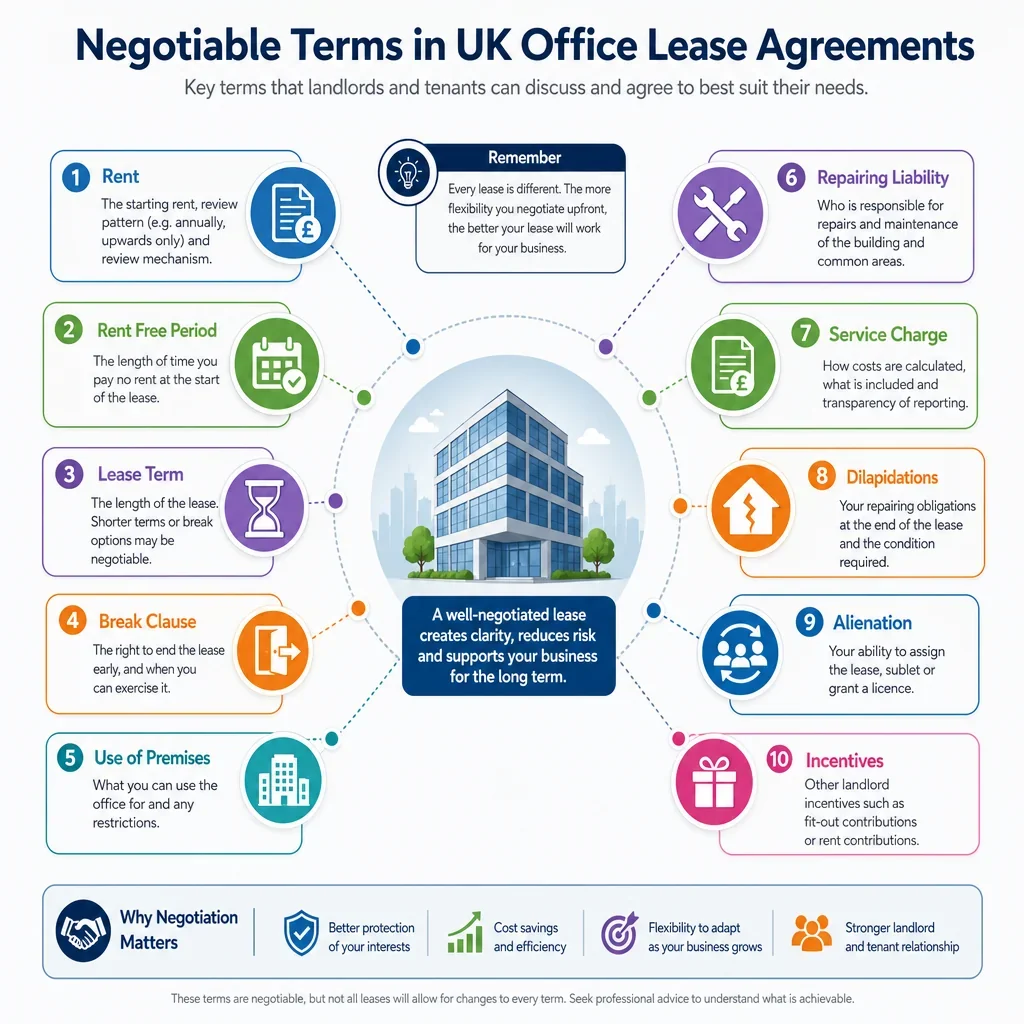
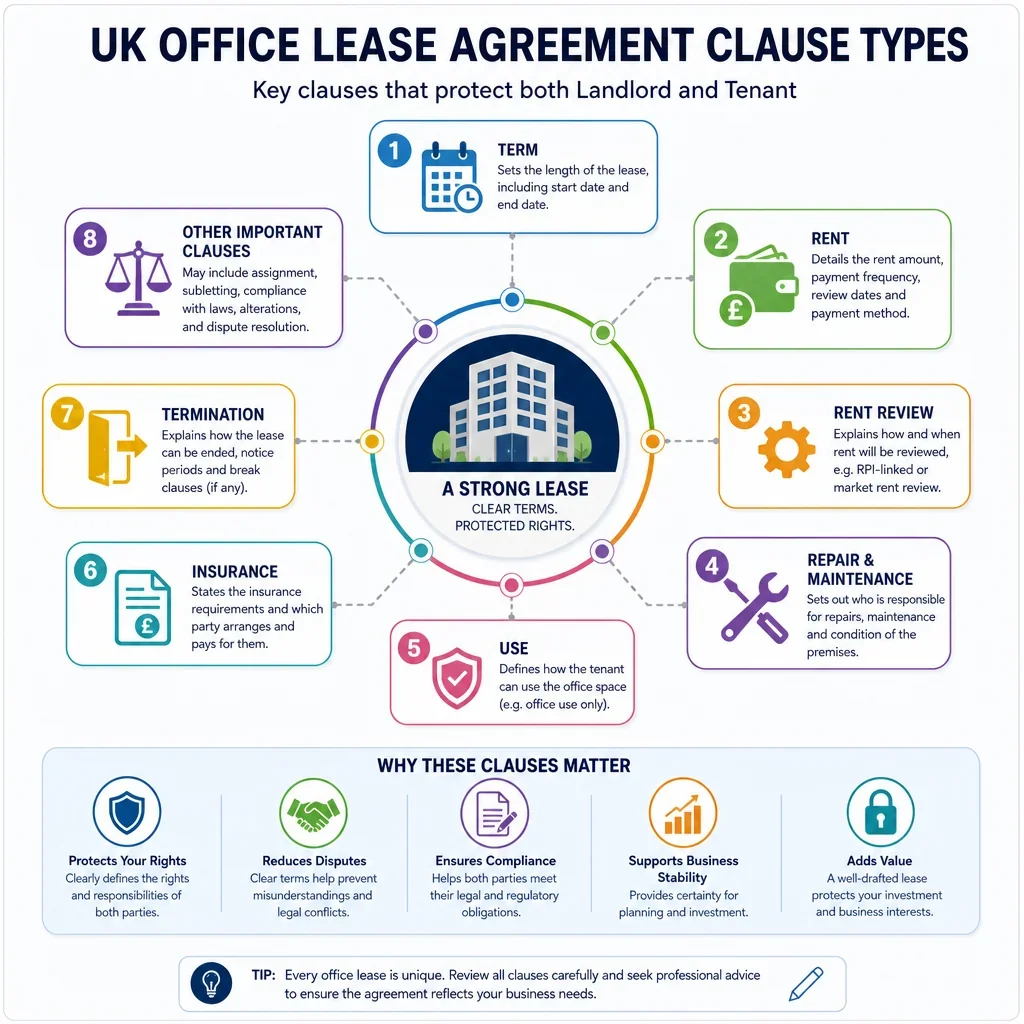
UK office leases usually combine commercial terms, property controls and statutory compliance duties. The most important clauses for tenants to review early are rent, rent review, service charge, repair, insurance, break rights, assignment, alterations and permitted use, because these provisions usually determine the real cost and flexibility of the occupation.
Why Are Repair And Service Charge Clauses High Risk?
A tenant can take on substantial liabilities through a full repairing obligation, service charge machinery or a schedule of condition. Office occupiers should check whether the repairing duty is limited to the condition at lease start, whether structural repairs are excluded, and whether service charge costs are capped, audited or limited to reasonable office building costs.
Which Clauses Are Most Affected By UK Law?
Several common office lease clauses interact with specific UK legal regimes, including security of tenure under the Landlord and Tenant Act 1954, release from lease covenants under the Landlord and Tenant (Covenants) Act 1995, fire safety duties, equality and accessibility duties, building safety rules and energy performance requirements.
How Should Break Clauses And Renewal Rights Be Treated?
Break clauses should be drafted with precise notice dates, service methods and pre-conditions. Tenants should avoid conditions requiring full covenant compliance, because minor breaches can jeopardise the break. Renewal position should be clear: a lease may be inside the 1954 Act with statutory renewal protection, or contracted out using the prescribed warning notice and declaration process.
What Should Tenants Negotiate Before Signing?
- Cost certainty: rent review method, VAT, service charge cap, insurance rent and interest rates.
- Operational flexibility: permitted use, alienation, sharing occupation, alterations and signage rights.
- Exit protection: break rights, assignment conditions, dilapidations limits and reinstatement obligations.
- Compliance allocation: who handles EPC, MEES, fire safety, asbestos, access improvements and data infrastructure permissions.
FAQs
You Might Also Be Interested In