

Negotiable Terms In UK Office Lease Agreements
Created:
Understanding negotiable terms helps UK tenants and landlords shape fairer, clearer office lease agreements. This guide supports informed decisions and complements our AI Generated British Commercial Lease Agreement resources.
Lease Term | Meaning | Negotiation Importance | Typical Drafting Position | Practical Checkpoint |
|---|---|---|---|---|
Rent | ||||
Base rent | The main periodic rent payable for the office premises. | High | Balanced | Compare with local office market evidence and total occupancy cost. |
Rent payment dates | Dates on which rent must be paid, commonly quarterly in advance. | Medium | Landlord-favouring | Check cash-flow impact and whether monthly payments are allowed. |
Rent-free period | An agreed initial period when no base rent is payable. | High | Tenant-favouring | Confirm trigger dates, service charge liability and clawback provisions. |
Stepped rent | Rent increases by fixed amounts on specified dates. | Medium | Depends on drafting | Model the effective rent across the whole lease term. |
Turnover rent | Rent calculated partly by reference to business turnover. | Medium | Depends on drafting | Define turnover, exclusions, audit rights and confidentiality. |
Rent review mechanism | The method for changing rent during the lease term. | High | Landlord-favouring | Check review frequency, assumptions, disregards and dispute procedure. |
Open market rent review | Rent is reviewed to the market rent for comparable premises. | High | Depends on drafting | Scrutinise assumptions on term length, incentives and vacant possession. |
Upwards-only rent review | Rent can rise or stay the same but cannot fall at review. | High | Landlord-favouring | Consider caps, collars or indexation instead of open-ended growth. |
Index-linked rent review | Rent changes by reference to an index such as CPI or RPI. | High | Depends on drafting | Check index used, caps, collars, base month and substitution rules. |
Rent review cap and collar | Minimum and maximum rent changes at each review. | High | Balanced | Confirm whether percentages are annualised or per review period. |
Default interest | Interest charged on overdue rent or other lease sums. | Medium | Landlord-favouring | Check the rate, grace period and compounding wording. |
VAT on rent | Whether VAT is charged on rent following an option to tax. | High | Landlord-favouring | Confirm VAT status and ability to recover input tax. |
Deposit | ||||
Rent deposit amount | Security sum held by the landlord against tenant default. | High | Landlord-favouring | Negotiate amount, release triggers and separate account arrangements. |
Deposit release trigger | Events requiring the landlord to return the rent deposit. | High | Depends on drafting | Tie release to trading history, accounts or assignment completion. |
Deposit drawdown rights | The landlord's right to use the deposit after tenant default. | Medium | Landlord-favouring | Require prior notice and a reasonable time to remedy. |
Deposit top-up obligation | Tenant must restore the deposit after lawful landlord withdrawals. | Medium | Landlord-favouring | Check top-up deadline and whether disputed sums are excluded. |
Interest on rent deposit | Interest earned on the deposit and who receives it. | Low | Depends on drafting | Confirm account type, tax treatment and interest ownership. |
Lease duration | ||||
Lease term length | The fixed period for which the office lease is granted. | High | Balanced | Match term length to business plan, fit-out cost and exit options. |
Lease commencement date | The date the lease term legally starts. | Medium | Balanced | Align start date with access, works, licences and rent commencement. |
Contractual expiry date | The date the fixed lease term ends unless renewed or extended. | Medium | Balanced | Diary expiry, repair obligations and statutory renewal deadlines. |
Security of tenure | Statutory right to remain and seek renewal under the 1954 Act. | High | Tenant-favouring | Check if the lease is inside or contracted out of the 1954 Act. |
Contracting out | Excluding statutory renewal rights before the lease is granted. | High | Landlord-favouring | Ensure warning notice, declaration and lease wording are completed correctly. |
Holding over | Occupation after expiry, potentially under statutory or implied rights. | Medium | Depends on drafting | Clarify rent, status and renewal position before expiry. |
Break rights | ||||
Tenant break option | Tenant's contractual right to end the lease early. | High | Tenant-favouring | Check break date, notice period, conditions and service method. |
Landlord break option | Landlord's contractual right to end the lease early. | High | Landlord-favouring | Assess business disruption, relocation costs and compensation position. |
Mutual break option | Either party can terminate early on agreed conditions. | High | Balanced | Ensure both parties have clear, workable notice rules. |
Break notice period | Minimum advance notice needed to exercise a break right. | High | Depends on drafting | Diary the latest service date and permitted notice methods. |
Break conditions | Requirements that must be met for early termination to work. | High | Landlord-favouring | Avoid conditions beyond rent payment, vacant possession and key return. |
Break premium | Payment required to exercise an early termination right. | Medium | Landlord-favouring | Check amount, payment deadline and VAT treatment. |
Repairs | ||||
Repairing obligation | Tenant's duty to keep or put premises in repair. | High | Landlord-favouring | Limit duty by condition, age, inherent defects and common parts. |
Full repairing and insuring lease | Tenant bears repair and insurance cost, directly or through service charge. | High | Landlord-favouring | Check whether liability includes structure, roof and historic disrepair. |
Internal repairing obligation | Tenant repairs only the internal parts of the office demise. | High | Tenant-favouring | Define the demise and exclude structure, roof and common systems. |
Schedule of condition | Photographic or written record limiting repair obligations to existing condition. | High | Tenant-favouring | Attach it to the lease and make limitation wording explicit. |
Dilapidations | Claims for breach of repair, decoration or reinstatement obligations. | High | Landlord-favouring | Budget for terminal works and obtain surveyor advice early. |
Decoration obligation | Duty to redecorate at intervals and at lease end. | Medium | Landlord-favouring | Negotiate frequency, colours, materials and end-date requirements. |
Reinstatement of alterations | Requirement to remove tenant works and restore premises at lease end. | High | Landlord-favouring | Require landlord notice and exclude approved beneficial alterations where possible. |
Inherent defects exclusion | Excludes liability for defects in design, construction or materials. | High | Tenant-favouring | Seek exclusion for latent defects and resulting damage. |
Use and occupation | ||||
Statutory compliance covenant | Obligation to comply with laws affecting use and occupation. | High | Landlord-favouring | Allocate responsibility for building-wide compliance and capital works. |
Permitted use | The authorised use of the premises, such as office use. | High | Landlord-favouring | Ensure use matches planning, licences and future business flexibility. |
Planning use class | Planning classification controlling lawful property use. | High | Balanced | Confirm the lease use is lawful under planning use class rules. |
Hours of access | Times when the tenant can access and use the office. | Medium | Depends on drafting | Check 24/7 access, HVAC availability and out-of-hours charges. |
Common parts rights | Rights to use shared entrances, lifts, stairs and facilities. | High | Balanced | Confirm rights are sufficient and cannot be unreasonably interrupted. |
Parking rights | Rights to use allocated or shared car parking spaces. | Medium | Depends on drafting | Check exclusivity, number of spaces, charges and relocation rights. |
Signage rights | Permission to display business names or signs at the building. | Medium | Landlord-favouring | Check landlord consent, planning consent and building branding rules. |
Alterations consent | Rules controlling tenant fit-out and physical changes. | High | Landlord-favouring | Permit non-structural internal works with consent not unreasonably withheld. |
Fit-out period | Time allowed for tenant works before trading or full occupation. | High | Tenant-favouring | Align with rent-free period, licences, contractors and completion dates. |
Landlord works obligation | Landlord's obligation to complete works before or after lease grant. | High | Tenant-favouring | Specify works, standards, deadlines, remedies and access arrangements. |
Quiet enjoyment | Tenant's right to occupy without unlawful landlord interference. | Medium | Tenant-favouring | Check reservations allow access only on notice and for proper purposes. |
Landlord access rights | Landlord rights to enter for inspection, repair or management. | Medium | Landlord-favouring | Require reasonable notice, emergencies exception and minimal disruption. |
Service charge | ||||
Service charge liability | Tenant contribution to shared building and estate costs. | High | Landlord-favouring | Review budget, exclusions, apportionment and management fee. |
Service charge cap | Maximum service charge payable by the tenant in a period. | High | Tenant-favouring | Check cap amount, indexation, exclusions and cumulative carry-forward. |
Service charge exclusions | Costs the landlord cannot recover through service charge. | High | Tenant-favouring | Exclude improvements, voids, enforcement costs and historic defects. |
Service charge apportionment | Method for calculating the tenant's share of shared costs. | High | Depends on drafting | Confirm percentage, floor area basis and landlord discretion. |
Reserve fund contributions | Payments set aside for future major works or replacements. | Medium | Landlord-favouring | Check refund rights, accounting, purpose and expected expenditure. |
Service charge audit rights | Tenant rights to inspect accounts and challenge charges. | Medium | Tenant-favouring | Negotiate certification, accounts, supporting documents and challenge period. |
Assignment and subletting | ||||
Assignment consent | Rules for transferring the whole lease to another tenant. | High | Landlord-favouring | Seek consent not unreasonably withheld and clear approval conditions. |
Authorised guarantee agreement | Outgoing tenant guarantee of assignee obligations after assignment. | High | Landlord-favouring | Limit AGA requirement to reasonable financial-risk circumstances. |
Group company occupation | Permission for related companies to occupy without formal assignment. | Medium | Tenant-favouring | Ensure sharing is permitted without creating a tenancy. |
Underletting consent | Rules for granting a sublease of all or part of the office. | High | Landlord-favouring | Check whether part underletting is allowed and on what terms. |
Sharing occupation | Allowing others to use the office without transferring the lease. | Medium | Depends on drafting | Permit contractors, group companies and flexible working users where needed. |
Consent response timescale | Time within which landlord must respond to consent applications. | Medium | Tenant-favouring | Include deemed refusal or escalation rules and required information list. |
Insurance | ||||
Insured risks | Risks covered by the landlord's buildings insurance policy. | High | Landlord-favouring | Review exclusions, excesses, terrorism cover and uninsured risk wording. |
Insurance rent | Tenant reimbursement of landlord's insurance premium and related costs. | High | Landlord-favouring | Check allocation, commission, excesses and policy evidence rights. |
Rent suspension | Rent stops or reduces if premises are unusable after insured damage. | High | Tenant-favouring | Check trigger, duration, partial damage and uninsured risks. |
Damage termination right | Right to end lease if damage is not reinstated in time. | High | Balanced | Negotiate longstop date, notice rights and rent suspension continuation. |
Uninsured risks | Risks not covered because insurance is unavailable or excluded. | High | Depends on drafting | Allocate repair, rent suspension and termination consequences clearly. |
Public liability insurance | Insurance for third-party injury or property damage claims. | Medium | Balanced | Check required cover level, insured parties and evidence obligations. |
Other | ||||
Forfeiture clause | Landlord right to terminate for tenant default, subject to legal limits. | High | Landlord-favouring | Check default triggers, grace periods and section 146 implications. |
CRAR enforcement | Statutory process for recovering commercial rent arrears from goods. | Medium | Landlord-favouring | Understand arrears thresholds and enforcement risk for business assets. |
Land Registry registration | Requirement to register leases granted for more than seven years. | Medium | Balanced | Check lease plan, prescribed clauses and registration responsibility. |
SDLT liability | Tenant tax liability on lease grant based on premium and rent. | Medium | Balanced | Calculate SDLT before completion and meet filing deadlines. |
Legal costs | Responsibility for each party's lease negotiation and completion costs. | Medium | Depends on drafting | Agree whether each party pays own costs or landlord costs are recoverable. |
Superior landlord consent | Consent needed from a head landlord before the lease or works proceed. | High | Depends on drafting | Make completion conditional on all superior consents being obtained. |
Lender consent | Mortgage lender approval required for lease grant or variations. | Medium | Depends on drafting | Confirm consent before completion to avoid title problems. |
Guarantor obligations | Third-party guarantee of tenant liabilities under the lease. | High | Landlord-favouring | Limit duration, liability cap and repeat guarantee obligations. |
Tenant indemnity | Tenant promise to reimburse landlord for specified losses or claims. | High | Landlord-favouring | Limit to tenant breach, negligence or occupation-related losses. |
Notice provisions | Rules for serving formal lease notices and communications. | High | Balanced | Check addresses, email exclusion, deemed service and break notice rules. |
Yielding up | Tenant obligations when returning the premises at lease end. | High | Landlord-favouring | Confirm cleaning, repair, reinstatement and removal requirements. |
EPC and MEES compliance | Energy performance rules affecting letting of commercial premises. | High | Depends on drafting | Check EPC rating, improvement obligations and cost allocation. |
Asbestos responsibility | Allocation of asbestos management duties for non-domestic premises. | High | Depends on drafting | Review asbestos register and allocate survey, works and management duties. |
Fire safety compliance | Duties relating to fire risk assessment and precautions. | High | Depends on drafting | Clarify responsible person duties for demise and common parts. |
Use and occupation | ||||
Telecoms and data cabling | Rights to install and use telecoms, fibre and data infrastructure. | High | Tenant-favouring | Secure wayleaves, riser access, installation rights and reinstatement limits. |
Service charge | ||||
Utilities and metering | Responsibility for electricity, water, gas, heat and metering charges. | Medium | Balanced | Check separate meters, recharging method and capacity for business use. |
Other | ||||
Business rates liability | Tenant liability for non-domestic rates on occupied premises. | High | Balanced | Check rateable value, reliefs and liability during fit-out or vacancy. |
Redevelopment rights | Landlord rights to carry out works or redevelopment affecting the building. | High | Landlord-favouring | Limit disruption, require notice and preserve access and services. |
Relocation clause | Landlord right to move tenant to alternative premises in the building. | High | Landlord-favouring | Require equivalent space, paid relocation costs and business disruption limits. |
Confidentiality clause | Restrictions on disclosing lease terms or commercial information. | Low | Depends on drafting | Allow disclosure to advisers, funders, auditors and legal authorities. |
Dispute resolution mechanism | Procedure for resolving rent review or lease disputes. | Medium | Balanced | Specify expert or arbitrator, appointment body and cost allocation. |
What Office Lease Terms Are Most Negotiable In The UK?
The most commercially sensitive terms are usually rent, rent review, break rights, repairing liability, service charge, alienation and permitted use. These provisions can materially change the cost, flexibility and risk profile of an office lease, even where the headline rent looks acceptable.
Why Should Tenants Focus On Repair, Service Charge And Break Clauses?
- Repairing obligations can expose a tenant to substantial end-of-term dilapidations, especially under a full repairing and insuring lease. A schedule of condition can limit that exposure if incorporated clearly.
- Service charge drafting should state what costs are recoverable, whether caps apply, and whether major works, improvements or void costs can be charged to the tenant.
- Break clauses should avoid strict conditions beyond rent payment, giving up occupation and returning keys, because technical conditions can make a break ineffective.
Which UK Legal Rules Should Be Checked Before Signing?
- Check whether the lease is inside or outside the Landlord and Tenant Act 1954, as this affects renewal rights and the tenant\'s security of tenure.
- For leases over seven years, consider Land Registry registration requirements and make sure the lease plan is compliant.
- If VAT is charged on rent or other sums, confirm the landlord\'s option to tax and budget for VAT on rent, service charge and insurance rent.
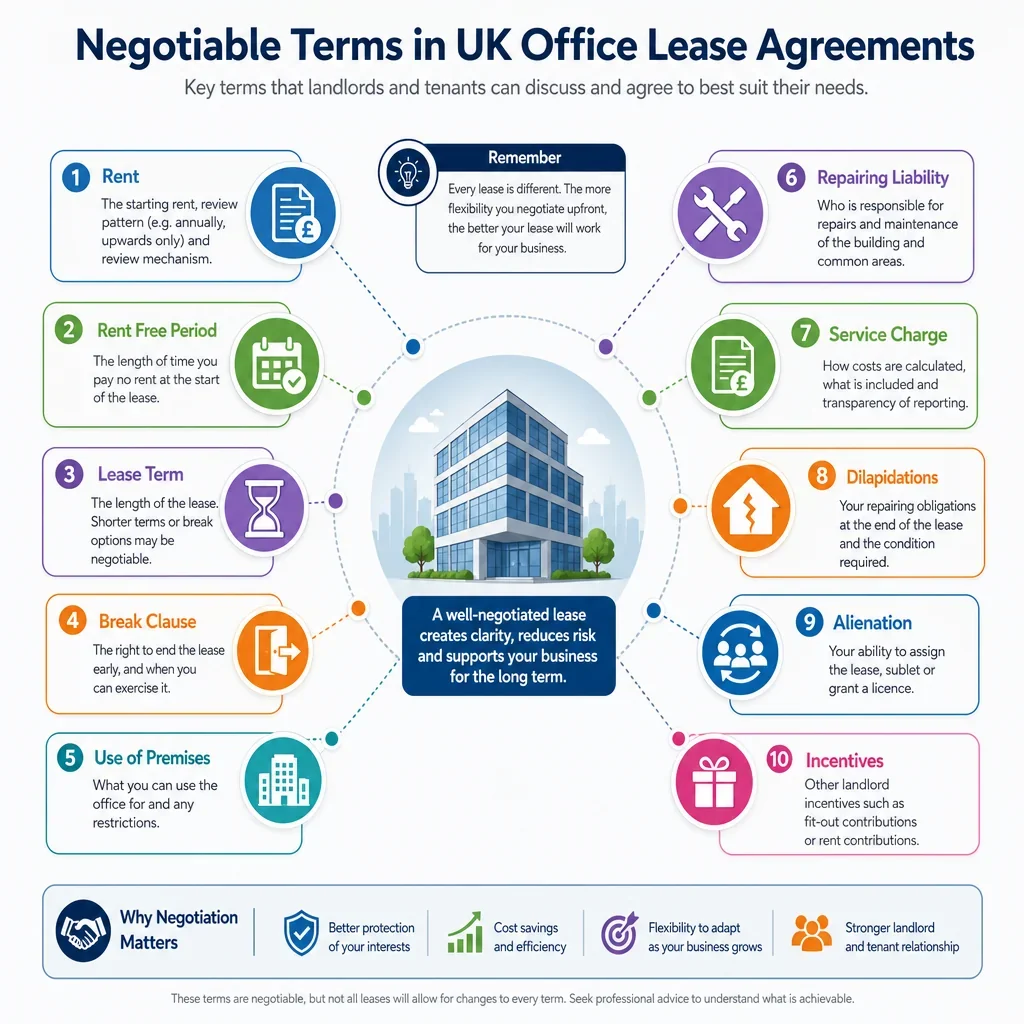
Want to Generate Your own Office Lease Agreement?
Docaro AI can help you write your own Office Lease Agreement for use in the United Kingdom in minutes.
FAQs
Often negotiable terms include rent, rent review, lease length, break clauses, repairing obligations, service charges, permitted use, assignment, subletting, rent-free periods, and security deposits.
Show All FAQs
You Might Also Be Interested In
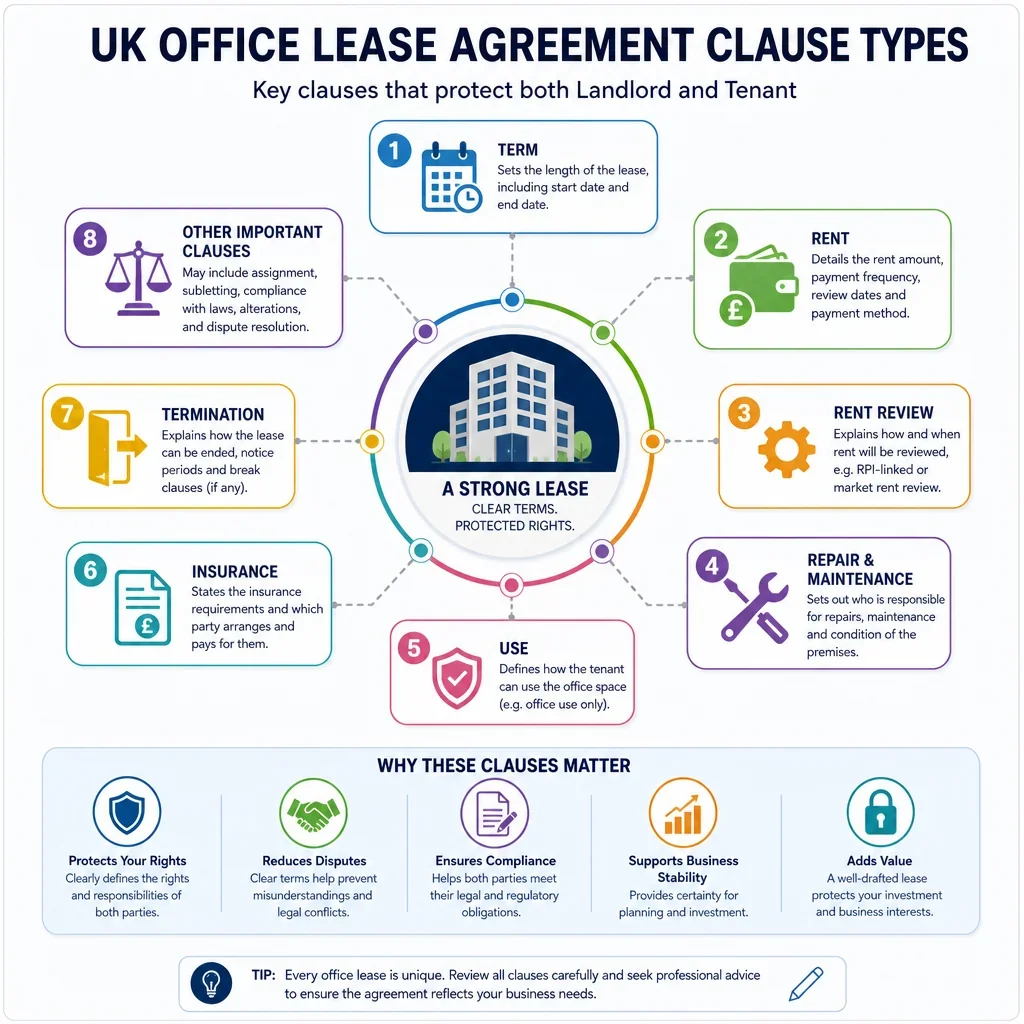
Learn key UK office lease agreement clause types and how they affect landlords, tenants, rent, repairs, and lease obligations.
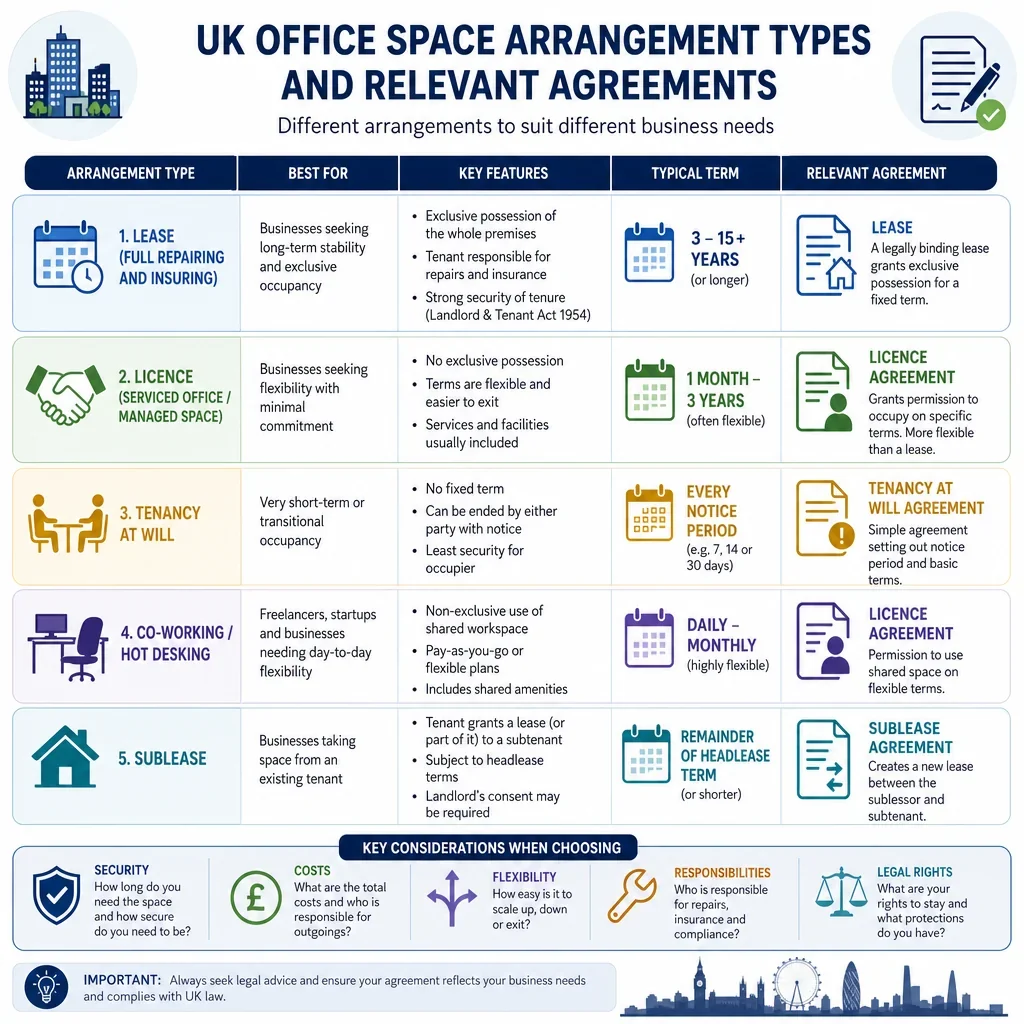
Explore UK office space types and relevant agreements to choose the right commercial lease or rental arrangement.