UK Dismissal Letter Scenarios
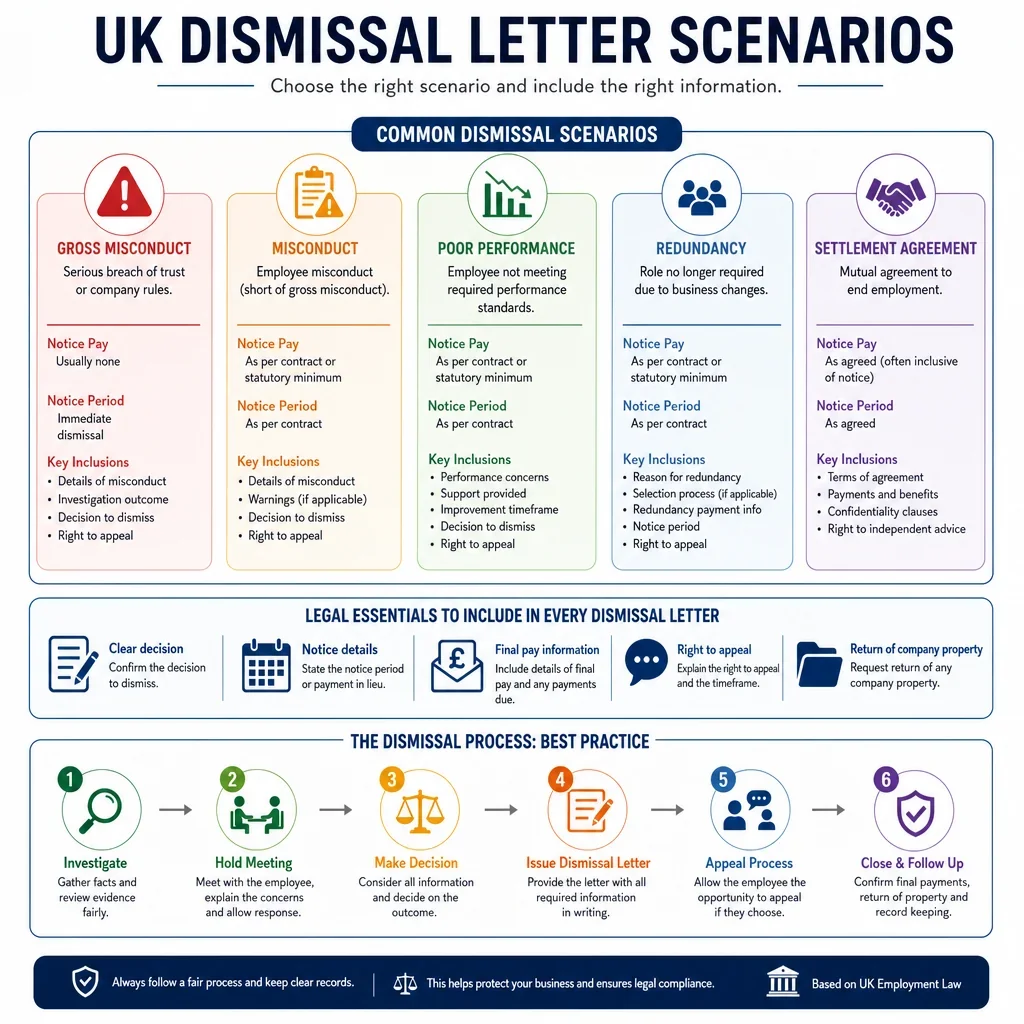
Scenario Name | When Used | Typical Letter Contents | Procedural Complexity |
|---|---|---|---|
Conduct | |||
Misconduct Dismissal After Final Warning | Used where repeated misconduct continues after prior warnings and a fair disciplinary process. | Allegations, findings, prior warnings, dismissal reason, notice, final pay, appeal right. | Medium |
Gross Misconduct Summary Dismissal | Used for very serious misconduct justifying dismissal without notice after investigation and hearing. | Gross misconduct findings, evidence summary, no notice or PILON, final pay, property return, appeal. | High |
Theft Or Fraud Dismissal | Used where evidence supports dishonesty, theft, fraud or deliberate financial misconduct. | Findings, evidence, policy breach, summary dismissal or notice, deductions if lawful, appeal. | High |
Violence Or Threatening Behaviour Dismissal | Used after serious workplace violence, threats, intimidation or abusive conduct. | Incident details, witness evidence, safety concerns, dismissal decision, notice position, appeal. | High |
Harassment Or Bullying Dismissal | Used where bullying or harassment allegations are upheld after disciplinary investigation. | Complaint findings, policy breach, seriousness, sanction rationale, confidentiality, appeal. | High |
Discriminatory Conduct Dismissal | Used where racist, sexist, homophobic or other discriminatory conduct is upheld. | Protected-characteristic context, findings, policy breach, sanction rationale, appeal. | High |
Serious Insubordination Dismissal | Used where an employee deliberately refuses reasonable instructions or undermines management authority. | Instruction refused, employee response, impact, findings, notice, final pay, appeal. | Medium |
Unauthorised Absence Dismissal | Used where unexplained absence persists or absence reporting rules are repeatedly breached. | Absence dates, contact attempts, reporting breach, findings, termination date, pay, appeal. | Medium |
Persistent Lateness Dismissal | Used where lateness continues despite warnings and reasonable opportunity to improve. | Lateness record, prior warnings, impact, dismissal reason, notice, appeal. | Medium |
Confidentiality Breach Dismissal | Used where an employee improperly discloses confidential business, client or personal data. | Disclosure details, contractual or policy duty, harm, sanction, ongoing confidentiality, appeal. | High |
Personal Data Breach Dismissal | Used after serious misuse, loss or unauthorised disclosure of personal data. | Breach facts, policy findings, regulatory impact, sanction, device return, appeal. | High |
Social Media Misconduct Dismissal | Used where online posts damage reputation, breach policy or harass colleagues. | Posts relied on, policy breach, reputational impact, findings, termination terms, appeal. | Medium |
Health And Safety Breach Dismissal | Used for serious or repeated breach of workplace safety rules. | Safety rule breached, risk created, evidence, training given, sanction, appeal. | High |
Alcohol Or Drugs Misconduct Dismissal | Used where intoxication or drug misuse creates misconduct or safety concerns. | Incident, testing or evidence, policy breach, safety impact, support considered, appeal. | High |
Conduct, Some Other Substantial Reason | |||
Criminal Charge Or Conviction Dismissal | Used where alleged criminal conduct affects role suitability, trust, reputation or legal compliance. | Known facts, employment impact, process followed, dismissal reason, notice, appeal. | High |
Capability or Performance | |||
Poor Performance Dismissal After Improvement Plan | Used where performance remains below required standard after warnings and support. | Performance standards, support offered, review history, findings, notice, appeal. | High |
Failed Performance Improvement Plan Dismissal | Used at the end of a PIP where measurable objectives were not met. | PIP targets, review dates, unmet objectives, alternatives considered, notice, appeal. | High |
Professional Competence Dismissal | Used where professional standards, accuracy or judgement remain inadequate after support. | Competence concerns, standards, training, assessments, risk, dismissal reason, appeal. | High |
Long-Term Sickness Capability Dismissal | Used where long-term absence prevents work and return is not reasonably foreseeable. | Medical evidence, consultation, adjustments, alternatives, dismissal reason, notice, appeal. | High |
Persistent Short-Term Absence Dismissal | Used where frequent absences cause unsustainable disruption after warnings and review. | Absence record, trigger points, support, warnings, impact, notice, appeal. | High |
Medical Capability Dismissal After Adjustments Considered | Used where health prevents role performance despite reasonable adjustments and consultation. | Medical advice, adjustments tried or rejected, redeployment options, notice, appeal. | High |
Capability or Performance, Some Other Substantial Reason | |||
Loss Of Essential Qualification Dismissal | Used where an employee can no longer hold a qualification required for the role. | Qualification requirement, loss details, alternatives considered, termination date, appeal. | Medium |
Loss Of Driving Licence Dismissal | Used where driving is essential and no suitable alternative work exists. | Licence requirement, disqualification details, redeployment considered, notice, appeal. | Medium |
Some Other Substantial Reason, Other | |||
Loss Of Right To Work Dismissal | Used where continued employment would breach UK right to work rules. | Right to work checks, evidence requested, illegality reason, termination date, pay, appeal. | High |
Capability or Performance, Some Other Substantial Reason | |||
Loss Of Professional Registration Dismissal | Used where regulatory registration needed for the role is suspended or removed. | Registration requirement, regulator decision, alternatives, dismissal reason, notice, appeal. | High |
Redundancy | |||
Individual Redundancy Dismissal | Used where one role is no longer needed after consultation and selection. | Redundancy reason, consultation summary, selection, alternatives, notice, redundancy pay, appeal. | High |
Collective Redundancy Dismissal | Used where 20 or more redundancies are proposed at one establishment within 90 days. | Collective consultation, selection outcome, notice, redundancy pay, support, appeal. | High |
Role Deletion Redundancy Dismissal | Used where a specific job disappears because the employer no longer needs that work done. | Business reason, consultation, role deletion, alternative roles, notice, redundancy pay, appeal. | High |
Workplace Closure Redundancy Dismissal | Used when a site, branch or workplace is closing or relocating beyond reasonable travel. | Closure reason, consultation, relocation or alternatives, notice, redundancy pay, appeal. | High |
Reduced Headcount Redundancy Dismissal | Used where fewer employees are needed to do the same or similar work. | Pool, scoring, consultation, alternatives, notice, redundancy pay, appeal. | High |
Bumping Redundancy Dismissal | Used where an employee is dismissed to make room for another displaced employee. | Reason for bumping, consultation, selection rationale, alternatives, payments, appeal. | High |
Redundancy, Mutual Agreement | |||
Voluntary Redundancy Acceptance Letter | Used to confirm accepted voluntary redundancy terms and employment end date. | Acceptance, leaving date, redundancy payment, notice, final pay, benefits, waiver limits. | Medium |
Probation, Capability or Performance | |||
Probation Failed Performance Dismissal | Used where a new employee does not meet standards during or at the end of probation. | Probation review, concerns, support, decision, notice, final pay, appeal if offered. | Medium |
Probation, Conduct | |||
Probation Misconduct Dismissal | Used where misconduct occurs during probation and dismissal is proportionate. | Misconduct findings, probation terms, notice position, final pay, appeal if offered. | Medium |
Probation, Some Other Substantial Reason | |||
Probation Suitability Dismissal | Used where attitude, fit or suitability concerns arise during probation. | Suitability concerns, review history, termination reason, notice, final pay, property return. | Low |
Probation, Other | |||
Short-Service Probation Termination | Used for early employment termination, avoiding automatically unfair or discriminatory reasons. | Termination date, notice, final pay, brief reason, benefits, property return. | Low |
Fixed-Term Contract | |||
Fixed-Term Contract Expiry Letter | Used where a fixed-term contract ends on its agreed expiry date and is not renewed. | Expiry date, non-renewal reason, final pay, holiday, property, appeal if applicable. | Low |
Fixed-Term Contract, Other | |||
Early Fixed-Term Contract Termination | Used when ending a fixed-term contract before expiry under a valid notice clause. | Contract clause, reason, notice or PILON, final pay, holiday, appeal if applicable. | Medium |
Fixed-Term Contract, Redundancy | |||
Project Completion Fixed-Term Non-Renewal | Used where the project or funding reason for the fixed-term role has ended. | Project end, non-renewal reason, alternatives, final pay, redundancy pay if eligible. | Medium |
Fixed-Term Contract, Some Other Substantial Reason | |||
Maternity Cover Fixed-Term End Letter | Used when temporary cover ends because the substantive postholder returns. | Cover arrangement, end date, reason, final pay, holiday, alternative roles considered. | Medium |
Mutual Agreement | |||
Settlement Agreement Termination Letter | Used to confirm termination under an agreed settlement agreement. | Agreement reference, termination date, payments, confidentiality, return of property, reference. | Medium |
Mutual Termination Agreement Confirmation | Used where employer and employee agree employment will end by consent. | Agreed end date, payments, benefits, handover, property, no-admission wording if relevant. | Low |
Other, Mutual Agreement | |||
Resignation Acceptance And Termination Confirmation | Used to acknowledge resignation and confirm leaving arrangements. | Resignation date, final working day, notice, final pay, holiday, property, handover. | Low |
Other | |||
Termination With Payment In Lieu Of Notice | Used where employment ends immediately and the employee receives contractual PILON. | Immediate end date, PILON amount, final pay, benefits end, tax, property return. | Low |
Termination With Garden Leave | Used where the employee remains employed during notice but is not required to work. | Notice period, garden leave duties, pay, benefits, contact rules, confidentiality, restrictions. | Low |
Termination With Statutory Minimum Notice | Used where contract notice is absent or shorter than statutory minimum notice. | Notice entitlement, termination date, pay during notice, final pay, holiday, appeal if relevant. | Low |
Capability or Performance, Other | |||
Frustration Of Contract Due To Incapacity | Used rarely where unforeseen incapacity makes employment impossible rather than merely difficult. | Medical position, impossibility rationale, adjustments considered, end date, payments, appeal stance. | High |
Some Other Substantial Reason | |||
Business Reorganisation SOSR Dismissal | Used where a substantial business change requires dismissal but is not redundancy. | Business reason, consultation, alternatives, employee objections, notice, appeal. | High |
Refusal Of Contractual Change Dismissal | Used after consultation where an employee refuses necessary contractual changes. | Proposed change, business need, consultation, refusal, notice, re-engagement offer, appeal. | High |
Dismissal And Re-Engagement Letter | Used when terminating old terms and offering re-employment on new terms after consultation. | Old contract termination, new offer, consultation record, notice, acceptance deadline, appeal. | High |
Third-Party Pressure Dismissal | Used where a major client or regulator reasonably refuses to work with the employee. | Third-party request, investigation, alternatives, representations, dismissal reason, notice, appeal. | High |
Breakdown In Working Relationship Dismissal | Used where trust and cooperation have broken down and alternatives have failed. | Breakdown facts, attempts to resolve, alternatives considered, notice, final pay, appeal. | High |
Conduct, Some Other Substantial Reason | |||
Conflict Of Interest Dismissal | Used where an unmanaged conflict undermines trust, role duties or business interests. | Conflict details, disclosure duties, risk, alternatives, findings, notice, appeal. | Medium |
Some Other Substantial Reason | |||
Team Incompatibility SOSR Dismissal | Used where persistent incompatibility seriously disrupts the team and mediation fails. | Impact, support or mediation, alternatives, reason, notice, final pay, appeal. | High |
Some Other Substantial Reason, Fixed-Term Contract | |||
End Of Secondment Termination | Used where a secondment or temporary assignment ends and no original role is available. | Secondment terms, end reason, original role position, alternatives, notice, appeal. | Medium |
Some Other Substantial Reason, Other | |||
Employer-Justified Retirement Dismissal | Used only where retirement age or compulsory retirement can be objectively justified. | Retirement date, objective justification, consultation, pension information, final pay, appeal. | High |
Some Other Substantial Reason, Redundancy | |||
TUPE-Related Dismissal Letter | Used around a business transfer where there is an economic, technical or organisational reason. | Transfer context, ETO reason, consultation, alternatives, notice, payments, appeal. | High |
Redundancy, Some Other Substantial Reason | |||
Post-TUPE Redundancy Dismissal | Used after a TUPE transfer where genuine redundancy and ETO grounds exist. | ETO redundancy reason, consultation, selection, alternatives, redundancy pay, notice, appeal. | High |
Conduct, Some Other Substantial Reason | |||
Safeguarding Concern Dismissal | Used where safeguarding findings make continued work with children or vulnerable adults unsafe. | Safeguarding findings, risk, referral duties, confidentiality, dismissal reason, appeal. | High |
Some Other Substantial Reason, Other | |||
DBS Barred List Dismissal | Used where barred status or DBS outcome prevents legally safe regulated activity. | DBS outcome, role requirement, regulatory duty, alternatives, termination date, appeal. | High |
Conduct, Capability or Performance, Other | |||
Dismissal After Whistleblowing Allegations | Used only where dismissal reason is genuinely separate from protected disclosure. | Independent dismissal reason, evidence, process, non-retaliation care, notice, appeal. | High |
Capability or Performance, Redundancy, Other | |||
Pregnancy Or Maternity-Related Risk Dismissal | Used only where dismissal is unrelated to pregnancy, maternity leave or protected absence. | Lawful reason, protected status considered, alternatives, selection safeguards, notice, appeal. | High |
Redundancy | |||
Redundancy During Maternity Leave | Used where a maternity leave employee is fairly selected and priority alternative role rights considered. | Redundancy reason, consultation, selection, priority vacancy consideration, payments, appeal. | High |
Conduct, Redundancy, Other | |||
Trade Union Activity Risk Dismissal | Used only where reason is unrelated to trade union membership or activities. | Independent reason, evidence, process, protected activity safeguards, notice, appeal. | High |
Conduct, Capability or Performance, Other | |||
Statutory Rights Assertion Risk Dismissal | Used only where dismissal is not because the employee asserted employment rights. | Genuine reason, evidence, chronology, process, notice, final pay, appeal. | High |
Some Other Substantial Reason, Capability or Performance | |||
Flexible Working Arrangement Conflict Dismissal | Used where role requirements cannot be met after considering flexible working options. | Role requirements, request history, alternatives, business impact, notice, appeal. | High |
Conduct, Some Other Substantial Reason | |||
Refusal To Return To Workplace Dismissal | Used where an employee refuses a reasonable workplace attendance requirement. | Attendance requirement, consultation, objections, adjustments considered, findings, notice, appeal. | Medium |
Capability or Performance, Conduct, Other | |||
Apprenticeship Termination Letter | Used where an apprentice is dismissed under the relevant apprenticeship agreement or contract. | Contract basis, training impact, reason, notice, final pay, provider notification, appeal. | High |
Other, Fixed-Term Contract | |||
Casual Worker Assignment End Letter | Used to confirm the end of a casual or zero-hours assignment. | Assignment end date, final pay, holiday pay, future work status, property return. | Low |
Other | |||
Zero-Hours Contract Termination | Used where a zero-hours employment or worker relationship is being ended. | Status, end date, notice if owed, final pay, holiday pay, future work position. | Medium |
Other, Fixed-Term Contract | |||
Agency Assignment Termination Notice | Used to confirm the end of an agency assignment rather than direct employment. | Assignment end, agency contact, final timesheets, equipment return, no direct dismissal wording. | Low |
Some Other Substantial Reason, Other | |||
Director Employment Termination Letter | Used where a director employment contract ends, separately from company office removal. | Employment termination, officeholder status, Companies House steps, payments, restrictions, property. | High |
Other, Mutual Agreement, Some Other Substantial Reason | |||
Senior Executive Termination Letter | Used for senior employee exits involving notice, PILON, garden leave or settlement terms. | Notice or PILON, bonus, equity, handover, restrictions, confidentiality, announcements. | High |
Fixed-Term Contract, Other | |||
Seasonal Employment End Letter | Used where seasonal work ends at the expected end of the season. | Season end, last working day, final pay, holiday, future season rehire position. | Low |
Redundancy | |||
Redundancy After Lay-Off Or Short-Time Working | Used where shortage of work becomes permanent after lay-off or short-time working. | Shortage history, redundancy reason, consultation, notice, redundancy pay, appeal. | High |
Redundancy, Capability or Performance | |||
Unsuccessful Redeployment Trial Dismissal | Used where a trial alternative role fails and original role is redundant or unsuitable. | Trial role, reasons unsuccessful, original redundancy, final date, payments, appeal. | Medium |
Redundancy | |||
Refusal Of Suitable Alternative Employment Letter | Used where an employee refuses a suitable alternative role during redundancy. | Alternative role offered, suitability, refusal, redundancy pay position, notice, appeal. | High |
What Should A UK Dismissal Letter Usually Cover?
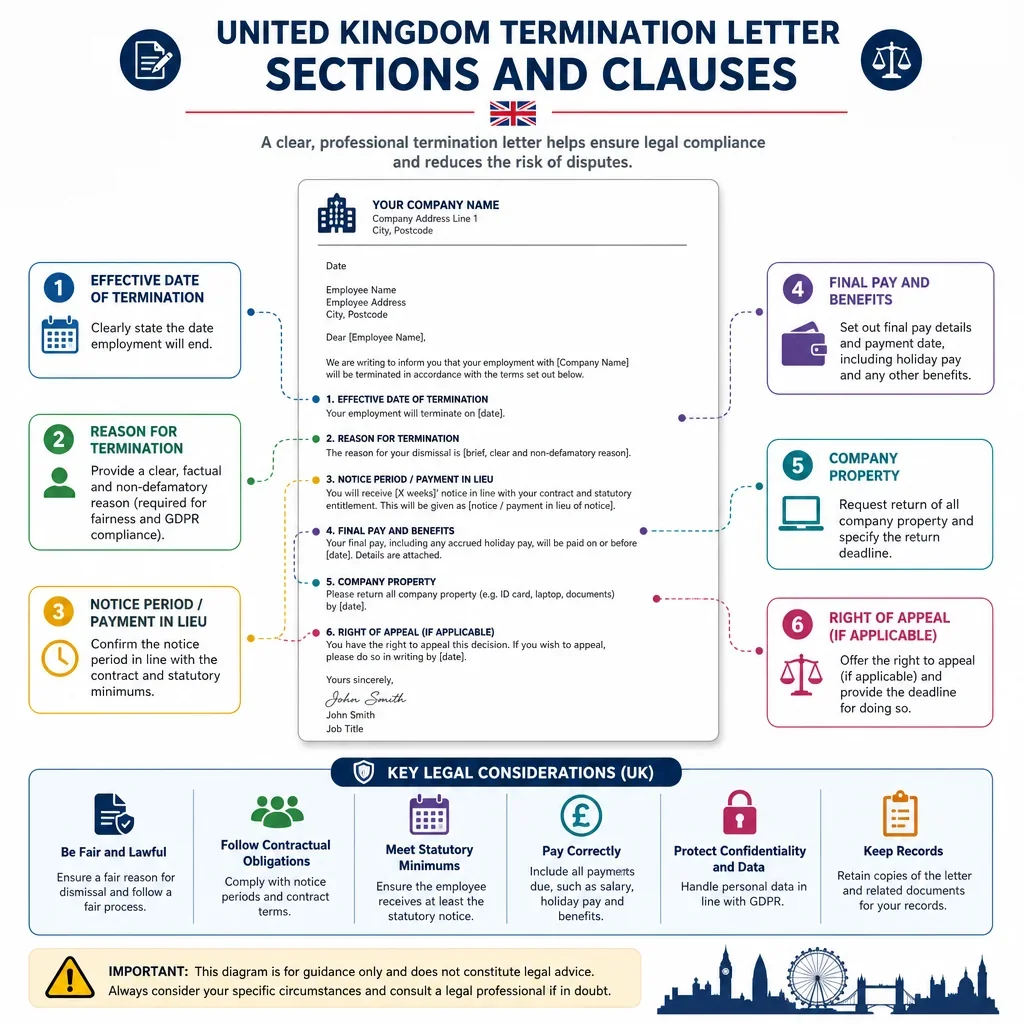
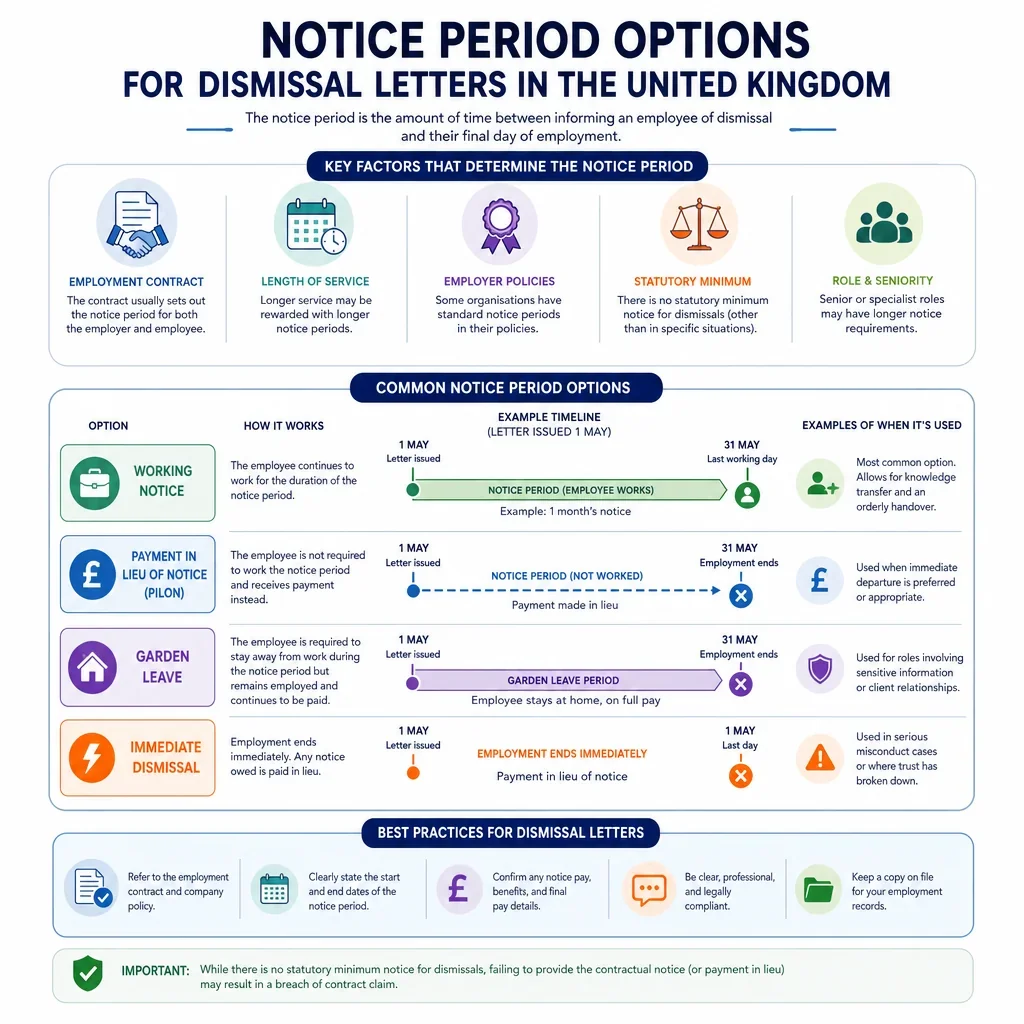
A dismissal letter should normally identify the reason for dismissal, the effective termination date, notice or payment in lieu, final pay, accrued holiday pay, return of property, confidentiality or restrictive covenant reminders, and any right of appeal. Conduct, performance, redundancy and ill-health scenarios usually need more detailed letters because the letter should reflect the procedure followed and the decision reached.
Which Dismissal Letter Scenarios Need The Most Care?
High-complexity scenarios include gross misconduct, redundancy selection, long-term sickness, refusal of contractual changes, TUPE-related dismissals, whistleblowing-linked cases, pregnancy or family leave issues, and retirement. These often raise unfair dismissal, discrimination, automatic unfair dismissal, or statutory consultation risks, so the letter should be consistent with the investigation, consultation and hearing records.
When Is A Shorter Termination Letter Usually Appropriate?
Lower-complexity letters are more likely to be suitable for genuine expiry of a fixed-term contract, agreed resignation follow-up, end of a casual assignment, or some probation dismissals. Even then, the letter should clearly state the end date, pay position and any appeal or review route if the employer offers one.
What UK Legal Sources Are Most Relevant?
- Unfair dismissal: employees usually need a potentially fair reason and fair process under the Employment Rights Act 1996.
- Redundancy: letters should align with redundancy consultation, selection and payment rules, including statutory redundancy pay where applicable.
- Discrimination risk: dismissals linked to protected characteristics, pregnancy, disability or family leave require particular care under the Equality Act 2010.
- Minimum notice: termination letters should not contradict statutory minimum notice rights under the Employment Rights Act 1996 section 86.
FAQs
You Might Also Be Interested In