Notice Period Options For Dismissal Letters In The United Kingdom
Description | Employer Checks | Drafting Notes | Practical Effect |
|---|---|---|---|
Statutory Notice | |||
Employee receives at least one week's notice once employed for one month or more. | Confirm start date, continuous service and that the contract does not give longer notice. | State notice start date, final working day and that statutory notice is being given. | Employee Works Notice |
Employee receives one week's notice for each complete year of service, up to 12 weeks. | Calculate complete years of continuous employment and compare with contractual notice. | Include the number of weeks' notice and the effective termination date. | Employee Works Notice |
Statutory notice is capped at 12 weeks after 12 or more complete years of service. | Check service length and whether a contract, policy or collective agreement gives longer notice. | Do not describe 12 weeks as the maximum if the contract gives a longer period. | Employee Works Notice |
Contractual Notice | |||
Employee is dismissed with the notice period stated in the employment contract. | Check signed contract, offer letter, handbook, collective agreement and later variations. | Quote the contractual period only if it is at least the statutory minimum. | Employee Works Notice |
Senior employee serves a longer contractual notice period, often several months. | Confirm exact notice clause, bonus terms, benefits and any restrictive covenants. | State continuing duties, reporting line, handover requirements and final employment date. | Employee Works Notice |
Employee remains employed during contractual notice but may have reduced duties or handover tasks. | Check whether reduced duties are permitted and whether pay or status is affected. | Avoid demotion wording specify duties, availability and manager contact. | Depends on Contract |
Notice is calculated using a contractual formula, such as one month per year of service. | Check formula, service dates, rounding rules and whether any cap applies. | Show the calculation briefly to reduce dispute risk. | Depends on Contract |
Statutory Notice | |||
Statutory notice overrides a shorter contractual notice period. | Compare the contract with the statutory minimum based on continuous service. | Use the longer statutory period and avoid relying on the shorter clause. | Employee Works Notice |
Payment in Lieu of Notice | |||
Employment ends immediately and the employee is paid instead of working notice. | Confirm the contract contains a PILON clause and what the payment must include. | State termination is immediate and identify salary, benefits and holiday treatment. | Employment Ends Immediately |
Employer pays notice instead of requiring work, but lack of a PILON clause may create breach risk. | Check contract, restrictive covenants and whether employee agreement or settlement terms are needed. | Avoid saying the payment is contractual if there is no PILON clause. | Employment Ends Immediately |
Employee receives salary for the notice period, with benefits excluded if the contract permits. | Check PILON clause carefully before excluding benefits, bonus or commission. | Specify whether PILON covers basic salary only or includes benefits and variable pay. | Employment Ends Immediately |
Employee receives a payment covering salary and contractual benefits during notice. | Value pension, car allowance, private medical insurance and other contractual benefits. | List included benefits or state how their cash equivalent is calculated. | Employment Ends Immediately |
PILON is paid over payroll dates rather than as one lump sum, if the contract allows. | Check contractual instalment wording and any duty to mitigate. | State payment schedule and whether instalments stop if new work is found. | Employment Ends Immediately |
Post-employment notice pay rules may tax notice-related termination payments as earnings. | Calculate post-employment notice pay and process taxable amounts through payroll where required. | Avoid promising net sums unless payroll and tax advice confirm the position. | Employment Ends Immediately |
Garden Leave | |||
Employee remains employed and paid during notice but is told not to attend work. | Confirm the contract allows garden leave and check length is reasonable. | State pay, benefits, duties, restrictions and the final employment date. | Employee Remains Away From Work |
Employee is kept away from work during notice, but lack of a clause may increase challenge risk. | Check contract, role, seniority, work rights and whether employee consent is advisable. | Use careful wording and keep restrictions proportionate to business protection needs. | Employee Remains Away From Work |
Employee is removed from active duties to protect confidential information or client relationships. | Identify legitimate business reasons, client exposure and access to confidential information. | Include no client contact, no systems access and confidentiality reminders. | Employee Remains Away From Work |
Employee stays away from work but must remain contactable and available for handover. | Check contact details, planned holiday and whether handover support is needed. | Set availability hours, contact person and handover obligations. | Employee Remains Away From Work |
Employee remains employed and is restricted from starting competing work during notice. | Check exclusivity, outside interests and post-termination restriction clauses. | Remind employee they remain bound by loyalty, confidentiality and exclusivity duties. | Employee Remains Away From Work |
No Notice Due | |||
Employee is summarily dismissed without notice or PILON because of gross misconduct. | Confirm evidence, disciplinary process, gross misconduct category and appeal rights. | State dismissal is without notice, give reasons, termination date and appeal process. | Employment Ends Immediately |
No statutory minimum notice is due if employment lasted less than one month. | Check exact start date and whether the contract gives notice from day one. | Do not state no notice is due if the contract gives a notice entitlement. | Employment Ends Immediately |
A fixed-term contract may end automatically on its agreed end date without separate notice. | Confirm contract end date, non-renewal process and unfair dismissal risk. | State the contract expires on the fixed end date rather than being ended early. | Employment Ends Immediately |
Contractual Notice | |||
A fixed-term contract is ended early using an express contractual notice clause. | Check early termination wording and whether statutory notice is longer. | Refer to the early termination clause and specify the notice period. | Employee Works Notice |
No Notice Due | |||
Ending a fixed-term contract early without a break clause may breach contract unless justified. | Check if gross misconduct, settlement agreement or mutual termination applies. | Avoid no-notice wording unless a lawful basis for immediate termination exists. | Depends on Contract |
Contractual Notice | |||
Employee works their notice after redundancy dismissal, using contractual or statutory minimum notice. | Check redundancy consultation, notice length, redundancy pay and alternative employment steps. | State redundancy reason, notice dates, redundancy pay and appeal rights. | Employee Works Notice |
Payment in Lieu of Notice | |||
Employee is made redundant and paid instead of working the notice period. | Check PILON clause, redundancy pay, holiday pay and tax treatment. | Separate redundancy payment, PILON, holiday pay and final salary amounts. | Employment Ends Immediately |
Garden Leave | |||
Employee remains employed during redundancy notice but is not required to work. | Check garden leave clause, consultation outcome and business reason for keeping employee away. | Confirm pay continues and distinguish garden leave from immediate termination. | Employee Remains Away From Work |
Contractual Notice | |||
Employee is dismissed for capability or performance and works the required notice period. | Check warnings, support, reasonable adjustments and applicable notice entitlement. | State capability reason, notice period, final date and appeal rights. | Employee Works Notice |
Employee dismissed for ill-health capability receives contractual or statutory notice entitlement. | Check medical evidence, consultation, disability adjustments, sick pay and notice pay rules. | Use sensitive wording and separate notice pay from sick pay and holiday pay. | Depends on Contract |
Employee is dismissed for misconduct but still receives notice because summary dismissal is not justified. | Check disciplinary warnings, evidence, policy category and notice entitlement. | Avoid calling it gross misconduct if notice or PILON is being paid. | Employee Works Notice |
No Notice Due | |||
No contractual notice is admitted, but employer may make a discretionary ex gratia payment. | Check payment is not described as notice pay if summary dismissal is maintained. | Label any discretionary payment carefully and preserve the summary dismissal position. | Employment Ends Immediately |
Contractual Notice | |||
Probationary employee receives the shorter notice period stated for probation. | Check probation clause, extension letters and statutory minimum after one month. | State the probation notice period and compare it with statutory minimum notice. | Employee Works Notice |
Payment in Lieu of Notice | |||
Probationary employment ends immediately with payment for the required notice period. | Check PILON clause, probation notice length and final payroll calculations. | Confirm immediate termination and identify the PILON amount or calculation basis. | Employment Ends Immediately |
Contractual Notice | |||
Employee with less than one month's service receives notice because the contract provides it. | Check offer letter and contract for day-one notice entitlement. | Use contractual wording rather than suggesting statutory notice applies. | Employee Works Notice |
Payment in Lieu of Notice | |||
Employer starts notice then brings employment to an earlier end by paying the remaining notice. | Check contract allows acceleration by PILON and calculate remaining notice accurately. | State the revised termination date and remaining PILON clearly. | Depends on Contract |
Contractual Notice | |||
Employee works notice but is required or allowed to take accrued holiday during it. | Check holiday balance, contract and required notice for compulsory holiday. | Specify holiday dates and any untaken holiday pay on termination. | Employee Works Notice |
Garden Leave | |||
Employee is on garden leave and may be required to use holiday before termination. | Check holiday notice requirements and whether garden leave clause permits holiday direction. | Identify garden leave period separately from holiday dates. | Employee Remains Away From Work |
Payment in Lieu of Notice | |||
Employment ends immediately and accrued untaken holiday is paid separately from PILON. | Calculate statutory and contractual holiday accrued to the termination date. | Separate PILON from accrued holiday pay in the letter or payment schedule. | Employment Ends Immediately |
Contractual Notice | |||
Employee dismissed during maternity leave receives required notice and protected employment rights. | Check redundancy protections, discrimination risk, maternity pay and notice pay entitlement. | Use careful wording and explain notice pay, maternity pay and any suitable alternative role. | Depends on Contract |
Statutory Notice | |||
Dismissed employee still receives minimum notice while enhanced redundancy protection may apply. | Check pregnancy, maternity, adoption or shared parental leave status and suitable vacancy priority. | Do not issue final notice until protected redundancy obligations have been checked. | Depends on Contract |
Contractual Notice | |||
Employee dismissed after a business transfer receives notice under transferred terms unless lawfully varied. | Check transferred contract terms, continuity of employment and TUPE dismissal risks. | Avoid suggesting continuity restarted after the transfer. | Depends on Contract |
Individual notice is given only after required collective consultation steps are addressed. | Check numbers affected, consultation period, representatives and HR1 notification. | Do not issue dismissal notice prematurely during collective consultation. | Employee Works Notice |
Employee remains employed during notice but may already be absent or suspended. | Check suspension terms, pay status, sickness absence and notice pay entitlement. | Clarify whether suspension continues, notice is worked, or attendance is not required. | Depends on Contract |
Employee serves notice while working from home or another agreed location. | Check remote working agreement, equipment return and information security needs. | Set duties, handover tasks, access rules and return of property deadline. | Employee Works Notice |
Garden Leave | |||
Employee stays employed during notice but must return devices, keys and documents immediately. | Check property list, data access, confidentiality risks and garden leave clause. | Specify property return method, deadline and continued confidentiality duties. | Employee Remains Away From Work |
Statutory Notice | |||
Redundant employee may have paid time off to look for work or arrange training during notice. | Check two years' service, redundancy status and reasonable time off requests. | Mention how to request time off during redundancy notice if applicable. | Employee Works Notice |
Contractual Notice | |||
Dismissal notice is confirmed after internal process and appeal rights are addressed. | Check disciplinary or capability procedure, decision date and appeal deadline. | Include appeal rights and clarify whether notice runs during appeal. | Depends on Contract |
Payment in Lieu of Notice | |||
Employment ends immediately and notice pay is dealt with under a settlement agreement. | Check settlement wording, independent advice requirements and payroll treatment. | Ensure the dismissal letter is consistent with the settlement agreement. | Employment Ends Immediately |
No Notice Due | |||
Both parties agree that employment ends without working or paying the remaining notice. | Obtain clear written agreement and consider whether consideration or settlement terms are needed. | Do not imply unilateral waiver unless the employee has expressly agreed. | Employment Ends Immediately |
Garden Leave | |||
Employee remains employed but is barred from contacting colleagues, customers or suppliers during notice. | Check garden leave clause and whether restrictions are proportionate and necessary. | Specify prohibited contacts and any permitted handover contacts. | Employee Remains Away From Work |
Payment in Lieu of Notice | |||
After suspension and dismissal decision, employment ends immediately with PILON rather than worked notice. | Check investigation outcome, contractual PILON right and suspension pay records. | Separate suspension period from termination date and PILON calculation. | Employment Ends Immediately |
Contractual Notice | |||
Employee initially works notice, but the employer may later require garden leave if contract permits. | Check garden leave power and business need before reserving or exercising it. | Include a reservation only if the contract supports it. | Depends on Contract |
Employee remains employed during notice but duties are limited to handover and transition work. | Check role, contractual duties and whether limiting duties could be challenged. | Define handover tasks, deadlines, access and reporting arrangements. | Employee Works Notice |
Statutory Notice | |||
Employer corrects an earlier notice error to ensure the statutory minimum is met. | Recalculate service, notice already given, termination date and any shortfall payment. | Clearly replace prior notice wording and explain the corrected termination date or payment. | Depends on Contract |
Contractual Notice | |||
Employer must give the longer notice period specified for employer-initiated termination. | Check whether employer and employee notice periods differ. | Use the employer notice period, not the shorter employee resignation period. | Employee Works Notice |
Notice ends on a specified calendar date calculated from the contractual or statutory period. | Check notice starts when communicated and calculate the correct final date. | Include both the notice period and the effective termination date. | Employee Works Notice |
Payment in Lieu of Notice | |||
Employer gives too little working notice but pays the balance as PILON or damages. | Calculate notice shortfall and check whether contract permits partial PILON. | State the amount and period covered by the shortfall payment. | Depends on Contract |
Statutory Notice | |||
Dismissal following lay-off or short-time working still requires applicable notice unless an exception applies. | Check lay-off clause, redundancy position, service length and notice entitlement. | Explain whether the termination is redundancy and state the notice period clearly. | Employee Works Notice |
What Notice Options Can A UK Dismissal Letter Use?
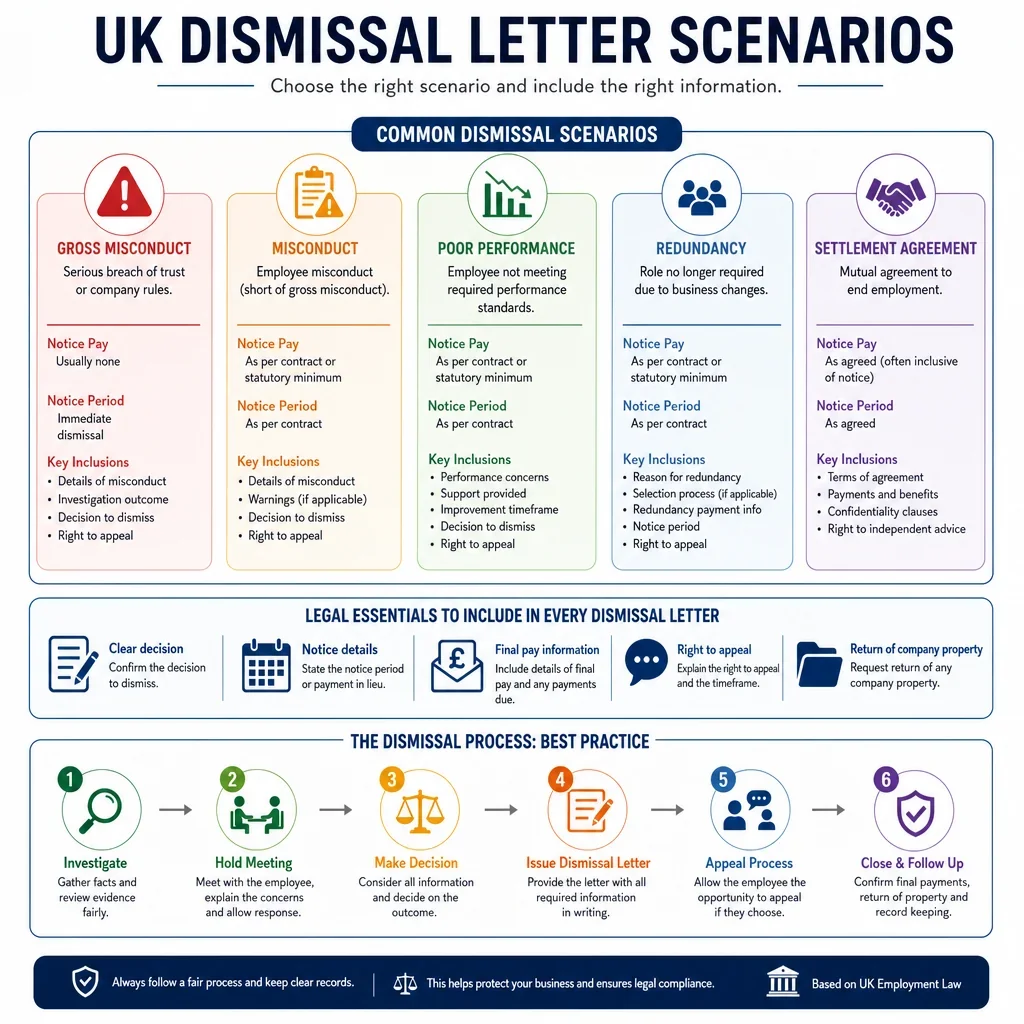
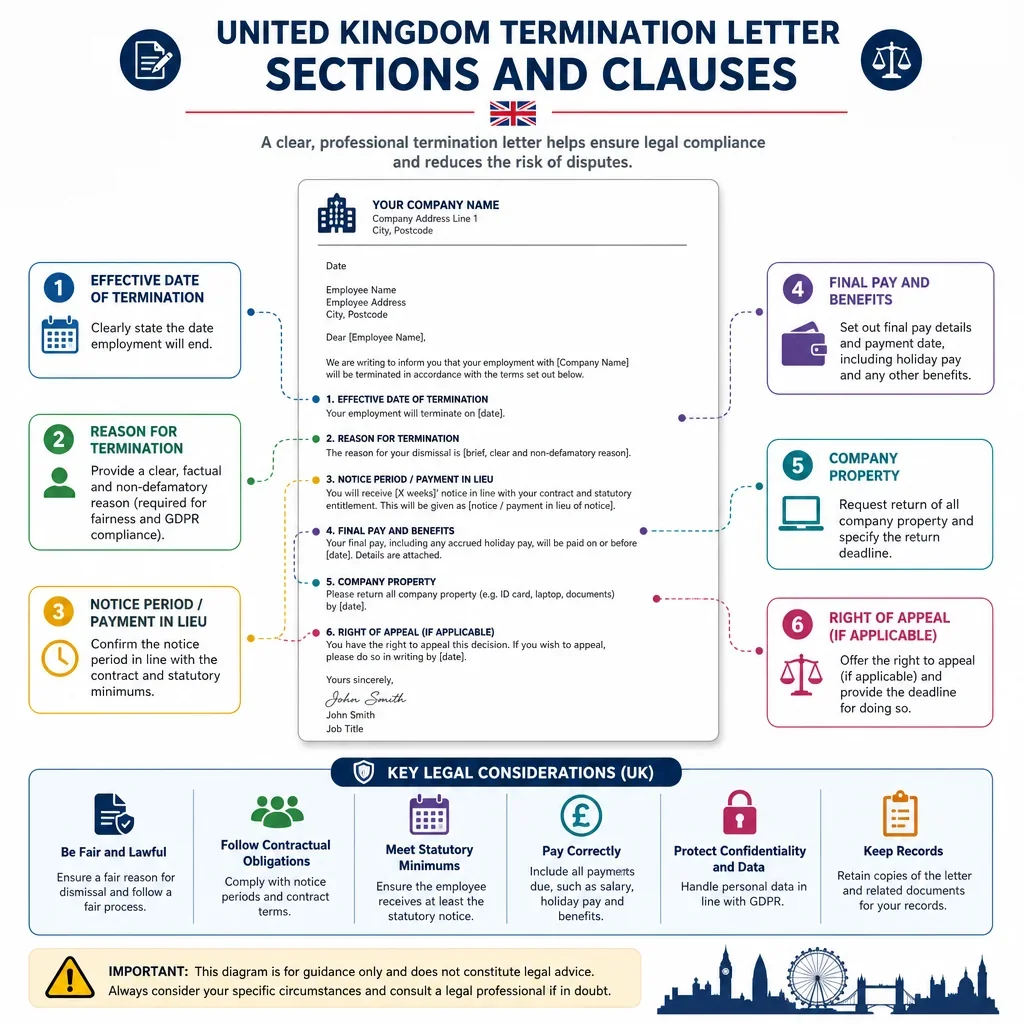
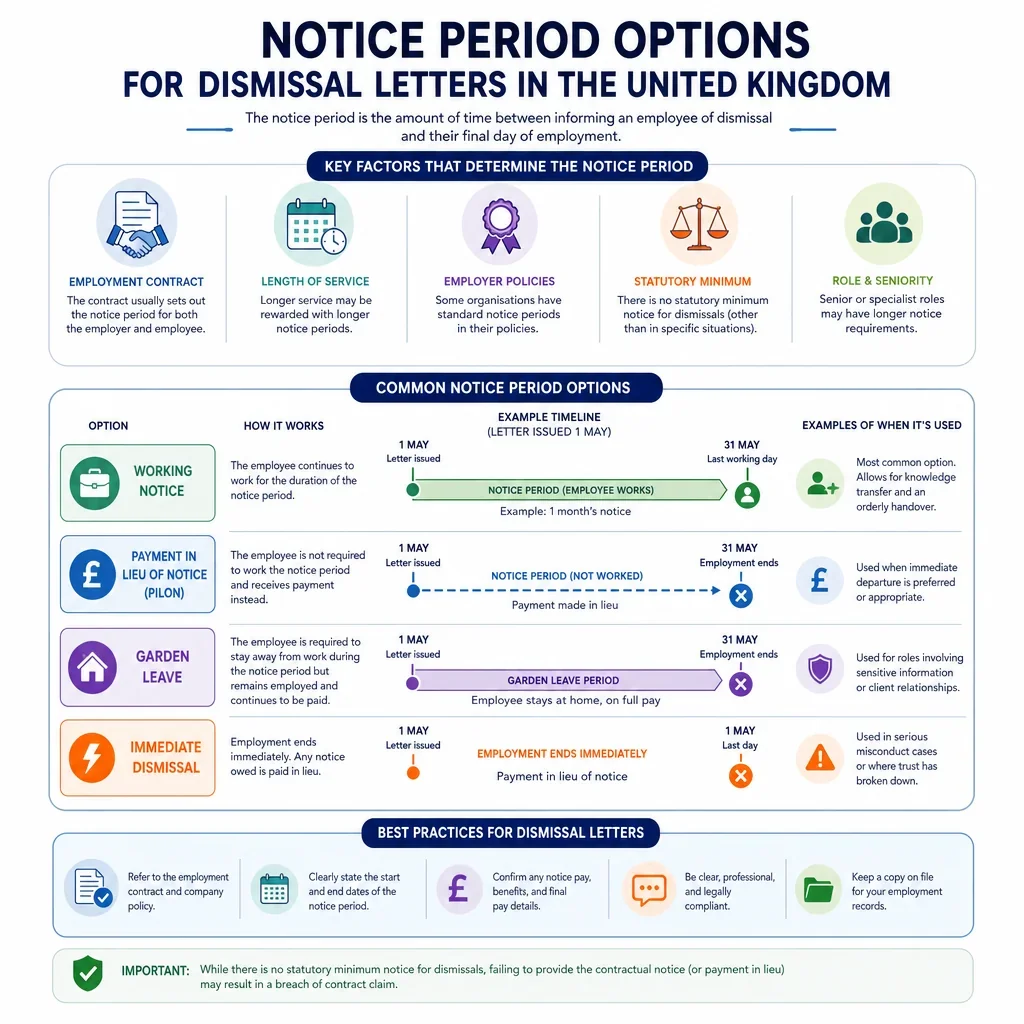
A dismissal letter should normally state whether the employee will work statutory or contractual notice, receive a payment in lieu of notice, be placed on garden leave, or receive no notice because of gross misconduct or another lawful reason. The choice affects the termination date, final pay, benefits, duties, holiday, restrictive covenants and the risk of a wrongful dismissal claim.
When Is Statutory Notice The Minimum?
In Great Britain, statutory minimum notice is generally one week after one month\'s service, then one week per complete year of service up to 12 weeks. A contract can give more generous notice, but usually cannot give less. The letter should not state a shorter period unless a lawful exception applies.
When Should Contractual Notice Be Used?
If the employment contract gives a longer notice period than the statutory minimum, the dismissal letter should usually use the contractual notice. Employers should check the signed contract, staff handbook, collective agreement and any later variations before drafting.
When Is Payment In Lieu Of Notice Appropriate?
A PILON means employment usually ends immediately and the employee is paid instead of working notice. Employers should check whether the contract contains a PILON clause, what must be included in the payment, and tax treatment. Using PILON without a contractual right can create breach of contract risk and may affect post-termination restrictions.
When Can Garden Leave Be Used?
Garden leave normally keeps the employee employed during notice but away from work. It is most useful where the employer needs to protect clients, confidential information or handovers. The dismissal letter should confirm pay and benefits continue and set out restrictions such as no work, no client contact and availability requirements.
When Is No Notice Due?
No notice is usually reserved for summary dismissal, commonly after gross misconduct. The letter should clearly state the dismissal is without notice and without PILON, give the effective termination date, and avoid suggesting that notice pay is still due unless the employer chooses to make an ex gratia payment.
FAQs
You Might Also Be Interested In