UK Consumer Law Considerations For Website Terms
Consumer Law Topic | Explanation | Consumer Protection Area | Importance Level | Terms Drafting Note |
|---|---|---|---|---|
Consumer Rights Act 2015 | ||||
Transparent Consumer Terms | Consumer terms must be written in plain, intelligible language and be legible. Ambiguous wording may be interpreted in the consumer's favour. | Fair terms | High | Use clear headings, short clauses and avoid hidden legal jargon for key consumer obligations. |
Fairness Test | A term may be unfair if it causes a significant imbalance to the consumer's detriment contrary to good faith. | Fair terms | High | Review one-sided rights, penalties, broad discretion and limits on consumer remedies for fairness. |
No Exclusion Of Statutory Rights | Terms must not mislead consumers into thinking statutory rights are excluded or reduced. | Complaints and remedies | High | Include a savings clause stating that nothing affects mandatory consumer statutory rights. |
Death Or Personal Injury Liability | A trader cannot exclude or restrict liability for death or personal injury caused by negligence. | Fair terms | High | Carve out death, personal injury, fraud and other non-excludable liabilities from liability limits. |
Liability Caps | Consumer liability limits may be unfair if they deprive consumers of meaningful remedies for breach. | Fair terms | High | Keep caps reasonable, prominent and subject to statutory rights and non-excludable losses. |
Unilateral Variation Rights | Rights to change terms, services or prices without valid reasons or notice can be unfair. | Fair terms | High | State valid reasons for changes, give notice and allow cancellation for material adverse changes. |
Automatic Renewal Terms | Auto-renewal terms may be unfair if not prominent or if cancellation is unreasonably difficult. | Pricing and payments | High | Explain renewal dates, charges, reminder notices and simple cancellation routes before purchase. |
Consumer Rights Act 2015, Consumer Protection from Unfair Trading Regulations | ||||
Subscription Cancellation Process | Difficult cancellation routes can create unfairness and may mislead consumers about ongoing charges. | Pricing and payments, Fair terms | High | Provide a clear online cancellation method and avoid retention hurdles not disclosed upfront. |
Consumer Rights Act 2015 | ||||
Minimum Contract Periods | Long minimum terms or lock-ins may be unfair if excessive, unclear or not justified. | Fair terms, Pricing and payments | Medium | Make any minimum period prominent and explain early termination charges clearly. |
Excessive Cancellation Charges | Charges payable on cancellation may be unfair if they exceed the trader's reasonable loss. | Fair terms, Pricing and payments | High | Limit cancellation charges to genuine costs and explain how they are calculated. |
Consumer Contracts Regulations | ||||
Total Price Disclosure | Consumers must receive clear total price information, including taxes and unavoidable charges, before ordering. | Pre-contract information, Pricing and payments | High | State that prices, taxes, delivery and mandatory fees are shown before checkout confirmation. |
Consumer Protection from Unfair Trading Regulations | ||||
Hidden Fees And Drip Pricing | Adding unavoidable charges late in the journey may mislead consumers and distort purchasing decisions. | Pricing and payments, Pre-contract information | High | Ensure mandatory charges are disclosed early, not only in small print or late checkout steps. |
Consumer Contracts Regulations | ||||
Delivery Charges | Delivery costs must be provided before the consumer is bound, or the consumer may not have to pay them. | Pre-contract information, Pricing and payments | High | List delivery options, costs, locations, timing and any restrictions before checkout. |
Order Button Payment Warning | An online order button must clearly indicate that placing the order creates an obligation to pay. | Pre-contract information, Pricing and payments | High | Use wording such as "Pay Now" or "Order With Obligation To Pay" near final confirmation. |
Consumer Contracts Regulations, Electronic Commerce Regulations | ||||
Trader Identity | Consumers must know who they are contracting with, including business identity and contact details. | Pre-contract information | High | Include legal name, trading name, address, email, company number and VAT number where applicable. |
Electronic Commerce Regulations | ||||
E-Commerce Information Duties | Online service providers must make certain identity and contact information easily, directly and permanently accessible. | Pre-contract information | High | Place required business details in terms, footer, contact page or legal notice. |
Online Contract Formation Steps | Before an online order, traders must explain the technical steps needed to conclude the contract. | Pre-contract information | Medium | Describe browse, basket, checkout, review, payment and acceptance steps clearly. |
Input Error Correction | Consumers should be given appropriate means to identify and correct input errors before placing an order. | Pre-contract information | Medium | Explain that users can review and amend orders before final submission. |
Order Acknowledgement | Online orders must generally be acknowledged electronically without undue delay. | Pre-contract information | Medium | Distinguish order acknowledgement from contract acceptance if acceptance occurs later. |
Accessible Contract Terms | Consumers should be told whether the contract will be filed and whether it will be accessible. | Pre-contract information | Low | State whether users can download terms and access order records through their account. |
Consumer Contracts Regulations | ||||
14-Day Cancellation Right | Most distance contracts give consumers a 14-day right to cancel, subject to exceptions. | Cancellation rights | High | Explain the cancellation period, how to cancel, effects of cancellation and any exceptions. |
Extended Cancellation Period | If required cancellation information is not given, the cancellation period may be extended. | Cancellation rights | High | Provide cancellation instructions and model cancellation form before the consumer is bound. |
Model Cancellation Form | Where cancellation rights apply, traders must provide the model cancellation form or equivalent information. | Cancellation rights | Medium | Include a cancellation form or link to one in the terms and order confirmation. |
Services Started During Cancellation Period | If services start during the cancellation period, consumer request and payment consequences must be handled correctly. | Cancellation rights | High | Obtain express request to start early and explain proportionate payment if the consumer cancels. |
Fully Performed Services | Cancellation rights can end after full performance if the consumer gave required consent and acknowledgement. | Cancellation rights | Medium | Record consent and acknowledgement before completing services within the cooling-off period. |
Digital Content Cancellation Consent | Cancellation rights may be lost for digital content supplied during the cancellation period only if statutory consent steps are met. | Cancellation rights, Digital content | High | Use a clear checkbox for immediate digital supply and acknowledgement of lost cancellation rights. |
Refund Timing After Cancellation | Refunds after valid cancellation must be made within the statutory timeframe and by permitted methods. | Cancellation rights, Complaints and remedies | High | State refund timing, method and any lawful deductions for goods or early services. |
Return Costs | Consumers may only bear return costs after cancellation if they were told before the contract. | Cancellation rights, Pricing and payments | Medium | Say who pays return postage and disclose any unusually high return costs upfront. |
Cancellation Right Exceptions | Some contracts are exempt from cancellation rights, such as personalised goods or sealed hygiene goods after opening. | Cancellation rights | Medium | List only applicable exceptions and avoid overstating when cancellation rights are unavailable. |
Consumer Rights Act 2015 | ||||
Digital Content Quality Rights | Digital content must be of satisfactory quality, fit for purpose and as described. | Digital content, Complaints and remedies | High | Avoid disclaimers that digital content is supplied "as is" without statutory quality rights. |
Digital Content Remedies | Consumers may be entitled to repair, replacement, price reduction or refund for faulty digital content. | Digital content, Complaints and remedies | High | State support and remedy routes without limiting statutory digital content remedies. |
Damage From Faulty Digital Content | Consumers may claim repair or compensation if faulty digital content damages their device or other digital content. | Digital content, Complaints and remedies | Medium | Do not exclude liability for device damage where the CRA gives a statutory remedy. |
Consumer Contracts Regulations | ||||
Digital Functionality Information | Consumers must receive information about digital content functionality before entering the contract. | Pre-contract information, Digital content | High | Describe key features, access limits, technical protection measures and update dependencies. |
Digital Compatibility Information | Consumers must be told about relevant compatibility and interoperability of digital content where known or reasonably expected. | Pre-contract information, Digital content | High | Set out browser, device, operating system, account and software requirements clearly. |
Consumer Rights Act 2015 | ||||
Service Quality Rights | Services must be performed with reasonable care and skill, within a reasonable time and for a reasonable price where not fixed. | Complaints and remedies | High | Describe service scope and support levels without excluding reasonable care and skill obligations. |
Service Remedies | Consumers may be entitled to repeat performance or a price reduction for non-conforming services. | Complaints and remedies | High | Explain complaint escalation and remedy handling while preserving statutory remedies. |
Goods Quality Rights | Goods must be of satisfactory quality, fit for purpose, as described and match samples or models where relevant. | Complaints and remedies | High | Avoid return policies that imply statutory rights only last for a short store policy period. |
Short-Term Right To Reject | Consumers generally have a short-term right to reject faulty goods within 30 days. | Complaints and remedies | Medium | Distinguish goodwill returns from statutory faulty goods rights. |
Consumer Contracts Regulations | ||||
Delivery Timeframe | Unless agreed otherwise, goods must generally be delivered within 30 days of contract formation. | Pre-contract information, Complaints and remedies | Medium | State delivery estimates, default timeframes and consumer rights for late delivery. |
Consumer Rights Act 2015 | ||||
Risk In Goods | Goods generally remain at the trader's risk until they come into the consumer's physical possession. | Complaints and remedies | Medium | Do not state that delivery risk passes before the consumer receives the goods. |
Consumer Rights Act 2015, Consumer Protection from Unfair Trading Regulations | ||||
Accurate Descriptions | Misleading descriptions, images or claims can breach consumer protection rules and become contract terms. | Pre-contract information, Fair terms | High | Avoid clauses saying descriptions are not binding where consumers rely on them. |
Consumer Protection from Unfair Trading Regulations | ||||
Misleading Omissions | Failing to provide material information can be unlawful if it affects a consumer's transactional decision. | Pre-contract information | High | Do not hide key limitations, charges, renewal terms or eligibility requirements in dense clauses. |
Aggressive Practices | Pressure tactics, undue influence or obstructive cancellation practices can breach consumer protection rules. | Fair terms, Cancellation rights | Medium | Avoid terms or flows that pressure users into purchases, renewals or waiving rights. |
Banned Commercial Practices | Certain practices are automatically unfair, including fake scarcity claims and falsely claiming a trader is approved. | Pre-contract information, Fair terms | Medium | Ensure terms and sales pages do not support false urgency, fake approvals or misleading guarantees. |
Online Reviews And Endorsements | Businesses should not use fake reviews or hide paid endorsements that influence consumers. | Pre-contract information | Medium | Set review rules, moderation policy and disclosure requirements for incentives or affiliate endorsements. |
Consumer Protection from Unfair Trading Regulations, Other UK consumer law | ||||
Marketplace Ranking Transparency | Online marketplaces should disclose main ranking parameters where rankings affect consumer choices. | Pre-contract information | Medium | Explain sponsored placement, default sorting and key ranking factors for marketplace listings. |
Marketplace Seller Status | Consumers should know whether they are buying from a trader or private seller and what rights apply. | Pre-contract information, Complaints and remedies | Medium | Require sellers to declare trader status and explain platform responsibility limits accurately. |
Consumer Contracts Regulations, Other UK consumer law | ||||
Complaints Handling | Consumers should be told how to complain and how complaints will be handled. | Complaints and remedies | Medium | Include contact routes, expected response times and escalation steps for consumer complaints. |
Other UK consumer law | ||||
Alternative Dispute Resolution | Businesses must provide ADR information in certain unresolved consumer disputes and may need sector-specific ADR details. | Complaints and remedies | Medium | State any ADR body used or required and explain whether the trader agrees to use ADR. |
Consumer Rights Act 2015, Other UK consumer law | ||||
Governing Law And Jurisdiction | Choice of law or court clauses should not deprive UK consumers of mandatory protections or local court rights. | Fair terms, Complaints and remedies | High | Use consumer-friendly wording preserving mandatory rights in the consumer's UK jurisdiction. |
Consumer Rights Act 2015 | ||||
Consumer Indemnities | Broad indemnities can be unfair if they make consumers cover losses beyond their fault or legal responsibility. | Fair terms | Medium | Limit indemnities to foreseeable losses caused by the consumer's breach or misuse. |
Account Suspension And Termination | A right to suspend or terminate accounts at the trader's sole discretion may be unfair if not balanced. | Fair terms, Digital content | High | Specify breach grounds, notice where appropriate, appeal route and refund consequences. |
Consumer Rights Act 2015, Other UK consumer law | ||||
User Content Removal | Broad rights to remove user content may be unfair if reasons, process and consequences are unclear. | Fair terms, Digital content | Medium | Define prohibited content, moderation grounds, notice rules and restoration or appeal options. |
Consumer Rights Act 2015 | ||||
Acceptable Use Rules | Use restrictions should be clear, proportionate and linked to legitimate site protection aims. | Fair terms, Digital content | Medium | Use specific prohibited behaviours instead of vague powers to sanction any conduct disliked by the site. |
Consumer Protection from Unfair Trading Regulations, Other UK consumer law | ||||
Age Restrictions | Websites aimed at minors need clear age rules and should not exploit children's inexperience or credulity. | Pre-contract information, Fair terms | Medium | State minimum age, parental consent requirements and any child-specific purchase restrictions. |
Consumer Contracts Regulations | ||||
Post-Contract Helpline Charges | Consumers must not be charged more than the basic rate for post-contract calls about existing contracts. | Complaints and remedies, Pricing and payments | Medium | Use basic-rate or free contact channels for support, cancellation and complaints. |
Additional Payments Consent | Consumers must give express consent for extra payments pre-ticked boxes are not valid consent. | Pricing and payments, Pre-contract information | High | Use unticked opt-ins for add-ons, donations, insurance, priority support or other paid extras. |
Consumer Rights Act 2015 | ||||
Deposits And Advance Payments | Non-refundable deposits can be unfair if they let the trader keep more than reasonable losses. | Fair terms, Pricing and payments | Medium | Explain when deposits are refundable and link deductions to actual administrative or wasted costs. |
Price Variation Clauses | Terms allowing price increases after contract formation may be unfair without valid reasons and exit rights. | Fair terms, Pricing and payments | High | State reasons for price changes, notice period and cancellation rights before increases apply. |
Consumer Contracts Regulations | ||||
Payment Arrangements | Consumers must receive information about payment arrangements before they are bound. | Pre-contract information, Pricing and payments | Medium | Describe accepted payment methods, timing of charges, failed payments and billing contacts. |
Other UK consumer law | ||||
Payment Surcharges | Businesses must not charge consumers prohibited payment surcharges for common payment methods. | Pricing and payments | Medium | Avoid card surcharges and disclose any lawful payment-related fees clearly before checkout. |
Consumer Rights Act 2015, Consumer Contracts Regulations | ||||
Guarantees And Warranties | Commercial guarantees must not suggest that statutory rights are reduced or replaced. | Complaints and remedies, Pre-contract information | Medium | State warranty scope and duration, and say it is in addition to statutory rights. |
Consumer Contracts Regulations | ||||
After-Sales Service | Where applicable, consumers must receive information about after-sales assistance, services and guarantees. | Pre-contract information, Complaints and remedies | Medium | Set out support availability, warranty process, service limits and contact routes. |
Electronic Commerce Regulations | ||||
Contract Language | Online traders must indicate the languages offered for concluding the contract. | Pre-contract information | Low | State that the contract and support are provided in English, unless other languages are available. |
Electronic Commerce Regulations, Consumer Contracts Regulations | ||||
Codes Of Conduct | If a trader subscribes to relevant codes of conduct, it should identify them and how to consult them electronically. | Pre-contract information | Low | Mention applicable trade codes or omit if none apply do not falsely claim membership. |
Electronic Commerce Regulations, Other UK consumer law | ||||
Regulated Profession Information | Regulated professionals providing online services must provide professional body, title and rules information. | Pre-contract information | Medium | For regulated services, include professional registration details and relevant supervisory authority. |
Other UK consumer law | ||||
VAT-Inclusive Consumer Prices | Consumer prices should generally be shown inclusive of VAT where VAT applies. | Pricing and payments, Pre-contract information | High | State whether prices include VAT and identify any taxes or charges added before payment. |
Consumer Protection from Unfair Trading Regulations, Other UK consumer law | ||||
Promotional Pricing | Discounts and reference prices must not mislead consumers about the real saving or availability. | Pricing and payments | Medium | State promotion eligibility, expiry, exclusions and whether offers can be withdrawn before acceptance. |
Consumer Protection from Unfair Trading Regulations | ||||
Availability Claims | False limited stock or limited time claims can be automatically unfair or misleading. | Pre-contract information, Pricing and payments | Medium | Avoid terms that reserve unlimited rights to cancel orders after misleading availability statements. |
Consumer Contracts Regulations | ||||
Late Delivery Remedies | Consumers may have rights to cancel if delivery is late, especially where an agreed deadline was essential. | Complaints and remedies, Cancellation rights | Medium | Explain what happens if delivery is delayed and avoid excluding statutory late delivery rights. |
Consumer Rights Act 2015 | ||||
Order Refusal And Cancellation By Trader | Broad rights to refuse or cancel consumer orders may be unfair if reasons and refund rights are unclear. | Fair terms, Complaints and remedies | Medium | List objective refusal grounds and promise prompt refunds where the trader cancels after payment. |
Electronic Commerce Regulations, Consumer Contracts Regulations | ||||
Contract Acceptance Timing | Consumers should understand when a binding contract is formed, especially if payment is taken before acceptance. | Pre-contract information, Pricing and payments | Medium | Define when acceptance occurs and how rejected orders are refunded. |
Consumer Protection from Unfair Trading Regulations, Other UK consumer law | ||||
Platform Intermediary Role | A platform must not mislead consumers about whether it is the seller, agent or marketplace host. | Pre-contract information, Complaints and remedies | High | Explain the platform's role, who contracts with the consumer and who handles refunds or complaints. |
Consumer Contracts Regulations, Consumer Rights Act 2015 | ||||
Third-Party Platform Purchases | Where purchases occur through app stores or platforms, consumers need clarity on billing, cancellation and support responsibility. | Pricing and payments, Complaints and remedies, Digital content | Medium | Identify whether platform terms govern payment, refunds, subscriptions or cancellation mechanics. |
Consumer Protection from Unfair Trading Regulations, Consumer Rights Act 2015 | ||||
Free Trials Converting To Paid Plans | Consumers should be clearly told when a trial ends, what they will pay and how to cancel before charging starts. | Pricing and payments, Pre-contract information, Fair terms | High | State trial length, conversion date, price, renewal frequency and cancellation deadline prominently. |
Consumer Rights Act 2015, Consumer Contracts Regulations | ||||
In-App Purchases And Virtual Goods | Paid virtual items or in-app digital content can trigger digital content rights and price disclosure duties. | Digital content, Pricing and payments | Medium | Explain virtual item access, revocation, refunds, account closure and statutory rights. |
Non-Refundable Digital Credits | Blanket no-refund rules for credits or balances may be unfair or conflict with statutory cancellation rights. | Fair terms, Pricing and payments, Digital content | Medium | Avoid absolute no-refund wording and explain expiry, use and lawful refund scenarios. |
Consumer Rights Act 2015 | ||||
Voucher And Credit Expiry | Expiry dates can be unfair if too short, hidden or used to cause disproportionate consumer loss. | Fair terms, Pricing and payments | Medium | Make expiry dates prominent and ensure they are reasonable for the product or service. |
Forfeiture Of Prepayments | Keeping all prepaid sums after consumer breach or cancellation may be unfair if disproportionate. | Fair terms, Pricing and payments | Medium | Calculate deductions by reference to services supplied, costs incurred or actual loss. |
Consumer Rights Act 2015, Consumer Protection from Unfair Trading Regulations | ||||
Entire Agreement Clauses | Entire agreement wording may be unfair if it excludes reliance on pre-contract statements made to consumers. | Fair terms, Pre-contract information | Medium | Do not exclude liability for statements or descriptions that consumer law treats as binding. |
Consumer Rights Act 2015 | ||||
Force Majeure Clauses | Force majeure clauses may be unfair if they let the trader keep payment without providing services or refunds. | Fair terms, Complaints and remedies | Medium | Provide fair refund, rescheduling or termination rights if performance becomes impossible or delayed. |
Website Availability Disclaimers | Broad disclaimers that the website may be unavailable at any time can be unfair for paid services. | Fair terms, Digital content | Medium | For paid access, set maintenance rights, service limits and remedies proportionately. |
Consumer Rights Act 2015, Consumer Contracts Regulations | ||||
Access After Termination | Consumers need clarity on whether they can access paid content, data or downloads after termination. | Fair terms, Digital content | Medium | Explain data export, download windows, refund consequences and account deletion effects. |
Consumer Rights Act 2015 | ||||
Notice Of Terms Changes | Consumers should receive clear notice of material changes, especially for ongoing subscriptions or digital services. | Fair terms, Digital content | High | Commit to reasonable notice and explain how users can reject adverse changes. |
Consumer Rights Act 2015, Consumer Contracts Regulations | ||||
Incorporation Of Terms | Terms are more enforceable when brought to the consumer's attention before the contract is made. | Pre-contract information, Fair terms | High | Link terms prominently before checkout and use active acceptance for important consumer contracts. |
Consumer Rights Act 2015 | ||||
Prominence Of Onerous Terms | Important or surprising terms should be especially prominent, not buried in lengthy terms. | Fair terms, Pre-contract information | High | Highlight cancellation charges, auto-renewals, liability limits and access restrictions before purchase. |
Core Price And Subject Matter Terms | Core price and main subject terms are protected from fairness assessment only if transparent and prominent. | Fair terms, Pricing and payments | High | Make main service description, subscription length and total price prominent before order. |
Excluding Goods Quality Rights | A trader cannot exclude or restrict key statutory rights for goods supplied to consumers. | Complaints and remedies, Fair terms | High | Do not limit rights that goods are satisfactory, fit for purpose or as described. |
Excluding Digital Content Rights | A trader cannot exclude or restrict key statutory digital content rights and remedies. | Digital content, Complaints and remedies, Fair terms | High | Do not use "no warranty" wording that conflicts with statutory digital content rights. |
Excluding Service Rights | A trader cannot exclude or restrict key statutory rights for services supplied to consumers. | Complaints and remedies, Fair terms | High | Do not exclude reasonable care and skill or statutory service remedies. |
Burden Of Proof Clauses | Terms that make it too hard for consumers to prove claims or restrict evidence may be unfair. | Fair terms, Complaints and remedies | Low | Avoid clauses requiring excessive proof or making trader records conclusive in all cases. |
Restrictions On Legal Remedies | Terms that hinder consumers from taking legal action or exercising remedies may be unfair. | Fair terms, Complaints and remedies | Medium | Do not impose mandatory arbitration or procedural barriers that remove court rights. |
Assignment By Trader | Allowing the trader to transfer the contract may be unfair if it reduces consumer guarantees or remedies. | Fair terms | Low | Permit transfer only where it will not reduce the consumer's rights or protections. |
Consumer Rights Act 2015, Other UK consumer law | ||||
User Content Licence | Overbroad licences over consumer content may be unfair if not needed for the service. | Fair terms, Digital content | Medium | Limit licences to hosting, displaying, sharing and improving the service as reasonably needed. |
Consumer Rights Act 2015, Consumer Protection from Unfair Trading Regulations | ||||
AI-Generated Output Limitations | Terms for AI tools should clearly explain output limitations without excluding statutory service or digital content rights. | Digital content, Fair terms, Pre-contract information | High | Explain AI limitations, user review duties and support remedies without blanket "as is" disclaimers. |
Consumer Protection from Unfair Trading Regulations, Other UK consumer law | ||||
Legal Information Disclaimers | Legal document websites should not mislead consumers about whether they receive regulated legal advice. | Pre-contract information, Fair terms | High | State whether outputs are templates, information or legal advice and identify any regulation status. |
Consumer Rights Act 2015 | ||||
AI Document Quality Complaints | Consumers buying AI-generated documents may have remedies if the service or digital content is not as described. | Digital content, Complaints and remedies | High | Offer correction, regeneration, support or refund routes consistent with CRA remedies. |
What UK Consumer Law Issues Should Website Terms Cover?
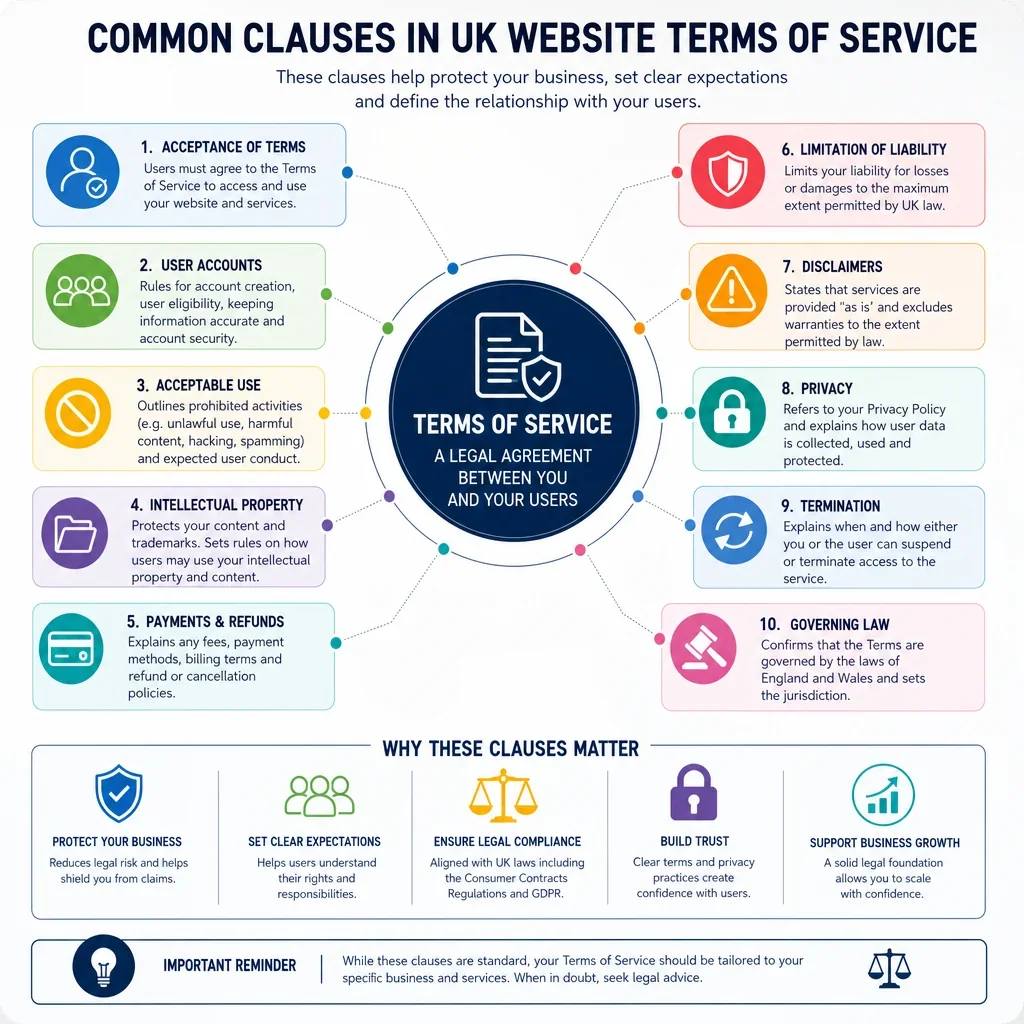
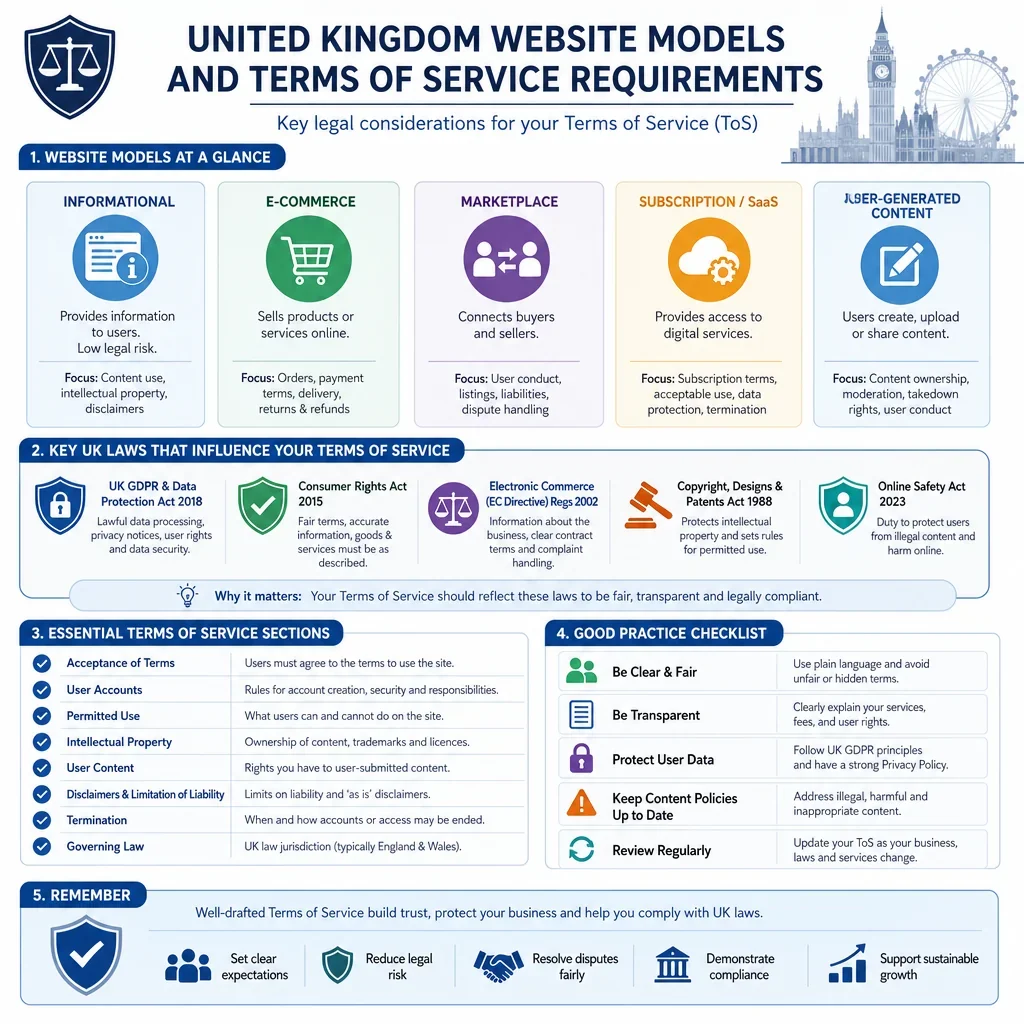
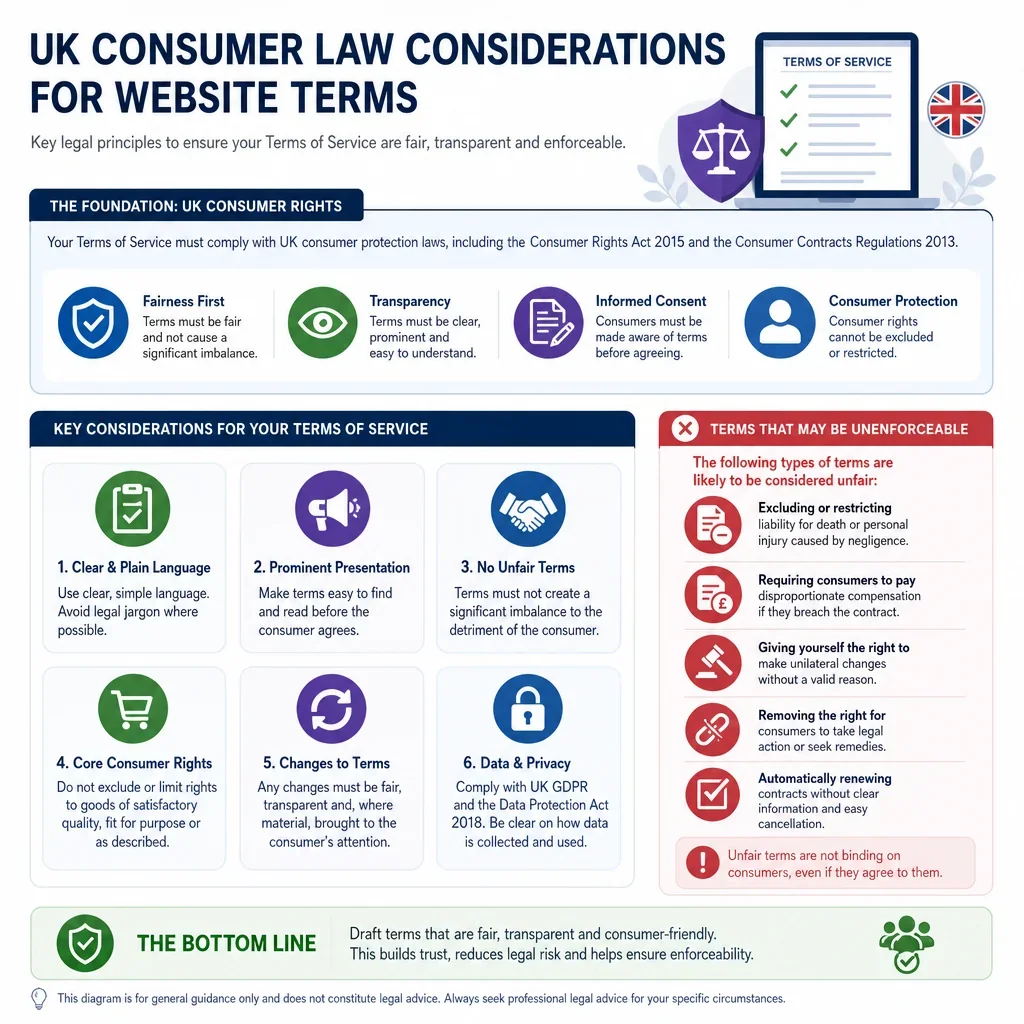
UK consumer-facing Terms of Service should clearly address pre-contract information, cancellation rights, fair terms, pricing, complaints, remedies and digital content. The most important risks arise where terms restrict statutory rights, hide key charges, shorten cancellation rights, or give the business one-sided powers.
When Are Website Terms More Likely To Be Unfair?
Under the Consumer Rights Act 2015, consumer terms must be fair and transparent. Terms should avoid broad exclusions of liability, unilateral variation rights, automatic renewals without clear notice, excessive cancellation charges, and wording that suggests consumers have fewer remedies than the law provides.
What Information Must Be Given Before A Consumer Orders Online?
The Consumer Contracts Regulations require traders to give key information before the contract is made, including trader identity, main characteristics, total price, delivery costs, payment arrangements, cancellation rights and complaint handling. Website terms should support the checkout journey and not contradict the mandatory pre-contract information.
How Should Digital Products And Online Services Be Addressed?
For digital content, terms should explain functionality, compatibility, access conditions, updates, payment terms, cancellation consequences and statutory remedies. If consumers are asked to start digital content during the cancellation period, the required consent and acknowledgement should be collected before supply begins.
Why Do Pricing And Cancellation Clauses Need Special Care?
Prices, subscription renewals, delivery charges and cancellation fees should be prominent and easy to understand before the consumer commits to pay. For online orders, the final order button should clearly indicate a payment obligation, and any cancellation process should not make statutory rights harder to exercise.
FAQs
You Might Also Be Interested In