UK Compliance Considerations For Remote And Hybrid Working
Policy Topic | UK Compliance Consideration | Policy Drafting Notes | Primary Responsibility | Compliance Risk Level |
|---|---|---|---|---|
Employment Rights | ||||
Contractual status of arrangement | Clarify whether remote or hybrid working is discretionary, temporary or contractual. | State that arrangements may be reviewed, varied or withdrawn subject to contract and consultation. | Employer | High |
Flexible Working, Employment Rights | ||||
Statutory flexible working requests | Employees have a day-one right to request flexible working under the statutory scheme. | Explain how informal hybrid arrangements interact with statutory flexible working applications. | Both | High |
Handling flexible working requests | Requests must be handled reasonably and within the statutory decision period. | Set out request steps, consultation, permitted refusal grounds, appeal route and timescales. | Employer | High |
Employment Rights, Health and Safety | ||||
Working hours | Working time limits and rest entitlements still apply when employees work remotely. | Define expected hours, core hours, availability, time recording and overtime approval. | Both | High |
Rest breaks and daily rest | Workers are entitled to minimum rest breaks and rest periods unless an exception applies. | Require employees to take breaks and managers to avoid scheduling patterns that prevent rest. | Both | Medium |
Health and Safety, Employment Rights | ||||
Work-life boundaries | No standalone UK right to disconnect, but excessive hours may create working time and stress risks. | Set expectations on emails, messaging, meetings outside hours and escalation exceptions. | Both | Medium |
Employment Rights, Tax and Expenses | ||||
Overtime and extra hours | Uncontrolled extra hours can affect pay, working time limits and national minimum wage calculations. | Require prior approval for overtime and explain recording, payment or time off in lieu. | Both | Medium |
Health and Safety | ||||
Home working risk assessments | Employers have duties to protect workers from work-related health and safety risks at home. | Require self-assessments, review triggers and manager follow-up for identified risks. | Employer | High |
Display screen equipment | DSE rules apply to workers who habitually use screens as a significant part of work. | Provide DSE assessment process, workstation guidance, eye test arrangements and equipment support. | Employer | High |
Health and Safety, Equality and Diversity | ||||
Mental health and isolation | Employers should manage work-related stress risks, including isolation and workload in remote roles. | Include contact routines, wellbeing support, workload escalation and manager check-ins. | Both | High |
Health and Safety | ||||
Accident and incident reporting | Work-related accidents and dangerous occurrences may need recording or reporting. | Explain what remote incidents must be reported, to whom, and within what timescale. | Both | Medium |
Electrical equipment safety | Work equipment provided for home use must be suitable and maintained safely. | Set rules on approved chargers, inspections, defects, safe use and returning equipment. | Both | Medium |
Health and Safety, Tax and Expenses, Data Protection | ||||
Employer-provided equipment | Equipment should be suitable, secure, recorded and returned when employment or remote work ends. | List issued items, ownership, maintenance, permitted use, loss reporting and return obligations. | Both | Medium |
Data Protection, Confidentiality | ||||
Bring your own device | Personal device use can create security, access control and data retention risks. | Specify approval, encryption, passwords, remote wiping, updates and separation of work data. | Both | High |
Secure networks and Wi-Fi | Controllers and processors must use appropriate technical and organisational security measures. | Require secure Wi-Fi, VPN where applicable, no public unsecured networks and prompt security updates. | Both | High |
Data Protection | ||||
Data breach reporting | Personal data breaches may need reporting to the ICO within 72 hours if notifiable. | Require immediate reporting of lost devices, misdirected emails and unauthorised access. | Both | High |
Data Protection, Confidentiality | ||||
Paper records and storage | Personal data must be processed securely and kept no longer than necessary. | Limit home printing, require locked storage, secure disposal and office return of files. | Employee | High |
Video meetings and calls | Remote meetings can expose confidential or personal data to household members or unauthorised attendees. | Address private spaces, headsets, screen sharing, recordings, meeting links and attendee checks. | Both | Medium |
Data Protection, Employment Rights | ||||
Employee monitoring | Monitoring must be lawful, fair, transparent, necessary and proportionate. | Explain what is monitored, why, legal basis, safeguards, retention and worker rights. | Employer | High |
Data Protection | ||||
Monitoring impact assessments | High-risk monitoring may require a data protection impact assessment before implementation. | Refer to DPIAs for intrusive tools such as keystroke, webcam or productivity tracking. | Employer | High |
Confidentiality, Data Protection | ||||
Confidentiality in remote settings | Remote work increases risk of accidental disclosure through screens, calls and documents. | Require private working areas, screen locking, privacy screens and no confidential work in unsuitable places. | Employee | High |
Confidentiality, Data Protection, Health and Safety | ||||
Working from public locations | Public working can compromise security, confidentiality and safe working conditions. | Define approved locations, prohibited activities and extra safeguards for public or shared spaces. | Employee | Medium |
Tax and Expenses, Data Protection, Employment Rights | ||||
Working from overseas | Overseas working may create tax, immigration, social security, employment law and data transfer issues. | Require advance approval and set limits on location, duration, insurance and data access. | Both | High |
Data Protection | ||||
International data access | Accessing personal data from outside the UK may involve restricted transfer rules. | Prohibit overseas data access without approval and appropriate transfer safeguards. | Employer | High |
Tax and Expenses | ||||
Home working expenses | Expenses and tax relief depend on whether costs are necessary and employer-required. | State what costs are reimbursed, approval rules, evidence required and excluded household costs. | Employer | Medium |
Tax and Expenses, Employment Rights | ||||
Travel to workplace | Travel reimbursement and tax treatment depend on permanent workplace and business journey rules. | Clarify whether commuting to the office is reimbursable under hybrid arrangements. | Employer | Medium |
Tax and Expenses | ||||
Tax treatment of equipment | Employer-provided equipment may have tax consequences depending on ownership and private use. | State ownership, permitted private use, replacement rules and employee purchase restrictions. | Employer | Low |
Employment Rights, Tax and Expenses | ||||
Minimum wage and deductions | Worker costs or deductions connected with work can affect national minimum wage compliance. | Avoid requiring unreimbursed mandatory costs that reduce pay below minimum wage. | Employer | High |
Equality and Diversity, Employment Rights | ||||
Office attendance requirements | Attendance rules may indirectly disadvantage protected groups if not objectively justified. | Explain business reasons, discretion, exception process and equality review of attendance rules. | Employer | High |
Equality and Diversity, Flexible Working, Health and Safety | ||||
Reasonable adjustments | Employers must make reasonable adjustments for disabled employees where the duty arises. | Include adjustment requests, occupational health input, equipment, hours and attendance flexibility. | Employer | High |
Equality and Diversity, Health and Safety, Flexible Working | ||||
Pregnancy and maternity considerations | Remote or hybrid rules must not discriminate because of pregnancy or maternity. | Allow risk review, appointment attendance, phased return and flexibility after maternity leave. | Employer | High |
Equality and Diversity, Flexible Working, Employment Rights | ||||
Carers and childcare impacts | Rigid hybrid rules may disproportionately affect carers and create discrimination or relations issues. | State that home working is not a substitute for childcare, but requests will be considered fairly. | Both | Medium |
Equality and Diversity, Employment Rights | ||||
Career progression and visibility | Remote workers should not be disadvantaged in allocation of work, training or promotion. | Require fair access to meetings, training, performance feedback and promotion opportunities. | Employer | Medium |
Employment Rights, Equality and Diversity | ||||
Performance management | Performance expectations should be clear, objective and applied consistently to remote and office staff. | Define outputs, communication standards, review frequency and support before capability action. | Both | Medium |
Employment Rights, Confidentiality, Data Protection | ||||
Remote working misconduct | Misuse of systems, unauthorised absence or confidentiality breaches may need fair disciplinary handling. | Identify examples of misconduct and cross-refer to disciplinary, IT and data protection policies. | Both | Medium |
Employment Rights, Flexible Working | ||||
Availability and responsiveness | Employers may set reasonable availability expectations consistent with contract and working time rules. | Define core hours, contact methods, calendar use, response expectations and absence notification. | Both | Low |
Employment Rights, Health and Safety | ||||
Sickness absence | Remote workers should follow normal sickness reporting and statutory sick pay rules. | Make clear employees must not work when unfit and must report sickness normally. | Both | Low |
Home insurance and permissions | Employees may need to check lease, mortgage or insurance conditions before home working. | Require employees to confirm any necessary home permissions and suitable working arrangements. | Employee | Low |
Health and Safety, Employment Rights | ||||
Employer insurance coverage | Employers must maintain compulsory employers liability insurance for relevant employees. | Confirm that business insurance is considered for home-based work and employer equipment. | Employer | Medium |
Data Protection, Confidentiality | ||||
Information security training | Security measures should include staff awareness suitable for remote working risks. | Require completion of remote work security, phishing and confidentiality training. | Employer | Medium |
Access controls and passwords | Appropriate security should protect systems and personal data from unauthorised access. | Mandate strong passwords, MFA, screen locks, access reviews and no credential sharing. | Both | High |
Local file retention | Personal data should be accurate, secure and retained only as long as necessary. | Ban unnecessary local downloads and require approved storage, deletion and document management systems. | Employee | Medium |
Confidential waste disposal | Confidential and personal data must be disposed of securely. | Require shredding, secure return to office or approved confidential waste process. | Employee | Medium |
Equality and Diversity, Employment Rights | ||||
Hybrid rota fairness | Rota decisions should be consistent and should not unlawfully disadvantage protected groups. | Set transparent criteria for office days, team days, exceptions and conflict resolution. | Employer | Medium |
Employment Rights, Flexible Working | ||||
Changing office attendance patterns | Changing agreed working location or attendance patterns may require consultation or contract variation. | Reserve review rights but require notice, consultation and consideration of individual circumstances. | Employer | High |
Place of work clause | Written particulars must include the place of work or working locations. | Align the policy with contract wording on office, home and mobility requirements. | Employer | Medium |
Employment Rights, Health and Safety, Data Protection | ||||
Remote onboarding | Remote starters need the same essential information, training and safety support as office-based staff. | Include equipment issue, system access, DSE checks, policy training and manager contact schedule. | Employer | Low |
Employment Rights, Equality and Diversity | ||||
Remote grievance access | Remote workers must have accessible routes to raise concerns or discrimination complaints. | Signpost grievance, whistleblowing, harassment and manager escalation channels. | Employer | Medium |
Equality and Diversity, Employment Rights | ||||
Virtual harassment and conduct | Harassment can occur through messages, video calls, online meetings or collaboration tools. | Apply conduct standards to chat, email, meetings, cameras, backgrounds and recordings. | Both | High |
Sexual harassment prevention | Employers must take reasonable steps to prevent sexual harassment of employees. | Cover remote channels, reporting routes, manager response and virtual event conduct. | Employer | High |
Employment Rights, Confidentiality | ||||
Whistleblowing access | Remote workers should be able to make protected disclosures without detriment. | Provide confidential reporting routes accessible away from the office. | Employer | Medium |
Health and Safety | ||||
Lone working | Home workers may be lone workers and should have suitable communication and emergency arrangements. | Set check-ins, emergency contacts and escalation for high-risk or isolated work. | Employer | Medium |
Home workspace fire safety | Home workspaces should be reasonably safe, including safe cables and no overloaded sockets. | Include basic home safety checklist items and defect escalation for work equipment. | Both | Low |
First aid arrangements | Employers must provide adequate and appropriate first aid arrangements for work risks. | State emergency procedure expectations for remote workers and office attendance days. | Employer | Low |
Health and Safety, Employment Rights | ||||
Employee consultation | Employers must consult employees or representatives on health and safety matters. | Include feedback routes for home working risks, equipment needs and policy changes. | Employer | Medium |
Employment Rights, Health and Safety | ||||
Representative engagement | Hybrid policy changes may need engagement with recognised unions or employee representatives. | Reference any collective consultation, local agreements or representative feedback process. | Employer | Medium |
Employment Rights, Flexible Working, Data Protection | ||||
Approval records | Clear records help evidence agreed arrangements and consistent decision-making. | Record approvals, review dates, equipment, exceptions and statutory request outcomes. | Employer | Low |
Data Protection | ||||
Remote work tool data minimisation | Personal data collected by collaboration and productivity tools must be limited to what is necessary. | Limit analytics, status tracking and logs to defined business purposes and retention periods. | Employer | Medium |
Worker privacy transparency | Workers must receive transparent information about processing of their personal data. | Link to employee privacy notice and identify remote-work data uses. | Employer | Medium |
Data Protection, Health and Safety, Equality and Diversity | ||||
Health information from assessments | Health data from DSE, risk or adjustment assessments is special category personal data. | Limit access, explain purpose and store health-related remote work records securely. | Employer | High |
Health and Safety, Data Protection, Employment Rights | ||||
Home visits or inspections | Home visits may raise privacy and consent issues and should usually be exceptional. | State when visits may occur, notice given, purpose, alternatives and who may attend. | Both | Medium |
Data Protection, Confidentiality | ||||
Cyber incident response | Remote work increases phishing, malware and unauthorised access risks. | Require immediate reporting of suspicious links, malware, lost credentials and device compromise. | Both | High |
Data Protection, Confidentiality, Employment Rights | ||||
Collaboration tool use | Work discussions and files should remain on approved systems with suitable security controls. | Identify approved platforms and prohibit unauthorised consumer messaging or file-sharing tools. | Both | Medium |
Recording virtual meetings | Recording meetings may process personal data and confidential information requiring transparency and purpose limitation. | Set consent or notice rules, approved uses, storage location, retention and prohibited covert recording. | Both | Medium |
Employment Rights, Health and Safety | ||||
Annual leave and holidays | Remote workers retain statutory holiday rights and should not work during booked leave. | Require normal booking, handover and no routine contact during leave except emergencies. | Both | Low |
Employment Rights, Tax and Expenses | ||||
Time recording for hourly workers | Employers must keep sufficient pay records for minimum wage compliance. | Specify timesheets, start and finish times, breaks and manager approval for remote shifts. | Both | High |
Confidentiality, Data Protection, Employment Rights | ||||
Safeguarding-sensitive work | Roles involving children or vulnerable people may need extra confidentiality and suitability safeguards. | Require private calls, secure records, approved platforms and role-specific safeguarding procedures. | Both | High |
Employment Rights, Confidentiality, Data Protection | ||||
Regulated sector restrictions | Some regulated sectors impose extra supervision, recordkeeping or operational resilience expectations. | Reserve role-specific rules for regulated functions, call recording, supervision and approved locations. | Employer | High |
Employment Rights, Data Protection, Confidentiality | ||||
Business continuity | Remote work arrangements should support continuity during disruption without compromising security or wellbeing. | Address loss of internet, system outage, emergency office closure and alternative work allocation. | Both | Medium |
Employment Rights, Tax and Expenses | ||||
Internet and utilities | Employees need suitable connectivity for effective work, subject to reasonable role requirements. | Set minimum connectivity expectations, outage reporting and whether internet costs are reimbursed. | Both | Low |
Health and Safety | ||||
Ergonomic workspace set-up | Workstations should be assessed to reduce musculoskeletal and visual risks. | Give guidance on chair, desk, screen height, lighting, breaks and reporting discomfort. | Both | Medium |
Health and Safety, Equality and Diversity, Tax and Expenses | ||||
Equipment requests and adaptations | Employers may need to provide suitable equipment or adjustments for safe and inclusive remote work. | Set request process for chairs, screens, assistive technology and disability-related adaptations. | Employer | High |
Flexible Working, Employment Rights | ||||
Trial periods and reviews | Trial periods can help assess suitability but must not undermine statutory flexible working rights. | Define trial length, review criteria, evidence, feedback and confirmation process. | Both | Low |
Employment Rights, Flexible Working, Equality and Diversity | ||||
Ending remote working arrangements | Withdrawing agreed remote work may raise contract, discrimination or flexible working issues. | Set review triggers, notice, consultation, appeal or exception process before withdrawal. | Employer | High |
Employment Rights, Equality and Diversity, Flexible Working | ||||
Role suitability criteria | Decisions on suitability should be based on objective role and business factors. | List criteria such as service needs, supervision, data sensitivity, performance and team collaboration. | Employer | Medium |
Employment Rights, Equality and Diversity, Health and Safety, Data Protection | ||||
Manager training | Managers need to apply hybrid rules consistently and identify remote work risks. | Train managers on requests, equality, wellbeing, performance, monitoring and data security. | Employer | Medium |
What Should A UK Remote And Hybrid Working Policy Cover?
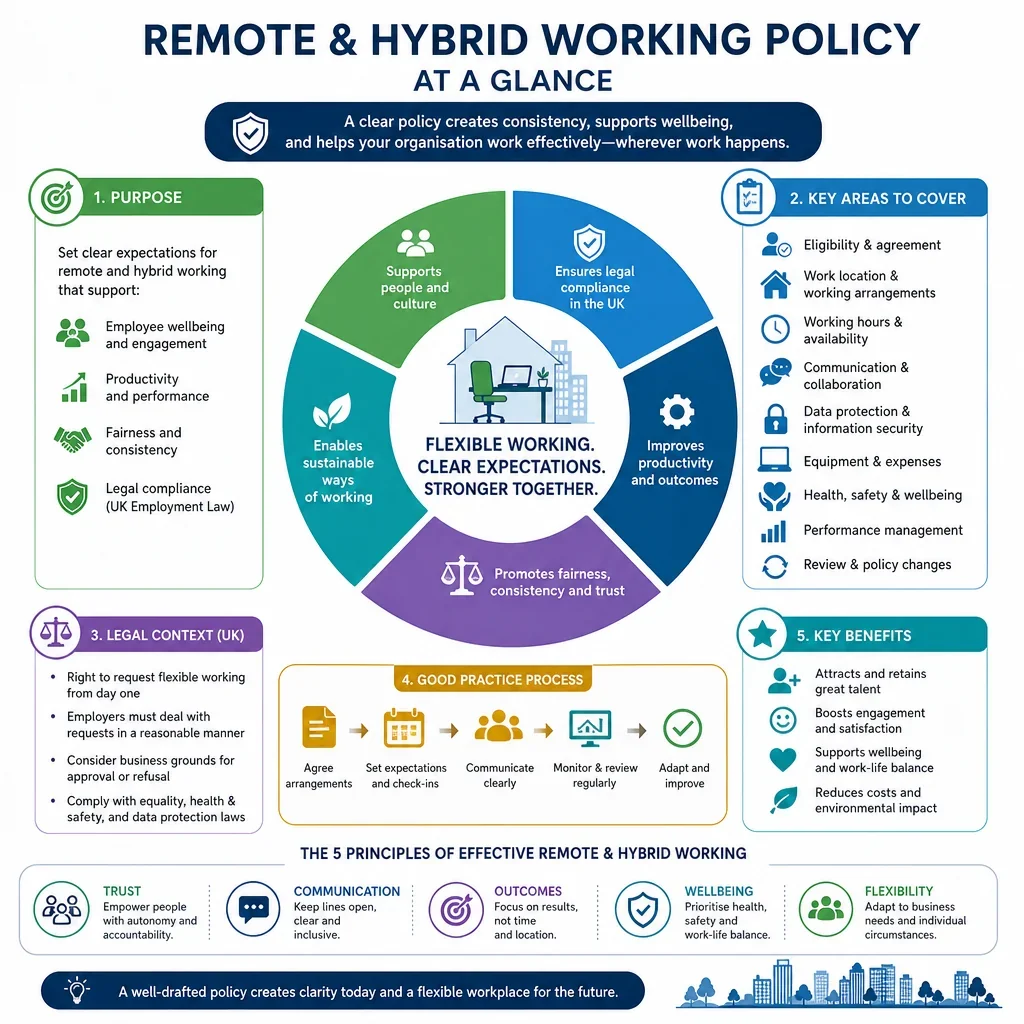
A UK remote and hybrid working policy should do more than describe where staff may work. It should allocate responsibility for health and safety, working time, data protection, confidentiality, expenses, equipment, flexible working requests and equality impacts. The highest-risk areas are usually working time compliance, home working risk assessments, data security, monitoring, disability adjustments and handling statutory flexible working requests.
Which Compliance Issues Create The Most Risk For Employers?
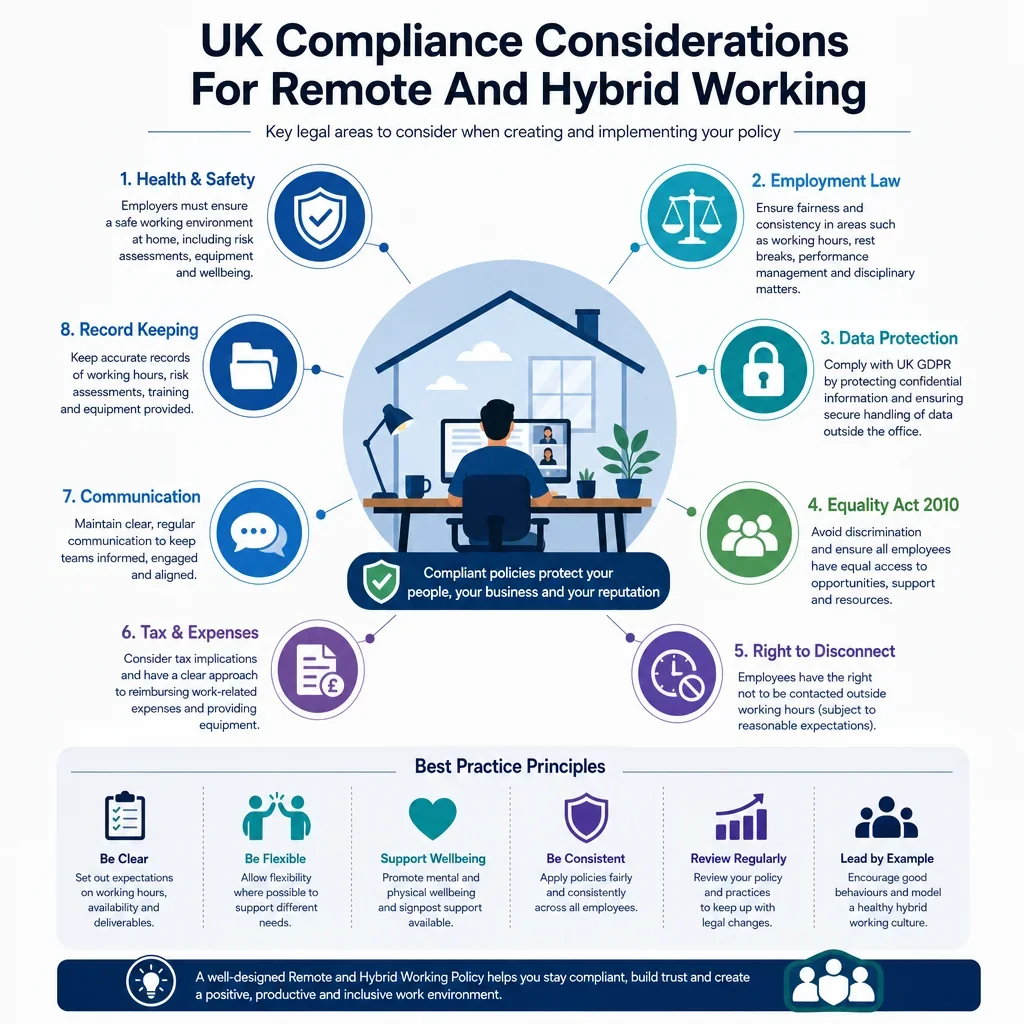
- Health and safety: Employers retain duties to protect workers even when they work from home, so policies should require workstation assessments, incident reporting and safe equipment use.
- Working time: Remote work can blur boundaries. Policies should address hours, rest breaks, overtime approval and the right to disconnect in practical terms.
- Data protection and confidentiality: Home and public working increase risk of unauthorised access, loss of devices and insecure networks. Policies should specify secure systems, device rules, storage, printing and breach reporting.
- Flexible working: Eligible employees can make statutory flexible working requests from day one of employment. Policies should separate informal hybrid arrangements from formal statutory requests.
- Equality and diversity: Hybrid arrangements must be applied consistently and should consider disability, caring responsibilities, pregnancy, religion and indirect discrimination risks.
How Should Employers Use These Compliance Considerations?
Employers should tailor remote and hybrid working policies to the role, seniority, data handled, home working set-up and expected attendance pattern. The policy should make clear when attendance may be required, who pays for equipment or expenses, how performance will be managed, and when arrangements can be changed or withdrawn.
FAQs
You Might Also Be Interested In