United Kingdom Remote And Hybrid Working Policy Clause Library
Clause Name | Clause Purpose | Working Arrangement Type | Practical Considerations | Risk If Omitted |
|---|---|---|---|---|
Core | ||||
Eligibility Criteria | Sets who can work remotely or hybrid and the criteria for approval. | Both | Role suitability, service needs, performance, supervision, probation and fairness. | High |
Policy Scope | Identifies who the policy applies to and which arrangements it covers. | Both | Employees, workers, contractors, permanent, temporary, UK-based and overseas staff. | Medium |
Contractual Status Of Arrangement | States whether remote or hybrid working changes the employment contract. | Both | Non-contractual wording, contract variation, individual letters and trial periods. | High |
Request And Approval Process | Explains how employees apply and how managers decide requests. | Both | Application forms, manager approval, objective criteria, appeal route and records. | High |
Flexible Working Requests | Links policy requests with statutory flexible working request procedures. | Both | Day-one right, two requests per year, consultation and two-month decision period. | High |
Review Periods | Provides for periodic review of remote or hybrid arrangements. | Both | Review dates, performance, service impact, wellbeing, team needs and consultation. | Medium |
Right To Vary Or Withdraw | Explains when the employer may change, suspend or end arrangements. | Both | Business needs, conduct, performance, role changes, notice and consultation. | High |
Permitted Work Locations | Sets approved locations for remote work and restrictions on unsuitable places. | Remote Working | Home address, public Wi-Fi, cafés, shared spaces, security and manager approval. | High |
Overseas Working Restrictions | Controls remote work outside the UK and related tax and immigration risks. | Remote Working | Prior approval, duration limits, right to work, tax residence and time zones. | High |
Office Attendance Requirements | Sets expected days or occasions when hybrid workers must attend the workplace. | Hybrid Working | Minimum days, anchor days, meetings, training, client needs and notice. | High |
Recommended | ||||
Anchor Days And Team Days | Allows fixed days for collaboration, meetings or whole-team attendance. | Hybrid Working | Department rules, part-time staff, reasonable adjustments and rota conflicts. | Medium |
Desk Booking And Workplace Capacity | Explains how hybrid staff reserve desks and use shared office space. | Hybrid Working | Hot-desking, booking systems, lockers, quiet rooms and accessibility needs. | Medium |
Core | ||||
Working Hours And Availability | Confirms working hours, availability windows and compliance with working time rules. | Both | Core hours, breaks, overtime approval, time recording and time zone differences. | High |
Rest Breaks And Working Time Limits | Reminds staff to take legal rest breaks and avoid excessive working hours. | Both | 20-minute breaks, 11-hour daily rest, weekly rest and opt-out records. | High |
Recommended | ||||
Time Recording | Sets how remote or hybrid workers record hours and absences. | Both | Timesheets, login data, overtime, breaks, annual leave and sickness reporting. | Medium |
Core | ||||
Communication Expectations | Sets expectations for contact, meetings, responsiveness and collaboration. | Both | Response times, diaries, video calls, messaging channels and manager check-ins. | Medium |
Recommended | ||||
Virtual Meeting Standards | Sets rules for online meetings, conduct, privacy and professional presentation. | Both | Camera use, recording, background privacy, accessibility and meeting etiquette. | Low |
Core | ||||
Wellbeing And Isolation | Addresses wellbeing risks, isolation and support for remote workers. | Remote Working | Regular contact, mental health support, workload, inclusion and lone working risks. | High |
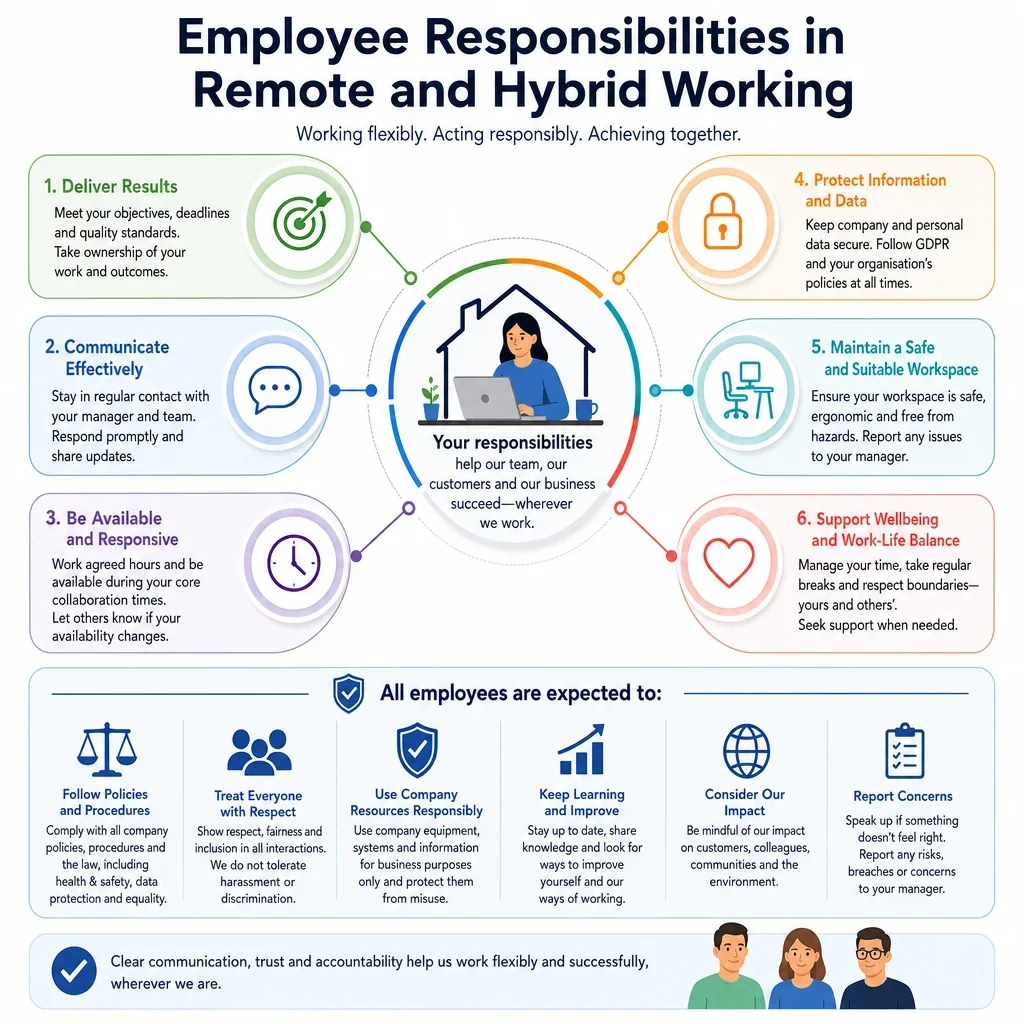
Health And Safety Responsibilities | Confirms employer and employee duties for safe remote working. | Both | Risk assessments, safe setup, accident reporting, hazards and employee cooperation. | High |
Homeworking Risk Assessment | Requires assessment of risks arising from home or remote working. | Remote Working | Self-assessment forms, manager review, photos, hazards and follow-up actions. | High |
Display Screen Equipment | Covers DSE assessments and workstation safety for screen users. | Both | Chair, screen, keyboard, lighting, eye tests, breaks and workstation assessments. | High |
Accident And Incident Reporting | Requires prompt reporting of work-related accidents at home or remotely. | Both | Reporting channels, investigation, RIDDOR review and near-miss records. | High |
Equipment Provision | States what equipment the employer provides for remote or hybrid work. | Both | Laptop, monitor, chair, keyboard, headset, delivery, maintenance and replacement. | High |
Recommended | ||||
Personal Device Use | Controls whether employees may use personal devices for work. | Both | BYOD approval, encryption, passwords, updates, remote wipe and family access. | High |
Core | ||||
Equipment Ownership And Return | Confirms company ownership and return obligations for equipment. | Both | Asset lists, collection, damage, deductions, termination and upgrades. | Medium |
Recommended | ||||
Equipment Care And IT Support | Sets employee duties for care, loss, damage and IT support requests. | Both | Fault reporting, repairs, loan devices, insurance, misuse and security updates. | Medium |
Core | ||||
Expenses And Reimbursement | Explains what remote working costs may be reimbursed and how to claim. | Both | Broadband, phone, stationery, utilities, receipts, approval and taxable benefits. | High |
Recommended | ||||
Travel To Workplace Costs | Clarifies when commuting or travel costs are payable or not payable. | Hybrid Working | Normal commuting, office days, client visits, temporary workplaces and mileage. | Medium |
Tax Treatment Of Homeworking Costs | Flags that payments or equipment may have tax implications. | Both | HMRC limits, taxable benefits, salary sacrifice and employee tax relief. | Medium |
Core | ||||
Data Protection | Requires secure handling of personal data when working remotely. | Both | UK GDPR, access controls, printing, storage, breach reporting and training. | High |
Information Security | Sets technical and organisational security rules for remote work. | Both | VPN, MFA, encryption, passwords, patching, Wi-Fi security and screen locking. | High |
Confidentiality | Protects confidential information in home, public and shared environments. | Both | Private calls, locked storage, family access, clean desk and secure disposal. | High |
Recommended | ||||
Printing And Paper Records | Controls printing, transport, storage and disposal of work documents. | Both | Print approval, locked storage, shredding, courier use and document registers. | High |
Core | ||||
Security Incident Reporting | Requires prompt reporting of data breaches or security incidents. | Both | Lost devices, phishing, misdirected emails, 72-hour ICO assessment and escalation. | High |
Recommended | ||||
Cyber Security Training | Requires staff training on remote working cyber risks. | Both | Phishing, passwords, MFA, updates, reporting and use of approved systems. | Medium |
Employee Monitoring | Explains lawful monitoring of work systems, activity or productivity. | Both | Transparency, proportionality, privacy notices, DPIAs and personal device boundaries. | High |
Core | ||||
Performance Management | Sets how performance will be measured and managed remotely. | Both | Outputs, objectives, supervision, feedback, underperformance and fair comparisons. | High |
Recommended | ||||
Management Supervision | Defines manager contact, supervision and support arrangements. | Both | One-to-ones, workload reviews, new starters, junior staff and escalation. | Medium |
Core | ||||
Conduct And Professional Standards | Confirms normal conduct rules apply when working away from the workplace. | Both | Availability, misuse of systems, conflicts, social media and disciplinary links. | Medium |
Equality And Non-Discrimination | Requires fair, non-discriminatory decisions about remote and hybrid working. | Both | Protected characteristics, part-time staff, carers, objective reasons and records. | High |
Reasonable Adjustments | Explains how remote or hybrid working may support disabled employees. | Both | Adjusted attendance, specialist equipment, phased returns, workspace needs and review. | High |
Recommended | ||||
Carers And Dependants | Clarifies remote work is not a substitute for dependant care. | Both | Childcare, emergency dependants leave, flexibility, interruptions and working hours. | Medium |
Core | ||||
Sickness Absence Reporting | Confirms normal sickness reporting rules apply to remote workers. | Both | Reporting deadlines, fit notes, remote capability, return-to-work and sick pay. | Medium |
Recommended | ||||
Annual Leave And Absence Planning | Ensures holiday booking and absence cover work for distributed teams. | Both | Booking systems, handovers, visibility, minimum leave and holiday pay rules. | Medium |
Optional | ||||
Remote Onboarding | Sets how new staff are inducted when working remotely or hybrid. | Both | Equipment delivery, induction, right to work checks, training and buddy systems. | Low |
Recommended | ||||
Training And Competence | Requires training needed to work safely and effectively remotely. | Both | DSE, cyber security, systems, management, health and safety and inclusion. | Medium |
Optional | ||||
Home Workspace Access | Sets when the employer may request access to assess or recover equipment. | Remote Working | Notice, consent, privacy, safety assessments, repairs and equipment collection. | Medium |
Recommended | ||||
Home Insurance And Permissions | Requires employees to check home insurance, tenancy or mortgage permissions. | Remote Working | Insurer notification, lease restrictions, business rates concerns and landlord consent. | Medium |
Employer Liability Insurance | Notes insurance should cover employees working remotely where required. | Both | Insurer notification, homeworking risks, equipment loss and public liability gaps. | Medium |
Change Of Home Address | Requires employees to notify changes affecting remote working arrangements. | Remote Working | Risk assessment updates, tax, right to work, commuting distance and equipment delivery. | Medium |
Right To Work And Immigration | Prevents remote arrangements from breaching work permission or sponsorship rules. | Remote Working | UK work location, sponsored workers, overseas travel and address reporting. | High |
Business Continuity And Emergency Working | Covers remote working during disruption, closure or emergency situations. | Remote Working | Office closure, weather, transport strikes, IT outages and temporary instructions. | Medium |
Connectivity And IT Outages | Explains what staff must do if technology prevents remote work. | Both | Reporting faults, alternative work, office attendance, mobile data and downtime. | Medium |
Optional | ||||
Co-Working Spaces | Controls work from shared offices or third-party workspaces. | Remote Working | Approval, cost, confidentiality, insurance, security, calls and health and safety. | Medium |
Recommended | ||||
Public Place Working | Restricts work in public places where confidentiality or security is at risk. | Remote Working | Privacy screens, calls, public Wi-Fi, screen visibility and secure conversations. | High |
Core | ||||
Home Workspace Standards | Sets minimum requirements for a safe and suitable home workspace. | Remote Working | Lighting, ventilation, seating, privacy, electrical safety and trip hazards. | High |
Recommended | ||||
Electrical Safety | Addresses safe use of electrical equipment in the home workspace. | Remote Working | Plugs, chargers, extension leads, PAT testing approach and damaged equipment. | Medium |
Lone Working | Manages risks where staff work alone away from colleagues. | Remote Working | Check-ins, emergency contacts, wellbeing risks, home visits and escalation. | Medium |
Work-Life Boundaries | Helps prevent overwork, stress and blurred home-work boundaries. | Remote Working | Expected hours, breaks, emails outside hours and manager role modelling. | Medium |
Optional | ||||
Out-Of-Hours Contact | Sets expectations for emails, calls and messages outside normal hours. | Both | Urgent contact, on-call roles, delayed send, rest periods and international teams. | Low |
Recommended | ||||
Team Collaboration And Inclusion | Ensures remote and office staff are included in work and decisions. | Both | Meeting access, promotion opportunities, information sharing and team cohesion. | Medium |
Optional | ||||
Recruitment And Role Advertising | Clarifies how remote or hybrid options are described in vacancies. | Both | Advert wording, office location, attendance requirements and contractual status. | Low |
Probationary Period Restrictions | Allows different remote or hybrid rules during probation or induction. | Both | Training needs, supervision, office days, mentoring and performance reviews. | Low |
Recommended | ||||
Trial Periods | Allows arrangements to be tested before longer-term approval. | Both | Duration, review criteria, employee feedback and outcomes after the trial. | Medium |
Temporary Remote Working | Covers short-term remote work for exceptional or temporary circumstances. | Remote Working | Emergencies, medical issues, travel disruption, childcare disruption and approval length. | Medium |
Role Changes And Suitability Review | Requires reassessment if duties, team or seniority change. | Both | Promotion, transfer, client-facing duties, supervision needs and location changes. | Medium |
Client And Site Attendance | Confirms remote workers must attend client sites or offices when required. | Both | Notice, travel, dress code, security, expenses and client confidentiality. | Medium |
Optional | ||||
Dress And Presentation Standards | Sets expectations for professional appearance during video calls or site visits. | Both | Client calls, internal meetings, office days, equality and religious dress. | Low |
Core | ||||
Approved Systems And Software | Requires use of approved platforms, software and storage locations. | Both | Cloud storage, file sharing, messaging apps, software installs and shadow IT. | High |
Passwords And Authentication | Sets authentication standards for remote access to systems. | Both | MFA, password managers, sharing bans, device locking and account recovery. | High |
Secure Network Use | Requires secure internet connections for remote work. | Remote Working | Home router passwords, VPN, public Wi-Fi restrictions and hotspot use. | High |
Recommended | ||||
Intellectual Property | Confirms ownership of work created remotely remains with the employer where applicable. | Both | Work product, inventions, personal devices, storage and post-termination obligations. | Medium |
Use Of AI Tools | Controls use of AI tools with work data outside the office. | Both | Approved tools, confidential data, personal data, checking outputs and records. | High |
Optional | ||||
Environmental Considerations | Encourages efficient use of energy, travel and resources in hybrid work. | Both | Travel reduction, paperless working, equipment energy use and sustainability reporting. | Low |
Payroll And Benefits Location Impact | Flags that location may affect payroll, benefits and allowances. | Remote Working | London weighting, travel allowances, overseas payroll, benefits and tax reporting. | Medium |
Recommended | ||||
Appeals And Grievances | Explains how employees challenge decisions or raise concerns. | Both | Refusals, changed arrangements, inconsistent treatment and formal grievances. | Medium |
Core | ||||
Record Keeping | Requires records of requests, decisions, reviews and risk assessments. | Both | Approvals, refusals, flexible working requests, DSE forms and review notes. | High |
Recommended | ||||
Policy Ownership And Updates | Identifies who owns the policy and how changes are communicated. | Both | HR ownership, consultation, version control, manager briefings and staff notices. | Low |
What Clauses Should A UK Remote And Hybrid Working Policy Include?
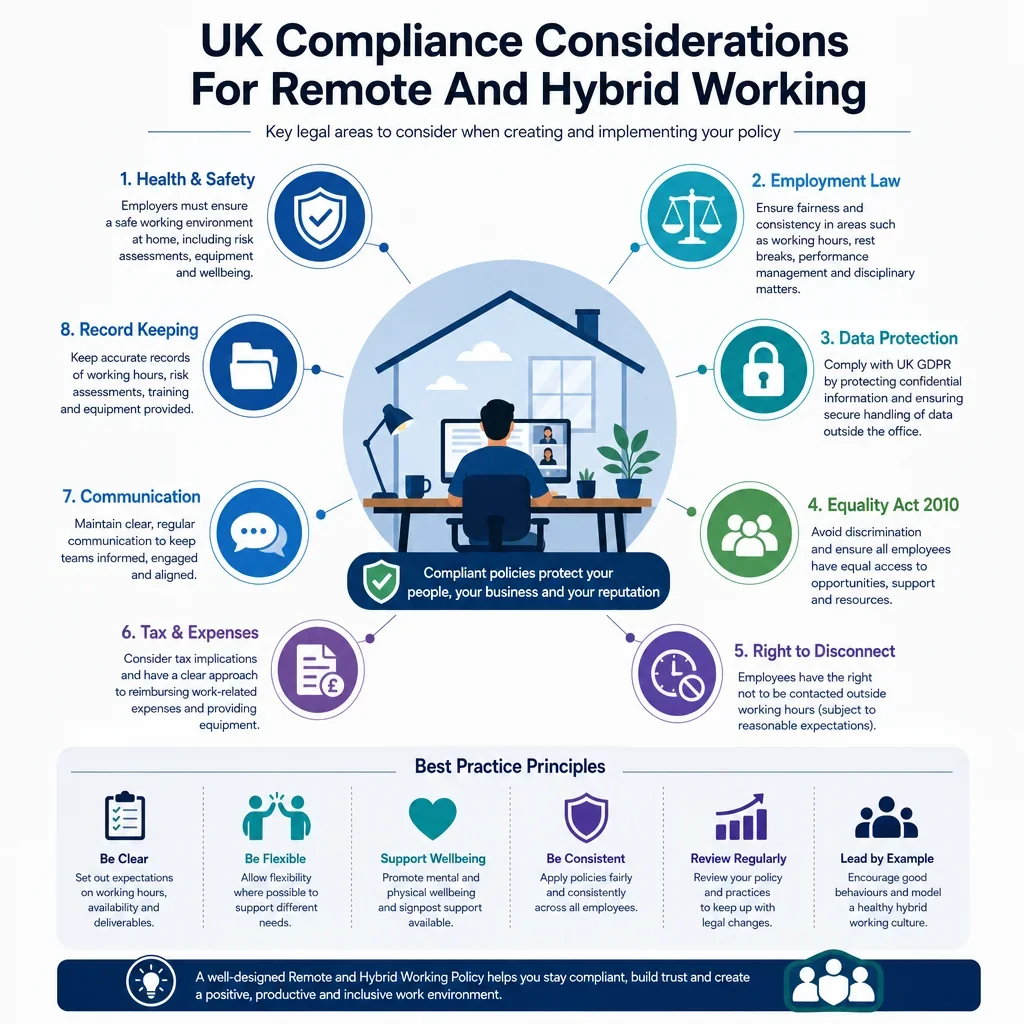
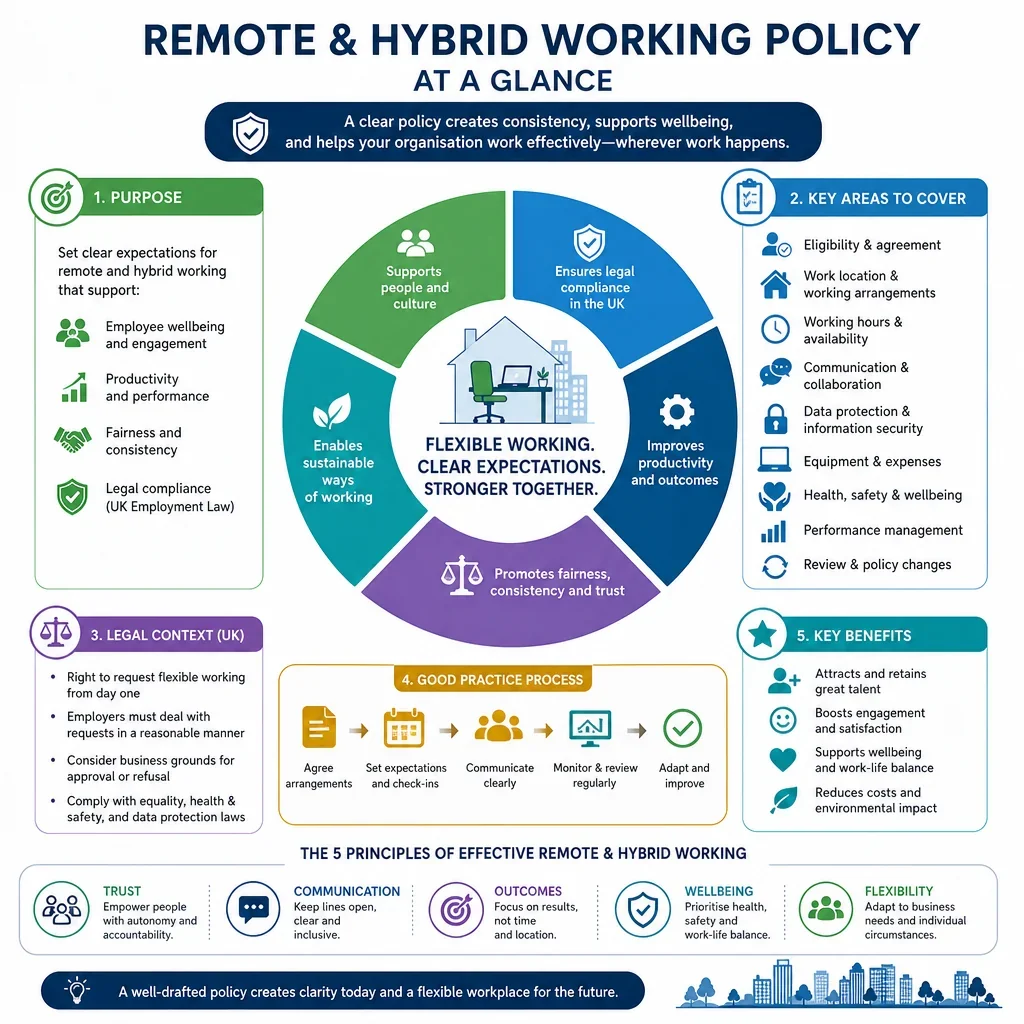
A robust UK Remote and Hybrid Working Policy should cover more than the number of days an employee may work from home. The highest-risk clauses are usually those dealing with eligibility, contractual status, health and safety, working time, data protection, confidentiality, equipment, expenses, performance management, and ending or changing the arrangement.
Why Should Employers Distinguish Hybrid Working From Fully Remote Working?
Hybrid working clauses need clear rules on office attendance, anchor days, team days, desk booking, commuting expectations, and changes to working patterns. Fully remote arrangements need additional controls on work location, overseas working, homeworking safety, security, isolation, and communication. Treating both models identically can create uncertainty and employee relations risk.
Which Clauses Have The Greatest Legal Or Compliance Impact?
Clauses on health and safety, display screen equipment, working time, data protection, confidentiality, equality, reasonable adjustments, expenses, and flexible working requests are especially important in the UK. These areas connect with statutory duties and regulator guidance, so vague wording can create legal, tax, operational, or information security exposure.
How Can A Policy Reduce Disputes About Homeworking Costs And Equipment?
The policy should state what the employer will provide, what employees must supply, how approval for purchases works, whether expenses are reimbursed, who owns equipment, and what happens when employment or remote working ends. This is particularly important where employees expect reimbursement for broadband, heating, furniture, travel, or co-working spaces.
Why Is A Right To Vary Or Withdraw Remote Working Important?
Employers should explain when remote or hybrid working may be reviewed, changed, suspended, or withdrawn, especially where arrangements are non-contractual or trial-based. Without this, an informal pattern may become difficult to manage and may generate disputes if business needs, performance, supervision, or client requirements change.
FAQs
You Might Also Be Interested In