Residential Works And Party Wall Relevance In The United Kingdom
Description | Party Wall Relevance | Typical Notice Type | Key Trigger Factors | Neighbour Response Likelihood |
|---|---|---|---|---|
Single-storey rear extension | ||||
A ground-floor extension to the rear of a house, often with new foundations near side boundaries. | Often relevant | Section 1 line of junction section 6 excavation sometimes section 2 party wall works | New wall on boundary foundations within 3m or 6m cutting into party wall flashing into shared wall | High |
Two-storey rear extension | ||||
A rear extension over two floors, usually requiring deeper foundations and structural connections. | Often relevant | Section 1 section 2 section 6 | Boundary wall position excavation depth tying into party wall increased load near shared structure | High |
Side return extension | ||||
Extension into the side passage of a terraced or semi-detached house. | Often relevant | Section 1 line of junction section 6 excavation section 2 if party wall is altered | Building on boundary excavating beside neighbour’s wall inserting flashings or beams | High |
Wraparound extension | ||||
An extension combining rear and side elements, often close to more than one boundary. | Often relevant | Section 1 section 2 section 6 | Multiple boundary walls nearby foundations structural openings party wall connections | High |
Side extension | ||||
Extension at the side of a dwelling, commonly close to a neighbour’s land or structure. | Often relevant | Section 1 line of junction section 6 excavation | Wall built up to boundary foundations near neighbour’s building shared flank wall alterations | Medium |
Front extension | ||||
Small extension or porch enlargement at the front of a house. | Sometimes relevant | Section 1 or section 6 if near boundary structures | Proximity to boundary shared porch wall excavation near neighbour’s foundations | Medium |
Porch construction | ||||
Building a small entrance structure, usually with shallow foundations. | Sometimes relevant | Section 1 line of junction section 6 if excavating close to neighbour | Boundary position shared entrance wall excavation depth and distance | Low |
Loft conversion with steel beams | ||||
Converting roof space and supporting new floors or dormers with steels bearing into party walls. | Often relevant | Section 2 party structure notice | Cutting pockets into party wall inserting beams raising or thickening party wall | High |
Dormer loft conversion | ||||
Adding a box or pitched dormer to create headroom in a loft conversion. | Often relevant | Section 2 sometimes section 1 for raised walls | Beams into party wall dormer cheeks at boundary raising party parapet shared chimney works | High |
Hip-to-gable loft conversion | ||||
Changing a hipped roof into a gable to enlarge loft space, common on semi-detached houses. | Sometimes relevant | Section 2 if shared wall is cut into or raised | Party wall beam bearings shared chimney works to separating wall or parapet | Medium |
Roof light loft conversion | ||||
Loft conversion using roof windows without major dormer construction. | Sometimes relevant | Section 2 if beams are inserted into a party wall | Structural floor steels cutting into party wall no notice if works stay within own roof only | Medium |
Mansard roof extension | ||||
Major roof enlargement with steep rear slope, common on terraced houses. | Often relevant | Section 2 party structure notice | Raising party walls cutting steel beams altering parapets shared roof junctions | High |
Basement excavation | ||||
Creating or enlarging a basement below an existing house or garden. | Often relevant | Section 6 excavation section 2 underpinning or party wall works | Excavation below neighbour’s foundations underpinning retaining walls 3m and 6m rules | High |
Cellar lowering | ||||
Digging down an existing cellar floor to increase headroom. | Often relevant | Section 6 excavation section 2 if underpinning party wall | Depth below neighbouring foundations underpinning shared wall temporary support methods | High |
Underpinning a shared wall | ||||
Strengthening or deepening foundations beneath a party wall or adjoining structure. | Often relevant | Section 2 party wall works section 6 excavation | Works beneath shared wall excavation below foundation level temporary support risk | High |
Piled foundations | ||||
Deep foundation system used for extensions, basements or poor ground conditions. | Sometimes relevant | Section 6 excavation if within statutory distance and depth | Pile depth distance to neighbour’s foundations vibration ground movement risk | Medium |
Trench foundations near boundary | ||||
Excavating concrete strip foundations for an extension or outbuilding near a neighbour. | Often relevant | Section 6 excavation notice | Excavation within 3m and deeper than neighbour’s foundations 6m plane rule for deeper works | Medium |
Garden room near boundary | ||||
Detached office, gym or studio built in a rear garden close to a boundary. | Sometimes relevant | Section 1 section 6 if excavations are close and deep enough | Wall on line of junction foundation depth proximity to neighbour’s garage or outbuilding | Low |
New garage on boundary | ||||
Constructing a garage or store along a side or rear boundary. | Sometimes relevant | Section 1 line of junction section 6 excavation | Wall astride or up to boundary excavation near neighbour’s structure shared boundary wall | Medium |
Garage conversion | ||||
Turning an existing garage into living space, usually without major excavation. | Sometimes relevant | Section 2 if works affect a party wall | Shared garage wall cutting in beams damp-proofing into party wall structural openings | Low |
Chimney breast removal | ||||
Removing an internal chimney breast, often from a wall shared with a neighbour. | Often relevant | Section 2 party structure notice | Chimney on party wall gallows brackets or steel support cutting into shared masonry | High |
Chimney stack removal | ||||
Removing a chimney stack above roof level, sometimes shared by adjoining houses. | Often relevant | Section 2 if stack forms part of party wall or shared structure | Shared stack party wall below weathering neighbour’s roof structural support | High |
Cutting beams into a party wall | ||||
Forming pockets in a shared wall to support steel or timber beams. | Often relevant | Section 2 party structure notice | Depth of pockets beam loads wall thickness proximity to neighbour’s fireplaces or services | High |
Removing a load-bearing wall | ||||
Creating open-plan space by removing internal structural masonry and adding beams. | Sometimes relevant | Section 2 if beam bears into or affects a party wall | Beam bearings in party wall vibration shared wall stability no trigger if wholly internal | Medium |
Forming an opening in a party wall | ||||
Creating or enlarging an opening in a wall shared with an adjoining owner. | Often relevant | Section 2 party structure notice | Shared wall lintel or beam support fire separation structural stability | High |
Raising a party wall | ||||
Increasing the height of a shared wall, often for loft or roof works. | Often relevant | Section 2 party wall notice | Existing party wall added height and load weathering enclosure by neighbour later | High |
Cutting flashings into a party wall | ||||
Installing lead flashing or weathering where a new roof meets a shared wall. | Often relevant | Section 2 party wall works | Cutting into shared wall roof abutment weatherproofing neighbour’s side | Medium |
Inserting a damp-proof course in a party wall | ||||
Chemical or physical damp-proofing treatment to a wall shared with a neighbour. | Often relevant | Section 2 party structure notice | Treatment into shared wall drilling pattern moisture effects access needs | Medium |
Replastering a party wall | ||||
Removing and replacing plaster finishes on the owner’s side of a shared wall. | Usually not relevant | Usually none unless cutting into or structurally affecting the party wall | Surface finish only no structural cutting no beam pockets or damp-proof insertion | Low |
Electrical chasing in a party wall | ||||
Cutting shallow channels for cables or sockets in a shared wall. | Sometimes relevant | May be section 2 if cutting is more than minor making-good | Depth and extent of chasing wall thickness structural or fire separation impact | Low |
Boiler flue through a party wall | ||||
Installing a flue or duct through a wall that may be shared or boundary-facing. | Sometimes relevant | Section 2 if cutting into a party wall | Whether wall is shared hole size termination over neighbour’s land structural effect | Medium |
Roof covering replacement | ||||
Replacing tiles, slates, battens or felt without altering party walls. | Usually not relevant | Usually none unless party wall, parapet or shared chimney is altered | No cutting into party wall no shared chimney works no parapet raising | Low |
Roof structure alteration | ||||
Changing rafters, purlins or structural roof supports near a shared wall. | Sometimes relevant | Section 2 if cutting into or loading a party wall | New bearings in party wall shared roof members parapet or chimney changes | Medium |
Solar panel installation | ||||
Mounting photovoltaic or thermal panels on the owner’s roof. | Usually not relevant | Usually none unless structural works affect a party wall | Fixings to own roof only no party wall cutting no shared parapet alteration | Low |
External wall insulation | ||||
Adding insulation boards and render to outside walls, sometimes at boundary edges. | Sometimes relevant | Section 1 or section 2 if boundary or party wall is affected | Projection over boundary fixing into shared wall access to neighbour’s land | Medium |
Rendering a boundary or party wall | ||||
Applying render to a wall at the boundary or to a shared wall face. | Sometimes relevant | Section 2 if a party wall is cut into or altered | Wall ownership thickness added over boundary access to neighbour’s land | Low |
New boundary wall | ||||
Building a garden or yard wall along the boundary line. | Often relevant | Section 1 line of junction notice | Wall astride boundary needs consent wall wholly on owner’s land still may need notice | Medium |
Replacing a garden fence | ||||
Removing and replacing timber fencing or posts along a garden boundary. | Usually not relevant | Usually none fences are generally outside the party wall procedure | Fence not a party fence wall no excavation near structures no masonry boundary wall works | Low |
Repairing a party fence wall | ||||
Repairing a masonry wall separating gardens, not forming part of a building. | Often relevant | Section 2 party fence wall works | Masonry party fence wall repair extent rebuilding shared ownership and cost issues | Medium |
Demolishing a party fence wall | ||||
Taking down a shared masonry garden wall along the boundary. | Often relevant | Section 2 party fence wall works | Whether wall is a party fence wall structural condition rebuilding or replacement plans | High |
Retaining wall construction | ||||
Building a wall to retain raised ground, often along a boundary or excavation edge. | Sometimes relevant | Section 1 section 6 if excavating near neighbouring structures | Boundary line excavation depth retained ground level proximity to neighbour’s foundations | Medium |
Driveway excavation | ||||
Digging out a front garden or drive for paving, drainage or parking. | Sometimes relevant | Section 6 if excavation is close and deep enough | Depth of excavation distance to neighbour’s house, wall or garage drainage trenches | Low |
Drainage trenches near neighbour | ||||
Excavating trenches for new drains, soakaways or service runs close to adjoining structures. | Sometimes relevant | Section 6 excavation notice if statutory depth and distance tests are met | Trench depth distance to neighbour’s foundations ground stability manholes near boundary | Low |
Soakaway installation | ||||
Excavating a pit or crate system to manage surface water in a garden or drive. | Sometimes relevant | Section 6 if excavation is near and below neighbour’s foundations | Excavation depth distance to structures effect on ground and neighbouring foundations | Low |
Swimming pool excavation | ||||
Excavating a large pit for an indoor or outdoor residential pool. | Sometimes relevant | Section 6 excavation notice | Depth distance to neighbour’s buildings or walls ground retention dewatering | Medium |
Kitchen refurbishment | ||||
Replacing units, appliances, finishes and services within an existing kitchen. | Usually not relevant | Usually none unless structural works affect a party wall | Non-structural works only no excavation no cutting into shared walls | Low |
Bathroom refurbishment | ||||
Replacing bathroom fittings, tiles, pipework and finishes. | Usually not relevant | Usually none unless chasing or structural works materially affect a party wall | Surface and service works only no shared wall structural cutting no excavation | Low |
Full internal rewire | ||||
Replacing electrical circuits, sockets and lighting throughout a dwelling. | Usually not relevant | Usually none unless substantial cutting into party walls is proposed | Extent of chasing wall type no structural intervention making good only | Low |
Window replacement | ||||
Replacing existing windows within existing openings. | Usually not relevant | Usually none unless openings are made in a party wall | Existing openings only no shared wall no structural enlargement affecting party structure | Low |
New window in flank wall | ||||
Creating a new opening in a side wall, sometimes close to a boundary. | Sometimes relevant | Section 2 if the wall is a party wall | Whether flank wall is shared lintel works boundary proximity privacy issues outside the Act | Medium |
Floor replacement | ||||
Replacing floorboards, joists or screed within the property. | Sometimes relevant | Section 2 if joists are cut into or replaced in a party wall | Joist bearings in party wall structural replacement surface flooring only usually outside Act | Low |
Structural floor strengthening | ||||
Adding steels, joists or support beams to increase floor load capacity. | Sometimes relevant | Section 2 if new supports bear into a party wall | Beam pockets wall load shared masonry condition vibration during installation | Medium |
Conservatory construction | ||||
Glazed rear or side addition with shallow or standard foundations. | Sometimes relevant | Section 1 if on boundary section 6 if excavations trigger the Act | Boundary wall foundation depth distance to neighbour’s conservatory or house | Medium |
Orangery construction | ||||
Solid-roof garden room extension, usually with masonry walls and foundations. | Often relevant | Section 1 section 6 sometimes section 2 | Boundary walls excavation depth tying into party wall shared drainage works nearby | Medium |
Demolishing an attached outbuilding | ||||
Removing a lean-to, store or garage attached to a shared wall or boundary wall. | Sometimes relevant | Section 2 if party wall or party fence wall is exposed or affected | Shared wall exposure weathering support to neighbour’s structure making good | Medium |
Rebuilding a shared garden wall | ||||
Taking down and reconstructing a masonry wall used by adjoining gardens. | Often relevant | Section 2 party fence wall works | Party fence wall status structural condition line of rebuild shared cost questions | Medium |
Installing a lintel in a party wall | ||||
Adding or replacing a lintel where an opening or support is formed in a shared wall. | Often relevant | Section 2 party structure notice | Cutting into shared wall temporary support opening size load path | High |
Raising a parapet wall | ||||
Increasing the height of a parapet, often between terraced roofs. | Often relevant | Section 2 party wall works | Parapet forms party wall added load weathering roof abutments | High |
Heat pump base excavation | ||||
Creating a small concrete base and service trench for an external heat pump unit. | Usually not relevant | Usually none section 6 only if excavation is close and deep enough | Shallow base trench depth distance to neighbour’s building boundary position | Low |
Ground source heat pump trenches | ||||
Excavating garden trenches or boreholes for ground loop pipework. | Sometimes relevant | Section 6 if excavation falls within distance and depth rules | Trench or borehole depth distance to neighbour’s foundations ground movement risk | Low |
Modular extension foundations | ||||
Installing ground screws, pads or piles for a prefabricated home extension. | Sometimes relevant | Section 1 section 6 depending on boundary and excavation | Foundation depth distance to neighbour’s structure boundary wall location | Medium |
Basement lightwell excavation | ||||
Excavating outside a basement to create a lightwell or access stairs. | Often relevant | Section 6 excavation section 2 if party wall is cut or supported | Depth below neighbour’s foundations retaining walls proximity to boundary underpinning | High |
Building a wall astride the boundary | ||||
Constructing a new wall partly on the neighbour’s land and partly on the owner’s land. | Often relevant | Section 1 line of junction notice | Requires neighbour consent to build astride fallback is wall wholly on owner’s land | High |
Building a wall up to the boundary | ||||
Constructing a new external wall wholly on the owner’s land but at the boundary line. | Often relevant | Section 1 line of junction notice | New wall at line of junction foundations may project excavation may also trigger section 6 | Medium |
Enclosing on an existing party wall | ||||
Using an existing party wall as part of a new extension or building. | Often relevant | Section 2 party wall works | Use of shared wall cutting flashings raising or weathering wall enclosure costs | High |
Exposing a party wall | ||||
Leaving a shared wall exposed after removing an attached structure or roof. | Often relevant | Section 2 party wall works | Weatherproofing structural support making good neighbour’s wall condition | High |
Cutting away projections from a party wall | ||||
Removing chimney breasts, corbels, piers or other projections from a shared wall. | Often relevant | Section 2 party structure notice | Projection forms part of party wall structural support vibration and making good | High |
Structural repair to a party wall | ||||
Repairing cracks, bulging, settlement or defective masonry in a shared wall. | Often relevant | Section 2 party wall repair works | Necessity of repair shared wall status access allocation of responsibility and cost | Medium |
Subsidence repair near boundary | ||||
Stabilising foundations, walls or floors after movement close to adjoining property. | Sometimes relevant | Section 2 or section 6 depending on wall works and excavation | Underpinning excavation depth shared wall repair proximity to neighbour’s foundations | High |
Cavity wall insulation | ||||
Injecting insulation into external wall cavities through small drill holes. | Usually not relevant | Usually none unless a party wall cavity is materially affected | External wall ownership no structural alteration no boundary projection | Low |
Internal insulation on a party wall | ||||
Adding insulated lining to the owner’s side of a shared wall. | Usually not relevant | Usually none unless fixings or works materially affect the party wall | Lightweight lining only no structural cutting no beam pockets or wall thickening | Low |
Scaffolding on neighbour’s land | ||||
Placing scaffold or access equipment on adjoining land for residential works. | Sometimes relevant | Access may be available for notifiable works under the Act otherwise separate consent needed | Access for notifiable party wall works licence needed if works are not under the Act | High |
Temporary propping of a party wall | ||||
Supporting a shared wall during openings, demolition, underpinning or structural alterations. | Often relevant | Section 2 party structure notice | Temporary support to shared structure risk of movement access and method statement | High |
When Do Residential Works Usually Need A Party Wall Notice?
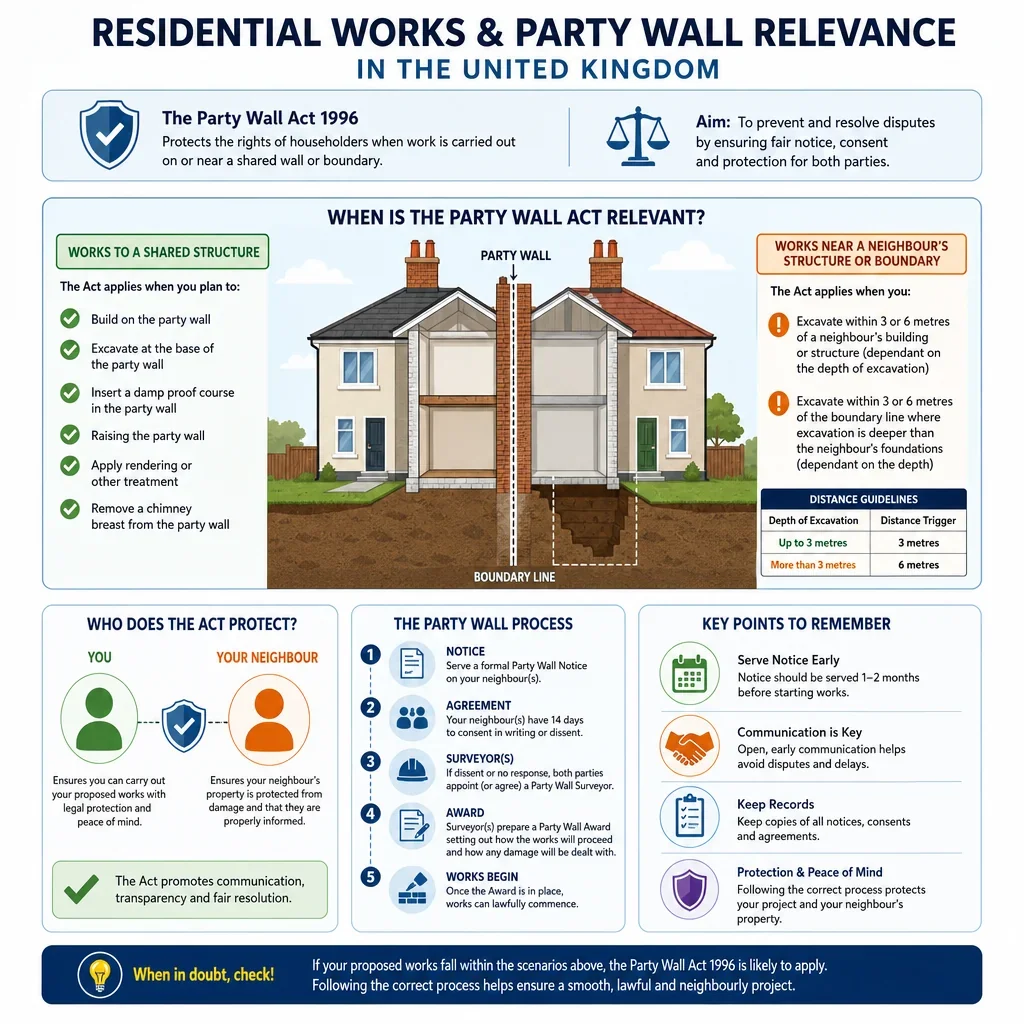
Party wall notice is most likely where works affect a shared wall, sit on or near the boundary, or involve excavations close to a neighbour’s structure. Common high-risk projects include rear extensions with new foundations near the boundary, loft conversions cutting steel beams into a party wall, basement works, chimney breast removal on a shared wall, and underpinning.
Which Party Wall Notice Is Most Common For Home Improvements?
For residential projects, the most common triggers are section 2 works to a party wall, section 1 new walls at or astride the line of junction, and section 6 excavations within 3 or 6 metres of neighbouring structures. One project may require more than one notice.
Which Works Are Less Likely To Need A Party Wall Agreement?
Purely internal works away from shared walls, like kitchen refits, bathroom refurbishments, electrical rewiring, flooring replacement and roof covering repairs, are usually outside the Party Wall etc. Act 1996. However, relevance can change if the works cut into, load onto, expose, underpin or demolish part of a party wall or involve excavation near neighbouring foundations.
Why Do Extensions And Loft Conversions Often Lead To Neighbour Involvement?
Extensions often involve boundary walls and excavations close to neighbouring buildings. Loft conversions often involve inserting steel beams or raising walls connected to a party wall. These factors increase the likelihood of a written response, dissent, a schedule of condition, or appointment of surveyors.
What Should Homeowners Check Before Starting Work?
- Check whether any wall is a party wall, party fence wall, or boundary wall.
- Check the distance and depth of any excavation compared with neighbouring foundations.
- Check whether structural beams, flashings, damp-proofing, chimney works or roof works affect a shared wall.
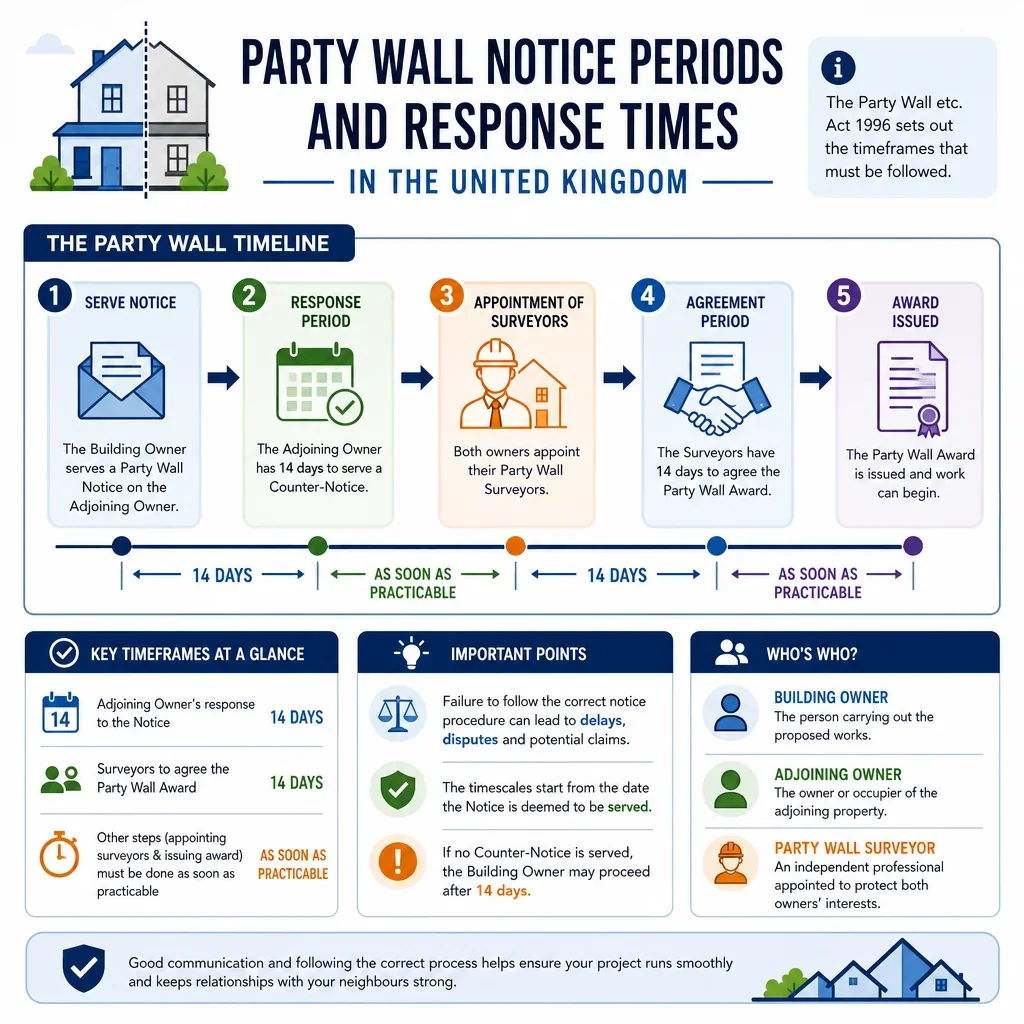
- Allow time for notice before starting notifiable work; the Act sets different notice periods depending on the section used.
- Use project-specific documents rather than assuming planning permission or building control approval replaces party wall procedure.
FAQs
You Might Also Be Interested In