Rental History Details For Reference Letters In The United Kingdom
Rental History Detail | Description | Information Nature | Accuracy Sensitivity | Verification Notes |
|---|---|---|---|---|
Tenancy Dates | ||||
Tenancy start date | Stated as the date the tenant first became contractually entitled to occupy. | Objective Fact | High | Check the signed tenancy agreement and move-in records. |
Tenancy end date | Stated as the date the tenancy ended or is due to end. | Objective Fact | High | Check surrender deed, notice, possession order or renewal records. |
Length of tenancy | Usually phrased as total months or years rented from the landlord. | Objective Fact | Medium | Calculate from tenancy start and end dates. |
Fixed-term period | Identifies the original contractual fixed term, such as 12 months. | Objective Fact | Medium | Check the tenancy agreement term clause. |
Periodic tenancy after fixed term | Notes that occupation continued on a rolling basis after the fixed term. | Objective Fact | Medium | Check whether the tenant stayed and paid rent after the fixed term. |
Tenancy renewal history | Mentions whether the tenant renewed for further fixed terms. | Objective Fact | Low | Review renewal agreements, addenda and agent records. |
Current or former tenant status | States whether the person is still renting or has moved out. | Objective Fact | Medium | Check keys, possession, rent account and correspondence. |
Rented property address | Identifies the address for which the reference is given. | Objective Fact | High | Check the tenancy agreement and landlord records. |
Named tenant on agreement | Confirms the applicant was a named tenant, not just an occupier. | Objective Fact | High | Check signed agreement, assignment, variation or licence records. |
Joint tenancy status | States whether the tenant was jointly responsible with others. | Objective Fact | High | Check agreement parties and any tenancy variation. |
Rent Payments | ||||
Monthly rent amount | States the agreed rent, commonly monthly or weekly. | Objective Fact | High | Check the tenancy agreement and any rent increase notices. |
Rent due date | States when rent was due, such as the first of each month. | Objective Fact | Medium | Check rent clause and payment ledger. |
Overall rent payment reliability | Commonly phrased as rent was paid on time throughout the tenancy. | Mixed | High | Compare bank statements, agent ledger and receipts before summarising. |
Rent paid in full | States whether all rent due was paid in full. | Objective Fact | High | Reconcile ledger against agreed rent and tenancy dates. |
Rent arrears during tenancy | States whether arrears occurred and, if needed, the amount or period. | Objective Fact | High | Use a dated rent ledger and avoid unverified figures. |
Outstanding rent at move-out | Confirms whether any rent remained unpaid when the tenancy ended. | Objective Fact | High | Check final account, deposit deductions and post-tenancy payments. |
Frequency of late rent payments | Summarises how often rent was paid after the due date. | Objective Fact | High | Count late payments using due dates and payment dates. |
Isolated late rent payment | Notes a one-off late payment without implying a general pattern. | Mixed | Medium | Verify date, amount and any agreed payment arrangement. |
Compliance with rent payment plan | States whether the tenant kept to an agreed arrears repayment plan. | Mixed | High | Check written plan, payment dates and final balance. |
Failed rent payments | Mentions returned, bounced or failed payments where relevant. | Objective Fact | High | Check bank records, payment processor records and ledger notes. |
Consistent rent payment method | Notes regular payment by standing order or agreed method. | Objective Fact | Low | Check bank narration, standing order records or agent system. |
Rent increases accepted or recorded | Notes any lawful or agreed rent increase during the tenancy. | Objective Fact | Medium | Check written agreement, rent review clause or section 13 notice. |
Benefit-related rent payments | States only payment facts, not unnecessary benefit details. | Objective Fact | High | Check rent ledger and avoid irrelevant financial or personal details. |
Additional charges paid | Covers service charges, utilities or other sums payable to the landlord. | Objective Fact | Medium | Check tenancy agreement, invoices and account statement. |
Deposit | ||||
Deposit amount paid | States the amount of tenancy deposit received. | Objective Fact | High | Check receipt, bank statement and deposit scheme record. |
Deposit protected in a government-approved scheme | Confirms protection where a qualifying tenancy deposit was taken. | Objective Fact | High | Check DPS, MyDeposits or TDS certificate and prescribed information. |
Deposit prescribed information served | Records whether the required deposit information was given to the tenant. | Objective Fact | High | Check signed prescribed information, certificate and service evidence. |
Deposit returned in full | States whether the deposit was returned without deductions. | Objective Fact | High | Check scheme repayment record and final account. |
Deposit deductions made | States deductions for rent, damage, cleaning or other permitted losses. | Objective Fact | High | Check inventory, invoices, photos, ledger and agreed settlement. |
Deposit dispute raised | Notes whether deductions were disputed through a deposit scheme or court. | Objective Fact | High | Check adjudication, settlement emails or court order. |
No deposit deductions proposed | Confirms the landlord did not seek money from the deposit. | Objective Fact | Medium | Check final inspection, scheme release and landlord correspondence. |
Deposit used for rent arrears | States if deposit money was applied to unpaid rent. | Objective Fact | High | Check final rent ledger, scheme statement and tenant agreement. |
Deposit used for cleaning costs | States if cleaning costs were deducted due to end condition. | Mixed | High | Compare check-in and check-out inventory and cleaning invoices. |
Deposit used for damage costs | States if deductions were made for damage beyond fair wear and tear. | Mixed | High | Use check-in report, photos, contractor quotes and age of items. |
Property Condition | ||||
Check-in condition recorded | Notes whether an inventory recorded the property condition at move-in. | Objective Fact | Medium | Check signed inventory, photos and meter readings. |
Cleanliness at move-out | Describes whether the property was left reasonably clean. | Mixed | High | Compare check-in and check-out reports and cleaning invoices. |
General care of property | Often phrased as the tenant kept the property in good condition. | Landlord Opinion | Medium | Base on inspection notes, photographs and maintenance records. |
Damage beyond fair wear and tear | States whether avoidable damage was recorded beyond normal use. | Mixed | High | Use dated photos, inventory comparison and repair invoices. |
No significant damage reported | Confirms no substantial damage was identified at check-out. | Mixed | Medium | Check final inspection and maintenance file. |
Routine inspections satisfactory | States inspections found no significant tenancy-related issues. | Mixed | Medium | Review inspection reports and follow-up correspondence. |
Access for inspections allowed | Notes whether the tenant reasonably cooperated with inspection access. | Mixed | Medium | Check appointment emails, texts and inspection logs. |
Repairs reported promptly | States whether the tenant notified defects or leaks without delay. | Landlord Opinion | Medium | Check maintenance requests and contractor attendance records. |
Minor tenant maintenance complied with | Notes tasks such as replacing bulbs or ventilating where required. | Mixed | Medium | Check tenancy terms, inspection records and written reminders. |
Garden maintained | States whether any garden was kept broadly in agreed condition. | Mixed | Medium | Check tenancy terms, seasonal photos and check-out report. |
Condensation and ventilation issues | Should be phrased carefully and not blame the tenant without evidence. | Mixed | High | Check repair history, expert reports, ventilation records and messages. |
Pet-related property condition | Notes whether permitted pets caused damage, odour or cleaning issues. | Mixed | High | Check consent records, inventory, photos and cleaning invoices. |
Smoking-related condition issues | Mentions smoke odour or staining only where evidenced and relevant. | Mixed | High | Check tenancy terms, inspection notes, photos and invoices. |
Unauthorised alterations | States whether changes were made without landlord consent. | Mixed | High | Check consent emails, inventory comparison and inspection photos. |
Missing fixtures, fittings or furnishings | States whether listed items were missing at check-out. | Objective Fact | High | Compare inventory, check-out report and replacement invoices. |
Rubbish or belongings left behind | Notes whether disposal was needed after the tenant left. | Objective Fact | Medium | Check check-out photos, disposal invoices and tenant messages. |
Notice and Move-Out | ||||
Tenant gave proper notice | States whether the tenant ended the tenancy with correct notice. | Mixed | High | Check tenancy terms, notice letter and agreed end date. |
Landlord served notice | States only that notice was served, avoiding unnecessary dispute detail. | Objective Fact | High | Check notice form, service evidence and court records if relevant. |
Section 21 notice served | Records that a no-fault possession notice was served in England or Wales. | Objective Fact | High | Check Form 6A, service proof and compliance prerequisites. |
Section 8 notice served | Records that a possession notice based on stated grounds was served. | Objective Fact | High | Check notice, grounds relied on, service proof and any court outcome. |
Tenancy ended by mutual agreement | States the tenancy ended by agreed surrender rather than dispute. | Objective Fact | High | Check surrender deed, emails and key return evidence. |
Actual move-out date | States when the tenant physically vacated the property. | Objective Fact | High | Check key return, check-out report and possession records. |
Keys returned on time | Confirms whether all keys were returned by the agreed date. | Objective Fact | Medium | Check key receipt, agent log and lock-change invoice if any. |
Check-out appointment attended | Notes whether the tenant attended or cooperated with check-out. | Mixed | Low | Check appointment records and check-out report. |
Forwarding address provided | States whether the tenant gave a forwarding address for final matters. | Objective Fact | Medium | Check move-out form, email or deposit scheme contact details. |
Final meter readings provided | Notes whether final gas, electricity or water readings were supplied. | Objective Fact | Low | Check check-out inventory, photos and supplier correspondence. |
Property not abandoned | Confirms the tenancy ended with normal handover rather than abandonment. | Objective Fact | High | Check notice, keys, occupancy evidence and landlord entry records. |
Possession proceedings issued | States whether court possession proceedings were issued. | Objective Fact | High | Check claim form, possession order or court correspondence. |
Eviction enforcement occurred | States if bailiff or enforcement action was required. | Objective Fact | High | Check warrant, bailiff appointment and court order. |
Communication | ||||
Prompt communication | Often phrased as the tenant responded promptly to reasonable messages. | Landlord Opinion | Low | Review email, text and agent portal response history. |
Courteous communication | States communication was generally polite and constructive. | Landlord Opinion | Low | Base on written correspondence and agent notes, not personal dislike. |
Clear maintenance requests | Notes whether repair issues were reported clearly with useful details. | Landlord Opinion | Low | Check maintenance emails, photos and contractor notes. |
Cooperation with repairs | States whether the tenant cooperated with access and contractor visits. | Mixed | Medium | Check appointment logs, access messages and contractor records. |
No unresolved landlord complaints | States there were no ongoing complaints from the landlord at move-out. | Mixed | Medium | Check agent notes, warning letters and final account records. |
Neighbour complaints received | Mentions complaints only if documented, relevant and fairly stated. | Mixed | High | Check written complaints, council records and tenant response. |
Antisocial behaviour allegations | Should be included only if evidenced and not presented as proven unless proven. | Mixed | High | Check incident logs, police or council records and written warnings. |
Compliance with tenancy terms | Summarises whether the tenant generally complied with key tenancy terms. | Mixed | High | Base on agreement, written warnings, inspection reports and records. |
Written breach warnings issued | States whether formal warnings about tenancy breaches were issued. | Objective Fact | High | Check warning letters, emails and proof of service. |
Emergency contact responsiveness | Notes whether the tenant responded during urgent repair or safety issues. | Mixed | Medium | Check call logs, texts, emergency contractor notes and emails. |
Landlord would rent to tenant again | A concise opinion often used as a closing endorsement. | Landlord Opinion | Medium | Ensure opinion is consistent with factual comments in the reference. |
Recommended as a tenant | A broad recommendation based on payment, care and conduct history. | Landlord Opinion | Medium | Check it is supported by records and not contradicted by disputes. |
Factual reference only | Limits the reference to dates, rent and factual account status. | Objective Fact | Low | Use where opinion evidence is limited or disputes are unresolved. |
Unresolved dispute at reference date | States neutrally that a matter remains unresolved if relevant. | Objective Fact | High | Check complaint file, deposit dispute, court papers or correspondence. |
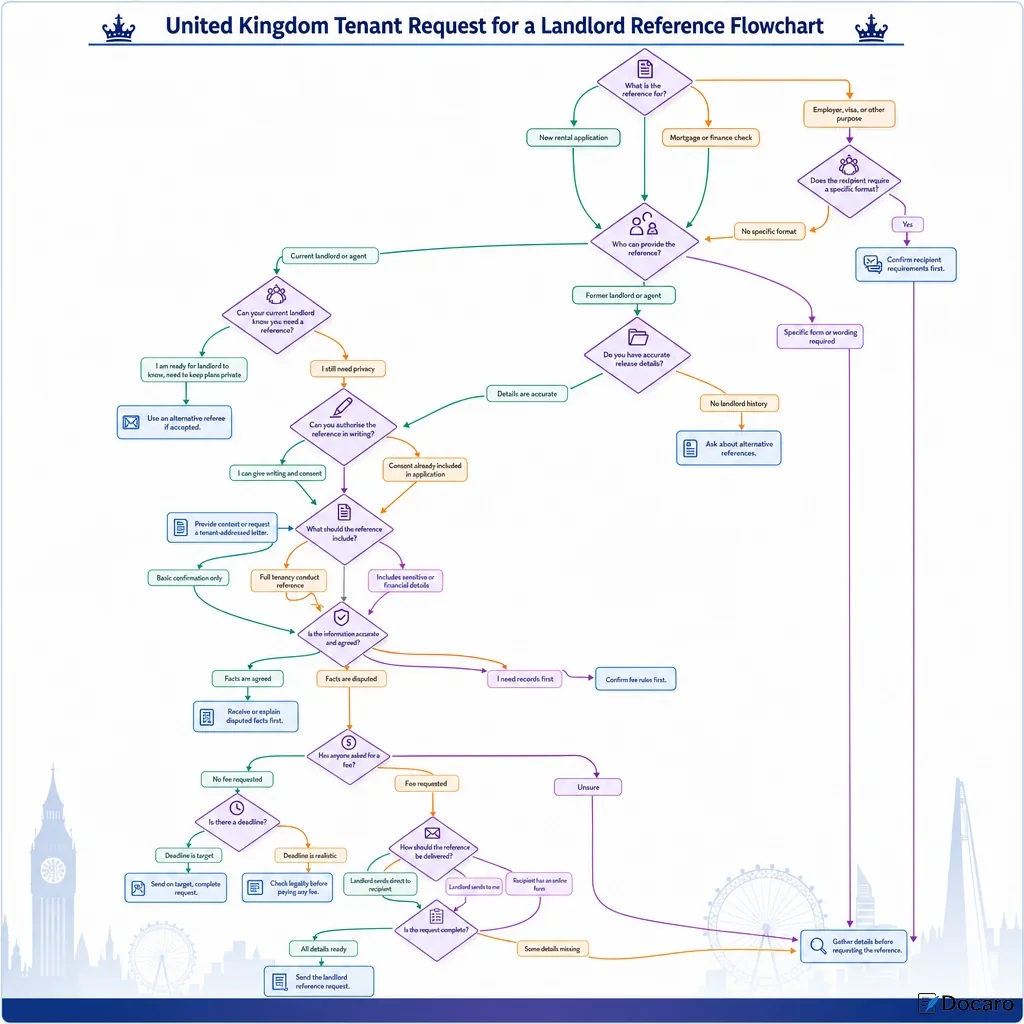
Tenant consent to provide reference | Notes that the tenant authorised the landlord to respond to a reference request. | Objective Fact | High | Keep written consent or the applicant reference request record. |
Only relevant personal data included | Keeps the reference focused on necessary tenancy history details. | Objective Fact | High | Review for relevance, accuracy and unnecessary sensitive information. |
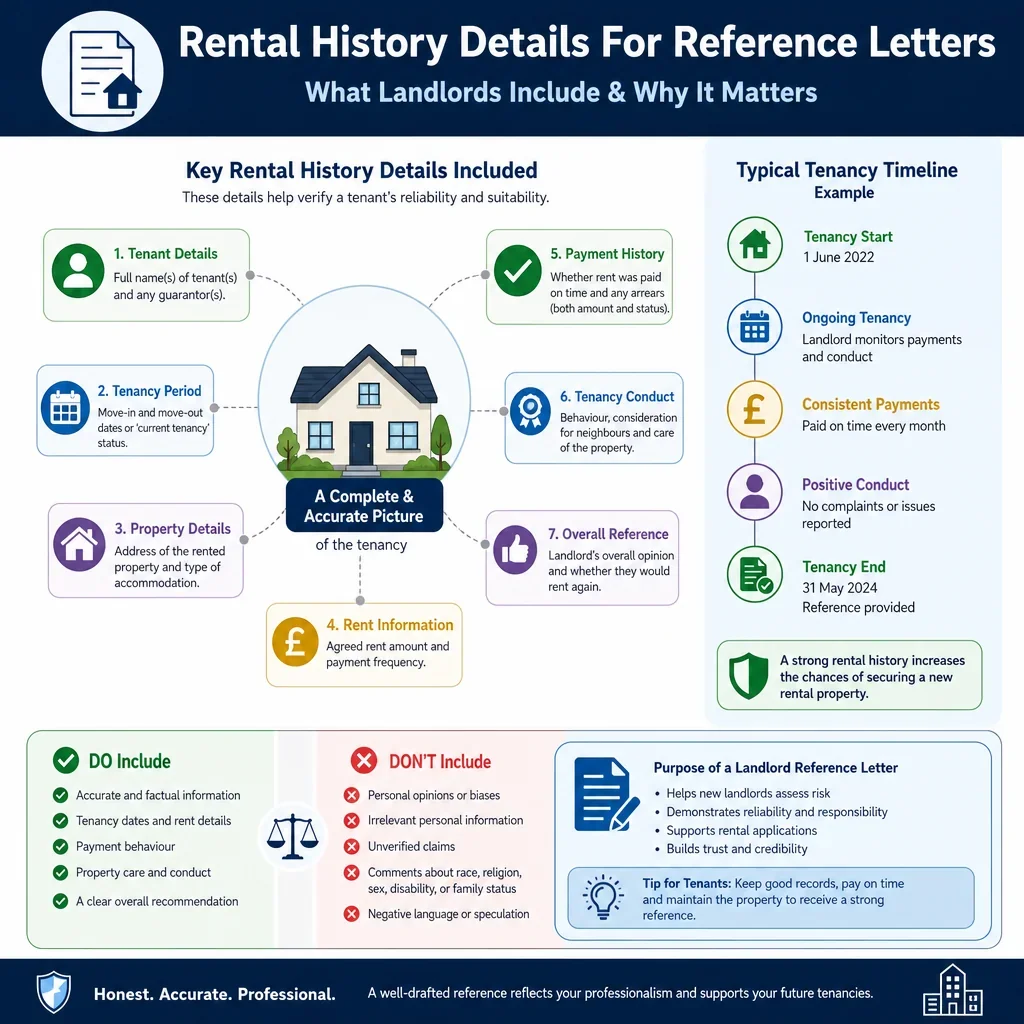
What Rental History Details Should A UK Landlord Reference Include?
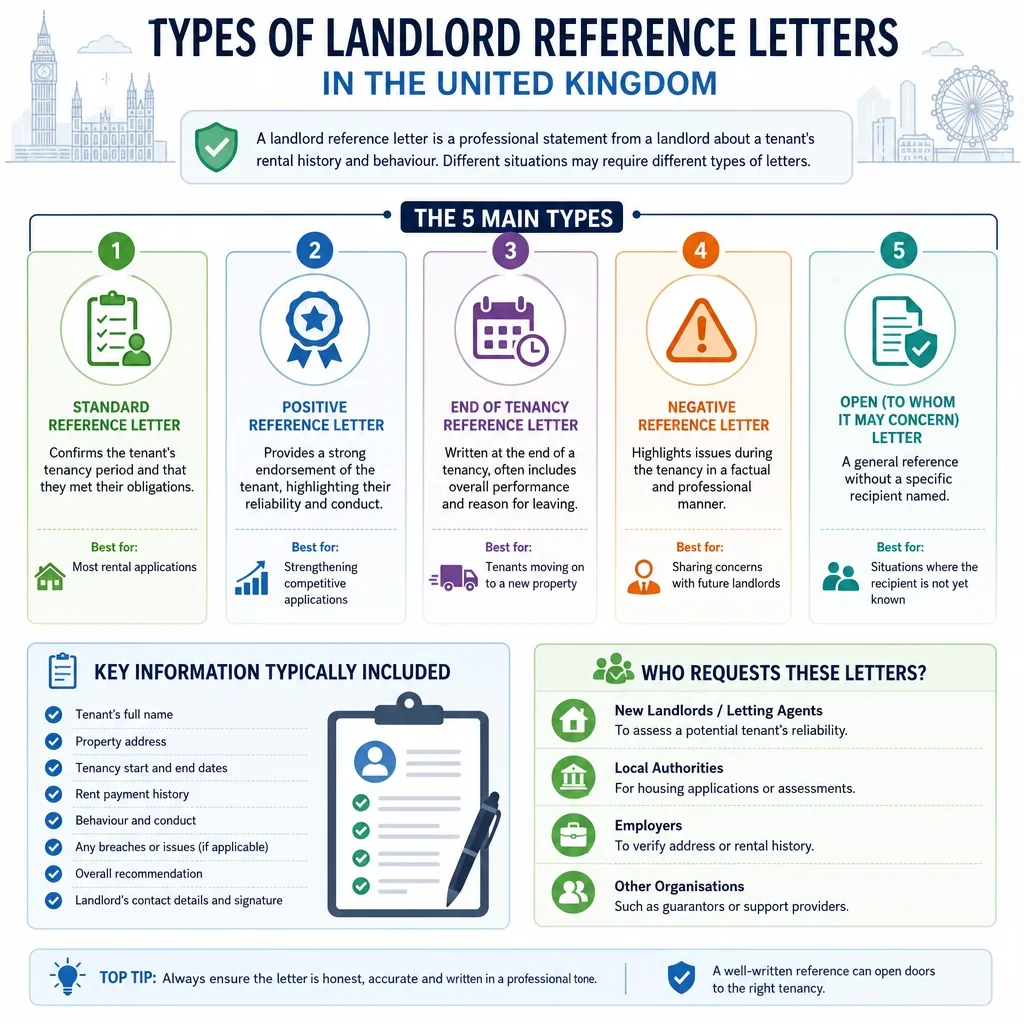
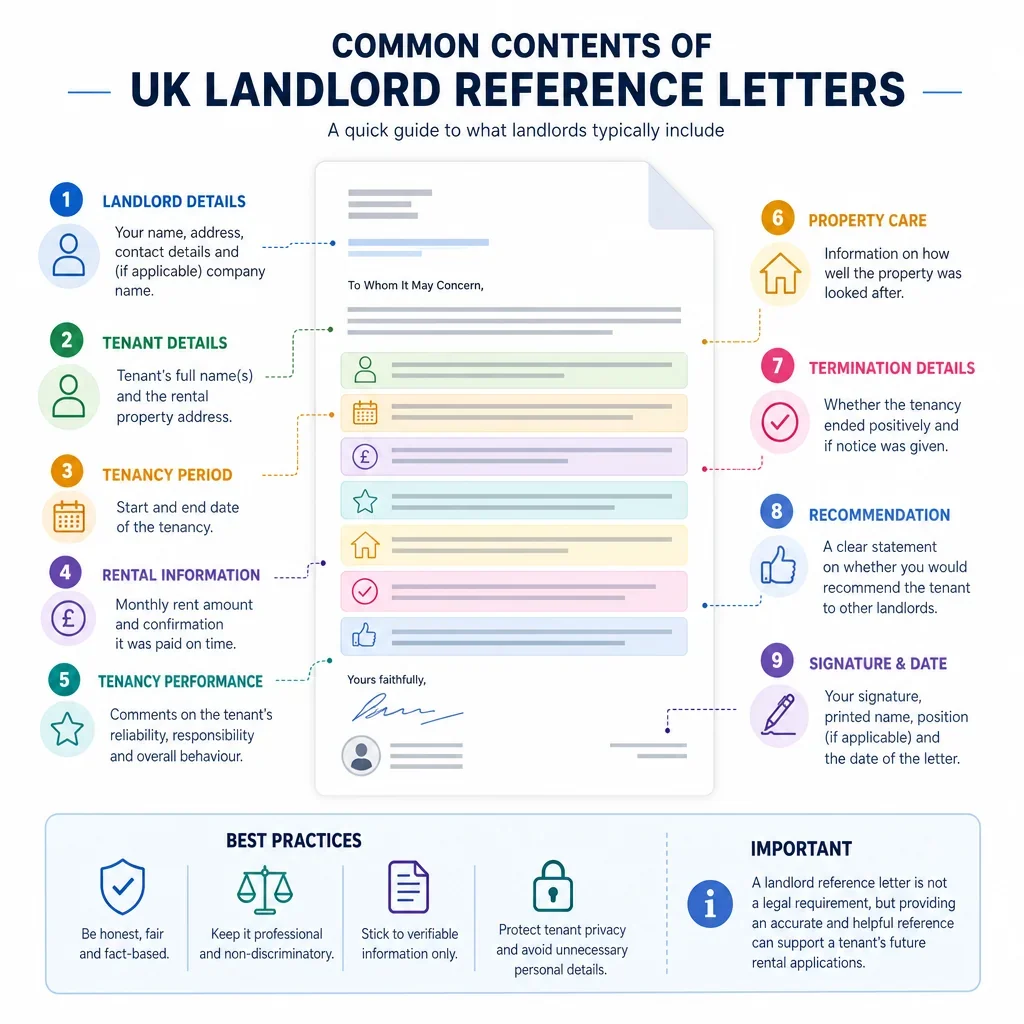
A strong landlord reference is usually most useful when it separates verifiable facts from landlord opinion. Tenancy dates, rent amount, payment record, deposit deductions, notice dates and move-out condition should be checked against the tenancy agreement, rent ledger, deposit records, inventory and written correspondence before being included.
Which Details Carry The Highest Risk If They Are Wrong?
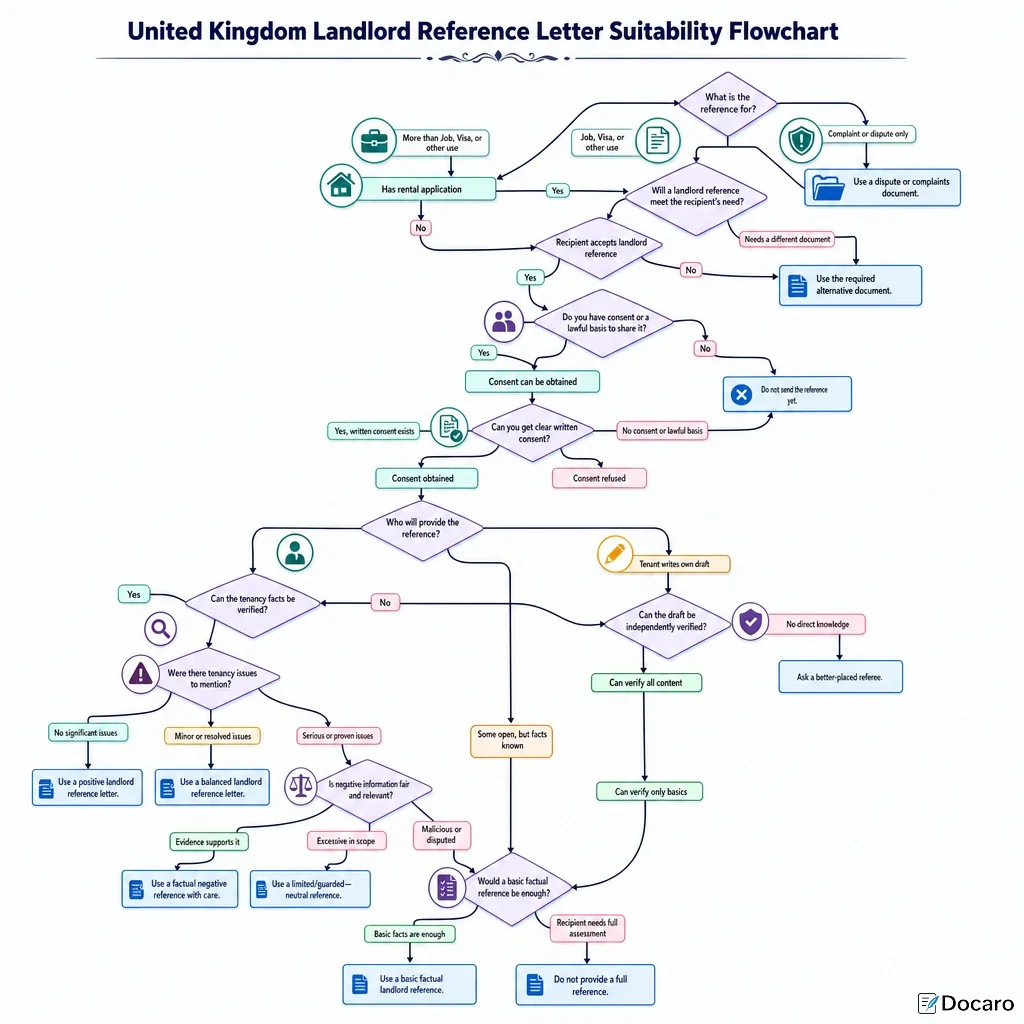
Details about rent arrears, late payments, deposit deductions, property damage, breach of tenancy and notices are high sensitivity because they may affect whether a tenant is accepted for a new home. If these points are included, they should be accurate, evidenced and phrased narrowly rather than exaggerated.
How Should Deposit And Property Condition Be Referenced In The UK?
Where the tenancy was an assured shorthold tenancy in England or Wales, landlords should be careful to check deposit protection and prescribed information records. Any comment on deductions or damage should be tied to the check-in inventory, check-out report, photographs, invoices or the outcome of any deposit dispute.
What Should Be Avoided In A Landlord Reference Letter?
Landlords should avoid unsupported allegations, vague character attacks, irrelevant personal information and comments based on protected characteristics. In practice, the safest references focus on rent payment history, tenancy compliance, communication, property care and whether the tenancy ended properly.
FAQs
You Might Also Be Interested In