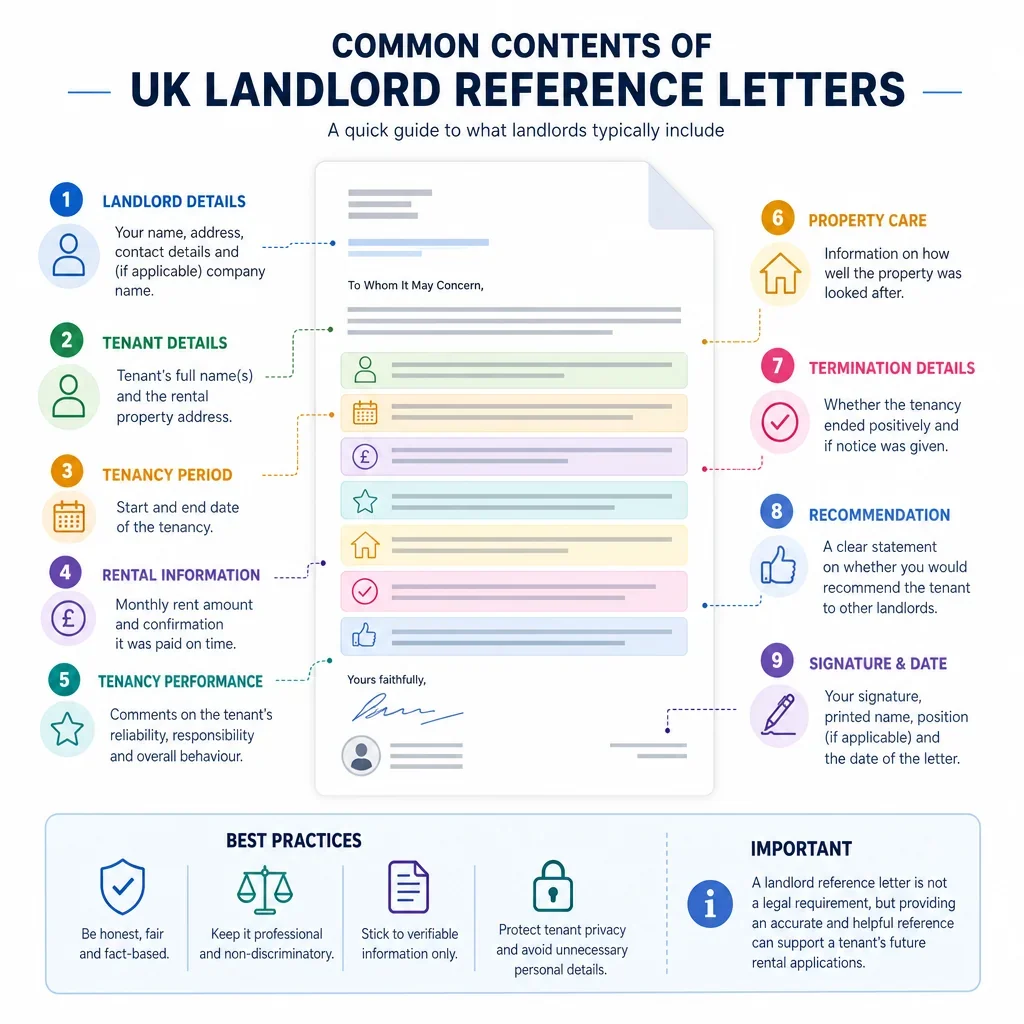
Common Contents Of UK Landlord Reference Letters
Information Item | Purpose | Importance | Frequency | Drafting Notes |
|---|---|---|---|---|
Tenant Identity | ||||
Tenant’s full name | Identifies the person being referenced. | High | Usually Included | Use the name shown on the tenancy agreement or verified records. |
Tenancy Details | ||||
Rented property address | Confirms where the tenancy took place. | High | Usually Included | State the full postal address without unnecessary extra personal data. |
Tenancy start date | Shows the length and context of the rental relationship. | High | Usually Included | Use the date from the tenancy agreement or management records. |
Tenancy end date | Confirms when the tenancy ended or is due to end. | High | Usually Included | If ongoing, state that the tenancy is current and give the start date. |
Length of tenancy | Helps assess stability and rental history. | Medium | Usually Included | Calculate accurately and avoid rounding that could mislead. |
Type of tenancy | Explains the legal or practical basis of occupation. | Medium | Sometimes Included | Examples include assured shorthold tenancy, licence or periodic tenancy. |
Payment History | ||||
Monthly or weekly rent amount | Shows the rent level the tenant was responsible for paying. | High | Usually Included | State the amount and payment frequency clearly, for example per calendar month. |
Rent due date | Provides context for assessing timely payment. | Medium | Sometimes Included | Include only if helpful to explain the payment pattern. |
Whether rent was paid on time | Indicates reliability in meeting rental obligations. | High | Usually Included | Use factual wording such as paid on time according to our records. |
History of rent arrears | Shows whether the tenant fell behind with rent. | High | Usually Included | Be precise about dates, amounts and whether arrears were later cleared. |
Current outstanding rent balance | Confirms whether money remains owed at the reference date. | High | Usually Included | State the balance as at a specific date and avoid estimates. |
Frequency of late rent payments | Shows whether late payment was isolated or repeated. | High | Sometimes Included | Use measured wording, such as once, occasionally or repeatedly, supported by records. |
Missed rent payments | Identifies more serious payment issues than minor lateness. | High | Sometimes Included | Distinguish missed payments from delayed payments later made in full. |
Payment plan compliance | Shows whether the tenant kept to an arrears repayment arrangement. | Medium | Sometimes Included | Mention only if a formal or clearly agreed plan existed. |
Usual rent payment method | May explain regularity of payments, such as standing order use. | Low | Rarely Included | Avoid unnecessary bank account or transaction details. |
Tenancy deposit paid | Confirms whether a deposit was received for the tenancy. | Medium | Sometimes Included | State only whether paid and amount if relevant avoid implying suitability from deposit alone. |
Tenancy Details | ||||
Deposit protection scheme used | Shows how the tenancy deposit was handled where protection rules applied. | Medium | Sometimes Included | For assured shorthold tenancies, refer only to factual scheme information if relevant. |
Payment History | ||||
Whether deposit was returned in full | May indicate whether deductions or disputes arose at checkout. | Medium | Sometimes Included | If unresolved, state that the deposit outcome is pending or disputed. |
Property Care | ||||
Deposit deductions made | Explains whether costs were claimed for damage, cleaning or arrears. | Medium | Sometimes Included | Use neutral wording and separate agreed deductions from disputed claims. |
Check-in inventory condition | Provides a baseline for assessing how the property was returned. | Medium | Rarely Included | Mention only if needed to support checkout comments. |
General property condition during tenancy | Indicates whether the tenant generally looked after the home. | High | Usually Included | Base comments on inspections, reports or checkout records. |
Property condition at checkout | Shows how the property was returned at the end of occupation. | High | Usually Included | Allow for fair wear and tear and avoid exaggeration. |
Cleanliness of the property | Shows whether the tenant maintained acceptable cleanliness. | Medium | Usually Included | Use factual terms such as clean, reasonably clean or professional cleaning required. |
Damage beyond fair wear and tear | Indicates whether the tenant caused avoidable property damage. | High | Usually Included | Separate damage from ordinary wear and tear cite specific examples if needed. |
Prompt reporting of repairs | Shows whether the tenant helped prevent deterioration by reporting issues. | Medium | Sometimes Included | Avoid blaming tenants for landlord repair obligations unless facts support it. |
Conduct | ||||
Cooperation with inspections and repairs | Shows whether the tenant cooperated with reasonable property management access. | Medium | Sometimes Included | Mention only reasonable, evidenced requests and avoid suggesting unrestricted access rights. |
Property Care | ||||
Garden or outdoor area upkeep | Shows compliance with any outdoor maintenance obligations. | Medium | Sometimes Included | Include only if the tenant was responsible under the tenancy terms. |
Rubbish disposal and waste management | Indicates whether the tenant kept the premises clear and sanitary. | Medium | Sometimes Included | State facts such as rubbish left at checkout rather than broad criticism. |
Conduct | ||||
Compliance with tenancy agreement terms | Shows whether the tenant followed agreed rental obligations. | High | Usually Included | Refer to specific breaches only if evidenced and relevant. |
Proper notice given before leaving | Shows whether the tenant ended the tenancy in an orderly way. | Medium | Sometimes Included | State whether notice matched the agreement or was mutually agreed. |
Tenancy Details | ||||
Reason for leaving | Provides context where the tenant moved for ordinary or agreed reasons. | Low | Sometimes Included | Include only if known, relevant and not intrusive. |
Conduct | ||||
Possession proceedings or eviction history | May explain serious tenancy issues leading to formal action. | High | Rarely Included | Do not overstate distinguish notices, court orders and actual eviction. |
Neighbour complaints received | Indicates whether the tenancy caused recurring local concerns. | Medium | Sometimes Included | Report only substantiated or recorded complaints, not rumours. |
Noise or nuisance issues | Shows whether there were tenancy-related disturbance concerns. | Medium | Sometimes Included | Use cautious wording unless nuisance findings are documented. |
Anti-social behaviour concerns | May be relevant where serious conduct affected neighbours or the property. | High | Rarely Included | Include only documented tenancy-related facts avoid unsupported labels. |
Responsiveness to landlord communications | Shows ease of communication during the tenancy. | Medium | Sometimes Included | Keep wording factual and avoid personality judgments. |
Courteous and cooperative behaviour | Helps indicate whether the tenancy relationship was manageable. | Low | Sometimes Included | Avoid overly personal opinions link to tenancy interactions. |
Unauthorised occupants or subletting | Shows whether occupancy terms were followed. | Medium | Rarely Included | Include only confirmed facts and relevant tenancy terms. |
Pet ownership and pet-related compliance | Shows whether pet rules were followed and whether pets caused damage. | Medium | Sometimes Included | Do not imply pets are problematic unless supported by tenancy records. |
Smoking policy compliance | May explain odour, staining or breach of no-smoking terms. | Medium | Sometimes Included | Mention only if tenancy terms and evidence support the statement. |
Payment History | ||||
Utility bills or council tax responsibility | Shows whether tenant-paid outgoings were dealt with where known. | Low | Rarely Included | Only comment on bills within the landlord’s knowledge or records. |
Property Care | ||||
Return of keys and access devices | Confirms the tenant properly gave back possession and access items. | Medium | Sometimes Included | Mention missing keys only where evidenced and relevant to costs or security. |
Condition of landlord’s furniture and contents | Shows whether furnished items were looked after. | Medium | Sometimes Included | Use inventory evidence and allow for fair wear and tear. |
Recommendation | ||||
Whether the landlord would rent to the tenant again | Provides a concise overall assessment for a prospective landlord. | High | Usually Included | Give an honest answer qualify if based on limited records. |
Overall tenant recommendation | Summarises the reference in a clear positive, neutral or qualified form. | High | Usually Included | Avoid vague praise if there were material issues be balanced. |
Suitability as a future tenant | Helps the next landlord assess likely tenancy risk. | High | Sometimes Included | Base suitability comments on tenancy performance, not protected characteristics. |
Reliability as a renter | Summarises payment, communication and care of the property. | Medium | Sometimes Included | Support general reliability statements with specific facts where possible. |
Scope and limitations of the reference | Clarifies what records or period the reference is based on. | Medium | Sometimes Included | Use phrases such as based on our records to reduce ambiguity. |
Statement that the reference is factual and given in good faith | Helps frame the document as a factual rental reference. | Medium | Sometimes Included | Do not use a disclaimer to excuse inaccurate or misleading statements. |
Tenant Identity | ||||
Tenant consent or authority to provide reference | Supports lawful sharing of personal data in the reference. | High | Sometimes Included | Record the request or consent include only necessary personal data. |
Recommendation | ||||
Only necessary tenancy information included | Reduces privacy risk and keeps the reference proportionate. | High | Rarely Included | Do not include irrelevant health, family, employment or immigration details. |
No discriminatory comments or protected characteristic references | Helps avoid unlawful or inappropriate reference content. | High | Rarely Included | Do not refer to age, disability, sex, race, religion or other protected characteristics. |
Contact Details | ||||
Landlord or agent name | Identifies who is providing the reference. | High | Usually Included | Use the legal name or trading name of the landlord or managing agent. |
Relationship to the tenant | Shows whether the writer is landlord, agent or property manager. | High | Usually Included | State the role clearly to avoid confusion about authority. |
Reference provider email address | Allows the prospective landlord to verify the reference. | High | Usually Included | Use a professional or business email where possible. |
Reference provider telephone number | Allows follow-up questions or authenticity checks. | Medium | Usually Included | Include only a number the provider is willing to use for verification. |
Landlord or agent postal address | Provides formal contact details for the reference provider. | Medium | Sometimes Included | A business or agency address is usually preferable to a private home address. |
Date the reference was issued | Shows how current the reference information is. | High | Usually Included | Use the date the letter is signed or sent. |
Signature or typed authorisation | Confirms the reference was approved by the stated provider. | Medium | Usually Included | For email references, a typed name and role may be sufficient. |
Agency letterhead or business details | Improves credibility and helps verify an agent-issued reference. | Medium | Sometimes Included | Use current business details and avoid misleading branding. |
Prospective landlord or agent recipient details | Shows who the reference was prepared for. | Low | Sometimes Included | If unknown, use a neutral salutation such as To whom it may concern. |
Recommendation | ||||
Records relied on for the reference | Explains the evidence behind the statements made. | Medium | Rarely Included | Examples include rent ledger, tenancy agreement, inspection notes and checkout report. |
Tenant Identity | ||||
Right to rent status not included unless directly required | Avoids unnecessary immigration-status data in an ordinary reference. | Medium | Rarely Included | Right to rent checks are separate from landlord references in England. |
Tenancy Details | ||||
Whether the tenancy was sole or joint | Clarifies whether payments and conduct related to one tenant or a household. | Medium | Sometimes Included | Avoid attributing household issues to one tenant unless evidence supports it. |
Payment History | ||||
Guarantor involvement | May explain whether payments were supported by a guarantor. | Low | Rarely Included | Include only if directly relevant to payment history and avoid unnecessary third-party data. |
Rent changes during the tenancy | Explains changes in the tenant’s payment obligations over time. | Low | Rarely Included | Mention only if needed to explain payment records or arrears. |
Recommendation | ||||
Accuracy of negative statements | Reduces risk from inaccurate or damaging statements about the tenant. | High | Rarely Included | Negative comments should be true, evidenced, relevant and proportionate. |
What Should A UK Landlord Reference Letter Usually Include?
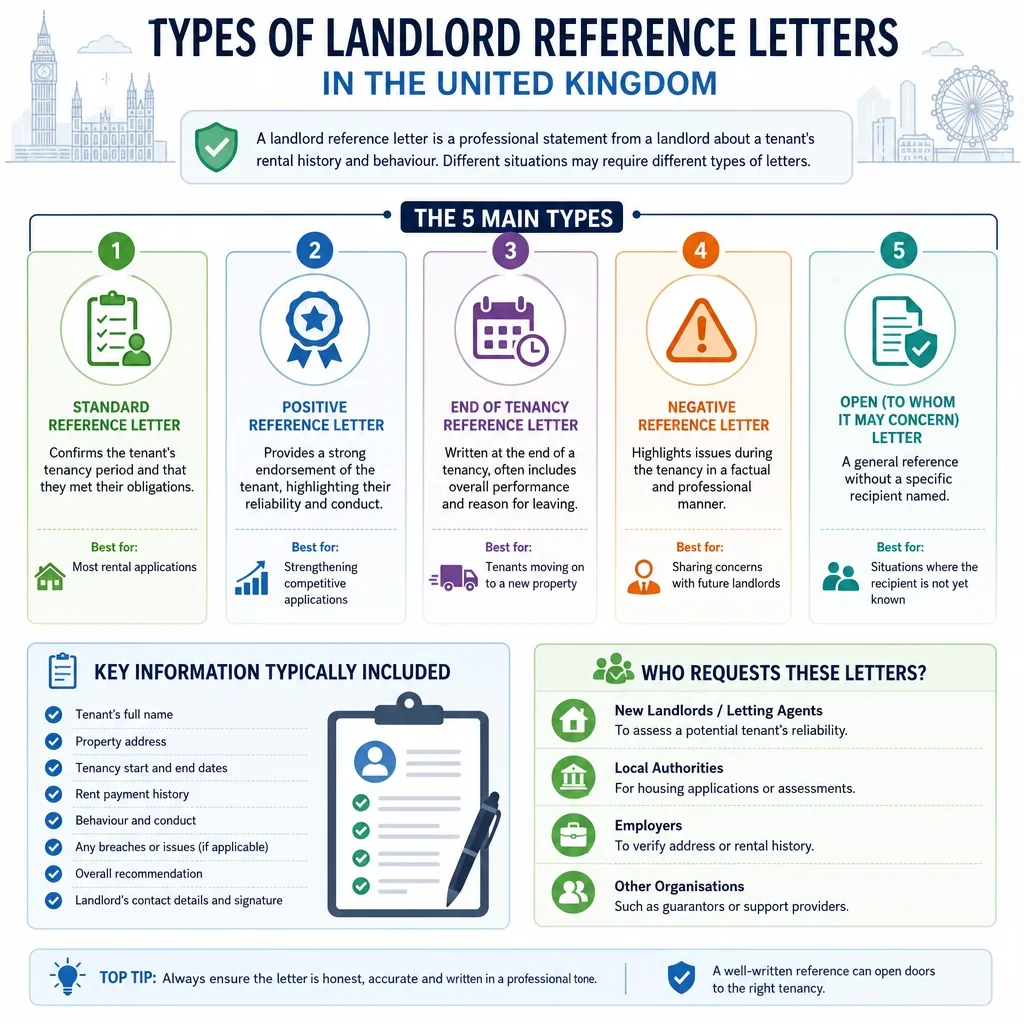
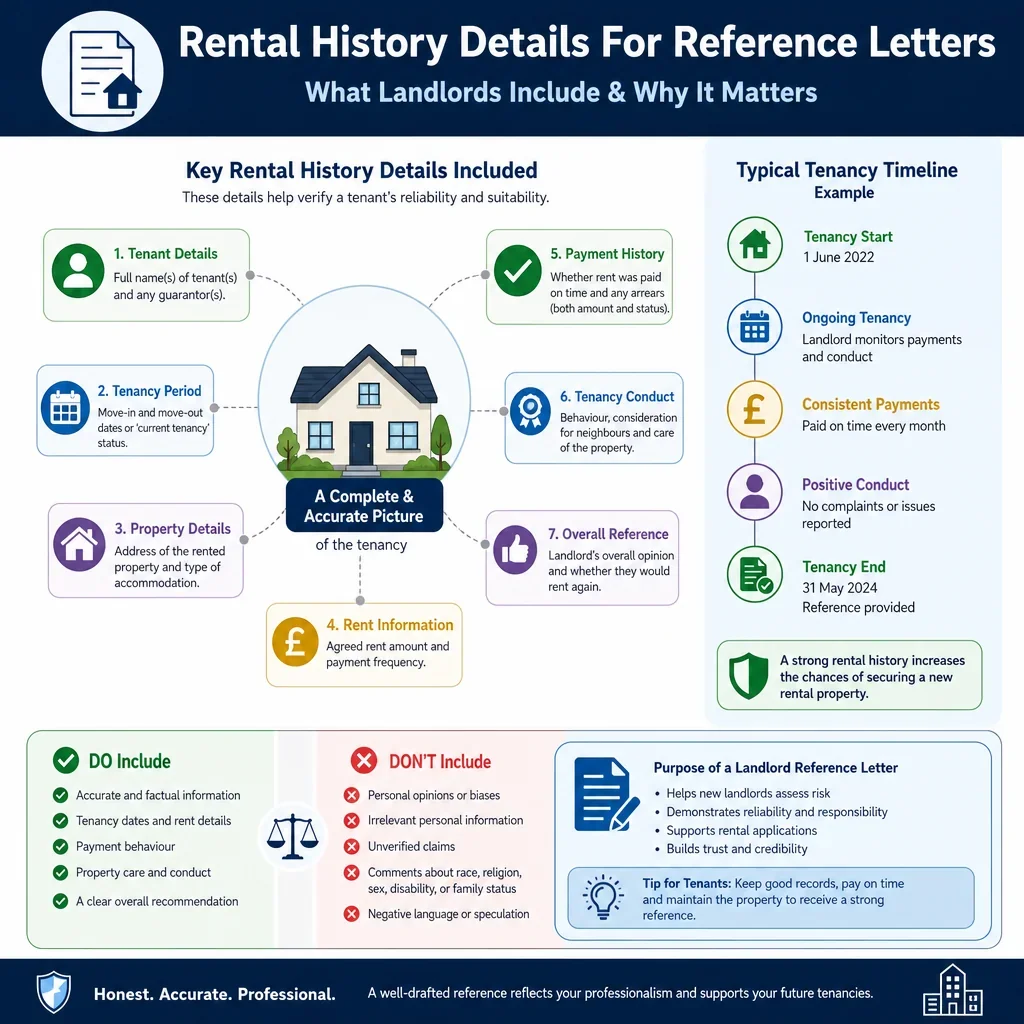
A strong landlord reference usually confirms the tenant’s identity, the property address, tenancy dates, rent amount, payment record, property care and whether the landlord would rent to the tenant again. These items are the most useful because they help a new landlord assess affordability, reliability and risk without including unnecessary personal detail.
What Information Should Be Handled Carefully In A Landlord Reference?
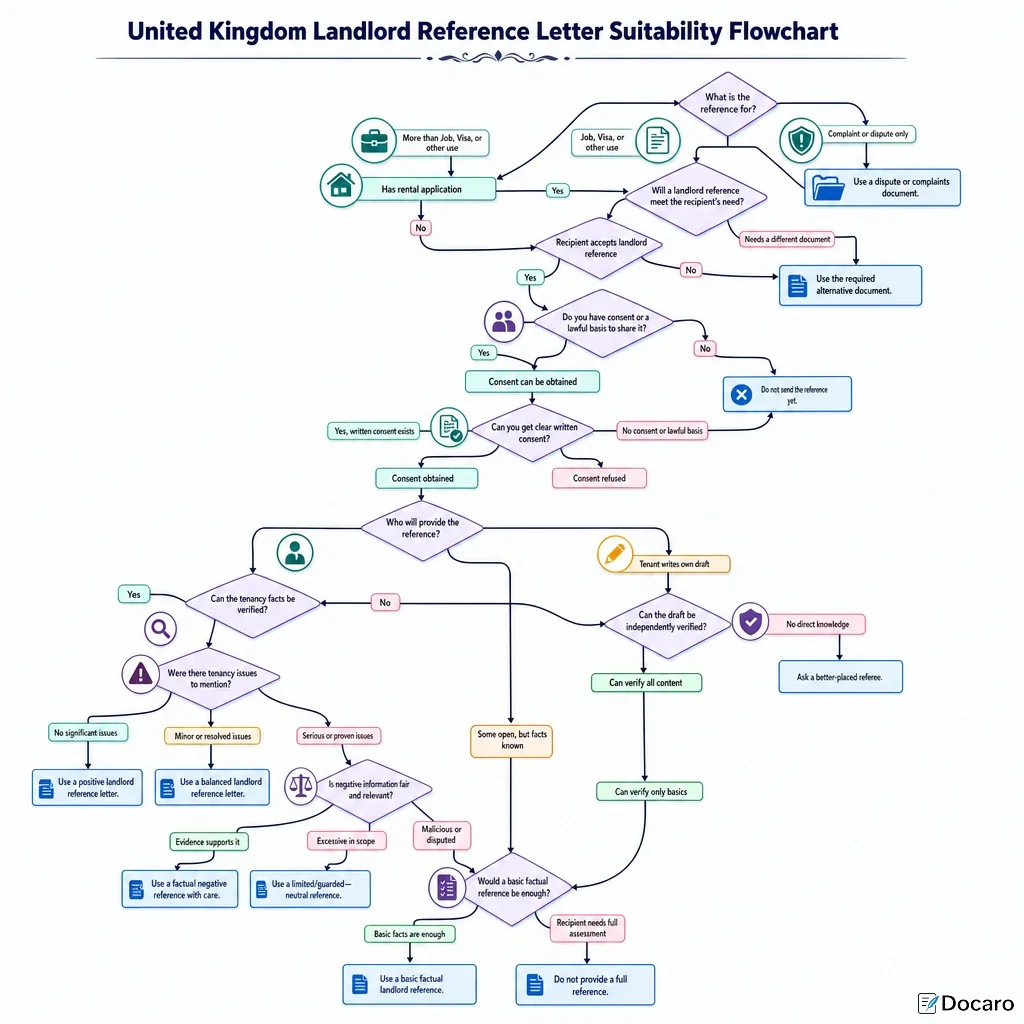
References should be accurate, fair and limited to relevant tenancy facts. Avoid unsupported opinions, discriminatory comments, excessive personal data or details that cannot be evidenced. UK data protection rules mean landlords should only share information that is necessary and should normally have a clear lawful basis for doing so.
Which Issues Are Most Important To Future Landlords?
- Rent payment history is usually the highest-value item, especially whether rent was paid on time and whether arrears remain.
- Property condition helps show whether the tenant looked after the home and complied with tenancy obligations.
- Conduct and complaints may be relevant where it is factual, proportionate and tenancy-related.
- A clear recommendation should be honest and qualified where necessary, for example "based on our records".
Can A Landlord Mention Deposits, Arrears Or Disputes?
Yes, if the information is accurate, relevant and not misleading. Deposit details should be factual, especially because tenancy deposits in England and Wales must generally be protected in an authorised scheme under the Housing Act 2004. If a dispute is unresolved, say so rather than presenting allegations as proven facts.
FAQs
You Might Also Be Interested In