

Mediation Participant Roles And Responsibilities In The United Kingdom
Created:
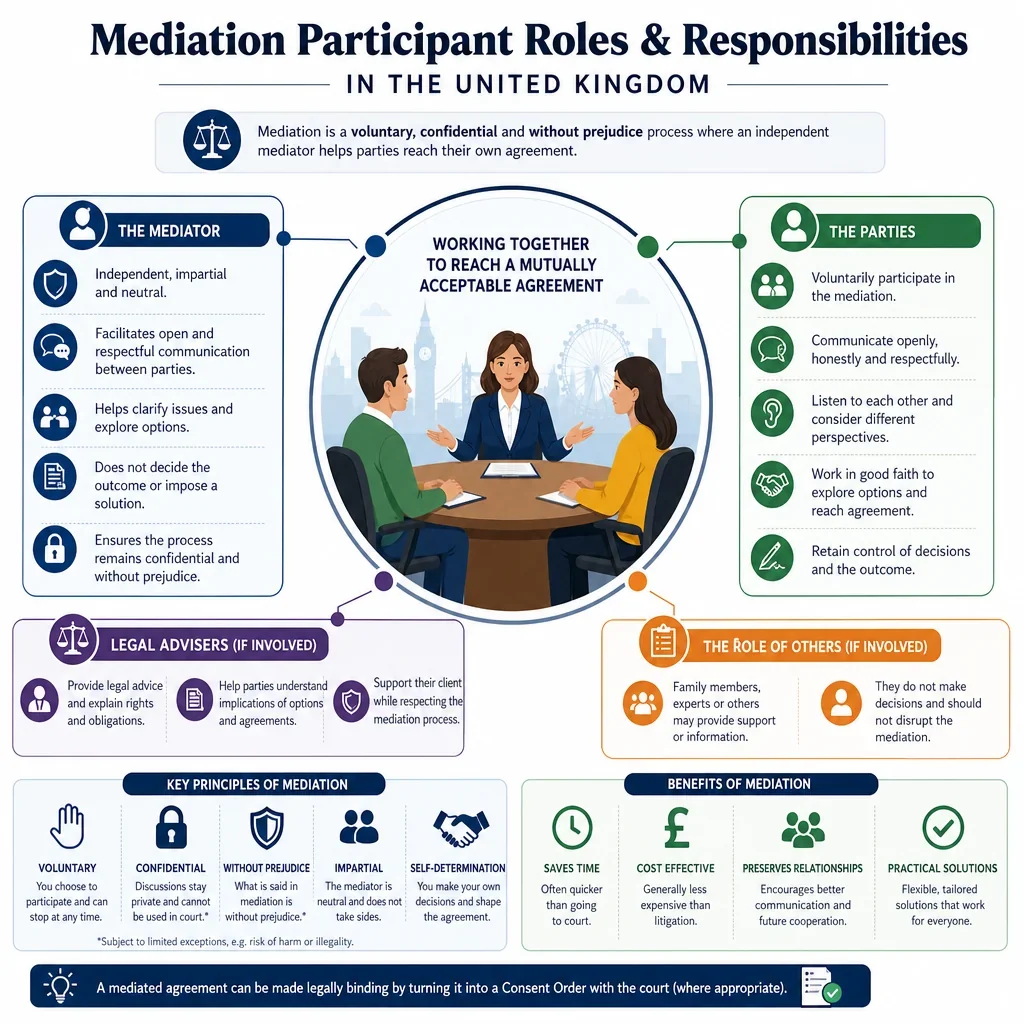
Understanding mediation participant roles helps parties prepare, communicate effectively, and make informed decisions. This guide supports readers using an AI Generated British Mediation Agreement by clarifying who does what during the process.
Role | Responsibilities | Agreement relevance | Identification approach | Limitations and safeguards |
|---|---|---|---|---|
Party | ||||
Individual claimant or applicant | States issues, provides information, attends in good faith, considers settlement options and signs any settlement. | Usually named as a party and bound by confidentiality, conduct, fees and settlement authority terms. | Usually named party | Should confirm capacity, authority to settle, confidentiality and right to take legal advice. |
Individual respondent or defendant | Responds to issues, provides information, participates constructively and considers settlement proposals. | Usually named as a party and subject to the same procedural and confidentiality duties. | Usually named party | Should confirm settlement authority, confidentiality and whether admissions are without prejudice. |
Company or LLP party | Participates through authorised representatives and provides commercial instructions for settlement. | Named by full legal name, company number where useful, and representative authority wording. | Usually named party | Representative authority should be verified internal approvals may need to be disclosed. |
Partnership party | Participates through partners or authorised agents and considers partnership settlement interests. | May identify firm name, partners attending and any limits on settlement authority. | Usually named party | Authority of attending partners or agents should be clear before settlement is reached. |
Sole trader party | Participates personally or through an agent and makes settlement decisions for the business. | Should identify trading name and the individual legally responsible. | Usually named party | Avoid ambiguity between personal identity and trading name. |
Charity or charitable incorporated organisation party | Participates through trustees or officers and ensures settlement fits charitable purposes. | May name charity, registration number, attendee role and required trustee approvals. | Usually named party | Settlement authority may depend on trustee powers, conflicts and charity governance rules. |
Public authority party | Participates within public law powers, governance requirements and public interest constraints. | Agreement may record decision-making limits, approvals and confidentiality qualifications. | Usually named party | Freedom of information, transparency duties and vires issues may limit confidentiality or settlement. |
Central government department party | Engages under government dispute resolution policy and obtains appropriate departmental authority. | May include nominated officials, approval routes and constraints on confidentiality. | Usually named party | Officials may need Treasury, ministerial or senior approval for some settlements. |
Local authority party | Participates through authorised officers and complies with governance and safeguarding duties. | May identify authorised officer, committee approval needs and information-sharing limits. | Usually named party | Authority may be limited by delegations, statutory duties and public records obligations. |
Landlord party | Explains property issues, rent or possession concerns and negotiates practical outcomes. | May be named with property address, tenancy details and authority to settle. | Usually named party | Settlement should not bypass statutory housing, deposit or possession requirements. |
Tenant or occupier party | Explains housing issues, affordability, repair concerns and proposed settlement terms. | May be named with property address and any household attendance arrangements. | Usually named party | Vulnerability, homelessness risk or advice needs may justify extra safeguards. |
Employer party | Provides workplace information, attends through authorised managers and considers resolution options. | Agreement may identify management attendees and limits on disciplinary or grievance overlap. | Usually named party | Employment rights, ACAS processes and non-victimisation safeguards should be respected. |
Employee or worker party | Explains workplace concerns, engages in dialogue and considers practical employment outcomes. | May include attendance, confidentiality, support person and relationship-repair provisions. | Usually named party | Should not waive statutory employment claims unless settlement agreement rules are met. |
Consumer party | Explains complaint, provides evidence and considers proposed redress. | May require clear, plain-language terms and cooling-off or complaint scheme references. | Usually named party | Terms should not remove mandatory consumer protections unfairly. |
Trader or supplier party | Responds to consumer complaint, provides records and considers lawful redress. | May include business details, complaint reference and compliance obligations. | Usually named party | Cannot contract out of mandatory consumer rights or mislead about statutory remedies. |
Parent participant in family mediation | Discusses arrangements for children, finance or communication and prioritises child welfare. | Named participant agreement may address safeguarding, MIAM status and separate meetings. | Usually named party | Domestic abuse, coercion and child safeguarding checks are essential. |
Spouse or civil partner in financial mediation | Provides financial disclosure, explores options and seeks legal advice on enforceability. | May include disclosure duties and confirmation that mediated proposals are not a court order. | Usually named party | Financial proposals usually need legal advice and court approval to become binding orders. |
Support person | ||||
Child or young person consulted in mediation | Shares views where appropriate through a trained child-inclusive mediator. | Usually addressed through consent, confidentiality and feedback arrangements rather than party status. | Sometimes identified | Requires safeguarding screening, parental consent and child consent child is not pressured to decide. |
Legal representative | ||||
Litigation friend | Conducts proceedings or settlement decisions for a child or protected party in their best interests. | Should be identified if a child or protected party is involved in litigation mediation. | Usually identified but not a party | Court approval is generally needed for settlements involving children or protected parties. |
Party | ||||
Protected party lacking litigation capacity | Participates as able decisions are made through authorised representatives or litigation friend. | Agreement should record representative involvement and capacity-related safeguards. | Usually named party | Capacity must be assessed decision-specifically best interests principles apply. |
Legal representative | ||||
Attorney under lasting power of attorney | Makes or supports decisions within the power granted and the donor's best interests. | Should be identified where signing or negotiating for a party under an LPA. | Usually identified but not a party | Must act within LPA scope and Mental Capacity Act duties. |
Court of Protection deputy | Acts for a person lacking capacity within authority granted by the Court of Protection. | Should be identified if participating or signing on behalf of a protected person. | Usually identified but not a party | Must comply with deputy order, best interests duties and any approval requirements. |
Organisation representative | ||||
Trustee participant | Represents trust interests and considers fiduciary duties when negotiating settlement. | May identify trustee capacity and any need for co-trustee consent. | Usually identified but not a party | Must act within trust powers and avoid conflicts of interest. |
Executor or administrator of estate | Represents the estate and negotiates subject to probate duties and beneficiary interests. | Should identify representative capacity and estate details where relevant. | Usually identified but not a party | Authority may depend on grant of probate or letters of administration. |
Party | ||||
Lead party in multi-party mediation | Coordinates aligned parties and communicates group positions where authorised. | May be named with limits on authority to speak for others. | Usually named party | Cannot bind other parties without express authority. |
Remote or absent decision-maker | Provides instructions or approval during mediation despite not attending fully. | May require contact details, availability and authority procedures. | Sometimes identified | Risk of delay authority and confidentiality should be expressly controlled. |
Mediator | ||||
Accredited mediator | Facilitates negotiation impartially, manages process, maintains confidentiality and helps parties explore settlement. | Named as mediator with appointment, fees, confidentiality, immunity and termination provisions. | Usually identified but not a party | Does not decide dispute or give legal advice to parties. |
Family mediator | Facilitates family discussions, screens for safeguarding and supports informed decision-making. | Agreement may include FMC status, MIAM role, safeguarding process and confidentiality limits. | Usually identified but not a party | Must manage domestic abuse risk and avoid mediating where unsafe or unsuitable. |
Workplace mediator | Facilitates employee or team discussions to repair working relationships and resolve conflict. | May define confidentiality, employer reporting limits and non-disciplinary status. | Usually identified but not a party | Should not replace formal processes where serious misconduct or legal rights require action. |
Co-mediator | Shares mediation management, supports balanced process and assists with complex dynamics. | Should be named with fee sharing, confidentiality and role allocation terms. | Usually identified but not a party | Both mediators should disclose conflicts and keep process consistent. |
Assistant or trainee mediator | Observes or assists under supervision for training or administrative support. | Should be identified if attending and bound by confidentiality. | Usually identified but not a party | Requires party consent should not influence outcome without agreed role. |
Online mediator | Runs mediation using video, telephone or platform tools while maintaining process integrity. | Should include platform, privacy, recording ban, technical failure and identity checks. | Usually identified but not a party | Must manage privacy, unauthorised listeners, recording risks and accessibility needs. |
Evaluative mediator | Facilitates negotiation and may give neutral reality-testing or non-binding views if agreed. | Agreement should state whether evaluation is permitted and its non-binding status. | Usually identified but not a party | Should avoid becoming legal adviser, arbitrator or judge unless parties agree a different process. |
Legal representative | ||||
Solicitor for a party | Advises client, prepares case summary, negotiates and drafts settlement wording. | Usually identified as attendee and bound by confidentiality, but not normally a party. | Usually identified but not a party | Must act on instructions, maintain professional duties and avoid conflicts. |
Barrister or counsel for a party | Provides specialist advice, advocacy support, risk analysis and settlement drafting input. | Usually listed as attendee and bound by confidentiality and without prejudice terms. | Usually identified but not a party | Acts within professional conduct duties and client instructions. |
In-house lawyer | Advises organisation, manages legal risk and supports authorised settlement decisions. | May be identified as legal adviser and organisational attendee. | Usually identified but not a party | Must manage conflicts between employer interests and professional obligations. |
Paralegal or trainee lawyer | Assists lawyers with documents, notes, logistics and limited client support. | Should be identified if attending and receiving confidential information. | Sometimes identified | Should act under supervision and not give unauthorised advice beyond competence. |
Support person | ||||
McKenzie Friend | Provides moral support, takes notes and helps a litigant organise papers. | Should be identified if attending and bound by confidentiality. | Usually identified but not a party | May not conduct litigation or address court without permission mediation role should be limited. |
Trade union representative | Supports worker, helps communicate concerns and advises on workplace context. | May be identified as companion or support attendee and bound by confidentiality. | Usually identified but not a party | Should not speak for the party unless agreed confidential employer information must be protected. |
Workplace companion | Supports employee during workplace-related mediation where permitted. | May be named with speaking limits and confidentiality undertakings. | Sometimes identified | Attendance should be agreed by all parties and not undermine direct dialogue. |
Family member support person | Provides emotional or practical support to a party during mediation. | Should be named if attending sessions or receiving confidential information. | Sometimes identified | Needs consent of mediator and parties should not intimidate or control the participant. |
Friend or informal supporter | Gives emotional support, assists note-taking or helps the party stay engaged. | May sign confidentiality undertaking if present. | Sometimes identified | Should not negotiate or advise unless expressly allowed and competent. |
Carer or personal assistant | Provides disability, health or communication support enabling participation. | May be identified for confidentiality, access and reasonable adjustment purposes. | Sometimes identified | Should respect party autonomy and confidentiality adjustments may be required under equality law. |
Disability advocate | Supports communication, accessibility and understanding for a disabled participant. | May be named with confidentiality and communication support provisions. | Sometimes identified | Should not override the party's own decisions reasonable adjustments should be recorded. |
Independent domestic violence adviser | Supports victim-survivor safety, risk awareness and informed participation where mediation is suitable. | May be identified with special attendance, shuttle mediation and confidentiality terms. | Sometimes identified | Mediation must not proceed where coercion, fear or safeguarding risk makes it unsafe. |
Safeguarding professional | Advises on child or adult safeguarding risks affecting mediation suitability. | May be referenced for information-sharing exceptions and safety planning. | Sometimes identified | Confidentiality may be limited by safeguarding duties and risk of serious harm. |
Interpreter | ||||
Spoken language interpreter | Interprets accurately and impartially between languages during mediation. | Should be identified and bound by confidentiality, impartiality and data terms. | Usually identified but not a party | Should disclose conflicts and avoid giving advice or advocacy. |
British Sign Language interpreter | Interprets between BSL and English to enable equal participation. | Should be named or identified and bound by confidentiality. | Usually identified but not a party | May be a reasonable adjustment interpreter must remain impartial. |
Relay or intermediary interpreter | Supports communication where standard interpretation is insufficient due to language or disability needs. | Should be identified with confidentiality and communication method details. | Usually identified but not a party | Role boundaries should be clear to avoid advice, coaching or undue influence. |
Document translator | Translates mediation documents, evidence or settlement wording accurately. | May be covered by confidentiality, data protection and version-control provisions. | Sometimes identified | Translated settlement terms should be checked before signature. |
Expert adviser | ||||
Independent financial adviser | Advises a party on financial consequences, affordability or investment-related settlement issues. | May be identified if attending or receiving confidential financial information. | Sometimes identified | Should clarify whether advice is independent, regulated and given to one party only. |
Accountant | Explains accounts, tax figures, valuations or payment structures. | May be identified as party adviser or joint expert and bound by confidentiality. | Sometimes identified | Tax advice should be checked before settlement conflicts should be disclosed. |
Tax adviser | Advises on tax effects of settlement payments, transfers or restructuring. | May be referenced where settlement depends on tax treatment or clearance. | Sometimes identified | Mediators usually do not provide tax advice written advice may be needed before signing. |
Chartered surveyor or property valuer | Provides property valuation, boundary, rent, defect or condition expertise. | May be identified as party expert, joint expert or observer. | Sometimes identified | Scope, reliance and confidentiality of expert input should be defined. |
Medical expert | Explains injury, prognosis, capacity or care-related issues relevant to settlement. | May require health data consent, confidentiality and reliance limits. | Sometimes identified | Special category health data needs careful handling and consent where appropriate. |
Child welfare expert | Provides specialist input on child development, welfare or contact arrangements. | May be referenced in family mediation with safeguarding and confidentiality controls. | Sometimes identified | Advice should not replace court welfare determinations where required. |
Pension expert | Explains pension values, sharing options and retirement income consequences. | May be needed before family financial settlement proposals are finalised. | Sometimes identified | Pension sharing usually requires a court order and scheme implementation steps. |
Construction expert | Explains defects, delay, quantum, standards or technical construction issues. | May be identified for expert meeting, joint inspection or confidential technical input. | Sometimes identified | Role should distinguish mediation advice from adjudication or expert determination. |
IT or digital evidence expert | Explains systems, data, cyber incident facts or digital evidence issues. | May be subject to confidentiality, data security and access restrictions. | Sometimes identified | Access to systems or personal data should be controlled and documented. |
Organisation representative | ||||
Insurer representative | Provides indemnity position, reserve authority and settlement instructions under policy terms. | Often identified if insurer controls or funds settlement discussions. | Usually identified but not a party | Authority may be limited by policy coverage, excess, co-insurers or reinsurers. |
Loss adjuster | Assesses insured loss, evidence and settlement figures for insurer or policyholder. | May be identified as insurer attendee and bound by confidentiality. | Sometimes identified | May not have final settlement authority role should be clear. |
Claims handler | Manages claim file, gives instructions and communicates settlement offers within authority. | May be identified where insurer or organisation is involved. | Sometimes identified | Authority limits and escalation route should be confirmed. |
Litigation funder | May approve funded party's settlement decisions under funding agreement. | May be identified if attending or if funder consent is needed for settlement. | Sometimes identified | Confidential information and control over settlement should be carefully limited. |
Company director representative | Represents company, gives commercial instructions and approves settlement within board authority. | Usually identified as attending representative with authority statement. | Usually identified but not a party | Must consider directors' duties and any board approval requirement. |
Senior manager or executive representative | Provides operational knowledge and commercial authority to negotiate settlement. | May be named with job title and decision-making authority. | Usually identified but not a party | Should not exceed delegated authority or make unauthorised admissions. |
Human resources representative | Supports workplace mediation, explains policies and helps implement agreed workplace outcomes. | May be identified with confidentiality and limited reporting terms. | Sometimes identified | Should not use mediation disclosures for disciplinary action unless agreed or required. |
Finance representative | Confirms payment capacity, accounting treatment and settlement budget constraints. | May be named if payment terms depend on finance approval. | Sometimes identified | May advise on affordability but not bind organisation without authority. |
Board member or trustee board representative | Provides governance approval or strategic settlement authority. | May be named where board approval is needed during or after mediation. | Sometimes identified | Collective decision-making and conflicts should be managed. |
Administrator | ||||
Mediation provider organisation | Appoints mediator, manages terms, fees, complaints process and case administration. | May be a contracting party for administration, fees and service terms. | Usually identified but not a party | Should distinguish provider obligations from mediator's independent role. |
Mediation case manager | Coordinates booking, papers, attendance lists, timing and communications. | May be identified for notices, document handling and data protection purposes. | Sometimes identified | Should not access confidential caucus information unless necessary and authorised. |
Court mediation administrator | Arranges court-linked mediation appointments and records administrative outcomes. | Usually governed by scheme terms rather than bespoke naming in agreement. | Usually not identified | Does not provide legal advice or decide the claim. |
Venue host or facilities provider | Provides rooms, access, security, refreshments or facilities for mediation. | Usually not named unless confidentiality, access or data issues arise. | Usually not identified | Room privacy, disability access and visitor confidentiality should be managed. |
Online mediation platform provider | Provides video, document-sharing or case-management technology. | May be referenced in online mediation terms, privacy and recording restrictions. | Sometimes identified | Security, data processing, access control and recording settings should be checked. |
Administrative note-taker | Records agreed administrative points or draft settlement wording if authorised. | Should be identified if attending sessions or handling confidential notes. | Sometimes identified | Notes should not create an unintended formal record of without prejudice discussions. |
Legal representative | ||||
Settlement agreement drafter | Converts agreed terms into clear written settlement or consent order wording. | May be specified where mediator does not draft binding legal terms. | Sometimes identified | Should clarify who receives legal advice and whether the drafter acts for one party or jointly. |
Support person | ||||
Factual witness attending mediation | Provides factual background or clarification if invited. | Should be identified if present and bound by confidentiality. | Sometimes identified | Should not be coached or pressured evidence use should remain governed by litigation rules. |
Observer | Observes for training, audit or organisational learning with consent. | Should be named or described and sign confidentiality undertaking. | Usually identified but not a party | Requires consent of parties and mediator no participation unless agreed. |
Organisation representative | ||||
Regulator or ombudsman representative | Participates where scheme rules or regulatory oversight affect resolution. | May require bespoke terms on confidentiality, reporting and powers. | Sometimes identified | Statutory or scheme duties may override private confidentiality. |
Support person | ||||
Community representative | Supports community context, cultural understanding or group communication. | May be identified if attending or speaking for a community group. | Sometimes identified | Authority to represent others and confidentiality should be expressly confirmed. |
Party | ||||
Neighbour or community party | Explains concerns, listens to practical options and agrees future conduct if possible. | Usually named if directly affected by boundary, noise, access or behaviour issues. | Usually named party | Harassment, injunction or police issues may require safety and legal advice safeguards. |
Organisation representative | ||||
School or university representative | Represents institution, explains policies and considers educational or disciplinary outcomes. | May identify safeguarding, authority, confidentiality and student data arrangements. | Usually identified but not a party | Safeguarding, equality and student data duties may limit confidentiality. |
Support person | ||||
Parent or guardian support attendee | Supports a child, young person or vulnerable adult participant. | Should be identified where their consent, attendance or confidentiality is relevant. | Usually identified but not a party | Must not pressure the participant safeguarding and capacity checks may be needed. |
Organisation representative | ||||
Police or statutory agency liaison | Provides information on statutory involvement or safety measures where relevant. | Rarely part of private mediation agreement unless safety or reporting duties are involved. | Sometimes identified | Criminal investigations, safeguarding and public protection duties may override confidentiality. |
Who Should Be Named In A UK Mediation Agreement?
A mediation agreement should normally name the disputing parties, the mediator, and any person who will attend with speaking or decision-making authority. Others, such as observers, interpreters, experts, insurers, funders, and administrators, may be identified if they will receive confidential information or influence settlement decisions.
What Participant Duties Matter Most In Mediation?
- Authority to settle: individuals, company representatives, trustees, attorneys and insurer representatives should have clear authority limits before mediation starts.
- Confidentiality: non-parties such as support persons, experts, interpreters and observers should usually sign or be bound by confidentiality wording.
- Impartiality: mediators must disclose conflicts and remain neutral; interpreters and experts should also disclose conflicts where relevant.
- Capacity and safeguarding: agreements should address vulnerable adults, children, litigation friends and reasonable adjustments where participation may otherwise be unfair.
How Do Roles Affect The Mediation Agreement Terms?
The more people involved, the more important it is for the agreement to define attendance, confidentiality, data handling, authority, fees, separate meetings, expert input and limits on legal advice. This is especially relevant in UK civil, family, workplace, consumer and commercial mediations where a signed mediation agreement often protects the process before any separate settlement agreement is made.
Want to Generate Your own Mediation Agreement?
Docaro AI can help you write your own Mediation Agreement for use in the United Kingdom in minutes.
FAQs
The main participants are the mediator, the parties in dispute, their legal representatives if instructed, and sometimes experts, support persons or company decision-makers.
Show All FAQs
You Might Also Be Interested In
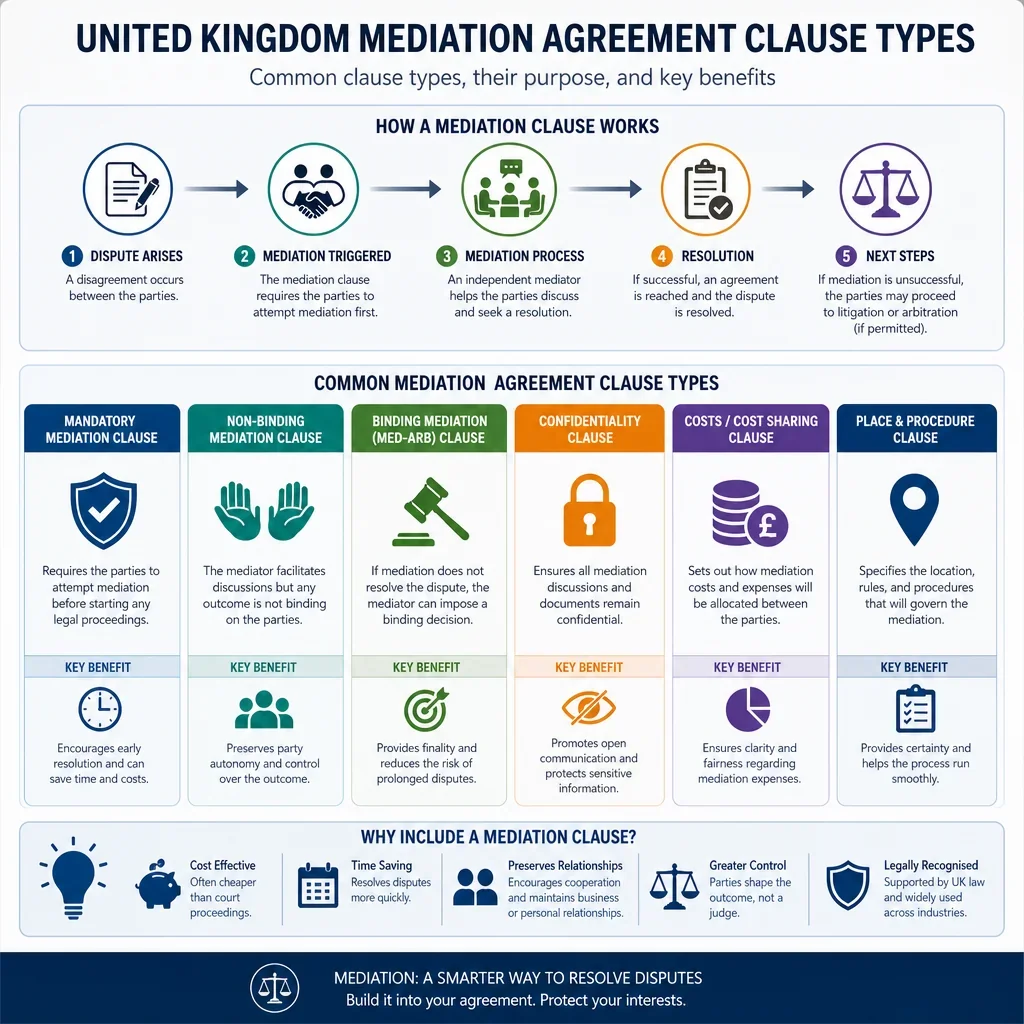
Learn key United Kingdom mediation agreement clause types and how they help structure effective dispute resolution terms.
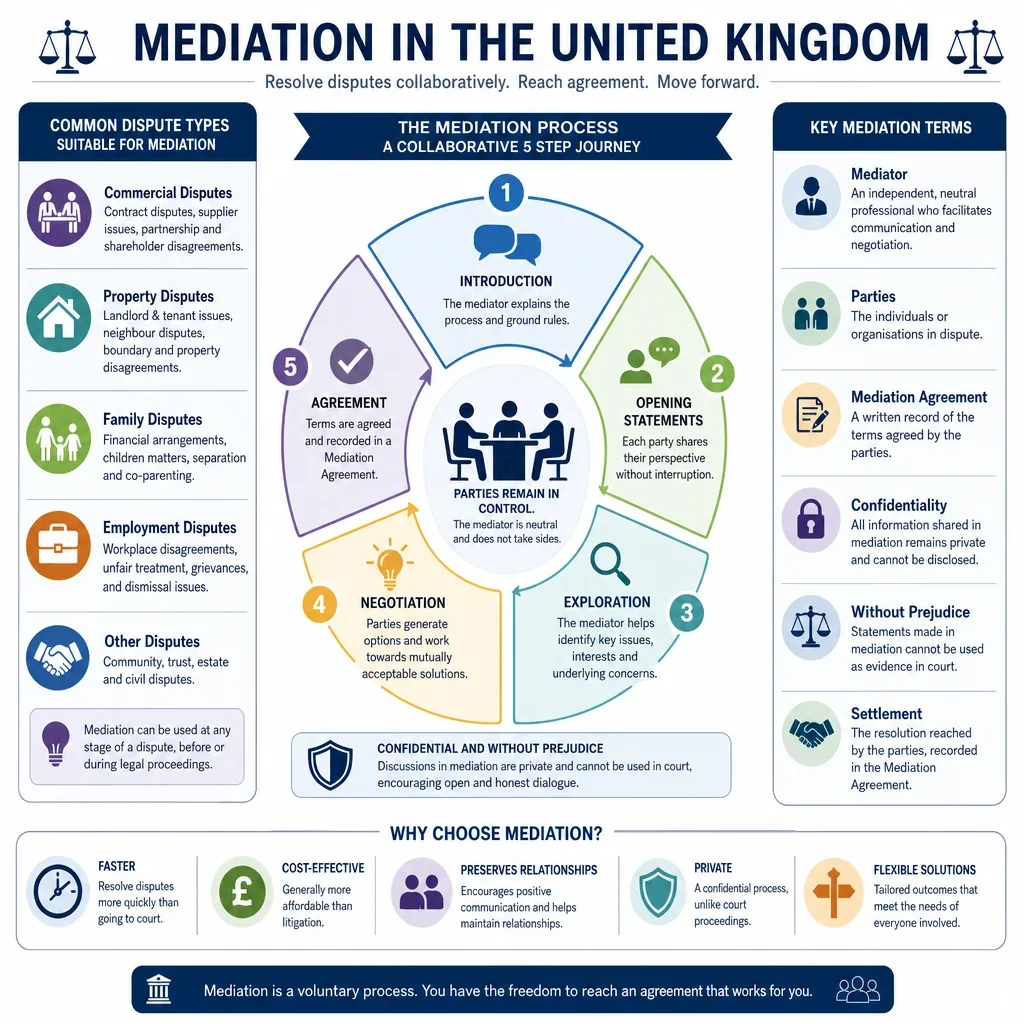
United Kingdom guide to dispute types and mediation terms, helping you understand relevant clauses for effective mediation agreements.