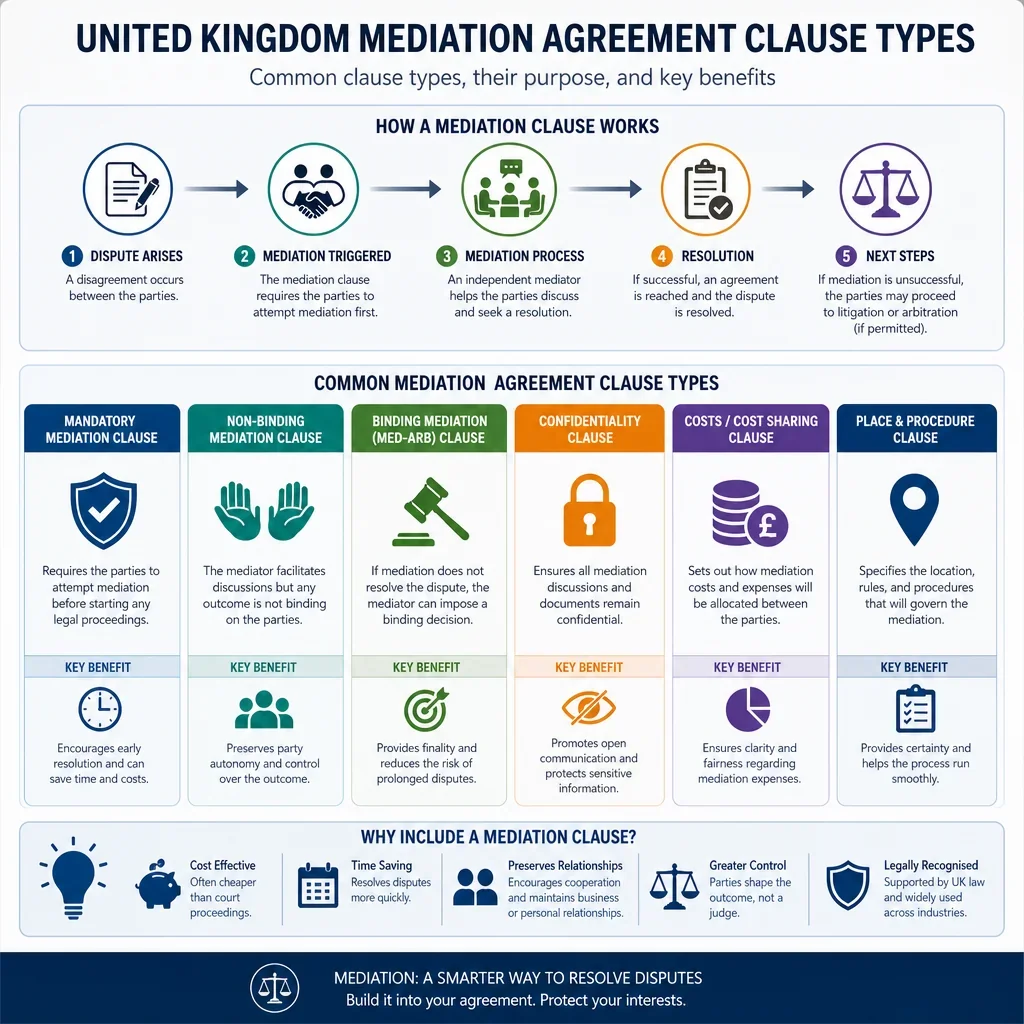
United Kingdom Mediation Agreement Clause Types
Clause name | Purpose | Relevant stage | Drafting considerations | Typical use cases |
|---|---|---|---|---|
Core clause | ||||
Parties To The Mediation | Identifies each participant and confirms who is bound by the agreement. | Before mediation | Use correct legal names, addresses, company numbers and representative roles. | Commercial disputes, family business disputes and multi-party claims. |
Mediator Appointment | Confirms the mediator is appointed and accepts the role on agreed terms. | Before mediation | Name the mediator, provider, appointment date, replacement process and fee basis. | Any mediation where a neutral third party facilitates settlement discussions. |
Scope Of Dispute | Defines the dispute, claims and issues to be mediated. | Before mediation | Avoid wording so narrow that related settlement issues cannot be discussed. | Contract claims, neighbour disputes, probate disputes and workplace conflicts. |
Voluntary Participation | States that participation is voluntary unless required by court order or contract. | Throughout the mediation process | Preserve the right to withdraw while addressing court or contractual obligations. | Civil, commercial and community mediation. |
Confidentiality | Keeps mediation communications, documents and settlement discussions private. | Throughout the mediation process | Define protected information, bound persons, duration and disclosure exceptions. | Most mediations, especially commercial, employment and family disputes. |
Without Prejudice Status | Helps prevent settlement communications being used as admissions in proceedings. | Throughout the mediation process | State that discussions are without prejudice, subject to recognised exceptions. | Civil litigation, pre-action disputes and settlement negotiations. |
Exceptions To Confidentiality | Lists circumstances where disclosure may be permitted or required. | Throughout the mediation process | Cover consent, enforcement, illegality, threats, safeguarding and legal duties. | All mediations where sensitive or regulated information may arise. |
Mediator Independence And Impartiality | Confirms the mediator is neutral and has no improper interest in the outcome. | Throughout the mediation process | Require disclosure of conflicts before and during the mediation. | All mediations, especially sector-specific or local disputes. |
Common optional clause | ||||
Conflict Of Interest Disclosure | Requires the mediator and parties to disclose actual or potential conflicts. | Throughout the mediation process | State consequences of disclosure, waiver and mediator replacement. | Small industries, professional negligence claims and repeat mediator appointments. |
Core clause | ||||
Mediator Role And No Adjudication | Clarifies that the mediator facilitates negotiation and does not decide the dispute. | Throughout the mediation process | Avoid language suggesting binding evaluation unless expressly intended. | Commercial, family, civil and workplace mediations. |
No Legal Advice By Mediator | States that the mediator does not act as a legal adviser to any party. | Throughout the mediation process | Encourage independent legal advice before signing any settlement. | Mediations involving unrepresented parties or complex legal claims. |
Authority To Settle | Ensures attendees have power to negotiate and approve settlement terms. | Before mediation | Specify who must attend and any limits on settlement authority. | Corporate parties, insurers, public bodies and represented claimants. |
Attendance And Participation | Sets expectations for who will attend and how they will participate. | Before mediation | Identify decision-makers, advisers, experts, support persons and remote attendees. | Multi-party disputes, insurance claims and workplace disputes. |
Common optional clause | ||||
Good Faith Participation | Encourages parties to engage constructively and explore settlement options. | During mediation | Avoid vague obligations that conflict with voluntary settlement principles. | Court-referred mediation and disputes with entrenched positions. |
Core clause | ||||
Date, Venue And Timetable | Sets the practical arrangements for when and where mediation will occur. | Before mediation | Include start time, expected duration, location, rooms and breaks. | In-person, hybrid and time-limited mediations. |
Situation-specific clause | ||||
Online Mediation Arrangements | Sets rules for remote attendance, platform use and digital conduct. | Before mediation | Address platform, privacy, identity checks, breakout rooms and technical failure. | Remote civil, consumer, commercial and international mediations. |
Common optional clause | ||||
No Recording | Prevents audio, video or transcript recording without express consent. | During mediation | Cover screenshots, AI transcription, meeting tools and mobile devices. | Online mediations and sensitive family, employment or commercial disputes. |
Pre-Mediation Documents | Sets deadlines and rules for position statements and document bundles. | Before mediation | State page limits, confidentiality status, delivery method and recipients. | Commercial, construction, probate and professional negligence disputes. |
Position Statements | Allows parties to summarise issues, interests and settlement positions. | Before mediation | Say whether statements are shared, private, confidential or without prejudice. | Disputes needing concise issue framing before the mediation day. |
Core clause | ||||
Private Sessions And Caucuses | Permits the mediator to meet parties separately in confidential sessions. | During mediation | Specify that private information is not shared unless authorised. | Most mediations involving sensitive offers or confidential commercial information. |
Common optional clause | ||||
Communications With The Mediator | Controls how parties may communicate with the mediator before and during mediation. | Throughout the mediation process | Permit private communications while clarifying confidentiality and copying rules. | Commercial mediations and disputes requiring pre-mediation calls. |
Conduct And Behaviour | Sets standards for respectful, safe and non-abusive participation. | During mediation | Include consequences for intimidation, harassment, disruption or safety risks. | Workplace, neighbour, family and emotionally charged disputes. |
Situation-specific clause | ||||
Safety And Safeguarding | Addresses risk of harm, coercion, abuse or safeguarding concerns. | Throughout the mediation process | Allow suspension, separate rooms, support persons and lawful disclosure. | Family, workplace, care, neighbour and harassment-related disputes. |
Domestic Abuse Screening | Checks whether mediation is safe and suitable where abuse may be present. | Before mediation | Use separate assessments and avoid requiring unsafe joint participation. | Family mediation, child arrangements and financial remedy discussions. |
Common optional clause | ||||
Support Persons And Advisers | Permits or restricts attendance by lawyers, advisers, interpreters or supporters. | Before mediation | Bind attendees to confidentiality and clarify speaking rights. | Unrepresented parties, disability support, family disputes and technical claims. |
Situation-specific clause | ||||
Interpreters And Translation | Ensures parties can understand and participate in the mediation. | Before mediation | Confirm interpreter independence, confidentiality and who pays the cost. | Cross-border, immigration-related, family and consumer disputes. |
Reasonable Adjustments | Provides adjustments so disabled participants can take part fairly. | Before mediation | Consider access, breaks, format, support, communication needs and venue suitability. | Mediations involving disabled parties, witnesses, employees or consumers. |
Core clause | ||||
Mediator Fees And Mediation Costs | Allocates mediator fees, venue costs, provider fees and other expenses. | Before mediation | State proportions, VAT, payment deadline, deposits and cancellation charges. | All paid private mediations. |
Common optional clause | ||||
Each Party Bears Own Costs | Confirms each party pays its own legal and preparation costs unless agreed otherwise. | Before mediation | Distinguish mediation costs from costs of litigation or settlement terms. | Civil and commercial mediations where cost allocation must be clear. |
Cancellation And Postponement | Sets consequences if the mediation is cancelled, postponed or adjourned. | Before mediation | Include notice periods, fee liability, illness and court timetable impacts. | Paid mediations, urgent court claims and multi-party scheduling. |
Core clause | ||||
Termination Of Mediation | Explains when and how the mediation may end without settlement. | During mediation | Allow termination by party, mediator, settlement, expiry or safety concern. | All mediations, especially where impasse or misconduct is possible. |
Recording Any Settlement | Requires any settlement to be put in clear written terms. | After mediation | Use a separate signed settlement agreement with implementation dates. | Commercial, civil, employment and family financial settlements. |
Binding Settlement Terms | States when a settlement becomes legally binding. | After mediation | Specify signature, authority, condition precedents and subject to contract wording. | Settlements needing formal approval, board consent or further documentation. |
Situation-specific clause | ||||
Subject To Contract | Prevents draft terms becoming binding before formal agreement is signed. | During mediation | Use only where parties intend no binding deal until final execution. | Property, corporate, construction and complex commercial settlements. |
Court Approval Or Tomlin Order | Provides for settlement to be embodied in a court order where needed. | After mediation | Consider stay terms, confidential schedule and court approval requirements. | Live civil proceedings settling on confidential or staged terms. |
Limitation Periods Not Suspended | Warns that mediation does not automatically stop limitation time running. | Before mediation | Consider standstill agreements, protective proceedings or court directions. | Claims near limitation deadlines, professional negligence and personal injury disputes. |
Standstill Agreement Interaction | Coordinates mediation with any agreement suspending or extending limitation defences. | Before mediation | Ensure dates, claims, parties and termination mechanics are precise. | High-value civil claims where limitation expiry is close. |
Existing Court Proceedings | Clarifies how mediation affects live proceedings, deadlines and directions. | Before mediation | State whether parties will seek a stay or comply with directions meanwhile. | Civil claims, possession proceedings and business disputes already issued. |
ADR Costs Consequences | Acknowledges that unreasonable refusal to mediate may affect court costs. | Before mediation | Avoid admissions about reasonableness preserve costs arguments for court. | Civil litigation where ADR conduct may later be scrutinised. |
Core clause | ||||
Data Protection | Explains how personal data will be handled during the mediation. | Throughout the mediation process | Identify controllers, retention, lawful basis, security and special category data. | Mediations involving employees, consumers, medical records or financial information. |
Common optional clause | ||||
Document Retention And Destruction | Sets how mediation documents are stored, returned, deleted or retained. | After mediation | Balance confidentiality, legal retention duties and data minimisation. | Sensitive commercial, employment, family and healthcare-related mediations. |
Mediator Notes And Records | Protects the mediator's private notes from disclosure or use in proceedings. | After mediation | Address retention period, destruction and exceptions required by law. | Commercial and civil mediations where later disclosure requests are possible. |
Mediator Not To Be Called As Witness | Seeks to prevent parties calling the mediator as a witness about the mediation. | After mediation | Recognise court powers and exceptions for enforcement or serious misconduct. | Civil disputes where mediation communications may later be contested. |
Mediator Liability Limitation | Limits mediator liability except where liability cannot lawfully be excluded. | Throughout the mediation process | Ensure exclusions are reasonable and do not exclude fraud or personal injury negligence. | Private mediations using mediator standard terms. |
Mediator Complaints Procedure | Explains how concerns about mediator conduct may be raised. | After mediation | Refer to provider, professional body or mediator complaints policy. | Provider-led mediation and consumer-facing mediation services. |
Core clause | ||||
Governing Law | States which law governs the mediation agreement. | Before mediation | For UK use, specify England and Wales, Scotland or Northern Ireland as appropriate. | Cross-border disputes and parties based in different UK jurisdictions. |
Jurisdiction | Identifies which courts may hear disputes about the mediation agreement. | Before mediation | Decide exclusive or non-exclusive jurisdiction and match governing law. | Commercial, online and cross-border mediations. |
Situation-specific clause | ||||
Language Of Mediation | Sets the language used for discussions, documents and settlement terms. | Before mediation | Address translation accuracy, interpreter confidentiality and governing version. | International commercial, family and consumer disputes. |
Multi-Party Coordination | Manages process, communications and settlement authority across several parties. | Throughout the mediation process | Clarify group meetings, private sessions, joint offers and partial settlements. | Construction, shareholder, probate, leasehold and group disputes. |
Insurer Participation | Ensures insurers with settlement authority are involved where cover matters. | Before mediation | Address authority limits, policy coverage issues and confidentiality obligations. | Personal injury, professional negligence, property damage and liability claims. |
Expert Attendance | Allows experts to assist parties or explain technical issues during mediation. | During mediation | Clarify confidentiality, role, independence and whether expert discussions are private. | Construction, valuation, tax, medical and professional negligence disputes. |
Tax Consequences | Reminds parties to consider tax treatment of any settlement payment or transfer. | After mediation | Avoid giving tax advice allocate responsibility and require professional advice. | Employment, shareholder, property, divorce finance and business settlements. |
Common optional clause | ||||
VAT On Fees | Clarifies whether quoted mediator or provider fees include VAT. | Before mediation | State VAT number, rate, invoice timing and responsibility for payment. | Commercial mediations with VAT-registered mediators or providers. |
Equality And Non-Discrimination | Promotes fair participation and prohibits discriminatory conduct in the process. | Throughout the mediation process | Address protected characteristics, accessibility, harassment and inclusive arrangements. | Workplace, education, service provision and public sector disputes. |
Situation-specific clause | ||||
Mental Capacity And Understanding | Ensures parties can understand, participate and make settlement decisions. | Before mediation | Consider capacity assessment, litigation friend, deputy or best interests issues. | Elder, probate, care, injury and Court of Protection-related disputes. |
Child Welfare Considerations | Keeps child welfare central where mediation concerns children. | Throughout the mediation process | Address safeguarding, child-inclusive mediation and limits of parental agreements. | Child arrangements, schooling, relocation and parenting disputes. |
MIAM And Family Mediation Suitability | Addresses family mediation assessment before certain family court applications. | Before mediation | Check exemptions, domestic abuse concerns and accredited mediator requirements. | Private law children and family financial remedy disputes. |
Employment Settlement Formalities | Recognises statutory formalities for settling many employment claims. | After mediation | Consider ACAS COT3 or compliant settlement agreement with independent advice. | Workplace disputes, dismissal claims and discrimination claims. |
ACAS Conciliation Distinction | Clarifies that private mediation is separate from ACAS early conciliation. | Before mediation | Do not assume private mediation satisfies employment tribunal pre-claim requirements. | Employment disputes that may proceed to an employment tribunal. |
Consumer ADR Information | Addresses trader duties to provide ADR information in consumer disputes. | Before mediation | Check whether a certified ADR body or sector ombudsman applies. | Consumer complaints against traders, service providers or online businesses. |
Construction Adjudication Rights Preserved | Confirms mediation does not waive statutory adjudication rights in construction contracts. | Before mediation | Avoid delaying adjudication rights unless expressly and lawfully agreed. | Building, engineering and payment disputes under construction contracts. |
Arbitration Or Escalation Clause Interaction | Coordinates mediation with any contractual arbitration or dispute escalation process. | Before mediation | Check notice, time limits, condition precedent wording and tribunal jurisdiction. | Commercial contracts with tiered dispute resolution clauses. |
Pre-Action Protocol Compliance | Links mediation with duties to exchange information and consider ADR before proceedings. | Before mediation | Preserve privilege while allowing protocol-compliant information exchange. | Civil disputes before a claim is issued. |
Public Body Settlement Authority | Ensures public bodies follow required approval, value for money and governance controls. | Before mediation | Identify delegated authority, approvals, audit trail and confidentiality limits. | NHS, local authority, central government and education disputes. |
Freedom Of Information Limits | Recognises that public authorities may receive FOIA disclosure requests. | Throughout the mediation process | Do not promise absolute secrecy where statutory disclosure regimes apply. | Mediations involving councils, universities, NHS bodies or government departments. |
Common optional clause | ||||
Privileged And Confidential Documents | Protects privileged or confidential documents shared solely for mediation. | Throughout the mediation process | Mark documents clearly and state no waiver of privilege is intended. | Disputes involving legal advice, trade secrets or sensitive financial records. |
Situation-specific clause | ||||
Intellectual Property And Trade Secrets | Protects confidential know-how, inventions, source code or trade secrets disclosed. | Throughout the mediation process | Limit access, copying, onward disclosure and post-mediation use. | Technology, licensing, software, R&D and business sale disputes. |
Non-Disparagement | Restricts damaging public statements about parties or the dispute. | After mediation | Define scope, permitted disclosures, whistleblowing and truthful evidence exceptions. | Employment exits, business breakups and reputation-sensitive settlements. |
Publicity And Announcements | Controls public statements about the mediation or settlement. | After mediation | Agree wording, timing, spokespersons and regulatory disclosure exceptions. | Corporate, charity, public sector and high-profile disputes. |
Illegality, Fraud And Sanctions | Allows refusal, suspension or disclosure where illegal conduct or sanctions issues arise. | Throughout the mediation process | Cover money laundering, sanctions checks, fraud and mandatory reporting duties. | International, financial, high-value and fraud-related disputes. |
Anti-Bribery And Corruption | Prohibits corrupt payments or improper inducements connected with settlement. | Throughout the mediation process | Include warranties, reporting rights and refusal to facilitate unlawful settlement. | Public procurement, agency, international and corporate disputes. |
Settlement Payment Mechanics | Sets how, when and where settlement payments will be made. | After mediation | Include amount, due date, bank details, currency, interest and default consequences. | Debt, damages, employment, commercial and property settlements. |
Instalment Payments And Default | Regulates staged settlement payments and consequences of missed payments. | After mediation | Specify acceleration, interest, notice to remedy and enforcement route. | Debt recovery, small business and personal guarantee settlements. |
Release Of Claims | Defines which claims are compromised by the settlement. | After mediation | Distinguish known, unknown, future, statutory and third-party claims. | Final settlements of litigation, employment exits and commercial disputes. |
Common optional clause | ||||
No Admission Of Liability | Confirms settlement is not an admission of wrongdoing or liability. | After mediation | Keep wording consistent with insurance, regulatory and reputation concerns. | Professional negligence, employment, discrimination and commercial claims. |
Confidentiality Of Settlement Terms | Keeps the existence or terms of settlement confidential after mediation. | After mediation | Include carve-outs for advisers, tax, auditors, insurers, regulators and enforcement. | Commercial settlements, employment exits and reputation-sensitive disputes. |
Situation-specific clause | ||||
Enforcement Of Settlement | Identifies how a party may enforce the settlement if breached. | After mediation | Consider judgment, Tomlin order, arbitration award, specific performance or debt claim. | Settlements with payments, transfers, undertakings or ongoing obligations. |
Common optional clause | ||||
Entire Agreement | States that the mediation agreement supersedes prior process arrangements. | Before mediation | Do not accidentally override court orders or underlying contract rights. | Formal commercial mediation agreements with negotiated process terms. |
Variation Of Mediation Agreement | Sets how process terms may be changed. | Throughout the mediation process | Require written agreement by parties and mediator for material changes. | Mediations where dates, attendees or platform arrangements may change. |
Counterparts And Electronic Signatures | Allows the agreement to be signed in parts or electronically. | Before mediation | Check execution formalities for deeds, companies and settlement documents. | Remote mediations and agreements signed by multiple parties. |
Notices | Sets how formal communications under the mediation agreement are served. | Throughout the mediation process | Include email service, deemed receipt and nominated contact details. | Commercial, remote and multi-party mediations. |
Severance | Preserves the rest of the agreement if one provision is invalid. | Throughout the mediation process | Use proportionate wording and avoid over-reliance for unreasonable exclusions. | Agreements with liability limits, confidentiality restrictions or complex terms. |
Third Party Rights | States whether non-parties can enforce terms of the mediation agreement. | Before mediation | Decide whether advisers, mediators or affiliates should have enforceable rights. | Commercial and group mediations involving advisers, insurers or affiliates. |
Force Majeure Or Unavailability | Deals with events preventing the mediation from going ahead as planned. | Before mediation | Cover illness, travel disruption, platform outage and rescheduling costs. | In-person, international, urgent or high-cost mediations. |
Mediator Replacement | Sets the process if the mediator cannot act or must withdraw. | Before mediation | Name appointing body, selection method and impact on timetable and fees. | Long-running, court-timetabled or specialist mediator appointments. |
Adjournment And Follow-Up Sessions | Allows mediation to continue after an adjournment or further session. | After mediation | State whether confidentiality and without prejudice protections continue. | Complex disputes where settlement needs further documents or approvals. |
Situation-specific clause | ||||
Partial Settlement | Records agreement on some issues while preserving unresolved matters. | After mediation | Clearly identify resolved claims, reserved claims and next steps. | Multi-issue family, probate, construction and commercial disputes. |
Common optional clause | ||||
Non-Party Confidentiality Undertakings | Binds advisers, experts, interpreters and supporters to confidentiality. | Before mediation | Require signature before attendance or access to documents. | Mediations involving experts, family members, interpreters or observers. |
Situation-specific clause | ||||
Observers And Trainee Mediators | Controls whether observers may attend for training or supervision purposes. | Before mediation | Require party consent and confidentiality undertakings from observers. | Provider panels, accredited training and supervised mediation practice. |
Use Of AI Tools | Regulates AI transcription, summarisation or document analysis during mediation. | Throughout the mediation process | Require consent, confidentiality, data protection checks and no unauthorised recording. | Online mediation, document-heavy commercial disputes and accessibility support. |
Common optional clause | ||||
Cybersecurity And Secure Communications | Reduces risk of unauthorised access to mediation communications and documents. | Throughout the mediation process | Use secure links, passwords, access controls and agreed email procedures. | Online, commercial, financial, healthcare and data-sensitive mediations. |
What Clauses Should A UK Mediation Agreement Usually Include?
A mediation agreement should normally deal with the parties, mediator appointment, scope of the dispute, confidentiality, without prejudice status, mediator neutrality, costs, authority to settle, communications, termination and what happens if settlement is reached. These clauses reduce uncertainty before the mediation starts and help protect the integrity of the process.
Why Are Confidentiality And Without Prejudice Clauses Especially Important?
In the UK, mediation is usually intended to be private and conducted on a without prejudice basis, but the agreement should still define the protection clearly. Confidentiality and without prejudice wording should explain what is covered, who is bound, and key exceptions such as consent, enforcement of a settlement, professional obligations, safeguarding concerns, or where disclosure is required by law or court order.
When Should A Mediation Agreement Refer To Court Proceedings?
If litigation is already underway, clauses on court timetables, stays, limitation, compliance with directions, costs sanctions and settlement approval may be important. Parties should not assume that mediation automatically pauses court deadlines or limitation periods; express arrangements or court orders may be needed.
What Clauses Matter Most For Enforceable Outcomes?
A mediation agreement should distinguish between the agreement to mediate and any later settlement agreement. If a settlement is reached, the settlement terms should be recorded in a separate signed document, with clear authority to settle, capacity checks, tax and implementation provisions where needed. In family or some regulated contexts, court approval or additional formalities may be required.
How Should Online Or Cross-Border Mediation Be Handled?
For online or international mediations, add clauses on platform use, data protection, recording bans, time zones, identity checks, governing law, jurisdiction, language and enforcement route. UK-focused drafting should also consider GDPR duties and whether the mediator or provider processes personal data as a controller or processor.
FAQs
You Might Also Be Interested In