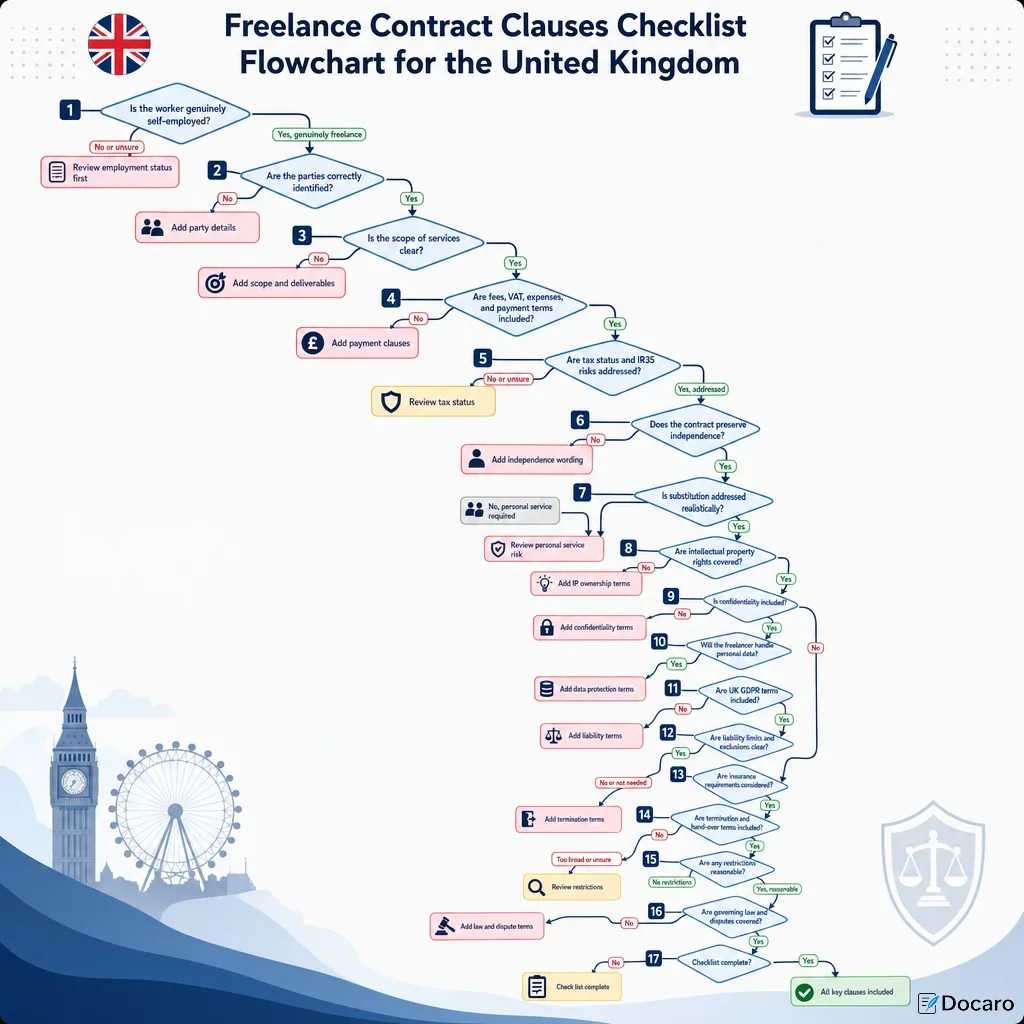
Freelance Contract Clauses Checklist Flowchart For The United Kingdom
Is the worker genuinely self-employed?
Why Does A UK Freelance Contract Need The Right Clauses?
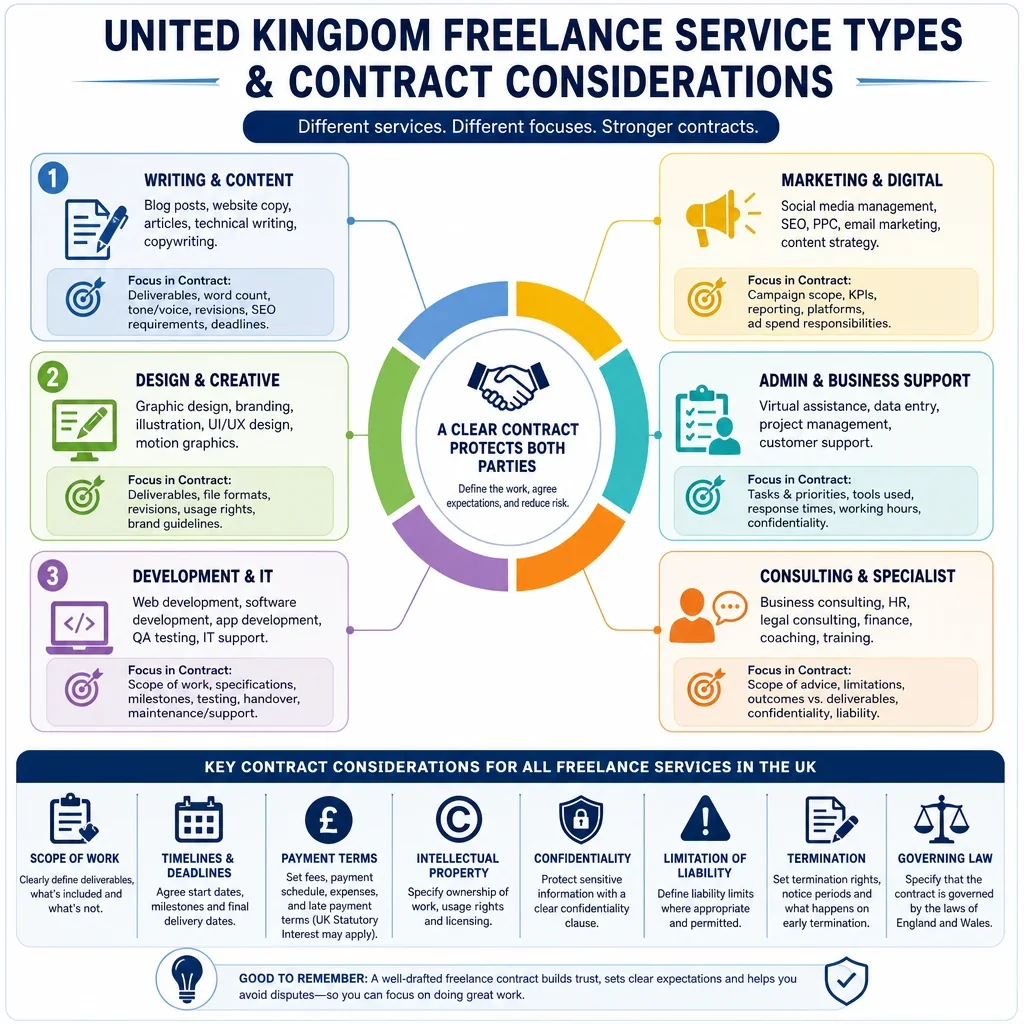
A freelance contract is not just a formality. In the United Kingdom, the clauses can affect payment rights, tax treatment, intellectual property ownership, data protection compliance, confidentiality, liability, and whether the relationship is truly self-employed.
How Can The Wrong Freelance Contract Increase Legal Risk?
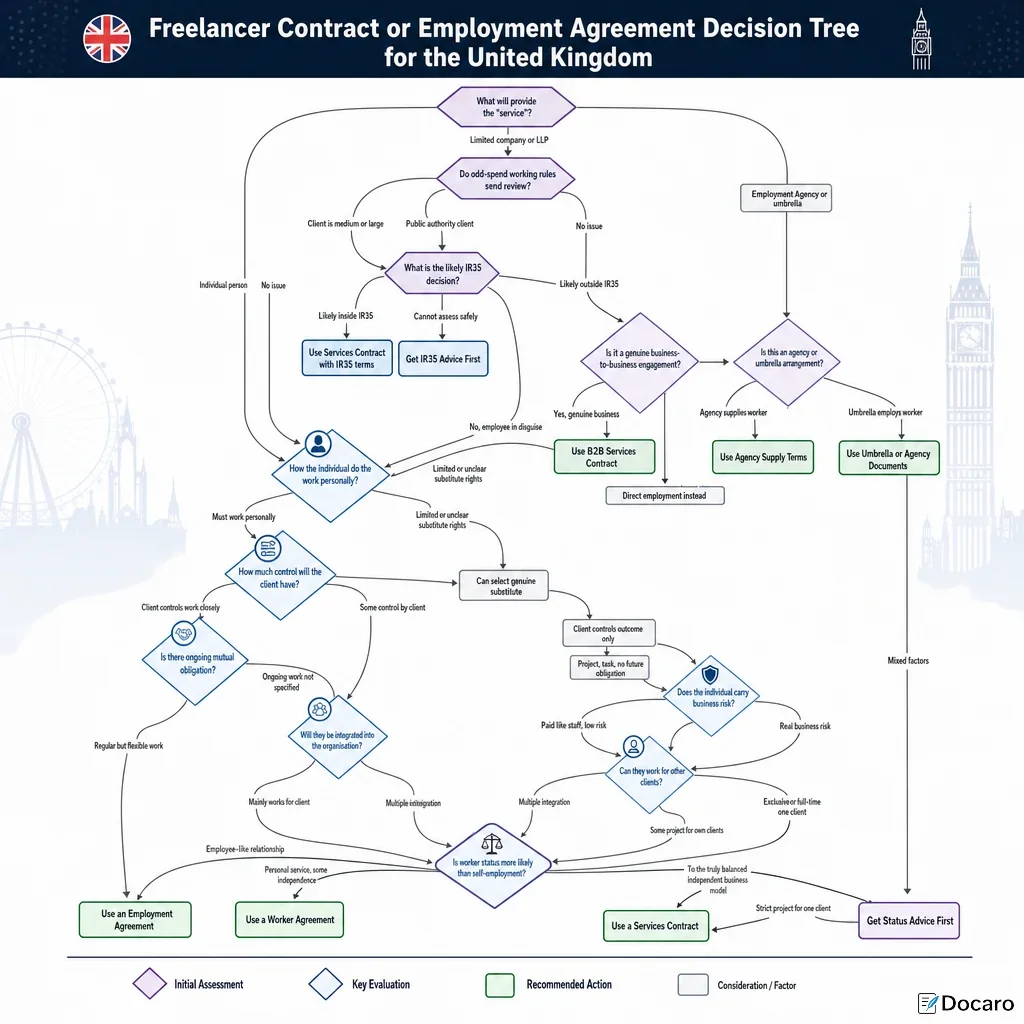
If the agreement does not match the real working relationship, the parties may face employment status, IR35, tax, National Insurance, and worker rights issues. UK authorities and tribunals look at the practical relationship as well as the written wording.
Why Are Payment, IP, And Data Clauses Especially Important?
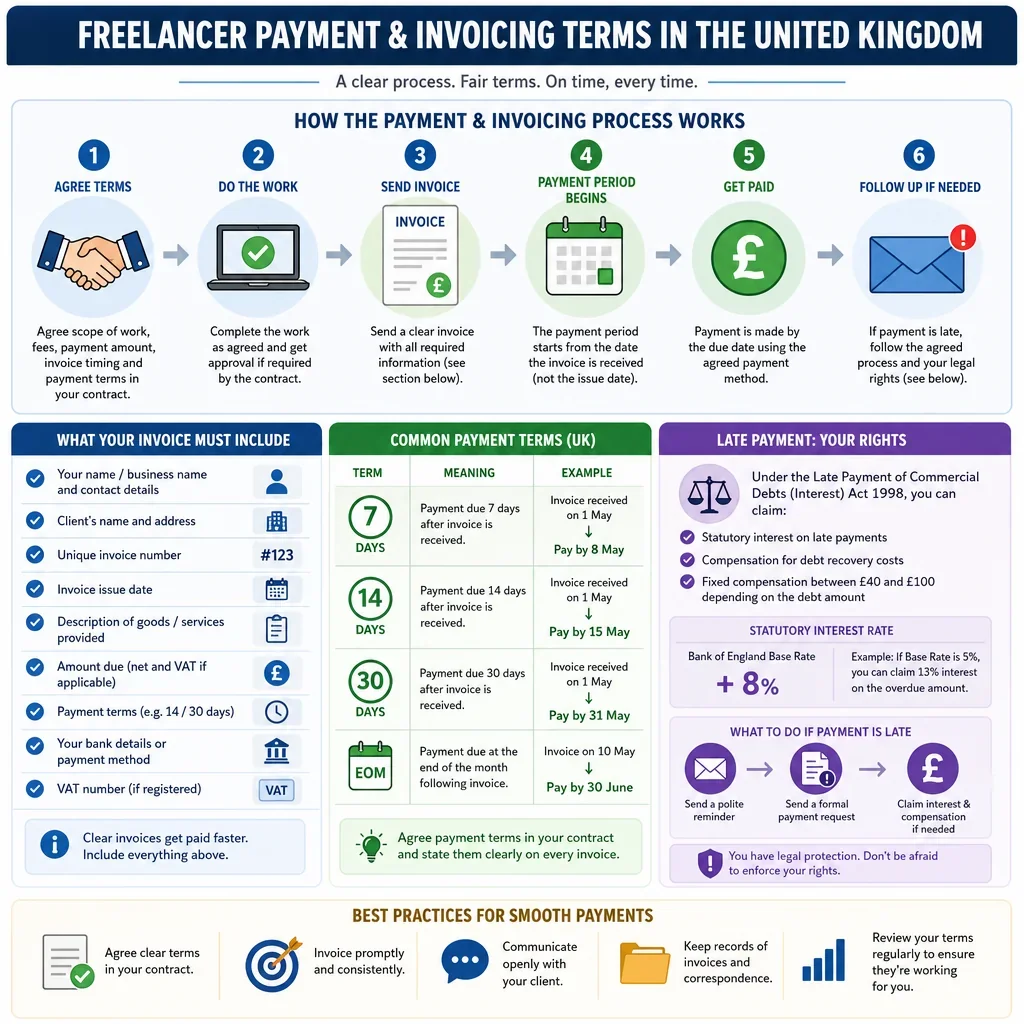
- Payment terms help determine when invoices are due, what expenses are recoverable, and what happens if a business client pays late.
- Intellectual property terms are important because a client does not automatically own all copyright in freelancer-created work just because it paid for it.
- Data protection terms may be required where the freelancer handles personal data under the UK GDPR.
When Should A Freelance Contract Be Reviewed?
A contract should be reviewed whenever the scope changes, personal data is shared, a freelancer works through a company, the client needs ownership of creative or technical work, or the working arrangement starts to look like employment. Official guidance from GOV.UK on employment status, HMRC on IR35, and the ICO on UK GDPR can help users understand the key risks.
FAQs
You Might Also Be Interested In