Common Clauses In Residential Lease Renewal Agreements In The United Kingdom
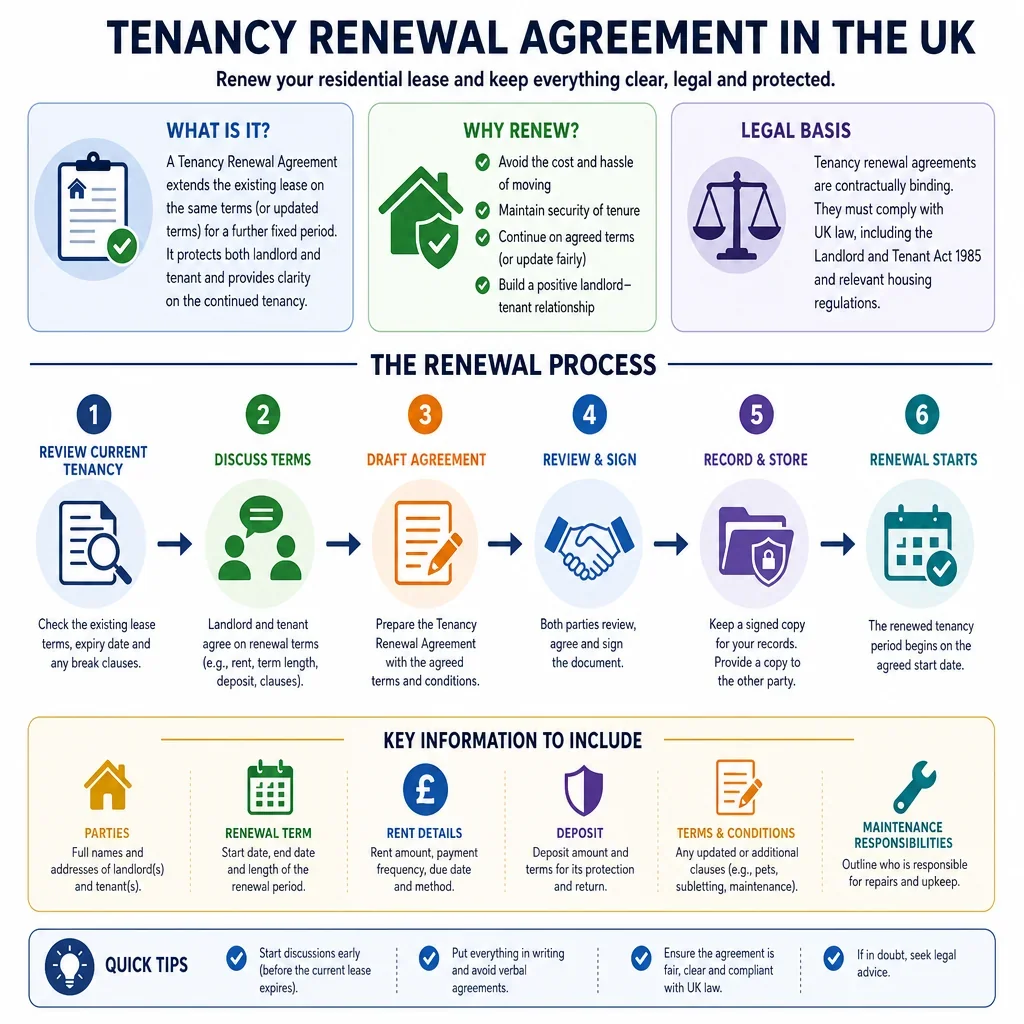
Clause Name | Purpose | Inclusion Frequency | Practical Notes | Importance Level |
|---|---|---|---|---|
Core Terms | ||||
Renewed Term And Start Date | States the renewed tenancy period and when it begins. | Commonly Included | Check whether the renewal is fixed-term or periodic and whether it starts immediately after the old term. | High |
Parties To The Renewal | Identifies the landlord, tenant and any joint tenants. | Commonly Included | Names should match the original tenancy unless a lawful change of tenant has been agreed. | High |
Property Description | Confirms the address and extent of the let property. | Commonly Included | Include any garden, parking space, storage area or excluded parts. | High |
Continuation Of Existing Terms | Carries forward original tenancy terms except as varied by the renewal. | Commonly Included | Review the old agreement because incorporated terms remain binding. | High |
Variation Of Previous Agreement | Lists changes made to the original tenancy terms. | Commonly Included | State every changed term clearly, especially rent, term, deposit and notice arrangements. | High |
Tenancy Type Confirmation | Confirms whether the tenancy is an assured shorthold, assured or other residential tenancy. | Commonly Included | Check the property, rent level and occupation facts support the stated tenancy type. | High |
Rent | ||||
Renewed Rent Amount | Sets the rent payable during the renewed tenancy. | Commonly Included | Confirm whether the amount is weekly, monthly or annual and whether it includes any services. | High |
Rent Payment Date And Method | Specifies when and how rent must be paid. | Commonly Included | Bank details and due dates should be accurate and practical for standing orders. | High |
Rent Review Or Increase | Allows rent to be reviewed or increased during or after the renewed term. | Sometimes Included | Check formula, timing and whether statutory section 13 procedures may apply to a periodic tenancy. | High |
Late Rent Interest | Sets any permitted interest on overdue rent. | Sometimes Included | In England, late rent interest is restricted and generally tied to arrears of at least 14 days. | Medium |
Rent Arrears Procedure | Explains consequences of unpaid rent and possible enforcement steps. | Sometimes Included | Possession for arrears must follow statutory grounds and court procedure. | Medium |
Service Charges And Utilities | Allocates responsibility for utilities, council tax and service charges. | Commonly Included | Confirm who pays gas, electricity, water, broadband, TV licence and council tax. | High |
Deposit | ||||
Deposit Amount And Purpose | Records the deposit held and what deductions it may cover. | Commonly Included | In England, tenancy deposit caps usually limit deposits to five or six weeks rent depending on annual rent. | High |
Deposit Protection Scheme | Confirms the approved scheme protecting the tenancy deposit. | Commonly Included | Check protection details and prescribed information, especially if the renewal creates a new tenancy. | High |
Deposit Prescribed Information | Confirms required deposit information has been given to the tenant. | Sometimes Included | Re-service may be needed if details change or a new tenancy is granted. | High |
Deposit Deductions | Sets out permitted reasons for deductions at tenancy end. | Commonly Included | Deductions should be evidenced and not betterment for ordinary fair wear and tear. | High |
Holding Deposit Treatment | Explains whether any holding deposit is refunded or applied to rent or deposit. | Situation Dependent | Usually relevant only where a new letting arrangement or changed tenant is being agreed. | Medium |
Property Use | ||||
Permitted Occupiers | Identifies who may live at the property with the tenant. | Sometimes Included | Check children, partners and lodgers are accurately addressed without creating unintended tenants. | Medium |
Residential Use Only | Restricts the property to private residential occupation. | Commonly Included | Home working should be distinguished from business use that affects insurance, planning or mortgage terms. | High |
Subletting And Assignment | Controls whether the tenant may sublet, assign or transfer the tenancy. | Commonly Included | Short-term letting and lodgers may breach mortgage, insurance or superior lease restrictions. | High |
Pets | States whether pets are allowed and any consent conditions. | Sometimes Included | Check consent process, cleaning obligations and any superior lease or building restrictions. | Medium |
Smoking And Vaping | Restricts smoking or vaping inside the property. | Sometimes Included | Clarify whether restrictions cover balconies, gardens and communal areas. | Medium |
Nuisance And Anti-Social Behaviour | Requires the tenant not to cause nuisance, annoyance or anti-social behaviour. | Commonly Included | Breach can support possession action in serious cases. | High |
Alterations And Redecoration | Controls changes to the property, fixtures or decoration. | Commonly Included | Written consent should be obtained before drilling, repainting or installing fixtures. | Medium |
Locks And Security Devices | Regulates changing locks, keys and security devices. | Sometimes Included | Balance tenant security with landlord emergency access and key return obligations. | Medium |
Garden And Outside Areas | Allocates use and upkeep of gardens, yards or balconies. | Situation Dependent | Define mowing, pruning, waste disposal and responsibility for shared areas. | Medium |
Parking Space | Confirms any parking rights and restrictions. | Situation Dependent | Identify the space, permits, visitor rules and consequences of misuse. | Medium |
Communal Areas | Sets rules for shared halls, entrances, bin stores and facilities. | Situation Dependent | Rules should match building regulations, management company rules and the superior lease. | Medium |
Prohibited Or Illegal Use | Prohibits unlawful, immoral or dangerous use of the property. | Commonly Included | Serious illegal use can support enforcement, injunctions or possession action. | High |
Repairs and Maintenance | ||||
Landlord Repairing Obligations | Confirms the landlord must repair structure, exterior and key installations. | Commonly Included | The agreement should not make the tenant responsible for statutory landlord repairs. | High |
Tenant Care And Minor Maintenance | Requires the tenant to use the property properly and report issues. | Commonly Included | Define minor tasks such as replacing light bulbs, ventilation and avoiding preventable damage. | High |
Reporting Repairs | Requires prompt notification of defects, leaks and damage. | Commonly Included | Set clear contact details and emergency reporting arrangements. | High |
Landlord Access For Inspection And Repairs | Allows reasonable access for inspections, repairs and compliance checks. | Commonly Included | Usually at least 24 hours written notice is expected except in genuine emergencies. | High |
Gas Safety Access And Certificates | Supports landlord gas safety checks and certificate provision. | Situation Dependent | Applies where gas appliances or flues are present annual checks are required. | High |
Electrical Safety Compliance | Supports inspection and maintenance of electrical installations. | Commonly Included | Private landlords in England generally need electrical checks at least every five years. | High |
Smoke And Carbon Monoxide Alarms | Allocates testing and reporting duties for alarms. | Commonly Included | Landlords must provide required alarms tenants should report faults promptly. | High |
Damp, Mould And Ventilation | Addresses reporting, ventilation and landlord action for damp or mould. | Sometimes Included | Fitness for human habitation duties may apply where damp or mould makes the property unsafe. | High |
Inventory And Schedule Of Condition | Records the condition and contents at renewal. | Sometimes Included | Update the inventory if condition, furnishings or appliances have changed since the original tenancy. | Medium |
Insurance And Tenant Belongings | Clarifies landlord building insurance and tenant contents responsibility. | Sometimes Included | Tenant possessions are usually not covered by landlord building insurance. | Medium |
Notices | ||||
Service Of Notices | Specifies how formal notices may be served. | Commonly Included | Confirm postal, hand delivery and email rules, addresses and deemed service timing. | High |
Contact Details For Notices | Lists addresses and contacts for formal communications. | Commonly Included | Landlords should provide an address in England or Wales for service of notices where required. | High |
Email Notice Consent | Records whether notices and documents may be served by email. | Sometimes Included | Use clear consent, current email addresses and safeguards for statutory notices. | Medium |
Section 21 Compliance Documents | Records provision of documents relevant to no-fault possession in England. | Sometimes Included | Check current rules on deposit protection, gas safety, EPC and How to Rent guide before relying on section 21. | High |
Ending the Tenancy | ||||
Tenant Notice To Leave | Sets how the tenant may give notice to end the renewed tenancy. | Commonly Included | Notice rules differ between fixed-term, break clause and periodic tenancies. | High |
Landlord Possession Notices | References statutory notices required before possession proceedings. | Sometimes Included | A renewal clause cannot remove statutory notice and court requirements for eviction. | High |
Break Clause | Allows early termination during the renewed fixed term. | Sometimes Included | Specify earliest break date, notice length, parties entitled to use it and any conditions. | High |
Surrender By Agreement | Allows the tenancy to end early by mutual written agreement. | Sometimes Included | Record agreed move-out date, rent apportionment, keys and deposit arrangements. | Medium |
End Of Tenancy Obligations | Sets checkout, cleaning, keys and vacant possession requirements. | Commonly Included | Avoid professional cleaning charges that breach tenant fees rules unless permitted for loss caused by breach. | High |
Abandoned Goods | Explains how belongings left behind may be handled. | Sometimes Included | Landlords should give reasonable notice before selling or disposing of uncollected goods. | Medium |
Administrative Provisions | ||||
Guarantor Continuation Or Release | Confirms whether an existing guarantor remains liable for the renewal. | Situation Dependent | Guarantors should usually sign or expressly consent to renewed or varied obligations. | High |
Joint And Several Liability | Makes each joint tenant responsible for all tenant obligations. | Situation Dependent | Each joint tenant may be liable for the full rent and breaches by other joint tenants. | High |
Permitted Payments And Fees | Limits payments required from the tenant to lawful permitted payments. | Commonly Included | In England, renewal, referencing and administration fees are generally restricted unless permitted by statute. | High |
Right To Rent Checks | Confirms immigration status checks relevant to occupation in England. | Situation Dependent | Applies in England follow current Home Office guidance for repeat checks where time-limited rights exist. | Medium |
Energy Performance Certificate | Records provision of an EPC where required. | Sometimes Included | Check EPC rating and any minimum energy efficiency restrictions before renewing. | Medium |
How To Rent Guide Acknowledgement | Records provision of the current government How to Rent guide in England. | Sometimes Included | Relevant to assured shorthold tenancies in England and section 21 compliance. | High |
Data Protection And Privacy | Explains how tenant personal data may be used and shared. | Sometimes Included | Landlords and agents should provide privacy information and avoid unnecessary data sharing. | Medium |
Severance | Keeps the rest of the agreement effective if one term is unenforceable. | Sometimes Included | Useful for administrative certainty but cannot save an unlawful core obligation. | Low |
Entire Agreement | States that the written renewal records the agreed terms. | Sometimes Included | Ensure promised repairs, concessions or side agreements are written into the renewal. | Medium |
Governing Law And Jurisdiction | Confirms the legal system governing the renewal agreement. | Commonly Included | For UK use, identify the correct jurisdiction, such as England and Wales, Scotland or Northern Ireland. | Medium |
Execution And Signatures | Records signing by landlord, tenant and any guarantor. | Commonly Included | All parties should sign before or at renewal start deeds need additional formalities. | High |
What Clauses Matter Most In A UK Tenancy Renewal Agreement?
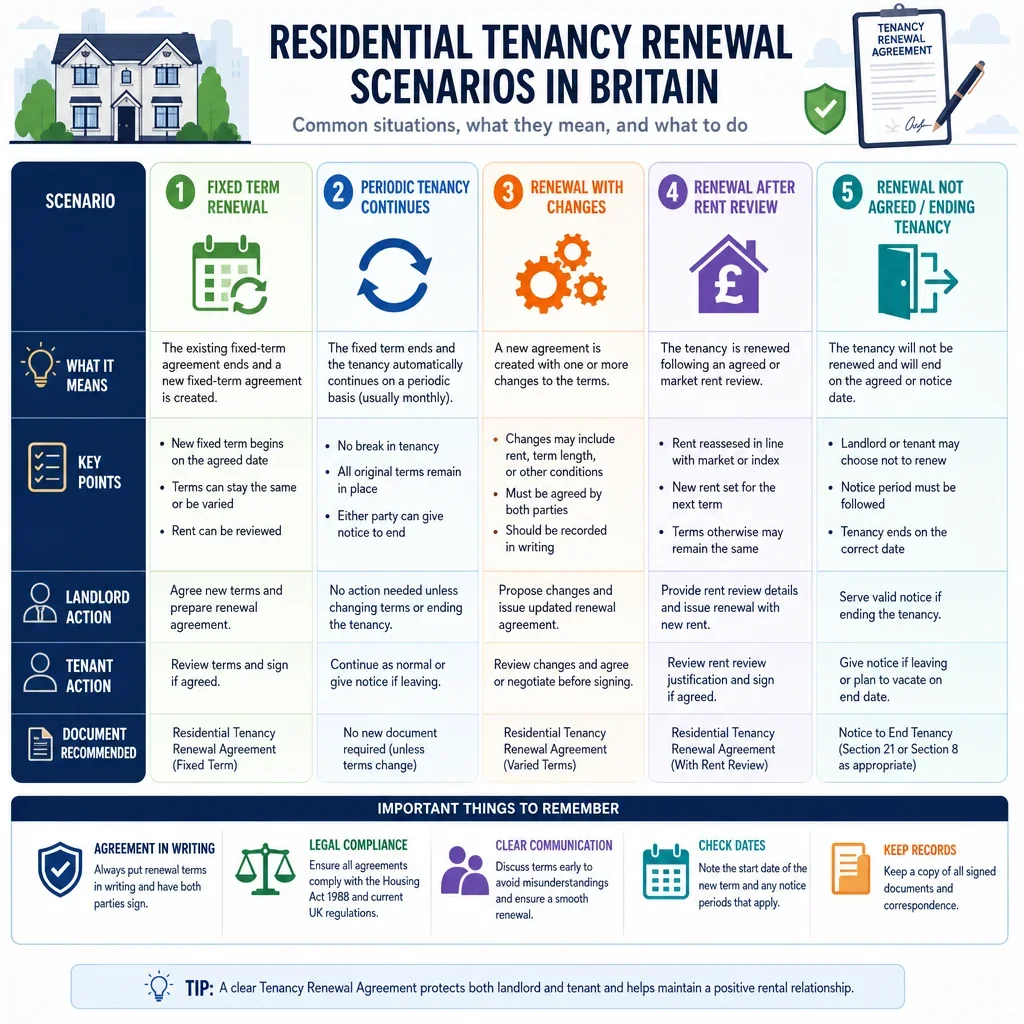
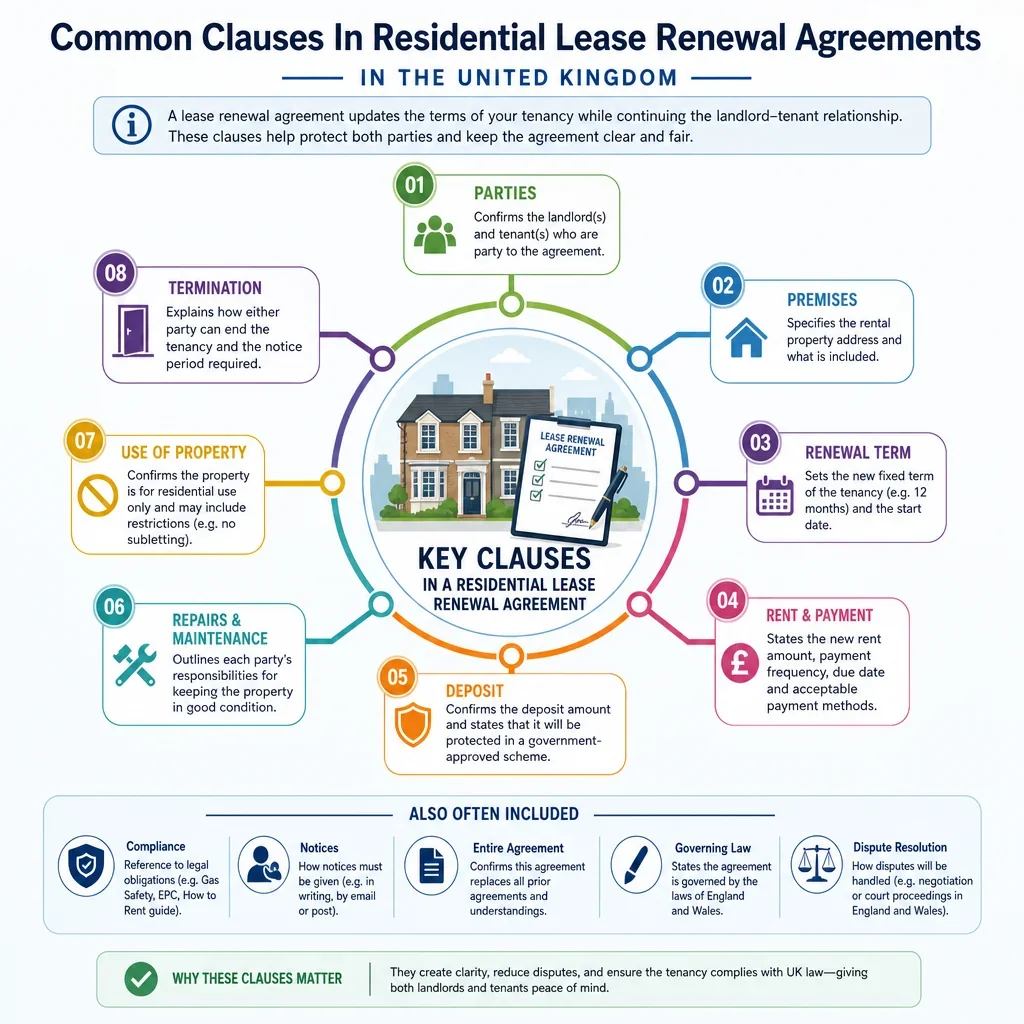
Core renewal terms, rent, deposit protection, repairing obligations and notice provisions are the clauses most likely to affect the legal and practical effect of a residential tenancy renewal. The renewal should clearly state whether it creates a new fixed term or continues on a periodic basis, because that affects rent certainty, exit rights and notice planning.
Can A Landlord Increase Rent When Renewing A Tenancy?
A rent review or revised rent clause should be checked carefully before signature. In England, statutory rent increase routes for periodic assured tenancies can involve section 13 of the Housing Act 1988, but a signed renewal agreement can also create a new contractual rent. Tenants should confirm the new rent, payment date, arrears consequences and whether utilities or service charges are included.
Does The Deposit Need To Be Protected Again On Renewal?
Deposit clauses are especially important where the renewal is treated as a new tenancy. Landlords should check whether the deposit remains correctly protected and whether prescribed information must be re-served under Housing Act 2004 section 213. Failure to comply can affect possession claims and expose the landlord to financial penalties.
Which Clauses Should Be Checked Before Signing?
- Break clauses should specify who can end the tenancy early, when notice can be served, and any preconditions.
- Repairs and maintenance clauses should align with the landlord repairing duties under Landlord and Tenant Act 1985 section 11 and should not shift statutory landlord obligations to the tenant.
- Fees and charges clauses should be checked against the Tenant Fees Act 2019 in England, which restricts many payments connected with assured shorthold tenancies.
- Use, pets, alterations and subletting clauses should reflect how the occupier actually intends to live in the property during the renewed term.
- Notice clauses should use correct service methods and current statutory notice periods, especially where possession notices may later be needed.
FAQs
You Might Also Be Interested In