Choosing The Right Job Offer Letter In The United Kingdom
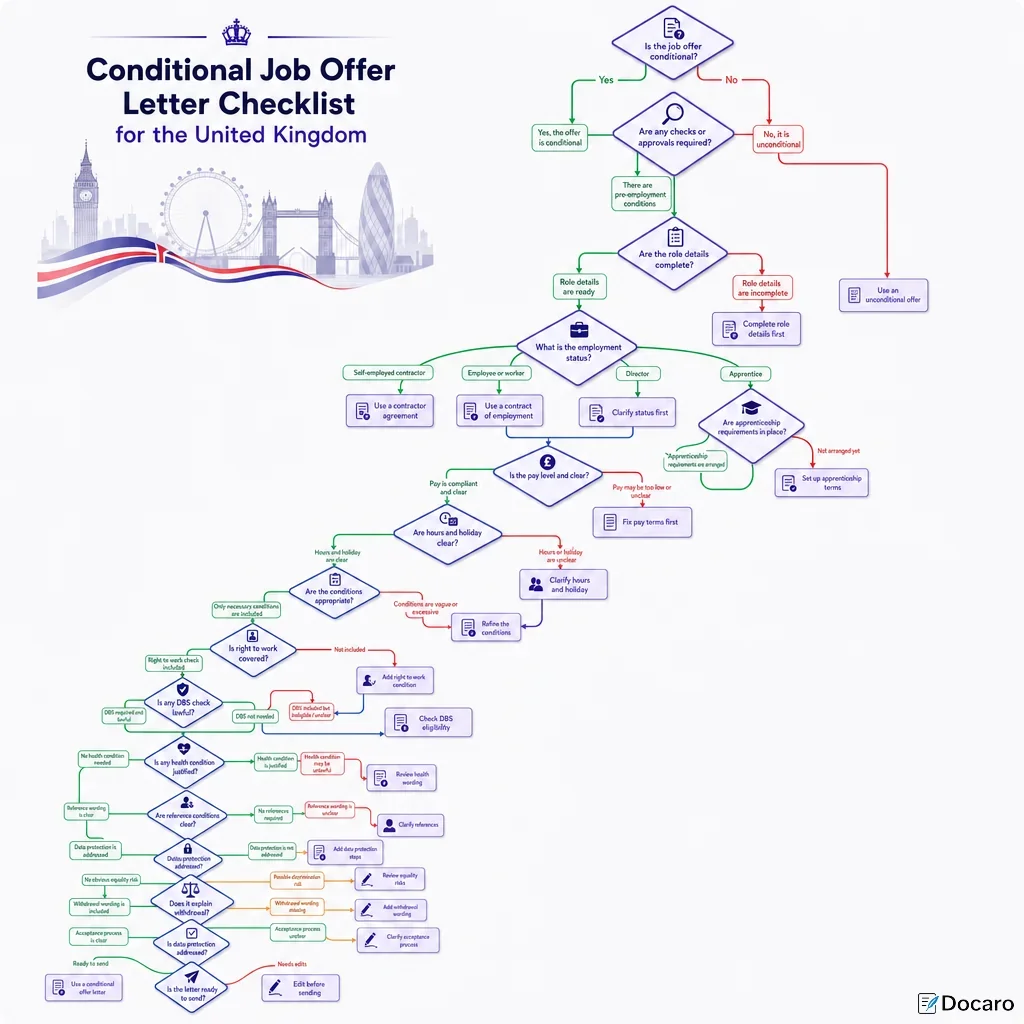
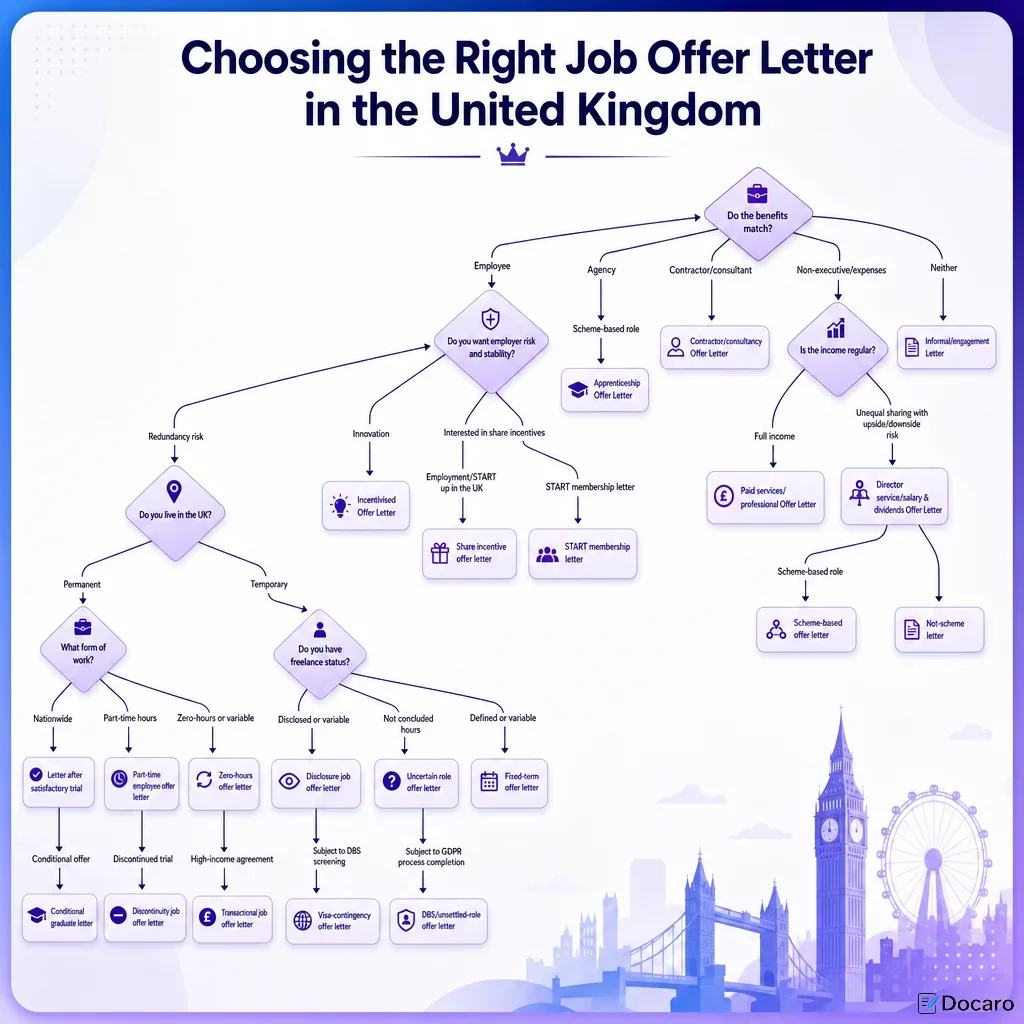
What is the person\'s status?
Why Is Choosing The Right UK Job Offer Letter Important?
Choosing the right job offer letter helps employers set clear expectations before work begins. In the United Kingdom, the wording of an offer can affect employment status, pay, working hours, notice, conditions, and the documents an employer must provide by law.
How Can The Wrong Offer Letter Create Legal Risk?
A letter that describes someone as self-employed, casual, or unpaid will not override the real working relationship. If the person is actually an employee or worker, they may still have rights to holiday pay, National Minimum Wage, sick pay, and other protections. Incorrect wording can lead to disputes, HMRC issues, or employment tribunal claims.
What Should A UK Job Offer Letter Usually Clarify?
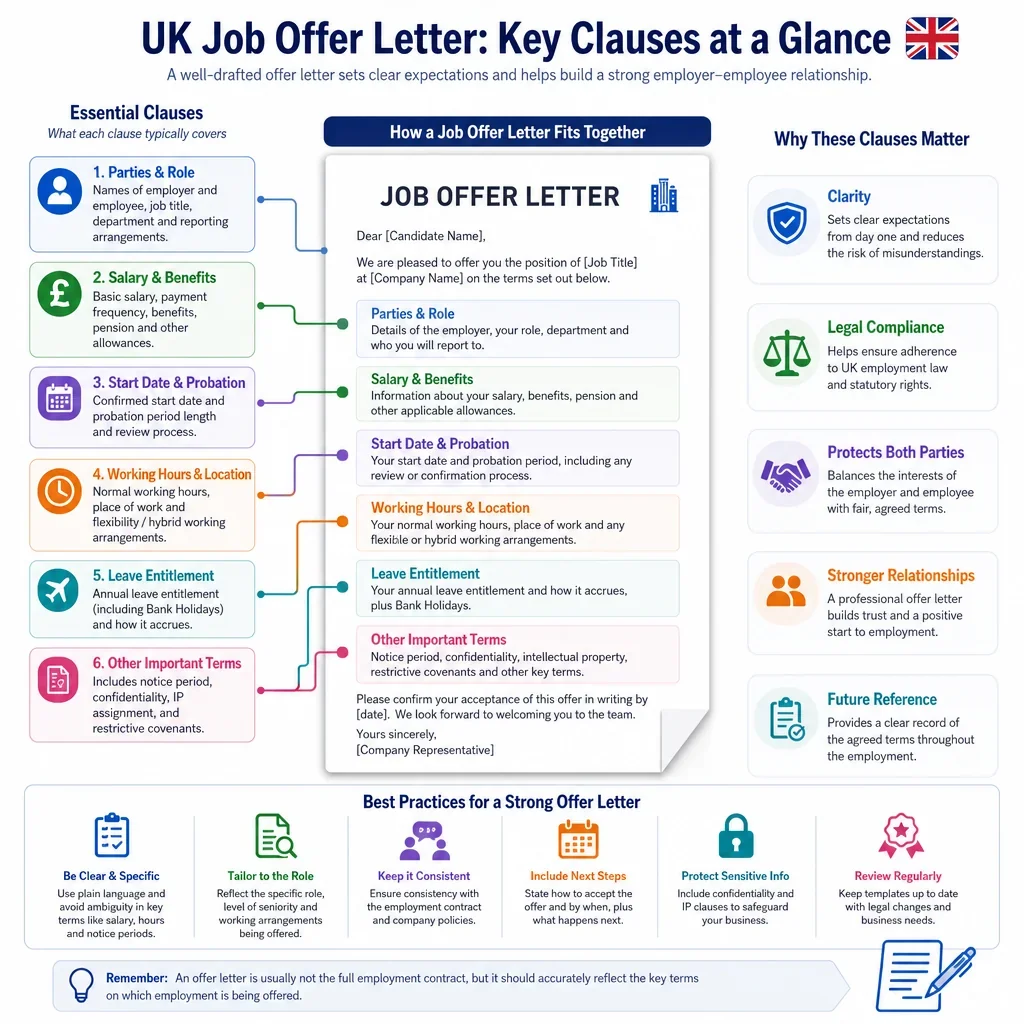
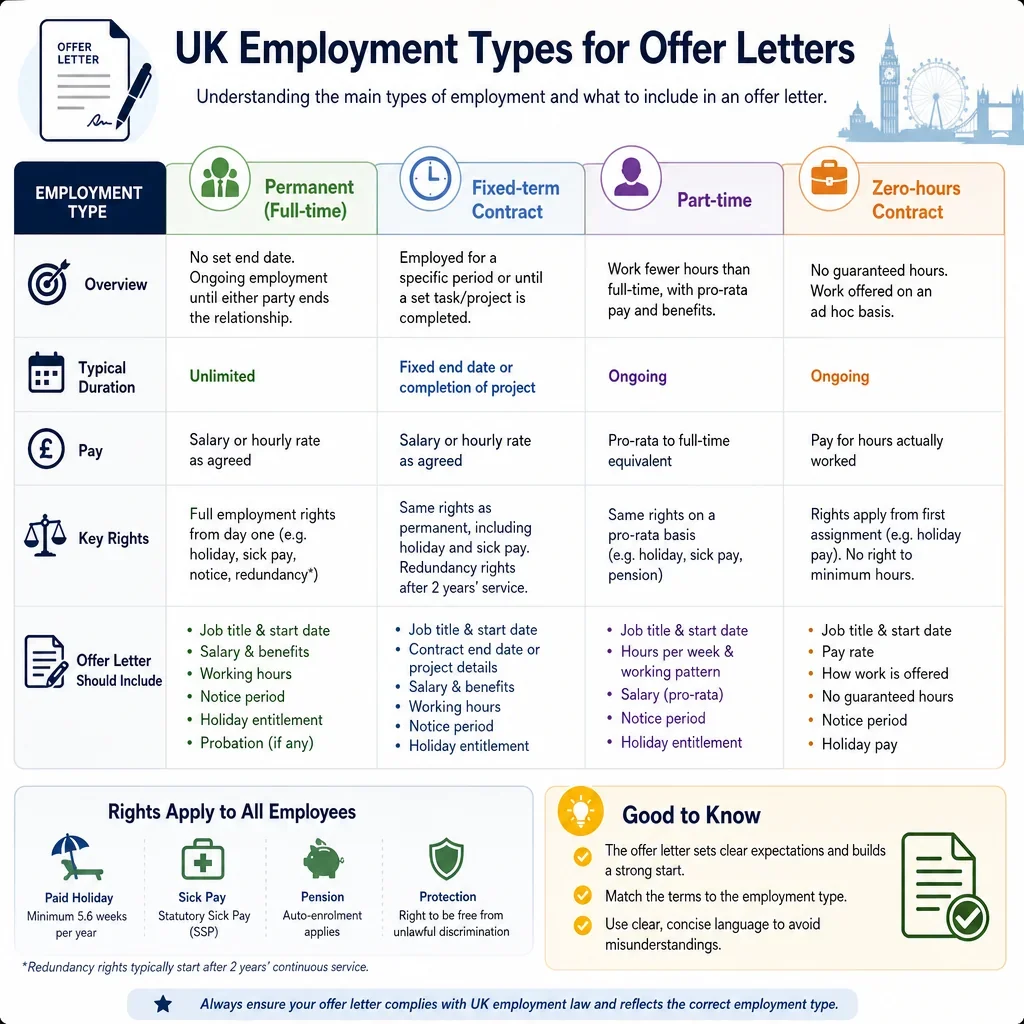
- Employment status: whether the person is an employee, worker, apprentice, contractor, intern, or volunteer.
- Role and start date: the job title, duties, reporting line, and first day of work.
- Pay and hours: salary or hourly rate, working pattern, overtime, and any shift requirements.
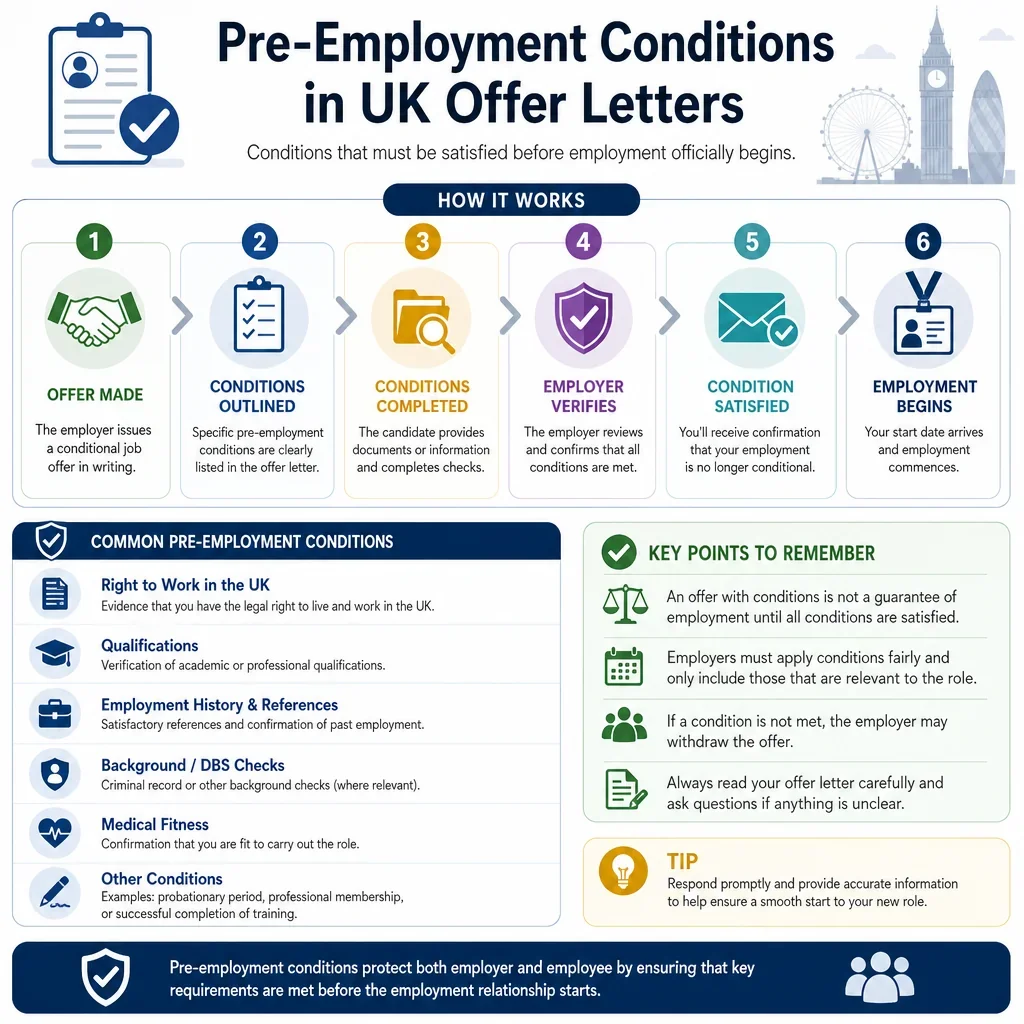
- Conditions: right to work checks, references, qualifications, DBS checks, or visa sponsorship.
- Duration: whether the role is permanent, fixed-term, project-based, or temporary cover.
When Should Employers Use A Conditional Offer Letter?
A conditional offer is often best where employment depends on checks being completed. Common UK examples include proof of right to work, satisfactory references, professional qualifications, immigration approval, or a lawful DBS check. Clear conditions make it easier to withdraw or delay the offer if a requirement is not met.
Where Can Employers Check Official UK Guidance?
Employers can review guidance from GOV.UK on employment status, GOV.UK on written employment particulars, and Acas on employment contracts. These resources help ensure the offer letter aligns with UK employment law and good practice.
FAQs
You Might Also Be Interested In