Which Documents Are Needed For A Commercial Lease Assignment In The United Kingdom?
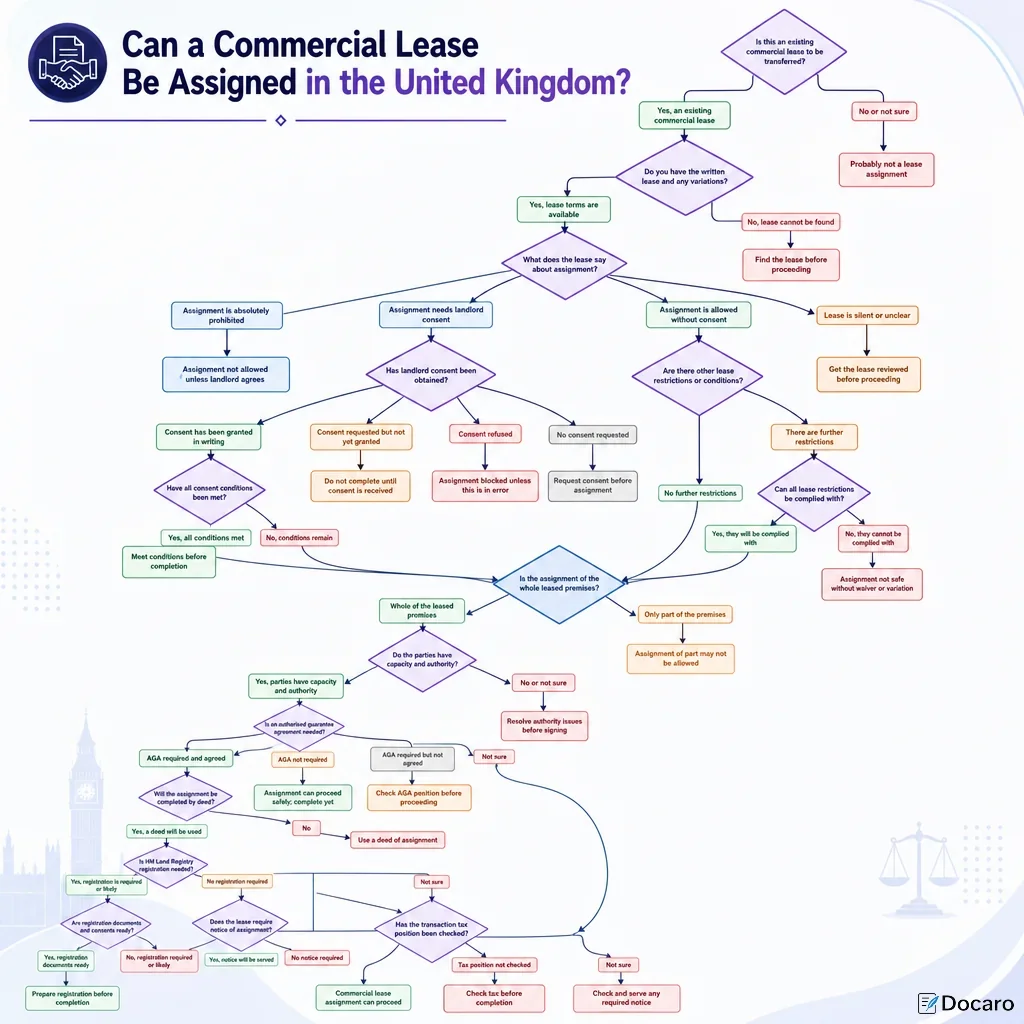
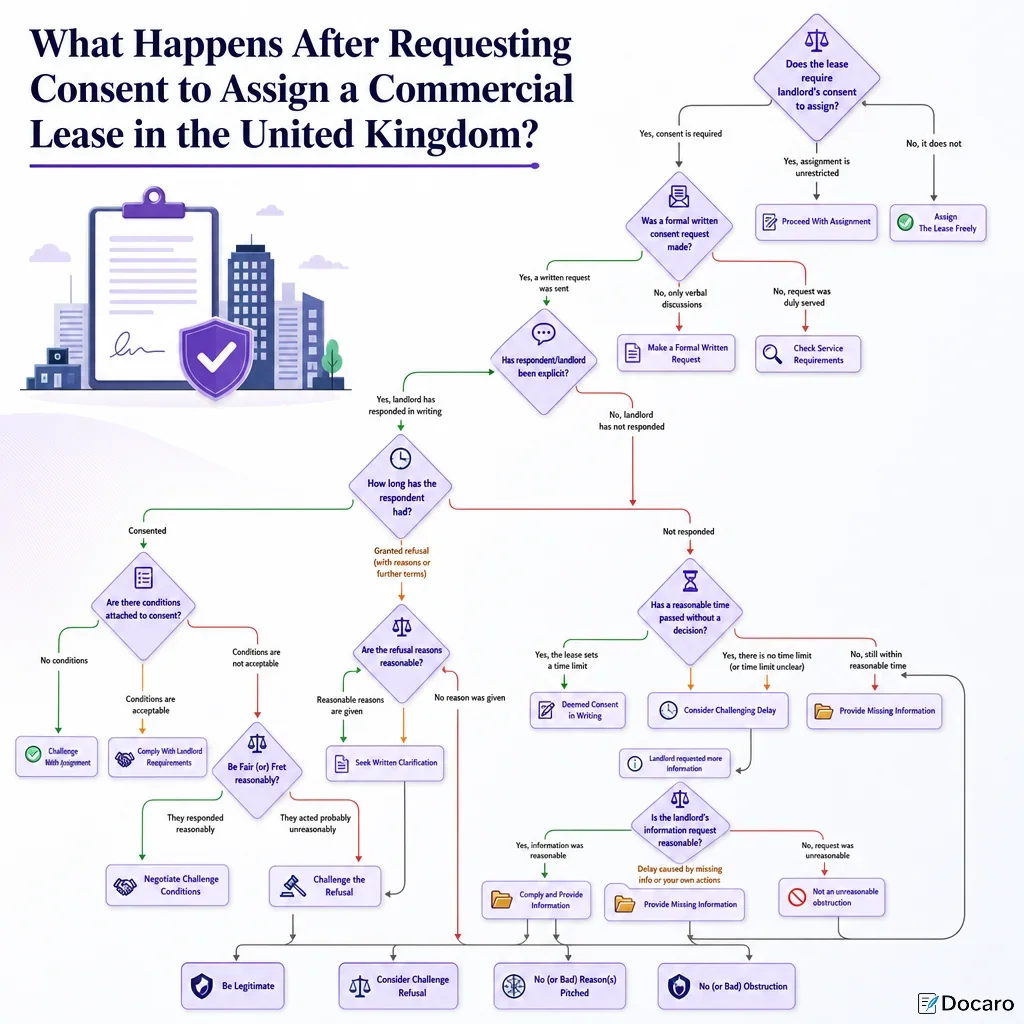
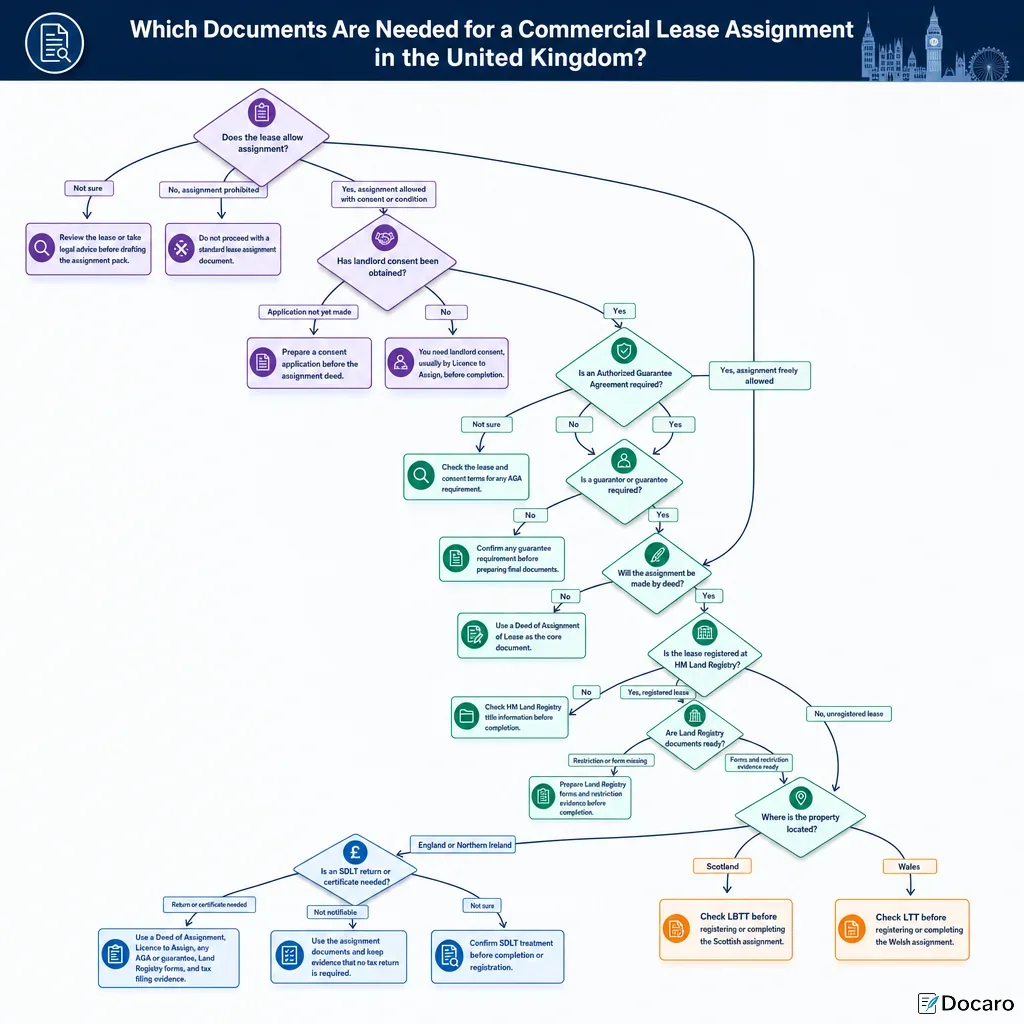
Does the lease allow assignment?
Why Are The Right Commercial Lease Assignment Documents Important?
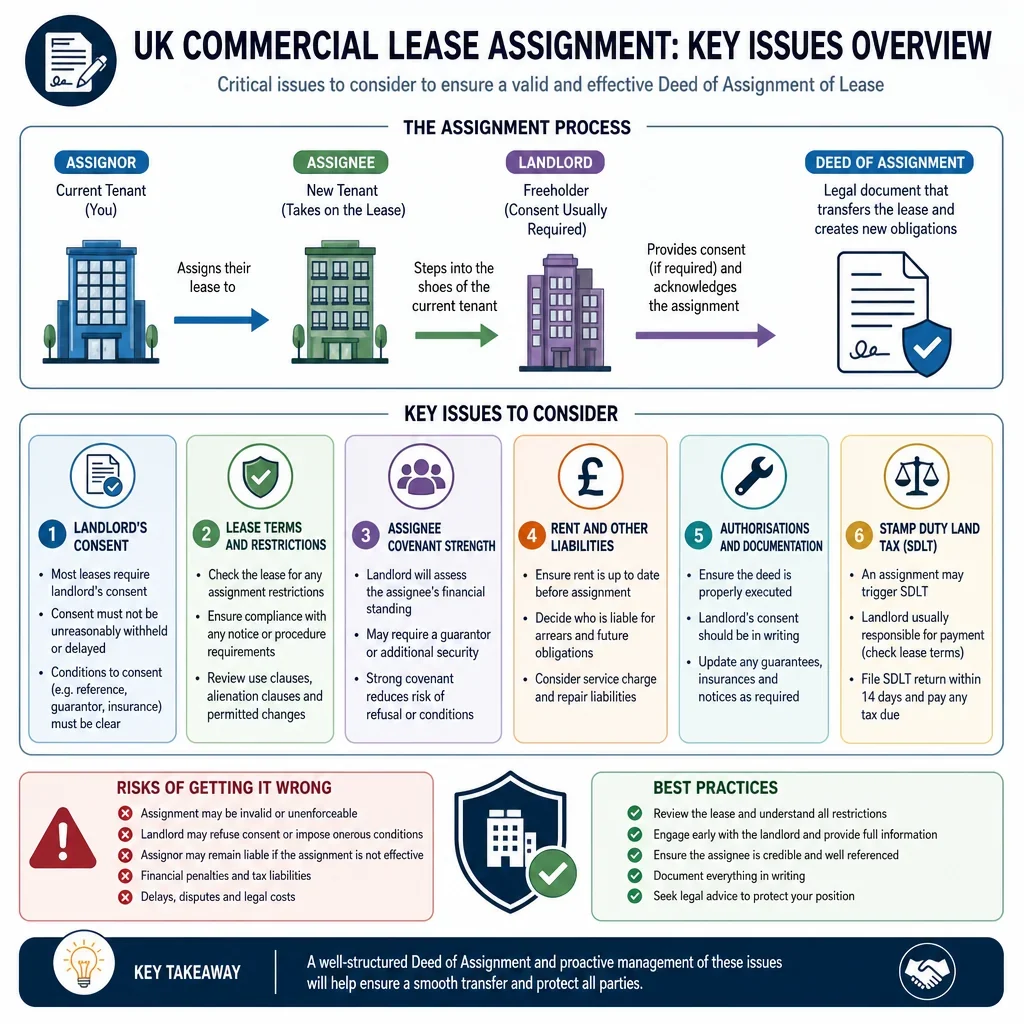
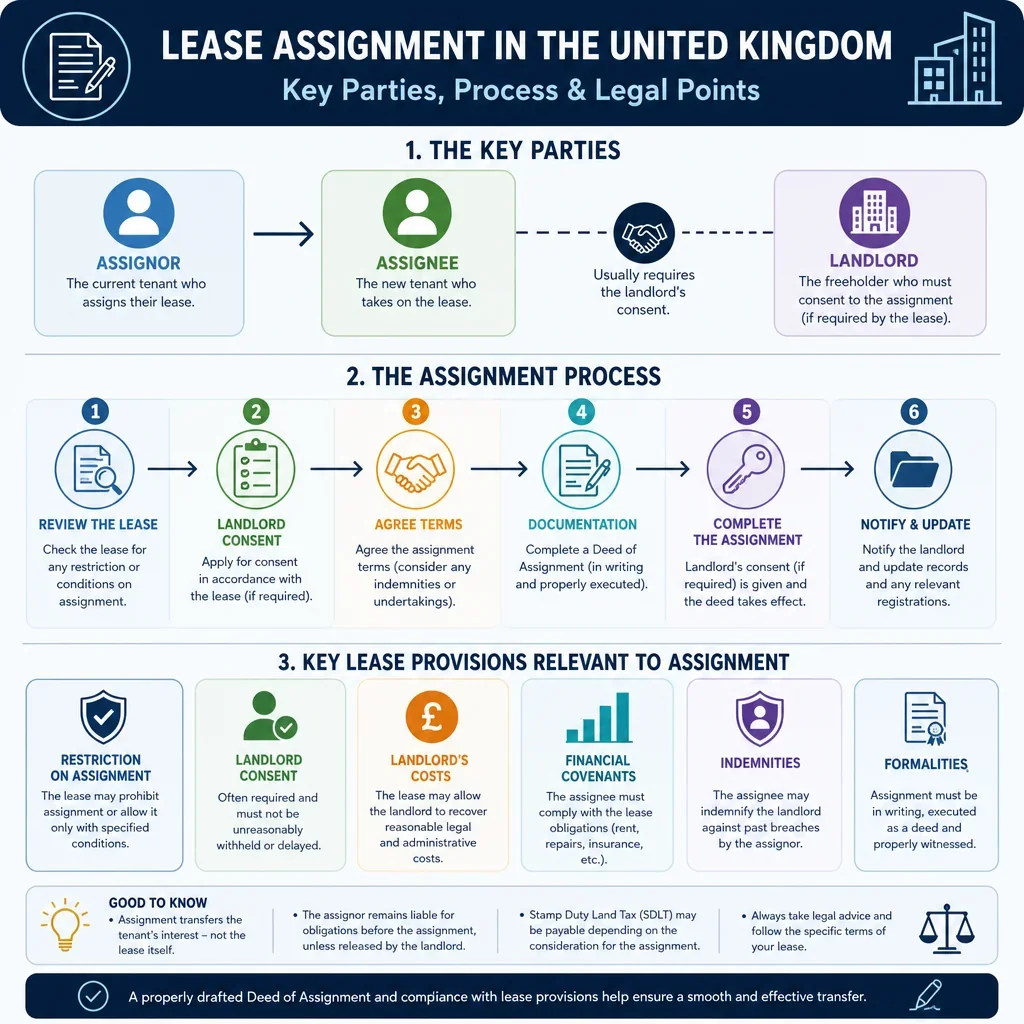
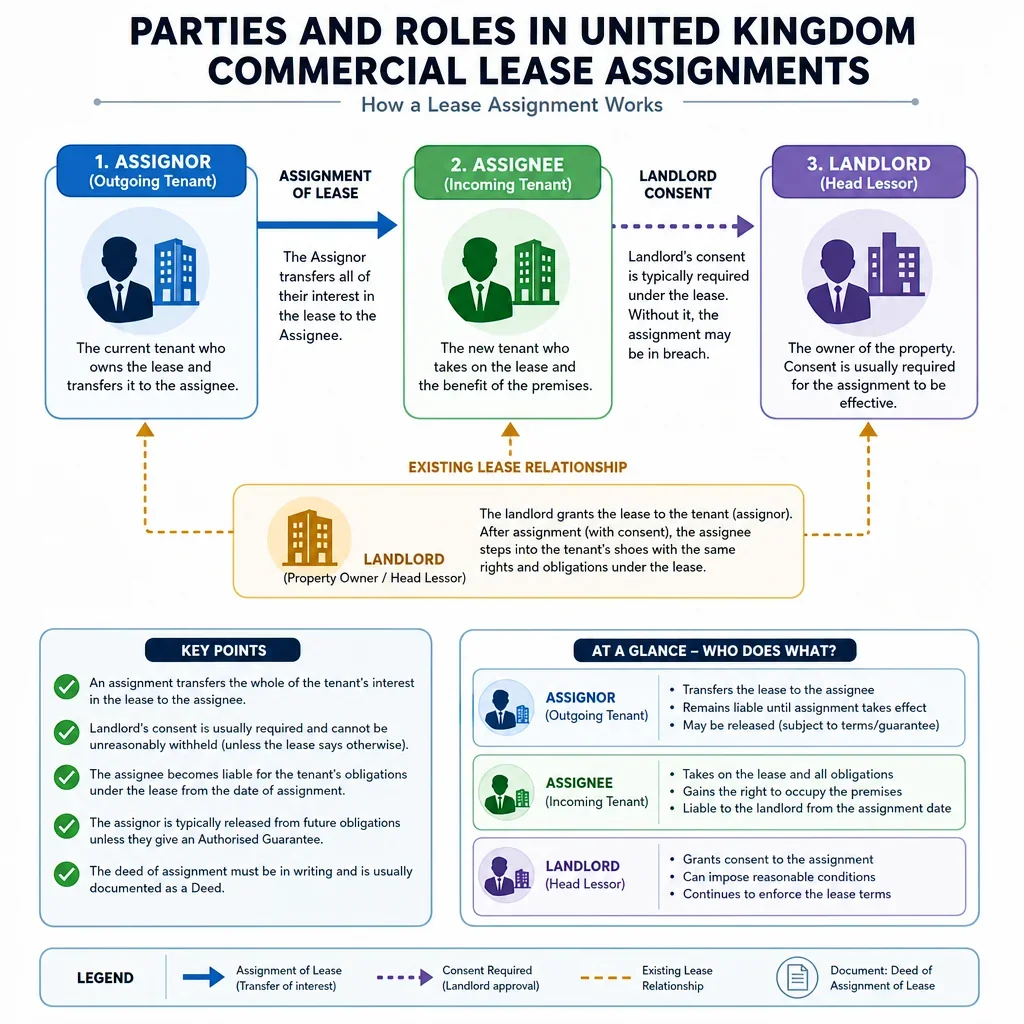
Assigning a commercial lease in the United Kingdom is not just an administrative step. It transfers valuable leasehold rights and ongoing liabilities from the outgoing tenant to the incoming tenant. The correct documents help show that the landlord has consented where required, the transfer has been made by deed, and any post-completion registration or tax steps have been dealt with.
What Can Go Wrong If The Wrong Documents Are Used?
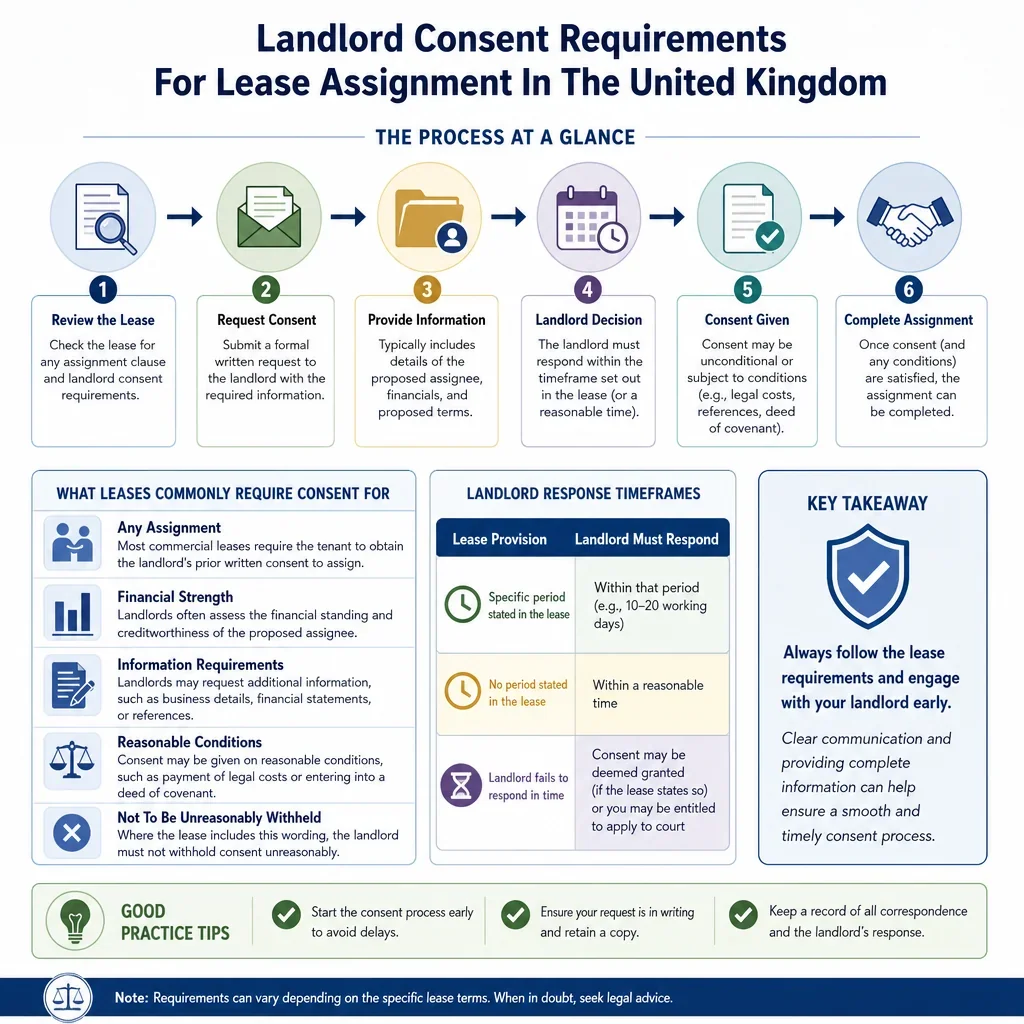
- Breach of lease: assigning without required landlord consent may breach the alienation clause.
- Invalid or incomplete transfer: many lease assignments must be made by deed and signed correctly.
- Continuing liability: an outgoing tenant may remain liable under an Authorised Guarantee Agreement or other lease covenants.
- Registration delays: HM Land Registry may reject an application if forms, consents, certificates or restriction evidence are missing.
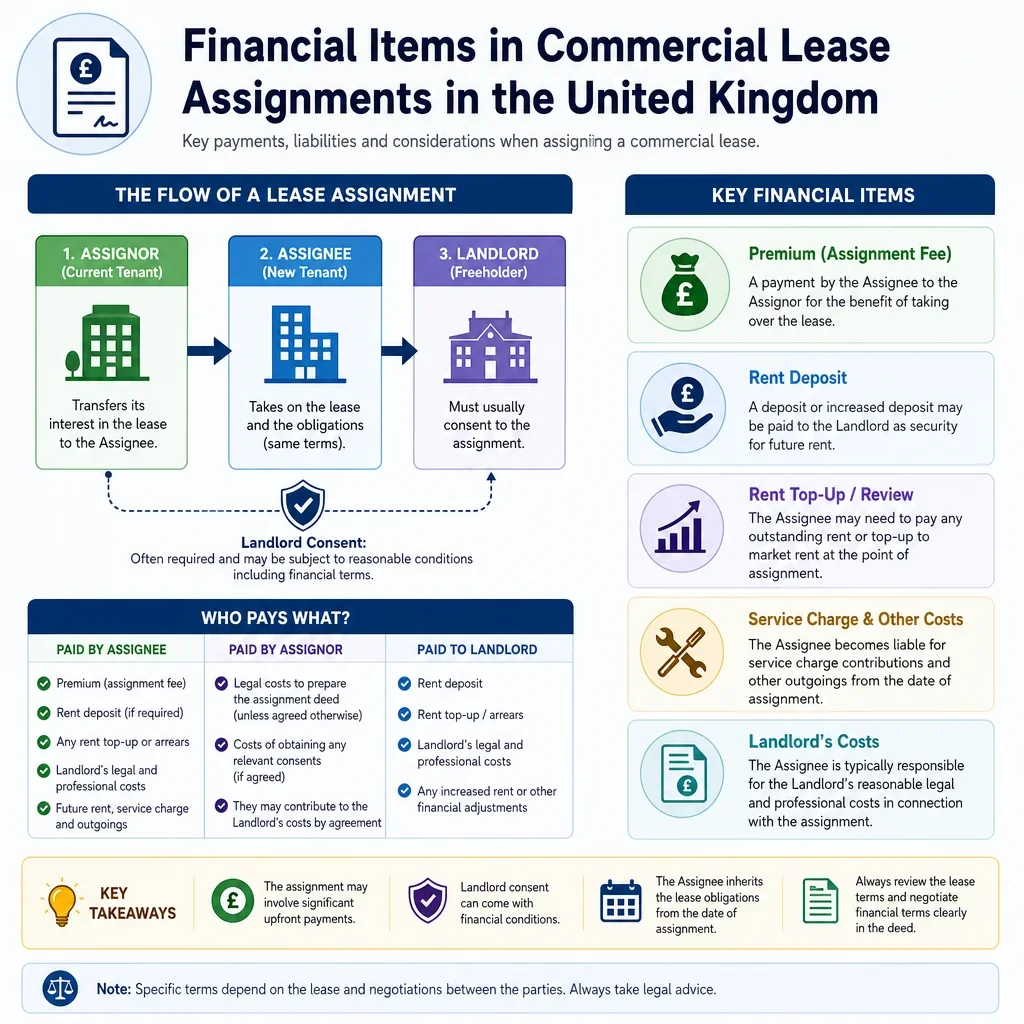
- Tax penalties: SDLT, LBTT or LTT rules may apply depending on whether the property is in England, Northern Ireland, Scotland or Wales.
Which Document Is Usually Central To A Commercial Lease Assignment?
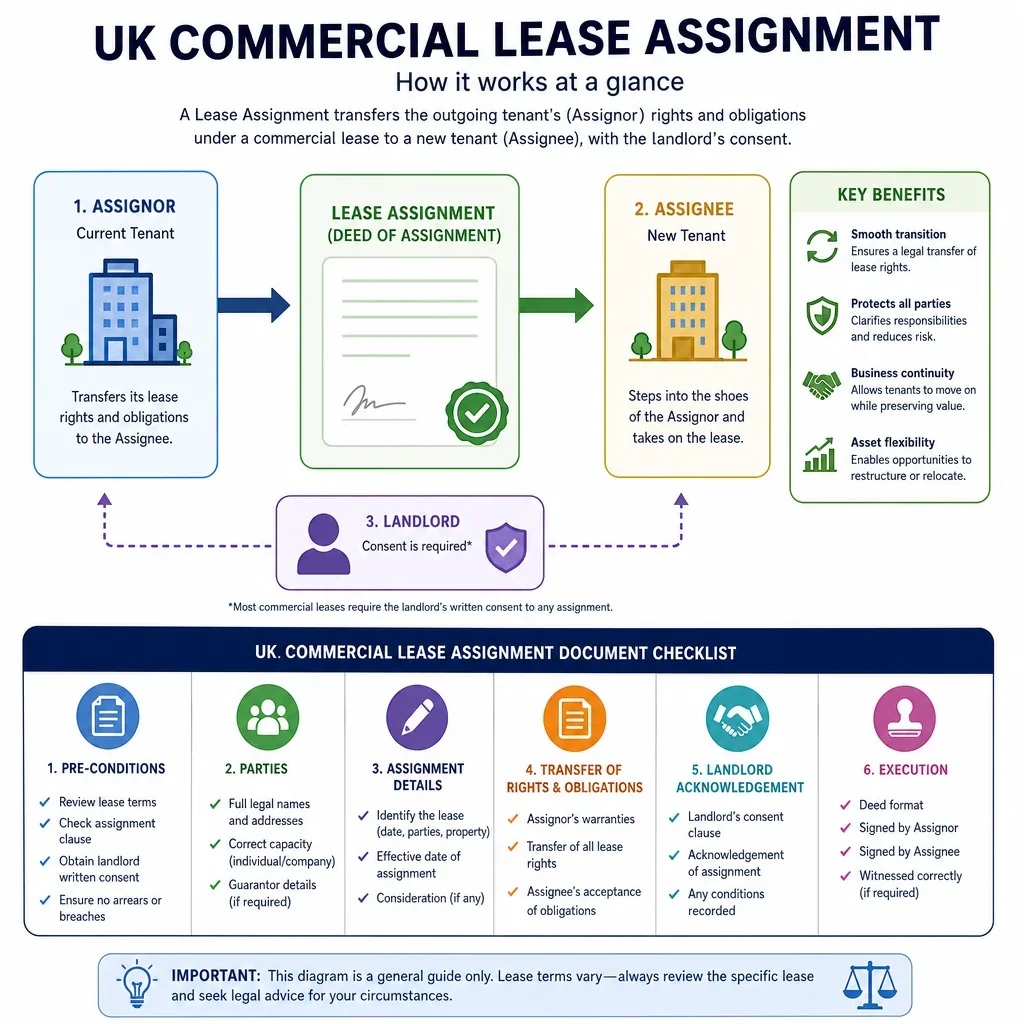
The key document is usually a Deed of Assignment of Lease. However, it is often not the only document. Depending on the lease terms, the parties may also need a Licence to Assign, an Authorised Guarantee Agreement, a guarantor document, HM Land Registry forms, and tax filing evidence.
How Does This Help Tenants And Landlords In The UK?
Using the correct document set gives the parties a clearer completion process, reduces the risk of disputes, and helps ensure the incoming tenant can prove its right to occupy and trade from the premises. It also helps the landlord maintain control over who occupies the property and who is responsible for lease obligations.
This tool is a practical guide only. Commercial lease assignments can involve substantial liabilities, so parties should consider professional advice where the lease terms, tax position or registration requirements are uncertain.
FAQs
You Might Also Be Interested In