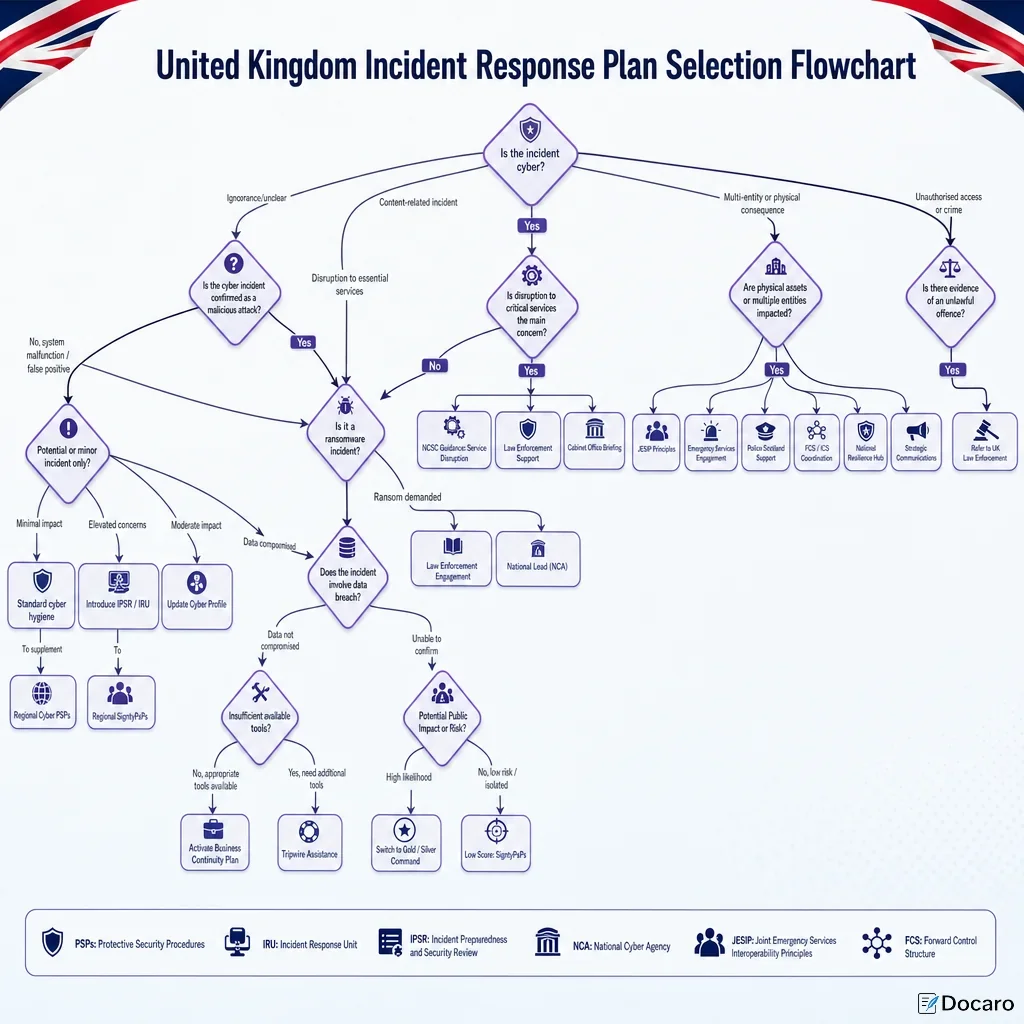
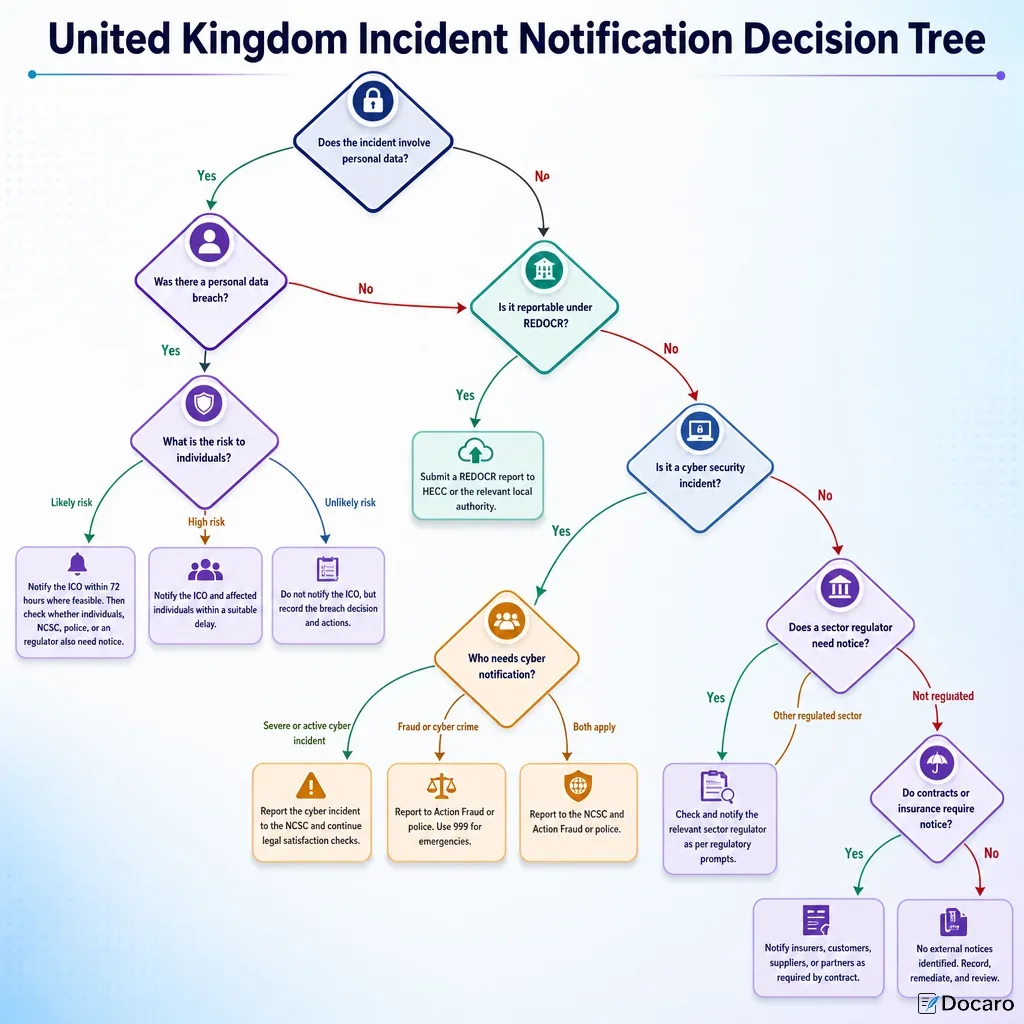
United Kingdom Incident Notification Decision Tree
Does the incident involve personal data?
Why Is The Right UK Incident Notification Decision Important?
Incident notification in the United Kingdom can involve several overlapping duties. A single event may require notice to the ICO, HSE, NCSC, police, a sector regulator, insurers, customers, or affected individuals. Making the right decision helps an organisation respond lawfully, quickly, and consistently.
How Can Incorrect Notification Decisions Create Legal Risk?
Failing to notify the right body, or notifying too late, can lead to regulatory investigation, enforcement action, loss of trust, and avoidable harm. For example, UK GDPR personal data breaches that are likely to risk individuals must normally be reported to the ICO within 72 hours of awareness. Work-related serious injuries and dangerous occurrences may need RIDDOR reporting to HSE or the relevant enforcing authority.
Why Do UK Incident Response Plans Need Clear Escalation Routes?
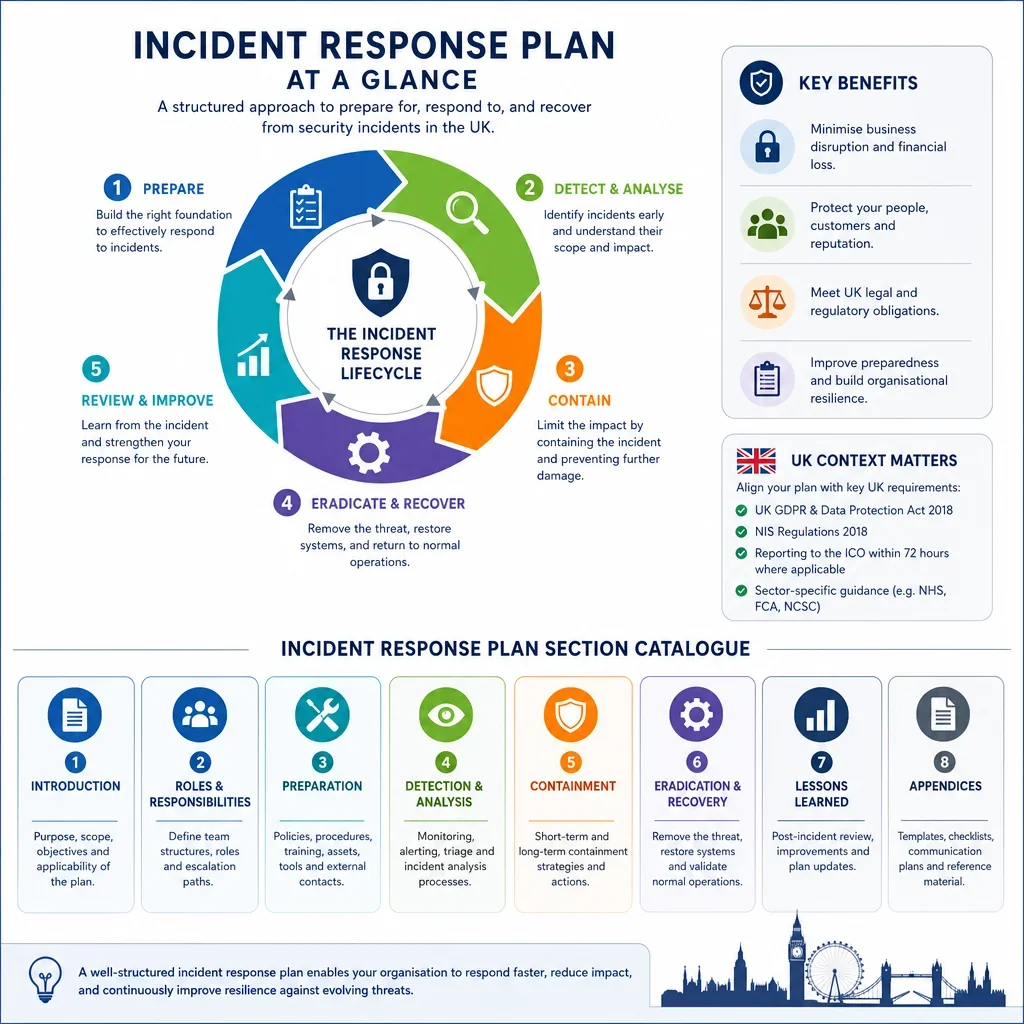
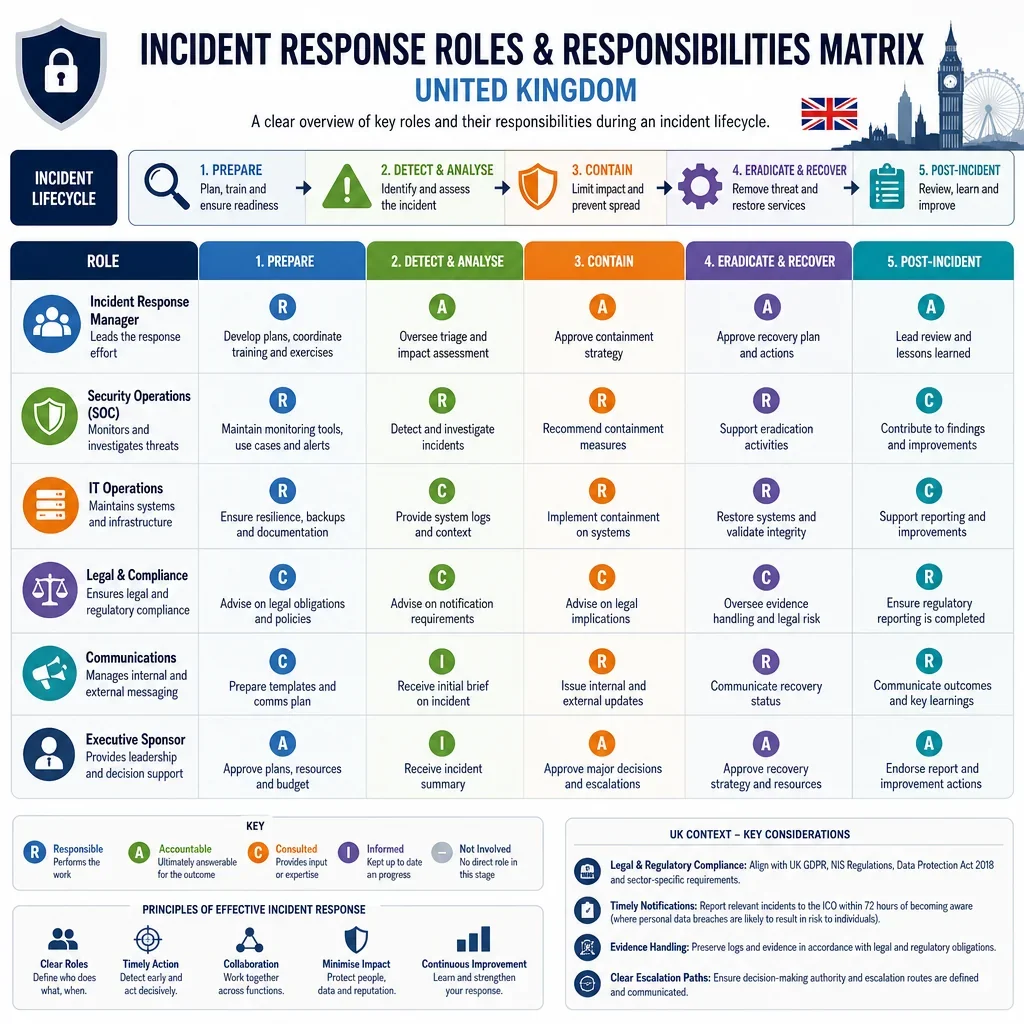
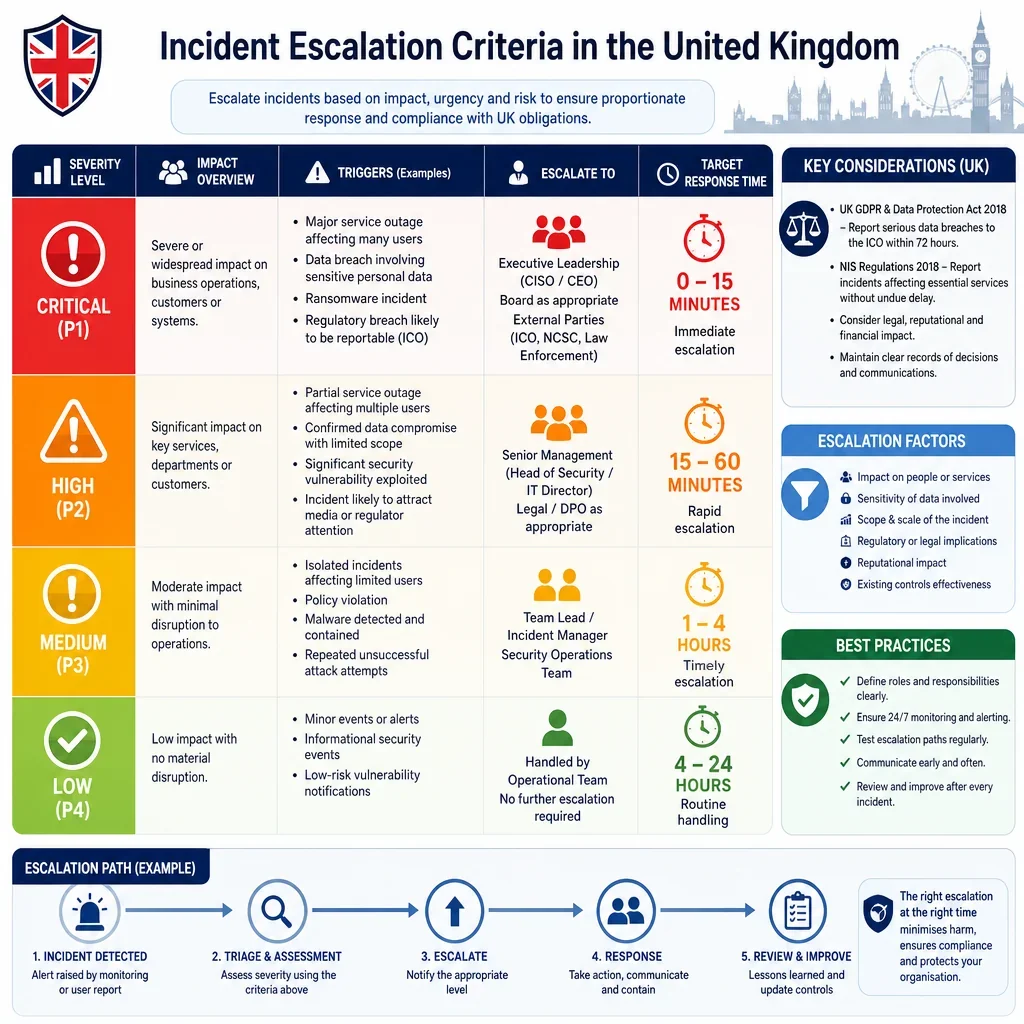
A documented incident response plan helps staff identify when an incident is not just an IT issue, but also a legal, safety, regulatory, contractual, or communications issue. Clear escalation routes reduce delay and make it easier to preserve evidence, protect people, contain harm, and coordinate notices.
What Should UK Organisations Record After An Incident?
Organisations should keep a proportionate record of the incident, the facts known at the time, the risk assessment, who made the notification decision, what notices were sent, and what remediation followed. Good records support accountability and help explain why a notice was or was not required.
- Personal data: assess ICO and individual notification duties.
- Health and safety: check RIDDOR reporting obligations.
- Cyber incidents: consider NCSC, Action Fraud, or police reports.
- Regulated sectors: check FCA, PRA, Ofcom, CQC, Charity Commission, or other rules.
- Contracts and insurance: check short notice periods and approval requirements.
For official guidance, see the ICO guidance on personal data breaches, HSE guidance on RIDDOR, and NCSC guidance on incident management.
FAQs
You Might Also Be Interested In