United Kingdom House Rules: What Should Be Included?
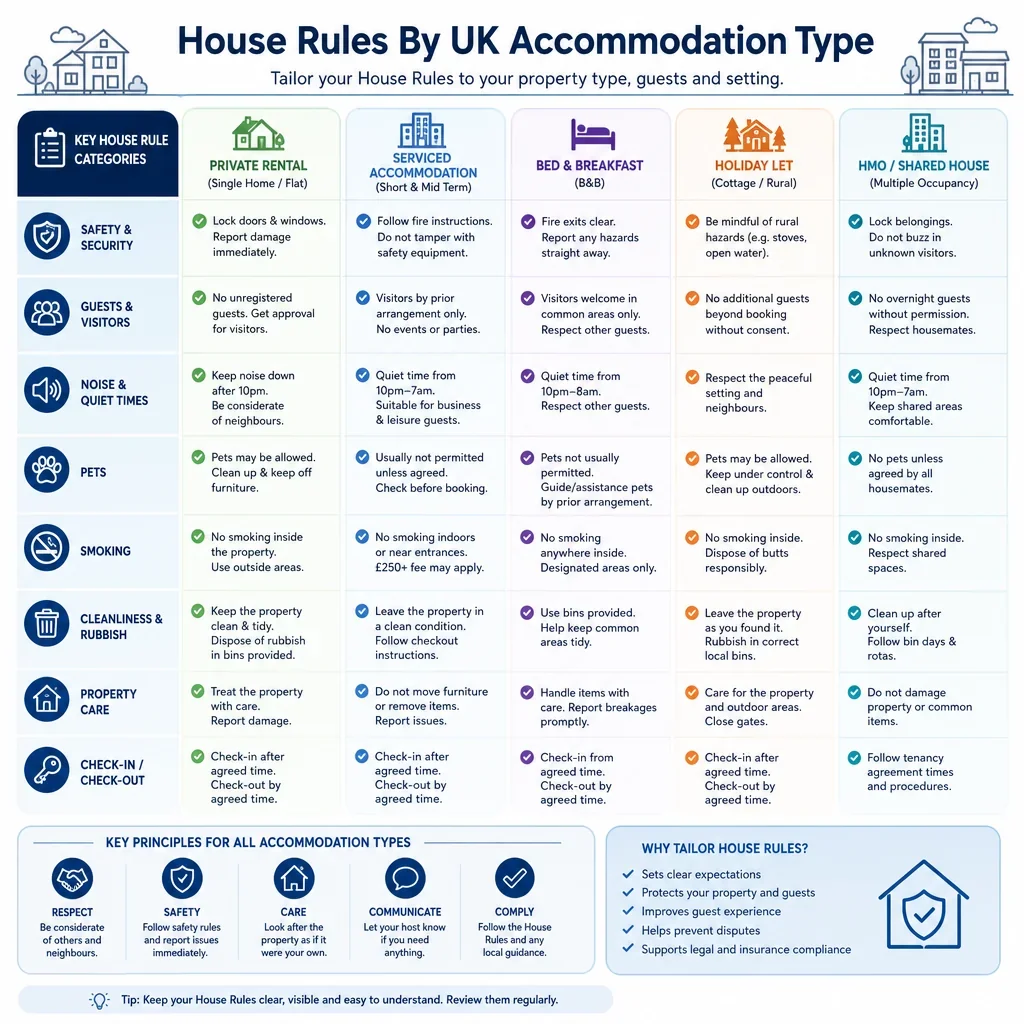
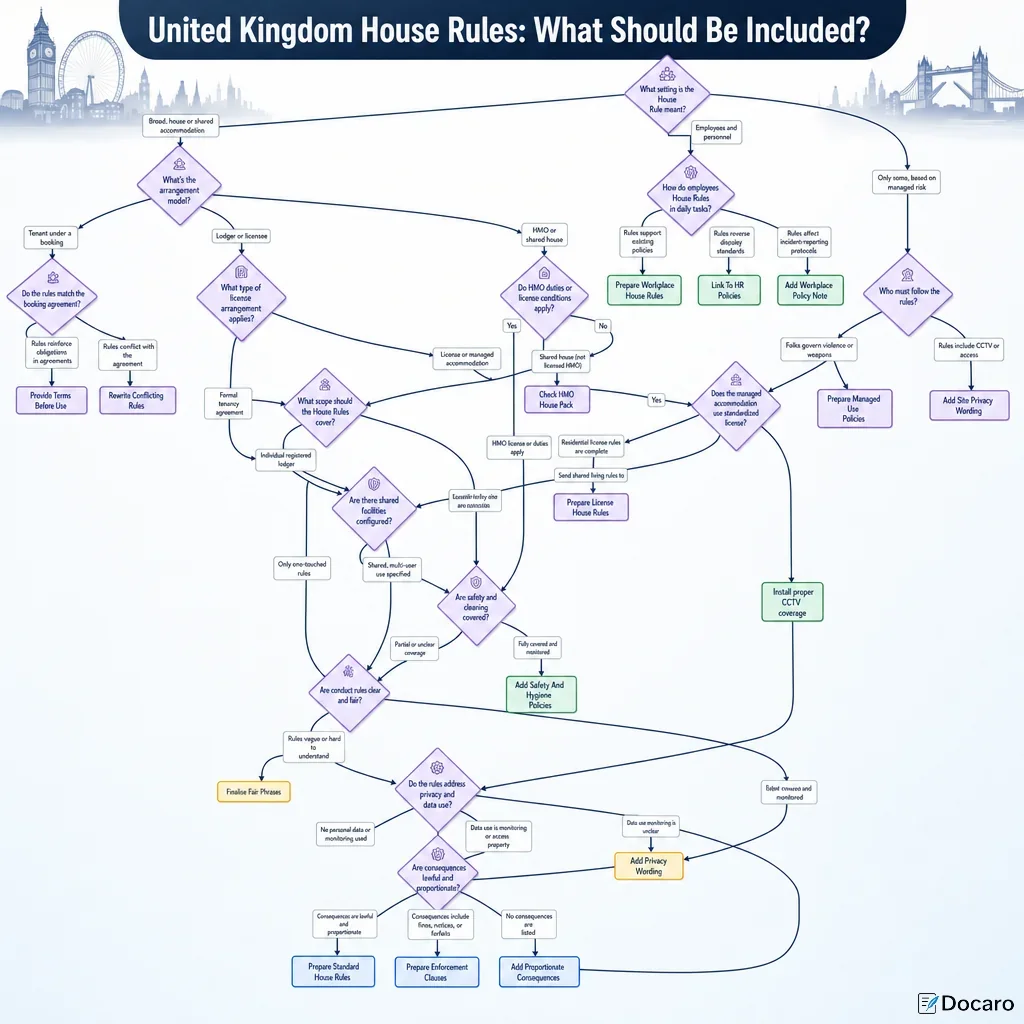
What setting do the House Rules cover?
Why Are UK House Rules Important?
Well drafted House Rules help people understand what is expected in a property, workplace, venue, or managed accommodation. In the United Kingdom, the right wording matters because rules must fit the main agreement and must not remove statutory rights.
How Can House Rules Prevent Disputes?
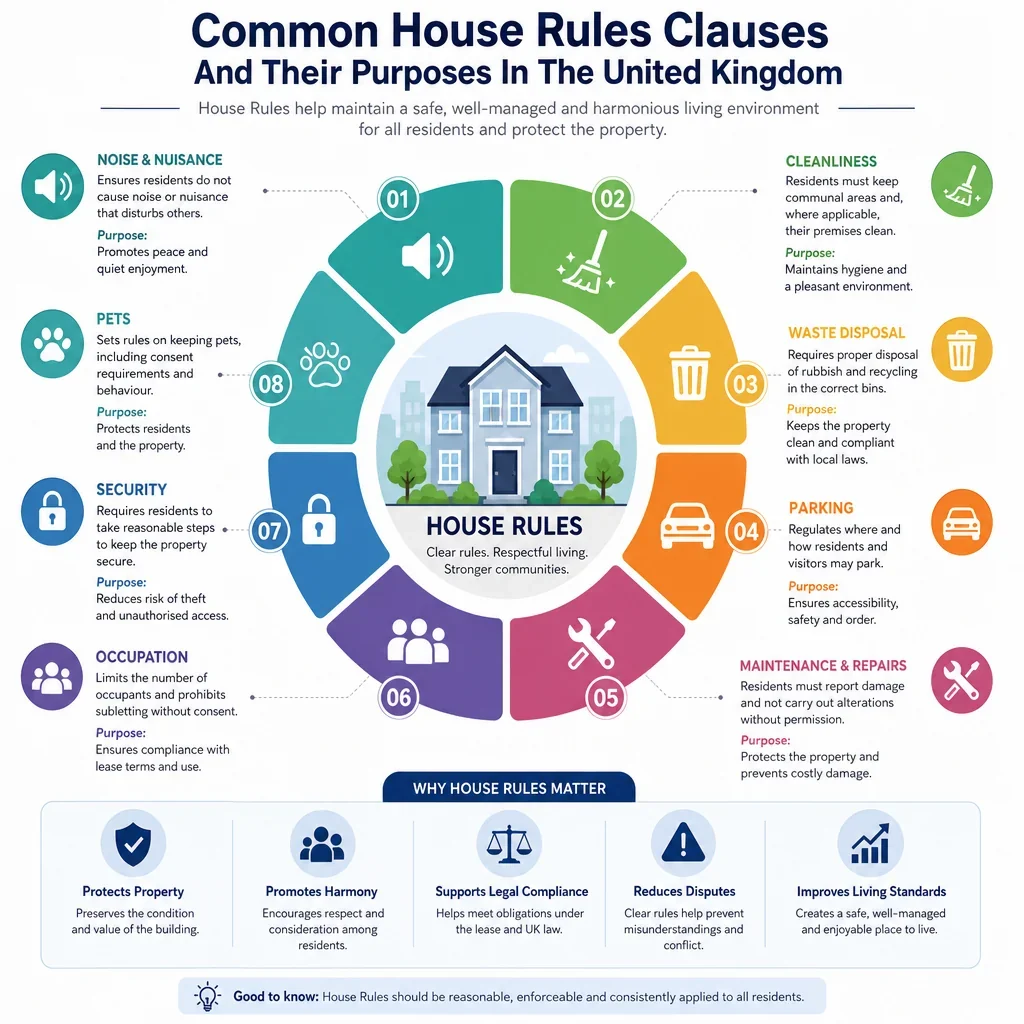
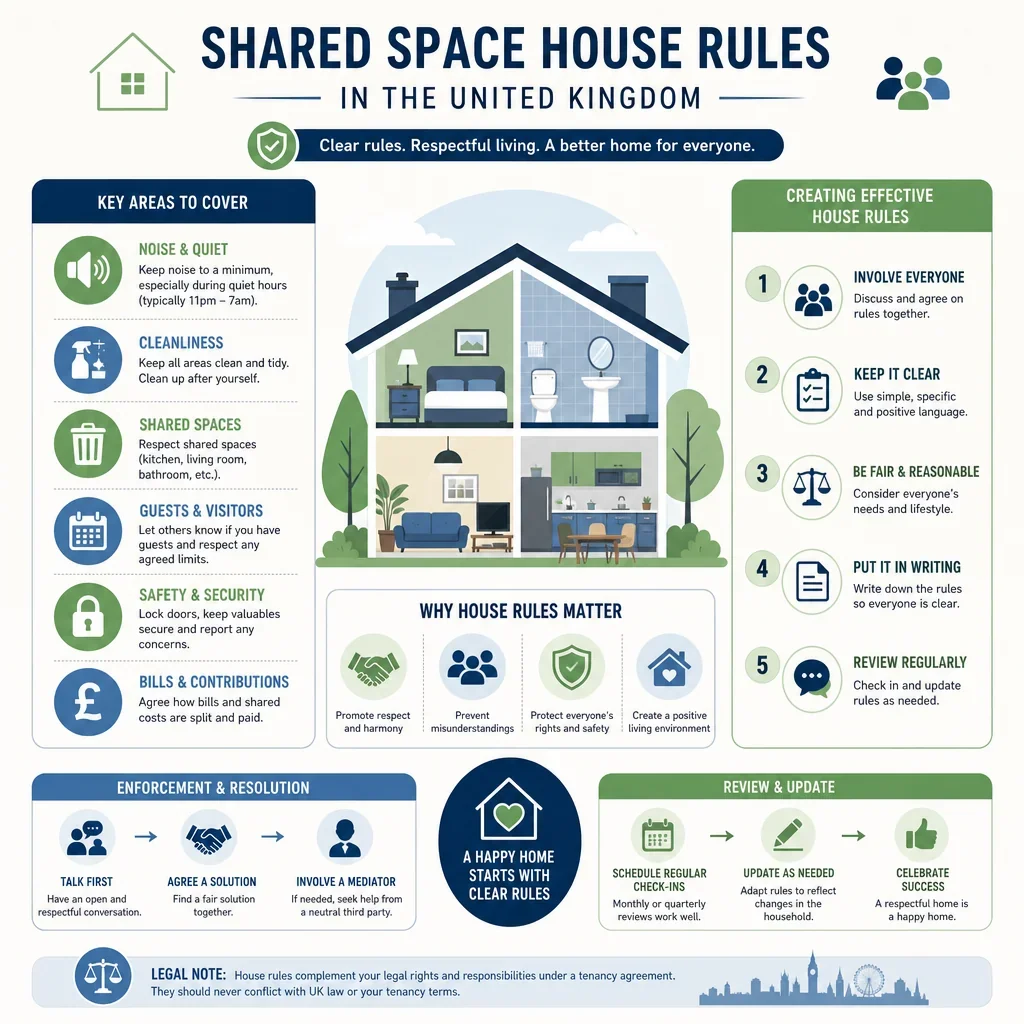
Clear rules reduce arguments about noise, guests, cleaning, smoking, pets, parking, shared areas, repairs, and safety. They also give landlords, employers, managers, residents, staff, and visitors a shared reference point when problems arise.
Why Must House Rules Match UK Law?
Rules that conflict with a tenancy, licence, employment contract, HMO licence, equality duty, or data protection obligation may be hard to enforce. In some cases, poor wording can create risk around unfair terms, unlawful fees, discrimination, harassment, privacy, or illegal eviction.
What Should A Good UK House Rules Document Do?
- Clarify daily expectations without replacing the main contract.
- Cover safety and repairs, including emergency reporting and fire precautions.
- Set fair conduct standards for noise, guests, shared facilities, and nuisance.
- Respect privacy where CCTV, inspections, access logs, or personal data are used.
- Use lawful consequences such as warnings, complaints procedures, or proper legal routes.
For residential property, useful official starting points include GOV.UK private renting guidance, GOV.UK HMO guidance, and ICO UK GDPR guidance.
FAQs
You Might Also Be Interested In