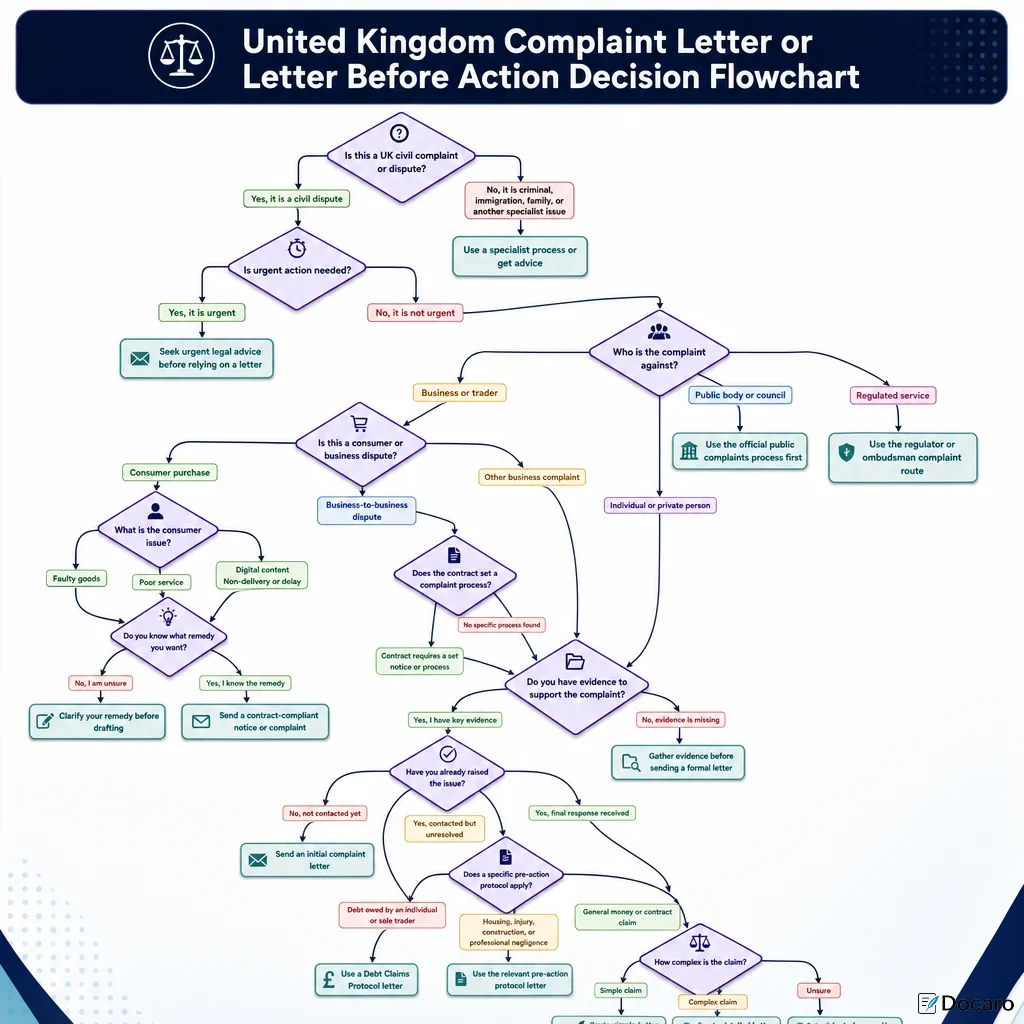
United Kingdom Complaint Letter Or Letter Before Action Decision Flowchart
Is this a UK civil complaint or dispute?
Why Is The Right Complaint Letter Important In The UK?
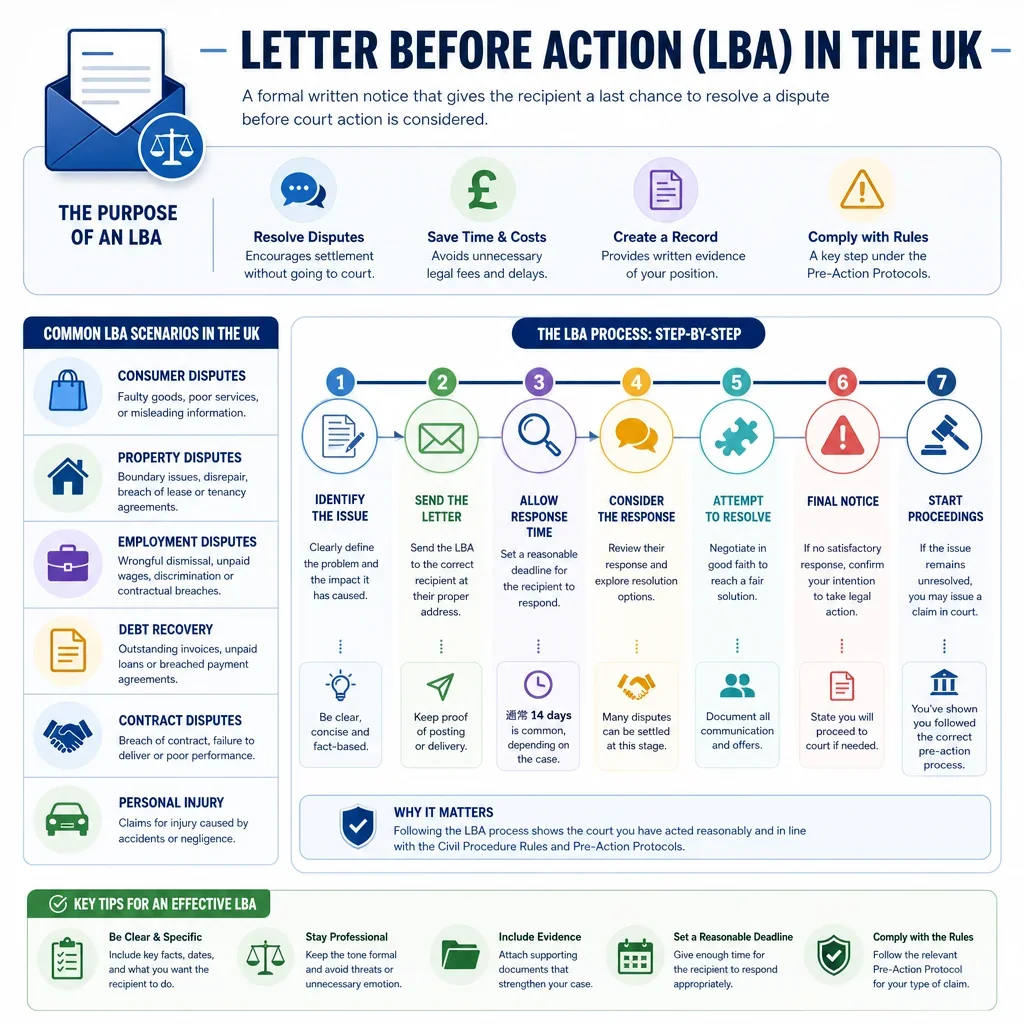
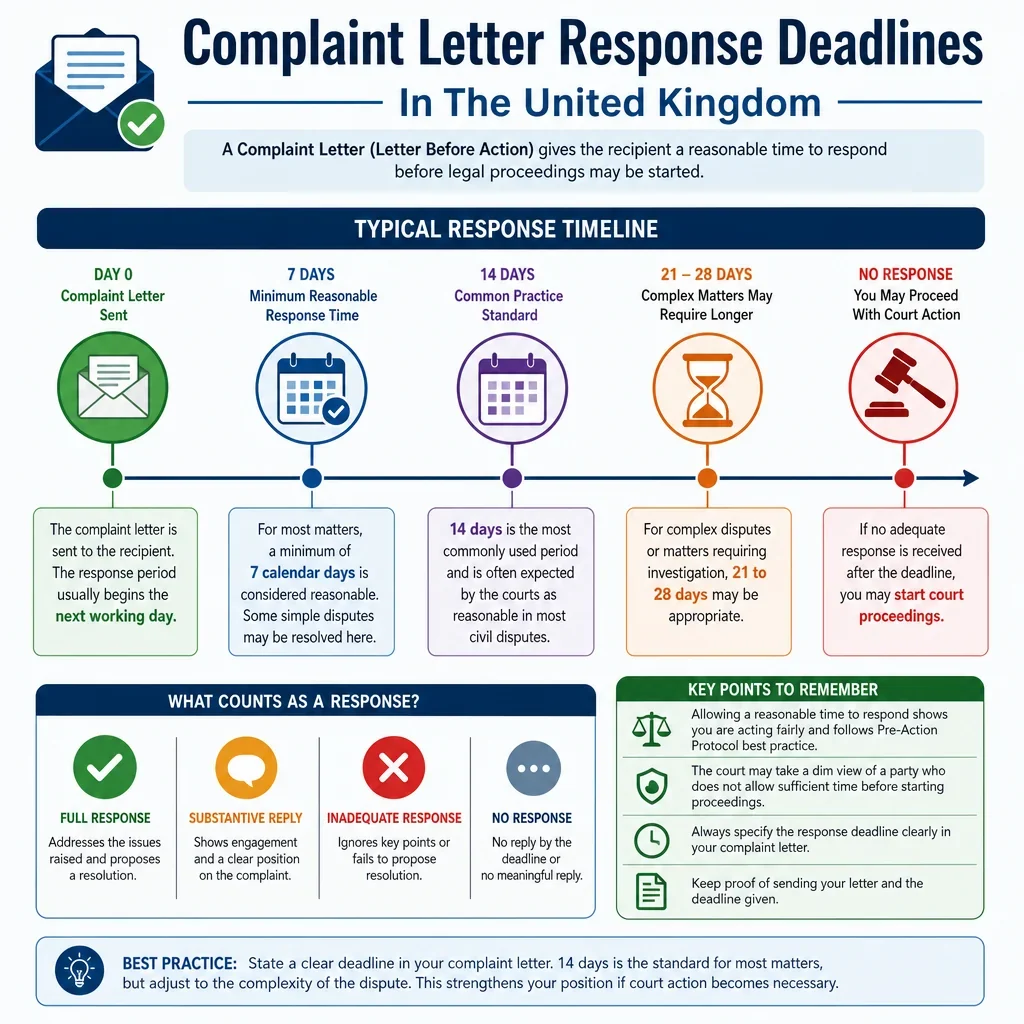
A well-chosen complaint letter or Letter Before Action can help resolve a dispute without court proceedings. In England and Wales, parties are generally expected to exchange information and try to settle before issuing a civil claim. Sending the wrong type of letter, using the wrong process, or giving an unreasonable deadline can weaken your position.
When Should You Send A Letter Before Action?
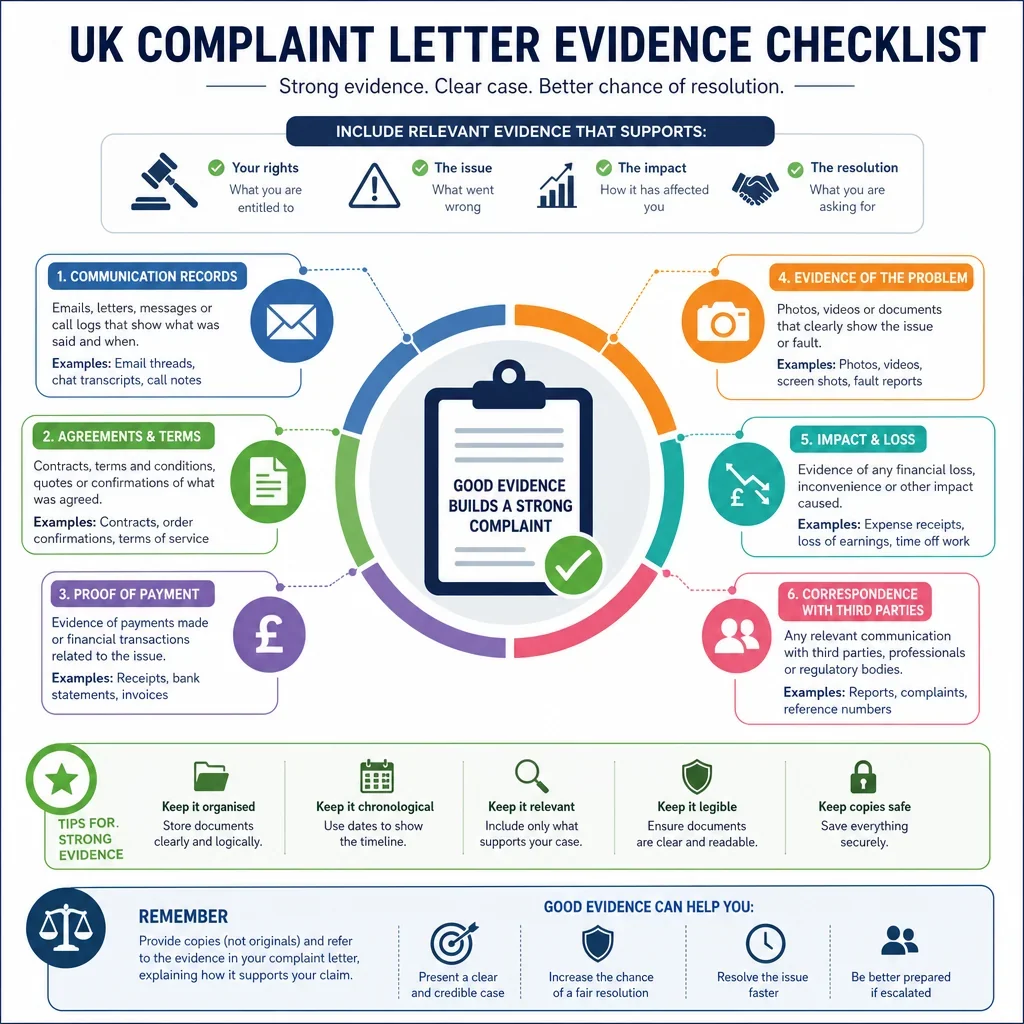
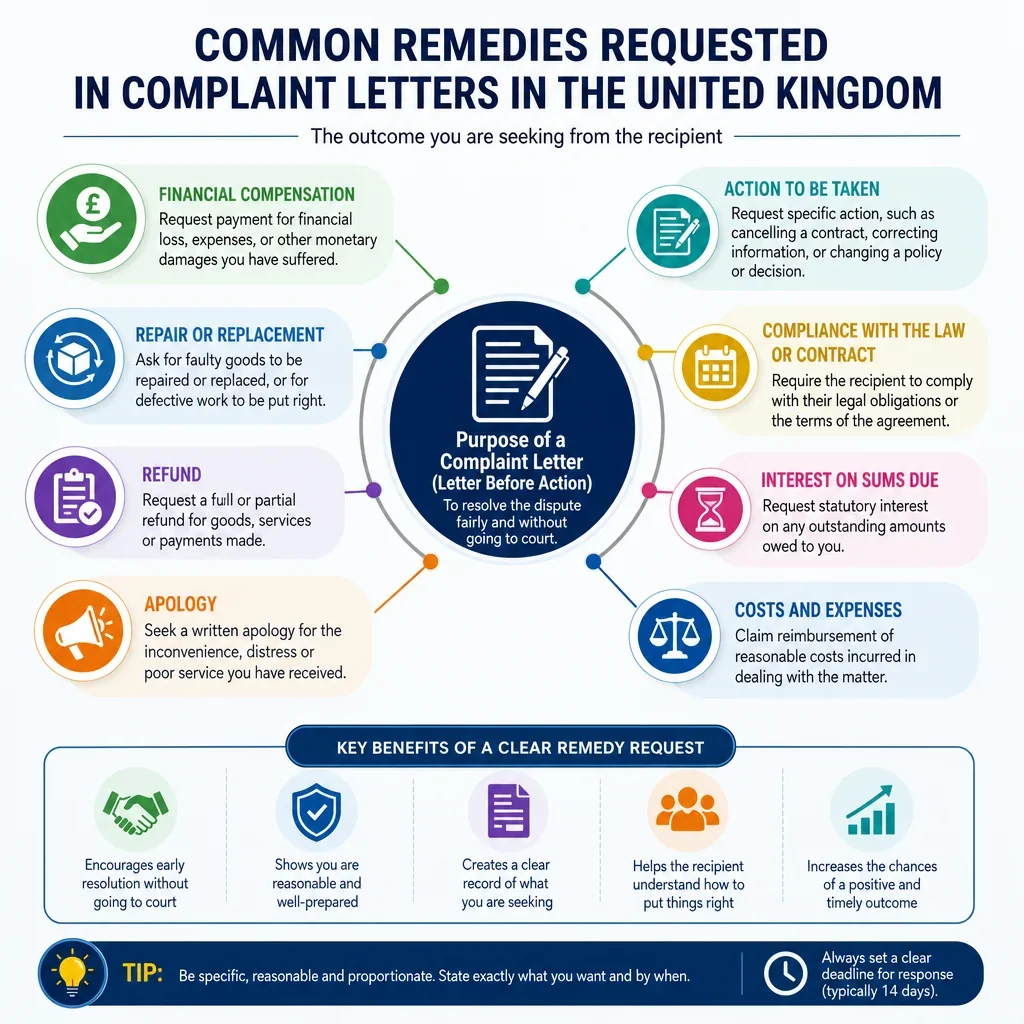
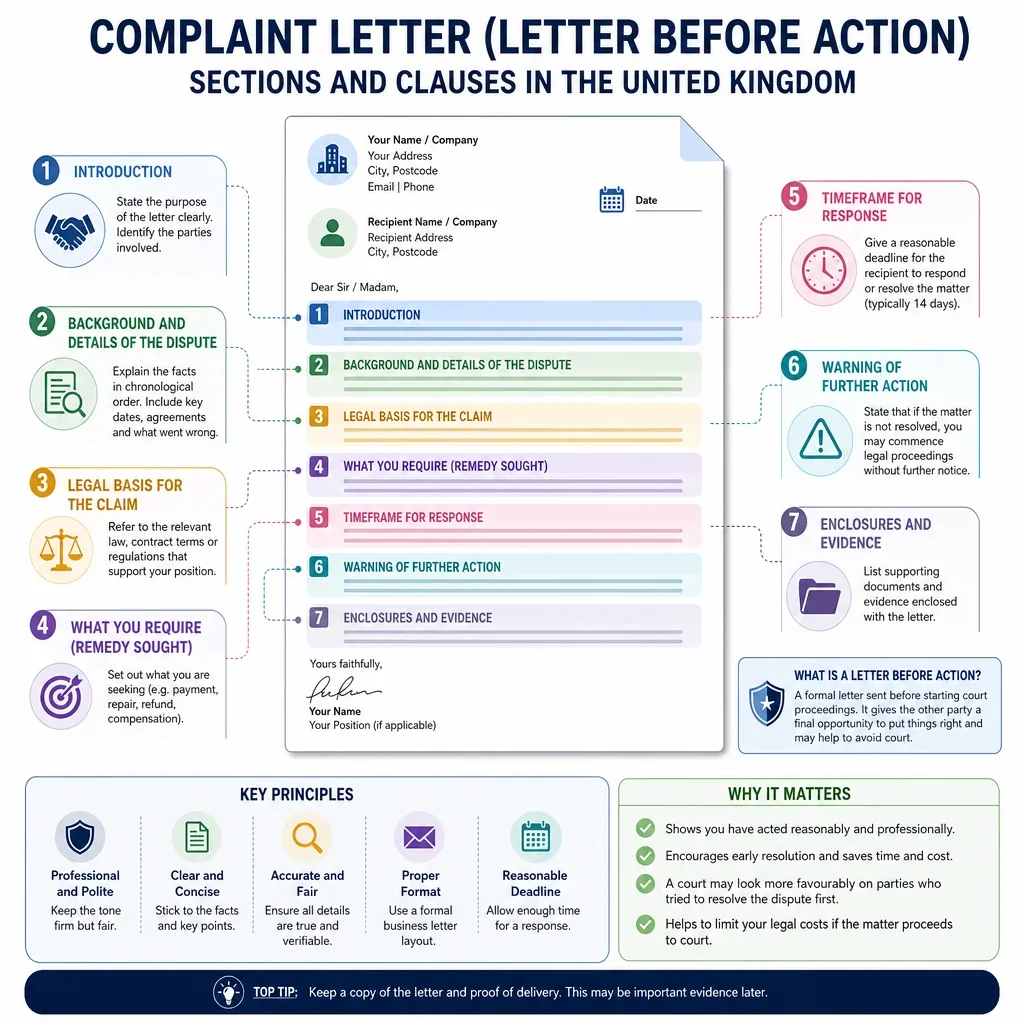
A Letter Before Action is usually appropriate when an earlier complaint has failed and you are genuinely considering a court claim. It should explain the facts, the legal basis of the complaint, the remedy sought, key evidence, and what will happen if the recipient does not respond.
Why Do UK Pre-Action Rules Matter?
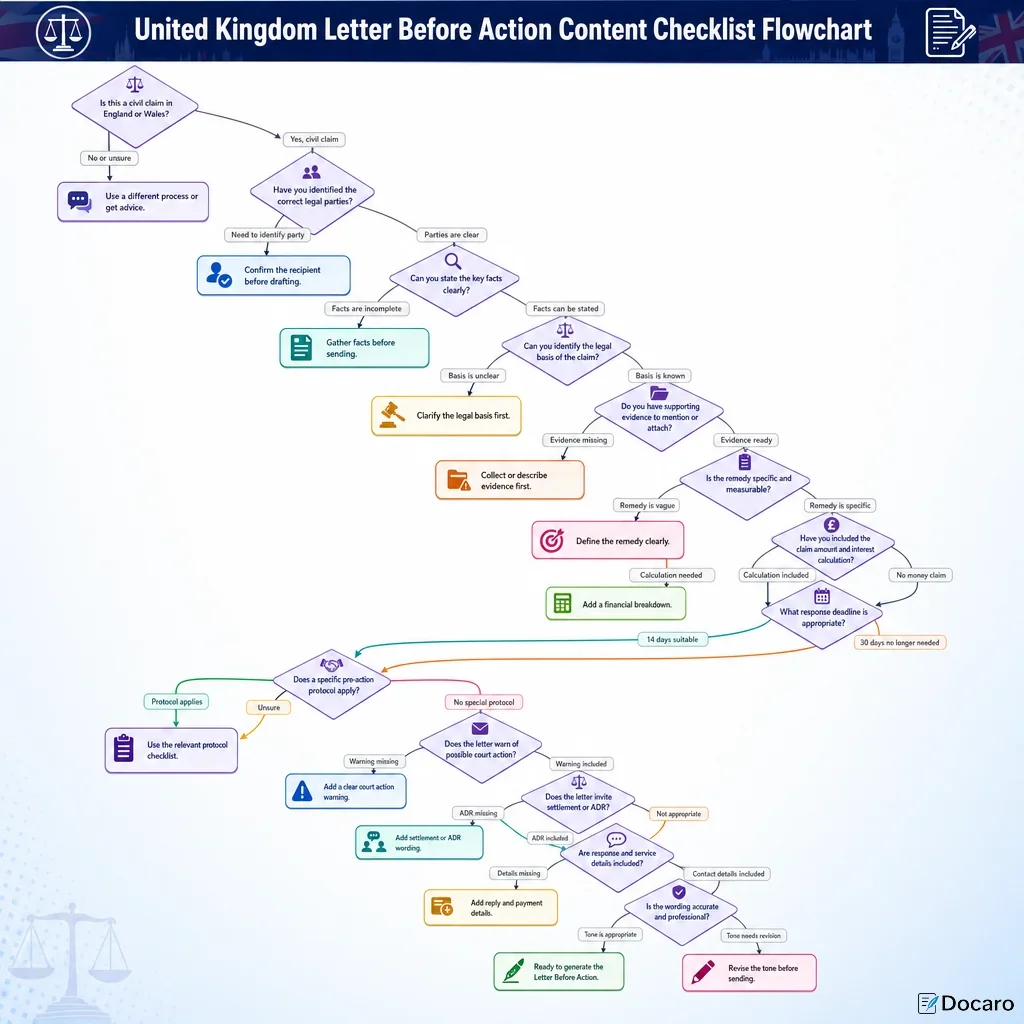
UK civil procedure encourages early settlement and proportionate conduct. Some disputes have specific pre-action protocols, including debt, housing disrepair, personal injury, construction, and professional negligence. Following the correct protocol can reduce delay, avoid unnecessary costs, and improve the credibility of your claim.
What Can Go Wrong If The Letter Is Incorrect?
- The recipient may ignore it because the demand is unclear.
- You may miss a required complaint, ombudsman, or protocol step.
- The court may later question whether you acted reasonably.
- You may ask for the wrong remedy or fail to prove your loss.
- You may escalate too quickly when an initial complaint would be better.
For official guidance, see the Practice Direction on Pre-Action Conduct, GOV.UK guidance on money claims, and Citizens Advice consumer guidance.
FAQs
You Might Also Be Interested In