Typical Response Periods For Letters Before Action In The United Kingdom
Typical response period | Urgency level | Factors affecting timing | Recipient type | Reasonableness note |
|---|---|---|---|---|
Unpaid business invoice | ||||
7 to 14 days | Routine | Invoice age, prior reminders, dispute complexity and limitation. | Business, Sole trader | Allow time to check accounts and raise any genuine dispute. |
Debt claim against individual | ||||
30 days | Routine | Debtor advice, reply form, documents and payment proposals. | Individual, Sole trader | Do not normally issue before the 30 day protocol period expires. |
Faulty goods consumer claim | ||||
14 days | Routine | Inspection, repair history, refund request and trader location. | Business, Sole trader | Give the trader a fair chance to inspect or resolve the complaint. |
Poor service consumer claim | ||||
14 days | Routine | Need for remedial work, expert evidence and service records. | Business, Sole trader | Allow time to investigate and propose repeat performance or refund. |
Breach of contract | ||||
14 days | Routine | Contract terms, document volume, loss calculation and urgency. | Individual, Business, Sole trader | A concise claim with documents supports a shorter reasonable deadline. |
Residential rent arrears | ||||
14 days | Time-sensitive | Arrears level, benefit delays, vulnerability and payment plan request. | Tenant | Consider affordability and any request for debt advice before escalation. |
Commercial rent arrears | ||||
7 to 14 days | Time-sensitive | Lease terms, forfeiture risk, rent deposit and payment history. | Business, Sole trader, Tenant | Make the deadline consistent with the lease and intended remedy. |
Tenancy deposit protection claim | ||||
14 days | Routine | Scheme records, prescribed information and tenancy dates. | Landlord | Allow time to produce deposit scheme evidence or settlement proposals. |
Disputed tenancy deposit deductions | ||||
10 to 14 days | Routine | Inventory, photos, quotations and scheme ADR deadlines. | Landlord, Tenant | Check deposit scheme dispute deadlines before issuing court proceedings. |
Housing disrepair | ||||
20 working days | Time-sensitive | Urgent hazards, inspections, expert reports and tenant access. | Landlord, Public body | The protocol expects a response within 20 working days where applicable. |
Urgent housing hazard | ||||
24 to 72 hours | Urgent | Health risk, no heating, leaks, electrics and vulnerability. | Landlord, Public body | Explain the immediate risk and requested temporary or permanent works. |
Pre-possession rent arrears warning | ||||
14 days or protocol timetable | Time-sensitive | Social landlord duties, arrears history and benefit issues. | Tenant | Social landlords should follow the possession protocol before court action. |
Private nuisance | ||||
7 to 14 days | Time-sensitive | Ongoing interference, evidence logs, expert evidence and urgency. | Individual, Business, Landlord, Tenant | A shorter deadline may be fair if nuisance is continuing daily. |
Trespass to land | ||||
48 hours to 7 days | Urgent | Continuing entry, damage risk, identity and injunction need. | Individual, Business, Sole trader | State why immediate cessation is required before urgent proceedings. |
Boundary dispute | ||||
14 to 28 days | Routine | Title plans, surveys, historic deeds and proposed works. | Individual, Business, Landlord | Allow enough time to check title documents and survey evidence. |
Party wall dispute | ||||
14 days | Time-sensitive | Works start date, notices, surveyor appointment and damage risk. | Individual, Business, Landlord, Tenant | The Act deems a dispute if no consent is given within 14 days. |
Defective building work | ||||
14 to 28 days | Routine | Expert reports, snagging list, remedial access and contract terms. | Business, Sole trader | Complex defects may justify a longer period for inspection and response. |
Construction payment dispute | ||||
7 days | Time-sensitive | Payment notices, adjudication timetable and cash flow pressure. | Business, Sole trader | Adjudication can be started at any time, but warning may assist settlement. |
Professional negligence | ||||
21 day acknowledgement 3 month response | Routine | Insurer involvement, file review, expert evidence and limitation. | Business, Sole trader, Individual | The protocol usually allows substantial time for investigation before proceedings. |
Solicitor negligence | ||||
21 day acknowledgement 3 month response | Routine | Client file, privilege, causation and insurer notification. | Business, Sole trader | Use the professional negligence protocol unless limitation or urgency prevents it. |
Clinical negligence | ||||
4 month response after letter of claim | Routine | Medical records, expert reports, NHS investigations and limitation. | Public body, Business, Individual | The clinical disputes protocol expects detailed investigation before proceedings. |
Personal injury | ||||
21 day acknowledgement 3 month investigation | Routine | Insurer tracing, accident evidence, medical evidence and limitation. | Individual, Business, Public body | A short deadline is usually inappropriate where the personal injury protocol applies. |
Road traffic accident injury | ||||
21 day acknowledgement 3 month investigation | Routine | Insurer response, police report, liability dispute and medical evidence. | Individual, Business | Allow insurer investigation unless limitation or urgent evidence preservation applies. |
Defamation | ||||
14 days | Time-sensitive | Ongoing publication, limitation, takedown request and media deadlines. | Individual, Business | The protocol expects a prompt response, commonly within 14 days. |
Harassment | ||||
24 to 72 hours | Urgent | Threats, repetition, safeguarding risk and injunction urgency. | Individual, Business | Short deadlines may be justified where conduct is continuing or threatening. |
Misuse of private information | ||||
24 hours to 7 days | Urgent | Imminent publication, sensitivity, takedown and injunction need. | Individual, Business | Explain any publication deadline or irreparable harm justifying urgency. |
Data protection breach | ||||
14 to 30 days | Time-sensitive | Ongoing processing, data sensitivity, rectification and disclosure risk. | Business, Public body, Individual, Sole trader | Give enough detail for the controller to identify and investigate the issue. |
Subject access request failure | ||||
7 to 14 days after missed deadline | Time-sensitive | Original deadline, identity checks, complexity and urgency of data. | Business, Public body, Sole trader | A final short period is often fair once the statutory deadline has passed. |
Freedom of Information failure | ||||
7 to 14 days after missed deadline | Time-sensitive | Public interest test, internal review and statutory deadline expiry. | Public body | Consider internal review and ICO route before court proceedings. |
Copyright infringement | ||||
7 to 14 days | Time-sensitive | Ongoing use, takedown, licensing, evidence preservation and losses. | Individual, Business, Sole trader | Use shorter deadlines where infringing material remains live online. |
Trade mark infringement | ||||
7 to 14 days | Time-sensitive | Confusion risk, stock, online listings and interim injunction need. | Business, Sole trader, Individual | Demand precise undertakings and allow realistic time for stock removal. |
Passing off | ||||
7 to 14 days | Time-sensitive | Misrepresentation, customer confusion, trading period and evidence. | Business, Sole trader | Urgency depends on continuing confusion and damage to goodwill. |
Unpaid wages | ||||
7 to 14 days | Time-sensitive | Payroll date, payslips, holiday pay and tribunal limitation. | Business, Sole trader | Account for ACAS early conciliation and short tribunal time limits. |
Notice pay claim | ||||
7 to 14 days | Time-sensitive | Contract terms, dismissal date and payroll records. | Business, Sole trader | Do not miss employment tribunal or county court limitation periods. |
Discrimination claim | ||||
14 to 28 days | Time-sensitive | Forum, limitation, evidence, grievance process and adjustments. | Business, Public body, Individual | Preserve tribunal or county court deadlines while allowing a proper response. |
Holiday or travel refund | ||||
14 days | Routine | Booking terms, chargeback deadline, package status and evidence. | Business | Provide booking references and allow time for the trader to check records. |
Flight delay compensation | ||||
14 to 28 days | Routine | Airline investigation, extraordinary circumstances and ADR scheme. | Business | Allow time for the airline to assess delay cause and passenger records. |
Private parking charge | ||||
14 to 30 days | Routine | Appeal stage, keeper liability, signage evidence and debt claim protocol. | Individual, Business | If claiming from an individual, consider the debt claims protocol. |
General small claim | ||||
14 days | Routine | Value, prior correspondence, evidence and settlement prospects. | Individual, Business, Sole trader | Even in small claims, unreasonable pre-action conduct can affect costs. |
Complex commercial dispute | ||||
21 to 28 days | Routine | Value, documents, board approval, experts and cross-border issues. | Business | Complex claims usually need longer than a simple 14 day deadline. |
Shareholder or partnership dispute | ||||
14 to 21 days | Time-sensitive | Company records, exclusion, asset dissipation and injunction need. | Individual, Business | Shorten only where control, assets or records are at immediate risk. |
Unpaid personal loan | ||||
30 days if debtor is individual | Routine | Written terms, affordability, admissions and repayment proposals. | Individual | Use the debt claims protocol where a business claims from an individual. |
Guarantor payment demand | ||||
14 to 30 days | Routine | Guarantee wording, principal debt, notices and individual debtor status. | Individual, Business | Longer periods may be needed if the guarantor is an individual. |
Insurance claim dispute | ||||
14 to 28 days | Routine | Policy terms, loss adjuster, complaint stage and ombudsman route. | Business | Consider the insurer complaint process before litigation. |
Financial services complaint | ||||
14 to 28 days | Routine | Complaint history, final response deadline and ombudsman eligibility. | Business | A regulated firm may have complaint handling time before FOS referral. |
Judicial review challenge | ||||
14 days, shorter if urgent | Time-sensitive | Decision deadline, public interest, removal risk and limitation. | Public body | The protocol recognises shorter periods where the case is urgent. |
Planning decision challenge | ||||
7 to 14 days | Urgent | Short statutory time limits, works start and public authority response. | Public body | Do not let pre-action correspondence cause missed challenge deadlines. |
Education public law challenge | ||||
7 to 14 days | Time-sensitive | School term dates, child welfare, appeal process and urgency. | Public body | A shortened deadline may be justified by education timetable disruption. |
Immigration removal challenge | ||||
24 to 72 hours if removal imminent | Urgent | Removal directions, detention, appeal rights and fresh evidence. | Public body | Explain the deadline by reference to imminent removal or detention risk. |
Public procurement challenge | ||||
7 to 14 days | Urgent | Standstill period, contract award date and disclosure need. | Public body | Deadlines may be compressed by procurement standstill and limitation rules. |
False online review | ||||
48 hours to 14 days | Time-sensitive | Publication reach, falsity, platform process and loss evidence. | Individual, Business | Urgent takedown may justify speed, but defamation protocol still matters. |
Used car dispute | ||||
14 days | Routine | Inspection, rejection period, finance, repair attempts and evidence. | Business, Sole trader | State any short-term rejection deadline and allow prompt inspection. |
Unpaid freelancer fees | ||||
7 to 14 days | Routine | Milestones, deliverables, invoice terms and client approval. | Business, Individual, Sole trader | Attach invoices and evidence of completed work to support the deadline. |
Recruitment or agency fee dispute | ||||
14 days | Routine | Terms signed, introduction evidence and rebate clauses. | Business, Sole trader | Allow time to check contractual terms and factual chronology. |
Goods supplied unpaid | ||||
7 to 14 days | Routine | Delivery evidence, retention of title and prior disputes. | Business, Sole trader, Individual | Give time to confirm delivery, quality issues and payment records. |
Failed payment demand | ||||
7 days | Time-sensitive | Bank error, fraud concern, replacement payment and prior notice. | Individual, Business, Sole trader | A short deadline may be fair if payment has already failed after demand. |
Chargeback repayment dispute | ||||
14 days | Routine | Card scheme evidence, delivery proof and bank process deadlines. | Individual, Business | Provide transaction evidence so the recipient can assess the claim. |
Settlement agreement breach | ||||
7 to 14 days | Time-sensitive | Payment date, confidentiality, releases and enforcement route. | Individual, Business, Public body, Sole trader | If breach is clear, a shorter final deadline may be reasonable. |
Threatened injunction application | ||||
24 hours to 7 days | Urgent | Imminent harm, undertakings, evidence preservation and notice feasibility. | Individual, Business, Public body, Sole trader, Landlord, Tenant | Give notice unless secrecy or extreme urgency justifies without-notice action. |
Asset dissipation concern | ||||
Immediate to 24 hours | Urgent | Risk of asset movement, fraud evidence and without-notice need. | Individual, Business, Sole trader | Notice may be inappropriate if it would defeat a freezing remedy. |
Inheritance or probate dispute | ||||
14 to 28 days | Routine | Grant status, estate documents, caveat and limitation. | Individual | Allow time to obtain estate documents and consider mediation. |
Former partner money claim | ||||
14 to 30 days | Routine | Domestic abuse concerns, family proceedings and evidence of loan. | Individual | Avoid oppressive deadlines where personal safety or family proceedings overlap. |
Local authority billing dispute | ||||
14 to 28 days | Routine | Appeal route, enforcement stage and statutory review process. | Public body | Check whether a statutory appeal route is required before court action. |
Leasehold service charge dispute | ||||
14 to 28 days | Routine | Demands, accounts, consultation, tribunal route and lease terms. | Landlord, Tenant | Consider First-tier Tribunal jurisdiction before county court enforcement. |
Ground rent arrears | ||||
30 days minimum after valid notice | Routine | Valid statutory notice, lease terms and arrears amount. | Tenant | Ground rent is not due unless properly demanded under the statutory notice rules. |
Anti-social behaviour injunction warning | ||||
24 hours to 7 days | Urgent | Safety risk, witnesses, housing status and ongoing incidents. | Individual, Tenant | Urgency should be tied to specific incidents and risk evidence. |
Unlawful eviction | ||||
Immediate to 24 hours | Urgent | Access to home, homelessness risk, locks changed and belongings. | Landlord | Immediate action may be justified where occupation or belongings are at risk. |
Informal lodging deposit dispute | ||||
14 days | Routine | Licence terms, damage evidence and payment records. | Landlord, Individual | Allow time to provide receipts, photos or a deduction breakdown. |
Private school fee debt | ||||
30 days if parent is individual | Routine | Contract, fee notices, bursary issues and payment proposals. | Individual | Debt protocol timing usually applies where a school claims from a parent. |
Subscription cancellation dispute | ||||
14 days | Routine | Cancellation terms, renewal notice and payment history. | Business | Attach cancellation evidence and identify the exact refund sought. |
Gym membership dispute | ||||
14 days | Routine | Minimum term, cancellation notice, health issues and direct debit. | Business | Give the trader time to review membership records and cancellation terms. |
Wedding supplier dispute | ||||
7 to 14 days if event imminent | Time-sensitive | Event date, cancellation terms, replacement supplier and losses. | Business, Sole trader | A shorter deadline is fair where the event date is close. |
Removal company damage | ||||
14 days | Routine | Inventory, photos, insurance, quotation and complaint terms. | Business, Sole trader | Provide photos and valuations so liability can be assessed. |
Lost parcel claim | ||||
14 days | Routine | Tracking, declared value, insurance and sender contract. | Business | Allow time for tracking checks and claims process evidence. |
Estate agent fee dispute | ||||
14 to 21 days | Routine | Agency agreement, introduction, sale completion and redress scheme. | Business, Individual | Consider the agent redress scheme and provide the agency agreement. |
Letting agent dispute | ||||
14 to 21 days | Routine | Management agreement, rent handling, redress scheme and records. | Business, Sole trader | Use complaint and redress scheme routes where appropriate. |
Overpaid rent refund | ||||
14 days | Routine | Tenancy end date, apportionment, statements and deposit overlap. | Landlord | Provide rent calculations and bank evidence to support the demand. |
Housemate bill contribution claim | ||||
14 days | Routine | Bills, occupation dates, agreement and payment history. | Individual, Tenant | Attach bills and a clear calculation before threatening proceedings. |
Garage repair dispute | ||||
14 days | Routine | Repair invoice, diagnosis, expert inspection and vehicle storage. | Business, Sole trader | Allow inspection if alleging defective repairs, unless vehicle use is urgent. |
Private vehicle sale dispute | ||||
14 days | Routine | Advert wording, misrepresentation, inspection and payment evidence. | Individual | Set out the alleged misrepresentation, not just dissatisfaction with the purchase. |
How Long Should You Give Someone To Respond To A Letter Before Action In The UK?
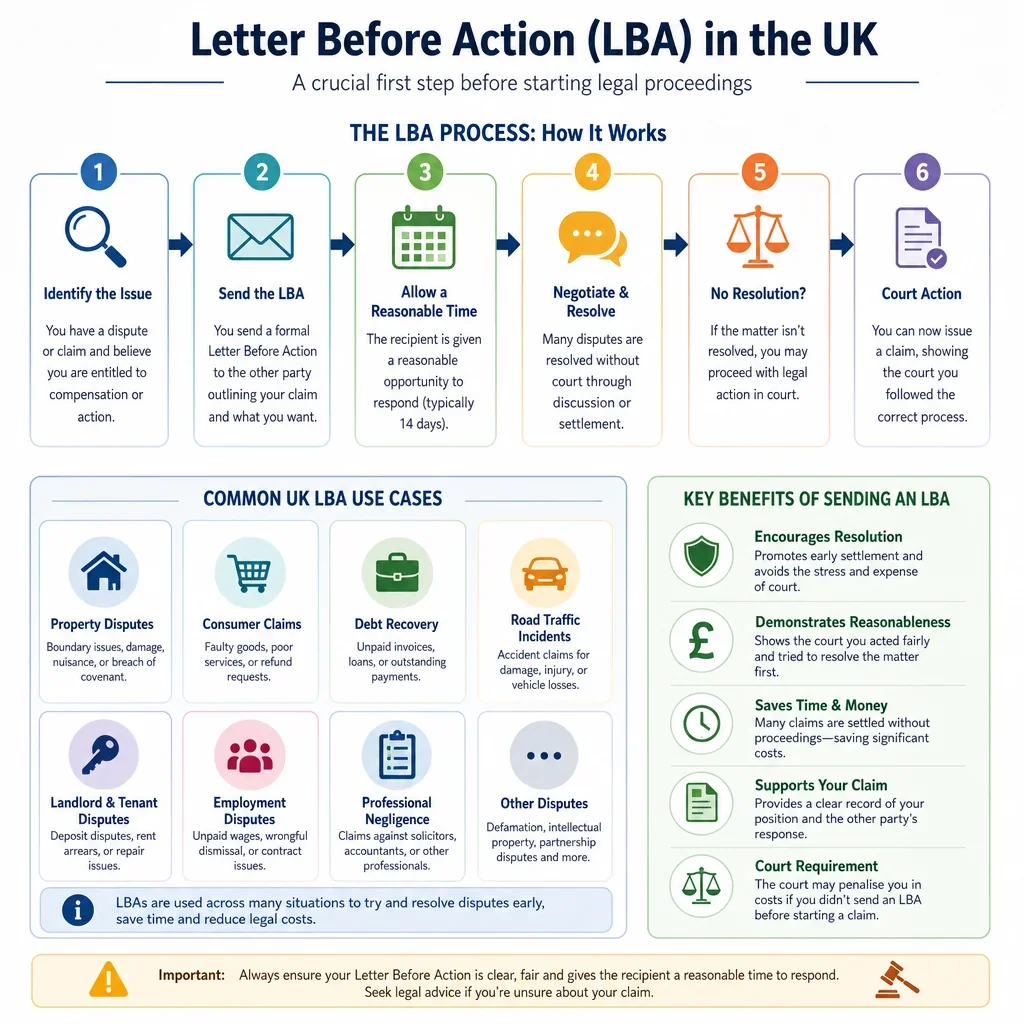
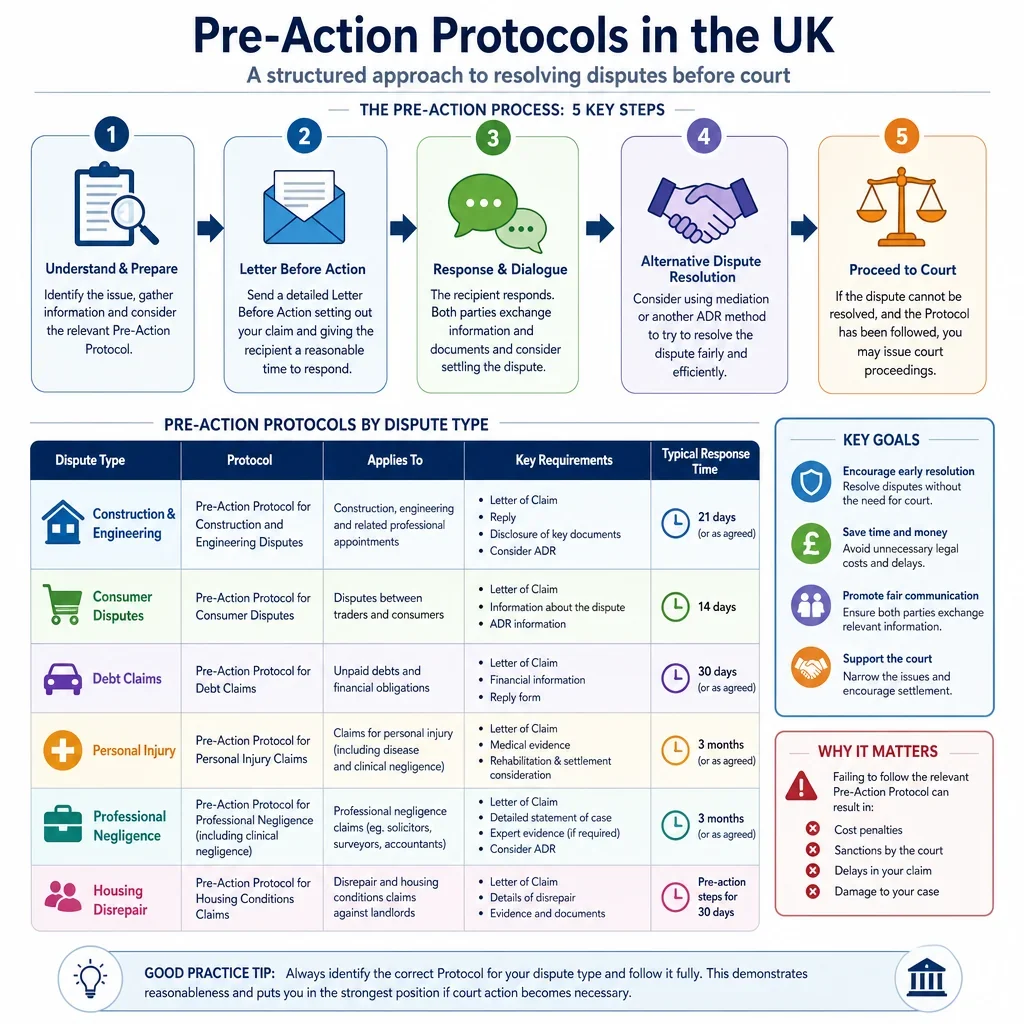
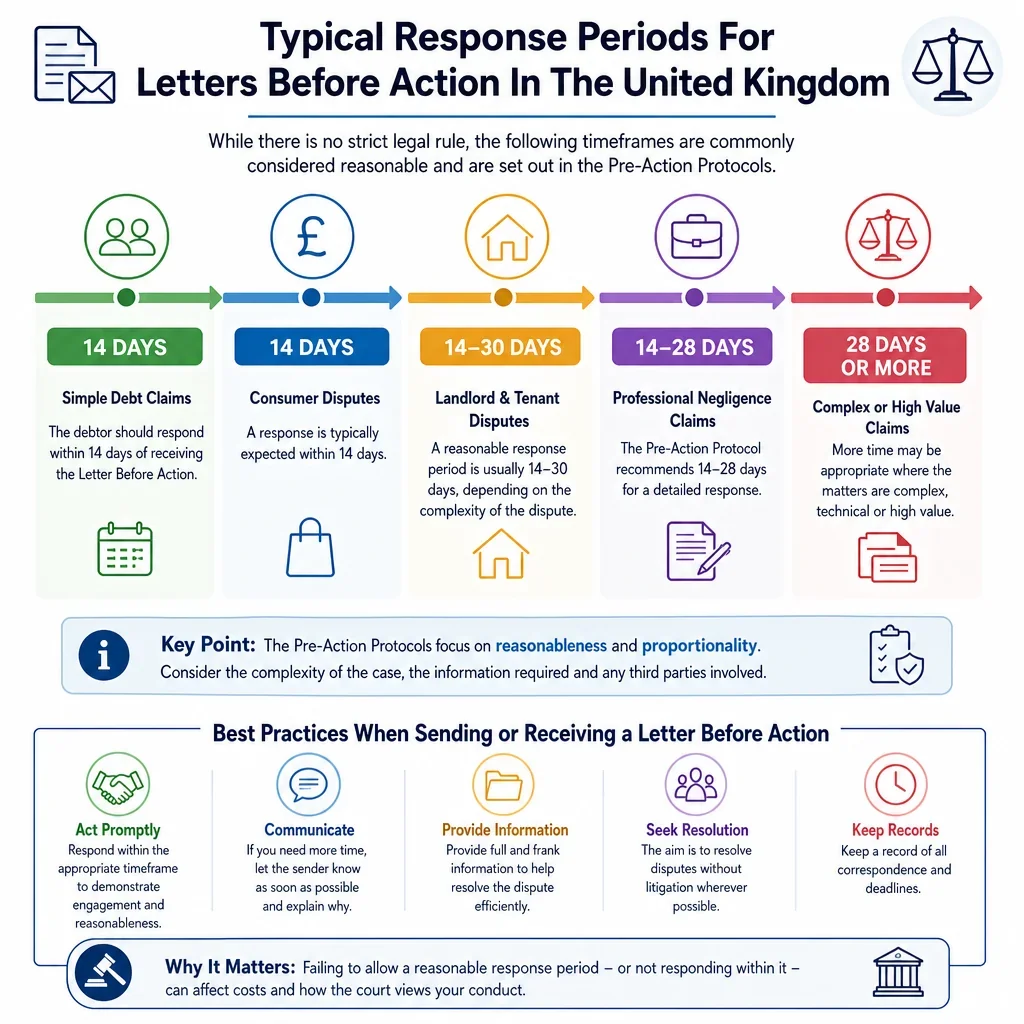
For many straightforward money, contract, consumer and property disputes, a 14 day response period is commonly used. However, several UK pre-action protocols require or strongly expect longer periods, particularly where insurers, public bodies, personal injury defendants or debtors need time to investigate.
When Is 30 Days Or More Usually Needed?
- Personal injury and clinical negligence: defendants often have up to 3 months to investigate liability after acknowledgement, so a short deadline is usually inappropriate.
- Professional negligence: the professional is commonly allowed 3 months to investigate and reply after acknowledging the claim.
- Debt claims against individuals: the Pre-Action Protocol for Debt Claims gives the debtor 30 days to respond before proceedings should normally be started.
- Judicial review: the usual pre-action response period is short, often 14 days, but may need to be reduced in genuinely urgent public law cases.
When Can A Shorter Deadline Be Reasonable?
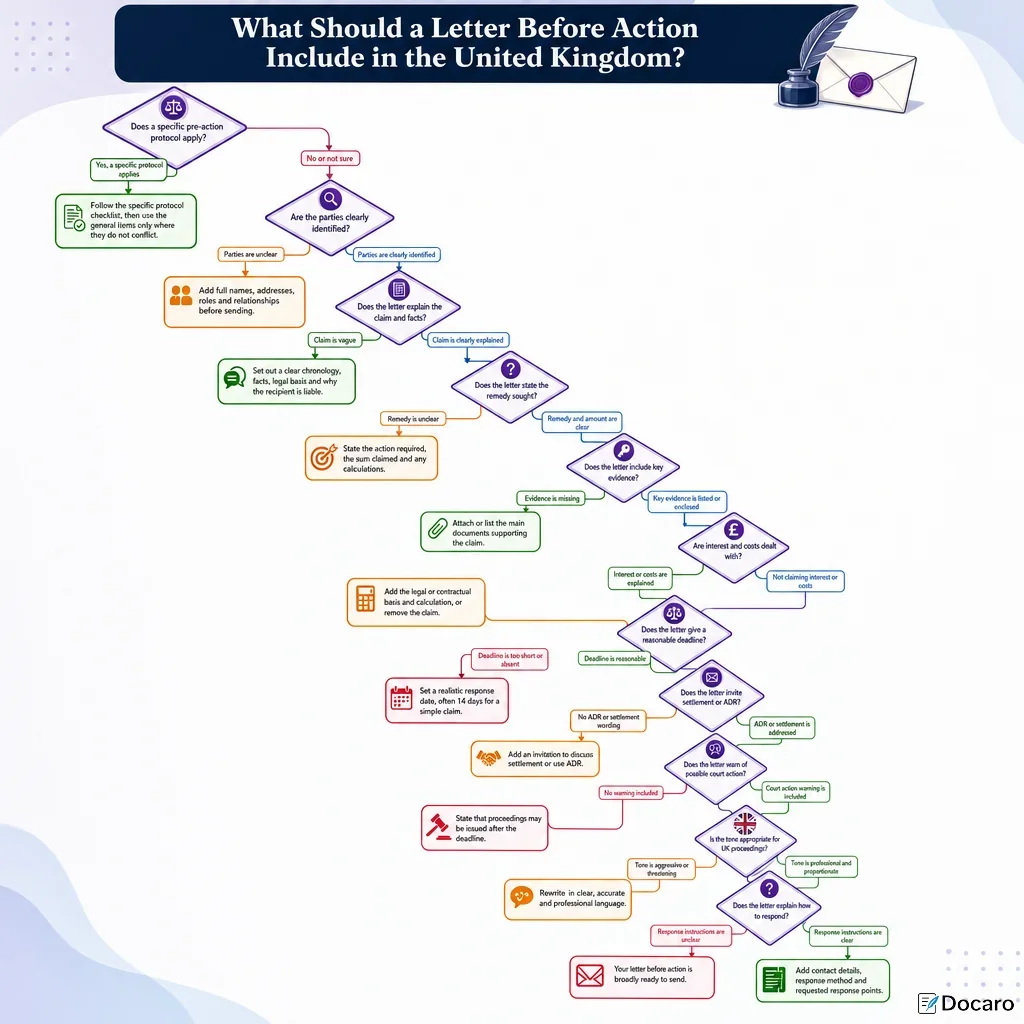
Short deadlines, such as 24 to 72 hours, are usually reserved for urgent matters where delay may cause serious harm, such as threatened harassment, data misuse, IP infringement, eviction without due process, or an impending injunction application. The letter should explain why the deadline is short and what immediate action is required.
Why Does The Recipient Type Matter?
Businesses and insurers may need time to locate documents and investigate internally. Public bodies may need time to identify the correct decision-maker. Individuals and tenants may need extra time to obtain advice. A deadline that is too short can make later proceedings harder to justify on costs, even where the underlying claim is strong.
What Is The Main Practical Rule?
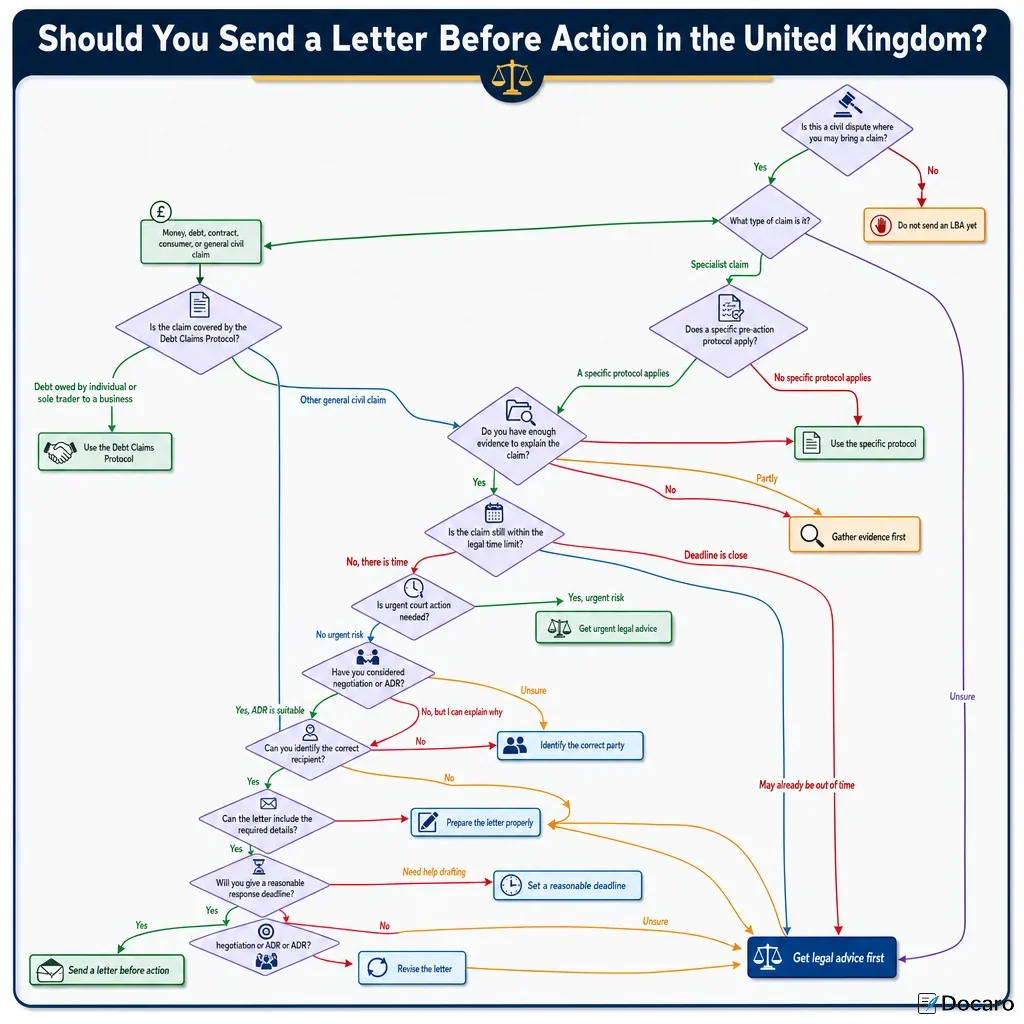
Match the deadline to the claim type, urgency and any applicable pre-action protocol. If no specific protocol applies, give a fair opportunity to respond, commonly 14 days for straightforward disputes and longer where the facts, evidence or vulnerability of the recipient justify it.
FAQs
You Might Also Be Interested In