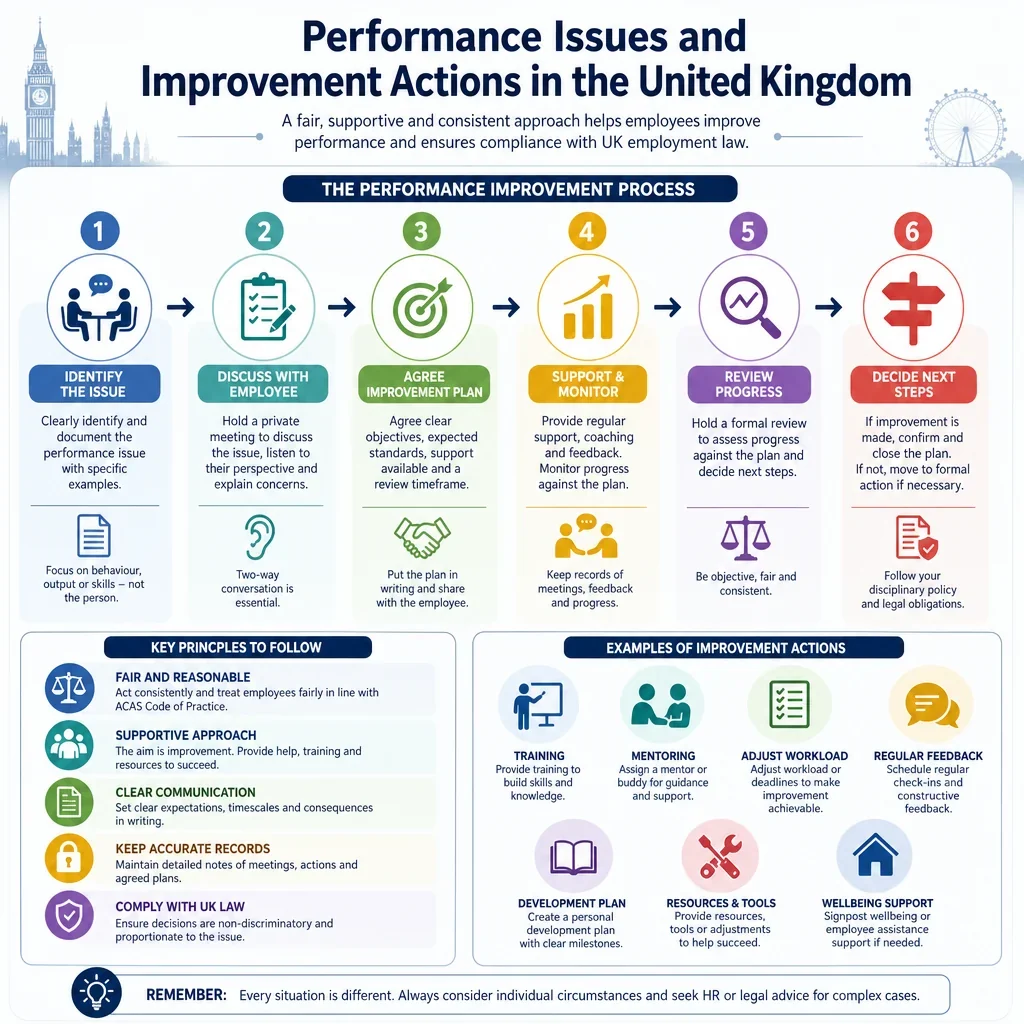
Performance Issues And Improvement Actions In The United Kingdom
Specific Issue | Typical Indicators | Relevant Evidence | Suggested Improvement Actions | Impact Level |
|---|---|---|---|---|
Time management | ||||
Repeatedly missing agreed deadlines | Late submissions, rushed work, frequent deadline extensions | Project plans, task logs, email timelines, missed milestone reports | Set weekly priorities, use task tracking, agree interim milestones, hold progress check-ins | High |
Poor prioritisation of urgent tasks | Important tasks delayed while low-value work is completed | Task lists, manager instructions, workload records, delivery reports | Use priority matrix, agree daily top tasks, clarify escalation rules | Medium |
Productivity | ||||
Taking too long to complete routine work | Output below peers, backlog growth, regular unfinished tasks | Productivity reports, workflow data, work allocation records | Review workflow, remove blockers, provide coaching, set output targets | Medium |
Low sales conversion rate | Few closed deals, weak pipeline movement, missed sales targets | CRM reports, call notes, sales dashboards, target records | Provide call coaching, review scripts, shadow top performers, set conversion milestones | High |
Quality of work | ||||
Frequent errors in completed work | Rework, rejected outputs, quality complaints, inconsistent standards | Quality checks, corrected drafts, audit logs, manager review notes | Use checklists, peer review, refresher training, staged sign-off | High |
Incorrect data entry | Wrong records, duplicate entries, customer details amended later | System audit trails, error logs, corrected records, sampling results | Introduce double-check process, data entry training, error-rate targets | Medium |
Incomplete records or documentation | Missing fields, unclear notes, undocumented decisions | Case files, CRM records, audit findings, document samples | Provide templates, minimum standards, file review schedule, coaching | Medium |
Communication | ||||
Unclear written communication | Confusing emails, missing key details, repeated clarification requests | Email samples, customer messages, internal feedback, revision history | Use email templates, proofread before sending, attend writing training | Medium |
Slow responses to colleagues or clients | Unanswered emails, missed messages, delayed customer updates | Email timestamps, ticket response times, customer feedback, SLA reports | Set response standards, schedule inbox checks, use holding replies | Medium |
Not listening to instructions or feedback | Repeated misunderstandings, same corrections, incorrect task execution | Meeting notes, feedback records, corrected work, instruction logs | Confirm instructions in writing, summarise actions, attend feedback sessions | Medium |
Customer service | ||||
Poor handling of customer enquiries | Low satisfaction scores, unresolved issues, complaints about tone | Customer complaints, call recordings, survey scores, ticket audits | Provide customer service coaching, review calls, use escalation scripts | High |
Failure to resolve complaints properly | Repeat complaints, escalations, missed complaint deadlines | Complaint files, escalation logs, customer correspondence, resolution data | Refresh complaint process training, monitor cases, agree resolution checklist | High |
Compliance | ||||
Failure to follow internal procedures | Skipped steps, unauthorised shortcuts, inconsistent process compliance | Procedure documents, audit findings, case reviews, system logs | Refresher training, process checklist, supervisor sign-off, compliance reviews | High |
Ignoring health and safety procedures | Unsafe practices, missing PPE, unreported hazards, near misses | Risk assessments, incident reports, training records, inspection notes | Repeat safety training, observe work, require PPE checks, review risk controls | High |
Poor handling of personal data | Misdirected emails, insecure files, unnecessary data sharing | Incident reports, email records, access logs, data breach reviews | Data protection refresher, email checks, access controls, handling checklist | High |
Attendance and reliability | ||||
Frequent short-term absences affecting work delivery | Repeated absences, missed handovers, disrupted service coverage | Absence records, return-to-work notes, rota gaps, workload reports | Hold absence review, consider health support, plan cover, set attendance expectations | Medium |
Persistent lateness | Late starts, missed meetings, delayed customer coverage | Clock-in records, timesheets, meeting attendance logs, manager notes | Agree punctuality target, identify causes, adjust travel planning, monitor start times | Medium |
Unreliable availability during working hours | Offline without notice, missed calls, unavailable for agreed shifts | System status logs, call records, rota records, missed meeting notes | Clarify availability rules, use calendar blocks, set contact expectations | Medium |
Teamwork | ||||
Poor collaboration with colleagues | Limited information sharing, duplicated work, friction in team tasks | Peer feedback, project records, handover notes, meeting observations | Define team responsibilities, schedule handovers, set collaboration goals | Medium |
Incomplete handovers | Missing updates, duplicated queries, colleagues unable to continue work | Handover documents, shift notes, colleague feedback, incident records | Use handover template, agree cut-off times, review sample handovers | Medium |
Workplace conflict affecting performance | Avoidance, tense meetings, reduced cooperation, escalated disagreements | Meeting notes, manager observations, complaints, mediation records | Set behaviour expectations, facilitate mediation, agree communication ground rules | High |
Skills and competence | ||||
Insufficient technical knowledge for the role | Repeated technical mistakes, excessive support needed, slow problem solving | Work samples, technical assessments, support tickets, training records | Targeted training, mentoring, supervised tasks, competence milestones | High |
Poor use of required software systems | Incorrect system entries, inefficient workarounds, support dependency | System logs, helpdesk tickets, user audit reports, training attendance | Provide system training, quick guides, practice tasks, user confidence checks | Medium |
Failure to apply completed training | Old mistakes continue, procedures not used, limited behaviour change | Training records, work samples, coaching notes, post-training assessments | Set application tasks, observe practice, provide feedback, retest competence | Medium |
Management performance | ||||
Ineffective management of direct reports | Unclear instructions, missed one-to-ones, team underperformance | Team KPIs, one-to-one records, employee feedback, project outcomes | Provide management coaching, set one-to-one cadence, review team objectives | High |
Poor delegation of work | Bottlenecks, uneven workloads, late delivery, unclear ownership | Work allocation records, team feedback, deadline logs, workload reviews | Map responsibilities, delegate with deadlines, track ownership, review capacity | Medium |
Judgement and decision-making | ||||
Making poor operational decisions | Avoidable losses, inconsistent decisions, preventable escalations | Decision logs, incident reviews, approval records, financial impact data | Agree decision thresholds, require consultation, use risk assessment checklist | High |
Failure to escalate issues promptly | Problems discovered late, unresolved blockers, surprise incidents | Incident timelines, emails, ticket histories, escalation logs | Define escalation triggers, set reporting deadlines, review live cases weekly | High |
Initiative and ownership | ||||
Lack of ownership of assigned work | Waiting for prompts, unresolved blockers, limited follow-through | Task updates, manager notes, project records, missed follow-ups | Set ownership expectations, require status updates, agree next-step plans | Medium |
Weak problem-solving approach | Repeats same issue, offers no options, escalates minor problems | Case notes, incident reviews, manager feedback, solution proposals | Use root cause analysis, prepare options before escalation, coaching sessions | Medium |
Targets and KPIs | ||||
Consistently missing agreed KPIs | Below-target metrics, repeated monthly shortfalls, widening performance gap | KPI dashboards, performance reports, target letters, benchmarking data | Break targets into weekly goals, review barriers, provide coaching, monitor metrics | High |
Low output volume compared with role expectations | Fewer cases closed, low production count, backlog contribution | Output reports, case closure data, rota records, workload allocation | Set daily output target, review blockers, streamline tasks, check workload balance | Medium |
Remote and hybrid working | ||||
Poor performance while working remotely | Reduced output, missed updates, unclear availability, delayed responses | Output records, system activity, meeting attendance, communication logs | Clarify remote expectations, schedule check-ins, agree availability and deliverables | Medium |
Missing required online meetings | Repeated non-attendance, late joining, lack of updates | Calendar invites, attendance logs, meeting notes, manager records | Use calendar reminders, confirm attendance expectations, require pre-meeting updates | Low |
Professional standards | ||||
Unprofessional online communication | Abrupt messages, inappropriate chat comments, poor video meeting conduct | Chat logs, meeting recordings, complaints, witness statements | Set communication standards, provide coaching, review meeting etiquette | Medium |
Negative attitude affecting work outcomes | Resistance to tasks, dismissive tone, reduced cooperation | Manager observations, peer feedback, meeting notes, customer comments | Clarify behavioural expectations, coach on professionalism, agree observable behaviours | Medium |
Regulated role standards | ||||
Failure to meet role-specific regulatory standards | Failed audits, compliance breaches, missing professional records | Audit reports, regulator guidance, supervision notes, training records | Provide regulated training, increase supervision, require evidence of competence | High |
Weak safeguarding practice | Missed concerns, poor records, delayed referrals, unclear escalation | Case notes, referral records, supervision logs, safeguarding audits | Repeat safeguarding training, increase supervision, use referral checklist | High |
Care and healthcare performance | ||||
Poor care record keeping | Incomplete care notes, late entries, missing risk updates | Care records, audit results, incident reports, supervision notes | Record keeping training, daily audits, mentor review, documentation checklist | High |
Education performance | ||||
Poor lesson or session planning | Unstructured sessions, weak learning outcomes, poor resource preparation | Lesson plans, observation notes, learner feedback, attainment data | Use planning template, observe experienced staff, review plans weekly | Medium |
Poor classroom or group management | Disruption, unclear expectations, reduced learner engagement | Observation reports, behaviour logs, learner feedback, manager notes | Behaviour management coaching, peer observation, structured session routines | High |
Operational performance | ||||
High defect rate in production work | Scrap, rework, failed inspections, customer returns | Quality control data, inspection records, defect logs, batch reports | Retrain on process, use quality gates, increase supervision, monitor defect rate | High |
Stock control errors | Incorrect counts, misplaced items, avoidable stockouts or overstocking | Inventory reports, cycle counts, discrepancy logs, warehouse audits | Retrain on stock system, use count checklist, sample audits, buddy checks | Medium |
Delivery route or scheduling errors | Late deliveries, failed drops, inefficient routes, customer complaints | Route data, delivery logs, telematics, customer feedback, schedule records | Route planning training, pre-shift checks, review delivery performance weekly | Medium |
Finance and administration | ||||
Errors in invoices or payments | Incorrect amounts, duplicate payments, delayed reconciliations | Invoice samples, payment reports, reconciliation records, audit findings | Use finance checklist, peer review, system training, error-rate monitoring | High |
Inaccurate management reports | Wrong figures, inconsistent assumptions, late corrections | Report drafts, source data, correction logs, stakeholder feedback | Validate source data, use report template, peer review before circulation | High |
Project delivery | ||||
Poor project planning and control | Unclear scope, missed milestones, unmanaged risks, budget drift | Project plans, RAID logs, budget reports, milestone updates | Create delivery plan, maintain risk log, weekly sponsor updates, milestone reviews | High |
Adaptability | ||||
Difficulty adapting to new processes | Continues old methods, resists change, needs repeated reminders | Training records, process audits, manager notes, system usage reports | Provide change briefing, practical demonstrations, follow-up coaching, usage targets | Medium |
Probation performance | ||||
Not meeting expected probation standards | Early performance gaps, slow learning, repeated supervision needs | Probation review notes, training records, manager feedback, work samples | Set probation objectives, provide onboarding support, schedule review meetings | Medium |
Health and disability-related performance | ||||
Performance affected by disability-related barriers | Performance fluctuates with health, barriers to standard process, adjustment requests | Occupational health advice, adjustment records, employee input, workload data | Consider reasonable adjustments, adjust targets, provide assistive tools, review workload | High |
Performance decline linked to work-related stress | Reduced concentration, more mistakes, missed deadlines, increased absence | Workload records, stress risk assessment, absence notes, employee feedback | Review workload, complete stress risk assessment, agree support and review dates | High |
Neurodiversity-related barriers to performance | Difficulty with unclear instructions, sensory issues, inconsistent task organisation | Employee feedback, occupational health advice, adjustment trial notes, task outcomes | Use written instructions, structured priorities, quiet workspace, assistive software | Medium |
Fitness for work | ||||
Suspected impairment affecting work performance | Poor concentration, unsafe behaviour, erratic attendance, quality issues | Incident reports, manager observations, attendance records, safety records | Follow policy, assess safety risk, signpost support, set fitness expectations | High |
Confidentiality and information security | ||||
Failure to protect confidential information | Unsecured files, careless discussion, incorrect access permissions | Access logs, breach reports, workspace checks, email records | Security refresher, clean desk checks, access review, confidentiality reminders | High |
Resources and equipment | ||||
Careless use of company equipment | Damage, avoidable repairs, missing equipment, unsafe use | Asset records, repair invoices, incident reports, manager observations | Provide equipment training, require checks, reinforce handling procedure | Medium |
Learning and development | ||||
Slow progress during onboarding | Basic tasks still need support, key processes not understood | Onboarding checklist, training attendance, buddy feedback, task assessments | Extend buddy support, repeat core training, set staged competence goals | Low |
Failure to maintain required knowledge | Outdated practice, missed updates, errors after policy changes | CPD records, training logs, policy update records, work samples | Set CPD plan, require update briefings, test knowledge, review application | Medium |
Call centre performance | ||||
Excessive call handling time | Long average handle time, queues increase, low call completion | Call metrics, queue reports, call recordings, quality scorecards | Call coaching, script practice, system shortcuts, target handle-time review | Medium |
Poor call quality scores | Missed verification steps, poor tone, incomplete resolutions | Quality scorecards, call recordings, customer feedback, compliance checks | Review sample calls, practise required wording, set quality improvement target | High |
Service levels | ||||
Failure to meet service level agreements | Late responses, missed resolution times, SLA breach notices | SLA reports, ticket timestamps, customer contracts, escalation records | Prioritise SLA tasks, set alert reminders, review ageing tickets daily | High |
Case management | ||||
Poor management of case files | Missed reviews, stale cases, incomplete action records | Case audits, diary records, file notes, closure reports | Use case checklist, schedule review dates, supervisor file sampling | Medium |
Attendance and reliability | ||||
Failure to follow absence reporting procedure | Late absence calls, missing fit notes, managers not informed | Absence notifications, fit notes, call logs, policy records | Explain reporting rules, provide policy copy, set notification expectations | Low |
Professional standards | ||||
Poor ethical judgement in work decisions | Conflicts of interest, biased decisions, questionable approvals | Decision records, declarations, audit findings, manager observations | Review code of conduct, require declarations, set approval safeguards | High |
Attention to detail | ||||
Errors in legal, contractual or formal documents | Incorrect clauses, wrong names, missing dates, version errors | Document drafts, mark-ups, client feedback, version history | Use document checklist, peer review, version control, proofreading time | High |
Communication | ||||
Poor contribution in meetings | Unprepared, dominates discussion, unclear updates, no action follow-up | Meeting minutes, action logs, manager observations, attendee feedback | Prepare agenda notes, give concise updates, confirm actions after meetings | Low |
Supervision and governance | ||||
Failure to attend required supervision sessions | Missed reviews, unresolved issues, lack of reflective learning | Supervision records, calendar logs, attendance notes, manager emails | Set supervision schedule, require preparation notes, track actions to completion | Medium |
Fair treatment and equality | ||||
Performance concern may be linked to protected characteristic barriers | Concerns linked to pregnancy, disability, religion, age or other protected factors | Employee explanation, adjustment requests, HR records, equality impact review | Review equality risks, consider adjustments, avoid discriminatory targets or assumptions | High |
Capability process | ||||
Unclear or unsupported capability expectations | Vague targets, no support, no review dates, inconsistent standards | PIP drafts, meeting notes, training offers, review correspondence | Set clear standards, provide support, allow reasonable time, hold reviews | High |
How Should UK Employers Use A Performance Improvement Plan?
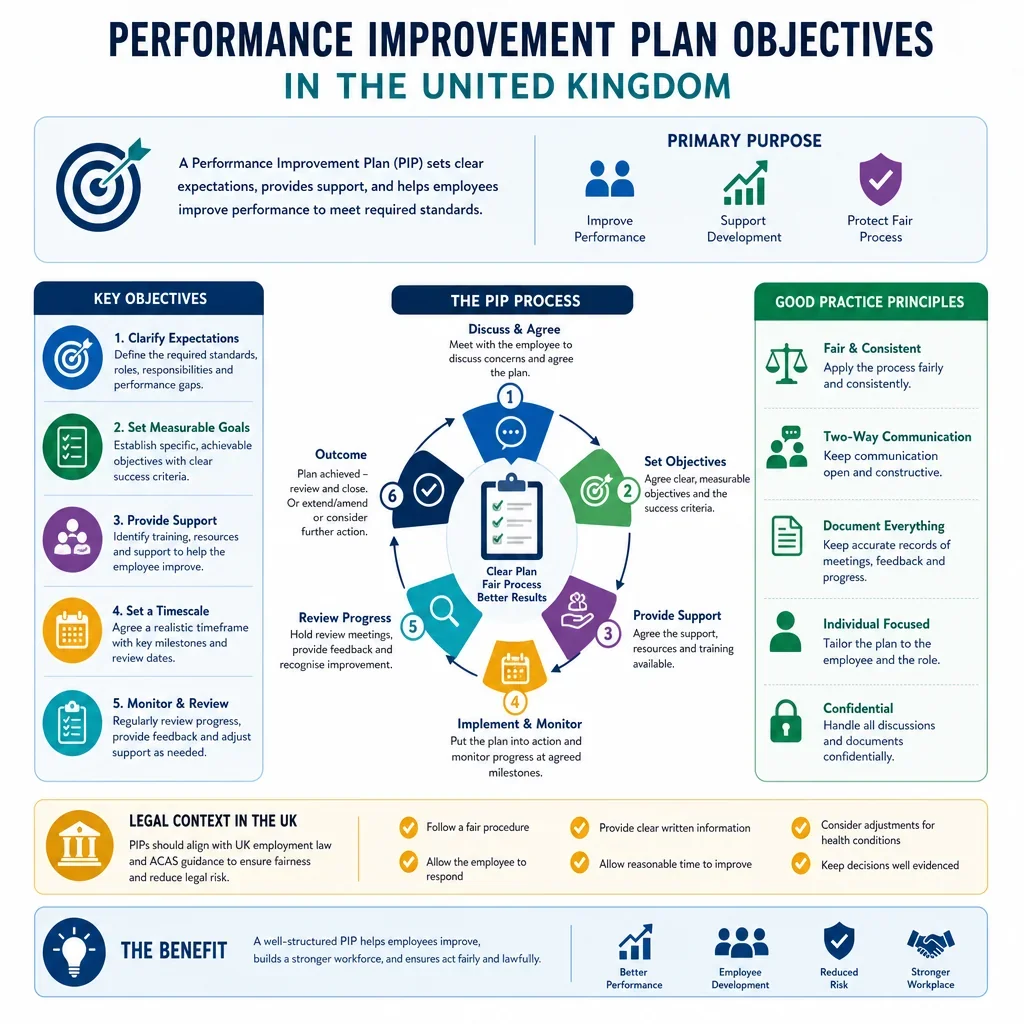
A performance improvement plan should convert broad concerns into specific, measurable actions. The records show that common issues such as missed deadlines, poor accuracy, low productivity, weak communication, conduct-related performance concerns and failure to follow procedures each need different evidence and tailored support.
What Evidence Should Support A Fair Performance Plan?
Use objective evidence such as work samples, error logs, KPI reports, attendance records, customer complaints, quality assurance scores, project records and meeting notes. This helps distinguish a genuine capability issue from unclear instructions, lack of training, excessive workload, disability-related barriers or conduct concerns.
What Legal Risks Should Be Considered?
- Disability and reasonable adjustments: If health, neurodiversity or disability may affect performance, consider adjustments before relying on targets or sanctions. Relevant UK guidance is available from Acas and the Equality Act 2010.
- Fair process: A PIP should usually include clear standards, support, review dates and consequences. Acas guidance on capability and conduct is important for avoiding unfair dismissal risk.
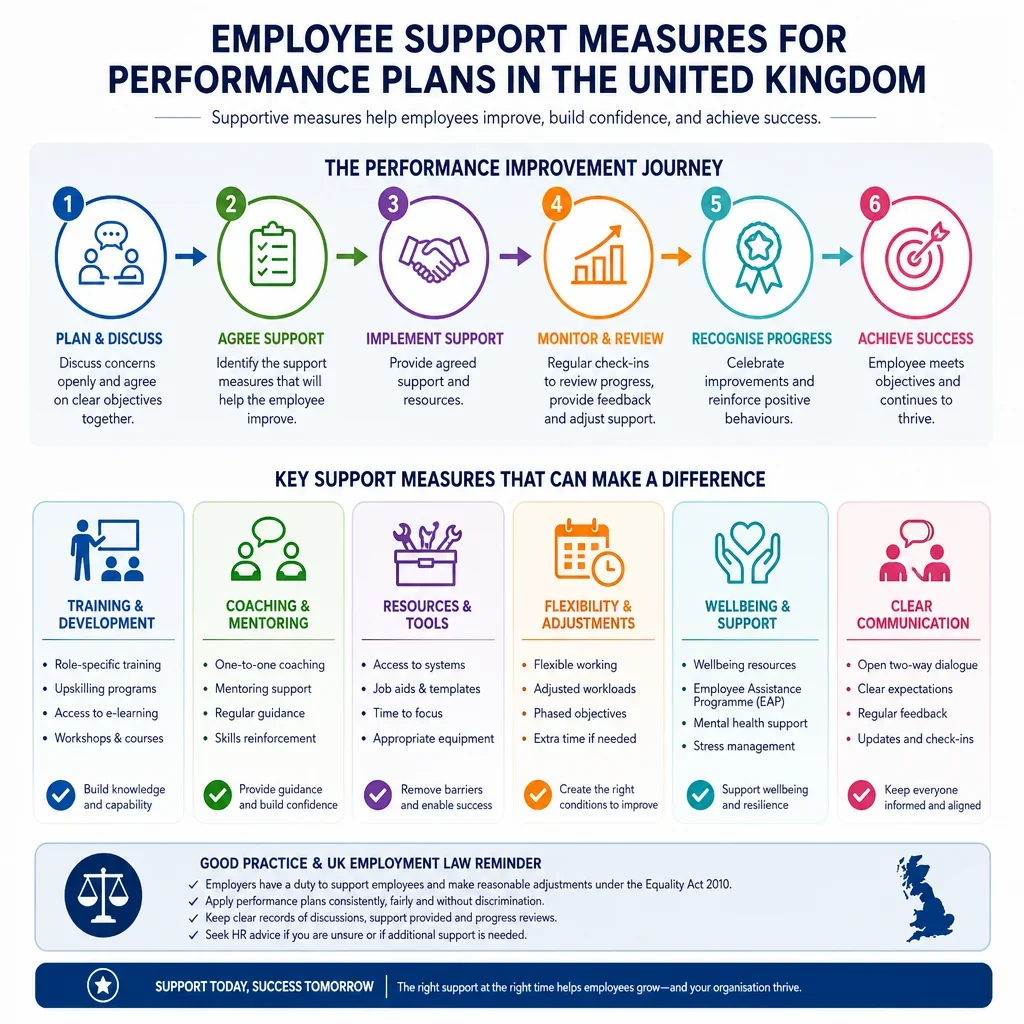
- Training and supervision: Many records point to practical support such as refresher training, mentoring, shadowing, workload review, written procedures and regular check-ins. These actions help show the employer acted reasonably.
What Should A Good Improvement Action Include?
Actions should be specific to the issue: for example, accuracy checks for data errors, prioritisation tools for missed deadlines, call coaching for customer service concerns, security refresher training for confidentiality breaches and attendance support where absence affects delivery. Targets should be realistic, time-bound and capable of being evidenced.
FAQs
You Might Also Be Interested In