Key Clauses In A UK Debenture
Purpose | Clause Category | Main Affected Party | Review Points | Omission Risk Level |
|---|---|---|---|---|
Parties and Capacity | ||||
Identifies the chargor, lender or security trustee and confirms capacity to grant security. | Core clause | All parties | Check company names, numbers, capacity, trustee role and group obligors. | High |
Definitions and Interpretation | ||||
Defines key terms used across the debenture. | Core clause | All parties | Align definitions with facility agreement, intercreditor deed and Companies House particulars. | High |
Secured Liabilities | ||||
States which debts and obligations are secured by the debenture. | Core clause | Borrower and lender | Confirm whether it covers specific debt, all monies, future advances, interest and costs. | High |
Covenant to Pay | ||||
Creates a direct promise to pay the secured liabilities when due. | Core clause | Borrower | Match payment timing, currency, default interest and demand mechanics to finance documents. | Medium |
Charging Clause | ||||
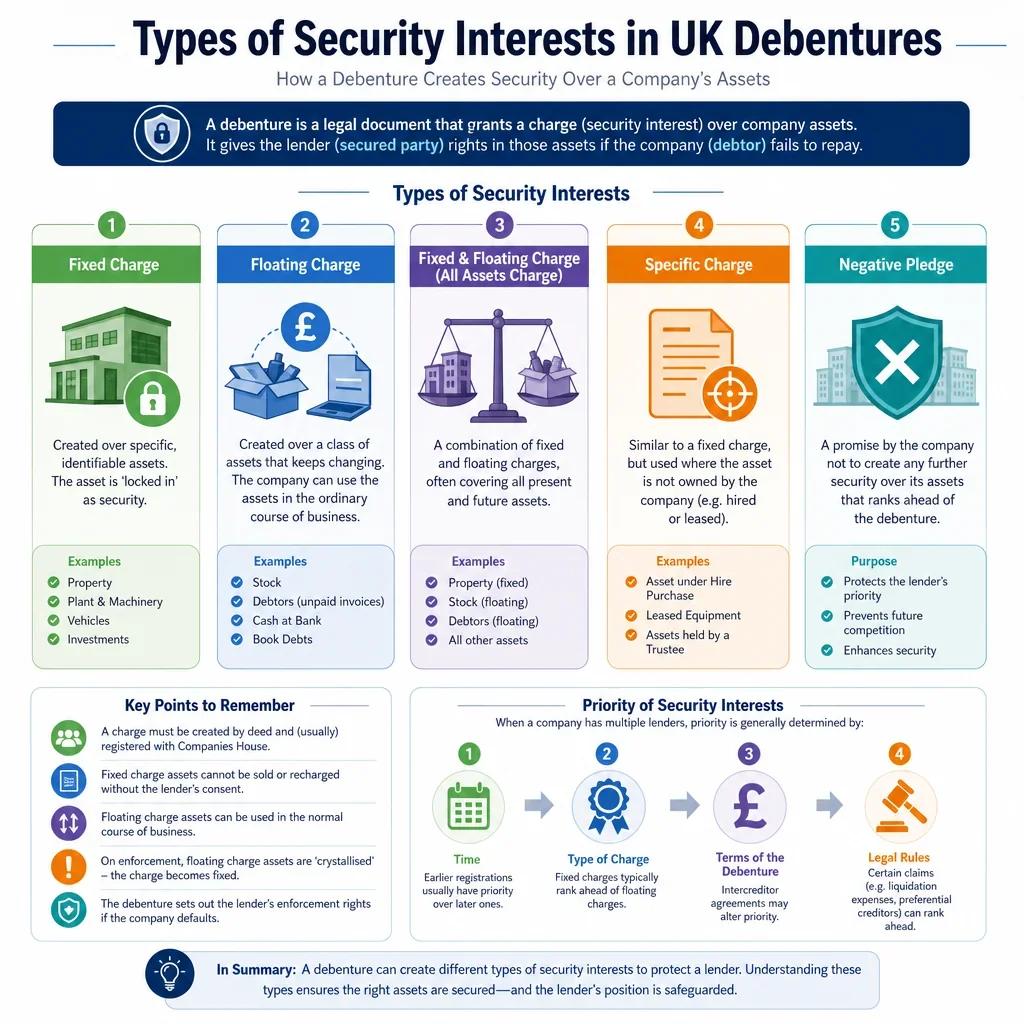
Grants security over the chargor's assets to secure the liabilities. | Core clause | Chargor | Check asset scope, fixed versus floating wording and excluded assets. | High |
Fixed Charge Over Real Property | ||||
Creates fixed security over freehold and leasehold property. | Core clause | Chargor | Identify titles, landlord consents, land registry filings and existing mortgages. | High |
Legal Mortgage | ||||
Takes stronger security over specified property where legal mortgage formalities can be met. | Transaction-specific clause | Chargor | Check execution as deed, title details, restrictions and Land Registry requirements. | High |
Equitable Mortgage | ||||
Creates mortgage-style security where legal mortgage formalities are not completed. | Transaction-specific clause | Chargor | Check whether legal mortgage is preferable and whether notices or consents are needed. | Medium |
Fixed Charge Over Plant and Machinery | ||||
Secures significant business equipment and machinery. | Common supporting clause | Chargor | Identify leased assets, retention of title goods, hire purchase and replacement assets. | Medium |
Fixed Charge Over Vehicles | ||||
Secures owned vehicles used in the business. | Optional clause | Chargor | Check ownership, finance leases, HP arrangements, insurance and sale restrictions. | Medium |
Fixed Charge Over Shares | ||||
Secures shares, securities and related rights held by the chargor. | Transaction-specific clause | Chargor | Check share certificates, stock transfer forms, pre-emption rights and constitutional restrictions. | High |
Fixed Charge Over Bank Accounts | ||||
Secures account balances and cash proceeds. | Core clause | Chargor | Assess account control, withdrawals, notice to bank and risk of floating charge characterisation. | High |
Fixed Charge Over Book Debts | ||||
Secures trade receivables and related proceeds. | Core clause | Chargor | Consider control over collection proceeds, factoring, customer notices and recharacterisation risk. | High |
Assignment of Receivables | ||||
Assigns debts and receivables to the lender by way of security. | Transaction-specific clause | Chargor | Check notice requirements, anti-assignment clauses, set-off rights and collection mechanics. | Medium |
Floating Charge Over Stock and Inventory | ||||
Secures trading stock that changes during ordinary business. | Core clause | Chargor | Check ordinary-course disposal permission, stock finance, ROT claims and insurance. | High |
Floating Charge Over Undertaking and Assets | ||||
Catches changing assets not effectively covered by fixed security. | Core clause | Chargor | Review prescribed part, preferential debts, qualifying floating charge status and crystallisation triggers. | High |
Fixed Charge Over Intellectual Property | ||||
Secures patents, trade marks, designs, copyright and related rights. | Transaction-specific clause | Chargor | List registered rights, licences, recordals, territorial scope and enforcement control. | High |
Fixed Charge Over Goodwill | ||||
Secures goodwill and business reputation value. | Common supporting clause | Chargor | Check interaction with trade marks, business sale restrictions and valuation assumptions. | Medium |
Charge Over Insurance Proceeds | ||||
Secures proceeds payable under insurance policies. | Common supporting clause | Chargor | Check loss payee wording, assignments, insurer notices and permitted reinstatement use. | Medium |
Assignment of Contract Rights | ||||
Secures rights under material contracts and related claims. | Transaction-specific clause | Chargor | Check consent requirements, anti-assignment wording, notices and termination risk. | Medium |
Assignment of Rental Income | ||||
Secures rent and lease income from property assets. | Transaction-specific clause | Property owner | Review tenant notices, rent accounts, existing mortgagee rights and lease restrictions. | Medium |
Excluded Assets | ||||
Carves out assets that cannot or should not be charged. | Common supporting clause | Chargor | Identify prohibited assignments, regulated assets, pensions, trust property and mandatory consent assets. | Medium |
Negative Pledge | ||||
Prevents the chargor granting competing security without consent. | Core clause | Chargor | Align permitted security, ordinary-course liens and existing encumbrances with facility documents. | High |
Restriction on Disposals | ||||
Limits sales or transfers of secured assets. | Core clause | Chargor | Set permitted disposals, stock sales, asset replacement and lender consent thresholds. | High |
Asset Maintenance Covenant | ||||
Requires the chargor to preserve secured assets in good condition. | Common supporting clause | Chargor | Define maintenance standard, capex obligations, asset inspections and exceptions for fair wear. | Medium |
Insurance Undertaking | ||||
Requires suitable insurance over secured assets and business risks. | Common supporting clause | Chargor | Check insured risks, sums, excesses, broker evidence, noting of lender and proceeds use. | Medium |
Information and Access Covenant | ||||
Allows the lender to monitor the secured assets and compliance. | Common supporting clause | Chargor | Set reporting frequency, inspection rights, notice periods and confidentiality limits. | Medium |
Further Assurance | ||||
Requires extra documents or actions needed to perfect or protect security. | Core clause | Chargor | Include filings, notices, consents, legal mortgages and asset-specific perfection steps. | High |
Registration and Perfection | ||||
Allocates responsibility for registering and perfecting the security. | Core clause | Lender and chargor | Track Companies House deadline, MR01, certified copy, fees and specialist asset registrations. | High |
Consequences of Non-Registration | ||||
Recognises that unregistered registrable security may be void against insolvency office-holders and creditors. | Common supporting clause | Lender | Confirm registration evidence and whether late registration or rectification is required. | High |
Title and Authority Representations | ||||
Confirms ownership, authority and ability to grant the security. | Core clause | Chargor | Check board approvals, constitutional limits, asset ownership and existing security. | High |
No Prior Security Representation | ||||
Confirms secured assets are not subject to undisclosed prior charges. | Common supporting clause | Chargor | Search Companies House, Land Registry, asset registers and finance documents. | Medium |
No Insolvency Representation | ||||
Confirms no insolvency process or event is affecting the chargor. | Common supporting clause | Chargor | Check winding-up petitions, administration filings, moratoria and financial distress. | Medium |
Corporate Benefit Confirmation | ||||
Records that directors considered commercial benefit to the chargor. | Common supporting clause | Chargor directors | Consider upstream or cross-stream guarantees, solvency, minutes and directors' duties. | Medium |
Solvency Confirmation | ||||
Confirms the chargor is solvent when granting security. | Common supporting clause | Chargor | Review cash flow, balance sheet solvency and insolvency challenge periods. | Medium |
Continuing Security | ||||
Keeps the security in force despite repayments or account fluctuations. | Core clause | Lender and chargor | Check whether all monies wording and future advances are intended. | High |
Reinstatement | ||||
Revives security if a payment is later clawed back or set aside. | Common supporting clause | Lender | Align with insolvency avoidance risks, discharge mechanics and release documents. | Medium |
Preservation of Rights | ||||
Prevents lender rights being lost by delay, waiver or other dealings. | Common supporting clause | Lender | Check consistency with waiver, amendments and intercreditor arrangements. | Medium |
Enforcement Event | ||||
States when the lender may enforce the security. | Core clause | Chargor | Align with events of default, acceleration, cure periods and demand requirements. | High |
Acceleration | ||||
Makes secured liabilities immediately due after default or enforcement notice. | Core clause | Borrower | Check automatic acceleration, notice wording and interaction with facility agreement. | High |
Crystallisation of Floating Charge | ||||
Converts floating security into fixed security on specified events. | Core clause | Chargor | Define automatic and notice-based triggers and permitted dealings after crystallisation. | High |
Appointment of Receiver | ||||
Allows the lender to appoint a receiver over secured assets. | Core clause | Chargor | Check qualifying floating charge, appointment formalities, blocked statutory powers and insolvency restrictions. | High |
Receiver's Powers | ||||
Sets out powers to manage, sell, collect and realise secured assets. | Core clause | Receiver and chargor | Include sale, leasing, borrowing, litigation, trading and delegation powers. | High |
Administrative Receiver Provisions | ||||
Addresses appointment and powers of an administrative receiver where legally available. | Transaction-specific clause | Lender and chargor | Check post-2003 restrictions and statutory exceptions before relying on this remedy. | Medium |
Administration Appointment Rights | ||||
Supports appointment of an administrator by a qualifying floating charge holder. | Transaction-specific clause | Lender and company | Confirm debenture constitutes a qualifying floating charge and appointment procedure is followed. | High |
Power of Sale | ||||
Allows secured assets to be sold after enforcement. | Core clause | Chargor | Check statutory powers, contractual extensions, notice requirements and sale process. | High |
Application of Enforcement Proceeds | ||||
Sets the order for applying money realised from secured assets. | Core clause | Lender and chargor | Account for enforcement costs, preferential debts, prescribed part, intercreditor waterfall and surplus. | High |
Receiver as Agent of Chargor | ||||
States the receiver acts as the chargor's agent unless law provides otherwise. | Common supporting clause | Chargor | Check liability allocation, insolvency exceptions and receiver remuneration. | Medium |
Receiver Remuneration and Costs | ||||
Makes receiver fees and enforcement expenses recoverable from secured assets. | Common supporting clause | Chargor | Define recoverable costs, priority, VAT and reasonableness limits. | Medium |
Protection of Purchasers | ||||
Protects buyers of assets sold under enforcement from having to investigate default. | Common supporting clause | Purchasers and chargor | Check sale authority, title transfer wording and land or asset register requirements. | Medium |
Set-Off | ||||
Allows the lender to apply credit balances against secured liabilities. | Common supporting clause | Borrower | Check bank accounts, currency conversion, insolvency set-off and notice requirements. | Medium |
Currency Conversion | ||||
Permits conversion of currencies for payment, set-off or enforcement. | Optional clause | Borrower | Check exchange rate source, conversion date, costs and multi-currency facilities. | Low |
Costs and Expenses | ||||
Requires the chargor to pay security, perfection and enforcement costs. | Core clause | Chargor | Cover legal fees, valuation fees, filing fees, receiver costs and VAT. | Medium |
Indemnity | ||||
Protects the lender and receiver against losses from the security or enforcement. | Common supporting clause | Chargor | Limit to reasonable losses, exclude lender misconduct and align with facility indemnities. | Medium |
Power of Attorney | ||||
Authorises the lender or receiver to sign documents and take enforcement steps for the chargor. | Core clause | Chargor | Ensure deed execution, irrevocability wording, security purpose and attorney scope. | High |
Notices to Debtors and Contract Counterparties | ||||
Enables or requires notice of assignments or charges to relevant third parties. | Transaction-specific clause | Chargor and third parties | Decide when notices are served and assess confidentiality, customer impact and legal assignment requirements. | Medium |
Land Registry Registration | ||||
Requires registration or protection of security over registered land. | Transaction-specific clause | Property owner and lender | Check title numbers, restrictions, notices, priority searches and landlord consents. | High |
IP Security Recordal | ||||
Provides for recordal of security at relevant intellectual property registries. | Transaction-specific clause | IP owner and lender | Identify UKIPO, EUIPO or overseas filings, deadlines, fees and registered right numbers. | Medium |
Account Control and Blocking Rights | ||||
Restricts withdrawals to support fixed security over accounts. | Transaction-specific clause | Chargor | Set blocked account mechanics, permitted withdrawals and bank acknowledgment wording. | High |
Collection Account for Receivables | ||||
Requires receivables proceeds to be paid into a controlled account. | Transaction-specific clause | Chargor | Check customer payments, account control, sweep rules and operational burden. | High |
Retention of Title and Third-Party Assets | ||||
Acknowledges that some assets may belong to suppliers or third parties. | Common supporting clause | Lender and chargor | Review supplier terms, consignment stock, leased goods and asset identification. | Medium |
Permitted Dealings | ||||
Allows limited ordinary-course use or sale of assets before enforcement. | Common supporting clause | Chargor | Define ordinary course, thresholds, prohibited transactions and post-default suspension. | Medium |
Priority and Ranking | ||||
States how the security ranks against other creditor rights. | Core clause | Lender and other creditors | Review existing charges, intercreditor agreements, deed of priority and statutory priority rules. | High |
Intercreditor Compliance | ||||
Subordinates or coordinates enforcement with other finance parties where required. | Transaction-specific clause | Lenders and chargor | Align standstill, voting, turnover, release and enforcement waterfall provisions. | High |
Security Trustee Provisions | ||||
Allows security to be held on trust for a changing lender group. | Transaction-specific clause | Security trustee and lenders | Check trust wording, beneficiary changes, enforcement instructions and trustee protections. | High |
Parallel Debt | ||||
Creates a separate debt to a security trustee in some cross-border structures. | Transaction-specific clause | Borrower and security trustee | Use mainly for cross-border deals check governing law and double recovery limits. | Low |
Assignments and Transfers by Lender | ||||
Allows lender rights and security benefits to move to new finance parties. | Common supporting clause | Lender and chargor | Check borrower consent, confidentiality, trust mechanics and novation requirements. | Medium |
No Assignment by Chargor | ||||
Prevents the chargor transferring its obligations or secured assets without consent. | Common supporting clause | Chargor | Coordinate with permitted reorganisations, asset sales and group transfers. | Medium |
Release of Security | ||||
Provides for discharge of security once secured liabilities are paid. | Core clause | Chargor and lender | Check full discharge conditions, contingent liabilities, filings and asset register releases. | Medium |
Partial Release and Substitution | ||||
Allows specific assets to be released or replaced while security continues. | Optional clause | Chargor and lender | Set valuation tests, consent process, replacement collateral and registration updates. | Low |
Certificate of Amounts Due | ||||
Makes lender certificates evidence of secured liabilities, usually absent manifest error. | Common supporting clause | Borrower and lender | Include manifest error carve-out and consistency with facility agreement. | Low |
Contractual Notices | ||||
Sets how notices under the debenture must be served. | Common supporting clause | All parties | Confirm addresses, email use, deemed receipt and statutory notice requirements. | Medium |
Service of Process Agent | ||||
Appoints a UK agent for legal proceedings where a party is overseas. | Transaction-specific clause | Overseas party | Confirm agent appointment, address, replacement process and court rules. | Medium |
Governing Law | ||||
Specifies the law governing the debenture, usually English law for UK security. | Core clause | All parties | Check asset location, conflict rules, Scots or Northern Irish assets and cross-border enforceability. | High |
Jurisdiction | ||||
Identifies the courts that may hear disputes about the debenture. | Core clause | All parties | Choose exclusive or non-exclusive jurisdiction and check overseas enforcement issues. | Medium |
Execution as a Deed | ||||
Ensures formal execution suitable for mortgages, powers of attorney and security obligations. | Core clause | Chargor and lender | Check Companies Act execution, witnesses, counterparts and delivery wording. | High |
Counterparts | ||||
Allows separate signed copies to form one debenture. | Optional clause | All parties | Check electronic signing, deed delivery and transaction closing mechanics. | Low |
Electronic Signatures | ||||
Permits electronic signing where legally and operationally acceptable. | Optional clause | All parties | Check deed witnessing, lender policy, filing acceptance and evidential integrity. | Low |
Severability | ||||
Keeps the rest of the debenture effective if one provision is invalid. | Common supporting clause | All parties | Ensure it does not mask an invalid core charging provision. | Low |
Amendments and Waivers | ||||
Controls how debenture terms can be changed or waived. | Common supporting clause | All parties | Require written consent and align with facility and intercreditor consent thresholds. | Medium |
No Merger | ||||
Prevents security rights merging into judgments or other documents. | Optional clause | Lender | Use where proceedings or refinancing may occur before full discharge. | Low |
Waiver of Defences | ||||
Limits arguments that lender dealings discharged or reduced the security. | Common supporting clause | Chargor | Check fairness, scope, guarantor protections and enforceability in context. | Medium |
Insolvency Clawback Awareness | ||||
Flags risk that security may be challenged as a preference, undervalue transaction or invalid floating charge. | Transaction-specific clause | Lender and chargor | Check new money, timing, connected parties, insolvency status and consideration. | High |
Financial Collateral Provisions | ||||
Addresses special rules for cash, shares or financial instruments collateral. | Transaction-specific clause | Lender and chargor | Confirm collateral type, possession or control, eligibility and enforcement mechanics. | Medium |
Regulated Lending Carve-Out | ||||
Excludes or manages security for regulated consumer credit or protected arrangements. | Transaction-specific clause | Lender and borrower | Check borrower status, loan purpose, FCA permissions and enforceability requirements. | High |
Environmental Compliance Undertaking | ||||
Protects collateral value where land or operations carry environmental risk. | Transaction-specific clause | Chargor | Review permits, contamination, remediation liabilities and indemnity scope. | Medium |
Taxes and Filing Fees | ||||
Allocates responsibility for taxes, duties and filing fees linked to the security. | Common supporting clause | Chargor | Check Companies House fees, Land Registry fees, stamp issues and gross-up interaction. | Low |
Data Protection and Confidential Records | ||||
Manages access to personal data and confidential records in monitoring or enforcement. | Transaction-specific clause | Chargor and lender | Check lawful basis, confidentiality, customer data, employee data and enforcement disclosure. | Medium |
Confidentiality | ||||
Controls disclosure of transaction, business and security information. | Common supporting clause | All parties | Permit disclosures to affiliates, advisers, funders, regulators, buyers and enforcement agents. | Low |
Entire Agreement | ||||
Limits reliance on prior statements not included in the finance documents. | Optional clause | All parties | Coordinate with facility agreement and avoid excluding fraud or required disclosures. | Low |
Third Party Rights | ||||
States whether non-parties can enforce debenture terms. | Common supporting clause | Third parties and lenders | Preserve rights for receivers, delegates, indemnified parties and finance parties if needed. | Low |
Scottish Asset Security Carve-Out | ||||
Recognises that Scots law security needs separate documentation and perfection. | Transaction-specific clause | Chargor and lender | Check Scottish land, shares, receivables and whether separate Scots law security is needed. | High |
Northern Ireland Asset Security | ||||
Addresses asset-specific security and registration for Northern Irish assets. | Transaction-specific clause | Chargor and lender | Check land registry, company charge registration and local law requirements. | Medium |
Overseas Asset Security | ||||
Flags that foreign assets may need local law security and filings. | Transaction-specific clause | Chargor and lender | Check lex situs, local enforceability, filings, taxes and legal opinions. | High |
Prescribed Part Acknowledgement | ||||
Acknowledges that part of floating charge realisations may be reserved for unsecured creditors. | Common supporting clause | Floating charge holder | Assess recoveries, floating charge timing and prescribed part cap. | Medium |
Preferential Creditors Acknowledgement | ||||
Recognises that preferential debts may rank ahead of floating charge recoveries. | Common supporting clause | Floating charge holder | Consider employee claims, HMRC secondary preferential status and recovery modelling. | Medium |
Financial Assistance Check | ||||
Checks whether security supports acquisition of shares in a public company or its holding company. | Transaction-specific clause | Company and directors | Check company type, acquisition purpose, whitewash availability and criminal consequences. | High |
What Clauses Matter Most In A UK Debenture?
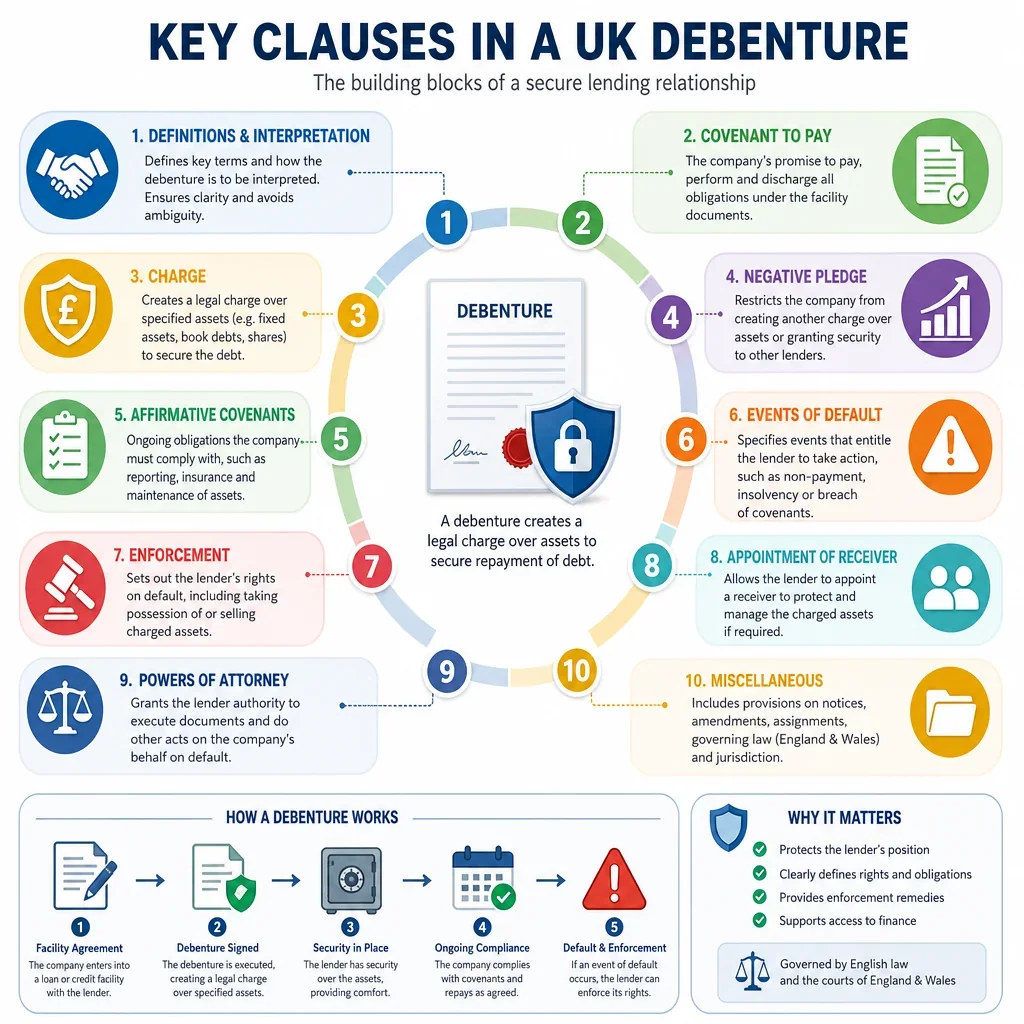
A UK debenture should not just state that a debt is secured. The core legal effect usually comes from the charging clause, the secured liabilities wording, the asset description, the enforcement trigger, and the remedies provisions. If these are incomplete, the lender may have security that is difficult to enforce or narrower than intended.
Why Is Registration A Critical Post-Signing Step?
For UK companies and LLPs, most debentures and other security interests must be registered at Companies House within the statutory deadline. Failure can make the security void against a liquidator, administrator and creditors, even though the debt itself remains payable. See Companies Act 2006 Part 25.
When Does A Fixed Charge Become A Floating Charge Risk?
Clauses over bank accounts, receivables, stock or other changing assets need careful drafting and practical control. If the chargor can freely deal with the asset or proceeds, a purported fixed charge may be vulnerable to recharacterisation as a floating charge, affecting priority and insolvency outcomes.
What Should Borrowers Check Before Signing A Debenture?
- Scope: check whether the debenture secures only one facility or all present and future liabilities.
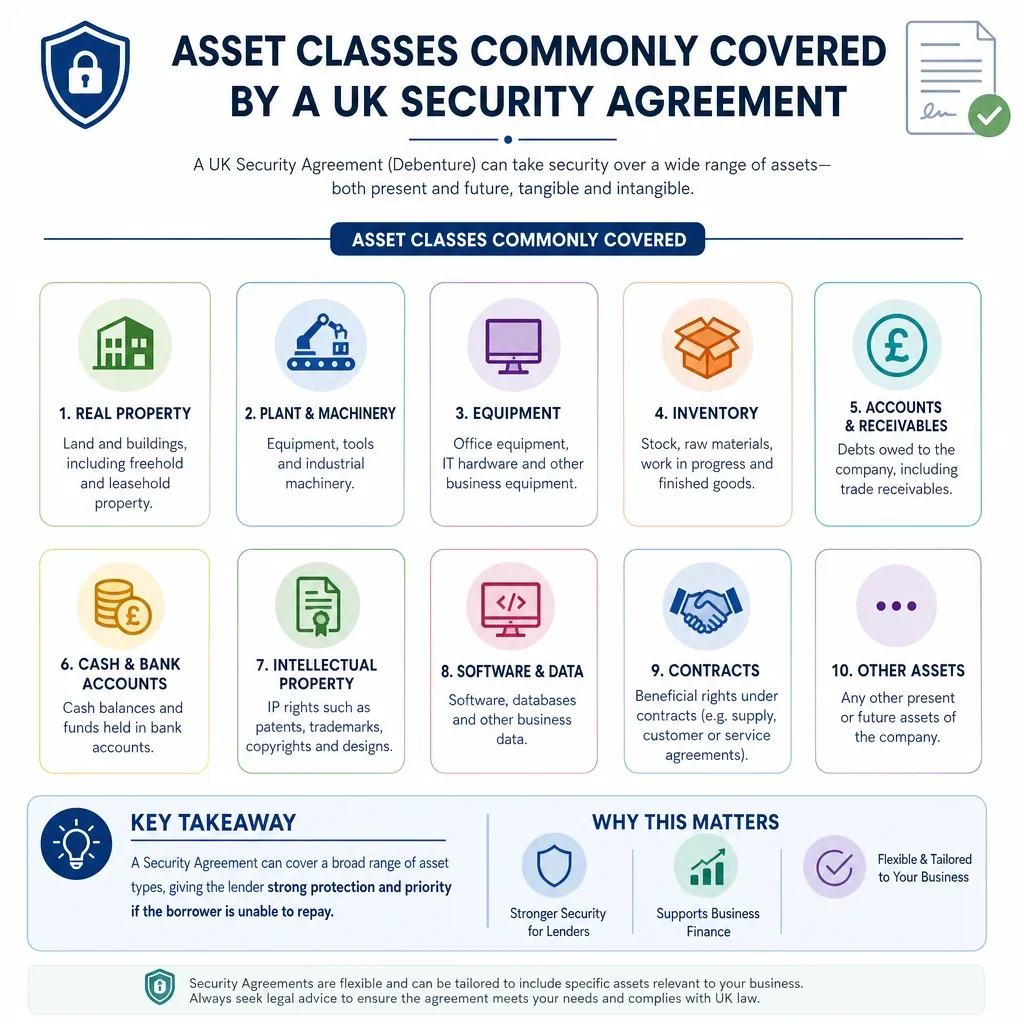
- Assets: identify which business assets are subject to fixed security, floating security, assignments or mortgages.
- Restrictions: review negative pledge, disposal, bank account, insurance and information undertakings because they can constrain ordinary trading.
- Enforcement: understand when default occurs, whether acceleration is automatic, and what powers a receiver or administrator may have.
- Filings: confirm Companies House registration and any specialist asset registrations, such as land, IP, ships or aircraft, are completed promptly.
FAQs
You Might Also Be Interested In